The short answer
For most Calgary adopters, the Bichon is right when three conditions hold. One: someone is home most of the day, or you have a real daycare and dog-walker plan, because separation anxiety is the breed's biggest surrender driver. Two: you can budget $700 to $1,200 a year for grooming every 4 to 6 weeks plus daily home brushing, because the curly double coat mats faster than almost any small breed. Three: you use gentle force-free training because Bichons shut down under corrections-based methods. If those three fit, the Bichon is one of the most rewarding small dogs in Calgary, one of the longest-lived, allergy-tolerated for many households, and a strong apartment companion. If even one is shaky, our resources hub covers steadier options.
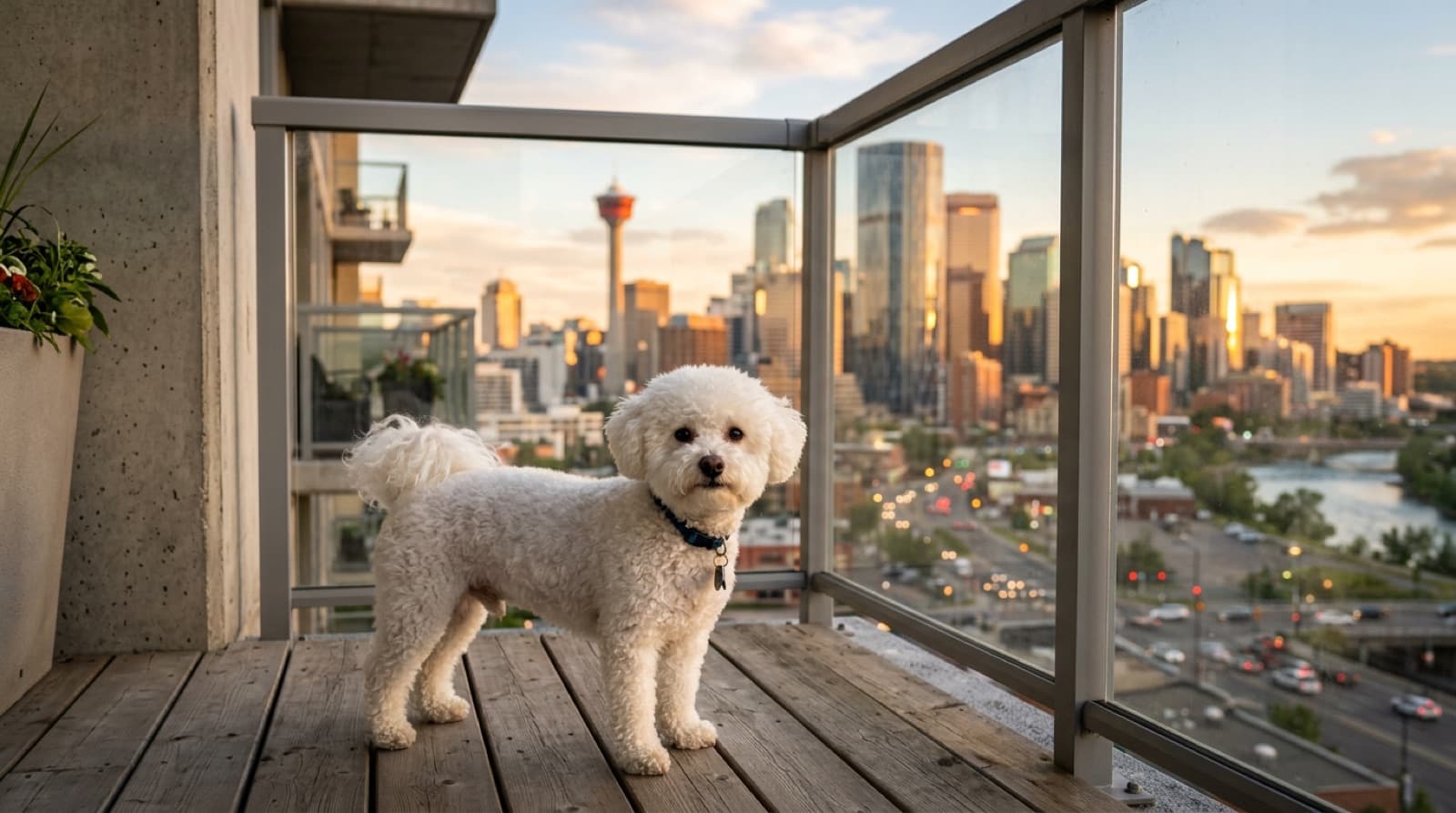
Honest Pros: Why Calgary Families Love the Bichon
Cheerful, gentle, people-focused temperament
Bichons were developed in 14th-century France and Spain as companion lap dogs for European nobility, never as working dogs. The breed retains that core purpose: to love people. Calgary Bichon owners consistently describe their dogs as happy, gentle, optimistic, and tuned in to the household mood. The breed greets visitors warmly, settles with calm kids, and rarely shows aggression. For owners who want a dog that genuinely enjoys human company every day, the Bichon delivers in a way that working breeds do not.
Long lifespan (14 to 16 years)
Bichons typically live 14 to 16 years in good health, on the long end for any breed and substantially longer than most large dogs. Many reach the longer end with proper weight management, lifelong dental care, and consistent skin and allergy management. For Calgary households planning a long-term household member, the lifespan is a meaningful pro. The American Kennel Club at akc.org documents the breed standard, history, and average lifespan.
Apartment-friendly and condo-compatible
At 12 to 18 lbs typical, the breed fits Calgary rental weight limits easily. Most Calgary pet-friendly buildings cap dogs at 50 to 75 lbs, so Bichons sit well under the bar. The moderate exercise floor (30 to 45 minutes daily) is achievable with two short walks. Beltline, Mission, Bridgeland, and downtown apartment owners often pick the Bichon specifically for the size, the cheerful temperament that handles elevators and hallway traffic without anxiety, and the low-shed coat that protects rental floors and furniture.
Low-shed and often allergy-tolerated
The Bichon curly double coat traps shed hair against the body until grooming releases it, which means the breed leaves very little hair on Calgary furniture and floors compared to most small breeds. Many mild-to-moderate allergic Calgary households tolerate Bichons well. The breed is not hypoallergenic (no dog is), and severe allergic adopters should always do a several-hour in-home trial before committing. For the majority of allergy-tolerant households, the low-shed coat is a genuine strength.
Friendly with kids, cats, and other dogs
Bichons were bred as companion dogs with no working prey-drive history, no guard-dog history, and no fight-breed history. The breed slots into multi-pet and multi-kid households more easily than most. Calgary Bichon owners report smooth introductions with resident cats, calm coexistence with other dogs at off-leash zones, and gentle play with school-age kids. The sensitive temperament does mean toddler households need adult supervision and respectful-handling coaching for the kids, but the breed itself rarely escalates.
Trainable with gentle methods
Bichons are intelligent and food-motivated. The breed responds beautifully to short positive training sessions, clicker work, and trick training. Calgary force-free trainers like Raising Canine and Pup City Pup Academy use the variable-reinforcement approach that suits the breed. Many Bichons learn basic obedience quickly, take well to therapy-dog work in seniors residences, and can earn AKC Canine Good Citizen titles. The catch is sensitivity (covered in the cons), but the trainability itself is genuine.
Adaptable to a wide range of households
The breed fits singles, couples, families with school-age kids, retirees, and work-from-home households well. Calgary retirees and seniors find the breed manageable in size, long-lived, and engaging without the energy demands of a working breed. Many Calgary rescues match adult and senior Bichons preferentially to retiree households, where the at-home routine prevents separation anxiety and the moderate exercise floor matches a calmer lifestyle. The adaptability is one of the genuine strengths of the breed.
Honest Cons: What the Marketing Photos Do Not Show
Separation anxiety is the breed's biggest risk
Bichons were bred for human company, never to work alone. The wiring shows up as separation-anxiety risk when owners are gone 8 to 10 hours a day. Many Bichons develop barking, scratching at doors, destructive chewing, and self-injury when left alone too long. Calgary rescues consistently report separation anxiety as the top surrender driver for the breed. Households where someone is home most of the day, retirees, work-from-home owners, or households with a real daycare plan (Pup City Doggy Daycare, Paws Dog Daycare) have the best outcomes. Households gone all day without a daycare plan are the highest-risk profile for this breed. Building alone-time tolerance gradually from day one matters more for Bichons than for almost any other breed.
Grooming cadence is short and demanding
The Bichon curly double coat needs professional grooming every 4 to 6 weeks at $80 to $130 per session in Calgary, plus daily home brushing. Annual grooming runs $700 to $1,200, higher than Westies, Cockapoos, or Maltese. The reason for the shorter cadence is matting risk. The curly double coat traps shed hair against the skin, where it tangles into dense mats fast. Owners who stretch grooming to 8 or 10 weeks routinely end up with severe mats that require an emergency shave-down. Daily face wiping with plain water is also needed to manage tear staining and beard discolouration on the white coat. Calgary owners who succeed treat grooming like a recurring vet appointment, not an optional expense.
Sensitive to harsh training methods
Bichons are biddable, but they are also sensitive. Harsh corrections, leash pops, stern voices, e-collars, and alpha-roll approaches damage the relationship, increase stress behaviours, and can trigger shutdown or fear-based aggression. Calgary owners who use corrections-based trainers often end up with anxious, hand-shy, or shutdown Bichons. The fix is force-free training from day one with trainers like Raising Canine and Pup City Pup Academy. Owners who default to corrections instinctively (especially first-time owners coming from working-breed backgrounds) should pause and learn the force-free approach before bringing the dog home.
Bark-prone if under-stimulated or anxious
Bichons are not bred to alarm-bark the way terriers are, but they bark heavily when anxious, bored, or left alone too long. For Calgary apartment and condo owners, this is the main neighbour-complaint risk. Calgary Responsible Pet Ownership Bylaw 3M2006 governs noise complaints, and barking complaints in condo buildings can trigger bylaw action. Apartment owners should commit to bark-management training from day one, meet the exercise and mental-engagement floor daily, and address separation-anxiety risk proactively. The City of Calgary at calgary.ca publishes the full bylaw including noise enforcement sections.
Dental disease is common
Small breeds carry higher dental disease risk than large breeds, and Bichons sit firmly in the high-risk group. Crowded teeth in a small jaw, plaque accumulation, and gum recession are common by age 5 or 6 without proactive home care. Calgary dental cleanings under anaesthesia run $700 to $1,400 depending on the work needed; extractions add to the cost. Daily home brushing with a dog-safe toothpaste is the single most useful daily habit for the breed. Pet insurance often does not cover routine dental work, so the cost is mostly out-of-pocket.
Allergies and atopic skin issues affect many Bichons
Bichons are one of the breeds most prone to atopic dermatitis (chronic allergic skin disease). Symptoms include itching, scratching, paw-licking, recurrent ear infections, and red irritated skin. Many Bichons show their first symptoms between 6 months and 3 years of age. Calgary general-practice vets handle most cases; severe cases get referred to a veterinary dermatologist at Western Veterinary Specialist Centre or VCA Canada West. Treatment ranges from omega-3 supplements and medicated baths to prescription medications like Apoquel or Cytopoint. Pet insurance taken before any symptoms appear offers high value because lifetime atopic care often runs into the thousands.
Designer-breed pricing and unethical breeders
Reputable Calgary Bichon puppies run $1,500 to $3,500 with waitlists of 6 to 18 months. The pricing draws backyard breeders selling unscreened puppies on Calgary Kijiji and Facebook Marketplace for $800 to $2,000. Warning signs: no patella or eye certificates, no parent screening for atopic skin, willing to release puppies before 8 weeks, no health guarantee, no follow-up contact. The Canadian Kennel Club at ckc.ca publishes the registered breeder directory. Adult rescues at $400 to $800 from Calgary Humane Society, AARCS, BARCS, or Pawsitive Match skip the breeder lottery entirely.
Who Bichons Are RIGHT For
Households with someone home most of the day
The single biggest fit factor. Retirees, work-from-home owners, multi-adult households where someone is usually home, and households with a real daycare plan have the best outcomes with this breed. The Bichon was bred for human company and thrives on it. Calgary households that can avoid leaving the dog alone more than 4 to 6 hours at a stretch consistently report happy, low-anxiety Bichons. The fit is genuine when the routine matches.
Calgary apartment and condo owners
The 12 to 18 lb size fits Calgary rental weight limits easily, and the moderate exercise floor (30 to 45 minutes daily) is achievable for Beltline, Mission, Bridgeland, or downtown apartment owners walking the dog twice daily. The cheerful temperament handles elevators and hallway traffic without anxiety. The low-shed coat protects rental floors and furniture. The caveats are separation anxiety and bark management; address both upfront and the apartment fit is one of the strongest in the small-breed world.
Households that budget grooming and skin care
Professional grooming every 4 to 6 weeks at $80 to $130 per session, plus daily home brushing, plus a reasonable budget for atopic skin management if it surfaces, is the realistic baseline for Bichon ownership. Households that can absorb the $700 to $1,200 annual grooming cost and commit to the routine have a much better long-term experience. Pet insurance taken before any symptoms appear offers strong value for the breed because lifetime atopic skin care often exceeds annual premiums.
Families with calm school-age kids 5 and up
Bichons pair beautifully with calm school-age kids who can be coached on respectful handling. The breed enjoys gentle play, settling on the couch, and being included in family activities. Kids who walk the dog, help with daily brushing, and participate in training feel included. Toddler-aged households can still succeed but should pick an adult Bichon with documented kid history rather than gambling on a puppy with unknown tolerance, and adult supervision matters always.
Calgary retirees and seniors
The breed is one of the best small-dog picks for Calgary retirees. The size is manageable, the lifespan is long (14 to 16 years), the temperament is gentle and engaging, and the moderate exercise floor matches a calmer lifestyle. Most importantly, retired households are typically home most of the day, which directly counters the separation-anxiety risk that defines the breed. Many Calgary rescues match adult and senior Bichons preferentially to retiree households for exactly this reason.
Mild-to-moderate allergic adopters (with a trial)
The Bichon curly double coat releases very little hair when properly maintained, which makes the breed tolerable for many mild-to-moderate allergic Calgary households. The honest test is a spend-the-afternoon visit with an adult Bichon in someones home rather than a quick rescue meet. Severe allergic adopters should trial for several hours in a home environment, not just at a rescue facility. Mild-to-moderate allergic adopters usually find the breed manageable to live with, especially when grooming stays on cadence and atopic skin (if present in the dog) is well-controlled.
You Should NOT Get a Bichon If...
You are gone 8 to 10 hours a day without a daycare or dog-walker plan
This is the single biggest mismatch profile and the leading reason Bichons end up in Calgary rescues. The breed was developed for human company and the separation-anxiety risk is wired in. Households gone all day without a real daycare plan, a midday dog-walker, or a stay-at-home household member produce stressed, barking, destructive Bichons within weeks. If the lifestyle does not match, pick a more independent breed (Beagle, small Poodle cross, Cairn) or wait until the routine changes.
You default to corrections-based training
If your instinct is to correct unwanted behaviour with leash pops, stern voices, e-collars, or alpha rolls, the Bichon is the wrong breed. The sensitive temperament shuts down or develops fear-based behaviour under harsh methods. Owners committed to learning force-free approaches do well; owners unwilling to switch produce anxious, hand-shy, or shutdown Bichons. Pick a more correction-tolerant breed or commit to switching methods before bringing the dog home.
You have a tight grooming budget
If $700 to $1,200 a year for professional grooming is a stretch, the Bichon double coat is the wrong fit. Skipping grooming to save money produces dense mats that require an emergency shave-down, which damages the coat and is painful for the dog. Households with tight grooming budgets either need to learn at-home grooming (which has a real learning curve for the curly double coat) or pick a low-grooming smooth-coated breed instead.
You want a watchdog or guard dog
Bichons are friendly with strangers, greet visitors warmly, and have zero guard-dog or watchdog wiring. The breed was bred for human company, not protection. If you specifically want a dog that alerts to strangers or deters intruders, pick a different breed entirely. Bichons will bark occasionally at door knocks, but the welcome wags and offers a paw to anyone who walks in. Treating that as a fit failure is reasonable if security is part of the dog requirement.
You want a hiking, running, or working partner
The breed is moderately active but not athletic. Bichons do not suit long trail hikes, daily runs, mountain biking, agility at a competitive level, or any sport that demands sustained endurance. Calgary owners looking for a pathway partner who can do 10 km daily, hike Kananaskis trails, or run alongside a bike should pick a working or sporting breed instead. Bichons are at their best on shorter neighbourhood walks and indoor play, not endurance work.
Bichon vs Maltese vs Coton de Tulear vs Havanese vs Cockapoo
Small white-coat companion breeds that look similar in photos and feel different in daily life. The Calgary-relevant decision table:
| Breed | Size | Grooming Cadence | Best Fit |
|---|---|---|---|
| Bichon Frise | 12 to 18 lbs | Every 4 to 6 weeks | At-home households wanting a cheerful low-shed companion, gentle training only, calm kids and cats |
| Maltese | 4 to 9 lbs | Every 4 to 8 weeks | Owners wanting a smaller lap-companion with similar separation-anxiety risk profile, true allergy tolerance, more fragile build |
| Coton de Tulear | 8 to 15 lbs | Every 4 to 6 weeks | Bichon temperament with softer cottony coat, rarer in Calgary, similar grooming load, similar at-home requirement |
| Havanese | 7 to 13 lbs | Every 4 to 8 weeks | Slightly more adaptable than Bichon, longer silkier coat, equally social, similar at-home preference |
| Cockapoo | 12 to 25 lbs | Every 6 to 8 weeks | More energetic than Bichon, longer grooming cadence, broader size range, similar low-shed appeal |
All five are small, low-shed, and apartment-workable. The Bichon, Maltese, Coton, and Havanese share lap-dog companion ancestry and people-focused temperament. The Cockapoo brings the Poodle athleticism with the Cocker friendliness, and is slightly more independent than the others. Pick the temperament and grooming cadence that match your routine, not the look that catches your eye.
Adult vs Puppy Adoption Decision Tree
For most first-time Bichon adopters, an adult rescue is the safer pick. The reasoning:
- Puppy: Calgary Bichon puppies are uncommon and reputable breeder waitlists run 6 to 18 months at $1,500 to $3,500. The puppy phase is roughly 12 to 14 weeks of intense house-training (small bladders make this longer than for large breeds), followed by 6 to 12 months of adolescent boundary-testing. Separation-anxiety risk is highest if the puppy is left alone too long during the first few months, so ramp-up alone-time training matters from day one. Puppies are the right pick only if you specifically want to raise the dog from puppyhood, are home most of the day, and either know a reputable breeder or are willing to wait on a waitlist.
- Adult rescue (1 to 5 years): temperament-evaluated, energy level documented, coat type known, kid tolerance noted, training history available, and any separation-anxiety patterns already identified. The Rule of 3s applies: roughly 3 days to decompress, 3 weeks to settle into routine, 3 months to fully bond. The adult Bichon arrives past the chaotic puppy stage and into the more settled adult temperament. For most first-time Bichon owners, this is the better path. Calgary rescue Bichons typically come from lifestyle changes (owner work-from-home ended, divorce, family illness, downsizing, separation anxiety the previous owner could not manage) rather than dog-driven surrender reasons.
- Senior rescue (8+ years): the calmest version of the breed, with realistic expectations on remaining lifespan and senior vet costs. Many seniors land in rescue after an owners health change. They are wonderful low-key companions, the grooming load is the same, and the temperament is settled. For Calgary seniors and retirees, a senior Bichon is often the gentlest entry into the breed and many rescues actively match seniors preferentially. Adoption fees for senior dogs are typically lower ($200 to $400) at most Calgary rescues.
Bichon rescue inventory in Calgary is small but real. Calgary Humane Society, AARCS, BARCS, Pawsitive Match, ARF Alberta, and Cochrane Humane list the breed or recognisable Bichon mixes when inventory exists. Expect the rescue process to take longer than for a more common breed because the available pool is smaller. Signing up for rescue alerts and expanding the search to Edmonton, Red Deer, or Lethbridge widens the pool.
The Calgary Lifestyle Math
Calgary is genuinely friendly to Bichon ownership when the household routine matches the breed. The honest picture:
- Winter climate: The Bichon double coat handles moderate Calgary winter better than single-coated toy breeds, but the small frame and short legs limit cold tolerance below minus 15C. Booties protect paws from sidewalk salt, and a fleece or insulated jacket helps below minus 20C. Walks should shorten in deep cold and indoor enrichment (training games, puzzle toys, indoor play) covers the exercise gap. The white coat also shows salt stains and slush quickly; a quick wipe-down at the door becomes routine.
- Apartment and condo compatibility: The 12 to 18 lb size fits virtually all Calgary pet-friendly buildings. The moderate exercise floor is achievable with two walks. Beltline, Mission, Bridgeland, and downtown apartments are realistic Bichon homes. Bark management and separation-anxiety management are the main building-fit concerns; address both upfront.
- Bow River pathway walks: Calgary pathways suit the breed well. Sandy Beach, Edworthy, Bowmont, Sue Higgins, and River Park all work for daily Bichon walks. The breed enjoys sniff walks and exploring new routes. Without working prey drive, recall around squirrels and rabbits is usually trainable to a reasonable level. Reliable off-leash work is more achievable than with terriers; fenced off-leash zones still help.
- Summer ear and skin care: The Bichon ear shape and the dense coat around the ear canal can trap moisture and trigger ear infections in Calgary summer. Weekly ear checks and gentle ear-cleaning routines prevent most issues. Atopic dermatitis tends to flare in Calgary summers when grass and weed pollen spike. Owners with atopic Bichons often manage with wipe-downs after outdoor time, paw-rinse routines, and medicated baths every 1 to 2 weeks during peak season.
- Bylaw 3M2006 compatibility: Calgary Responsible Pet Ownership Bylaw 3M2006 governs noise complaints. Bichon anxiety-driven barking can run afoul of the bylaw in condo buildings, especially if the dog barks while alone. Meeting the exercise floor, committing to bark-management training, and managing separation-anxiety triggers prevent most issues.
- Specialty vet access: Western Veterinary Specialist Centre handles complex dermatology, ophthalmology, and orthopedic referrals, which matters for the breeds atopic skin, cataract risk, and patella risk profile. VCA Canada West also offers dermatology referrals. For routine atopic flare-ups and dental work, most Calgary general-practice vets handle treatment without referral.
- Grooming infrastructure: Calgary has solid mid-tier and high-end grooming salons that handle Bichon coats. A groomer who knows the breed cut, the curly double coat, and the typical skin sensitivities is worth the search effort. Booking the next appointment at the end of each visit to lock in the 4 to 6 week cadence helps avoid waitlist gaps that produce matting.
- Daycare and dog-walker network: For Calgary households gone all day, a real daycare plan (Pup City Doggy Daycare, Paws Dog Daycare) or a reliable midday dog-walker is the difference between a happy Bichon and a stressed one. Build the network before adopting, not after the dog starts struggling.
Browse adoptable Bichon Frises in Calgary
Calgary Bichon availability is limited but real. Reputable rescues list adults with documented temperament, coat condition, kid and cat tolerance, dental history, and separation-anxiety notes. A foster trial of 2 to 4 weeks gives you a real-world test of the daily routine, the grooming workload, and how the dog handles your alone-time pattern before committing. For a breed this defined by people-focus and grooming cadence, a foster trial is the safest way to know the fit.
See Available Bichons →10-Question Self-Assessment
Answer honestly. If you answer “no” or “not sure” to more than two, the Bichon is probably not the right fit right now. That is useful information, not a judgment.
1. Is someone home most of the day, or do I have a real daycare plan?
This is the single most important question. Bichons left alone 8 to 10 hours daily without a daycare or midday dog-walker plan are the highest-risk profile for separation anxiety. Retirees, work-from-home households, multi-adult households, and households with a Pup City Doggy Daycare or Paws Dog Daycare plan have the best outcomes. If you cannot answer yes here, the breed is probably not the right fit.
2. Can I budget $700 to $1,200 a year for professional grooming?
Every 4 to 6 weeks at $80 to $130 per session in Calgary, plus daily home brushing. Skipping the cadence produces matting, which is painful for the dog and often requires an emergency shave-down. The cadence is shorter than for Westies, Cockapoos, or Maltese because the curly double coat mats faster. Budget the cadence upfront.
3. Will I use gentle force-free training methods?
Bichons shut down under harsh corrections, leash pops, stern voices, or e-collars. Calgary force-free trainers like Raising Canine and Pup City Pup Academy use the variable-reinforcement approach that suits the breed. Plan training before bringing the dog home, and if your instinct is to correct, learn the force-free approach first.
4. Do I want an apartment-friendly small companion or a working partner?
The Bichon fits apartment and condo life beautifully. The breed is not suited to long hikes, daily runs, mountain biking, or any sport demanding sustained endurance. If you want a pathway-running or trail-hiking partner, pick a working or sporting breed. If you want a calm small companion for daily neighbourhood walks and indoor companionship, the Bichon is a strong fit.
5. Can I provide 30 to 45 minutes of daily exercise plus mental engagement?
Two 15 to 20 minute walks daily plus a training session, sniff walk, or indoor play session cover most adult Bichons. Under-stimulated Bichons redirect into excessive barking and stress behaviours. The exercise floor is achievable for most Calgary households if it is on the daily calendar.
6. If I am allergic, have I tested for several hours in a home environment?
Bichons are low-shed but not hypoallergenic. The honest test is a spend-the-afternoon visit with an adult Bichon in someones home, not just a quick rescue meet. Severe allergic adopters should trial in a home for several hours. Mild-to-moderate allergic adopters usually find the breed manageable.
7. Am I prepared for daily dental care?
Small breeds carry high dental disease risk. Daily home brushing with a dog-safe toothpaste is the single most useful daily habit for the breed. Calgary dental cleanings under anaesthesia run $700 to $1,400. Pet insurance often does not cover routine dental work, so the cost is mostly out-of-pocket.
8. Do I have force-free Calgary training resources lined up?
Calgary force-free trainers like Raising Canine and Pup City Pup Academy use the gentle methods that suit the breed. Corrections-based methods damage the dog and trigger shutdown or fear-based behaviour. Plan training before bringing the dog home.
9. Do I have a vacation plan with boarding or a sitter?
Bichons do best with trusted in-home sitters or familiar daycare boarding rather than unfamiliar high-volume kennels. The separation-anxiety wiring makes traditional boarding harder than for more independent breeds. Plan the vacation logistics before adopting, especially if you travel frequently. Pup City Doggy Daycare and Paws Dog Daycare offer boarding options that suit the breed.
10. If I have toddlers, am I picking an adult Bichon with documented history?
Toddler households should pick an adult Bichon with documented kid tolerance from a Calgary rescue rather than gambling on a puppy with unknown adult temperament. Adult supervision and respectful-handling coaching matter for all small-dog households with toddlers.
Frequently Asked Questions
Is a Bichon Frise good for first-time owners?
Yes for first-time owners who are home most of the day, can budget $700 to $1,200 a year for professional grooming, and use gentle force-free training methods. Bichons are sensitive companion dogs bred specifically to be lap dogs for European nobility, never as working dogs. They are biddable, cheerful, and people-focused, which suits beginners. The catch is separation anxiety risk and grooming workload. First-time owners who succeed are home most of the day or have a daycare plan, build alone-time tolerance gradually from day one, and accept the every-4-to-6-week grooming cadence. Calgary force-free trainers like Raising Canine and Pup City Pup Academy run group classes that work well for the breed.
Are Bichon Frises good with kids?
Generally yes with calm school-age kids 5 and up, more cautious with toddlers. Bichons are gentle, cheerful, and playful, which makes them a strong family-pet choice. The caveat is the small 12 to 18 lb frame and the sensitive temperament. Bichons do not handle rough handling, ear pulling, or being woken from sleep well. Kids must be coached on respectful handling and on giving the dog space to rest. Toddler households should pick an adult Bichon with documented kid history rather than gambling on a puppy. Adult supervision matters with all small dogs and small children.
Are Bichon Frises good with cats?
Generally yes. Unlike terrier breeds, Bichons were bred as companion lap dogs with no working prey-drive history. Most Bichons live peacefully with resident cats after a proper introduction. The breed tends to treat cats as housemates rather than chase targets. Calgary households with resident cats can usually integrate a Bichon with a slow Rule of 3s introduction and supervised initial weeks. Foster trials still help confirm individual compatibility. The Bichon temperament is one of the genuine strengths of the breed for multi-pet homes.
Can a Bichon Frise live in an apartment?
Yes, the Bichon is one of the best small apartment dogs in Calgary. At 12 to 18 lbs they fit Calgary rental weight limits easily. The 30 to 45 minute daily exercise floor is achievable for Beltline, Mission, Bridgeland, or downtown apartment owners walking the dog twice daily. The breed is naturally confident in hallways, elevators, and around neighbours. The main apartment concern is separation anxiety. Bichons left alone too long can develop barking, scratching at doors, and stress behaviours that trigger neighbour complaints. Calgary Responsible Pet Ownership Bylaw 3M2006 governs noise complaints. Pick a household where someone is home most of the day, or build a reliable daycare and dog-walker plan before adopting.
How much exercise does a Bichon Frise need?
Thirty to forty-five minutes of real exercise daily, plus mental engagement. Bichons are moderately active. They are happy with two 15 to 20 minute walks plus indoor play, training sessions, or a sniff walk. The breed thrives on short positive training sessions, scent games, and gentle play. Over-exercise is not the typical risk; under-stimulation is. Bored Bichons redirect into excessive barking, chewing, and stress behaviours. Calgary off-leash zones like Sandy Beach, River Park, and Tom Campbell Hill work well for Bichons; the breed has decent recall when trained because there is no working prey drive to override the cue.
How often does a Bichon Frise need grooming?
Every 4 to 6 weeks at $80 to $130 per session in Calgary, plus daily home brushing. Annual grooming runs $700 to $1,200. The Bichon grooming cadence is shorter than the Westie (6 to 10 weeks), the Cockapoo (6 to 8 weeks), or the Maltese (4 to 8 weeks) because the curly double coat mats faster than any of those. The white coat also shows tear staining and beard discolouration, so face wiping with plain water becomes a near-daily routine. Skipping the cadence produces matting, which is painful for the dog and often requires an emergency shave-down. Calgary owners who manage the cadence successfully treat grooming like a recurring vet appointment, not an optional expense. See our Bichon grooming and coat care guide for the full routine.
Do Bichon Frises have separation anxiety?
Yes, more than most breeds. Bichons were bred specifically for human companionship, never as working dogs. Many Bichons struggle with being left alone for more than 4 to 6 hours, and some develop full clinical separation anxiety with destructive behaviour, barking, and self-injury. The risk factor is the biggest single reason Bichons are surrendered to Calgary rescues. Households with someone home most of the day, retirees, work-from-home owners, or households committed to a Calgary daycare like Pup City Doggy Daycare or Paws Dog Daycare have the best outcomes. Building alone-time tolerance gradually from day one matters; sudden 8-hour days in the crate without ramp-up is the typical failure pattern.
Are Bichon Frises hypoallergenic?
Bichons are low-shed and often allergy-tolerated, but they are not hypoallergenic. No dog is 100% allergen-free. Saliva and dander trigger allergic reactions in addition to shed hair. The curly double coat traps loose hair against the body until grooming releases it, which is why the breed sheds less into the home than many others. For mild-to-moderate allergic Calgary households, Bichons are usually manageable. For severe allergic adopters, the honest test is a spend-the-afternoon visit with an adult Bichon in someones home rather than a quick rescue meet. Atopic dermatitis in the dog can also produce skin flakes that some allergic humans react to, even when the coat itself sheds minimally.
Are Bichon Frises easy to train?
Generally yes, when trained with gentle force-free methods. Bichons are intelligent, biddable, and food-motivated. The breed responds well to short positive training sessions, clicker work, and trick training. The catch is sensitivity. Bichons do not handle harsh corrections, leash pops, or stern voices well. Corrections-based methods damage the relationship, increase stress behaviours, and can trigger shutdown or fear-based aggression. Calgary force-free trainers like Raising Canine and Pup City Pup Academy use the variable-reinforcement approach that suits the breed perfectly. House-training can take longer than with larger breeds because small bladders need more frequent breaks; consistency and a strict schedule resolve this within a few months.
How long do Bichon Frises live?
Bichons typically live 14 to 16 years in good health, on the long end for any breed. Many reach the longer end with proper weight management, lifelong dental care, and ongoing skin and allergy management. A Bichon adopted as a puppy is a 14 to 16 year household member, longer than most large breeds. The lifelong commitment is the part new owners often underestimate. Senior Bichons do well with the same daily exercise floor reduced to 20 to 30 minutes, soft bedding for ageing joints, and consistent grooming to protect ageing skin. The long lifespan is a real strength but it cuts both ways.
Should I buy a Bichon Frise puppy or adopt a Bichon rescue?
For most first-time Bichon owners, an adult rescue is the safer pick. Calgary Bichon puppies are uncommon and reputable breeder waitlists run 6 to 18 months at $1,500 to $3,500. Adult rescues at $400 to $800 from Calgary Humane Society, AARCS, BARCS, Pawsitive Match, or breed-specific rescue arrive temperament-evaluated, energy-level documented, and past the chaotic puppy stage. The Rule of 3s applies (3 days to decompress, 3 weeks to settle, 3 months to bond). Senior Bichons are particularly available and make wonderful low-key companions for Calgary seniors and retirees. Puppies are the right pick only if you specifically want to raise the dog from puppyhood and either know a reputable breeder or are willing to wait on the right waitlist. See our Bichon adoption Calgary guide for the full rescue-source breakdown.
What is a common mistake Calgary Bichon owners make?
Skipping the every-4-to-6-week grooming cadence to save money. Bichons mat faster than almost any other small breed because the curly double coat traps shed hair against the skin. Owners who stretch grooming to 8 or 10 weeks end up with mats that require an emergency shave-down at a Calgary salon, which damages the coat and is painful for the dog. The second common mistake is underestimating separation-anxiety risk and adopting a Bichon into a household with 8 to 10 hour workdays without daycare or a dog-walker plan. Both mistakes are preventable with realistic expectations before adopting.
Sources and further reading
- American Kennel Club (akc.org): history, breed standard, temperament, lifespan, and known health concerns for the Bichon Frise.
- Canadian Kennel Club (ckc.ca): Canadian breed standard and registered breeder directory for the Bichon Frise.
- Calgary Humane Society (calgaryhumane.ca): local adoption process, surrender support, and breed listings when inventory exists.
- City of Calgary (calgary.ca): Responsible Pet Ownership Bylaw 3M2006 including licensing, leash, and noise enforcement sections.
- Calgary force-free trainer network including Raising Canine and Pup City Pup Academy for group classes and behavioural consultations.
This article is informational only and not a substitute for veterinary, behavioural, or insurance advice. Consult a Calgary veterinarian, a force-free trainer, and your own grooming salon for personalised guidance.
Related Bichon guides
Bichon Frises for Adoption in Calgary →
Live listing of available Bichon Frises and Bichon mixes across Calgary rescues when inventory exists.
Bichon Frise Adoption Calgary →
Where to find a rescue Bichon in Calgary, real adoption costs vs breeder pricing, what reputable rescues assess, and the foster-trial route.
How to Groom a Bichon Frise →
A Bichon Frise grooming guide: why the coat mats so fast, the pre-bath rule that prevents disasters, the powder-puff trim, tear stains, and the honest cost.
Bichon Frise Health Issues: Stones, Knees, Teeth →
Bichon Frise health issues to plan for: bladder stones, slipping kneecaps, dental disease, itchy skin and allergies, and what to ask your vet after adoption.
New dog? Start with these care guides
Everything a new adopter needs to set up a safe, happy home.