The honest version
Dachshunds are 11 to 32 lbs, 5 to 9 inches tall, and live 12 to 16 years. They bond intensely with one person, bark at everything, ignore recall when scent-driven, and take 6 to 12 months to fully housetrain. Roughly 1 in 4 will develop IVDD (intervertebral disc disease) in their lifetime, the highest spinal risk of any breed. They are wonderful for patient singles, retirees, work-from-home adults, and homes with respectful older kids. They are a poor fit for families with toddlers, fast-paced households, owners who cannot tolerate barking, and anyone unwilling to install ramps, manage weight, and enforce a strict no-jumping rule. Most “dachshund regret” in the Calgary rescue network is one of three things: housetraining frustration, a back injury from rough handling, or barking complaints from neighbours. This article catches all three before you adopt.
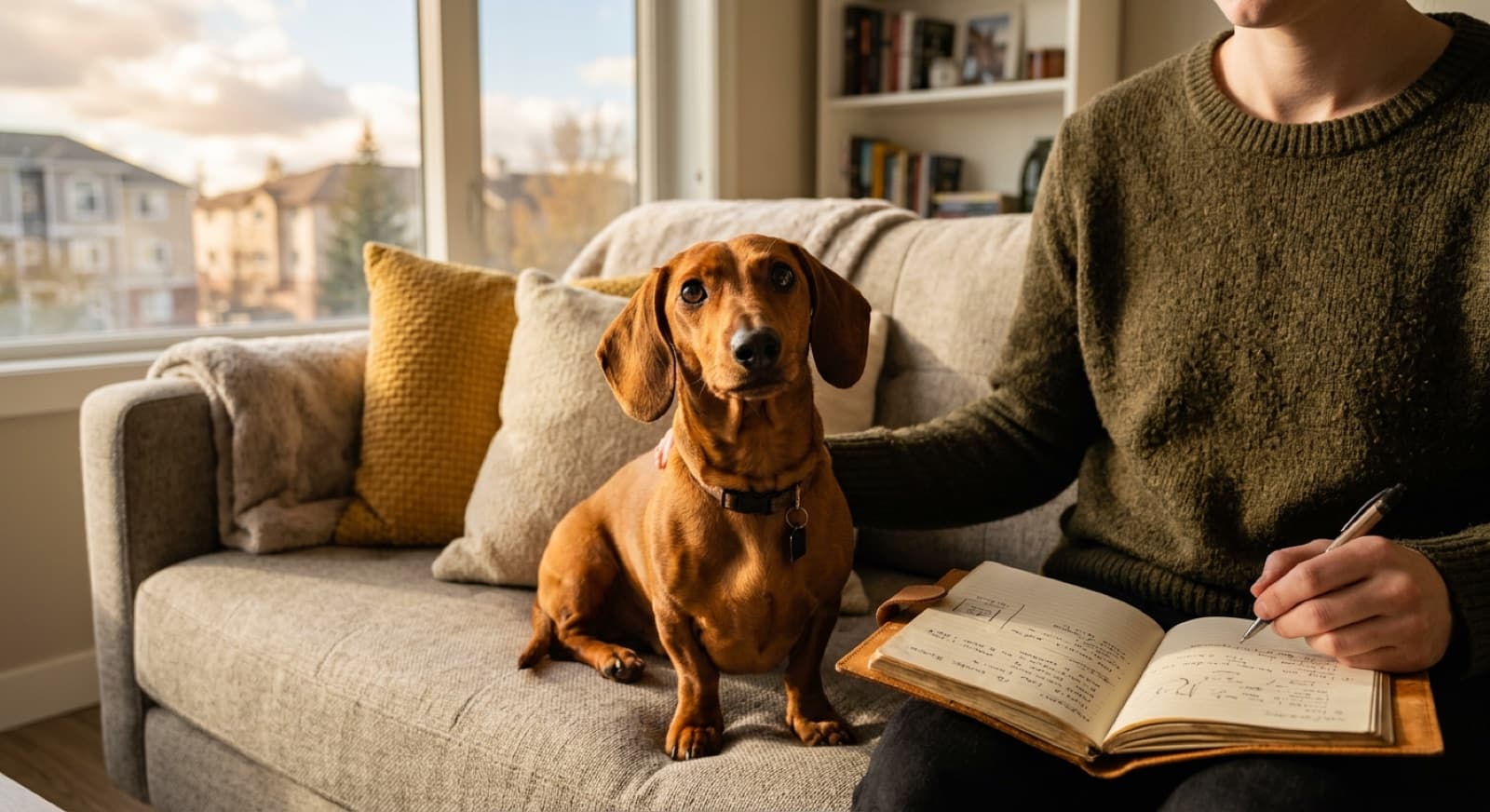
10 Things Nobody Tells You Before Getting a Dachshund
1. The IVDD risk is real, not theoretical
Roughly 25 percent of Dachshunds develop IVDD (intervertebral disc disease) in their lifetime. A bad episode can cause pain, partial paralysis, or full hind-end paralysis. Surgery in Calgary runs $6,000 to $12,000. Every owner has to live as if their dog will, which means ramps for couches and beds, no jumping on or off furniture, no free stair climbing, and strict weight management for life. Most Dachshunds never develop IVDD, but the lifestyle is mandatory either way.
2. Housetraining takes 6 to 12 months, not 6 to 8 weeks
Dachshunds are among the slowest small breeds to housetrain. The stubborn streak is real, the tiny bladder holds 2 to 3 hours, and the dislike of cold or wet ground stacks against you. Calgary winter mornings at -25C amplify everything. Plan for crate training, potty breaks regularly, enzymatic cleaner, and indoor pee pads as a real winter tool. Owners expecting a typical 6 to 8 week puppy timeline often surrender at month 4. Read our Dachshund potty training Calgary guide before day one.
3. They were bred to bark loudly inside badger dens
The Dachshund bark is deep, loud, and persistent relative to body size. Hunters needed to locate the dog by sound underground, so vocal Dachshunds were the ones that got bred. They alert-bark at doorbells, footsteps, elevators, dogs on TV, and the wind. Training reduces excess barking but does not eliminate the alarm reflex. Strict-rules condos and shared-wall neighbours are real friction points.
4. Recall barely works once they catch a scent
Dachshunds are scent hounds. When a smell catches them (squirrels, gophers, rabbits, food scraps), the world disappears and your voice is white noise. Off-leash in Calgary off-leash parks is a real risk because they will follow a scent into traffic, into shrubs, or under fences. Most experienced Dachshund owners keep them on a long line in unfenced areas for life. This is not a training failure, it is the breed.
5. They velcro to one person, hard
Dachshunds pick a person and stick. They follow you to the bathroom, sleep under your blankets, and reject other family members for affection if their person is in the room. This is wonderful for singles and retirees. It is harder for couples who wanted a shared family dog and end up with one “chosen one” partner and the other as background.
6. The stubborn streak ruins old-school training
Yelling, leash pops, alpha rolls, and e-collars all backfire with Dachshunds. The breed shuts down or escalates. Force-free, positive-only training with high-value treats, short sessions, and patient consistency is the only method that builds a stable Dachshund. Calgary force-free trainers (Doggie Tales, Sit Happens, Above and Beyond) all teach this. Old-school “dominance” advice from family or YouTube ruins the breed.
7. Weight management is the single biggest IVDD lever
An overweight Dachshund is a Dachshund with a much higher IVDD risk. Every extra pound stresses the long spine. A mini Dachshund should be 9 to 11 lbs lean, a standard 16 to 28 lbs lean. You should feel ribs easily under thin fat cover and see a clear waist from above. Calgary vets see chronic overfeeding constantly. Treats count. Pumpkin and green beans as low-calorie filler help.
8. Ramps and no-jumping rules are non-negotiable
Couches, beds, cars, and stairs all stress the Dachshund spine. Buy or build a ramp for every place the dog sleeps or rests. Block furniture if your dog jumps off uninvited. Carry your Dachshund up and down stairs, or train one-stair-at-a-time on a leash. Many Calgary IVDD cases trace back to a single jump off a bed or couch. The lifestyle change feels excessive at first and becomes second nature within a month.
9. They are not the “easy small dog” the meme suggests
The internet sells Dachshunds as cute cuddly couch dogs. The reality is a stubborn, vocal, scent-driven hound with a fragile spine and slow housetraining. Owners who pick the breed for aesthetic reasons (the “wiener dog” cuteness) and skip the temperament homework are the ones who end up in “dachshund regret” Reddit threads at month 6. Cute does not mean easy.
10. Pet insurance is almost mandatory
A single IVDD surgery costs $6,000 to $12,000 in Calgary. Conservative crate-rest treatment runs $1,500 to $3,000 with imaging, drugs, and follow-ups. Pet insurance for a Dachshund runs $40 to $80 a month and almost every long-term owner uses it. Enrolling before any back issues appear is the only way to keep IVDD covered. Read our pet insurance for Dachshunds Calgary guide for the comparison.
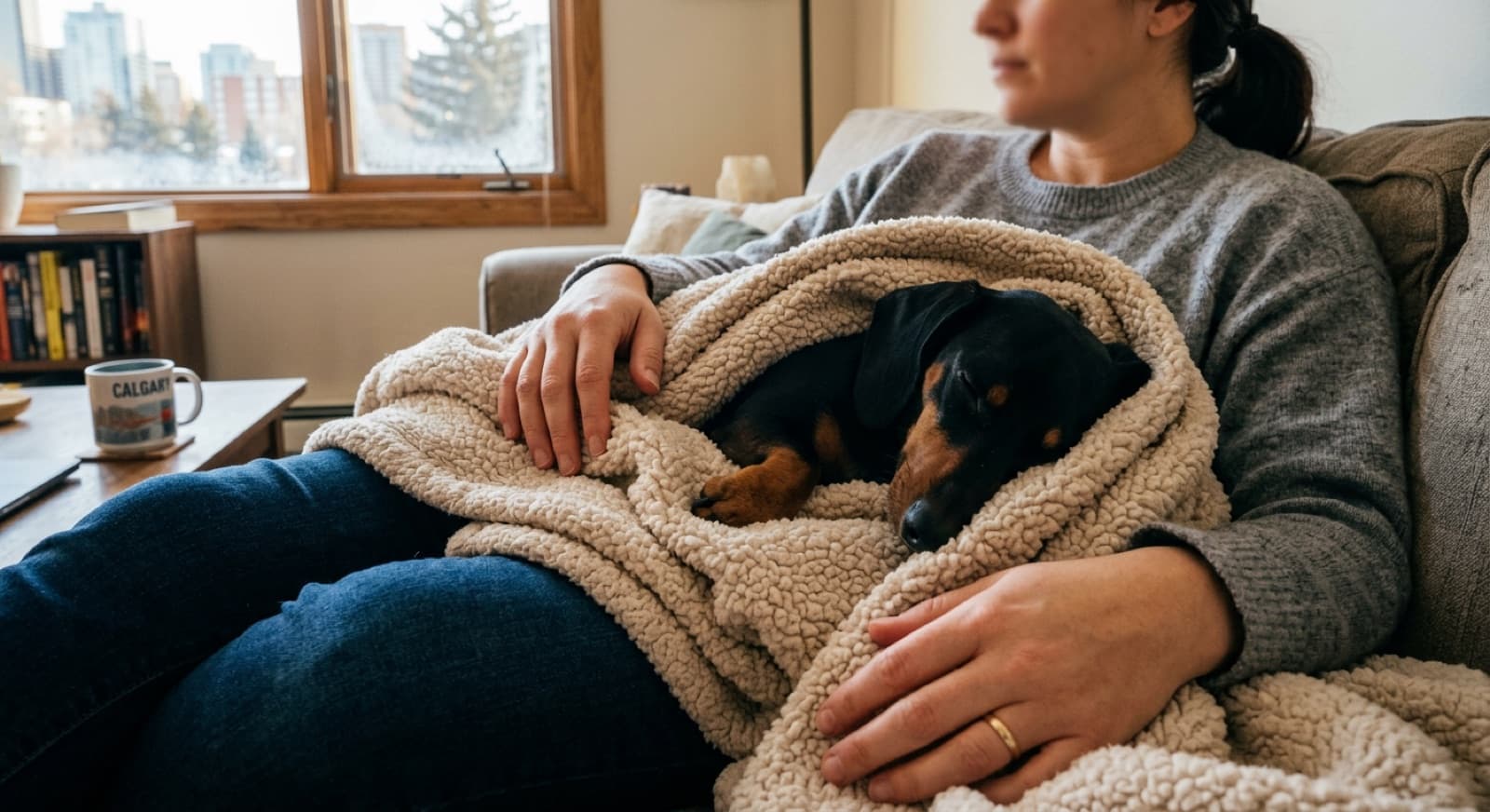
Pros and Cons (Real Owner Perspectives)
Pulled from Calgary Dachshund owner conversations, Alberta Dachshund Rescue foster reports, and the broader Doxie community.
Pros
- Intensely loyal and deeply bonded to their person
- Small enough for any apartment or condo
- Long-lived (12 to 16 years) for the size
- Funny, characterful, full of personality
- Great alert dogs, will tell you about everything
- Moderate exercise needs (20 to 40 minutes a day)
- Adaptable to work-from-home routines
- Three coat types and two sizes means real variety
Cons
- Roughly 25 percent lifetime IVDD risk
- Slow to housetrain (6 to 12 months)
- Loud, persistent, breed-typical barking
- Stubborn and selectively deaf to recall
- Separation anxiety prone (velcro breed)
- Cold-sensitive, struggle in Calgary winter
- Snap defensively when handled roughly
- Mandatory ramps, no jumping, weight management
Who Dachshunds Are a GREAT Fit For
Apartment and condo dwellers
An 11 to 32 lb dog fits anywhere. No yard needed. Daily exercise is a 20 to 40 minute walk plus indoor sniff games. Calgary downtown, Beltline, Bridgeland, and Inglewood condos with size restrictions almost always allow Dachshunds. Just verify barking rules with the building, because some strict-rules condos have noise complaints on file for the breed.
Single adults and couples without small kids
The velcro bond pays off when you live alone or as a couple without toddlers. No fragility risk from small hands. No snapping triggers from rough child handling. Just devotion and a small loyal shadow that follows you everywhere.
Retirees and seniors
Long lifespan, moderate exercise needs, indoor-friendly, and intense companionship make Dachshunds one of the best senior breeds. Many Calgary seniors specifically adopt a 4 to 8 year old rescue Dachshund through Alberta Dachshund Rescue (ADR) because housetraining is done and the temperament is settled. Lifting and carrying a 12 lb mini is feasible for most seniors; a 28 lb standard is harder on the back.
Families with respectful older kids (10+)
Calm older children who can lift a Dachshund correctly (supporting both ends, never under the front legs alone), read body language, and respect a sleeping dog do well with the breed. Younger kids increase the back-injury risk and the snapping risk in ways that are hard to manage.
Work-from-home or part-time workers
The velcro bond pays off when you are home. The dog naps under your desk during meetings, follows you to the kitchen, and burrows into a blanket next to you. WFH became standard after 2020 and Dachshund adoptions surged for exactly this reason.
Patient owners willing to slow-housetrain
If you go in expecting 6 to 12 months of consistent work, you will be fine. Crate training, every-2-hour potty breaks, indoor pee pads for Calgary winter, and zero scolding for accidents are the path. Read our Dachshund crate training Calgary guide before you start.
Who Dachshunds Are NOT a Fit For
Families with toddlers or kids under 8
The back-injury risk from rough handling is real. A toddler picking up a Dachshund the wrong way can cause spinal damage that lasts a lifetime. A dropped Dachshund can rupture a disc instantly. Add the defensive snapping baseline and this is a real safety issue both ways. Most Calgary Dachshund rescues will not place into homes with kids under 8 to 10. Pick a sturdier small breed (Cavalier, Cocker, Beagle) for young-kid families.
Fast-paced, chaotic households
Constant doorbell traffic, kids running, frequent guests, and high-stimulation homes amplify the barking. They also create more rough-handling and jumping-off-furniture opportunities. Dachshunds thrive on routine and calm. Chaotic homes produce more barking complaints, more accidents, and a higher IVDD incident rate.
Owners who cannot tolerate barking
Strict-rules condos, light sleepers, shared-wall neighbours, and home-office workers on video calls all hit the barking wall. Training reduces but does not eliminate alert-barking. If silence matters more than companionship, pick a Basenji, Whippet, or retired Greyhound. Read our Dachshund barking and aggression Calgary guide for the management plan.
Owners who cannot commit to ramps and weight management
The IVDD prevention lifestyle is mandatory for life. Ramps for couches and beds. No jumping on or off furniture. No free stair climbing, or one-stair-at-a-time on a leash. Strict weight management with regular vet weigh-ins. Owners who want a casual, free-roaming dog should pick a sturdier breed. The Dachshund spine does not forgive.
Outdoor-lifestyle people who want a trail dog
Hiking, camping, paddleboarding, mountain biking, skiing. Short legs cannot keep up at full pace and the IVDD risk makes long-distance hiking on uneven ground a real issue. Dachshunds handle a 30 to 45 minute neighbourhood walk. They struggle with multi-hour Kananaskis or Banff trails. If your weekends are mountain trips, pick a breed that can come with you.
Owners who travel often without a sitter plan
Velcro Dachshunds struggle with frequent boarding. Separation anxiety builds with every absence. Owners gone more than 2 to 3 nights a month need a dedicated trusted sitter, not a kennel. If you travel for work weekly, this is not the right breed.
Foster-to-adopt with Alberta Dachshund Rescue is the safest test
Alberta Dachshund Rescue (ADR), based in Spruce Grove and serving all of Alberta, runs 2 to 4 week foster trials before formal adoption. You meet the velcro reality, the barking baseline, the housetraining curve, and the IVDD-aware lifestyle in your own home. Pawsitive Match, AARCS, and Furball Force also place Dachshund mixes in foster-to-adopt programs. If the trial fits, you adopt. If not, the dog returns to foster with no fee lost. This is by far the best way to know whether the breed fits your life.
See Available Dachshunds →The IVDD Reality (The Single Biggest Lifestyle Lever)
IVDD (intervertebral disc disease) is a degenerative spine condition. The cushioning discs between vertebrae rupture or herniate. In Dachshunds, the long-back-short-leg body type creates roughly a 25 percent lifetime risk, the highest of any breed. A bad episode can cause pain, partial paralysis, or full hind-end paralysis within hours.
Calgary IVDD surgery runs $6,000 to $12,000 depending on severity, imaging, and surgical centre. Conservative crate-rest treatment for milder cases runs $1,500 to $3,000 with imaging, anti-inflammatories, and follow-ups. Pet insurance enrolled before any back issues appear covers most of it. Read our Dachshund IVDD recovery Calgary guide if you want the full surgical and recovery picture.
The prevention lifestyle is non-negotiable. Ramps for every couch, bed, and car. No jumping on or off furniture (block with baby gates or pillows if your dog tries). No free stair climbing, or one-stair-at-a-time on a leash with you spotting. Strict weight management for life. Harness instead of neck collar for walks. Read our full Dachshund health issues Calgary guide for the breed-specific health profile.
Most Dachshunds never develop IVDD. But every owner has to live as if their dog will. The lifestyle change feels excessive at first and becomes second nature within a month.
The Stubbornness Reality
Dachshunds were bred to make independent decisions inside underground badger dens, alone, far from the handler. The breed was selected for self-direction and stubborn focus. That trait still drives modern Dachshund behaviour.
It shows up in three places. Training takes more sessions and shorter ones than a Labrador or Border Collie would need. Recall works at home in your living room and stops working the moment a scent appears. Housetraining stretches to 6 to 12 months because the dog will simply ignore the rule when it does not feel like complying.
Force-free training fixes most of this. High-value treats, short 3 to 5 minute sessions, end on a success, and never escalate to scolding. Yelling, leash pops, alpha rolls, and e-collars all backfire. The Dachshund either shuts down or escalates. Patient consistency is the only path.
The Vocal-By-Design Reality
Dachshunds bark to alert their hunters underground. The bark is deep, loud, and persistent relative to body size. They bark at doorbells, footsteps, the elevator, dogs on TV, the wind, and visitors who stay too long.
Training reduces excess barking. Reinforce quiet with treats. Avoid yelling, which the dog reads as joining in. Address resource-triggered barking with desensitization. Manage visual triggers with frosted window film on the front-facing window if the dog alert-barks at every passerby. Calgary force-free trainers all teach this protocol.
What training does not do is eliminate the alarm reflex. If you cannot tolerate occasional barking at every doorbell and footstep, pick a different breed. Strict-rules condos with noise bylaws are a real friction point for new Dachshund owners.
The “Dachshund Regret” Phenomenon
Reddit's r/Dachshund and breed-specific Facebook groups carry an ongoing thread of owner regret posts. The pattern is consistent. New owner adopts a Dachshund because of the cute aesthetic. The reality of the breed shows up at month 3 or 4. Owner posts in frustration looking for confirmation or advice.
The triggers are almost always the same three things. Housetraining is taking forever and the carpet keeps getting peed on. The barking is constant and the neighbours have started complaining or the condo board sent a letter. The dog snapped at a child, a guest, or a vet tech and the owner is worried.
All three are predictable, breed-typical, and preventable with realistic expectations going in. The owners who read articles like this one, or who foster-to-adopt first, almost never end up in those regret threads. The owners who buy on aesthetic from a Kijiji ad without research are the ones flooding the Reddit threads. Reading this article is the prevention.
The 12-16 Year Commitment
Dachshunds live 12 to 16 years, with 14 the average. Mini Dachshunds (under 11 lbs) often live 15+ years. Standard Dachshunds (16 to 32 lbs) average 12 to 13. A Dachshund adopted at age 2 is a companion through every life change for the next decade and a half.
This matters more than new adopters expect. Job changes, moves between Calgary apartments, new relationships, a marriage, possibly children, and possibly a divorce can all happen during one Dachshund lifetime. The breed is loyal to one person, which means a major life change that takes the dog away from its bonded person is harder than it would be for a less velcro breed.
If you are unsure about a 14-year horizon, foster-to-adopt first through Alberta Dachshund Rescue, Pawsitive Match, or AARCS. The trial period gives you a real read on whether you can commit.
The Calgary Winter Constraint
Short legs put the Dachshund belly almost on the snow. The breed loses body heat fast and is genuinely cold-sensitive. Smooth-coat (short-haired) Dachshunds are the most affected. Long-haired and wire-haired Dachshunds tolerate cold slightly better but still need full winter gear.
The Calgary plan looks like this. Winter coat below -5C for smooth-coats, below -10C for long-coats and wires. Booties below -10C (Calgary sidewalk salt cracks small paw pads). Outdoor time capped at 5 to 10 minutes in extreme cold. Indoor pee pads for -25C and below deep-freeze days. Shovel a potty path in the backyard because deep snow is impassable on 5-inch legs.
Cold-stiff backs are a real IVDD risk factor. A Dachshund who shivers outdoors comes inside with a tense back. Warming up gradually with a heated bed or blanket protects the spine. Many Calgary Dachshund owners carry their dog through deep snow rather than letting it muscle through, which protects both the joints and the back.
If you live in a walk-up apartment 3 stories above the door, expect to carry your Dachshund up and down stairs in winter. This protects the spine and the paw pads at the same time.
Foster-to-Adopt with Alberta Dachshund Rescue (ADR)
Alberta Dachshund Rescue (ADR) is the dedicated Dachshund-specific rescue serving Alberta, based in Spruce Grove. They place adult and senior Dachshunds in foster homes across the province, including Calgary. Foster trials run 2 to 4 weeks before formal adoption.
During the foster trial, you learn the velcro reality, the barking baseline, the housetraining timeline, and the IVDD-aware lifestyle in your own home. ADR covers food, vet care, and basic gear during the trial. You provide the home and the time. If the trial fits, you complete adoption. If not, the dog returns to foster with no fee lost.
Calgary adoption fees through ADR and other rescues run $300 to $650. Calgary Dachshund breeder pricing runs $1,500 to $3,500 for purebred puppies. Kijiji listings are not vetted and most are puppy-mill or backyard-bred. Foster-to-adopt is the only path that protects both you and the dog. Read our buy vs adopt a Dachshund Calgary guide for the full breakdown.
Pawsitive Match, AARCS, and Furball Force also place Dachshund mixes when available. The breed shows up in Calgary rescue rotation more often than people expect, often surrendered for the exact reasons this article catches.
Frequently Asked Questions
Are Dachshunds good for first-time dog owners?
Yes for a patient first-timer who accepts the trade-offs, no for many others. The breed is small, devoted, long-lived, and apartment-friendly. The catch is slow housetraining (6 to 12 months), vocal-by-design barking, stubborn streak, and a roughly 25 percent lifetime IVDD risk that requires lifestyle changes (ramps, no jumping, weight management). A patient first-timer who is home most of the day, willing to install ramps and stay consistent with housetraining, usually does very well. A first-timer expecting an easy compact pet will struggle.
What is IVDD and how serious is the risk in Dachshunds?
IVDD (intervertebral disc disease) is a degenerative spine condition where the cushioning discs between vertebrae rupture or herniate. Dachshunds carry roughly a 25 percent lifetime risk because of the long-back-short-leg body type. A bad episode causes pain, partial paralysis, or full hind-end paralysis. Calgary surgery runs $6,000 to $12,000. Conservative crate rest manages mild cases. Prevention is the lifestyle: ramps for couches and beds, no jumping, no free stair climbing, and strict weight management.
How long do Dachshunds live?
12 to 16 years, with 14 the average. Mini Dachshunds often live 15+ years. Standard Dachshunds average 12 to 13. Healthy weight, IVDD-aware lifestyle, and regular dental care are the top predictors. A Dachshund adopted at 2 will be with you for 12+ years through every life change.
Are Dachshunds good with kids?
Generally not for kids under 8 to 10. Back-injury risk from rough handling plus defensive snapping baseline make this a safety risk both ways. Most Calgary Dachshund rescues require adult-only homes or kids 10+. With calm older children who can lift correctly and read body language, the breed does fine. Toddler households should pick a sturdier small breed like a Cavalier or Beagle.
How hard is Dachshund housetraining?
Hard. 6 to 12 months of consistent work, not the 6 to 8 weeks most puppy books suggest. Stubborn streak, tiny bladder, and dislike of cold or wet ground stack against you. Calgary winter at -25C amplifies it. Indoor pee pads are a real tool. Crate training, potty breaks regularly, and patient consistency are the only path. Owners expecting fast results often surrender at month 4.
Why do Dachshunds bark so much?
Vocal-by-design. The breed was selected to bark loudly inside underground badger dens so hunters could locate them. Alert-barking at doorbells, footsteps, dogs on TV, and the wind is breed-typical. Training reduces excess barking but does not eliminate the alarm reflex. Strict-rules condos and shared-wall neighbours are real friction points.
Can Dachshunds handle Calgary winter?
Poorly without gear. Short legs put the belly on the snow. Smooth-coats lose body heat fastest. The Calgary plan: winter coat below -5C, booties below -10C, indoor pee pads on deep-freeze days, outdoor time capped at 5 to 10 minutes in extreme cold. Long-haired and wire-haired tolerate cold slightly better but still need gear. Shovel a potty path in the backyard. Carry the dog through deep snow.
Who should NOT get a Dachshund?
Families with toddlers or kids under 8 (back injury risk plus snapping baseline). Fast-paced households with constant chaos. Owners who cannot tolerate barking. Owners who cannot commit to ramps, weight management, and a strict no-jumping rule. Anyone expecting fast housetraining. Outdoor-lifestyle people who want a trail dog. Owners who travel often without a dedicated sitter plan.
Related Dachshund guides
Dachshund Adoption Calgary →
Where to find a rescue Dachshund in Calgary, Alberta Dachshund Rescue (ADR) overview, real adoption costs, and foster-to-adopt programs.
Dachshund IVDD Recovery Calgary →
Surgery costs, conservative crate-rest treatment, the recovery timeline, and the IVDD-aware lifestyle setup every Doxie owner needs.
Dachshund Potty Training Calgary →
The realistic 6 to 12 month housetraining plan, indoor pee pad strategy for Calgary winter, and how to handle stubborn-streak accidents.
New dog? Start with these care guides
Everything a new adopter needs to set up a safe, happy home.