The short answer
English Bulldogs are the most health-burdened breed in major epidemiology studies. The Royal Veterinary College's VetCompass 2022 disorder predispositions study (n=2,662) found English Bulldogs have approximately twice the odds of carrying at least one disorder versus non-Bulldogs (odds ratio 2.04) and elevated predisposition across 55.8% of common canine disorders studied (24 of 43). Teng et al. (2022) VetCompass life tables place median lifespan at 7.39 years, among the shortest of any breed. Four conditions dominate the breed's clinical picture: BOAS (functionally affecting roughly 45 to 50% of brachycephalic dogs per Liu et al. 2017), hip dysplasia (approximately 70 to 83% depending on cohort and decade per OFA registry data), skin fold dermatitis (6.7% prevalence, the highest odds ratio of any breed disorder at 38.12), and cherry eye (5.7%, odds ratio 26.79). Anaesthesia is high-risk and should only be performed at a specialty practice. Pet insurance bought before any diagnosis is the single highest-leverage decision an English Bulldog owner can make.
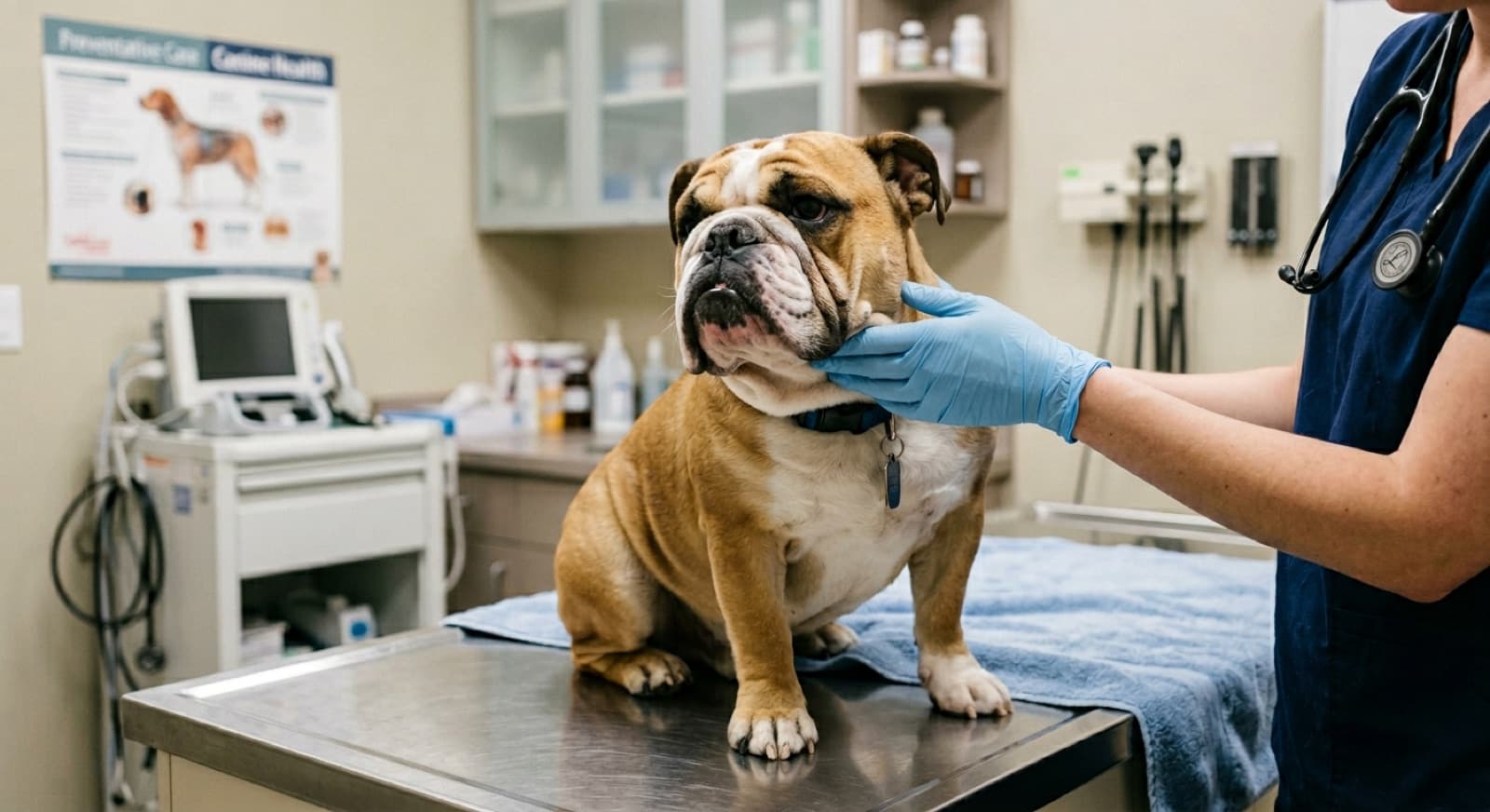
English Bulldogs are the most health-burdened breed in the literature
VetCompass 2022 (n=2,662): English Bulldogs carry twice the odds (2.04x) of at least one disorder versus non-Bulldogs, with elevated predisposition across 55.8% of common canine disorders. Median lifespan 7.39 years, among the shortest of any breed. Skin fold dermatitis predisposition is the highest of any breed disorder at OR 38.12. Cherry eye OR 26.79. BOAS OR 19.20 (clinical) with functional rates closer to 45 to 50%. Calgary owners need this baseline before adoption, not after the first vet bill.
BOAS: the breed-defining health crisis
Brachycephalic Airway Obstructive Syndrome (BOAS) is a structural obstruction of the upper airway caused by selective breeding for the flat-faced (brachycephalic) skull shape. It is the defining English Bulldog health concern and the proximate driver of heat sensitivity, exercise intolerance, anaesthesia risk, and reduced lifespan.
The four anatomical components of BOAS:
- Stenotic nares. Narrow nostril openings limit airflow at the entry point.
- Elongated soft palate. The soft palate is too long for the shortened skull, partially blocking the airway opening.
- Hypoplastic trachea. The windpipe is undersized relative to body weight, increasing airway resistance.
- Everted laryngeal saccules. Soft-tissue pouches near the voice box become pulled into the airway over time from chronic negative pressure.
Prevalence data. The RVC VetCompass 2022 dataset shows BOAS clinically diagnosed in 4.2% of English Bulldogs with an odds ratio of 19.20 versus other breeds. But clinical diagnosis dramatically understates the real disease burden. Liu et al. (2017) PLOS One used barometric whole-body plethysmography to functionally assess airway obstruction in brachycephalic dogs and found roughly 45 to 50% functionally affected, including many owners who reported no breathing problems whatsoever. Calgary owners often describe normal Bulldog noises (snoring, snorting, gurgling) as “just the breed,” but those sounds are the disease.
Symptoms across the spectrum: persistent noisy breathing at rest, loud snoring, exercise intolerance, post-prandial respiratory distress, gagging or regurgitation while eating, fainting (syncope) on exertion, blue-tinged gums under stress, and heat collapse at ambient temperatures above 22°C.
Diagnosis requires a specialty workup: physical exam, exercise tolerance testing, and laryngoscopy under light sedation to grade each of the four components. Calgary specialty referral is Western Veterinary Specialist and Emergency Centre or VCA Canada West.
Surgical correction can address stenotic nares (rhinoplasty), elongated soft palate (staphylectomy), and everted saccules (saccule removal). Hypoplastic trachea is structural and cannot be surgically expanded. Calgary surgical cost is roughly $3,000 to $6,000 depending on the number of components corrected. Outcomes are meaningfully better when surgery is performed before chronic secondary changes set in, typically between 12 and 24 months of age. This is one of the strongest arguments for early BOAS screening at the breed's typical age of clinical maturity.
Anaesthesia caveat. Any BOAS workup, surgery, or unrelated procedure that requires sedation must happen at a specialty practice. General-practice anaesthesia protocols are not built for brachycephalic airway management, and the breed's anaesthesia mortality risk is meaningfully elevated. See the anaesthesia section below.
For the Calgary summer heat protocol specific to this breed, see our English Bulldog summer heat and BOAS guide.
Hip dysplasia: the mobility-loss problem
Hip dysplasia is a developmental malformation of the hip joint where the ball of the femur does not sit properly in the socket. The Orthopedic Foundation for Animals (OFA) registry shows English Bulldogs with approximately 70 to 83% dysplastic rates depending on cohort and decade, among the worst of any breed. The true population rate is likely higher, since registry submission carries selection bias (owners are more likely to submit and disclose hips they expect to be normal).
Symptoms typically emerge in middle age but can present in puppies with severe cases: bunny-hopping gait, reluctance to stand from lying down, difficulty climbing stairs, narrow stance behind, reduced exercise tolerance (compounding the BOAS picture), and chronic pain expressed as irritability or reduced affection.
Diagnosis uses radiographs (OFA-standard hip views) or PennHIP quantitative assessment. Calgary radiographs run approximately $300 to $600 at a general practice; specialty imaging at Western Veterinary Specialist and Emergency Centre is higher.
Treatment is staged. Mild cases respond to weight management (target body condition score 4 to 5 of 9), joint supplements (directional only; quality varies and your vet should guide product choice), structured low-impact exercise, and vet-directed NSAIDs. Severe cases may need surgical intervention: femoral head ostectomy (FHO) for smaller body weights and total hip replacement (THR) for larger ones. Calgary surgical cost ranges from $5,000 to $10,000+ depending on procedure and unilateral or bilateral correction. Never administer NSAIDs without vet direction. Some over-the-counter human NSAIDs are toxic to dogs.
The compounding effect. Hip dysplasia plus BOAS plus obesity is the worst trifecta for an English Bulldog. Each condition makes the others worse. Keeping the dog lean is the single highest-leverage thing an owner can do to slow joint deterioration and reduce cardiac and respiratory load. See our English Bulldog cost of ownership guide for the full medical budget picture.
Skin fold dermatitis: the highest predisposition odds of any breed disorder
O'Neill et al. (2022) VetCompass disorder predispositions study reported 6.7% prevalence of skin fold dermatitis in English Bulldogs with an odds ratio of 38.12 versus crossbreeds, the highest predisposition odds ratio of any disorder studied in this breed.
The three at-risk fold zones:
- Facial folds across the nose and around the eyes. These trap tear staining, food debris, and moisture.
- Tail pocket (the recess at the base of the tail in screw-tail or low-set tail conformation). This pocket is often invisible from above and chronically overlooked.
- Vulvar fold in females and the preputial fold in males. Moisture accumulates from urine and natural secretions.
Clinical presentation: red inflamed skin, foul yeasty odour, brown or yellow discharge in the fold base, the dog rubbing the face on furniture, chronic eye discharge that worsens infection, and in severe cases bacterial pyoderma with crusting and pain.
Daily management protocol. Clean each fold daily with a vet-approved hypoallergenic wipe or a soft cloth dampened with a chlorhexidine-based cleanser. Critically, dry the fold thoroughly after every cleaning. Moisture left in the fold is what feeds the yeast and bacterial overgrowth. For the full daily protocol including products and frequency, see our English Bulldog grooming and skin folds guide.
When to escalate to a vet. Persistent odour despite daily cleaning, visible pus, raw or bleeding skin, the dog appearing painful when the fold is touched, or a fold lesion that does not improve within 7 to 10 days of consistent home care. Severe or recurrent cases warrant referral to a veterinary dermatologist. Underlying atopic dermatitis (food or environmental allergies) commonly drives recurrent skin fold disease and may need its own workup (elimination diet, allergy testing, Apoquel, Cytopoint, or immunotherapy).
The cost reality. Routine skin fold maintenance runs $500 to $1,200 per year in Calgary including wipes, cleansers, occasional vet visits, and prescription topicals for flare-ups. Severe cases requiring dermatology referral and ongoing systemic allergy treatment can run $2,500 to $4,000 annually.
Cherry eye and entropion: the eye-surgery duo
Cherry eye: 5.7% annual prevalence, odds ratio 26.79. Entropion: 3.9% annual prevalence, odds ratio 11.61. Both per RVC VetCompass. Both common, both surgically correctable, both best managed by veterinary ophthalmology rather than general practice.
Cherry eye is the prolapse of the gland of the third eyelid (nictitating membrane). It appears as a pink-red rounded mass in the inner corner of the eye. The current standard of care is surgical replacement using a pocketing technique (Morgan pocket) or imbrication, preserving the gland and its tear-production function. Calgary surgical cost is approximately $1,200 per eye. The older “gland removal” surgery is no longer recommended; removing the gland causes lifelong dry eye (keratoconjunctivitis sicca, KCS) requiring daily cyclosporine drops at around $30 per month for life. Insist on replacement, not removal.
Entropion is the inward rolling of the eyelid, causing eyelashes to rub on the cornea and create chronic ulceration, discomfort, and potential vision loss. Mild cases can sometimes be managed medically; moderate to severe cases require surgical correction (Hotz-Celsus procedure) by a veterinary ophthalmologist. Calgary surgical cost is in the range of $1,000 to $1,800 per eye.
Where to refer. Both procedures are routine for veterinary ophthalmologists but technically demanding for general practice. Calgary specialty ophthalmology is available through Western Veterinary Specialist and Emergency Centre and VCA Canada West. A general practice referral is the appropriate first step; both centres also accept self-referrals.
Other major conditions to budget for
Cardiac disease. Pulmonic stenosis (narrowed pulmonary valve) and aortic stenosis are over-represented in brachycephalic breeds including the English Bulldog. Murmurs detected on routine exam warrant referral to a veterinary cardiologist for echocardiography. Calgary echo cost runs $400 to $700 at Western Veterinary Specialist and Emergency Centre or VCA Canada West. Surgical intervention (balloon valvuloplasty) exists for moderate-to-severe pulmonic stenosis at specialty referral centres.
Atopic dermatitis and allergies. Both food and environmental allergies occur at elevated rates and frequently drive recurrent skin fold dermatitis, ear infections, and pruritus. Workup includes an 8 to 12 week elimination diet, intradermal allergy testing or serum allergen panels (results vary), and management options including Apoquel, Cytopoint injections, and immunotherapy desensitisation. Calgary chronic dermatology cost runs $1,500 to $3,500 per year for moderate cases.
Reproductive: C-sections. Evans and Adams (2010) J Small Anim Pract reported that more than 80% of English Bulldog litters in a study of 22,005 litters across 151 breeds were delivered by caesarean section. The reasons are anatomical (broad-headed puppies, narrow dam pelvis) and respiratory (the dam's BOAS makes prolonged labour life-threatening). Responsible English Bulldog breeding is essentially surgical breeding, which carries its own welfare and cost considerations.
IVDD (intervertebral disc disease). English Bulldogs are a chondrodystrophic breed, meaning their cartilage and disc structure predispose them to disc herniation. Symptoms include sudden back pain, reluctance to jump, dragging hind legs, or paralysis. Conservative cases respond to strict crate rest and medication. Severe cases require neurosurgical referral; Calgary IVDD surgery runs $7,000 to $12,000+ at specialty.
Cancer. Lymphoma and mast cell tumours are lifetime concerns. RVC VetCompass identifies neoplasia as a leading cause of death in the breed. Any new lump, especially one that grows, changes texture, or ulcerates, warrants prompt vet assessment with fine-needle aspirate or biopsy. Calgary oncology referral is available at Western Veterinary Specialist and Emergency Centre.
Anaesthesia: the high-risk reality
Do not let a general-practice clinic anaesthetise your English Bulldog for any procedure. Routine spay, neuter, dental, biopsy: refer everything to Western Veterinary Specialist and Emergency Centre or VCA Canada West, where board-certified anaesthesiologists and brachycephalic protocols are standard.
Why the risk is meaningfully higher:
- Difficult intubation. The narrow oropharynx and elongated soft palate complicate placement of the endotracheal tube.
- Extubation risk. Airway collapse can occur the moment the tube is removed. Specialty practice protocols delay extubation until the dog is fully conscious and protecting its own airway.
- Regurgitation and aspiration. The breed has elevated rates of hiatal hernia and gastro-oesophageal reflux. Aspiration pneumonia is a common post-anaesthetic complication.
- Thermoregulation. Hyperthermia under anaesthesia and hypothermia during recovery both occur at elevated rates.
- Cardiac risk. Underlying pulmonic and aortic stenosis make anaesthetic depth and IV fluid management more complex. A pre-anaesthetic cardiac workup (auscultation plus echocardiogram if a murmur is detected) is appropriate for any English Bulldog over five years old.
The practical Calgary rule. When your general-practice vet recommends any procedure requiring sedation, including a basic dental cleaning, ask whether the procedure can be referred to a specialty practice. The cost difference is real (specialty anaesthesia adds approximately $300 to $600 to a routine procedure) but the safety difference for this breed is meaningful. Bundle anaesthetic events when possible: combine a dental cleaning with any planned surgery to minimise cumulative anaesthetic exposure.
Calgary summer heat: a life-threatening reality
Calgary summer days regularly reach 25 to 32°C. Cornell's Riney Canine Health Center identifies brachycephalic breeds as the highest-risk group for canine heat stroke, with clinical onset possible at temperatures that pose no risk to most other breeds. Heat stroke begins at a core body temperature near 41°C (106°F), and organ damage starts within minutes.
The Calgary protocol for English Bulldogs:
- No walks when ambient temperature is above 22°C. Walk at dawn or after dusk on hot days.
- Pavement test. Place the back of your hand on the sidewalk for 7 seconds. If you cannot hold it there comfortably, the surface will burn the dog's pads and overheat the body.
- Never leave the dog in a parked vehicle. Interior temperatures rise 20°C in 10 minutes even with windows cracked.
- Always carry water. Offer it every 10 to 15 minutes on any outing above 18°C.
- Recognise early heat stroke signs: panting that does not settle within minutes of rest, brick-red gums, glazed eyes, vomiting, drooling, weakness, collapse.
For the full summer-heat-and-BOAS protocol including cooling intervention steps and ER decision criteria, see our dedicated guide.
Pet insurance: the timing decision that defines lifetime cost
English Bulldog premiums run 50 to 80% above the breed-average for comparable plans. Canadian insurers (Trupanion, Petsecure, Pet Plus Us) price the actuarial risk accurately, and the math still works out for owners because lifetime medical for the breed frequently exceeds $30,000 to $50,000.
The single highest-leverage decision for an English Bulldog owner's lifetime finances is enrolling in pet insurance before any vet visit documents a covered condition. Pre-existing-condition exclusions bite hard in this breed because so many of the major conditions (BOAS, hip dysplasia, skin fold dermatitis, cherry eye, entropion, atopic dermatitis) get documented during routine puppy or adult intake exams.
The ideal enrolment moment is at the puppy or rescue adoption stage, before the first non-essential vet exam. For adults adopted from Alberta Bulldog Rescue Society, request the medical history from the rescue before adoption so you can match it against insurance policy language. Conditions already documented in the medical record will be excluded from new policies.
What to look for in an English Bulldog policy:
- Annual or lifetime limit of at least $15,000. Lower limits run out fast with this breed.
- No per-condition sub-limits on chronic conditions. Trupanion structures its plans this way; some competitors do not.
- Explicit BOAS coverage. Read the breed-specific clauses carefully. Some Canadian insurers add Bulldog-specific exclusions or treat BOAS as a congenital condition (and exclude it accordingly).
- Dermatology coverage for chronic skin fold and allergy management. Some policies cap dermatology benefits low.
- Reasonable deductible structure. Annual deductibles work better than per-condition deductibles for a breed with multiple concurrent conditions.
The lifetime equation. A typical Calgary English Bulldog insurance premium runs $120 to $230 per month ($1,500 to $2,700 per year). Over a 7 to 10 year life that totals $10,500 to $27,000 in premiums. Lifetime out-of-pocket medical without insurance frequently runs $30,000 to $50,000+. The math favours insurance for this breed more reliably than for almost any other.
The 7.39-year lifespan: an honest framing
RVC VetCompass 2022 reports a median English Bulldog lifespan of 7.39 years. Among the shortest of any breed studied. Well below the general-dog-population median of approximately 11.2 years.
Why the number is so low. The drivers are cumulative rather than singular. BOAS limits exercise capacity and increases anaesthesia risk across the lifespan. Hip dysplasia and IVDD limit mobility in middle age. Cardiac disease shortens late life. Cancer (lymphoma, mast cell) takes a meaningful share. Cumulative anaesthetic exposure for routine and emergency procedures adds risk each time. The breed is not built for the body it has been bred into.
What proactive owners can change. Annual senior wellness panels from age 5 onwards; baseline echocardiogram by age 5; weight maintenance at body condition score 4 to 5 of 9; early BOAS screening and surgery when indicated; daily skin fold maintenance; insurance enrolment before any diagnosis; specialty-practice anaesthesia for every procedure. These interventions meaningfully improve quality of life and reduce avoidable emergency-vet visits. They do not lift median lifespan into the general-population range. Set expectations accordingly before adoption.
The honest adopter conversation. Alberta Bulldog Rescue Society and Calgary Humane Society both regularly intake English Bulldogs surrendered when owners realise the medical demands. Surrender drivers include the lifetime cost (most common), unmanaged BOAS that progresses, a household move into rental housing that excludes the breed, and divorce or family change. An adult English Bulldog from a rescue often comes with a known medical history, which is an enormous advantage over a puppy from a breeder where conditions are statistically likely but not yet documented.
Calgary specialty veterinary access
English Bulldog care is specialty-driven more than most breeds. Build the network before you need it.
- Primary care. Any reputable Calgary general practice can handle routine wellness, vaccinations, fold maintenance prescriptions, and initial diagnosis. They should know to refer for anaesthesia, BOAS, cardiology, ophthalmology, dermatology, and orthopaedics.
- Specialty referral. Western Veterinary Specialist and Emergency Centre handles BOAS surgery, cardiology, ophthalmology, internal medicine, soft-tissue surgery, oncology, and emergency. VCA Canada West offers a similar specialty roster.
- Emergency. Calgary has 24-hour emergency vet coverage at multiple specialty centres. Pre-program the numbers into your phone before you need them.
- Veterinary dermatology referral for severe or refractory atopic disease and chronic skin fold cases. Your primary vet can refer when home management plateaus.
- Pet Poison Helpline at 1-855-764-7661 for ingested-toxin emergencies.
Year-one and ongoing vet cost reality
| Cost category | Calgary range | Frequency |
|---|---|---|
| Routine annual wellness | $800 to $1,500 | Yearly |
| Annual dental cleaning (specialty anaesthesia) | $700 to $1,300 | Annual to every 18 months |
| BOAS surgical correction | $3,000 to $6,000 | One-time, ideally 12 to 24 months |
| Cherry eye replacement (per eye) | ~$1,200 | As needed |
| Entropion correction (per eye) | $1,000 to $1,800 | As needed |
| Chronic skin fold maintenance | $500 to $1,200 | Yearly |
| Hip surgery (FHO or THR, if indicated) | $5,000 to $10,000+ | One-time |
| Cardiac echo at specialty | $400 to $700 | Baseline plus annual after first murmur |
| Pet insurance (breed-adjusted premium) | $1,500 to $2,700 | Yearly |
| Lifetime medical (typical English Bulldog) | $30,000 to $50,000+ | Across 7 to 10 years |
Calgary procedure ranges current to mid-2026 and intended as planning estimates only. Confirm with your primary vet and your specialty referral practice before any procedure.
Building an English Bulldog emergency kit
A breed-specific emergency kit reduces ER chaos. Keep this list assembled and refreshed:
- Carrier or chest harness within easy reach (not a neck collar; pressure on the airway is risky).
- Current pet insurance policy summary and claim phone number.
- Current photo with the dog's weight and microchip number on a physical card.
- Vaccination records and a list of known sensitivities (food allergies, drug reactions).
- After-hours emergency vet phone pre-programmed into your phone.
- Calgary specialty practice phone for BOAS or cardiac emergencies (Western Veterinary Specialist and Emergency Centre).
- Pet Poison Helpline (1-855-764-7661) saved in contacts.
- Rectal thermometer for at-home heat-stroke triage. Core temperature above 40°C is an emergency.
- Cooling vest or wet towel ready for summer heat events.
- Eye flush (sterile saline) and clean gauze for fold or eye irritation events.
- Any current prescription medications, dated and labelled.
Find your English Bulldog in Calgary
Alberta Bulldog Rescue Society places adult English Bulldogs with known health history, which is often easier to insure and budget for than puppies. Foster home notes describe the actual dog in front of you, including any documented BOAS, hip, or skin issues.
See Available English Bulldogs →Frequently Asked Questions
What are the main English Bulldog health issues?
English Bulldogs are the most health-burdened breed in major epidemiology studies. The Royal Veterinary College's VetCompass 2022 study (n=2,662) found English Bulldogs have approximately twice the odds of carrying at least one disorder versus non-Bulldogs (odds ratio 2.04), with elevated predisposition across 55.8% of common canine disorders studied (24 of 43). Median lifespan is 7.39 years, among the shortest of any breed. The four dominant conditions are BOAS (Brachycephalic Airway Obstructive Syndrome), hip dysplasia, skin fold dermatitis, and cherry eye. Cardiac disease (pulmonic and aortic stenosis), atopic dermatitis, IVDD, and cancer (lymphoma, mast cell) also occur at elevated rates. Anaesthesia is high-risk and should only be performed at a specialty practice such as Western Veterinary Specialist and Emergency Centre.
How common is BOAS in English Bulldogs?
BOAS is clinically diagnosed in 4.2% of English Bulldogs per RVC VetCompass, with an odds ratio of 19.20 versus other breeds. But that figure understates the real prevalence: a 2017 functional study by Liu et al. in PLOS One used barometric whole-body plethysmography and found roughly 45 to 50% of brachycephalic breeds were functionally BOAS-affected, even when their owners reported no symptoms. The gap between clinical diagnosis and functional disease is the dangerous part. Many Calgary English Bulldogs are walking around with mild-to-moderate airway obstruction that has never been formally assessed. Heat, exercise, excitement, and sedation can decompensate a dog whose owner thought breathing was “just how Bulldogs sound.”
Is there a DNA test for BOAS or hip dysplasia?
No DNA test currently predicts BOAS severity in English Bulldogs. BOAS is a structural condition (stenotic nares, elongated soft palate, hypoplastic trachea, everted laryngeal saccules) assessed by physical exam, exercise tolerance testing, and laryngoscopy under sedation at a specialty practice. For hip dysplasia, the Orthopedic Foundation for Animals (OFA) hip evaluation is the standard radiographic screening but it is performed on the adult dog, not via DNA. PennHIP is an alternative quantitative method. Neither method is a true predictive DNA test. Ethical breeders OFA-rate both parents before breeding. Most Calgary English Bulldog breeders do not, which is one reason rescue is often a better risk path.
Should I get my English Bulldog screened for BOAS?
Yes, ideally before age two and again any time you notice breathing changes. A specialty workup at Western Veterinary Specialist and Emergency Centre includes upper-airway examination under light sedation, exercise tolerance testing, and assessment of all four BOAS components (nares, soft palate, trachea, laryngeal saccules). Early identification matters because surgical correction (staphylectomy plus rhinoplasty plus saccule removal) is meaningfully more successful when performed before chronic secondary changes set in. Calgary surgical cost is approximately $3,000 to $6,000 depending on the components addressed. Insurance enrolled before screening can cover BOAS as long as it is not yet diagnosed.
What is skin fold dermatitis and how often does it happen?
Skin fold dermatitis is chronic inflammation in the warm, moist skin folds around the face, tail pocket, and genitals where moisture and bacteria accumulate. O'Neill et al. (2022) VetCompass disorder predispositions study reported 6.7% prevalence in English Bulldogs with an odds ratio of 38.12 versus crossbreeds, the highest predisposition odds ratio of any disorder studied in this breed. Daily fold cleaning with a vet-approved wipe, careful drying, and breaking the cycle of secondary yeast or bacterial infection are the practical management levers. Severe or recurrent cases warrant referral to a specialty dermatologist.
What is cherry eye and how is it treated?
Cherry eye is the prolapse of the gland of the third eyelid (nictitating membrane). It appears as a pink-red mass in the corner of the eye nearest the nose. RVC VetCompass reports 5.7% annual prevalence in English Bulldogs with an odds ratio of 26.79. The current standard of care is surgical replacement (pocketing technique or imbrication) by a veterinary ophthalmologist, preserving tear production. Calgary surgical cost is roughly $1,200 per eye. Older “gland removal” techniques are no longer recommended because removing the gland causes lifelong dry eye (keratoconjunctivitis sicca) requiring daily cyclosporine drops. Refer to a veterinary ophthalmologist, not a general practice, for this procedure.
How long do English Bulldogs really live?
The Royal Veterinary College's VetCompass 2022 life-tables study published a median lifespan of 7.39 years for English Bulldogs in the UK. This is among the shortest of any breed studied and is well below the general-dog-population median of about 11.2 years. The drivers are cumulative: BOAS limits exercise tolerance and increases anaesthesia risk; hip dysplasia limits mobility in middle age; cardiac disease (pulmonic and aortic stenosis) shortens late life; and cancer (lymphoma, mast cell) takes a meaningful share. Proactive screening, weight management, BOAS surgery when indicated, and insurance bought before diagnosis meaningfully improve quality of life. They do not lift median lifespan into the general-population range. Adopters need this fact before bringing the dog home.
Why is the RVC lifespan study so much shorter than what breeders say?
The RVC VetCompass study is built on primary-care veterinary records for thousands of dogs, capturing every death recorded in the clinical system regardless of cause. Breeder estimates and breed-club averages are often based on self-reported owner surveys, which under-represent dogs that died young (owners stop responding) and over-represent long-lived dogs whose owners chose to participate. The 7.39-year RVC figure is the most methodologically rigorous number available today. The American Kennel Club lists 8 to 10 years for the breed, which is closer but still likely optimistic. Plan and budget around the lower number.
Are English Bulldogs really at higher anaesthesia risk?
Yes. The brachycephalic airway makes intubation and extubation more complex, increases the risk of regurgitation and aspiration, and complicates oxygenation. Body conformation (thick neck, narrow chest, dense soft tissue) makes IV access and monitoring harder. Body composition and BOAS together increase the risk of hyperthermia under anaesthesia and hypothermia in recovery. The practical rule for Calgary owners: do not allow a general-practice clinic to anaesthetise your English Bulldog for any procedure, including routine spay/neuter and dental work. Refer to Western Veterinary Specialist and Emergency Centre or VCA Canada West, where board-certified anaesthesiologists and brachycephalic protocols are standard. A pre-anaesthetic cardiac workup is wise given the breed's pulmonic and aortic stenosis rates.
How does Calgary summer heat affect English Bulldogs?
Calgary summers regularly hit 25 to 32°C, and English Bulldogs cannot pant effectively to cool. Cornell University's Riney Canine Health Center identifies brachycephalic breeds as the highest-risk group for canine heat stroke, with onset possible at ambient temperatures most other breeds tolerate easily. The clinical threshold for heat stroke is a core body temperature near 41°C (106°F), at which point organ damage begins within minutes. Practical rules: no walks above 22°C ambient; pavement-test the back of your hand for 7 seconds before any walk; never leave the dog in a vehicle, period; carry water on every outing; learn to recognise early signs (excessive panting that does not settle, brick-red gums, glazed eyes, vomiting, collapse). See our dedicated English Bulldog summer heat and BOAS guide for the full Calgary protocol.
Is pet insurance worth it for an English Bulldog?
For this breed specifically, yes. English Bulldog premiums run 50 to 80% above the breed-average for comparable plans because Canadian insurers price the actuarial risk accurately. Even at that premium, the lifetime math works out: a single BOAS surgery is $3,000 to $6,000, cherry eye repair is $1,200 per eye, hip surgery (FHO or THR) ranges from $5,000 to $10,000+, and chronic dermatology runs $500 to $1,200 per year. Lifetime medical for an English Bulldog frequently exceeds $30,000 to $50,000. Trupanion, Petsecure, and Pet Plus Us all write English Bulldog policies. Read each policy carefully for breed-specific clauses, BOAS exclusions, and pre-existing-condition definitions. Annual limit floor of $15,000 is the minimum we suggest for this breed.
When should I buy pet insurance for my English Bulldog?
Before the first vet visit that documents any of the breed's common conditions. Pre-existing-condition exclusions bite hard in this breed because so many of the major conditions (BOAS, hip dysplasia, skin folds, cherry eye, entropion) are documented during routine puppy or adult intake exams. If the puppy or rescue dog already has BOAS, hip dysplasia, or skin fold dermatitis noted in its medical records, that condition is excluded for life from new policies. The ideal enrolment moment is at the puppy or adoption stage, before any vet exam documents a finding. For adult rescue English Bulldogs from Alberta Bulldog Rescue Society, request the medical history before adoption so you can match it against insurance policy language.
Where can I get an English Bulldog echocardiogram in Calgary?
Cardiology referrals in Calgary go to Western Veterinary Specialist and Emergency Centre or VCA Canada West, both of which staff board-certified veterinary cardiologists (DACVIM-Cardiology). A baseline echocardiogram is reasonable at adoption and prior to any anaesthetic procedure in an English Bulldog over five years old, given the breed's pulmonic stenosis, aortic stenosis, and arrhythmia rates. Calgary echo cost is approximately $400 to $700. Your primary vet can refer you; an open-access self-referral is also possible at both centres. Bring all prior medical records and a list of current medications.
Why do English Bulldogs need so many cesarean sections?
Evans and Adams published in the Journal of Small Animal Practice (2010) a study of 22,005 litters across 151 breeds. English Bulldog litters were delivered by C-section more than 80% of the time. The reasons are anatomical: the breed's broad-headed puppies often cannot pass through the dam's relatively narrow pelvis, and the dam's BOAS makes prolonged labour life-threatening. The implication for ethics-minded adopters is that responsible English Bulldog breeding is surgical breeding, which carries surgical risk, surgical cost ($3,000 to $5,000 per litter in Calgary), and welfare questions. It is one of several reasons adoption from Alberta Bulldog Rescue Society or other Calgary rescues is the more straightforward path for most households.
English Bulldogs in Calgary
Available English Bulldogs from Calgary-area rescues including Alberta Bulldog Rescue Society and Calgary Humane Society.
English Bulldog Summer Heat & BOAS
Calgary summer protocol, pavement test, heat-stroke early signs, cooling intervention, ER decision criteria.
English Bulldog Cost of Ownership
Full Calgary budget for an English Bulldog: adoption fee, year-one setup, ongoing medical, insurance equation, lifetime totals.
English Bulldog Grooming & Skin Folds
Daily fold protocol, product picks, tail pocket management, when to escalate to veterinary dermatology.
New dog? Start with these care guides
Everything a new adopter needs to set up a safe, happy home.