The short answer
English Springer Spaniels turn up at Calgary rescues uncommonly but steadily, with most being 2 to 6 year old young adults whose first family underestimated either the exercise demand or the grooming workload. Apply broadly to Calgary Humane Society, AARCS, BARCS, Pawsitive Match, ARF Alberta, Cochrane Humane Society, and Heaven Can Wait. Adoption fees are typically $400 to $800 versus $1,500 to $3,500 for a breeder puppy. The critical reset before adopting: ask which line the dog comes from. A working-line Springer needs 90+ minutes of daily field-equivalent work; a show-line Springer needs 60 to 90 minutes and $500 to $900 a year in grooming.
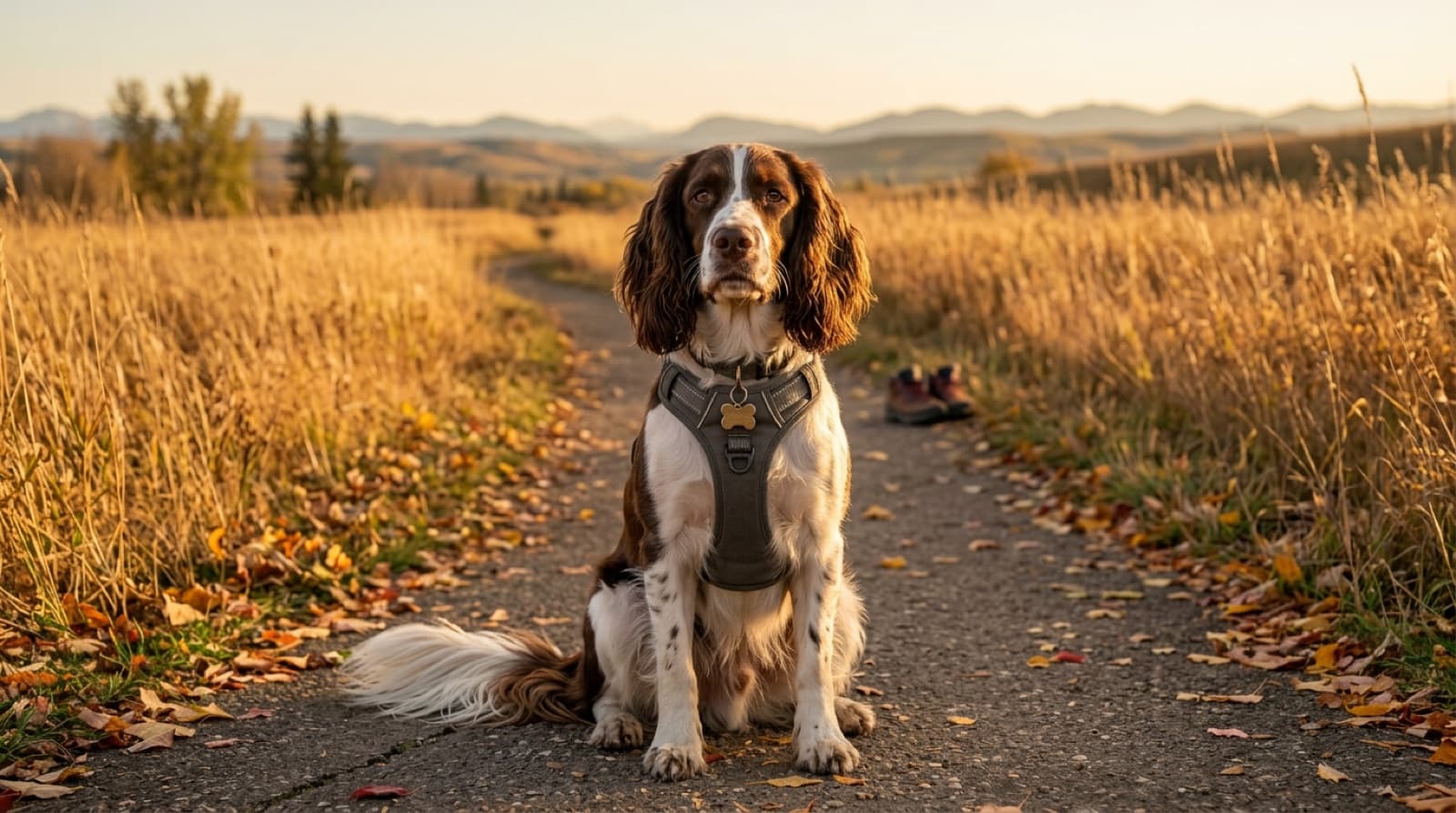
The English Springer Spaniel was developed in 1800s Britain as a flushing spaniel for upland bird hunters. British shooting estates needed a medium-sized dog that could push pheasant, woodcock, and partridge out of dense cover and retrieve to hand. The Springer and the Cocker Spaniel were the same breed until 1902, when the Kennel Club in Britain formally separated them by size: dogs over 28 lbs became Springers, smaller dogs became Cockers. Today's English Springer is a 40 to 55 lb medium dog with a feathered double coat in liver-and-white or black-and-white, 19 to 20 inches at the shoulder, and a 12 to 14 year lifespan. The breed is recognised by the Canadian Kennel Club and the American Kennel Club, with breed-club support from the English Springer Spaniel Club of Canada and rescue support from English Springer Rescue America. This guide covers where Springers appear in Calgary rescue, what they cost to live with, the working vs show line distinction that drives most placement decisions, and how to evaluate whether your household matches the line.
The English Springer Spaniel at a glance
The English Springer is a recognised purebred with a documented working heritage, not a designer cross. The breed splits clearly into two lines: a working or field line bred for hunt-test ability and a show or conformation line bred for the breed ring and family homes. The lines diverged in the mid-1900s and now look noticeably different in build, coat, and energy level. A working-line Springer is lean and athletic with light feathering; a show-line Springer is heavier-boned with full coat feathering. Both lines retain the flushing-spaniel drive and the close family bond.
| Trait | Typical range |
|---|---|
| Adult weight | 40 to 55 lbs (females smaller, males larger) |
| Height | 19 to 20 inches at the shoulder |
| Lifespan | 12 to 14 years |
| Coat | Feathered double coat; liver-and-white or black-and-white |
| Energy level | High (working line); moderate-high (show line) |
| Exercise needs | 90+ min daily (working); 60 to 90 min (show), plus mental work |
| Temperament | Friendly, biddable, eager to please, family-bonded, flushing drive, sensitive to harsh handling |
The dog you actually live with is friendly, soft, and emotionally close to family. Springers are well-known for the breed's lean into family life; they want to be near you most of the day and they do not tolerate isolation well. A working household that leaves a young Springer alone nine hours a day is the classic setup for separation anxiety and destructive boredom by month three. The flushing drive is real and consistent across both lines; cats and small dogs are case by case and benefit from foster-tested placements.
Where to adopt an English Springer Spaniel in Calgary
Calgary Springer rescue intake is uncommon but steady. The breed is moderately popular but not as widely owned as Labradors or Goldens, so general rescue intake is thinner. Owner-surrendered Springers often move through breed-specific channels before reaching local shelters. The strategy is the same as for any uncommon working breed: apply broadly to every Calgary rescue, register with the national breed networks, set up alerts on the LocalPetFinder breed page, and be ready to move quickly when a listing appears because a sound foster-tested Springer is often spoken for within days.
Calgary-area rescues to monitor:
- Calgary Humane Society: the largest local shelter; receives owner-surrendered Springers and Springer mixes throughout the year.
- AARCS: foster-based; structured “good with” evaluations matter for a high-drive flushing breed.
- BARCS Rescue: Calgary foster network; medium active dogs come through regularly.
- Pawsitive Match: Calgary foster-based; sporting breeds appear regularly.
- ARF Alberta: Calgary foster network; broad medium-dog inventory.
- Cochrane Humane Society: Cochrane-based, serves the Calgary region; rural surrenders often include working sporting breeds.
- Heaven Can Wait: High River-based, Calgary placement common; rural-acreage surrenders frequent.
- Calgary Animal Services: the municipal facility; occasional surrendered Springers when a household hits the exercise or grooming wall.
The single best move is to set up notifications on the LocalPetFinder English Springer Spaniel breed page. Live listings from all Calgary rescues land there as they appear, and you will see a new arrival before most adopters do.
National breed-specific networks are essential for an uncommon breed like this. The English Springer Spaniel Club of Canada maintains a rescue referral system and connects volunteer fosters across provinces. English Springer Rescue America is a US-based volunteer organisation that occasionally coordinates cross-border placements when an Alberta home matches a US-side dog. These networks favour applicants who can credibly show they understand the breed (an outdoor lifestyle, prior spaniel experience, or a willingness to engage with structured training).
What does an English Springer Spaniel cost in Calgary?
Calgary fees vary by rescue and what is included. The realistic ranges below are directional, not quotes:
| Source | Fee range | Typically includes |
|---|---|---|
| Calgary Humane Society | $400 to $600 | Spay or neuter, vaccinations, microchip, vet exam |
| AARCS | $500 to $800 | Spay or neuter, vaccinations, microchip, foster history |
| BARCS / Pawsitive Match / ARF Alberta | $500 to $700 | Spay or neuter, vaccinations, microchip, foster notes |
| English Springer Rescue America (cross-border) | $500 to $800 | Foster-based evaluation, transport coordination, network follow-up |
| Show-line breeder puppy | $1,500 to $2,500 | Health-tested parents, contract, 6 to 12 month waitlist |
| Working-line breeder puppy | $2,000 to $3,500 | Field-titled parents, hunt-test history, 8 to 15 month waitlist |
The adoption fee is only the entry cost. Annual care for a Springer in Calgary runs higher than a typical medium breed because grooming is a real line item, especially for show-line dogs, and the feathered coat needs regular work. Plan for:
- Grooming: show-line Springers need professional grooming every 6 to 8 weeks ($75 to $120 per visit in Calgary) for trimming and de-matting, plus brushing at home 3 to 4 times a week. Annual grooming budget runs $500 to $900. Working-line coats are lighter and can be maintained at home with weekly brushing and an occasional bath; budget $150 to $300 a year.
- Ear cleaning supplies: a vet-approved cleaner, cotton balls, and a routine. Budget $50 to $100 a year. Ear infections are the most common Springer health complaint, and weekly preventive cleaning saves vet visits.
- Winter coats: the double coat handles cold well, but a light shell for chinook windchill days is useful for working-line dogs. Budget $60 to $100.
- Active-dog gear: a well-fitted Y-front harness, 6 to 8 foot leash, 15 to 30 foot biothane long line for recall training, and booties for salted sidewalks. Budget $200 to $400 in the first month.
- Food and treats: $60 to $110 per month for an active 40 to 55 lb dog. High-quality protein-forward kibble plus training treats. Spaniels can develop food sensitivities so single-protein options are worth considering if skin issues appear.
- Vet and preventive care: roughly $500 to $900 per year for routine wellness, vaccines, parasite prevention, and dental. Add a baseline budget for ear-infection vet visits even with good prevention.
- Pet insurance: worth considering given the breed predisposition to hip dysplasia, retinal disease, and chronic ear issues. Plan for $50 to $100 per month for a Springer, with Calgary specialty care available through Western Veterinary Specialist Centre and VCA Canada West.
- Training: a force-free trainer experienced with sensitive sporting breeds is worth the investment in year one. Raising Canine and Pup City Pup Academy are two Calgary force-free options many spaniel owners use. Budget $400 to $900 for a structured group or private package.
- Calgary dog licence: required for every dog three months and older under the Responsible Pet Ownership Bylaw 3M2006. A small annual fee that improves recovery odds if your dog ever goes missing.
First-year totals typically land between $2,800 and $5,200 once you add grooming, gear, training, vet, food, and licence on top of the adoption fee. Show-line dogs cost more on the grooming side; working-line dogs cost more on the gear and training side. For a full breakdown of lifetime ownership cost in Calgary, see our Calgary adoption costs guide.
Why English Springer Spaniels end up in Calgary rescue
Surrender drivers split along the working vs show line. Working-line dogs land in rescue because of the exercise demand wall. Show-line dogs land in rescue because of the grooming workload and separation anxiety. Understanding the patterns helps you build a household where surrender does not happen to your dog.
- Exercise demand wall (working line). Owners read the friendly Springer temperament profile and assume a 30-minute walk works. For a working-line Springer it does not. The dog is destructive by month three: chewed baseboards, scratched doors, counter-surfing escalation. Under-exercise is the cause; destruction is the symptom.
- Grooming wall (show line). The full feathered coat looks beautiful in breed photos but mats fast without weekly brushing and 6 to 8 week professional grooming. Owners who did not budget the $500 to $900 a year and the home-brushing time end up with a matted dog they cannot maintain.
- Separation anxiety. Springers bond hard to family and do not tolerate long alone-stretches well. A household that leaves a young Springer alone nine-plus hours daily often discovers severe separation anxiety by month two. Crate destruction, vocalisation that drives neighbour complaints in Calgary condos, and stress-related skin issues are common.
- Chronic ear infections. Owners who do not learn the ear-care routine end up at the vet repeatedly. Some surrender after a $1,500 chronic-ear treatment course because the routine never sank in.
- Line mismatch from purchase. Someone buys a working-line Springer from a Kijiji ad expecting a calm family pet, then discovers the dog needs serious daily field-equivalent work. The dog is fine; the placement was wrong from day one.
- Lifestyle changes. Babies, moves to smaller condos, divorces, owner illness. Common across breeds but particularly hard on a separation-prone sporting dog.
None of these are problems with the breed. They are problems with line mismatch and household readiness. Calgary rescues that run foster-based programs (AARCS, Pawsitive Match, ARF Alberta, BARCS) are the best resource for a Springer whose adult temperament, line, compatibility, and exercise rhythm are already known, which avoids most of the patterns above.
The 1800s origin: a British flushing spaniel
The English Springer Spaniel was developed in 19th-century Britain as a flushing or “springing” spaniel for upland bird hunters. The name refers to the dog's job: spring or flush gamebirds out of dense cover into the air so the hunter could shoot them, then retrieve to hand. The Springer worked alongside larger pointing breeds and shared kennel space with the Cocker Spaniel for most of the 1800s. The two were considered one breed, separated only by size, until the Kennel Club in Britain formally split them in 1902. Dogs over 28 lbs became Springers; smaller dogs became Cockers. The American Kennel Club recognised the Springer in 1910 and the Canadian Kennel Club followed shortly after.
The breed's working heritage matters for Calgary adopters because it sets the baseline temperament. A Springer wants to use its nose. A Springer wants to work the ground in front of you, then check in, then work again. The flushing-spaniel range pattern (closer to the handler than a Pointer, more independent than a retriever) is genetic. A Springer that gets only a 30-minute walk gets bored, and bored Springers are inventive about finding their own work, usually involving destroyed slippers, dug-up gardens, or counter-surfing.
The working vs show line split happened in the mid-1900s as breed-ring competition pulled show-line breeders toward a heavier, more coated dog. Today both lines are recognised by the same kennel clubs but they look noticeably different and behave noticeably different. The split is not as extreme as in the Labrador (where field and bench Labs look like different breeds) but it is real enough that ethical Calgary breeders and rescues will tell you which line a dog came from before placement. The English Springer is genetically and historically distinct from the Welsh Springer Spaniel, which is a separate breed that is rarer in Canada and not commonly seen in Calgary rescue.
Working vs show line: the critical breed distinction
This is the single most important question a Calgary adopter asks before applying. The two lines need different homes. A working-line Springer in a show-line household becomes destructive by month three; a show-line Springer in a hunting household stays sound but does not perform the field work the family wanted. Ask the rescue or breeder which line the dog comes from, and listen carefully to the foster home's description of the dog's actual energy level.
| Trait | Working / field line | Show / conformation line |
|---|---|---|
| Build | Lean, athletic, longer-legged | Heavier-boned, more substantial frame |
| Coat | Lighter feathering, easier to maintain | Full feathering, more grooming work |
| Energy | Very high; needs a daily job | Moderate-high; settles indoors more easily |
| Exercise needs | 90+ minutes daily plus mental work | 60 to 90 minutes daily plus mental work |
| Flushing drive | Strong; quick to lock onto bird scent | Present but more moderate |
| Apartment fit | Rare; needs a yard and an outdoor lifestyle | Possible with a committed exercise routine |
| Grooming budget | $150 to $300 a year | $500 to $900 a year |
The deeper differentiator article on working vs show line Springers in Calgary covers how to identify each line, what specific behaviours predict success in each household type, and how Calgary rescues label dogs in intake notes. Read it before applying to a Springer you have not met in person.
Springer temperament: friendly, biddable, sensitive
Springers are emotionally close to family. They want to be in the room with you. They want to follow you between rooms. They want to lean on your leg while you cook. The strong family bond is a feature for households who want a present, soft, biddable dog, and it is a challenge for owners who need long stretches of independent dog behaviour. Crate training, an alone-time routine from early in foster placement, and at least one human home most of the day all help reduce separation anxiety risk.
The biddability and eager-to-please drive make Springers strong training partners. They learn quickly and they want to work with you. The flip side is sensitivity: harsh corrections, dominance-based training, or inconsistent handling shut a Springer down fast. Force-free methods work much better with this breed than with stoic working breeds like a Lab. Calgary trainers who run modern force-free programs, including Raising Canine and Pup City Pup Academy, are well-suited to Springers.
The flushing-spaniel drive is the temperament feature most Calgary first-time owners underestimate. Squirrels, rabbits, geese on river paths, sometimes cats, sometimes small dogs. The drive is genuine and consistent across both lines; you do not train it out, you manage it. Foster-tested cat and small-dog compatibility is the best predictor of household fit. A Springer raised with cats from puppyhood often lives well with them; a Springer that first meets a cat at age 2 often will not settle.
Calgary climate fit: a winter-ready breed with one weak spot
The English Springer handles Calgary winter well. The feathered double coat insulates effectively down to roughly minus 20 degrees Celsius without a coat, and many Calgary owners report their Springer is at its happiest in deep snow conditions. The breed loves snow, loves water, and loves long winter trail walks. Working-line dogs with lighter feathering benefit from a light shell coat below minus 25 for windchill; show-line dogs with fuller coats often do fine in their natural insulation.
Practical Calgary winter routine:
- Light winter coat for working-line Springers below minus 25 degrees Celsius. Show-line dogs usually do not need one until below minus 30. A coat that fits the chest is a $60 to $100 investment.
- Ear check after every winter walk. This is the single biggest Calgary winter issue for Springers. Long pendulous ears get wet from snow, then trap moisture inside the ear canal, then develop chronic infections. A quick towel-dry of the inside of the ear flap after every winter outing prevents most cases.
- Booties on salted Beltline, Inglewood, and downtown sidewalks. Calgary sidewalk salt irritates the pad-pocket skin and the foot feathering picks up salt that the dog then licks. A quick paw rinse on return is the minimum if booties are not your dog's style.
- Below minus 30, exercise becomes brief outdoor potty breaks plus indoor enrichment. Treadmill work, scent games, structured training sessions, and weekly daycare carry many Calgary Springers through the coldest weeks.
- Chinook caveat. Calgary chinooks swing temperature 20 to 30 degrees in hours and the windchill effect is real. A plus 5 chinook morning with 60 km/h winds feels colder than minus 5 calm. Check actual feels-like before committing to a long foothills outing.
Summer is Springer paradise. The breed loves swimming and the Bow River, Glenmore Reservoir, and Sandy Beach are natural Calgary playgrounds from May through September. Spaniels were bred for water work and most Calgary Springers will jump into any body of water within reach. The feathered coat dries reasonably fast but needs a quick brush after every swim to prevent matting. Above 25 degrees Celsius walk before 8am or after 8pm; the family-pleasing drive can mask early heat stress signs. Always check the ears for water after a swim, then dry the inside of the ear flap to prevent infection.
Common Springer mixes in Calgary intake
Springer intake at Calgary rescues frequently includes mixes. The most common combinations are Springer-Cocker, Springer-Lab (sometimes called a Sprabrador), and Springer-Pointer crosses. Foster temperament assessment matters more than the breed label on the intake form. Here is what each cross typically looks like in practice:
| Mix | What changes | What stays |
|---|---|---|
| Springer-Cocker | Smaller frame (30 to 45 lbs), softer drive, similar grooming load | Family bond, ear-care needs, flushing instinct |
| Springer-Lab (Sprabrador) | Heavier build, stronger retrieve drive, slightly higher cold tolerance | Water love, high energy, strong family bond |
| Springer-Pointer | More ranging tendency off-leash, longer-coupled body, lighter feathering | Hunting drive, exercise demand, ear-care needs |
| Springer-Setter | Taller frame, longer coat, slightly more independent | Working drive, sensitivity, family bond |
The foster home is the best source of truth. Ask the rescue: how much exercise does this dog actually need to settle? How does the dog handle being alone for four hours? Has the dog been exposed to cats or small dogs, and how did it go? What does the dog do in the first hour of a new environment? Those answers predict adoption success far better than a breed-DNA test result.
A note on breed DNA tests: they are useful curiosity tools but not predictive of behaviour. A dog that tests “60 percent English Springer Spaniel, 25 percent Cocker, 15 percent something else” can still be a textbook Springer in temperament. Foster behaviour is the predictor; the DNA test is an interesting footnote.
Browse adoptable English Springer Spaniels in Calgary
See current English Springer Spaniels and Springer mixes across Calgary rescues in one place. If your household wants a versatile sporting companion who loves family, loves water, and matches an active Calgary lifestyle, a Springer is one of the best matches in the rescue system. Listings update regularly.
See Available Springers →Frequently Asked Questions
Where can I adopt an English Springer Spaniel near me in Calgary?↓
How much does it cost to adopt an English Springer Spaniel in Calgary?↓
Are English Springer Spaniels hypoallergenic?↓
Are English Springer Spaniels good for first-time owners and apartments?↓
What is the difference between working and show line English Springer Spaniels?↓
How much exercise does an English Springer Spaniel need in Calgary?↓
Are English Springer Spaniels cold-tolerant in Calgary winters?↓
How do I care for English Springer Spaniel ears in Calgary?↓
How hard is English Springer Spaniel off-leash recall?↓
What is the English Springer Spaniel breeder waitlist like in Calgary?↓
Should I adopt an English Springer Spaniel from rescue or buy from a breeder?↓
What breed mixes show up at Calgary English Springer Spaniel rescue?↓
Continue reading
Adoptable English Springer Spaniels in Calgary
Live English Springer Spaniel and Springer-mix listings across Calgary rescues, refreshed regularly. Set up notifications for new arrivals.
Working vs show line Springers
How to tell the lines apart, what household type suits each, how Calgary rescues label dogs in intake notes, and why the line matters more than the breed.
English Springer Spaniel Health Issues
English Springer Spaniel health issues to plan for: ear infections, PRA and glaucoma, PFK deficiency, epilepsy and hip dysplasia, and what to ask your vet.
Cocker Spaniels in Calgary
The Springer's smaller cousin and one-time littermate. Adoptable Cocker Spaniels across Calgary rescues, plus how the breeds compare for family fit.
New dog? Start with these care guides
Everything a new adopter needs to set up a safe, happy home.