The short answer
For most Calgary adopters, the Labradoodle is right when four conditions hold. One: you walk, run, or hike for 60 to 90 minutes daily including Calgary winters. Two: you can budget $600 to $1,200 a year for professional grooming of a wool or fleece coat. Three: if hypoallergenic is a hard requirement, you pick an F1B+ or Australian Labradoodle rather than gambling on the F1 coat lottery. Four: you have done the stacked Labrador and Poodle health homework and either picked an adult rescue with documented history or budgeted pet insurance before any pre-existing condition. If those four fit, the Labradoodle is one of the most rewarding family dogs in Calgary. If even one is shaky, our resources hub covers steadier options.
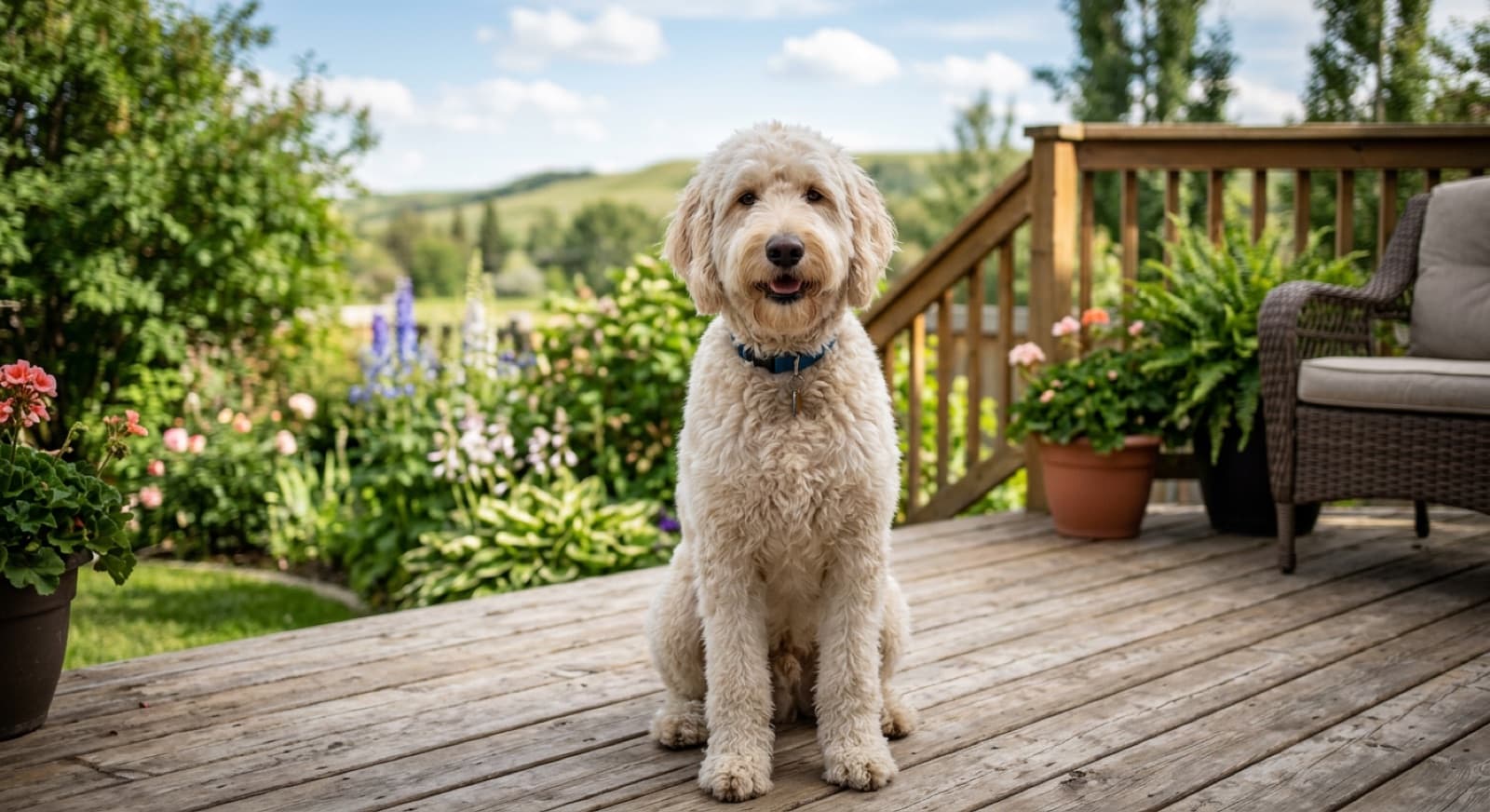
Honest Pros: Why Families Love the Labradoodle
Low-shed potential in F1B+ and Australian Labradoodles
F1B (75% Poodle), F1BB (87.5% Poodle), and multi-generation Australian Labradoodles produce consistently low-shed wool or fleece coats. For Calgary households with mild-to-moderate dog allergies, these generations are often the breed that finally works after years of trying other dogs. The Worldwide Australian Labradoodle Association at walaregistry.org documents coat standards and breeder verification. The trade-off is professional grooming every 6 to 8 weeks because the coat keeps growing rather than shedding out. F1 Labradoodles are a lottery (see the coat section below).
Retriever biddability plus Poodle intelligence
Labradoodles inherit two of the most trainable lineages in dogdom. Labradors rank consistently in the top five for biddability; Standard Poodles rank in the top three for working intelligence. The combination is genuinely easy to train for first-time owners committed to positive-reinforcement methods. The American Kennel Club at akc.org documents both parent breeds in detail (Labradoodles themselves are not AKC-recognised because they are a cross). Most Calgary Labradoodles take to obedience class quickly and thrive in structured activities like nose-work, dock-diving, and rally obedience.
Family-bonded and generally good with kids
Labradoodles bond deeply with the whole household, not just one person. The Labrador half is famously kid-tolerant; the Poodle half adds patience and intelligence without sharpness. Calgary families with active routines often describe their Labradoodle as the dog that joins everything: kids backyard play, hiking weekends in Kananaskis, summer afternoons at Sandy Beach. Most Calgary Labradoodles do well with kids 4 and up who understand respectful handling. Mini variants are softer around toddlers because of the smaller body energy.
Generally good with other dogs
The breed tends to be social and dog-friendly, inheriting the Labradors well-known tolerance for other dogs. Most Calgary Labradoodles thrive in daycare environments, off-leash play, and multi-dog households. Calgary daycares like Pup City Doggy Daycare and Paws Dog Daycare report Labradoodles as one of their easiest-to-place breeds. The eager-to-please temperament extends to other dogs, not just people, which makes off-leash recall training and group walks easier than for guardian or independent working breeds.
Water-loving
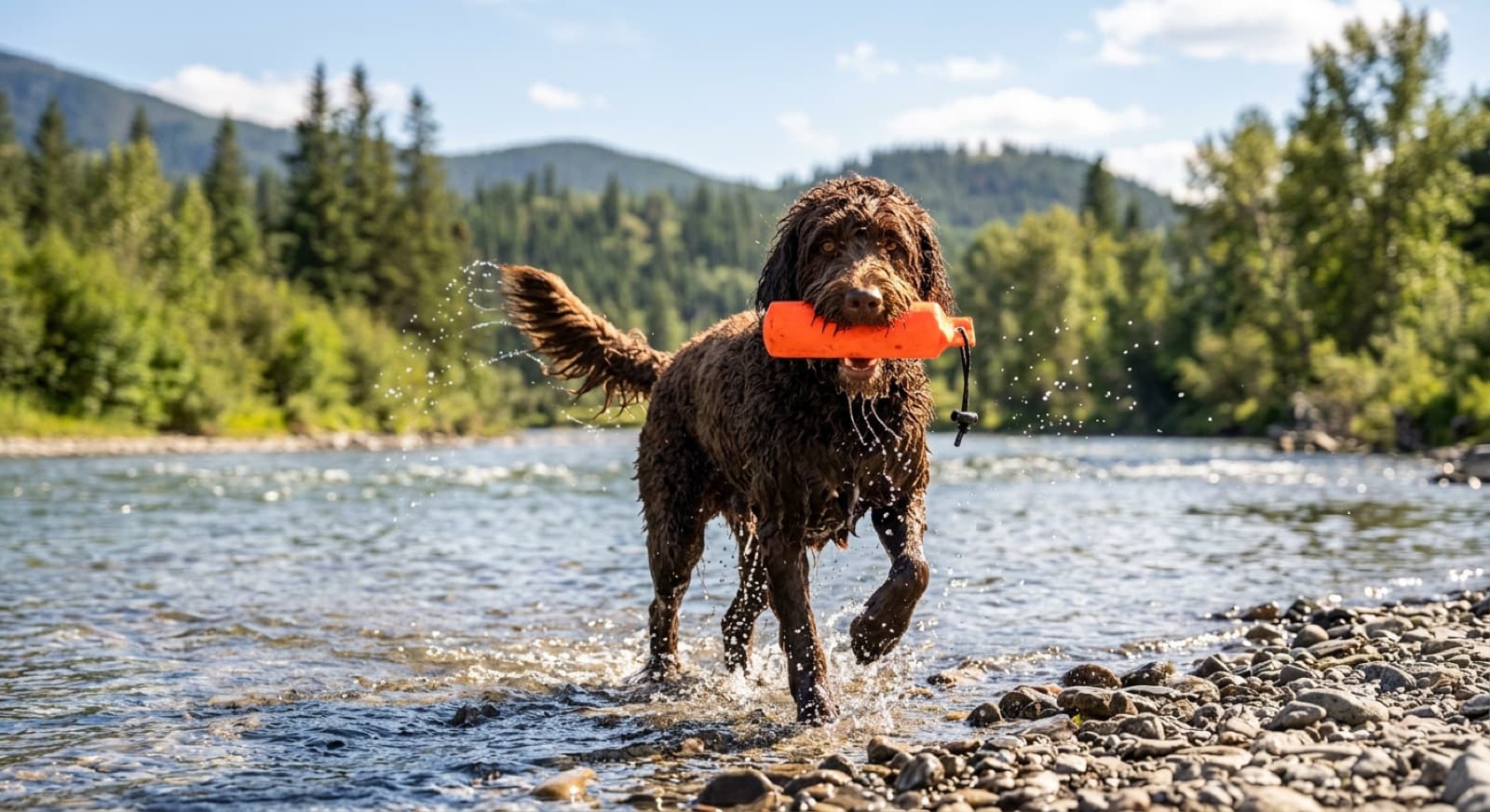
Labradoodles inherit water drive from both parent breeds. Labradors were bred as retrievers in cold Newfoundland water; Standard Poodles were originally water retrievers in Germany. A Labradoodle will swim happily and tirelessly. Calgary summer access to the Bow River pathways at Edworthy and Bowness, Sandy Beach on the Elbow River, and Glenmore Reservoir is breed paradise. A daily summer swim covers the breeds working-drive need without effort. Owners with summer-water habits often describe the Labradoodle as the dog that finally fit their lifestyle.
Three size options to fit different households
Mini Labradoodles (20 to 35 lbs, using Toy or Miniature Poodle parents) fit apartments and households wanting a smaller footprint. Medium Labradoodles (30 to 45 lbs, using Miniature Poodle parents) suit families wanting a middle-ground size. Standard Labradoodles (50 to 90 lbs, using Standard Poodle parents) match households with space and active outdoor lifestyles. The size range gives Calgary adopters flexibility that single-breed options like the Portuguese Water Dog do not offer. Pick the size that matches your home and routine, not the size that looks most appealing in photos.
Realistic 10 to 14 year lifespan
Labradoodles typically live 10 to 14 years in good health. Mini variants often reach the longer end of that range; Standards reach the shorter end because larger dogs age faster. Owners who do the stacked health screening homework, manage weight (Labrador genetics drive a strong food motivation), and budget for senior care often see the full span. The lifespan is realistic for families planning a decade-plus commitment without the heartbreak of giant-breed timelines.
Honest Cons: What the Marketing Photos Do Not Show
The F1 coat lottery
F1 Labradoodles (50% Lab, 50% Poodle) are a coat lottery. Roughly a third inherit a low-shed wool coat, a third get a moderate-shed fleece coat, and a third get a heavy-shed straight Lab-style coat. Marketing copy often glosses over this. For Calgary adopters who need hypoallergenic, an F1 puppy is a gamble that fails one time in three. Only F1B (75% Poodle), F1BB (87.5% Poodle), and multi-generation Australian Labradoodles produce reliably low-shed coats. Adult rescues solve the lottery by showing you the dogs actual coat before you commit. Puppy buyers who skip the generation question often end up with a heavy-shedding dog they expected to be hypoallergenic.
High grooming workload and cost
Wool and fleece coats keep growing rather than shedding out. Without regular cutting, the coat mats against the skin and causes irritation. A standard Calgary grooming session runs $80 to $130 every 6 to 8 weeks. Annual grooming alone is typically $600 to $1,200 for wool and fleece coats. Between sessions, brushing two or three times a week prevents matting. Owners who learn at-home clipper grooming can stretch the professional interval to 10 to 12 weeks and reduce the annual bill significantly, but the learning curve is real. Households that skip the grooming cadence end up with matted coats and emergency shave-downs that cost more than the original budget.
High exercise demand, every day
Sixty to ninety minutes of real exercise daily is the floor, not the ceiling. Labradoodles inherit working drive from both retriever and water-dog lineages. A 20 minute backyard wander does not meet the breeds needs. Calgary owners who succeed walk daily regardless of weather, including minus 20C winter mornings. The coat handles cold to about minus 15C for wool and fleece variants without a jacket; straight-coat F1s sit closer to the Labrador profile and tolerate cold better. Under-exercised Labradoodles redirect the unused drive into counter-surfing, chewing baseboards, digging the yard, and frustration vocalising. The exercise commitment is the single biggest sorting factor for the breed.
Stacked Labrador and Poodle health risk
The breed inherits the risk profile of both parent breeds. From the Labrador side: hip and elbow dysplasia, exercise-induced collapse (DNA-testable), progressive retinal atrophy, and a strong obesity tendency driven by food motivation. From the Poodle side: Addisons disease, progressive retinal atrophy (different mutation), epilepsy, sebaceous adenitis. Standard-size variants also carry bloat (gastric dilatation-volvulus) risk. Reputable breeders screen hips and elbows via OFA and DNA-test for the genetic conditions. Calgary specialty cardiac, ophthalmic, and orthopedic referrals are available at Western Veterinary Specialist Centre. Rescue adopters should ask about screening history. Pet insurance taken before any pre-existing condition is documented offers high value. See our Labradoodle health issues guide for the full breakdown.
Designer-breed pricing and unethical breeders
Labradoodles command designer-breed pricing in Calgary: $2,500 to $4,500 for F1, $3,000 to $5,000 for F1B, $3,500 to $6,500 for Australian Labradoodle. The high pricing draws backyard breeders who cross any Labrador with any Poodle and sell the result without health screening. Calgary Kijiji and Facebook Marketplace are full of unethical Labradoodle listings. Symptoms of an unethical breeder: no OFA hip or elbow certificates, no DNA test results for EIC or progressive retinal atrophy, willing to release puppies before 8 weeks, no health guarantee, no follow-up contact. Adult rescues at $400 to $700 from Calgary Humane Society, AARCS, or Pawsitive Match skip the breeder lottery entirely and arrive with documented temperament and health history.
Size variability between siblings
Even within a single litter, Labradoodle puppies can grow to noticeably different adult sizes. A Medium Labradoodle litter advertised at 30 to 45 lbs can produce puppies that finish at 25 lbs and others that finish at 55 lbs. The variability is highest in F1 and F2 crosses and lowest in multi-generation Australian Labradoodles. For Calgary adopters with strict size requirements (apartment weight limit, vehicle size, household with small kids), the variability matters. Adult rescues solve this by showing you the finished adult size before you commit. Puppy buyers who need a specific size should pick a multi-generation Australian Labradoodle from a reputable breeder.
Who Labradoodles Are RIGHT For
Active households with a daily exercise commitment
If your household already walks, runs, hikes, or cross-country skis daily, the Labradoodle slots in beautifully. The breed thrives when the routine includes 60 to 90 minutes of real exercise every day. Calgary owners who jog the Bow River pathways, hike Nose Hill or Bowmont, or do summer paddling at Glenmore Reservoir bring the breed into the activity rather than treating it as a chore. The dog is happiest when included in the familys active life, not when the family has to manufacture activity for the dog.
Households that budget grooming and force-free training
Professional grooming every 6 to 8 weeks at $80 to $130 per session in Calgary is the realistic baseline for wool and fleece coats. Households that can absorb this cost without resenting it have a much better experience. Force-free training fits the breeds eager-to-please temperament; Calgary force-free trainers like Raising Canine and Pup City Pup Academy run group classes well-suited to Labradoodles. Households that budget both the grooming and the training upfront have one of the smoothest first-year experiences of any Calgary breed.
Families with kids 4 and up
Labradoodles pair beautifully with school-age kids who can be coached on respectful handling. The Labrador half of the breed is one of the most kid-tolerant lineages; the Poodle half adds patience without sharpness. Kids who walk the dog, help with brushing, and participate in training feel included; the dog gets the daily engagement it needs. Toddler-aged households can still succeed but should pick a Mini variant or supervise greetings closely with Standards because the working-drive enthusiasm can knock a small child over.
Hypoallergenic-need families who pick F1B+ specifically
For Calgary allergic adopters, F1B (75% Poodle), F1BB (87.5% Poodle), or Australian Labradoodle is the safest path. These generations produce consistently low-shed coats and lower allergen output than F1 crosses. The honest test is still a spend-the-afternoon visit with an adult of the same generation before adopting. Severe allergic adopters should trial in someones home for several hours, not just a quick rescue visit. Mild-to-moderate allergic adopters usually find F1B+ Labradoodles tolerable to live with.
Bow River, Glenmore, and Sandy Beach summer routine
If your summer already includes Calgary water access, you are most of the way there. The Bow River pathways at Edworthy and Bowness, Sandy Beach on the Elbow River, and Glenmore Reservoir are all Labradoodle-friendly. A daily summer swim plus a structured winter exercise plan covers the breeds needs across the Calgary year. Owners who already do this routine for their own enjoyment often describe the Labradoodle as the dog that finally fit their lifestyle.
Multi-pet households
The breeds sociability extends to other dogs and often to cats, especially when raised with them. Calgary multi-pet households tend to have a smoother integration with a Labradoodle than with a guardian breed or independent working breed. The Rule of 3s still applies: 3 days to decompress, 3 weeks to settle, 3 months to bond. Existing-resident-pet introductions should be structured and slow, but the underlying temperament of the breed makes the work easier.
Who Labradoodles Are NOT Right For
Low-activity or sedentary lifestyles
Households that walk 20 minutes a day, prefer indoor evenings, or skip outdoor activity in Calgary winter should not adopt the breed. A Labradoodle under-exercised becomes a destructive Labradoodle within months. The exercise floor is non-negotiable. Honest self-knowledge about daily activity habits matters more than any other factor. Calgary winter is not a valid excuse to skip walks; the coat handles cold and the breed prefers cool weather.
Tight grooming-budget households
If $600 to $1,200 a year for grooming alone is a stretch, the Labradoodle wool or fleece coat is the wrong fit. Skipping grooming to save money produces matted coats and emergency shave-downs that cost more in the end. Households with tight grooming budgets either need to learn at-home clipper grooming (which has a real learning curve) or pick a low-grooming breed. There is no shortcut around the cadence for wool and fleece coats.
Allergy-prone households picking F1 without coat verification
F1 Labradoodles are a one-in-three risk of a heavy-shed coat. For severe allergic adopters, this is the wrong way to choose. The right path is an F1B+ or Australian Labradoodle with a documented coat, or an adult rescue whose coat type you can see and touch before adopting. Marketing copy promising hypoallergenic on F1 puppies is misleading. Calgary allergic adopters who skip generation verification often end up rehoming the dog within months.
Owners expecting a calmer Labrador
Adopters who picture a Labradoodle as a hypoallergenic version of a calmer Labrador often misread the breed. Labradoodles are typically more, not less, energetic than purebred Labs. The Poodle side contributes intelligence and biddability, not relaxation. A Labradoodle still has the Labrador working drive plus the Poodle need for mental engagement, which means more output is required overall, not less. Households shopping for a calmer family dog should look at older adult rescues with documented temperament rather than assuming the breed is inherently lower-energy.
Full workdays alone with no enrichment plan
Working-drive boredom and separation distress can both develop when a Labradoodle is left alone for 8 to 10 hours daily without daycare, a midday walker, or structured enrichment. Calgary daycares like Pup City Doggy Daycare and Paws Dog Daycare suit the breed well because they meet the social and physical needs. Owners with full workdays and no plan for enrichment are the highest-risk profile.
The Coat Lottery Decision Framework
If your decision hinges on allergies, the coat math is the most important section of this guide. The four scenarios:
- Allergic and need a reliable low-shed coat: pick F1B (75% Poodle), F1BB (87.5% Poodle), or a multi-generation Australian Labradoodle from a reputable breeder. Or pick an adult rescue whose coat you can see and touch before adopting. Skip F1 puppies entirely; the lottery odds fail one time in three.
- Not allergic and shedding is fine: F1 is the cheapest path and produces a perfectly lovely dog regardless of coat type. The straight-coat F1 sheds like a Labrador and grooms like a Labrador (much less professional work). The wool or fleece F1 needs the full grooming cadence. Either outcome is workable if shedding is not a hard constraint.
- Allergic and on a tighter budget: adult rescue is the highest-value path. Calgary Labradoodle rescues at $400 to $700 from Calgary Humane Society, AARCS, or Pawsitive Match arrive with a known adult coat type. You can ask the foster about coat-blow patterns, shedding around the house, and any allergic reactions the foster experienced. No lottery, no breeder waitlist, full disclosure.
- Severe allergic: no breed is 100% allergen-free. A trial spend-the-afternoon visit with an adult of the chosen generation, ideally in someones home rather than a rescue facility, is the only honest test. Skip the trial and the marketing copy at your peril.
See our deeper Labradoodle generation and coat guide for the full breakdown of F1 vs F1B vs F1BB vs F2 vs Australian Labradoodle, with Calgary breeder-verification questions and rescue-history questions.
Adult vs Puppy Adoption Decision Tree
For most first-time Labradoodle adopters, an adult rescue is the safer pick. The reasoning:
- Puppy: Labradoodle puppies are uncommon in Calgary rescue. Reputable Australian Labradoodle breeders sell privately and waitlists run 6 to 18 months. The puppy phase is roughly 14 weeks of intense puppy biting, house-training, and crate training, followed by 8 to 14 months of adolescent boundary-testing. Under-stimulated Labradoodle puppies are creatively destructive. For owners with the time and energy to shape from the start, a puppy works. For owners without that bandwidth, a puppy is a recipe for early regret. F1 puppies also carry the coat lottery, which only resolves around 6 to 8 months of age.
- Adult rescue (1 to 5 years): temperament-evaluated, energy level documented, coat type known, kid tolerance noted, training history available. The Rule of 3s applies: roughly 3 days to decompress, 3 weeks to settle into routine, 3 months to fully bond. The adult Labradoodle arrives past the chaotic adolescent stage and into the more biddable adult temperament the breed is known for. For most first-time Labradoodle owners, this is the better path. Calgary rescue Labradoodles typically come from lifestyle changes (owner allergies, divorce, family illness) rather than dog-driven surrender reasons.
- Senior rescue (8+ years): the calmest version of the breed, with realistic expectations on remaining lifespan and senior vet costs. Many seniors land in rescue after an owners health change. They are wonderful low-key companions and the grooming load is the same as for any age. For first-time owners hesitant about the exercise floor, a senior is the gentlest entry path into the breed.
Labradoodle rescue inventory in Calgary is small but real. Calgary Humane Society, AARCS, Pawsitive Match, and occasionally ARF Alberta list the breed or recognisable mixes. The breed is uncommon enough that signing up for rescue alerts and expanding the search to Edmonton, Red Deer, or Lethbridge widens the pool. Expect the rescue process to take longer than for a more common breed because the available pool is smaller.
The Calgary Lifestyle Math
Calgary is genuinely friendly to Labradoodle ownership. The honest picture:
- Winter climate: Wool and fleece coats handle cold to about minus 15C without a jacket. Below minus 15C, a soft-shell or fleece coat helps because the coat is single-layered (no insulating undercoat the way a Husky double coat has). Straight-coat F1s sit closer to the Labrador profile and tolerate cold a bit better. Most Labradoodles happily walk through Calgary winter; some prefer it to summer heat. Booties protect paw pads on heavily salted sidewalks.
- Summer water access is breed paradise: The Bow River pathways at Edworthy and Bowness, Sandy Beach on the Elbow River, and Glenmore Reservoir are all dog-friendly and within easy reach of most Calgary neighbourhoods. A Labradoodle that swims an hour a day in summer is meeting its working-drive need without effort. Calgary summers genuinely fit the breed.
- Off-leash recall is achievable: Unlike Huskies or Shibas, the Labradoodle can develop reliable off-leash recall with force-free training. Calgary off-leash zones like Nose Hill, Bowmont, Sue Higgins Park, and Sandy Beach work for trained adult Labradoodles. The recall is not automatic; it requires consistent training from puppyhood or early adolescence. Adult rescues often come with documented recall ability; ask the foster about it.
- Bylaw 3M2006 compatibility: Calgary Responsible Pet Ownership Bylaw 3M2006 governs noise complaints. Labradoodles are not chronic barkers and rarely run afoul of the bylaw. Frustration vocalising in an under-exercised dog can become a problem; meeting the exercise floor prevents it.
- Specialty vet access: Western Veterinary Specialist Centre handles complex cardiac, eye, and orthopedic referrals, which matters for the breeds stacked hip, elbow, eye, and cardiac risk profile. VCA Canada West also offers internal medicine and cardiology referrals.
- Grooming infrastructure: Calgary has solid mid-tier grooming salons that handle curly-coated breeds well. Expect to interview two or three salons before finding one that knows the Labradoodle cut, which varies depending on whether the coat is wool, fleece, or straight. A good groomer is worth keeping.
- Rescue availability: Labradoodles are uncommon in Calgary rescue but do appear. General rescues like Calgary Humane Society, AARCS, Pawsitive Match, and occasionally ARF Alberta list the breed or recognisable mixes. Expanding the search to Edmonton, Red Deer, or Lethbridge widens the available pool.
- Common mixes in Calgary listings: Labradoodle x Goldendoodle, Labradoodle x Poodle, and occasionally Labradoodle x Labrador show up. Mixes inherit some coat traits and some shedding from the non-Labradoodle parent, so the hypoallergenic claim is unreliable in any mix. Ask the rescue about shedding patterns before adopting a mix.
Size Selection
Pick the size that matches your home and routine, not the size that looks most appealing in photos. The three Calgary-relevant size brackets:
- Mini Labradoodle (20 to 35 lbs): Bred from Toy or Miniature Poodle parents. Apartment-compatible, fits most Calgary rental weight limits, gentler around toddlers, easier to handle on Calgary winter ice. Exercise floor still applies: 60 minutes of real walking daily, ideally split into two outings. Mini Labradoodles often reach the longer end of the 10 to 14 year lifespan.
- Medium Labradoodle (30 to 45 lbs): Bred from Miniature Poodle parents. Middle-ground size that suits most Calgary family households. Big enough for off-leash hiking at Nose Hill or Bowmont, small enough for a standard sedan and most pet-friendly Calgary rentals. The most flexible size for adopters whose lifestyle is not at either extreme.
- Standard Labradoodle (50 to 90 lbs): Bred from Standard Poodle parents. Needs space, ideally a fenced yard, and a household with active outdoor habits. Larger Standards push against Calgary rental weight limits (most cap at 50 to 75 lbs). The working drive is highest in this size bracket, and the exercise floor sits at the upper end of the 60 to 90 minute range. Lifespan trends shorter (10 to 12 years) because larger dogs age faster.
Size variability within F1 and F2 litters is a known issue. A litter advertised at 30 to 45 lbs can produce puppies that finish at 25 lbs and others at 55 lbs. Adult rescues solve this by showing you the finished size. Puppy buyers who need a strict size should pick a multi-generation Australian Labradoodle from a reputable breeder.
Browse adoptable Labradoodles in Calgary
Calgary Labradoodle availability is limited but real. Reputable rescues list adults with documented temperament, coat type, energy level, and kid tolerance. Foster-trial programs of 2 to 4 weeks give you a real-world test of the daily exercise floor, the grooming routine, and the household fit before committing. For a breed this defined by the coat lottery and grooming load, a foster trial is the safest way to know the fit.
See Available Labradoodles →10-Question Self-Assessment
Answer honestly. If you answer “no” or “not sure” to more than two, the Labradoodle is probably not the right fit right now. That is useful information, not a judgment.
1. Will I genuinely walk, run, or hike 60 to 90 minutes daily, every day?
This is the floor, not the ceiling. Calgary winter mornings at minus 20C are still walk days for the breed. Under-exercised Labradoodles become destructive. Honest self-knowledge here matters more than any other answer.
2. Can I budget $600 to $1,200 a year for professional grooming?
Every 6 to 8 weeks at $80 to $130 per session in Calgary for wool and fleece coats. Skipping grooming to save money causes matting and emergency shave-downs. Either budget the cadence or learn at-home clipper grooming.
3. If I am allergic, am I picking F1B+ or an adult rescue with a documented coat?
F1 puppies are a coat lottery that fails one in three for allergic households. F1B (75% Poodle), F1BB, or Australian Labradoodle is the safer path. Adult rescues solve the lottery by showing you the actual coat before you commit.
4. Am I committed to force-free training only?
The breeds eager-to-please temperament responds beautifully to marker training and positive reinforcement. Calgary force-free trainers like Raising Canine and Pup City Pup Academy are the right fit. Corrections-based methods damage the dog and are unnecessary.
5. Do I have a daycare or midday-walker plan if I work full days outside the home?
Full workdays alone with no enrichment is the highest-risk profile for the breed. Calgary daycares like Pup City Doggy Daycare and Paws Dog Daycare suit Labradoodles. A reliable midday walker is the next-best option.
6. Do I have a winter exercise plan beyond the summer swim routine?
Calgary rivers freeze. Indoor pools mostly do not allow dogs. Winter exercise shifts to brisk walks, nose-work classes, indoor obedience, and snow-fetch in Nose Hill. Owners with no winter plan see destructive boredom by December.
7. Am I picking the right size for my home and routine?
Mini (20 to 35 lbs) for apartments and toddlers, Medium (30 to 45 lbs) for typical family households, Standard (50 to 90 lbs) for active households with space. Most Calgary rentals cap at 50 to 75 lbs.
8. Have I done the stacked health homework on hip and elbow dysplasia, EIC, Addisons, and progressive retinal atrophy?
Reputable breeders screen hips and elbows via OFA and DNA-test for EIC and progressive retinal atrophy. Rescue adopters should ask about screening history. Pet insurance taken before any pre-existing condition is documented offers high value.
9. Am I prepared to spot an unethical Labradoodle breeder?
Calgary Kijiji and Facebook Marketplace are full of unethical Labradoodle listings. Symptoms: no OFA certificates, no DNA results, willing to release puppies before 8 weeks, no health guarantee. Adult rescue avoids the breeder lottery entirely.
10. Am I willing to consider an adult rescue rather than waiting on a puppy?
Calgary Labradoodle puppies are uncommon and reputable Australian Labradoodle breeder waitlists run 6 to 18 months. Adult rescues are temperament-evaluated, coat-typed, and arrive past the chaotic puppy stage. For most first-time Labradoodle owners, adults are the better path.
Frequently Asked Questions
Is a Labradoodle good for first-time owners?
Yes for active first-time owners with realistic expectations, no for sedentary households. Labradoodles inherit Labrador biddability and Poodle intelligence, so the training side is friendly for beginners who commit to force-free methods. The harder parts are the 60 to 90 minute daily exercise floor, the every-6-to-8-week grooming cadence at $80 to $130 per session in Calgary, and the coat lottery if hypoallergenic is a hard requirement. First-time Calgary owners who succeed walk daily anyway, budget the grooming, and pick an adult rescue with a documented coat type rather than gambling on an F1 puppy. Calgary force-free trainers like Raising Canine and Pup City Pup Academy run group classes well-suited to the breed.
Are Labradoodles truly hypoallergenic?
Only F1B (Labradoodle bred back to a Poodle, 75% Poodle), F1BB (87.5% Poodle), and multi-generation Australian Labradoodles are reliably low-shed. F1 Labradoodles (50% Lab, 50% Poodle) are a coat lottery: roughly a third inherit a low-shed wool coat, a third get a moderate-shed fleece coat, and a third get a heavy-shed straight Lab-style coat. No dog is 100% allergen-free because saliva and dander trigger allergies as well as shed hair. For Calgary allergic adopters, an F1B+ adult with a documented coat is the safest path. The Worldwide Australian Labradoodle Association at walaregistry.org documents coat standards and breeder verification.
How much exercise does a Labradoodle need?
Sixty to ninety minutes of real exercise every day, sometimes more for high-Lab-content F1s. Labradoodles inherit the working-retriever drive from the Labrador side and the high intelligence from the Poodle side, so they need both physical output and mental engagement. Calgary owners who succeed combine a 45 to 60 minute morning walk or jog with an evening training session, fetch game, or swim. Summer access to the Bow River pathways, Sandy Beach on the Elbow River, or Glenmore Reservoir suits the breed beautifully. Winter exercise shifts to brisk walks, indoor nose-work, and structured training. Under-exercised Labradoodles redirect the unused drive into counter-surfing, chewing, and frustration vocalising.
How often do Labradoodles need to be groomed?
Wool and fleece coats need professional grooming every 6 to 8 weeks at $80 to $130 per session in Calgary, plus brushing two or three times a week at home. Straight-coat F1s shed seasonally like a Labrador and need less professional work but heavy de-shedding twice a year. Annual grooming alone for wool and fleece coats runs $600 to $1,200. Owners who learn at-home clipper grooming can stretch the professional interval to 10 to 12 weeks. Between sessions, brushing prevents matting, which is the main coat problem. Mats close to the skin cause irritation and sometimes require a shave-down. Skipping the grooming cadence is the single biggest source of avoidable vet bills for the breed.
What health issues do Labradoodles have?
The breed inherits the stacked risk profile of both parent breeds. From the Labrador side: hip and elbow dysplasia, exercise-induced collapse (EIC, DNA-testable), progressive retinal atrophy, and obesity tendency. From the Poodle side: Addisons disease, progressive retinal atrophy (different mutation), epilepsy, and sebaceous adenitis. Bloat (gastric dilatation-volvulus) is a risk for the larger standard-size variants. Reputable breeders screen hips and elbows via OFA, DNA-test for EIC and progressive retinal atrophy, and test for cardiac and eye conditions. Calgary specialty referrals are available at Western Veterinary Specialist Centre. Rescue adopters should ask whether the dogs history includes any of these. Pet insurance taken before any pre-existing condition is documented offers high value for the breed.
Are Labradoodles good with kids?
Generally yes, especially with school-age kids. The Labrador half of the breed is one of the most kid-tolerant lineages in dogdom, and the Poodle half adds patience and intelligence without sharpness. Most Calgary Labradoodles do well with kids 4 and up who understand respectful handling. The size range matters: a Standard Labradoodle at 50 to 90 lbs can knock a small child over from sheer enthusiasm, while a Mini at 20 to 35 lbs is gentler around toddlers but still bouncy. Adult supervision during greetings prevents the accidental-collision pattern. The eager-to-please temperament makes Labradoodles easier to coach around children than guardian breeds or independent working breeds.
Can a Labradoodle live in an apartment?
Mini Labradoodles at 20 to 35 lbs are apartment-workable. Standard Labradoodles at 50 to 90 lbs are a stretch unless the building has space and the household is genuinely active. The catch in either size is the 60 to 90 minute daily exercise floor. Calgary apartment owners need a real commitment to two outings every day regardless of weather. Beltline or Mission condo owners should be honest about that willingness before committing. Most Calgary rentals cap weight at 50 to 75 lbs, which fits Minis and Mediums but excludes larger Standards. Pet-friendly buildings tend to be more lenient for low-shed breeds, which helps Labradoodle owners specifically.
How does a Labradoodle compare to a Goldendoodle?
Both share the Poodle parent and the coat lottery; the difference is the retriever side. Labradoodles inherit the Labrador working drive, slightly higher exercise floor, and a tendency toward a leaner build. Goldendoodles inherit the Golden Retrievers softer temperament, slightly lower exercise floor, and a slightly more biddable demeanor for first-time owners. Both breeds have the same F1 vs F1B+ coat lottery and the same stacked health risk from two parent breeds. For Calgary adopters who want a more active outdoor partner, the Labradoodle leans slightly better; for adopters who want the calmer family-companion temperament, the Goldendoodle leans slightly better. See our Goldendoodle breed page for the parallel decision.
What is the difference between F1, F1B, F2, and Australian Labradoodles?
F1 is a first-generation cross: Labrador x Poodle, 50/50. F1 puppies vary widely in coat type and shedding because the genetics have not stabilised. F1B is an F1 bred back to a Poodle, producing 75% Poodle puppies with more reliable low-shed wool or fleece coats. F1BB pushes that to 87.5% Poodle. F2 is two F1s crossed (still 50/50 in heritage but with widely variable individual outcomes, often the worst lottery odds). Australian Labradoodle (sometimes called Multi-Gen) is a multi-generation breed with stabilised genetics across Labrador, Poodle, and small amounts of Cocker Spaniel; the coat is consistent and the temperament is the most predictable. For Calgary allergic adopters, F1B or higher or Australian Labradoodle is the safest choice. See our Labradoodle generation and coat guide for the full breakdown.
Are Labradoodles easy to train?
Yes, compared to most working breeds. Labradoodles inherit Labrador biddability and Poodle intelligence, which makes positive-reinforcement training rewarding from day one. They pick up basic obedience quickly, thrive in structured activities like obedience classes and nose-work, and respond beautifully to marker training. The downside is the same drive in reverse: an under-stimulated Labradoodle gets bored, and a bored Labradoodle is creatively destructive. Calgary force-free trainers like Raising Canine and Pup City Pup Academy run group classes that fit the breed well. Avoid corrections-based methods (e-collars, leash pops, alpha rolls), which damage the breeds trust and are unnecessary given how willing the dog already is.
Sources and further reading
- Worldwide Australian Labradoodle Association (walaregistry.org): coat standards, multi-generation breed registry, and breeder verification for prospective Australian Labradoodle owners.
- American Kennel Club (akc.org): working history, temperament, lifespan, and breed standards for the Labrador Retriever and Standard Poodle parent breeds.
- Canadian Kennel Club (ckc.ca): Canadian breed standards and registered breeders for the parent breeds (Labradoodles themselves are not CKC-recognised because they are a cross).
- Calgary Humane Society (calgaryhumane.ca): local adoption process, surrender support, and breed listings when inventory exists.
- Calgary Responsible Pet Ownership Bylaw 3M2006: governing legislation for licensing, leash, and noise enforcement in Calgary.
This article is informational only and not a substitute for veterinary, behavioural, or insurance advice. Consult a Calgary veterinarian, a force-free trainer, and your own grooming salon for personalised guidance.
Related Labradoodle guides
Labradoodle Adoption Calgary →
Where to find a rescue Labradoodle in Calgary, real adoption costs vs breeder pricing, what reputable rescues assess, and the foster-trial route.
Labradoodle Generation and Coat Guide →
F1 vs F1B vs F1BB vs F2 vs Australian Labradoodle breakdown, with Calgary breeder-verification and rescue-history questions.
Labradoodle Health Issues: Joints, Ears, Eyes →
Labradoodle health issues to plan for: hip and elbow dysplasia, weight, exercise-induced collapse, Addison’s disease, ear infections, eye disease and bloat.
Labradoodles for Adoption in Calgary →
Live listing of available Labradoodles and Labradoodle mixes across Calgary rescues when inventory exists.
New dog? Start with these care guides
Everything a new adopter needs to set up a safe, happy home.