The short answer
Mini Schnauzers are uncommon in Calgary rescue because the breed is small, family-friendly, and most surrenders move through breeder take-back contracts or private rehoming. Apply broadly to Calgary Humane Society, AARCS, BARCS, Pawsitive Match, ARF Alberta, Cochrane Humane Society, and Heaven Can Wait, and set up notifications. Adoption fees are typically $400 to $700 versus $1,800 to $3,500 for a registered breeder Mini Schnauzer puppy. The breed is a late-1800s German farm ratter created by crossing the Standard Schnauzer with the Affenpinscher and a likely Poodle infusion. Adults weigh 11 to 20 lbs, stand 12 to 14 inches at the shoulder, live 12 to 15 years, and carry a wiry double coat with the iconic beard and bushy eyebrows. The breed is smarter and more biddable than most terriers, but needs a low-fat diet for life to prevent pancreatitis.
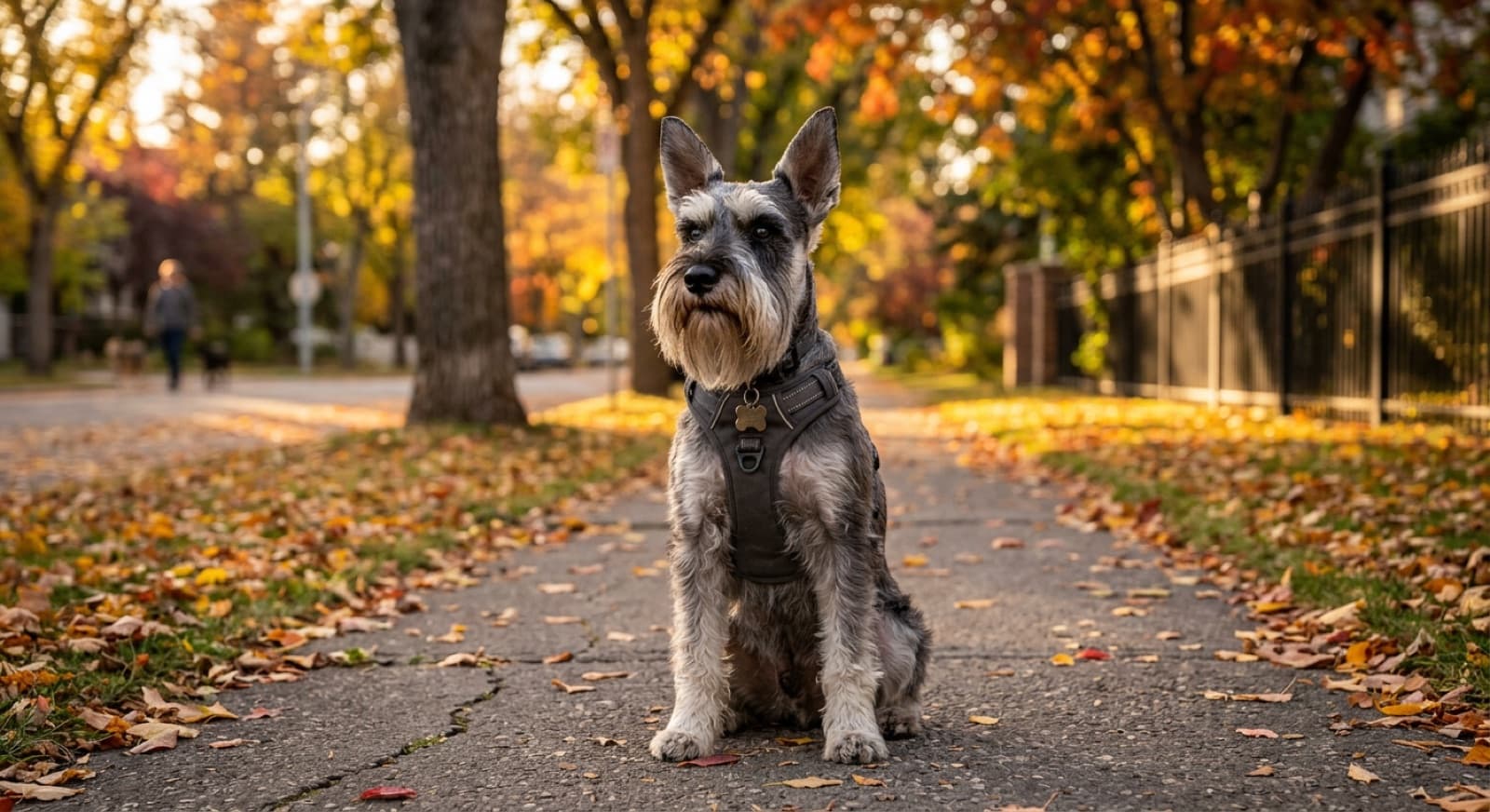
The Miniature Schnauzer is a German farm and companion dog developed in the late 19th century by crossing the Standard Schnauzer with the Affenpinscher and a likely Poodle infusion. The goal was a smaller working ratter that could still earn its keep on a farm and live easily inside a family home. The result is a small dog with the recognisable Schnauzer beard, bushy eyebrows, and wiry double coat in salt-and-pepper, black, or black-and-silver. The breed was registered by the Pinscher-Schnauzer Klub in 1895 and reached the Canadian Kennel Club and American Kennel Club registries in the early 1900s. Today most Calgary adopters know the breed through a friend or family member who had one. The breed is genuinely workable for the right household and easier to train than most terriers, but the bark, the every six to twelve week grooming workload, and the pancreatitis-diet vigilance catch many first-time owners off guard. This guide covers where Mini Schnauzers actually appear in Calgary rescue, what they cost to live with, why the low-fat diet is non-negotiable, and how to evaluate a breeder honestly when rescue is not realistic for your timeline.
The Miniature Schnauzer at a glance
The Miniature Schnauzer is a recognised purebred. The Canadian Kennel Club registers Mini Schnauzers in the Terrier Group, and the American Kennel Club does the same. The American Miniature Schnauzer Club maintains the breed standard and the rescue network for the largest North American population. The Schnauzer Club of Canada serves the same role nationally. The Mini Schnauzer standard is well established, so coat type, adult size, and temperament are far more predictable than for any designer cross.
| Trait | Typical range |
|---|---|
| Adult weight | 11 to 20 lbs (males slightly larger than females) |
| Height at shoulder | 12 to 14 inches |
| Lifespan | 12 to 15 years |
| Coat | Wiry double coat: harsh outer guard hairs over a soft undercoat, with iconic beard and eyebrows |
| Coat colours | Salt-and-pepper, black, black-and-silver (white is non-standard in CKC) |
| Energy level | Moderate; bursts of ratter intensity |
| Exercise needs | 45 to 60 minutes daily plus mental work and scent games |
| Temperament | Smart, alert, fearless, family-bonded, bark-prone, biddable for a terrier |
The dog you actually live with is far more predictable than a doodle because the standard is fixed. Variation comes mostly from individual temperament and from how the dog was raised: a well-socialised confident Mini Schnauzer is the breed at its best; an under-socialised or fear-bred dog is reactive and bark-driven. Most Calgary rescue Mini Schnauzers fall in the confident-to-mildly-pushy range. The breed inherits a working ratter's independence, but the Poodle ancestry softens the edges; the dog is meaningfully easier to train than a Westie or a Cairn, and notably more eager to work with a handler than most terriers.
Where to adopt a Miniature Schnauzer in Calgary
Calgary Mini Schnauzer rescue intake is uncommon for the same reason most popular small purebreds are scarce. The dogs are small, family-friendly, easy to rehome through breed-specific networks, and most registered breeders run take-back contracts that route surrenders back to the breeder rather than into a shelter. The result is that a typical Calgary rescue sees one or two Mini Schnauzers a year, not one or two a month. The strategy is the same as any low-volume purebred: apply broadly, set up alerts, and be ready to move quickly when a listing appears.
Calgary-area rescues to monitor:
- Calgary Humane Society: the largest local shelter; occasional Mini Schnauzer and Schnauzer-mix intakes from owner surrenders.
- AARCS: foster-based; structured “good with” evaluations are useful for a small terrier that may be bark-reactive.
- BARCS Rescue: Calgary foster network; small and medium dogs frequently, with terrier mixes from time to time.
- Pawsitive Match: Calgary foster-based; companion and small breeds appear regularly.
- ARF Alberta: Calgary foster network; broad small and medium dog inventory.
- Cochrane Humane Society: Cochrane-based, serves the Calgary region.
- Heaven Can Wait: High River-based, Calgary placement common.
- Calgary Animal Services: the municipal facility; rare surrendered Mini Schnauzers when a family hits the bark complaints, pancreatitis vet bills, or grooming workload.
The single best move is to set up notifications on the LocalPetFinder Miniature Schnauzer breed page. Current listings from all Calgary rescues land there as they appear, and you will see a new arrival before most adopters do.
Two breed-specific networks are worth knowing for flexible adopters. We could not verify a Canadian Schnauzer-specific rescue by name. The US-based American Miniature Schnauzer Club rescue occasionally coordinates cross-border placements, and the American Miniature Schnauzer Club Rescue Foundation operates a similar pipeline in the United States. Cross-border transport into Canada is logistics-heavy but happens. Serious applicants who can demonstrate breed knowledge sometimes get matched through these channels months before a dog would otherwise appear in general rescue. When a registered breeder retires a brood female at age 4 or 5, the dog is sometimes placed through these networks at a fraction of puppy pricing.
What does a Miniature Schnauzer cost in Calgary?
Calgary fees vary by rescue and what is included. The realistic ranges below are directional, not quotes:
| Source | Fee range | Typically includes |
|---|---|---|
| Calgary Humane Society | $400 to $600 | Spay or neuter, vaccinations, microchip, vet exam |
| AARCS | $500 to $700 | Spay or neuter, vaccinations, microchip, foster history |
| BARCS / Pawsitive Match / ARF Alberta | $400 to $700 | Spay or neuter, vaccinations, microchip, foster notes |
| Breeder puppy (CKC registered) | $1,800 to $3,500 | Parent health testing, written contract, 8 to 18 month waitlist |
The adoption fee is only the entry cost. Annual care for a Mini Schnauzer in Calgary runs higher than a generic small breed because of the every six to twelve week grooming requirement, the low-fat diet for pancreatitis prevention, and the dental cleaning cadence. Plan for:
- Professional grooming: $70 to $110 per clip session every 6 to 8 weeks, or $90 to $150 per hand-stripping session every 8 to 12 weeks at Calgary salons that still offer hand stripping. That works out to $500 to $900 per year for either method. The wiry coat does not shed out on its own; it keeps growing and needs trimming, beard cleanup, eyebrow shaping, and sanitary work on a steady schedule. The beard alone needs a quick daily wipe after meals to prevent food crusting.
- Low-fat food for pancreatitis prevention: $80 to $120 per month for a commercial low-fat kibble or a vet-prescription gastrointestinal formula. This is the single biggest difference between Mini Schnauzer ownership cost and generic small-breed cost. Standard kibble runs higher in fat than most Mini Schnauzers tolerate long-term, and the cost of a single acute pancreatitis episode dwarfs years of diet upgrade.
- Dental cleanings: $400 to $900 every one to two years at a Calgary vet. Small breeds including Mini Schnauzers accumulate tartar faster than large breeds, and the breed's slightly narrower jaw crowds the back teeth. Daily home brushing extends the interval; skipping home care typically means an annual cleaning.
- Home grooming tools: a slicker brush, metal comb, stripping knife (if hand stripping), beard comb, scissors for between-salon touch-ups. Budget $80 to $150 once, then refill consumables every year or two.
- Small-dog gear: a well-fitted Y-front harness (a neck collar can aggravate the breed's small frame and the alert-bark pulling pattern), a 6 foot leash, a long line for recall training, weatherproof boots and coat for winter. Budget $150 to $300 in the first month.
- Vet and preventive care: roughly $400 to $800 per year for routine wellness, vaccines, parasite prevention, and an annual triglyceride blood panel that catches early hypertriglyceridemia before it triggers pancreatitis. An acute pancreatitis episode runs $1,500 to $4,000 at a Calgary emergency vet, which is the single best argument for prevention and pet insurance.
- Pet insurance: worth strong consideration given the pancreatitis and urinary stone risk profile. Plan for $45 to $85 per month for a Mini Schnauzer; pre-existing conditions may be excluded if not enrolled before symptoms appear, so enrol early in adulthood.
- Calgary dog licence: required for every dog three months and older under the Responsible Pet Ownership Bylaw 3M2006. A small annual fee that improves recovery odds if your dog ever goes missing.
First-year totals typically land between $2,500 and $4,500 once you add gear, training, grooming, diet upgrade, and licence on top of the adoption fee. For a full breakdown of lifetime ownership cost in Calgary, see our Calgary adoption costs guide.
Why Mini Schnauzers end up in Calgary rescue
Intake is uncommon. When surrenders do happen, the patterns are consistent year over year. Understanding them helps you build a household where it does not happen to your dog. The dominant surrender cohort is the 3 to 8 year young adult; puppies are essentially never in rescue.
- Bark complaints in a Calgary condo. The single most common surrender driver. Mini Schnauzers were bred as ratters and watchdogs, and the alert-bark instinct is strong. Owners in a Calgary condo building who did not invest in bark-management training in the first six months often face neighbour complaints by month nine to twelve, and surrender follows when condo board pressure or strata fines mount. This is largely a training-and-expectation problem rather than a breed problem.
- Grooming workload fatigue. The every six to twelve week salon visit at $70 to $150 catches families by surprise, particularly when the beard, eyebrows, and leg furnishings start matting between visits. Owners who expected a low-maintenance small dog and got a real coat-care commitment sometimes surrender when the budget tightens or the routine slips.
- Pancreatitis vet bill surprise. A first pancreatitis episode at a Calgary emergency clinic runs $1,500 to $4,000. Families who did not understand the low-fat diet requirement and learned about it through an acute episode sometimes surrender when the second episode pushes them past their budget. Sticking to the diet prevents the episode entirely in most cases, but the lesson is often learned the hard way.
- Urinary stone cost surprise. Mini Schnauzers have an elevated risk of calcium oxalate and struvite bladder stones. A single stone-removal surgery runs $2,000 to $4,500 in Calgary, and recurrence is common without dietary management. This stacks on top of the pancreatitis-diet cost and pushes some families past what they expected.
- Lifestyle changes. Babies, moves to smaller condos, divorces, owner illness. Common across breeds but particularly hard on a senior Mini Schnauzer whose diet and grooming routines cannot easily transfer to a new home.
- Backyard-breeder cast-offs. A meaningful share of poorly bred Mini Schnauzers end up surrendered when behavioural or health issues surface that the seller misrepresented. Untested parents producing severe pancreatitis-prone dogs, juvenile cataracts, or liver shunts is a documented pattern in Canadian backyard-bred Mini Schnauzers.
None of these are problems with the breed concept. They are problems with the match, the source, or the household honesty before adoption. Calgary rescues that run foster-based programs (AARCS, Pawsitive Match, ARF Alberta, BARCS) are the best resource for a Mini Schnauzer whose adult temperament and health history are already known, which avoids most of the patterns above. Read Is a Mini Schnauzer right for you? before applying.
The late-1800s German origin: a farm ratter built from three breeds
The Miniature Schnauzer was developed in Germany in the late 19th century by breeders looking for a smaller version of the Standard Schnauzer that could still do farm and household ratter work. The cross brought together three breeds. The Standard Schnauzer contributed the wiry coat, the alert temperament, and the ratter drive. The Affenpinscher contributed reduced size and a stubborn personality. A likely Poodle infusion contributed coat texture stability, intelligence, and biddability, which is part of why the Mini Schnauzer is meaningfully more trainable than most terriers. The blend was registered as a separate breed by the Pinscher-Schnauzer Klub in Germany in 1895.
An important clarification for new adopters: the Miniature Schnauzer, the Standard Schnauzer, and the Giant Schnauzer are three distinct breeds, not three size variants of one breed. They share the recognisable Schnauzer silhouette (wiry coat, beard, eyebrows) and a common ancestor in the medium-sized working Schnauzer of medieval Germany, but each was bred for different work and registered separately. The Mini was the small ratter, the Standard remained the all-purpose farm watchdog, and the Giant was developed in Bavaria for cattle droving and later police work. Breeding programs do not cross them; a registered Mini Schnauzer comes from Mini Schnauzer parents.
The Canadian Kennel Club and American Kennel Club recognised the Miniature Schnauzer in the early 20th century. Both registries place the breed in the Terrier Group, although the AKC notes the breed is technically not a British-Isles terrier and shares only the working role rather than the lineage of breeds like the Westie or the Jack Russell. The breed has remained consistently popular in North America for over a century and ranks among the more common small dogs in the United States. In Canada, the breed is solidly mid-tier in popularity, with a small number of dedicated registered breeders and a modest national waitlist for puppies.
Two takeaways matter for Calgary adopters. First, the breed has a 130-year-plus pedigree and the type is fixed; coat, size, and temperament are predictable in a way that a designer cross cannot match. Second, the ratter and watchdog origin is not a marketing flourish. The bark-when-something-is-different instinct, the prey drive for small fast-moving animals, the willingness to defend the family, and the high alertness all trace directly to the original German farm-and-household work. Buying a Mini Schnauzer because it looks cute and discovering the bark intensity is one of the most common Mini Schnauzer surrender patterns.
Mini Schnauzer mixes seen in Calgary intake
The most common Mini Schnauzer mix in Calgary rescue is the Schnoodle (Mini Schnauzer crossed with Poodle), which makes intuitive sense given the breed already has a Poodle infusion in its founding. Schnoodles tend to be lower-shedding, slightly softer in coat texture, and often a touch taller than a purebred Mini, depending on the Poodle parent. Other crosses seen occasionally include the Schnauzer x Yorkie (Snorkie), the Schnauzer x Bichon (Schnu-Frise), and the Schnauzer x Cairn or Westie. None of these are recognised by the Canadian Kennel Club or American Kennel Club; they are crossbred dogs marketed as designer puppies and frequently end up in general intake when an owner discovers the unpredictability of a first-generation cross.
A practical implication for adopters: a Mini Schnauzer mix in a Calgary shelter is often genuinely a mix, not a misidentified purebred. Foster-based rescues (AARCS, Pawsitive Match, BARCS, ARF Alberta) usually label uncertain dogs honestly as “Schnauzer mix” rather than overclaiming. This is good news for adopters: a mixed-breed dog with strong Mini Schnauzer features and one of the other parent breeds you respect can be a great fit, often at a lower adoption fee than a verified purebred. The trade-off is that adult coat texture, adult size, and adult temperament are less predictable, particularly for puppies. An adult mix already in a foster home for 4 to 8 weeks gives you most of the picture without the guesswork.
Why mixed-breed Mini Schnauzers may end up in general intake rather than breed-specific networks: breed-specific rescue networks (which for Schnauzers are US-based, like the American Miniature Schnauzer Club rescue) are usually set up to triage and place dogs that meet the breed standard reasonably closely. A first-generation Schnoodle or a third-generation random cross does not meet that bar, so the dog enters general intake at Calgary Humane Society, AARCS, or a foster-based rescue instead. These dogs often have all the temperament traits the Schnauzer is loved for (alert, family-bonded, smart, biddable for a small dog) without breeder waitlists or purebred pricing.
Mini Schnauzer temperament: smarter than most terriers, and more vocal
The biggest mismatch in Mini Schnauzer adoption is the assumption that a small bearded dog is automatically a quiet lap dog. The breed is family-bonded and affectionate, but it is also alert, vocal, and confident in a way that genuinely matters in a Calgary condo. What that looks like day to day:
- Smart and biddable. The Poodle ancestry shows clearly. Mini Schnauzers pick up cues faster than most terriers, generalise well across environments, and are eager to work with handlers rather than negotiate every command. This makes the breed one of the most trainable small dogs available. Calgary force-free trainers like Raising Canine or Pup City Pup Academy report Mini Schnauzers as solid foundation-class students.
- Alert and vocal. The watchdog and ratter instincts are strong. The breed will bark at doorbells, hallway sounds, visitors, squirrels, and unfamiliar dogs. The bark is high-pitched and carries. Bark management is the single biggest training priority in the first six months, and the difference between a trained adult Schnauzer and an untrained one is significant.
- Fearless. Mini Schnauzers do not back down from new situations easily, which is a strength for a small dog navigating a city. The breed will engage a much larger dog at a Bowmont Park off-leash visit without much regard for the size mismatch. Good socialisation channels this confidence productively; poor socialisation lets it tip into reactivity.
- Family-bonded. Mini Schnauzers bond closely with their household and are notably affectionate within the home. The breed is more velcro than most terriers, and a Mini Schnauzer will typically pick a primary person but stay friendly with the whole household. Long workdays without enrichment cause problems faster than for an independent breed.
- Moderate prey drive. Lower than a Westie or a Cairn, but real. Squirrels, rabbits, gophers, and sometimes small cats will trigger a chase. A solid recall takes 6 to 12 months of structured work, which is faster than most terriers. Cats already in the home usually work out fine after a careful introduction; new outdoor cats spotted on a walk do not.
The breed is genuinely a good first-dog choice for a Calgary family that commits to early bark training and a low-fat diet. Mini Schnauzers do well with kids when raised with them, fit a condo if the bark work is done, and are easier to train than most small terriers. The honest caveats are the bark, the grooming workload, and the pancreatitis diet vigilance. None of those are deal-breakers for a prepared owner. All three catch unprepared owners off guard.
Calgary climate fit: a German farm coat works on the prairies
The Mini Schnauzer handles Calgary cold better than most small breeds. The dense wiry double coat was selected for working outdoors on German farms through cold winters, and the same insulation properties carry the dog through prairie winters reasonably well. Comfortable working range without a coat is roughly minus 15 to minus 20 degrees Celsius, depending on coat density and clip schedule. Below minus 20 a winter coat is sensible because the dog is small and the wind chill at Calgary's exposed off-leash parks is no joke.
Practical Calgary winter routine:
- Walk without a coat to about minus 15; add a coat below that. Hand-stripped dogs at full coat tolerate cold slightly better than recently clipped dogs.
- Booties help on packed snow and salted Beltline and Inglewood sidewalks. Salt and ice-melt residue irritates Mini Schnauzer paws; a quick paw rinse on return prevents licking and secondary infection.
- Beard freezing is a Mini Schnauzer quirk. On cold walks the beard collects moisture from breath and snow, and ice mats form in the wiry hair. A quick towel dry on return prevents the mats and the skin irritation underneath.
- Watch for chinook coat-blow events. Calgary's warm winter chinooks can trigger heavier coat shedding than stable cold weather because the dog's body partially resets the undercoat for warmer conditions. Plan a brush-out after each chinook.
- Below minus 20 degrees, shorten walks and swap distance for indoor enrichment. Scent work, structured training, or a short trip to a Calgary daycare social play group carries the breed through the coldest weeks better than forcing long cold walks.
Summer is more straightforward but still demands attention, particularly around the food trigger for pancreatitis:
- Above 25 degrees Celsius, walk before 8am or after 8pm during July and August. The double coat traps more heat than a single-coated breed.
- Stampede and holiday meal vigilance. The two highest-risk weeks for Mini Schnauzer pancreatitis in Calgary are Stampede week (smoky meats, party leftovers, kids slipping treats) and the Christmas-Thanksgiving holiday window (turkey skin, gravy, ham fat, butter). Lock the food, brief house guests, and crate the dog during the meal if the household cannot keep eyes on every plate. A single fatty meal can trigger an acute episode.
- Watch for grass-pollen flare-ups. Tom Campbell's Hill, Sandy Beach, Bowmont Park, and Edworthy Park all have stretches that can trigger seasonal skin irritation in Mini Schnauzers prone to atopy.
- Provide constant water and shade. Small dogs heat up faster than large dogs, and the breed's confident attitude can mask early signs of overheating.
Breed mix verification: not every wiry-coated small dog is a Schnauzer
Wiry-coated small terriers are common in Calgary shelter intake, and not all of them are Mini Schnauzers. Cairn Terrier mixes, Westie mixes, Schnauzer x Yorkie crosses, Affenpinscher mixes, and the standard Schnoodle cross can all look superficially similar, particularly when the coat is unclipped and the breed history is unknown. Calgary foster-based rescues (AARCS, Pawsitive Match, BARCS, ARF Alberta) are usually upfront about this and label uncertain dogs as “Schnauzer mix” or “small wiry terrier mix” rather than overclaiming. Apply the same skepticism to listings outside foster-based networks.
What an ethical rescue can and cannot tell you:
- Can tell you: the dog's settled adult coat condition, observed temperament in foster care, compatibility with kids, cats, or other dogs, dental and skin condition history, and any documented vet visits including pancreatitis episodes.
- Cannot tell you with certainty: exact parentage (unless surrender paperwork includes the breeder), exact purebred status without registration documents, or which breeds are in the mix beyond visual assessment. Listings that state these confidently without paperwork are usually guessing.
- DNA tests: Embark or Wisdom Panel DNA tests cost $130 to $200 and resolve parentage within 24 to 28 days. Most rescues do not pay for them; if the answer matters to you, factor a DNA test into your first-year budget.
The most reliable Mini Schnauzer identifiers are the wiry double coat in salt-and-pepper, black, or black-and-silver (white is non-standard in CKC), the full beard and bushy eyebrows that grow continuously rather than seasonally, the deep oval-shaped dark eyes, the leg furnishings (longer hair on the lower legs), the docked tail in many older imports (no longer routinely done in Canada), and the square-rather-than-rectangular body proportions. A Mini Schnauzer should look compact and balanced, not toy-fragile and not Westie-shaped. If the dog you are looking at is white, has prick ears like a Westie, or has a curly soft coat like a Schnoodle, it is probably not a purebred Mini Schnauzer.
The free-pet scam pattern is real for small valuable breeds in Calgary. The classic version: a Facebook or Kijiji listing offers a “free Mini Schnauzer” with an emotional surrender story (military move, allergy in the family, divorce). The applicant is asked to pay a shipping or holding fee of $200 to $500. The dog does not exist, or the dog that does exist turns out to be a wiry-coated mix once delivered. The pattern targets the breed's relative scarcity in Canadian rescue and the urgency adopters feel when listings move quickly. Never pay a deposit to a private “rehomer” sight-unseen, and never meet at a transport pickup location without seeing the dog first in the surrender home. Legitimate Calgary rescues use foster homes, structured applications, and meet-and-greet visits; they do not ship dogs from out of province for an upfront fee.
Browse adoptable Miniature Schnauzers in Calgary
See current Mini Schnauzers and Schnauzer mixes across Calgary rescues in one place. Listings update regularly, and because the breed is smart, family-bonded, and easier to train than most small terriers, dogs are often adopted within a week. A smart trainable small dog with watchdog instinct is worth waiting on a four-rescue waitlist for. Set up notifications and apply quickly when a listing appears.
See Available Mini Schnauzers →Frequently Asked Questions
Where can I adopt a Miniature Schnauzer in Calgary?↓
How much does it cost to adopt a Miniature Schnauzer in Calgary?↓
Are Miniature Schnauzers hypoallergenic?↓
Are Miniature Schnauzers good for first-time owners or apartments?↓
How much do Miniature Schnauzers bark?↓
What does Mini Schnauzer grooming actually involve?↓
Are Mini Schnauzers easier to train than other terriers?↓
What is the deal with Mini Schnauzers and pancreatitis?↓
Why are breeder waitlists so long for Miniature Schnauzers?↓
Are Miniature Schnauzers good in Calgary winters?↓
Should I adopt a puppy or an adult Mini Schnauzer?↓
Rescue or breeder: which path is right for a Calgary family?↓
Continue reading
Adoptable Mini Schnauzers in Calgary
Current Mini Schnauzer and Schnauzer-mix listings across Calgary rescues, refreshed regularly. Set up notifications for new arrivals.
Is a Mini Schnauzer right for you?
The household honesty test, the bark-management expectation reset, and the questions every Calgary adopter should answer before applying.
Mini Schnauzer grooming and coat care
Hand stripping vs clipping, beard and eyebrow maintenance, bath frequency, and the home brushing schedule that prevents matting.
Mini Schnauzer health issues
Pancreatitis, urinary stones, hypertriglyceridemia, juvenile cataracts, and the screening list ethical Mini Schnauzer breeders work through.
New dog? Start with these care guides
Everything a new adopter needs to set up a safe, happy home.