The short answer
For most Calgary adopters, the Mini Schnauzer is right when three conditions hold. One: you can commit to bark management from day one (this is a watchdog-wired breed and alarm barking is not a training optional). Two: you can run a lifelong low-fat diet with no table scraps to prevent pancreatitis attacks (this breed cannot eat human food the way most dogs can). Three: you can budget $500 to $900 a year for professional grooming plus weekly home brushing. If those three fit, the Mini Schnauzer is one of the most rewarding small dogs in Calgary, one of the most apartment-workable, and easier to train than most terriers. If even one is shaky, our resources hub covers steadier options.
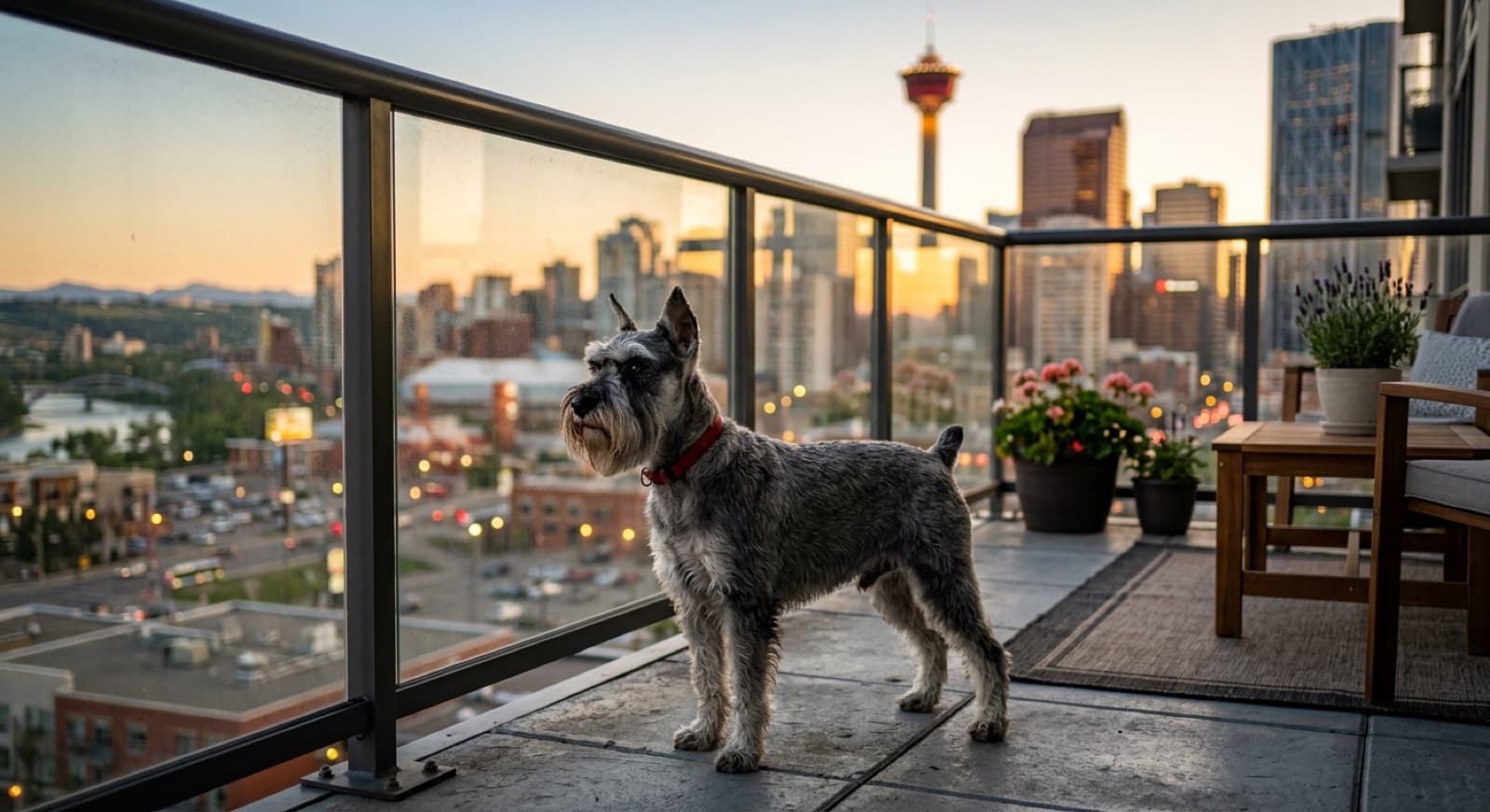
Honest Pros: Why Calgary Families Love the Mini Schnauzer
Smart and biddable for a terrier
The Mini Schnauzer was developed in late-1800s Germany by crossing Standard Schnauzers with Affenpinschers and likely Poodles as a small farm-dog and ratter. The Poodle influence shows up in the temperament. Unlike most terriers (Westie, Cairn, Jack Russell), the Mini Schnauzer is biddable, food-motivated, and eager to work with the handler. Calgary owners describe the breed as the personality of a terrier with the trainability of a Poodle. For first-time owners who want a small dog without the typical terrier stubbornness, the breed is one of the best picks in Calgary.
Long lifespan (12 to 15 years)
Mini Schnauzers typically live 12 to 15 years in good health, longer than most breeds and well above the small-dog average. Many reach the longer end of the range with consistent weight management, lifelong low-fat diet, and proactive monitoring for stones and pancreatitis. For Calgary households planning a long-term household member, the lifespan is a meaningful pro. The American Kennel Club at akc.org documents the breed standard, working history, and average lifespan.
Apartment-friendly size and adaptability
At 11 to 20 lbs typical, the breed fits Calgary rental weight limits with room to spare. Most Calgary pet-friendly buildings cap dogs at 50 to 75 lbs, so Mini Schnauzers sit comfortably under the bar. The moderate exercise floor (45 to 60 minutes daily) is achievable with two daily walks. Beltline, Mission, Bridgeland, and downtown apartment owners often pick the Mini Schnauzer specifically for the size, the biddable temperament, and the confident behaviour in elevators and hallways.
Lower prey drive than other terriers
Thanks to the biddable temperament and the farm-companion history (rather than pure earthdog roots), Mini Schnauzers have lower prey drive than Westies, Cairns, or Jack Russells. Calgary owners report better off-leash recall and easier cat introductions than they had with previous small terriers. The breed will still chase a darting squirrel, but the chase ends faster and the recall response is more reliable. For multi-pet households with cats, the Mini Schnauzer is one of the more compatible terrier-adjacent picks.
Cold-tolerant German double coat
The Mini Schnauzer double coat (harsh wiry top, dense soft undercoat) handles Calgary winters better than most small breeds. Below minus 20C most Mini Schnauzers benefit from booties on heavily salted Calgary sidewalks and shortened walks, but they handle minus 5 to minus 15C without needing a coat the way single-coated breeds like Cockapoos or Maltipoos do. For Calgary winter ownership, the coat is a genuine strength, and the beard and eyebrows even add a bit of face insulation on the coldest days.
Low-shed coat for mild-to-moderate allergic adopters
The harsh wiry top coat releases very little hair when properly maintained, which makes the breed tolerable for many mild-to-moderate allergic Calgary households. The breed is not hypoallergenic (no dog is fully allergen-free), but it is one of the better tolerated breeds for households with light dog allergies. Hand-stripped Mini Schnauzers tend to be tolerated marginally better than clipped ones because the coat texture stays harsher and traps less dander. Severe allergic adopters should still trial in a home for several hours before commitment.
Iconic look that draws compliments
The bushy eyebrows, full beard, and salt-and-pepper coat are unmistakable. Walking a Mini Schnauzer on a Calgary pathway draws compliments from strangers more reliably than most breeds. The look is part of why the breed retains popularity decade after decade. For owners who enjoy the social side of walking a recognisable dog, the breed delivers. The look does require the every-6-to-8-week grooming cadence to maintain, so the compliments come at a budget.
Honest Cons: What the Marketing Photos Do Not Show
Bark-prone watchdog wiring
Mini Schnauzers were developed as alert farm guardians as well as ratters. The alarm-bark wiring is hard-coded into the breed. Calgary apartment and condo owners hear the alarm bark at elevator dings, hallway footsteps, door knocks, and pigeons on the balcony. Without management, the barking becomes a real neighbour-complaint risk and a real bylaw risk under Calgary Responsible Pet Ownership Bylaw 3M2006. The fix is bark-management training from day one and picking an adult with documented quiet behaviour if you live in a noise-sensitive building. The City of Calgary at calgary.ca publishes the full bylaw including noise enforcement sections.
Lifelong pancreatitis-prevention diet
The Mini Schnauzer has a documented genetic predisposition to hyperlipidemia (high blood fats) that triggers pancreatitis attacks on fatty foods. This is the single most important commitment for owners of the breed. A lifelong low-fat diet with zero table scraps, no fatty treats, and no Stampede pancake mornings is non-negotiable. A single fatty meal can land an adult Mini Schnauzer in the Calgary emergency vet with vomiting, abdominal pain, and lethargy. Severe attacks can be life-threatening. Owners need to brief family, kids, and house guests that this breed does not get human food. The diet discipline is the harder cost than the grooming bill.
Urinary stones risk
The breed has elevated lifetime risk for both struvite and calcium oxalate urinary stones. Symptoms include straining to urinate, blood in urine, frequent attempts, and accidents in the house. Mild cases respond to diet change and increased water intake. Severe cases require surgical removal at several thousand dollars per surgery. Calgary general-practice vets handle the workup; complex or recurrent cases may be referred to Western Veterinary Specialist Centre. Pet insurance taken before any symptoms appear offers strong value for the breed because stone surgery and lifelong prescription urinary diet add up.
Grooming workload and the hand-strip decision
The Mini Schnauzer double coat needs professional grooming every 6 to 8 weeks plus brushing 2 or 3 times a week at home. Standard Calgary clipping runs $70 to $110 per session. Annual grooming runs $500 to $900 for clipped pet coats. The bigger decision is hand stripping vs clipping. Hand stripping preserves the harsh wiry coat texture and is what the breed standard expects for show; clipping is faster and cheaper but softens the coat over time and dulls the salt-and-pepper colour slightly. Most Calgary pet Mini Schnauzers are clipped because hand strippers are harder to find. Owners committed to the traditional coat should interview multiple Calgary grooming salons before adopting to confirm someone in the city handles hand stripping. The beard and eyebrows also need wiping after every meal and water drink to prevent food crusting and staining.
Confident terrier-adjacent personality with softer dogs
The biddability does not erase the terrier confidence. Mini Schnauzers carry themselves like much bigger dogs and will sometimes dominate softer breeds at the dog park or in the home. Owners with a resident Cavalier, Bichon, or other soft-tempered small dog should introduce slowly and supervise interactions. Mini Schnauzer-to-Mini Schnauzer households generally work well. Mini Schnauzer-and-bossy-Yorkie or Mini Schnauzer-and-aloof-Scottie pairings can produce friction. Foster-trial the introduction if you have a sensitive resident dog.
Schnauzer comedo syndrome and other skin issues
Schnauzer comedo syndrome is a breed-specific skin condition that produces small blackhead-like bumps along the dog back. It is treatable with medicated shampoos and occasional vet visits but it is lifelong management once it surfaces. Other skin issues like atopic dermatitis can also occur, though at lower rates than in Westies. Owners should expect that some level of skin care management may be part of ownership for the breed. Working with a Calgary general-practice vet who knows the breed helps with early detection and management.
Designer-breed pricing and unethical breeders
Reputable Calgary Mini Schnauzer puppies run $1,800 to $3,500 with waitlists of 8 to 18 months. The pricing draws backyard breeders selling unscreened puppies on Calgary Kijiji and Facebook Marketplace for $1,200 to $2,000. Warning signs: no DNA testing for PRA or myotonia congenita, no patella or eye certificates, willing to release puppies before 8 weeks, no health guarantee, no follow-up contact. The Canadian Kennel Club at ckc.ca publishes the registered breeder directory. Adult rescues at $400 to $700 from Calgary Humane Society, AARCS, BARCS, Pawsitive Match, or breed-specific US-based breed-specific rescue networks (the American Miniature Schnauzer Club rescue) skip the breeder lottery entirely.
Who Mini Schnauzers Are RIGHT For
First-time small-dog owners who want trainability
The most rewarding fit. If you want a small dog with personality but without the typical terrier stubbornness, the Mini Schnauzer is one of the best picks in Calgary. The breed responds beautifully to positive-reinforcement training, learns new behaviours quickly, and is food-motivated enough to make training rewarding for both sides. Calgary force-free trainers like Raising Canine and Pup City Pup Academy report excellent success rates with the breed in basic obedience, recall, and trick training classes.
Calgary apartment and condo owners
The 11 to 20 lb size fits Calgary rental weight limits with room to spare. The moderate exercise floor (45 to 60 minutes daily) is achievable for Beltline, Mission, Bridgeland, or downtown apartment owners walking the dog twice daily. The confident temperament handles elevators and hallway traffic without anxiety. The main caveat is barking management; commit to training from day one and pick an adult with documented quiet behaviour if your building is noise-sensitive. Pup City Doggy Daycare and Paws Dog Daycare offer Calgary daycare options for apartment owners who work full-time.
Households that budget grooming and accept diet discipline
Professional grooming every 6 to 8 weeks at $70 to $110 per session, plus weekly home brushing, plus lifelong low-fat diet discipline is the realistic baseline for Mini Schnauzer ownership. Households that can absorb the cost and run a strict no-table-scraps household have a much better long-term experience with the breed. The diet discipline matters more than most owners expect; pancreatitis prevention is not optional. Pet insurance taken before any symptoms appear offers strong value because pancreatitis and stone surgery can each run several thousand dollars.
Families with kids of all ages
Mini Schnauzers pair well with kids of all ages when raised together. The sturdy 11 to 20 lb build handles gentle play better than toy breeds. The biddable temperament makes the breed patient with school-age kids who help with walks, brushing, and training. Toddler-aged households should pick an adult Mini Schnauzer with documented kid history rather than gambling on a puppy with unknown tolerance. The breed alert bark profile can startle very young children initially, so supervised introductions help.
Multi-pet households with resident cats (with care)
The lower prey drive than other terriers makes the breed one of the more cat-compatible small-dog picks. Mini Schnauzers raised with cats from puppyhood usually live peacefully with them. Adult Mini Schnauzers with documented cat-tolerant history from a Calgary rescue are a safer bet than an untested dog. A foster trial of 2 to 4 weeks gives you a real-world test of the cat dynamic before committing. Never assume any individual Mini Schnauzer is cat-safe without testing.
Active singles, couples, and retirees
The breed fits a wide range of household configurations. Singles and couples who want a sturdy small dog they can take on Calgary pathway walks and short weekend trips often land on the Mini Schnauzer. Calgary retirees and seniors find the breed manageable in size, long-lived, and engaging without the energy demands of a working breed. Many Calgary rescues match adult and senior Mini Schnauzers preferentially to retiree households where the diet discipline and steady routine fit naturally.
Who Mini Schnauzers Are NOT Right For
Households unwilling to commit to lifelong low-fat diet
If you cannot envision running a household where no one (kids, partner, house guests, grandparents) ever slips the dog table scraps, the breed is the wrong fit. Pancreatitis is the breed dominant medical issue and a single fatty meal can trigger a life-threatening attack. Households where diet discipline is loose end up with repeated emergency vet visits and a shortened lifespan for the dog. Pick a more diet-forgiving breed if you cannot enforce the rule across the whole household.
Noise-sensitive condo buildings without bark management
If your building has strict noise policies and you are unwilling to commit to bark-management training from day one, the breed is the wrong fit. Mini Schnauzers are alarm-bark wired and they apply that to hallway noise. Calgary condo bylaw complaints over barking are common with the breed. Either commit to the training upfront and pick an adult with documented quiet behaviour, or pick a quieter breed entirely.
Tight grooming-budget households
If $500 to $900 a year for professional grooming is a stretch, the Mini Schnauzer double coat is the wrong fit. Skipping grooming to save money produces matted coats, irritated skin, eye irritation from overgrown brow hair, and emergency shave-downs that ruin the coat texture for months. Households with tight grooming budgets either need to learn at-home grooming (real learning curve, especially for hand stripping) or pick a low-grooming smooth-coated small breed instead.
Households with very soft-tempered resident small dogs
Mini Schnauzers carry themselves with terrier confidence and can dominate softer-tempered small breeds. Households with a sensitive resident Cavalier, Bichon, Maltipoo, or other gentle small dog should foster-trial before committing. Some pairings work beautifully; others produce daily low-level friction the soft-tempered dog cannot recover from. The risk is manageable with care but it is real.
Owners who want a low-energy lapdog
If you want a quiet small dog that lounges on the couch most of the day and asks for little exercise, the Mini Schnauzer is not the right pick. The breed is moderately active, alert, engaged, and needs 45 to 60 minutes of daily exercise plus mental engagement. Under-exercised Mini Schnauzers redirect into barking, digging, and demand vocalising. For true low-energy small dogs, look at Cavaliers, older small breeds, or specifically low-energy senior rescues.
Mini Schnauzer vs Westie vs Yorkie vs Cairn vs Cocker Spaniel
Small breeds that get cross-shopped in Calgary and feel very different in daily life. The decision table:
| Breed | Size | Temperament | Best Fit |
|---|---|---|---|
| Mini Schnauzer | 11 to 20 lbs | Biddable, alert, bark-prone | First-time owners who want trainability + apartment fit + lifelong diet discipline |
| Westie | 15 to 22 lbs | Independent terrier, alert | Owners who like terrier personality and accept atopic skin risk |
| Yorkie | 4 to 7 lbs | Bold but fragile, lap-leaning | Owners wanting a smaller lap-friendly terrier with true allergy tolerance |
| Cairn Terrier | 13 to 18 lbs | Independent terrier, alert | Westie temperament in a smaller package with more colour variety |
| Cocker Spaniel | 20 to 30 lbs | Soft, biddable sporting dog | Owners wanting a quieter family dog with no terrier independence |
The Mini Schnauzer sits in a useful sweet spot. It is more biddable than the Westie or Cairn, more durable than the Yorkie, and smaller than the Cocker. The diet discipline and bark management are the trade-offs. Pick the temperament and the daily-routine fit, not the look that catches your eye.
Adult vs Puppy Adoption Decision Tree
For most first-time Mini Schnauzer adopters, an adult rescue is the safer pick. The reasoning:
- Puppy: Calgary Mini Schnauzer puppies are uncommon in general intake. Reputable breeder waitlists run 8 to 18 months at $1,800 to $3,500 from CKC-registered breeders. The puppy phase is roughly 14 weeks of intense biting, house-training, and crate training, followed by 6 to 12 months of adolescent boundary-testing including barking experimentation. Puppies are the right pick only if you specifically want to raise the dog from puppyhood and have the time to commit.
- Adult rescue (1 to 5 years): temperament-evaluated, energy documented, bark profile known, kid tolerance noted, training history available. The Rule of 3s applies (roughly 3 days to decompress, 3 weeks to settle, 3 months to fully bond). Adult rescues arrive past the chaotic puppy stage and into settled adult temperament. Common surrender pattern: 3 to 8 year young adults whose owners hit the bark management, grooming, or diet management walls. For most first-time Mini Schnauzer owners, the adult rescue is the better path.
- Senior rescue (8+ years): the calmest version of the breed, with realistic expectations on remaining lifespan and senior vet costs. Many seniors land in rescue after an owner health change or downsizing. They make wonderful low-key companions and the grooming load is the same as for any age. For Calgary seniors and retirees, a senior Mini Schnauzer is often the gentlest entry into the breed and many rescues match seniors preferentially.
Mini Schnauzer rescue inventory in Calgary is uncommon but real. Calgary Humane Society, AARCS, BARCS, Pawsitive Match, ARF Alberta, and Cochrane Humane list the breed or recognisable Mini Schnauzer mixes (Schnoodle) when inventory exists. Breed-specific US-based breed-specific rescue networks (the American Miniature Schnauzer Club rescue) move most surrenders through retirement and rehoming channels. Signing up for rescue alerts and expanding the search to Edmonton, Red Deer, or Lethbridge widens the pool.
The Calgary Lifestyle Math
Calgary is genuinely friendly to Mini Schnauzer ownership. The honest picture:
- Winter climate: The German double coat handles Calgary winters better than most small breeds. Below minus 15C most Mini Schnauzers benefit from booties on heavily salted Calgary sidewalks; below minus 20C walks should shorten and indoor enrichment covers the exercise gap. The cold tolerance is a real advantage compared to single-coated small dogs like Cockapoos or Maltipoos.
- Apartment and condo compatibility: The 11 to 20 lb size fits virtually all Calgary pet-friendly buildings. The moderate exercise floor is achievable with two walks. Beltline, Mission, Bridgeland, and downtown apartments are realistic Mini Schnauzer homes. Bark management is the main building-fit concern; commit to training from day one.
- Bow River pathway walks: Calgary pathways suit the breed well. Sandy Beach, Edworthy, Bowmont, and Sue Higgins all work for daily Mini Schnauzer walks. The breed enjoys sniff walks and exploring new routes. Pathway encounters with squirrels and rabbits are easier to manage than with Westies thanks to the lower prey drive, but a 6-foot leash and consistent loose-leash training still matter.
- Off-leash reality: Reliable off-leash recall around wildlife is achievable in many Mini Schnauzers with consistent force-free training. Tom Campbell Hill and River Park well-fenced sections work well for trained adults. Sandy Beach, Bowmont, and Sue Higgins open sections are workable for dogs with solid recall. The breed biddability makes recall training easier than with most terriers.
- Stampede meal-temptation vigilance (every July): Calgary Stampede week is the highest-risk period of the year for Mini Schnauzer pancreatitis attacks. Pancake breakfasts, mini doughnuts, ribs at backyard parties, and bacon-wrapped everything are the trigger menu. Owners need to brief every family member and guest that the dog gets none of it, and the dog should ideally stay home rather than attend Stampede gatherings where well-meaning strangers slip food. Calgary emergency vets see a measurable spike in Mini Schnauzer pancreatitis cases every Stampede week.
- Bylaw 3M2006 compatibility: Calgary Responsible Pet Ownership Bylaw 3M2006 governs noise complaints. Mini Schnauzer alarm barking can run afoul of the bylaw in condo buildings, especially when the dog barks while alone. Meeting the exercise floor, committing to bark-management training, and managing alone-time bark triggers prevent most issues.
- Specialty vet access: Western Veterinary Specialist Centre handles complex internal medicine, dermatology, and surgical referrals, which matters for the breed pancreatitis and urinary stone risk profile. VCA Canada West also offers internal medicine referrals. For routine pancreatitis monitoring and stone management, most Calgary general-practice vets handle treatment without referral.
- Grooming infrastructure: Calgary has solid mid-tier grooming salons that handle wiry double coats. Hand strippers are harder to find than clipper groomers, so owners committed to the traditional coat should interview salons before adopting. A groomer who knows the Mini Schnauzer cut, the breed beard maintenance, and typical skin sensitivities is worth the search effort.
Browse adoptable Mini Schnauzers in Calgary
Calgary Mini Schnauzer availability is uncommon but real. Reputable rescues list adults with documented temperament, bark profile, kid tolerance, diet history, and any pancreatitis or stone history. A foster trial of 2 to 4 weeks gives you a real-world test of the daily routine, the bark management, and the diet discipline before committing. For a breed this defined by trainable temperament and lifelong diet vigilance, a foster trial is the safest way to know the fit.
See Available Mini Schnauzers →10-Question Self-Assessment
Answer honestly. If you answer “no” or “not sure” to more than two, the Mini Schnauzer is probably not the right fit right now. That is useful information, not a judgment.
1. Am I home enough to manage separation barking and meet daily exercise?
Two walks daily plus a training session, sniff walk, or nose-work game cover most adult Mini Schnauzers. Under-exercised dogs redirect into barking and demand vocalising. Households where the dog is alone 10+ hours daily without daycare or a midday walker often run into separation-related alarm barking. Pup City Doggy Daycare and Paws Dog Daycare offer Calgary daycare options.
2. Can I budget $500 to $900 a year for professional grooming plus home brushing?
Every 6 to 8 weeks at $70 to $110 per session in Calgary for clipped Mini Schnauzers, plus brushing 2 or 3 times a week at home. Hand stripping costs more. Skipping grooming to save money causes matting, eye irritation, and emergency shave-downs. Budget the cadence upfront.
3. Can I run a strict no-table-scraps household for the next 12 to 15 years?
Pancreatitis is the breed dominant medical issue and a single fatty meal can trigger a life-threatening attack. Lifelong low-fat diet, no human food, no fatty treats, and weight management are non-negotiable. Brief family, kids, and house guests on the rule. If you cannot enforce this across the whole household, pick a different breed.
4. Is my apartment or condo bark-tolerant, and am I ready for bark management?
The breed is alert and watchdog-wired. Without management, alarm barking becomes a real neighbour-complaint risk and a bylaw risk. Commit to bark-management training from day one and pick an adult with documented quiet behaviour if your building is noise-sensitive. Detached homes are more forgiving but the training still matters.
5. Can I manage Calgary cold snaps with a small but cold-tolerant dog?
The German double coat handles cold better than most small breeds. Below minus 15C booties protect paws from salt; below minus 20C walks should shorten. Indoor enrichment (nose-work, trick training, frozen low-fat Kongs) covers the exercise gap. The cold tolerance is a real strength compared to single-coated small breeds.
6. Am I ready to use force-free training methods with a smart food-motivated dog?
Calgary force-free trainers like Raising Canine and Pup City Pup Academy use the variable-reinforcement approach that suits the breed. Corrections-based methods (e-collars, leash pops, alpha rolls) damage the dog and intensify resource-guarding around food, which matters given the breed food drive and pancreatitis-prevention requirement. Plan training before bringing the dog home.
7. If I am allergic, have I tested for several hours in a home environment?
The Mini Schnauzer is low-shed but not hypoallergenic. The honest test is a spend-the-afternoon visit with an adult Mini Schnauzer in someones home, not just a quick rescue meet. Severe allergic adopters should trial in a home for several hours. Hand-stripped coats tend to be tolerated marginally better than clipped ones.
8. Do I have a vacation plan with boarding or a sitter who manages the diet?
Mini Schnauzers do well with reputable boarding facilities or trusted sitters who understand the no-table-scraps rule. Brief the boarding facility on pancreatitis risk before booking. Calgary daycares like Pup City Doggy Daycare and Paws Dog Daycare can confirm low-fat-feeding protocols before commitment.
9. If I have kids or resident cats, am I picking an adult Mini Schnauzer with documented history?
Toddler households and multi-pet households should pick an adult Mini Schnauzer with documented kid tolerance or cat-tolerance from a Calgary rescue rather than gambling on a puppy. The breed lower prey drive helps with cats but does not eliminate the need for testing.
10. Am I confident leading a smart dog, not winning a battle of wills?
Mini Schnauzers are intelligent enough to test the rules. The right owner is consistent and confident without being harsh, sets clear routines, and uses food-motivated training to keep the dog engaged. Owners who are inconsistent end up with a smart dog who has learned that rules are negotiable. Confidence and consistency matter more than dominance.
Frequently Asked Questions
Is a Mini Schnauzer good for first-time owners?
Yes, the Mini Schnauzer is one of the better small-breed picks for first-time owners. Unlike most terriers, the breed is biddable, food-motivated, and eager to work with the handler. First-time owners should be ready for three commitments: bark management from day one (the breed is alert and watchdog-wired), a lifelong low-fat diet to prevent pancreatitis, and professional grooming every 6 to 8 weeks at $500 to $900 a year. Calgary force-free trainers like Raising Canine and Pup City Pup Academy run group classes that suit the breed. Owners who handle those three commitments find the Mini Schnauzer one of the most rewarding small dogs in Calgary.
Are Mini Schnauzers good with kids?
Yes, the breed is generally good with kids of all ages when raised together. Mini Schnauzers are sturdier than toy breeds at 11 to 20 lbs and they tolerate household chaos better than fragile small dogs like Yorkies or Maltese. The breed bonds strongly to family and is patient with school-age kids. Toddler-aged households should pick an adult Mini Schnauzer with documented kid history rather than gambling on a puppy with unknown tolerance. The alert bark profile can startle very young children initially, so supervised introductions help. Kids should be coached on respectful handling like with any small dog.
Are Mini Schnauzers good with cats?
Often yes, more reliably than most terriers. The Mini Schnauzer has lower prey drive than the Westie, Cairn, or Jack Russell, thanks to its more biddable temperament and longer history as a farm-companion rather than pure earthdog. Mini Schnauzers raised with cats from puppyhood usually live peacefully with them. Adult Mini Schnauzers with documented cat-tolerant history from a Calgary rescue are a safer bet than an untested dog. A foster trial helps confirm the fit before commitment. Some individual dogs still have a chase reflex around bolting cats, so introductions should be gradual and supervised.
Can a Mini Schnauzer live in an apartment?
Yes, the Mini Schnauzer is one of the best small apartment dogs in Calgary. At 11 to 20 lbs they fit any pet-friendly building weight limit. The 45 to 60 minute daily exercise floor is achievable with two walks. Beltline, Mission, Bridgeland, and downtown apartment owners pick the breed specifically for the size, the biddable temperament, and the iconic look. The main apartment concern is barking. The breed is alert and watchdog-wired, so they bark at elevator dings, hallway footsteps, and door knocks. Calgary Responsible Pet Ownership Bylaw 3M2006 governs noise complaints, so bark management training from day one matters. Pick an adult with documented quiet behaviour if your building is noise-sensitive.
How much exercise does a Mini Schnauzer need?
Forty-five to sixty minutes of real exercise every day, plus mental engagement. The breed is moderately active and food-motivated, which makes training and nose-work easy ways to meet the mental floor. A 30 minute morning walk plus an evening training session, sniff walk, or controlled fetch covers most adult Mini Schnauzers. The breed enjoys trick training and short obedience drills more than most terriers. Under-exercised Mini Schnauzers redirect energy into barking, digging, and demand-vocalising at family. Calgary off-leash zones like Sandy Beach, Bowmont, and Sue Higgins work for trained adults; recall is achievable with consistent force-free training thanks to the breed biddability.
How often does a Mini Schnauzer need grooming?
Every 6 to 8 weeks at $70 to $110 per session in Calgary for clipped Mini Schnauzers, plus brushing 2 or 3 times a week at home. Annual grooming runs $500 to $900 for clipped pet coats. The breed has the iconic eyebrows and beard that need wiping after meals and water to prevent food crusting and beard staining. Show-quality hand stripping preserves the harsh wiry coat texture and costs more; it also requires a groomer who knows the technique. Most Calgary pet Mini Schnauzers are clipped because hand strippers are harder to find. See our Mini Schnauzer grooming and coat care guide for the full routine.
Are Mini Schnauzers easy to train?
Yes, easier than most terriers and most small breeds. The Mini Schnauzer is intelligent, food-motivated, and eager to work with the handler. The breed responds beautifully to positive-reinforcement methods and learns new behaviours quickly. Short 5 to 10 minute sessions hold attention well. The two training challenges to watch for are barking (the watchdog instinct needs early management) and food-stealing (the breed will counter-surf and resource-guard food given the chance, especially relevant for pancreatitis prevention). Calgary force-free trainers like Raising Canine and Pup City Pup Academy use the variable-reinforcement approach that suits the breed. Corrections-based methods damage the relationship and intensify resource-guarding.
What is the pancreatitis risk in Mini Schnauzers?
Pancreatitis (inflammation of the pancreas) is the breed dominant medical issue and the single most important diet commitment for Mini Schnauzer owners. The breed has a documented genetic predisposition to hyperlipidemia (high blood fats) that triggers pancreatitis attacks on fatty foods. Symptoms include vomiting, abdominal pain, lethargy, and loss of appetite. Severe attacks require emergency vet care and can be life-threatening. Prevention is straightforward: lifelong low-fat diet, no table scraps, no fatty treats, and weight management. Calgary owners should brief family, kids, and guests that the breed cannot eat human food the way other dogs can. The lifelong commitment is non-negotiable. See our Mini Schnauzer health issues guide for the full breakdown.
Do Mini Schnauzers get urinary stones?
Yes, the breed has elevated risk for both struvite and calcium oxalate urinary stones. Symptoms include straining to urinate, blood in urine, frequent attempts to urinate, and accidents in the house. Calgary general-practice vets handle most cases with diet change, increased water intake, and sometimes prescription urinary diets. Severe cases require surgery to remove stones. Prevention strategies include encouraging water intake, monitoring urine pH if recommended by the vet, and prescription urinary diets for dogs with stone history. The American Kennel Club at akc.org documents the breed elevated stone risk. Pet insurance taken before any symptoms appear offers value because surgical stone removal in Calgary can run several thousand dollars.
Should I buy a Mini Schnauzer puppy or adopt a Mini Schnauzer rescue?
For most first-time Mini Schnauzer owners, an adult rescue is the safer pick. Calgary Mini Schnauzer puppies are uncommon in general intake but reputable breeder waitlists run 8 to 18 months at $1,800 to $3,500. Adult rescues at $400 to $700 from Calgary Humane Society, AARCS, BARCS, Pawsitive Match, or breed-specific US-based breed-specific rescue networks (the American Miniature Schnauzer Club rescue) arrive temperament-evaluated, energy documented, and past the chaotic puppy stage. Common surrender pattern is 3 to 8 year young adults whose owners hit the bark management, grooming, or diet management walls. The Rule of 3s applies (3 days to decompress, 3 weeks to settle, 3 months to bond). Senior Mini Schnauzers are particularly available and make wonderful low-key companions for Calgary seniors and retirees.
How long do Mini Schnauzers live?
Mini Schnauzers typically live 12 to 15 years in good health, with many reaching the longer end of the range when diet, weight, and grooming stay consistent. Lifelong low-fat diet, weight management, dental care, and annual vet visits to monitor for stones and pancreatitis are the levers. A Mini Schnauzer adopted as a puppy is a 12 to 14 year household member, longer than most large breeds and well above the small-dog average. Senior Mini Schnauzers do well with the daily exercise floor reduced to 30 to 40 minutes, soft bedding for ageing joints, and consistent grooming to protect ageing skin. The long lifespan is a real strength but it cuts both ways. Plan for the full commitment.
What are the most common Calgary Mini Schnauzer mistakes?
Five mistakes show up repeatedly. One: underestimating the bark profile and getting into condo bylaw trouble. Two: feeding human food and triggering pancreatitis attacks (Stampede pancake breakfasts are a real risk every July). Three: skipping the every-6-to-8-week grooming cadence to save money and ending up with matted coats and emergency shave-downs. Four: choosing corrections-based training and intensifying the breed natural alert-vocalising. Five: assuming the breed needs minimal exercise because it is small, then dealing with redirected energy as barking, digging, and demand vocalisation. All five are preventable with planning and force-free training from a Calgary trainer who knows the breed.
Sources and further reading
- American Kennel Club (akc.org): working history, breed standard, temperament, lifespan, and known health concerns for the Miniature Schnauzer.
- Canadian Kennel Club (ckc.ca): Canadian breed standard and registered breeder directory for the Miniature Schnauzer.
- Calgary Humane Society (calgaryhumane.ca): local adoption process, surrender support, and breed listings when inventory exists.
- City of Calgary (calgary.ca): Responsible Pet Ownership Bylaw 3M2006 including licensing, leash, and noise enforcement sections.
- Calgary force-free trainer network including Raising Canine and Pup City Pup Academy for group classes and behavioural consultations.
This article is informational only and not a substitute for veterinary, behavioural, or insurance advice. Consult a Calgary veterinarian, a force-free trainer, and your own grooming salon for personalised guidance.
Related Mini Schnauzer guides
Mini Schnauzers for Adoption in Calgary →
Live listing of available Miniature Schnauzers and Schnauzer mixes across Calgary rescues when inventory exists.
Mini Schnauzer Adoption Calgary →
Where to find a rescue Mini Schnauzer in Calgary, real adoption costs vs breeder pricing, what reputable rescues assess, and the foster-trial route.
Mini Schnauzer Grooming and Coat Care →
Hand strip vs clip decision, weekly home brushing, beard and eyebrow maintenance, and Calgary grooming salon notes.
Mini Schnauzer Health Issues →
Calgary-specific deep dive on pancreatitis, urinary stones, hyperlipidemia, Schnauzer comedo syndrome, and pet insurance ROI for the breed.
New dog? Start with these care guides
Everything a new adopter needs to set up a safe, happy home.