The short answer
The Newfoundland is a sweet, patient, devoted giant, famously good with children and wonderfully suited to Calgary's winters. The honest catch is everything that comes with the size: a big budget for food and giant-breed vet care, plenty of drool and shedding, a need for careful heat management in summer, and a shorter lifespan of roughly nine to ten years. If you have the space, the budget, and the heart for a giant dog and its shorter time, a Newfoundland is one of the most rewarding dogs to adopt, and taking in an adult or senior is especially meaningful. If space or budget is tight, this is a breed to admire rather than adopt.
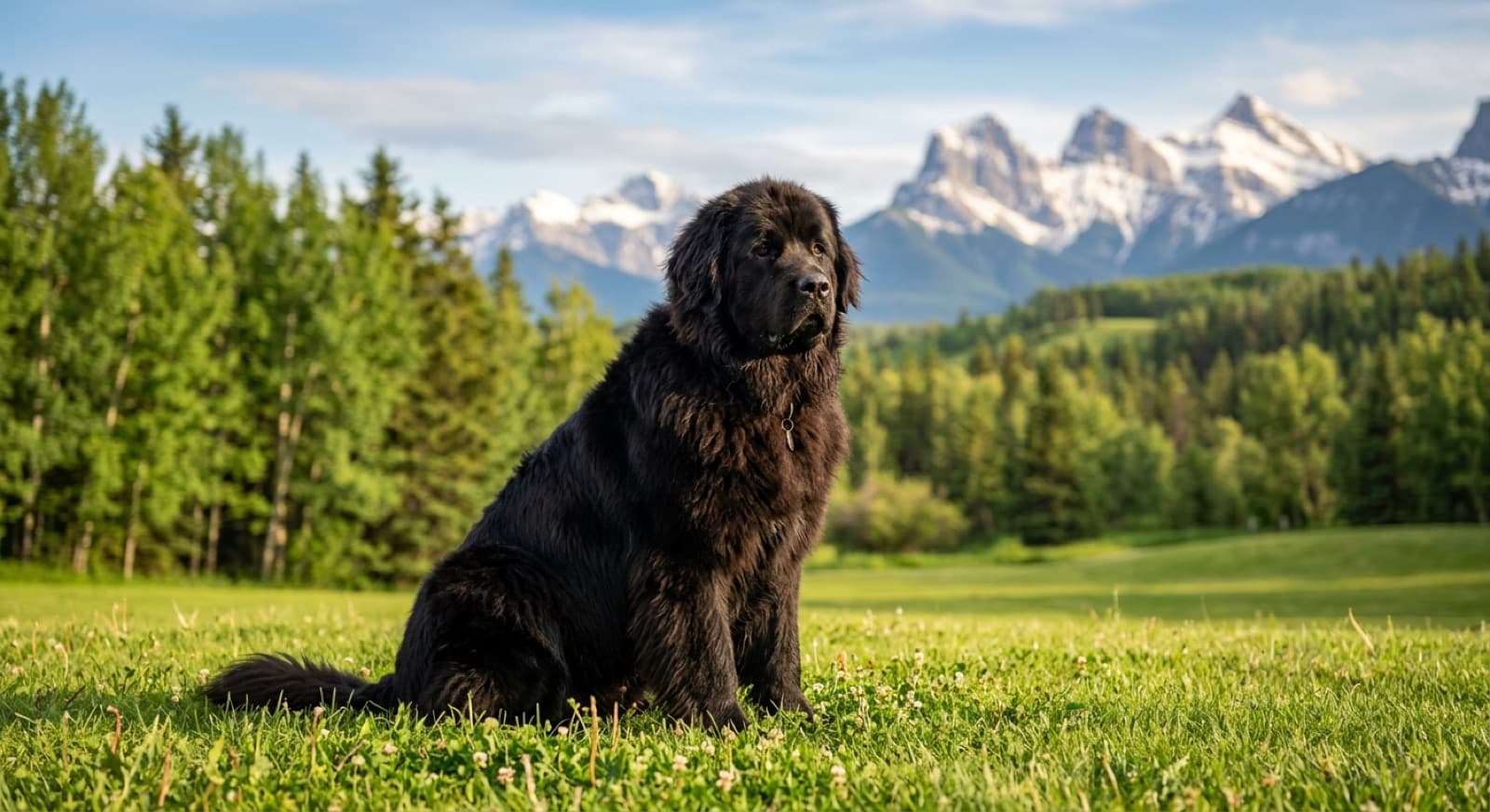
Everyone who meets a Newfoundland falls a little in love. They are enormous, soft, patient dogs with the temperament of a favourite uncle, and they have earned every bit of their gentle-giant reputation. What newcomers do not always weigh is what living with a hundred-and-thirty-pound dog actually involves: the cost, the drool on your ceiling, the fur in every corner, and the quiet grief of a breed that does not live long. Adopt a Newfoundland with all of that in view and you gain one of the finest companions there is. This guide helps you decide honestly.
Why Newfoundlands end up in rescue
The Newfoundland is, in the words of the American Kennel Club, a strikingly large, powerful working dog of heavy bone and dignified bearing, sweet-tempered and famous as a patient nanny dog for children. Temperament is almost never the reason a Newf ends up in rescue. The reasons are practical.
People underestimate the cost and the logistics of a giant breed: the food bills, the giant-breed vet care, the drool and shedding, the space. Sometimes a Newfoundland comes into rescue as a senior when an aging owner can no longer lift or manage a dog that size, or when a giant-breed medical bill overwhelms a family. None of this reflects on the dog, which is usually as gentle as ever. Adopting a Newfoundland, especially an older one, means giving a sweet giant a soft place to land.
Where to adopt a Newfoundland in Calgary
Purebred Newfoundlands are not everyday arrivals in local rescue, but they and their crosses do appear. Start with Calgary's general rescues and shelters: the Calgary Humane Society and AARCS both take in giant breeds from time to time, and there are Newfoundland-specific and giant-breed rescues across western Canada worth following. Watch the current Newfoundland listings and set an alert so you hear the moment one comes in.
Adopting an adult Newfoundland has a particular grace to it. You meet a known temperament, you skip the giant-breed puppy stage (which is a lot of dog to raise), and if you open your home to a senior, you give a gentle old dog its best possible final chapter. A good rescue will be honest about a dog's health and needs, which matters especially in a breed with real medical considerations.
Who a Newfoundland actually suits
Be honest about the practicalities, because they are the whole question with this breed. A Newfoundland suits a home with real space, a budget that can absorb giant-breed food and vet bills, a tolerance for drool, hair, and muddy giant paws, and an appreciation for cool weather over hot. It also suits someone prepared, emotionally, for a shorter lifespan. It does not suit small apartments, tight budgets, immaculate households, or anyone wanting a long-lived, low-maintenance dog. If the drool and the vet bills give you pause, that is worth listening to.
For the right home, a Newfoundland is simply one of the loveliest dogs you can share your life with. Before you commit, read our guide to Newfoundland grooming, drool, and daily care, the defining practical reality of the breed, and our Newfoundland health guide for the medical picture, including the heart and bloat concerns giant breeds carry.
Ready to welcome a gentle giant?
If you have the space, budget, and heart for a Newfoundland, adopting an adult through a Calgary rescue means you meet the real dog, and often give an older giant its best possible home. See who is available now.
See Calgary Newfoundlands →Frequently Asked Questions
Where can I adopt a Newfoundland near me in Calgary?↓
Are Newfoundlands good family dogs?↓
How much does it cost to own a Newfoundland?↓
How long do Newfoundlands live?↓
Do Newfoundlands handle Calgary winters and summers?↓
Continue reading
Coat, shedding, drool, and managing a giant in the heat.
Heart, hips, bloat, cystinuria, and preventive care.
Live listings across Calgary rescues.
A cold-weather breed built for Calgary winters.
New dog? Start with these care guides
Everything a new adopter needs to set up a safe, happy home.