The short answer
The Newfoundland's key health concerns are inherited heart disease (above all subaortic stenosis), hip and elbow dysplasia, bloat (GDV) from its deep chest, and cystinuria (a stone-forming condition notable in the breed). Heat sensitivity is a real practical concern given the heavy coat, and lifespan is a giant-breed nine to ten years. Reputable breeders screen hearts, hips, and cystinuria. This is general information, not veterinary advice: build a plan with a Calgary vet who knows giant breeds, keep the dog lean, know your nearest emergency vet for the bloat risk, and price pet insurance while your dog is young.
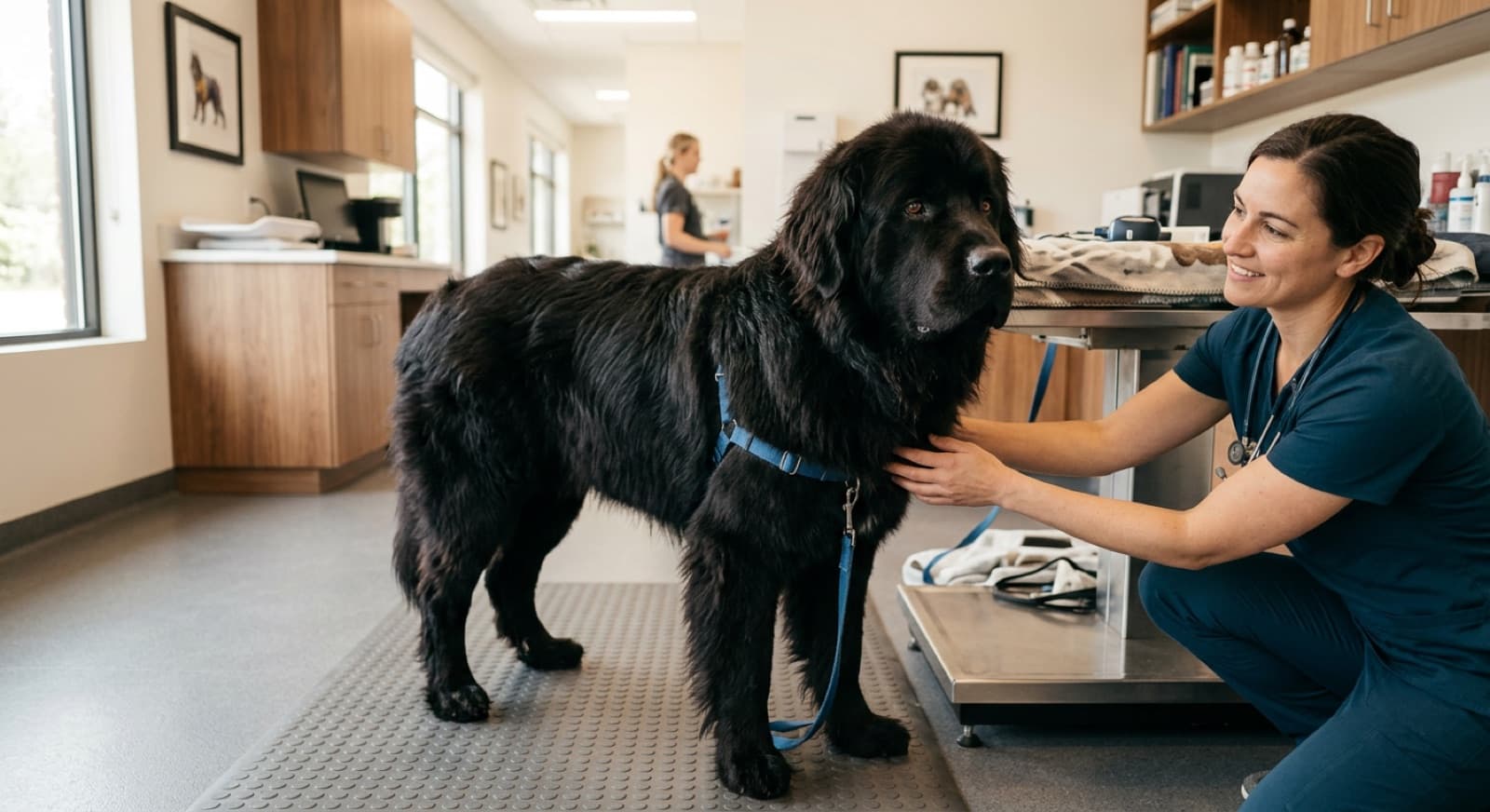
Loving a Newfoundland means accepting that a giant breed comes with a giant-breed health profile. The good news is that the most important concerns are well understood and, in many cases, screened for by responsible breeders, which means an informed owner can catch problems early. This guide walks through each with authoritative sources, then covers the giant-breed preventive care that gives a Newfoundland its best, healthiest years in Calgary.
Heart disease: the breed's signature concern
The Newfoundland is predisposed to inherited heart disease, most notably subaortic stenosis (SAS), a narrowing below the aortic valve that forces the heart to work harder and can be serious. It is often first picked up as a heart murmur on a routine exam, which is one reason regular veterinary care matters so much in this breed. Reputable breeders have their breeding dogs' hearts evaluated, ideally by a veterinary cardiologist, and screening is registered through databases like the Orthopedic Foundation for Animals (OFA).
For your own Newfoundland, the practical steps are simple: keep up with vet visits so a murmur or change is caught early, and take any exercise intolerance, fainting, or unusual tiredness seriously. If a heart concern is found, your vet may refer you to a cardiologist for imaging and a plan. This is firmly a job for professionals; heart disease is never something to assess or manage at home.
Bloat (GDV): the deep-chested emergency
As a large, deep-chested breed, the Newfoundland is among the dogs at real risk of bloat, or gastric dilatation-volvulus (GDV), where the stomach fills with gas and can twist on itself. According to the American Kennel Club, deep-chested dogs face the greatest risk, and without treatment a bloating dog can go into shock in only an hour or two.
Know the warning signs (per the AKC):
- An enlarging or visibly distended abdomen
- Retching, or trying to vomit with little or nothing coming up
- Drooling or salivation
- Restlessness and pacing
- Pain when the belly is touched
If you see these signs, this is a true emergency: go straight to a 24-hour vet, do not wait. Treatment involves deflating the stomach and, often, a gastropexy that tacks the stomach in place to prevent recurrence. Ask your Calgary vet whether a preventive gastropexy makes sense for your Newfoundland.
Joints, cystinuria, and heat
Like most giant breeds, Newfoundlands are prone to hip and elbow dysplasia, and reputable breeders screen through the OFA. Keeping a Newfoundland lean and avoiding high-impact exercise in a growing dog protects those joints for life. The breed also carries cystinuria, an inherited condition in which cystine stones can form in the bladder or kidneys; a DNA test exists and good breeders screen for it. Straining to urinate or blood in the urine, especially in a male, is urgent, treat it as a same-day vet visit.
Finally, a practical concern rather than a disease: heat sensitivity. That magnificent double coat was built for cold water, and it makes a Newfoundland overheat easily. In a Calgary summer that means exercising in the cool of the morning or evening, providing shade and water, and never leaving the dog anywhere warm. Managing the heat is a daily part of keeping this breed healthy through the warmer months.
Preventive care and insurance in Calgary
Giant-breed care rewards prevention. Keep your Newfoundland lean to protect its joints and heart, favour joint-friendly exercise over high-impact activity, and stay on top of vet visits so heart and other issues are caught early. The American Kennel Club describes a powerful working dog of heavy bone, and keeping one well means respecting both the size and the specific risks.
The costs most likely to add up, heart care, orthopedic treatment, and bloat surgery, are the case for pet insurance. Price a few Canadian insurers while your dog is young and healthy, before anything becomes pre-existing, and read what each excludes. Know your nearest 24-hour emergency vet in advance. For the daily practical side of living with a Newfoundland, see our grooming and care guide, and for the adoption picture, our Newfoundland adoption guide.
Considering a Newfoundland?
Adopting an adult through a rescue that has done a vet workup means much of the health history is already known, a real advantage with a giant breed that carries heart and bloat risk. See who is available across Calgary rescues.
See Calgary Newfoundlands →Frequently Asked Questions
What health problems are Newfoundlands prone to?↓
Do Newfoundlands have heart problems?↓
Are Newfoundlands at risk of bloat?↓
What is cystinuria in Newfoundlands?↓
How can I keep my Newfoundland healthy in Calgary?↓
Continue reading
Cost, commitment, lifespan, and who the breed suits.
Coat, shedding, drool, and managing a giant in the heat.
Live listings across Calgary rescues.
A cold-weather breed built for Calgary winters.
New dog? Start with these care guides
Everything a new adopter needs to set up a safe, happy home.