The short answer
Owning a Newfoundland is a real grooming and housekeeping commitment. The heavy double coat needs thorough brushing several times a week, and daily during the twice-yearly heavy shed, to prevent mats and manage the hair. Newfoundlands are a drooly breed, and there is no fixing that, keep a towel handy and make peace with it. And because that magnificent coat makes them overheat easily, a Calgary summer means exercising in the cool hours, offering shade and water, and never shaving the coat without professional guidance. Embrace the fur and drool and you get one of the sweetest dogs there is; resist it and you will be frustrated daily.
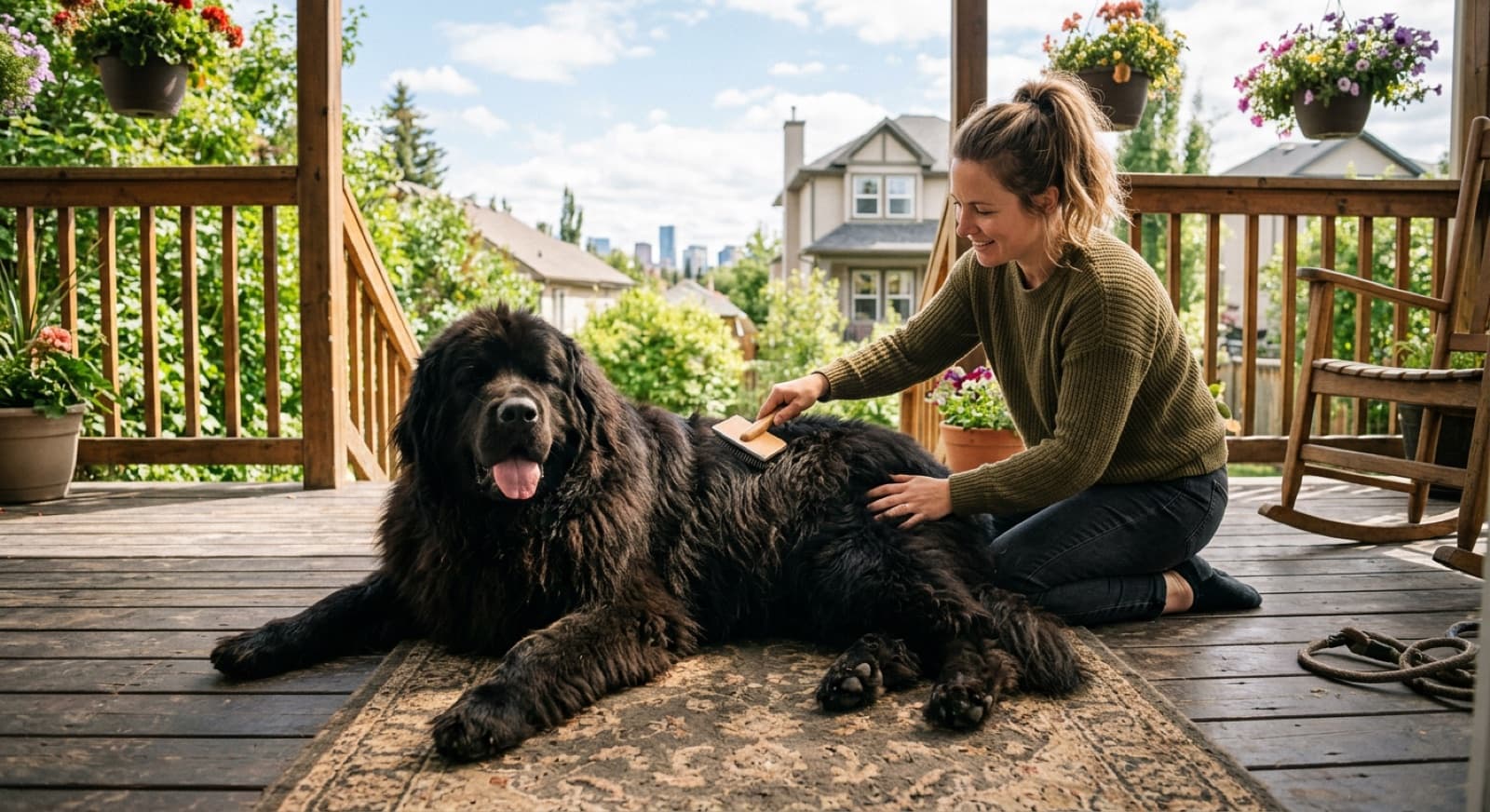
People choose a Newfoundland for the temperament and are surprised by the maintenance. This is the part of ownership that never lets up: the brushing, the tumbleweeds of undercoat, the drool on the window, the summer heat you have to plan around. None of it is hard, exactly, but all of it is constant, and being honest with yourself about whether you will enjoy or resent it is the real test of whether the breed fits your life. This guide lays out the daily reality.
The coat: brushing and the great shed
The Newfoundland's heavy, water-resistant double coat, part of what the American Kennel Club calls a powerful working dog of heavy bone, is glorious and demanding. It needs thorough brushing several times a week to prevent the mats that form behind the ears, under the legs, and around the rear, and that can become painful and require shaving if neglected. Invest in good tools, an undercoat rake and a slicker brush, and make brushing a regular, calm routine rather than an occasional marathon. A groomer experienced with giant double-coated breeds is well worth it for baths and the heavier work.
Twice a year, the Newfoundland blows its undercoat, and the volume of hair is genuinely startling. During these few weeks, daily brushing keeps the worst of it off your home and helps the new coat come in cleanly. Between sheds, expect steady year-round hair; a Newfoundland home simply has fur in it. The owners who thrive with the breed treat the grooming as part of the bond rather than a chore, and the dogs, who love the attention, tend to agree.
The drool: no training it away
Let us be direct, because this surprises people. Newfoundlands drool, and it is not a training problem to be solved; it comes with the loose jowls that are part of the breed. Expect it especially around food and after drinking water, and know that a hearty head shake can fling drool onto walls, ceilings, and unsuspecting guests. This is permanent. If the idea genuinely bothers you, take that seriously now rather than after you adopt.
Living with it is straightforward once you accept it. Keep a “drool towel” or two in easy reach, wipe the jowls after meals and water, and you will manage the day-to-day fine. Many Newfoundland owners come to find the drool oddly endearing, a small tax on an enormous amount of love. But it is a real feature of the breed, and an honest guide has to say so plainly.
Keeping a giant cool in a Calgary summer
The same coat that makes a Newfoundland perfect for a Calgary winter makes summer the season to manage carefully. This is a heavy, heavily coated breed that overheats easily, so on warm days exercise in the cool of the early morning or evening rather than the afternoon, always provide shade and fresh water, and never leave the dog in a warm space, including a parked car. Many Newfoundlands adore water, so a shallow pool or a supervised swim is a wonderful way to help them cool off.
Resist the urge to shave the coat for summer without professional guidance. Counterintuitive as it seems, the double coat helps regulate temperature and protects the skin, and shaving can interfere with both and with healthy regrowth. Diligent brushing to thin the dense undercoat does more for airflow than shaving would. Watch for heavy panting, drooling more than usual, or distress, and get your dog out of the heat at once if you see it. Our Calgary winter dog care guide covers the cold end of the year, where this breed truly shines.
Ready for the fur, the drool, and the love?
If the daily upkeep sounds worth it, adopting an adult Newfoundland through a Calgary rescue means you meet the real dog, coat and all. See who is available now.
See Calgary Newfoundlands →Frequently Asked Questions
How much grooming does a Newfoundland need?↓
Do Newfoundlands shed a lot?↓
Do Newfoundlands drool a lot?↓
How do I keep a Newfoundland cool in a Calgary summer?↓
Should you shave a Newfoundland in summer?↓
Continue reading
Cost, commitment, lifespan, and who the breed suits.
Heart, hips, bloat, cystinuria, and preventive care.
Live listings across Calgary rescues.
Where a double-coated giant is truly in its element.
New dog? Start with these care guides
Everything a new adopter needs to set up a safe, happy home.