The short answer
Weimaraners are generally sound, but the deep chest that gives them their elegant lines also puts them at real risk of bloat (GDV), a stomach emergency: learn the signs (enlarging belly, unproductive retching, drooling, restlessness) because a bloating dog can go into shock within an hour or two. Beyond bloat, watch for hip and elbow dysplasia, von Willebrand disease (an inherited bleeding disorder), and growth issues in puppies. This is general information, not veterinary advice: build a plan with your Calgary vet, know where your nearest 24-hour emergency vet is, and price pet insurance while your dog is young.
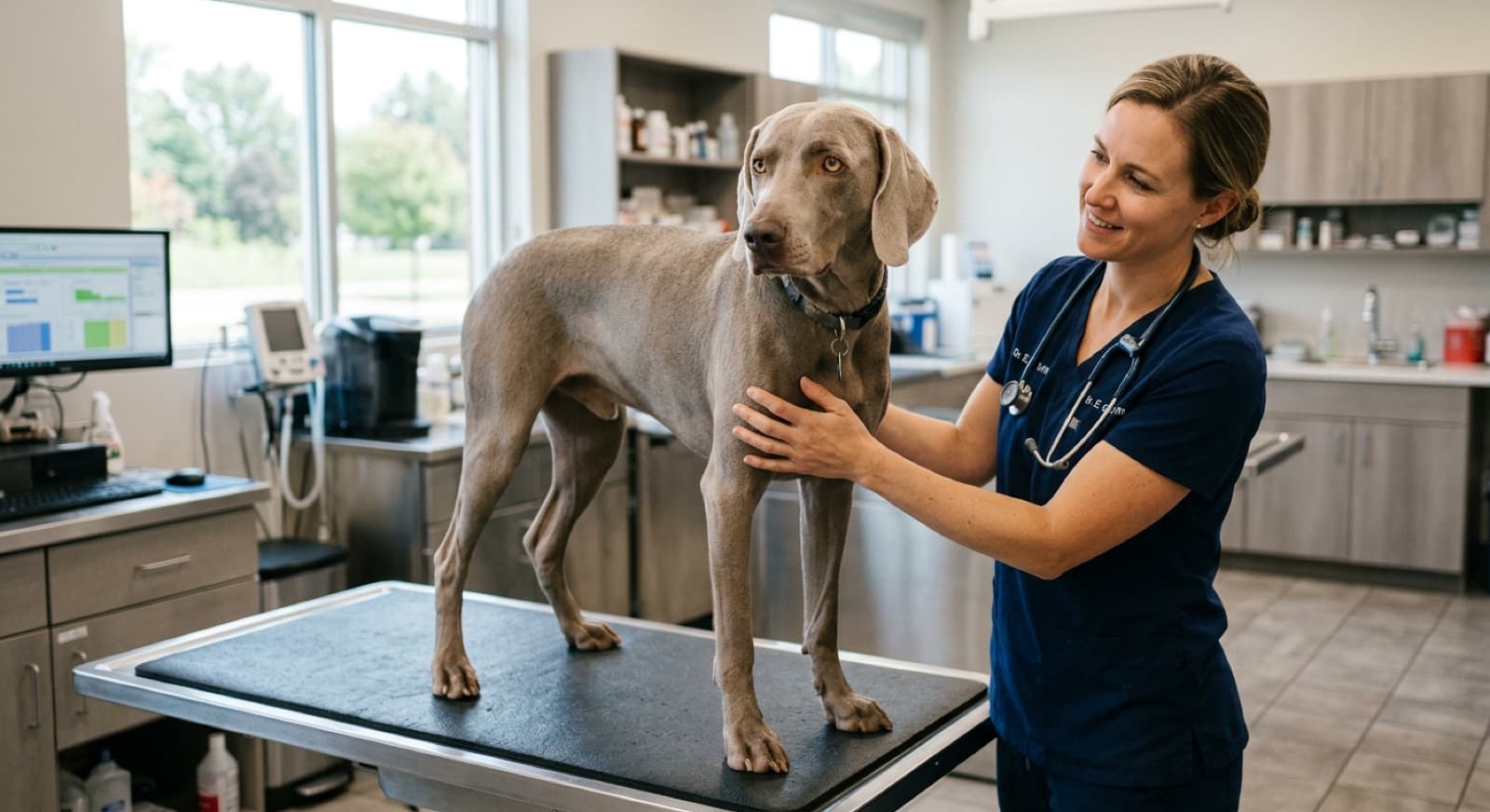
The Weimaraner is a hardy, athletic breed, and most live long, active lives. But there is one condition that overshadows the rest for this dog, and it comes directly from its build. A few others are worth knowing too. This guide walks through each with authoritative sources, then covers preventive care in Calgary, so you can stay ahead of problems rather than react to them.
Bloat (GDV): the deep-chested emergency
This is the one that can kill a Weimaraner in an afternoon. As a large, deep-chested breed, the Weim is among the dogs at real risk of bloat, or gastric dilatation-volvulus (GDV), where the stomach fills with gas and can twist on itself. According to the American Kennel Club, deep-chested dogs face the greatest risk, and without treatment a bloating dog can go into shock in only an hour or two.
Know the warning signs (per the AKC):
- An enlarging or visibly distended abdomen
- Retching, or trying to vomit with little or nothing coming up
- Drooling or salivation
- Restlessness and pacing
- Pain when the belly is touched
If you see these signs, this is a true emergency: go straight to a 24-hour vet, do not wait. Treatment involves deflating the stomach and, often, a gastropexy, a surgery that tacks the stomach in place to prevent it twisting again. Ask your Calgary vet whether a preventive gastropexy makes sense for your Weimaraner, and about feeding practices that may lower risk.
Hips, joints, and the von Willebrand bleeding disorder
Like most large, active breeds, Weimaraners can develop hip and elbow dysplasia, joint conditions that cause instability and, over time, arthritis. Reputable breeders screen hips and elbows through the Orthopedic Foundation for Animals (OFA). Growing Weimaraner puppies can also experience hypertrophic osteodystrophy (HOD), a painful bone condition; any young dog that is limping, feverish, or reluctant to move needs a vet, not a wait.
The inherited concern to have on record is von Willebrand disease, a blood-clotting disorder in which the blood does not clot normally, so an affected dog may bleed more than expected from injury or surgery. A DNA test exists and good breeders screen for it. The practical takeaway for an adopted Weimaraner is simple: mention the breed to your vet before any planned surgery so they can take appropriate precautions. Entropion (an inward-rolling eyelid) and hypothyroidism also appear in the breed and are readily managed once a vet identifies them.
Preventive care and insurance in Calgary
For most of its ten-to-thirteen-year life, a Weimaraner needs standard large-breed care: routine vet visits, quality food, a lean body, sensible exercise, and prevention. The American Kennel Club describes an athletic breed built for activity, and keeping one sound means matching that activity without overdoing impact on young joints. The two line items most likely to generate a big vet bill are bloat surgery and orthopedic problems, which is the case for pet insurance.
Price a few Canadian insurers while your dog is young and healthy, before anything becomes pre-existing, and read what each excludes. The single most useful habit for this breed is knowing your nearest 24-hour emergency vet in advance, because bloat does not keep business hours. For what daily life with a Weimaraner demands, see our guide to Weimaraner separation anxiety, and for the adoption picture, our Weimaraner adoption guide.
Considering a Weimaraner?
Adopting an adult through a rescue that has done a vet workup means much of the health history is already known, a real advantage with a deep-chested breed. See who is available across Calgary rescues.
See Calgary Weimaraners →Frequently Asked Questions
What health problems are Weimaraners prone to?↓
Are Weimaraners prone to bloat?↓
What are the warning signs of bloat in a Weimaraner?↓
What is von Willebrand disease in Weimaraners?↓
How long do Weimaraners live?↓
Continue reading
Why so many end up in rescue, and who the breed suits.
The velcro-dog challenge, and how to help.
Live listings across Calgary rescues.
Protecting a short-coated athlete from the cold.
New dog? Start with these care guides
Everything a new adopter needs to set up a safe, happy home.