The short answer
Weimaraners bond so intensely to their people that many genuinely struggle to be left alone, and separation anxiety is the top behaviour reason they end up in rescue. Signs include destruction, howling, house-soiling, and escape attempts that happen specifically when you leave. What helps is meeting the dog's exercise and enrichment needs, building alone time gradually, and never punishing anxiety-driven mess. For anything beyond mild cases, or if the dog is hurting itself, work with your vet or a qualified behaviourist, who may combine behaviour modification with medication where appropriate. This is general information, not veterinary advice.
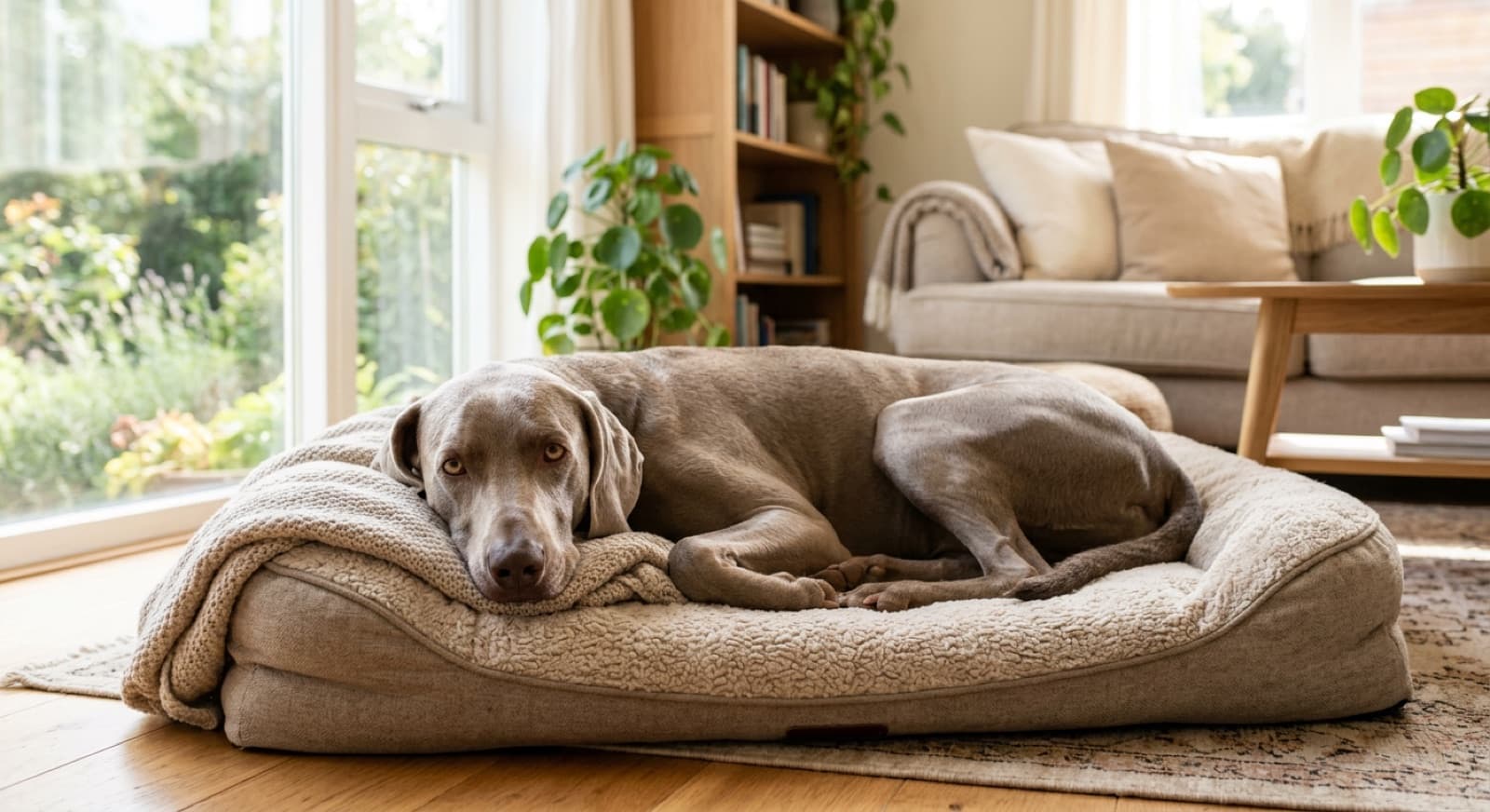
Every Weimaraner owner learns the word “velcro” quickly. This is a breed that wants to be with you every minute, and the same trait that makes it such a devoted companion is what makes being left alone so hard for it. Understanding that, and taking alone time seriously from day one, is the difference between a Weimaraner that settles happily and one whose panic tears a household apart. This guide covers how to recognise separation anxiety, what genuinely helps, and when to get professional support.
Why the Grey Ghost is so prone to it
The Weimaraner was bred to work in close partnership with a hunter and to be a constant companion, and the American Kennel Club describes a breed that wants lots of quality time with its humans. That deep attachment is the breed's gift and its vulnerability. A dog wired to be with you does not simply relax when you leave; for many Weimaraners, your absence registers as something closer to distress.
This is why separation anxiety is so common in the breed, and why it is the leading behaviour reason Weimaraners are surrendered. It is important to be clear: this is not the dog being naughty or spiteful. It is panic. Treating it as misbehaviour, and punishing it, makes it worse. Treating it as an emotional problem to be managed and modified is what actually works.
Anxiety or boredom? Recognising the signs
According to the ASPCA, dogs with separation anxiety may urinate or defecate indoors, bark and howl, chew, dig, or try to escape when left alone, and show panting, drooling, pacing, and frantic greetings when you return. The key detail is timing: the behaviour is tied specifically to your absence and often begins within minutes of your leaving.
That is different from plain boredom. A bored, under-exercised Weimaraner also chews and gets into trouble, but it is calmer about it, and the behaviour eases when you increase exercise and enrichment. True separation anxiety has a frantic, panicked quality and does not improve with exercise alone. Telling the two apart matters, because the plan is different. If you are unsure, a short video of your dog while you are out often makes it obvious, and is exactly what a vet or behaviourist will want to see.
What actually helps
For mild cases, the general approach that the AKC and ASPCA describe rests on a few pillars:
- Meet the needs first. A physically and mentally tired Weimaraner copes far better. Exercise and enrichment before you leave are foundational, not optional.
- Build alone time gradually. Practise very short absences and slowly extend them, so your dog learns that you always come back and that being alone is safe.
- Defuse the departure cues. Pick up your keys or put on your coat and then stay, so those signals stop predicting that you are leaving and stop triggering the panic.
- Add enrichment at departure. A food-stuffed toy, ideally frozen to last, gives your dog something positive to associate with your leaving.
- Never punish the aftermath. House-soiling or destruction from anxiety is not defiance. Punishing it deepens the fear and makes the problem worse.
Keep departures and arrivals low-key rather than emotional, and set your adopted Weimaraner up for success from the first week by building in calm alone time rather than shadowing you every minute. In Calgary, practical management like a midday dog walker or doggy daycare can bridge the gap while you train, and matters even more in winter when outdoor exercise takes more planning. Our winter dog care guide covers keeping an athletic breed exercised in the cold.
When to get professional help
Home management works for mild cases, but genuine separation anxiety is a recognised condition and often needs a professional. See your vet if the anxiety is more than mild, if your dog is injuring itself trying to escape, or if you are not making progress. The ASPCA notes that many dogs do best with a combination of behaviour modification and, in some cases, medication prescribed by a veterinarian. Your Calgary vet can assess the dog, rule out other causes, and refer you to a veterinary behaviourist. Do not attempt to medicate a dog yourself; that is a decision for your vet, not a home remedy.
Ready for a devoted Weimaraner?
Adopting an adult through a Calgary rescue lets you ask directly how a dog copes when alone, which matters more than anything else in this breed. See who is available now.
See Calgary Weimaraners →Frequently Asked Questions
Why do Weimaraners have separation anxiety?↓
What are the signs of separation anxiety in a Weimaraner?↓
How do you help a Weimaraner with separation anxiety?↓
When should I see a vet about my Weimaraner’s separation anxiety?↓
Can you leave a Weimaraner alone during the workday?↓
Continue reading
Why so many end up in rescue, and who the breed suits.
Bloat, hips, bleeding disorders, and preventive care.
Live listings across Calgary rescues.
Exercise is the foundation of a settled Weimaraner.
New dog? Start with these care guides
Everything a new adopter needs to set up a safe, happy home.