The short answer
Trauma-history German Shepherds need decompression measured in months, not days. The standard 333 rule (3 days, 3 weeks, 3 months) is the starting framework; for Edmonton rescue GSDs, especially the chain-tether and undersocialization cases coming through SCARS, plan on 6 to 12 months for the real personality to emerge. Engage an Edmonton force-free trainer within the first one to two weeks. Read the foster temperament evaluation before you apply. The bond when it forms is often the most loyal of any breed.
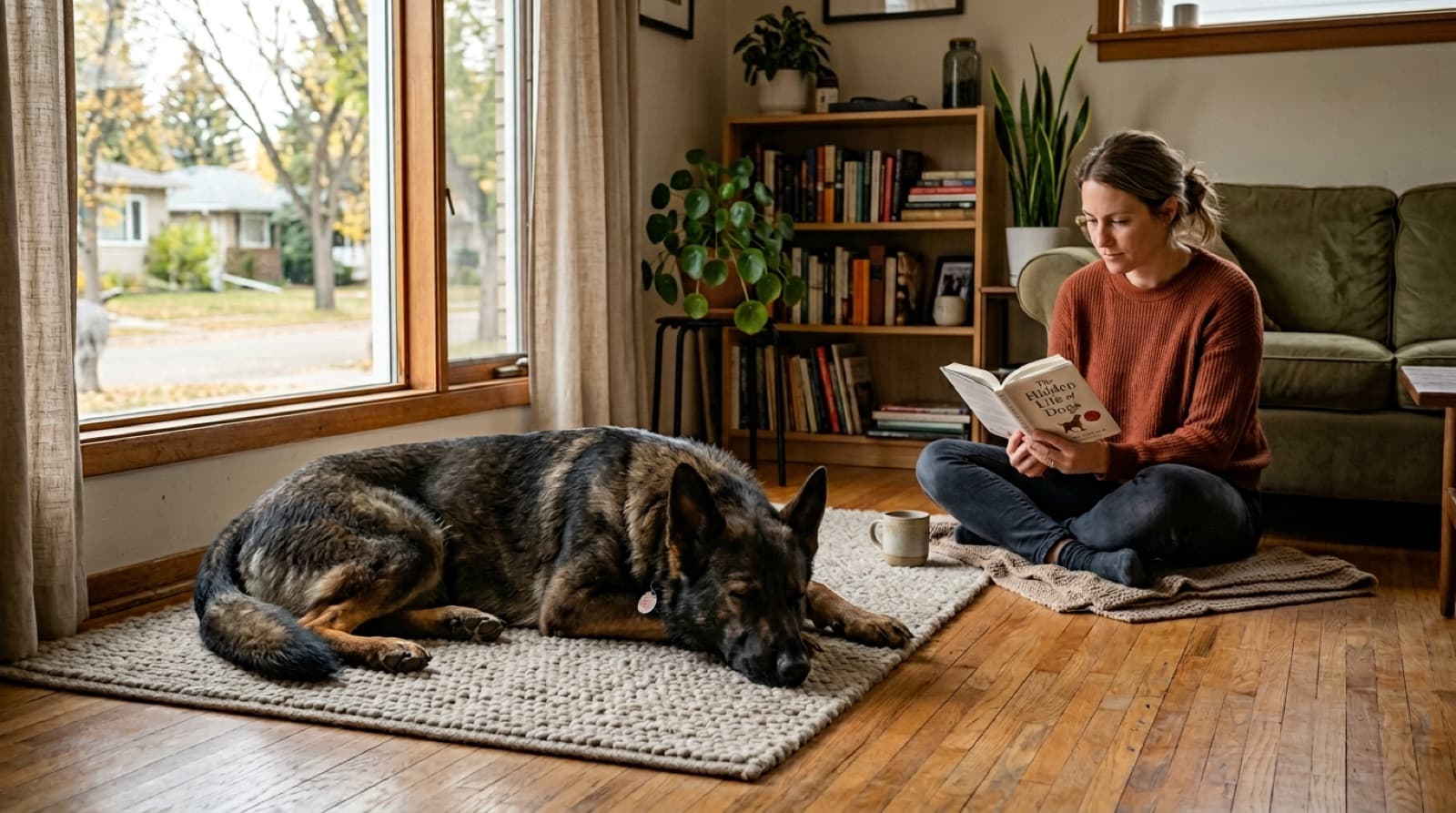
Where Edmonton's rescue Shepherds come from
Edmonton has three main GSD pipelines and the dogs from each arrive with different histories. Understanding which pipeline a dog came through helps you anticipate what decompression and rehabilitation will look like.
SCARS (Second Chance Animal Rescue Society): the largest pipeline for working-line and Shepherd-cross dogs. SCARS pulls heavily from northern Alberta communities, including Indigenous community partnerships where Shepherds and Shepherd-crosses are common working dogs. Many SCARS GSDs arrive with chain-tether history, limited human handling, no leash experience, no indoor exposure, and sometimes no prior veterinary care. SCARS fosters write detailed temperament notes that are usually the most honest assessment you will get of the dog's starting point. Read those notes carefully before applying.
Edmonton Humane Society: open-admission, so EHS takes owner surrenders, bylaw confiscations, and stray intake from across Edmonton metro. EHS GSDs are often more habituated to indoor living than SCARS dogs, but the surrender history sometimes includes the behaviour that led to the surrender (reactivity, resource guarding, separation anxiety). Ask the adoption counsellor directly what is known about why the dog was surrendered.
AHHRB (Alberta Homeward Hound Rescue Bureau): takes unclaimed dogs from bylaw agencies across Sherwood Park, Strathcona County, Fort Saskatchewan, Leduc, Camrose, Tofield, and Edmonton. Stray history is the norm, which means the dog's prior socialisation is often unknown. AHHRB's temperament evaluation is the foster's observed read of the dog over weeks; treat it as the best available evidence.
Other Edmonton rescues that occasionally have GSDs or Shepherd-mixes include Hope Lives Here Animal Rescue (foster-based, Sherwood Park base), GEARS (Greater Edmonton Animal Rescue Society, foster-based with force-free training emphasis), and Zoe's Animal Rescue (foster-based with thoughtful matchmaking).
The 333 rule applied to high-drive GSDs
The 333 rule is canonical rescue-community guidance: three days to decompress, three weeks to learn the routine, three months to feel at home. For high-drive guarding breeds like the German Shepherd, the timelines often extend.
First 3 days, decompression: dog overwhelmed, sometimes shut down, sometimes hyper-vigilant. May not eat much. May seem too good. Real personality not showing. Bite risk is highest in this window because the dog is most stressed. No forced interaction, no visitors, no baths, no grooming, no vet visits unless emergency.
First 3 weeks, learning the routine: dog starts to settle, learns the household rhythm, sometimes shows what looks like regression as real behaviours emerge. Real GSD personality often takes four to six weeks to surface. Begin basic positive-reinforcement training in week two if the dog is settling.
First 3 months, feeling at home: real personality fully emerges. Bond deepens. The dog you adopted in week one is not the dog you will have at month three.
Edmonton GSD extension: many SCARS dogs need 6 to 12 months for full adjustment because of chain-tether and undersocialization history. Severe trauma cases sometimes need 12 to 24 months with ongoing behaviourist support. Treat 333 as a minimum, not a finish line.
Behavioural red flags in the first two weeks
Some stress responses in the first week are normal. The same patterns still showing in week three or beyond are the signal to engage professional support.
- Resource guarding: growling, freezing, or stiff body language around food, toys, beds, or a specific person. Do not test guarding to confirm it; assume it and manage with space and gates.
- Leash reactivity: lunging, barking, or fixating on other dogs or people during walks. Often worsens in the first weeks as the dog learns the route and starts to feel territorial.
- Handler distrust: flinching from raised hands, ducking from collar grabs, refusing to come inside, hiding when leashed.
- Startle responses: overreaction to doorbells, sudden movements, dropped objects, household appliances (vacuums, blenders, dryers). Some startle is normal; sustained shutdown after a startle is a signal.
- Separation distress: panting, pacing, destruction, vocalisation, or self-harm when left alone. Edmonton winter adoption often surfaces this because the dog is indoors longer.
Bite incidents of any kind, including air snaps and minor warnings, are immediate reasons to call an Edmonton force-free trainer and the rescue.
Decompression space in an Edmonton home
Physical setup: crate or quiet room in a low-traffic part of the home, away from the front door and away from windows that look onto the street. Baby gates to separate the dog from kids, other pets, and visitors. Soft bedding. Water within reach. Food in the safe space initially. The dog should be able to retreat to the safe space and choose to come out when ready.
Routine: same person feeding at the same times. Same outdoor potty schedule. Same evening wind-down. Predictability builds trust faster than affection does.
Edmonton winter adoption: plan indoor decompression with brief outdoor potty trips in the yard, not neighbourhood walks past unknown dogs. A trauma-history GSD on a leash in a busy Edmonton residential area in week one is a setup for reactivity. Build calm in the home first, then expand the world.
What to avoid in the first week: visitors, baths, vet visits unless emergency, grooming sessions, boundary testing, multi-pet introductions, child-focused interactions. The first week is for the dog to learn that this home is safe.
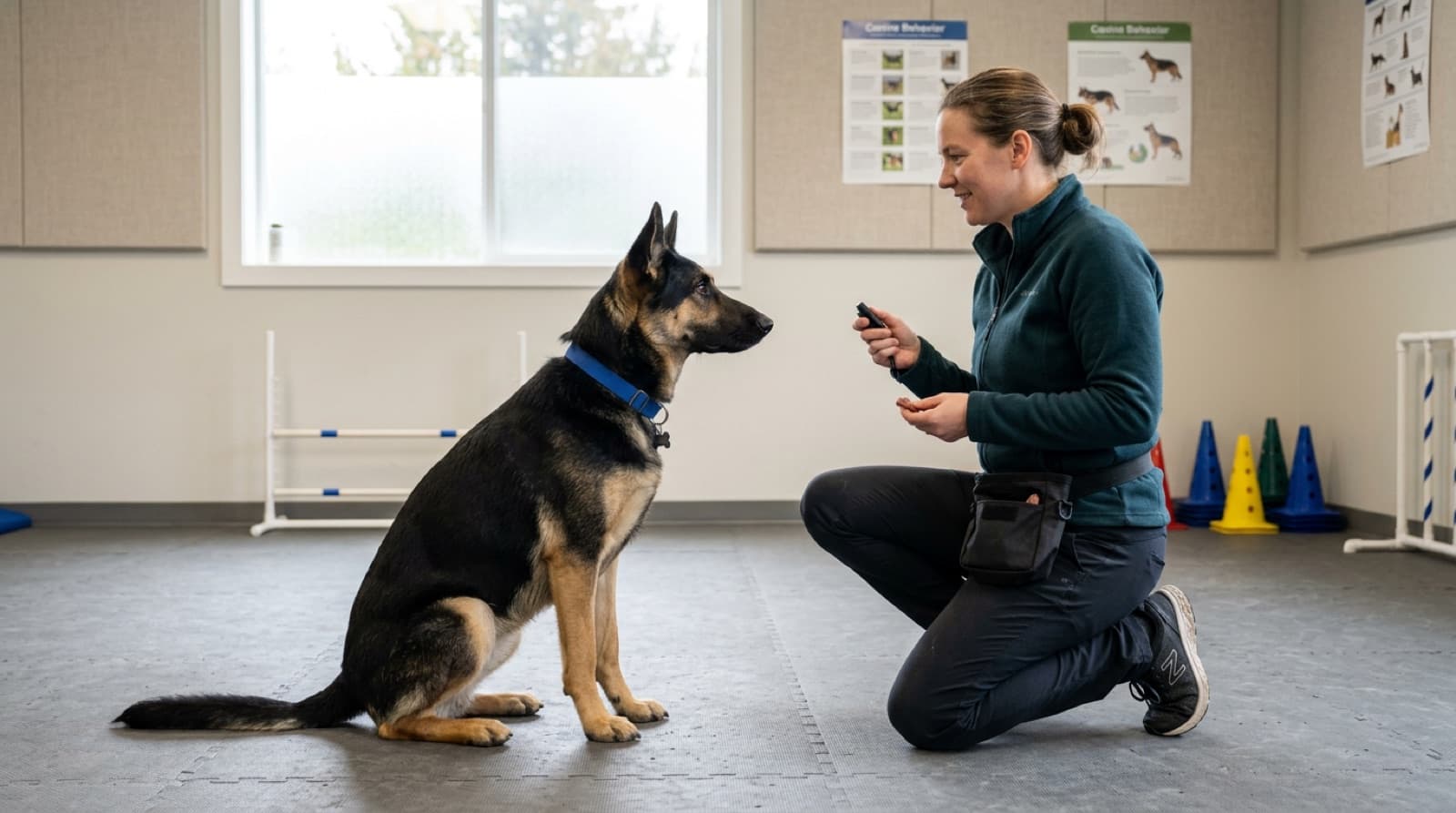
Force-free training fundamentals
Positive-reinforcement-only methods are the consensus recommendation for fearful or reactive dogs. The American Veterinary Medical Association and the American Animal Hospital Association both recommend positive-reinforcement and low-stress handling for reactive dogs because aversive methods reliably elevate aggression in trauma cases.
Core principles: reward the behaviour you want; manage the environment to prevent the behaviour you do not want; never punish a fearful dog (it confirms the dog's assessment that you are unsafe); use high-value food rewards in early training because the dog has not yet learned that you are a source of safety.
What to look for in an Edmonton force-free trainer: credentials from CCPDT (CPDT-KA, CBCC-KA), the IAABC (CDBC), the Karen Pryor Academy, or Fear Free Pets. Ask: are you certified in force-free/LIMA/positive-reinforcement-only methods? Do you have rescue-dog trauma experience? Do you have GSD-specific experience? Will you coordinate with a veterinary behaviourist if medication is part of the plan? Can you provide references from past rescue-GSD clients?
Red flags: shock or prong collar recommendations, “alpha” or “dominance” language, promises of rapid results, refusal to explain methodology, refusal to coordinate with veterinary care.
Investment range: private in-home training $80 to $150 per session, group reactive-dog classes $200 to $400, behaviour-modification programs $500 to $2,000 in the first year. Telehealth options serve Alberta.
When to call a certified behaviourist
Trainers handle teaching cues and shaping behaviour. Certified behaviourists handle clinical-level behavioural conditions and can coordinate with veterinarians on anti-anxiety medication when that is part of the plan. The distinction matters for severe trauma cases.
Call a behaviourist when you see:
- Bite incidents of any kind, including air snaps
- Severe persistent leash reactivity that does not respond to standard force-free protocols
- True aggression (offensive intent, not defensive fear)
- Self-harm behaviour (compulsive licking, chewing, tail spinning)
- Severe destructive behaviour
- Breakdown of training progress
- Family safety concerns
Ask your primary vet for a referral to a board-certified veterinary behaviourist (Dip. ACVB). Telehealth options serve Alberta adopters. Investment range $300 to $500 per session. Some cases benefit from anti-anxiety medications (fluoxetine, trazodone, clomipramine) prescribed and monitored by the veterinary behaviourist. Medication is part of a treatment plan that also includes force-free training and management, not a standalone solution.
Why foster-to-adopt is the strongest path
For most first-time GSD owners and any household with kids or other pets, foster-to-adopt is the strongest path for a trauma-history Shepherd. The dog comes home on a trial basis, usually two to four weeks, during which the rescue retains ownership and supports the foster with food, training help, and a safety net to return the dog if the match is wrong.
What foster-to-adopt buys you: you find out how the dog actually settles in your specific home before the contract is final; the rescue is more forthcoming with support when they still own the dog; you have a graceful exit if the dog is not the right match; the dog is not jerked between homes with a feeling of failure.
Several Edmonton rescues run informal foster-to-adopt arrangements; ask the rescue directly. Foster-to-adopt is not failure, it is risk management. For a trauma-history GSD, the worst outcome is a return after a bonded month in your home; the foster-to-adopt window catches mismatches before the bond consolidates.
Bottom line
Likely to succeed if: patience for an extended 333 timeline, force-free training commitment in the first year, pet insurance enrolled early, an emergency medical fund, predictable household routine, an Edmonton certified force-free trainer relationship, careful reading of the foster temperament evaluation, and a long-term view.
Likely wrong if: not willing to use force-free methods, leaning toward aversive training, impatient with slow progress, unable to fund the lifetime reality, a first-time GSD owner without breed-experienced mentorship, or a household with very young children needing constant supervision plus a severely reactive dog plus full-time work obligations.
The reward: rare loyalty. Many Edmonton GSD adopters describe their trauma-history rescues as the most meaningful relationships of their lives.
References used in this guide: American Kennel Club: German Shepherd Dog; American Veterinary Medical Association: dog-bite prevention; Certification Council for Professional Dog Trainers; International Association of Animal Behaviour Consultants; Cornell Riney Canine Health Center; Canadian Kennel Club.
Browse adoptable German Shepherds in Edmonton
Foster-evaluated rescue GSDs from SCARS, Edmonton Humane Society, AHHRB, GEARS, Hope Lives Here, and Zoe's Animal Rescue. Foster-to-adopt + force-free training + insurance enrolled early is the highest-success path for trauma-history Shepherds. Listings update regularly.
See Available Dogs →Frequently Asked Questions
Where do most Edmonton rescue German Shepherds come from?
Most Edmonton rescue GSDs come through three pipelines. SCARS (Second Chance Animal Rescue Society) pulls heavily from underserved northern Alberta communities including Indigenous community partnerships, where Shepherds and Shepherd-cross working dogs are common. Many SCARS GSDs arrive with chain-tether trauma, undersocialization, and a history of harsh handling. Edmonton Humane Society takes owner surrenders, bylaw confiscations, and stray intake from across Edmonton metro. AHHRB (Alberta Homeward Hound Rescue Bureau) takes unclaimed dogs from bylaw agencies in Sherwood Park, Strathcona County, Fort Saskatchewan, Leduc, Camrose, Tofield, and Edmonton. Each pipeline produces a different trauma profile. Ask the rescue specifically about the dog's known history before you commit.
What is the 333 rule and does it apply to GSDs?
The 333 rule is rescue-community guidance: three days to decompress, three weeks to learn the routine, three months to feel at home. For high-drive guarding breeds like the German Shepherd, the timelines usually extend. First three days: the dog is overwhelmed, sometimes shut down, sometimes hyper-vigilant. May not eat. May seem too good. Real personality is not showing. First three weeks: dog starts to settle, learns household rhythm, sometimes shows what looks like regression as real behaviours emerge. First three months: real personality emerges, bond deepens. Edmonton extension: many SCARS GSDs need 6 to 12 months for full adjustment because of chain-tether and undersocialization history. Severe trauma cases sometimes need 12 to 24 months with ongoing behaviourist support. Treat 333 as a minimum, not a finish line.
What behavioural red flags should I watch for in the first two weeks?
Watch for resource guarding (growling or freezing around food, toys, beds, or a specific person), leash reactivity (lunging, barking at dogs or people on walks), handler distrust (flinching from raised hands, ducking from collar grabs, refusing to come inside), startle responses (overreaction to doorbells, sudden movements, dropped objects), and separation distress (panting, pacing, destruction, vocalisation when left alone). Any of these in week one is normal stress. The same pattern still showing in week three is a signal to engage an Edmonton certified force-free trainer. Bite incidents of any kind, including air snaps and minor warnings, are reasons to call right away.
How do I set up decompression space for a rescue GSD in an Edmonton home?
Crate or quiet room in a low-traffic part of the home, away from the front door and away from windows that look onto the street. Baby gates to separate the dog from kids, other pets, and visitors. Predictable routine: same person feeding at the same times, same outdoor potty schedule, same evening wind-down. No visitors in the first week. No baths, no vet visits unless emergency, no grooming, no boundary testing. The dog should be able to retreat to a safe space and choose to come out when ready. For an Edmonton winter adoption, plan indoor decompression with brief outdoor potty trips in the yard rather than neighbourhood walks past unknown dogs.
What is an Edmonton force-free trainer and when should I engage one?
A force-free trainer (sometimes called LIMA or positive-reinforcement-only) uses reward-based methods without shock collars, prong collars, alpha rolls, or leash corrections. The American Veterinary Medical Association and the American Animal Hospital Association both recommend positive-reinforcement and low-stress handling for fearful or reactive dogs, because aversive methods reliably elevate aggression in trauma cases. For Edmonton rescue GSDs, the standard recommendation is a foundation consult within the first one to two weeks of adoption, and immediate consultation if any concerning behaviour (reactivity, fear, growling, snapping, resource guarding) emerges. Look for credentials from CCPDT (CPDT-KA, CBCC-KA), the IAABC (CDBC), the Karen Pryor Academy, or Fear Free Pets. Ask the trainer directly about their methodology and their experience with rescue-dog trauma and with the GSD breed specifically.
What should I never do with a trauma-history rescue GSD?
Avoid flooding (visitors, baths, vet visits, grooming, crowded places, forced socialisation in the first one to three weeks). Avoid aversive training (alpha rolls or dominance methods can trigger a defensive bite in a fearful Shepherd; shock collars and prong collars elevate aggression in trauma cases). Avoid forced handling (hugging, face-touching, prolonged eye contact, grabbing the collar without preparation). Avoid emotional projecting (do not assume the dog needs constant affection; do not over-comfort fearful behaviour, which can reinforce it). Avoid inconsistency (different rules between family members, variable schedule, inconsistent training cues). Avoid overwhelming environments (loud media, multiple new pets introduced at once, unsupervised children, dog parks before trust is established).
When should I call an Edmonton certified behaviourist instead of a trainer?
Call a behaviourist when you see bite incidents of any kind including minor air snaps, severe persistent leash reactivity that does not respond to standard force-free protocols, true aggression (offensive intent, not defensive fear), self-harm behaviour (compulsive licking, chewing, tail spinning), severe destructive behaviour, breakdown of training progress, or family safety concerns. The distinction matters: trainers handle teaching cues and shaping behaviour; certified behaviourists handle clinical-level behavioural conditions and can coordinate with veterinarians on anti-anxiety medication when that is part of the plan. Ask your primary vet for a referral to a board-certified veterinary behaviourist (Dip. ACVB); telehealth options serve Alberta. Some Edmonton behaviour cases benefit from medications like fluoxetine or trazodone, prescribed and monitored by the veterinary behaviourist.
How does the SCARS pipeline change what I should expect from a rescue GSD?
SCARS GSDs often arrive from northern Alberta partnerships where dogs may have lived their entire lives on a chain tether, with limited human handling, no leash experience, no indoor exposure, and sometimes no veterinary care. The fosters who evaluate these dogs are usually rural Alberta volunteers who write detailed notes about what the dog tolerated in their home. Read the foster temperament evaluation carefully before applying, and ask SCARS directly about what the dog has been exposed to in foster (cats, other dogs, kids, stairs, leashes, vet visits). Treat the foster's evaluation as the starting point, not a finished product. Edmonton home adoption usually means the dog's second-ever indoor environment after the foster home, so expect a fresh round of decompression even after the foster has done good work.
Is foster-to-adopt a better path than direct adoption for a trauma-history GSD?
For most first-time GSD owners and for any household with kids or other pets, yes. Foster-to-adopt programs let the dog come home on a trial basis, usually two to four weeks, during which the rescue retains ownership and supports the foster with food, training help, and a safety net to return the dog if the match is wrong. Many Edmonton rescues run informal foster-to-adopt arrangements; ask the rescue directly. The advantage for trauma cases is real: you find out how the dog actually settles into your specific home before the contract is final, the rescue is more forthcoming with support when they still own the dog, and you have a graceful exit if the dog is not the right match. Foster-to-adopt is not failure; it is risk management.
What does the first year of rehabilitation actually look like?
Week one is pure decompression, no demands. Weeks two to four introduce the basic routine and a foundation force-free training consult. Months two and three see the real personality begin to emerge and the bond develop. Months four to six are usually the inflection point, where the dog either consolidates a trusting partnership or surfaces the trauma patterns that need professional support. Months seven to twelve build on the gains, expand the dog's tolerated experiences (longer walks, cautious visitor exposure, reliable cues in low-distraction environments), and integrate the dog into family life. Severe trauma cases continue into year two with ongoing behaviourist support. The bond when it forms is often the most loyal of any breed. Edmonton GSD owners often describe their rescues as the most devoted dogs of their lives once trust is built.
How much should I budget for a trauma-history rescue GSD in Edmonton?
Adoption fee from an Edmonton rescue runs roughly $250 to $700 depending on the dog and the rescue. Initial setup (crate, bedding, quality food, force-free trainer foundation consult, vet baseline exam, pet insurance enrolment) runs roughly $500 to $1,500. Force-free trainer engagement in the first year runs $200 to $2,000 depending on case complexity. Pet insurance runs $50 to $150 per month and should be enrolled before any behavioural issue is documented, because behavioural conditions can be excluded as pre-existing. Annual care including food, vet, and insurance runs $2,000 to $5,000. Build an emergency medical fund of at least $5,000 to $10,000. Veterinary behaviourist consultations for severe cases run $300 to $500 per session, with telehealth options for Alberta adopters.
What is the realistic bottom line on adopting a trauma-history GSD in Edmonton?
Likely to succeed if you have patience for an extended 333 timeline, commit to force-free training in the first year, enrol pet insurance early, set aside an emergency medical fund, run a predictable household routine, build a relationship with an Edmonton certified force-free trainer, read the foster temperament evaluation carefully and ask the hard questions, and take a long-term view (the partnership pays off in year one and compounds for the next decade). Likely wrong if you are not willing to use force-free methods, lean toward aversive training, are impatient with slow progress, cannot fund the lifetime medical and behavioural reality, are a first-time GSD owner without breed-experienced mentorship, or have a household with very young children needing constant supervision plus a severely reactive dog plus full-time work obligations. The reward when it works is rare loyalty. Many Edmonton GSD adopters describe their trauma-history rescues as the most meaningful relationships of their lives.
German Shepherd Adoption Edmonton
Rescue sources, costs, lifestyle fit, and the full Edmonton GSD adoption overview.
Best Dog Rescues Edmonton
SCARS, EHS, Zoe's, GEARS, Hope Lives Here, and AHHRB compared by adopter persona.
GSD Adolescence Edmonton
Why month 8 to 30 is the hardest stretch, and how Edmonton force-free trainers help.
All Edmonton Adoptable Dogs
Live listings of rescue dogs from Edmonton-area shelters and foster networks.
New dog? Start with these care guides
Everything a new adopter needs to set up a safe, happy home.