The short answer
Three to seven brushings a week year-round, daily during coat blow, never shave. The Akita double coat sheds moderately every day and blows undercoat in concentrated bursts for four to six weeks in spring and again in fall. Tools matter: undercoat rake, slicker brush, pin brush, metal comb. Bathing every four to eight weeks with thorough drying prevents hot spots. The most damaging owner mistake is asking for a summer body-shave, which destroys the coat's thermoregulation and frequently triggers Post-Clipping Alopecia. Akitas with sebaceous adenitis or VKH skin involvement need a modified routine; see the health-issues guide.
How the Akita double coat actually works
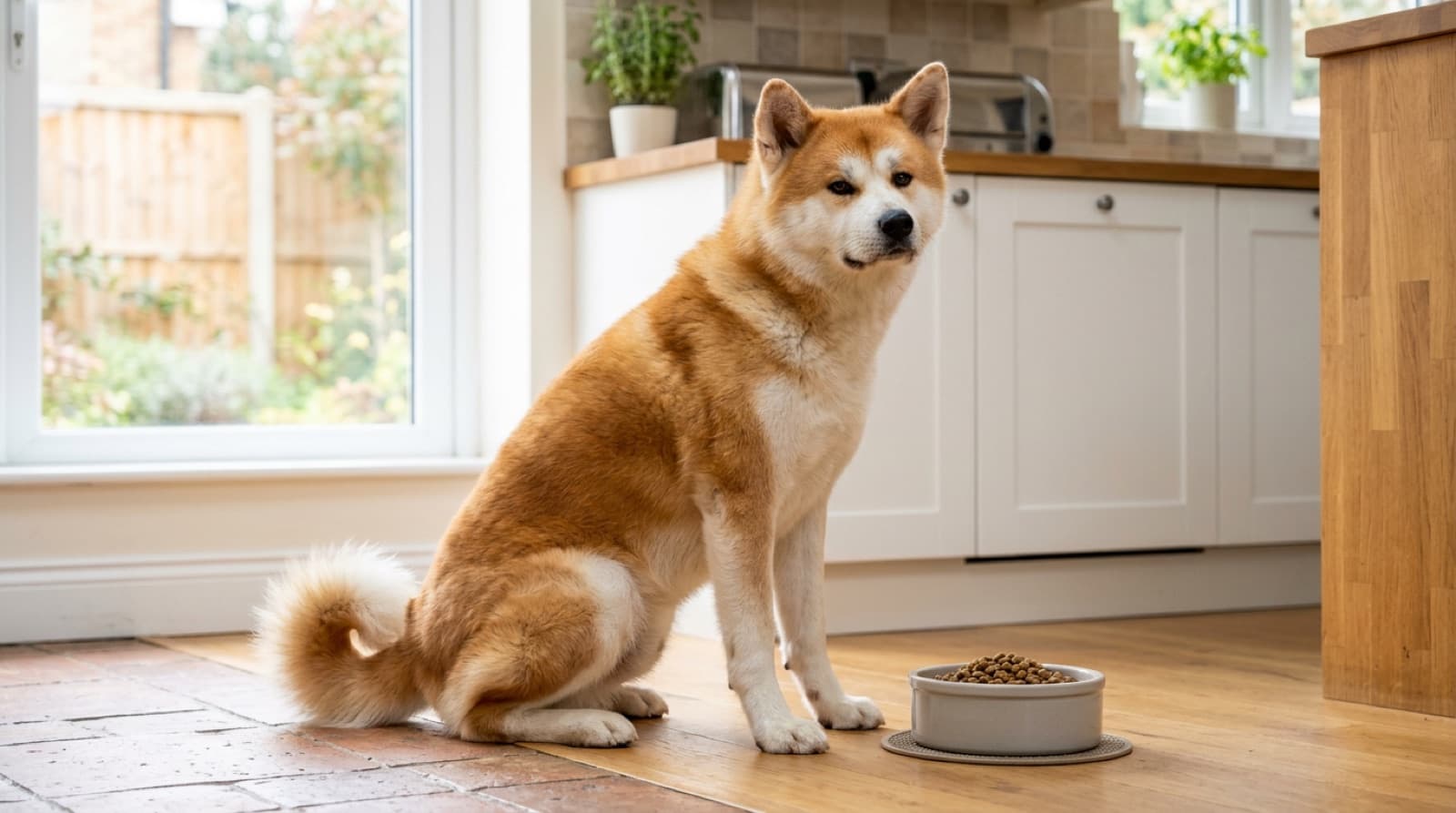
The Akita wears two layers of coat doing two different jobs. The dense soft undercoat sits close to the skin and traps a layer of air for insulation. The harsh straight guard hairs of the topcoat sit on top, deflect water and dirt, and give the breed its trademark plush bear-suit silhouette. The two layers depend on each other. Damage one and the other stops working properly. That single fact is the foundation for every grooming decision below.
Both layers grow on cycles. The undercoat thickens before winter and releases before summer, then thickens again before winter and releases again before summer. This twice-yearly release is what owners call coat blowing. The guard hairs grow more slowly and continuously through the dog's life. The American Kennel Club describes the double-coated breed family (Akita, Husky, Bernese, Samoyed, Malamute, and Chow Chow among others) as built for cold-climate work, with insulation properties that depend on the coat being intact rather than clipped.
The bear-suit appearance of an adult Akita is largely coat density, not body size. A thoroughly brushed-out Akita in spring after a coat blow looks meaningfully slimmer than the same dog mid-winter, although the underlying frame has not changed. New owners often think the dog has lost weight when in fact the dense winter undercoat has released. This is normal. The dog is not skinny; the coat is doing its job.
Standard versus long-haired Akita
Most Akitas wear the standard coat: a dense plush double coat about two inches long across the body with longer guard hairs on the tail, neck ruff, and rear. A recessive variant produces the long-haired Akita (sometimes called the long-coat Akita or, in Japanese-line dogs, the Moku). Long-coated Akitas appear in both American Akita and Akita Inu lines and are not show-eligible under any major kennel club standard, although they make excellent pets and reach rescue at similar rates to the standard coat.
The grooming routine is the same in structure but longer per session. Brushing runs 30 to 50 percent longer because more coat means more passes per zone. The feathering on the legs, the rear, and the ear backs mats faster than on a standard-coated Akita, so the metal comb becomes a daily tool rather than a session-finish check. The tail plume on a long-coated Akita is genuinely substantial and needs its own brushing pass at every session.
The never-shave rule applies equally to long-coated Akitas. The longer coat is not a reason to clip; the coat structure and thermoregulation work the same way. Long-coated Akitas show Post-Clipping Alopecia at rates similar to standard-coated dogs, and a body shave damages the coat and the dog's temperature regulation just as severely.
The two annual coat blow seasons
Akitas shed every day of their lives. The dense undercoat constantly releases small amounts of hair, the guard hairs cycle through replacement, and the feathering on the legs, neck, and tail sheds at its own rate. Year-round moderate shedding is normal. It is not a coat problem to fix. It is the price of admission for the breed.
Twice a year the undercoat releases in bulk. The two Edmonton windows roughly map to April through May (spring blow, releasing the heavy winter undercoat) and October through November (fall blow, dropping summer coat as the new winter undercoat grows in). Each window lasts four to six weeks. The Edmonton spring blow tends to run longer than in milder climates because cold months keep winter coat locked in until temperatures climb consistently. During these weeks expect dramatic shedding, visible tumbleweeds of undercoat across the floor, a vacuum bag that fills in days rather than weeks, and a coat that may look patchy or uneven partway through the blow.
The management routine is more brushing, not less. An undercoat rake used daily through the coat blow pulls dead undercoat out cleanly. Twenty-five to forty minutes per session is reasonable during the heaviest weeks. A professional groom mid-blow that includes a high-velocity dryer accelerates the process by blowing out loose undercoat the brush cannot reach. Many established Edmonton groomers book longer appointments during April and October specifically for coat-blow grooms.
Coat blowing is normal and healthy. The mistake is panicking at the patchy mid-blow look and asking a groomer to even it out with a clipper. That is the single most common path to Post-Clipping Alopecia in adult Akitas. Sudden excessive shedding outside the coat-blow windows, patchy bald spots, or thinning that does not stop are different and signal something underlying that needs a vet workup. Hypothyroidism (common in middle-aged Akitas), sebaceous adenitis (Akita-overrepresented), allergies, and nutritional gaps are the usual culprits. See the dedicated health-issues guide for the medical workup.
The daily and weekly brushing routine
Three to seven brushings per week is the year-round baseline. A typical maintenance session runs 15 to 25 minutes. The goal is to reach the undercoat, lift dead coat, and check for mats in the four common trouble zones: behind the ears, in the heavy neck ruff, at the tail base, and through the leg furnishings.
Line brushing works like this. Sit or stand the dog on a non-slip surface. Start at one shoulder. Part the coat in a horizontal line near the skin with one hand. With the other hand, brush from the skin outward through the parted section using a slicker brush. Lay down a new horizontal line a half-inch higher and repeat. Work up the body in sections, then repeat on the other side, the legs, the chest, the neck ruff, the tail, and the rear. Pass a metal comb through the same sections at the end to catch anything the brush missed. The technique matters: surface brushing only pulls topcoat and misses the dead undercoat where matting starts.
During coat blow weeks the routine intensifies. Daily 25 to 40 minute sessions. The undercoat rake leads the work, with the slicker brush as a follow-up tool, and the metal comb as a final check. Many Edmonton owners pair this with a podcast and a quiet floor spot. Akitas typically tolerate the routine well if it was introduced calmly during puppyhood, and most adopted adult Akitas learn to settle into the routine within a few weeks. Reactive dogs may need a desensitisation plan with a qualified force-free trainer; the temperament and training guide covers the methodology.
The essential grooming tool kit
Four tools cover most of the work, with two optional add-ons that pay for themselves quickly:
- Undercoat rake. The single most important Akita tool. A row of long rounded metal teeth that pull dead undercoat without cutting topcoat guard hairs. Use daily during coat blow, weekly otherwise. Look for rounded tip teeth and a comfortable handle.
- Slicker brush. Fine bent wire bristles that reach into the undercoat and lift loose hair. The daily and weekly workhorse. A larger pad size (firm but not stiff) suits an Akita-size dog.
- Pin brush. A gentler tool with rounded-tip pins for daily passes through the topcoat and the heavy tail plume. Less aggressive than the slicker; reduces breakage on longer guard hairs and the long furnishings on a long-coated Akita.
- Metal greyhound-style comb. A two-section comb with fine and wide teeth. Runs through the coat at the end of every session to catch hidden mats and confirm the coat is genuinely clear to the skin. The honesty check that separates a thorough groom from a surface pass.
- Dematter (optional but useful). A blade tool with sharp recessed cutting edges that splits small mats from the inside. Used carefully on mats that have tightened past brush-out stage. Larger mats need a groomer.
- Force-style or high-velocity dryer (optional). A loud air-only dryer (no heat) that blows out loose undercoat and dries the dense coat thoroughly after a bath. Cuts coat-blow time roughly in half. Worth the $200 to $400 investment for committed owners; rent or rely on a groomer otherwise.
Some of the product links in this section are Amazon affiliate links — we may earn a small commission at no extra cost to you. It never changes which products we recommend.
A starter kit of four good single tools runs about $90 to $180 at an Edmonton pet supply store. Cheap multi-packs usually include the wrong tools (universal combs, soft-bristle brushes for short-haired dogs) and underperform on a double coat. Avoid Furminator-style deshedding blades. They feel productive but cut the guard hairs at the base, damaging the topcoat over months in ways that do not regrow quickly. The whole point of the double-coat system is the intact guard layer.
Bathing and the drying problem
Every four to eight weeks is typical for a healthy adult Akita, with the longer end of the range in winter. More often than every four weeks strips natural skin oils and dries the coat, particularly in Edmonton winter when indoor air is already arid. Less often than every ten weeks produces noticeable odour, especially in dogs that work outdoors or roll on walks.
How to bathe an Akita well. Brush thoroughly before the bath, not after. Wet matting felts under shampoo and becomes much harder to remove. Use a dog-specific shampoo (oatmeal-based for sensitive skin works well). Human shampoo has the wrong pH for dog skin and is harsher than needed. Work the shampoo through the dense coat to the skin, not just over the top. The Akita undercoat resists water; expect to spend a meaningful chunk of bath time just getting the coat truly wet. Rinse for longer than feels necessary; residual shampoo is a major cause of post-bath itching.
The critical step is drying. The dense Akita undercoat traps moisture for hours if left to air-dry, and trapped moisture against warm skin creates hot spots within 24 to 48 hours. Hot spots (acute moist dermatitis) appear as red, weeping, painful patches that the dog licks and scratches relentlessly, and they often need a vet visit, clipping the area, and topical or systemic treatment. The American College of Veterinary Dermatology consistently flags moisture trapped under dense coat as a primary trigger for pyotraumatic dermatitis in plush-coated breeds.
Active drying prevents the problem. Towel-dry aggressively first. Use a hair dryer on cool or low setting (or a force-style dog dryer if you own one), brushing as you dry. Pay particular attention to the chest, the neck ruff, the rear, the tail base, and the inside of each ear flap. These are the zones where moisture lingers longest. A full active dry on a clean adult Akita takes 30 to 60 minutes with a household dryer and 20 to 30 minutes with a force dryer. Many Edmonton Akita owners bathe at home between professional grooms and rely on the every six-to-ten-week professional groom for the high-velocity dry that does the real work.
The never-shave rule and Post-Clipping Alopecia
The single most important rule for an Akita coat: do not shave it. Not in summer to cool the dog down. Not during a coat blow to even it out. Not for a shorter, easier-care look. Not because a groomer suggests it. Body shaving an Akita is for genuine medical reasons only, such as a post-surgical site or a severely matted area that cannot be brushed out humanely.
Akitas are among the breeds strongly associated with Post-Clipping Alopecia, sometimes called clip-and-shave alopecia or post-clipping hair loss. After a body shave, the coat may grow back patchy, woolly in texture, sparse in coverage, or in some cases not return at all in the shaved area. The American College of Veterinary Dermatology recognises Post-Clipping Alopecia as a real condition in plush double-coated breeds. The mechanism is not fully understood (theories include hair-cycle disruption, follicle damage, and underlying endocrine triggers) but the clinical picture is consistent across affected dogs.
Recovery, when it happens, is slow. Most regrowth takes twelve to twenty-four months and may not return to original density or texture. Some dogs never fully regrow the coat in the affected area. There is no reliable treatment beyond patience, regular gentle brushing, ruling out endocrine causes (hypothyroidism, hyperadrenocorticism) with a vet workup, and supportive care.
The thermoregulation reasoning matters. A shaved Akita loses the air-buffer cooling system, exposes pink skin directly to sun, and absorbs more solar heat. The American Animal Hospital Association grooming guidance for double-coated breeds aligns with this approach: maintain coat through brushing and bathing, not through clipping. The strategic alternative to summer shaving is aggressive April and May undercoat-rake work, which thins the dense insulating layer while leaving the protective topcoat intact. The covered section below on the spring transition lays out the protocol.
Browse adoptable Edmonton Akitas
Akitas reach Edmonton rescue rarely. Foster notes on existing coat condition save weeks of guesswork in the first month at home, especially for adopted adults whose previous grooming routine and coat baseline are unknown.
See Available Edmonton Dogs →Mat-prone zones and dematting protocol
Akita mats form in four predictable zones, in roughly this order of frequency:
- Behind the ears. Fine soft hair tangles fastest, made worse by ear-flap movement and the dog's habit of resting one ear against bedding. Check this zone every single brushing session.
- The neck ruff. The heavy mane around the throat compresses against collars, harnesses, and seatbelt clips. The dense ruff is also where many owners under-brush because the volume hides early mats. Run the metal comb through the full ruff at every session.
- The tail base. The Akita tail curls over the back, and the heavy plume base sits in a moisture-prone fold against the dog's flank. Compression mats form here on sitting dogs and seniors who lie on the tail. The tail plume itself needs its own brushing pass.
- Leg furnishings. Long guard hairs over the deeper undercoat tangle if missed, especially on the rear legs. Wet feathering (after walks in long grass, after snow walks) mats within hours if not brushed out.
Caught early, a small mat brushes out in two minutes with the slicker. Hold the base of the mat between two fingers (so the brush does not pull on the dog's skin), then work the slicker through from the outside of the mat inward. A spritz of detangler spray helps if the mat is dry.
Left for a week, the same mat tightens against the skin, becomes painful to remove, and may need a groomer to clear without injuring the dog. Large mats (anything over a few centimetres, or any mat that is felted solid to the skin) should never be cut out with scissors at home. The risk of slicing the skin underneath is real, and the resulting wound often needs vet attention. A groomer with a dematter or appropriate clipper work can usually clear matted areas more safely than home tools.
Tail plume care
The Akita tail is a defining breed feature. A heavy plumed tail that curls over the back, sometimes touching the flank in a full ring (called the “double curl” in show terminology), the tail carries dense coat from the base to the tip and is the most visually striking part of the dog. It is also a daily grooming priority that many owners overlook because the tail looks fine from a distance.
The daily check. Lift the curl gently and run the metal comb through the underside (the inner part of the curl that rests against the back and flank). This is the surface that compresses against the body when the dog lies down, and it mats fastest. The outer side of the curl tangles less because it gets brushed in normal session passes. Pay extra attention to the tail base, where the heavy coat meets the rear feathering and the moisture-prone skin fold.
On a long-haired Akita the tail plume is genuinely substantial and benefits from a dedicated five-minute pin-brush pass at every session. Keep the pin brush moving with the natural lay of the coat; against-the-grain brushing on a long tail plume breaks guard hairs unnecessarily. If you spot a small mat at the tail base, work it out gently with the slicker rather than tugging through the coat above it; the tail base is sensitive and a rushed pull triggers a memorable yelp.
Ear care: weekly priority
Akita ears stand erect (one of the breed-defining features) and are smaller and more open than the drop ears of Bernese or Cocker Spaniels. This means the ear canal gets more natural airflow and chronic otitis is less common than in floppy-eared breeds. Akita ear maintenance is therefore lighter, but still consistent.
The weekly routine. Look in each ear under good light. A healthy ear is pale pink, lightly waxy, and not smelly. Apply a vet-recommended ear cleaner per the bottle instructions, massage the base of the ear for ten to fifteen seconds, let the dog shake, and wipe the visible ear flap with a cotton pad. Never push a cotton swab deeper than the visible flap. Brown waxy buildup, a yeasty smell, head shaking, scratching, or head tilt all signal infection that needs a vet, not more home cleaning.
After any bath or swim, dry the inside of each ear flap with a cotton pad and let the dog shake. Even on an upright-eared Akita, water left in the canal is the most common trigger for an infection 48 to 72 hours later. Akitas with allergies (atopic dermatitis is moderately common in the breed) may need more frequent cleaning during flare-ups; the dedicated health-issues guide covers atopic dermatitis workup and chronic otitis management.
Nail trims on black nails
Most Akitas have black nails, which makes the quick (the blood vessel inside the nail) impossible to see from the outside. This is the main reason owners under-trim and end up with overgrown nails that contribute to splayed feet, gait changes, and orthopaedic stress on a large-frame breed where hips and elbows already work hard.
Two strategies work well. First, trim small amounts often. A weekly micro-trim of two to three millimetres per nail keeps the quick gradually receding without ever cutting into it. Over six to eight weeks of weekly micro-trims, neglected long nails return to a healthy short length. Second, use a dremel-style rotary grinder rather than a guillotine clipper for the finishing pass. The dremel sands the nail down gradually and lets you stop the moment you see the pale circle of the inner nail bed (the quick boundary).
The two-finger technique helps if the dog is unsure about nail handling. Hold one paw firmly but gently with one hand, isolate one toe between thumb and index finger, and work on that single nail without moving any other toes. Treat after each nail. Many adopted adult Akitas have nail-handling sensitivities and need a slow desensitisation plan. Trim every two to three weeks at minimum. Most Edmonton groomers handle nails as part of the full groom if you prefer not to do it at home, and dremel work is standard at established shops.
Eye care and the VKH connection
Akita eye care during routine grooming is light. A daily wipe of the corners of the eyes with a damp cotton pad keeps the area clean. Tear staining is generally minimal on the Akita face because the coat colour and the eye placement make staining less visible than on white-coated breeds.
The breed-distinctive eye concern is uveodermatologic syndrome (VKH-like), an autoimmune attack on pigment cells that affects both the eyes and the skin. Annual ophthalmic examinations are breed-standard care for any Akita; suddenly bloodshot eyes, squinting, cloudy appearance, or visible iris changes warrant a same-week vet visit. VKH onset is faster than many owners realise and untreated bilateral uveitis can cause permanent vision loss inside weeks. The health-issues guide covers the full medical detail, including the skin depigmentation pattern (nose, lips, eyelids, footpads) that often runs alongside the eye involvement.
Sebaceous adenitis and the grooming overlap
Sebaceous adenitis is the Akita-overrepresented autoimmune condition where the immune system destroys the sebaceous glands (the oil glands in the skin). Without those glands, the coat loses its natural oil layer. The clinical picture is progressive dry scaling at the base of the hairs, dull or brittle topcoat, patchy hair loss starting on the top of the head and along the back, and recurrent secondary skin infections. The condition is diagnosed by punch biopsy and managed lifelong, not cured. The full medical workup and the cyclosporine plus vitamin A plus omega-3 treatment pillars live in the health-issues guide; the grooming overlap is what matters here.
For an Akita with confirmed sebaceous adenitis, the home grooming routine changes substantially. Weekly to twice-weekly medicated baths with a keratolytic shampoo (propylene glycol or salicylic acid based) replace the every-four-to-eight-week routine bath. The medicated shampoo softens and lifts the scale that builds up at the base of the hairs. Bath time runs longer because the shampoo needs ten to fifteen minutes of contact time on the skin before rinsing. Most Edmonton veterinary dermatologists prescribe the specific shampoo and a topical oil mist or essential fatty acid spray for the days between baths.
Brushing changes too. Aggressive deshedding tools (Furminator-style blades, sharp slickers) damage the fragile compromised coat and worsen the appearance. A soft pin brush and gentle slicker passes replace the routine undercoat rake. The metal comb stays useful for lifting scale at the end of each session. Long sessions are tolerated less well by affected dogs because the skin is uncomfortable and the dog is often itchy.
For an Akita with VKH-like syndrome and skin involvement, the depigmented areas (nose, lips, eyelids, footpads) become sun-sensitive. Sun exposure should be limited; midday Edmonton summer walks become a no-go and dog-safe sunscreen on the affected skin areas is sometimes prescribed. Cold-air protection in winter matters too because the depigmented skin loses some of its natural insulation. Neither condition justifies a body shave; both demand the opposite, more careful coat preservation and more attentive home care.
Edmonton winter coat care
Edmonton winter punishes Akita coats from the inside, not the outside. The double coat handles -25C ambient temperatures well during normal walk sessions; this is roughly the climate the Akita ancestor was built for in northern Japan, and Akitas often visibly enjoy cold-weather walks more than summer ones. The damage comes from the indoor environment.
Forced-air heating drops indoor humidity into the teens or twenties through January and February, creating static that mats the fine undercoat, drying the skin, and accelerating coat breakage at the tips. Repeated transitions between cold outdoor air and dry indoor heat compress the coat further. The winter routine is daily brushing rather than three times weekly. The dry-air static makes the undercoat want to mat in the four trouble zones (behind the ears, in the neck ruff, at the tail base, in the leg furnishings), and the only way to stay ahead is consistency.
A humidifier in the rooms your dog spends most time in helps both the coat and the skin. Aim for 40 to 50 percent indoor humidity, measured with a $15 hygrometer. The same humidity range helps human skin, so the household benefits broadly. The Edmonton Humane Society and most local clinics flag dry winter skin and coat as one of the top seasonal complaints in northern double-coated breeds.
Daily post-walk routine matters in winter. Snow and salt accumulate in the leg furnishings and the neck ruff during walks on Edmonton sidewalks. Brush the coat lightly to release snow before the dog comes inside, then rinse paws with lukewarm water after walks on salted sidewalks and towel dry. De-icing salt is harsh on paw pads, the feathering on the legs, and the skin between the toes. Trim the hair between paw pads every four to six weeks through winter to prevent ice-ball buildup, which is painful and can cause the dog to refuse walks. Some owners use wax-based paw balms before walks on the worst-salt days. Bath frequency drops slightly in winter; every eight to ten weeks is enough for most dogs because winter coats hold less odour and the dry indoor air punishes over-bathed skin.
Spring transition and strategic summer prep
April and May are the most important grooming months on the calendar for an Edmonton Akita. The spring coat blow releases the heavy winter undercoat, and how thoroughly you pull that dead undercoat in April directly affects how comfortable the dog is through summer heat.
The strategy. Run an aggressive undercoat-rake routine through April and the first half of May, with daily sessions of 25 to 40 minutes. Book a professional groom in mid-April or early May for a bath and a high-velocity blow-out; this removes the deepest undercoat that home tools cannot reach. The goal is to enter June with a thoroughly de-shed coat where the protective topcoat is intact and the dense insulating undercoat has been thinned to its summer minimum.
This is the strategic alternative to shaving. A properly de-shed Akita handles 20 to 25C Edmonton summer temperatures with reasonable comfort because the air can move through the coat and dissipate heat. An undershed dog (skipped spring blow management) struggles in the same conditions because the dense matted undercoat blocks airflow. Akitas are also a lean-muscled breed compared to many giant breeds; they tolerate cold better than heat, so spring de-shedding is the single highest-impact grooming work of the year.
October and November mirror this pattern for the fall blow. Heavy undercoat-rake work releases the summer coat and clears the way for the new winter undercoat to grow in densely and evenly. Skipped fall blow management produces a matted layer of dead summer coat underneath the new winter coat, which traps moisture, blocks insulation, and sets up skin issues through the cold months.
Senior Akita coat care
Akitas typically live 10 to 12 years and enter the senior window around age 7 or 8. The coat changes through the senior years. The undercoat thins, guard hairs grow more slowly, the overall density decreases, and the texture can shift from harsh and water-resistant to softer and more fragile. White or grey hair appears around the muzzle and eyes. This is normal aging, not a coat problem to fix.
What changes about the routine. Brushing is gentler because thinning skin is more sensitive. The slicker brush stays a daily tool but with lighter pressure. The undercoat rake is reserved for the actual coat blow rather than weekly maintenance. Bath frequency drops to every eight to ten weeks because senior skin dries out faster. A senior-appropriate oatmeal-based shampoo and a quick conditioner pass help.
Joint stiffness becomes a factor. Long brushing sessions on the floor can be uncomfortable for a senior Akita with hip or elbow arthritis. Break sessions into two 10 to 15 minute halves with a rest between. Use a non-slip mat if the dog is unsure about standing. Some owners switch to a grooming table at home or rely more heavily on the professional groom; the trade-off is fewer sessions but more thorough each time.
Mat prevention becomes more critical as mobility declines. Matted senior coat is harder to rehabilitate than matted adult coat. A senior Akita who is moving less, sleeping more, and shifting position less often on bedding develops compression mats at the tail base, in the neck ruff, and on the rear faster than an active adult. Daily checks of the mat-prone zones matter more, not less, in the senior years. Senior Akitas with confirmed sebaceous adenitis or VKH have additional medication and bathing schedules layered on top; coordinate with the veterinary dermatologist on how the routine grooming interacts with the medical bathing protocol.
Multi-Akita household grooming logistics
Two Akitas is not double the grooming work. It is closer to triple. The hair compounds, the bathing logistics get harder, and the seasonal coat-blow windows stack. Multi-Akita households are also typically opposite-sex pairings or carefully matched cross-sex configurations because of the same-sex aggression reality covered in the temperament and training guide; either way, two Akita coats running through April spring blow simultaneously is a meaningful household commitment.
Most Edmonton multi-Akita households settle on a rotation system. Dog A gets a thorough session Monday and Thursday. Dog B gets the same on Tuesday and Friday. Saturday is the longer session for whichever dog needs more work that week. A force-style dryer becomes worth the investment immediately; doing two Akita coats through coat blow with household dryers is impractical. Professional grooming for two Akitas runs $160 to $300 every six to ten weeks combined. Some Edmonton groomers offer multi-dog discounts. Book back-to-back appointments where possible; this keeps the rotation logistics simpler and reduces the total time managing groomer schedules.
Finding an Edmonton Akita-experienced groomer
Not every groomer is comfortable with an Akita. The breed is large, occasionally reactive on the grooming table, sometimes resistant to handling by strangers, and the coat demands more time than a typical large-breed groom. Akita-experienced groomers exist in Edmonton but are not common, and the established ones book out weeks ahead.
Three questions to confirm before booking. First: do you use a high-velocity dryer for coat blow seasons? The answer should be yes. Second: do you understand Post-Clipping Alopecia in double-coated breeds and confirm you will not body-shave an Akita? The answer should be yes and the explanation should be confident. Third: do you have experience with primitive or guardian breeds that may be reactive on the grooming table? The right answer involves calm desensitisation, breaks, and owner consultation rather than restraint or sedation requests.
Waitlists run four to ten weeks for established Edmonton groomers and stretch further during the April and October coat-blow seasons. Book the next appointment when you check out of the current one. For reactive Akitas, a private appointment outside normal hours sometimes works better than a busy floor; ask the groomer directly. Avoid groomers who suggest sedation as a first-line solution; sedation in an unfamiliar setting, combined with the Akita anaesthesia sensitivity profile covered in the health-issues guide, raises the risk profile more than the grooming benefit justifies.
Frequently asked questions
How often should I groom my Akita in Edmonton?
Three to seven brushings per week year-round, with daily brushing during the two coat blow windows (roughly April through May and October through November). A typical maintenance session runs 15 to 25 minutes. Coat blow sessions run 25 to 40 minutes per day for four to six weeks. A professional bath every six to ten weeks handles the high-velocity blow-dry, nails, and sanitary trim. Skip the routine for a week and tight mats form behind the ears, in the heavy neck ruff, and at the tail base. The Akita double coat does not forgive owners who delay.
Can I shave my Akita in summer?
No. The Akita double coat insulates in both directions; it traps cooler air against the skin in heat and warmer air in cold. Shaving destroys that thermoregulation, exposes pink skin to sunburn, and frequently triggers Post-Clipping Alopecia, where the coat grows back patchy, woolly, or sometimes not at all. The correct summer strategy is aggressive de-shedding through April and May to thin the dense undercoat while leaving the topcoat intact. Most Akitas handle Edmonton 20 to 25C summer temperatures well with a properly de-shed coat and shaded daytime rest. Body shaving is for genuine medical reasons only, such as a post-surgical site or a severely matted area that cannot be brushed out humanely.
What tools do I actually need for an Akita?
Four tools cover most of the work. An undercoat rake for the coat blow seasons and weekly undercoat release. A slicker brush with fine bent wires for daily maintenance and lifting loose undercoat. A pin brush for gentle passes through the topcoat and the heavy tail plume. A metal greyhound-style comb to finish each session and catch hidden mats before they tighten. Add a force-style or high-velocity dryer if budget allows; it cuts coat-blow time roughly in half. A starter kit of four good tools runs about $90 to $180 at any Edmonton pet supply store. Avoid Furminator-style deshedding blades; they cut topcoat guard hairs and damage the protective layer over months.
When does an Akita blow coat in Edmonton?
Twice a year, roughly April through May for the spring blow (releasing heavy winter undercoat) and October through November for the fall blow (dropping summer coat as the new winter undercoat grows in). Each window lasts four to six weeks. The spring blow tends to run longer in Edmonton because the cold months keep winter undercoat locked in until temperatures climb consistently above zero. During these weeks expect dramatic shedding, tumbleweeds of undercoat across the floor, a vacuum bag that fills in days rather than weeks, and a coat that may look patchy partway through the blow. Daily undercoat-rake sessions pull most of the dead coat before it carpets the house.
How do I bathe an Akita without causing hot spots?
Brush thoroughly before the bath, never after. Wet matting felts under shampoo and becomes much harder to remove. Use a dog-specific oatmeal-based shampoo, work it through to the skin, and rinse for longer than feels necessary. Residual shampoo is a major cause of post-bath itching. The critical step is drying. The dense Akita undercoat traps moisture for hours if left to air-dry, and trapped moisture against warm skin creates hot spots within 24 to 48 hours. Towel-dry aggressively, then use a hair dryer on cool or a force-style dryer while brushing. Pay particular attention to the chest, the heavy neck ruff, the rear, and the tail base. Bath frequency is every four to eight weeks for a healthy adult Akita, longer in winter.
Is the long-haired Akita different to groom?
Yes, somewhat. The long-haired Akita (sometimes called the long-coat or Moku) is the recessive long-coated variant of the breed. The dog still wears a double coat, but the topcoat guard hairs are noticeably longer and softer and the overall coat carries more visible feathering on the legs, tail, and ear backs. Practical impact: brushing time runs about 30 to 50 percent longer per session, feathering mats faster (especially behind the ears and on the rear legs), and the metal comb becomes a daily tool rather than a session-finish check. The never-shave rule applies equally; long-coated Akitas show Post-Clipping Alopecia at similar rates to standard-coated Akitas. The two coat-blow seasons run the same calendar; they just leave more loose hair behind.
Where do Akita mats form first?
Four trouble zones, in roughly this order. Behind the ears (fine soft hair tangles fastest, made worse by ear-flap movement). The neck ruff (the heavy mane around the throat compresses against collars and harnesses). The tail base (the heavy plumed tail curls over the back and the base sits in a moisture-prone fold). The leg furnishings (silky guard hairs over the deeper undercoat tangle if missed, especially on the rear). Run the metal comb through each zone at the end of every session. Caught early, a small mat brushes out in two minutes with the slicker. Left for a week, the same mat tightens against the skin and may need a groomer to clear without injuring the dog.
How do I trim Akita nails on black nails?
Most Akitas have black nails, which makes the quick (the blood vessel inside the nail) impossible to see from the outside. Two strategies. First, trim small amounts often. A weekly micro-trim of two to three millimetres per nail keeps the quick gradually receding without ever cutting into it. Second, use a dremel-style rotary grinder rather than a guillotine clipper for the finishing pass. The dremel sands the nail down gradually and lets you stop the moment you see the pale circle of the inner nail bed. Trim every two to three weeks at minimum. Most Edmonton groomers handle nails as part of the full groom if you prefer not to do it at home.
How does Edmonton winter affect Akita coat care?
Edmonton winter punishes Akita coats from the inside, not the outside. The double coat handles -25C ambient air well during walks; this is roughly the climate the Akita ancestor was built for in northern Japan. The damage comes from the indoor environment. Forced-air heating drops indoor humidity into the teens and twenties through January and February, creating static that mats the fine undercoat, drying the skin, and accelerating coat breakage. Brush daily through winter rather than weekly. Run a humidifier in the rooms your dog spends most time in (target 40 to 50 percent indoor humidity). Rinse paws with lukewarm water after walks on salted Edmonton sidewalks and towel dry; de-icing salt is harsh on paw pads and the leg furnishings.
What if my Akita has sebaceous adenitis or VKH skin involvement?
Both are autoimmune skin conditions overrepresented in the breed and both change the grooming routine substantially. Sebaceous adenitis destroys the oil glands and produces progressive scaling, patchy alopecia, and recurrent secondary infection. The grooming side of management is weekly to twice-weekly medicated baths with a keratolytic shampoo containing propylene glycol, regular gentle brushing to lift scale, and avoidance of routine deshedding tools that strip the fragile coat further. Uveodermatologic syndrome (VKH-like) produces depigmentation of the nose, lips, eyelids, and footpads alongside the eye involvement, and the skin becomes sun-sensitive. Both conditions need a veterinary dermatologist and are managed lifelong, not cured. The dedicated health-issues guide covers the medical detail; the grooming chair work is supplemental, not curative.
Do Edmonton groomers know how to handle an Akita coat?
Many established Edmonton groomers do, but ask before you book. Three questions to confirm. First: do you use a high-velocity dryer for coat blow seasons? The answer should be yes. Second: do you understand Post-Clipping Alopecia in double-coated breeds and confirm you will not body-shave an Akita? The answer should be yes and the explanation should be confident. Third: do you have experience with primitive or guardian breeds that may be reactive on a grooming table? The right answer involves calm desensitisation, breaks, and owner consultation rather than restraint. Waitlists run four to ten weeks for established groomers and stretch further during the spring and fall coat-blow seasons. Book the next appointment when you check out of the current one.
Related Edmonton Akita guides
Edmonton Adoptable Dogs
Current Edmonton-area listings from SCARS, Zoe's Animal Rescue, EHS, GEARS, Hope Lives Here, AHHRB, and AARCS Edmonton fosters, including Akitas and Akita mixes when available.
Akita Adoption Edmonton
Edmonton rescue intake patterns, American Akita vs Akita Inu, $400 to $700 fees, same-sex aggression reality, and the 6 to 12 month timeline.
Akita Health Issues Edmonton
VKH-like syndrome, sebaceous adenitis, pemphigus, hip dysplasia, bloat, hypothyroidism, drug sensitivities, anaesthesia profile, and the 10 to 12 year lifespan.
Akita Temperament & Training Edmonton
Aloof-with-strangers temperament profile, same-sex aggression at social maturity, force-free methodology, leash reactivity protocol, and multi-dog matching criteria.
Find your Edmonton rescue Akita
Browse current Edmonton-area Akita and Akita-mix listings. Foster temperament and coat-condition notes help you find a dog whose grooming needs fit your home before you apply.
Browse Edmonton Dogs →New dog? Start with these care guides
Everything a new adopter needs to set up a safe, happy home.