The short answer
Akitas are autoimmune-defined. The trio that owners and vets need to recognise: VKH-like syndrome (uveodermatologic syndrome, attacks pigment cells in eyes and skin), sebaceous adenitis (destroys oil glands, producing scaling and alopecia), and pemphigus foliaceus (autoimmune skin disease). Hip and elbow dysplasia, bloat (GDV), and hypothyroidism are the secondary concerns. Akitas also have breed-specific drug sensitivities (different from MDR1, particularly steroids and sulfa drugs) and a sighthound-like anaesthesia profile. Annual ophthalmologic and dermatologic baselines are breed-standard care. Week-one pet insurance enrolment is essentially mandatory. The American College of Veterinary Ophthalmologists and American College of Veterinary Dermatology credential the two specialties an Akita owner uses most.
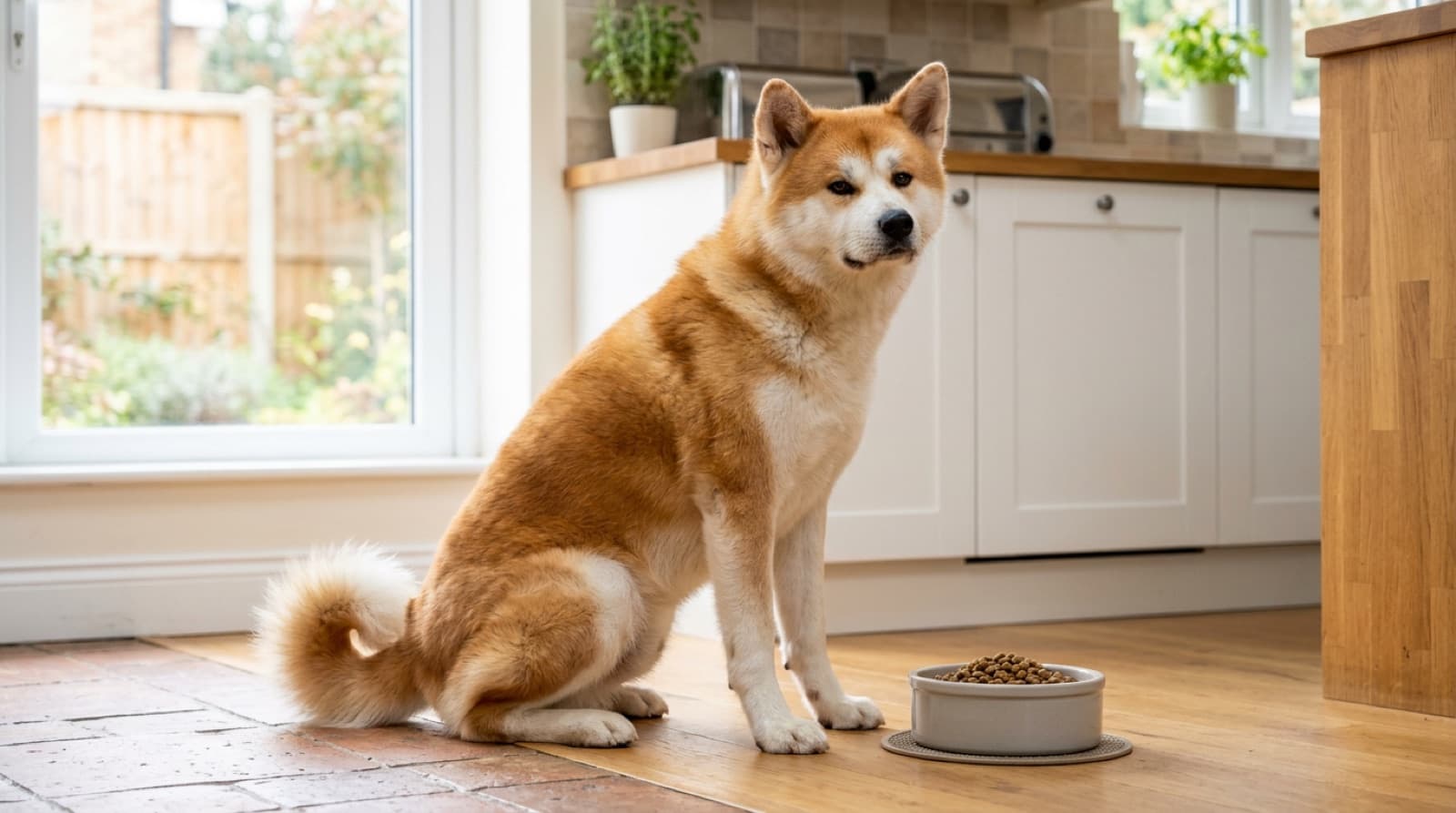
The Akita health picture, briefly
Akitas are not a giant breed by mass (most males sit 75 to 130 pounds, females 65 to 100), but they carry a unique health profile that does not slot neatly into the giant-breed or large-breed templates most pet insurance pricing and most general veterinary care default to. The defining feature of the breed health load is autoimmune disease. Three named autoimmune conditions are notably overrepresented: VKH-like syndrome (also called uveodermatologic syndrome), sebaceous adenitis, and pemphigus foliaceus. Each one is lifelong management. Each one needs specialty involvement (ophthalmology and dermatology, often working together). Together they shape what owning a healthy adult Akita actually looks like.
Beyond the autoimmune trio, the orthopaedic load is real. Hip and elbow dysplasia carry moderate to high prevalence given the heavy frame. Bloat (GDV) is the deep-chested emergency every Akita owner needs the emergency-vet number for. Hypothyroidism is common and frequently misread as behaviour or normal ageing. Cushing disease appears at moderate rates. The cancer load is moderate, including lymphoma and hemangiosarcoma. Eye anomalies beyond VKH (microphthalmia, lens luxation, cataracts, progressive retinal atrophy) appear at meaningful rates and reinforce the annual ophthalmology habit.
The other layer that distinguishes Akita care from other breeds is drug sensitivity. Akitas have documented adverse reaction patterns to steroids and sulfa drugs that are different from the MDR1 mutation that affects Collies, Australian Shepherds, and herding crosses. The breed also has a sighthound-like anaesthesia profile driven by lean body composition. Telling every vet who treats the dog about these breed-specific concerns is part of owning the breed responsibly. Pet insurance enrolled in week one remains the single highest-leverage health decision because the autoimmune, skin, and orthopaedic claims stack predictably over the dog lifetime. The American Animal Hospital Association publishes general pet insurance evaluation guidance that applies to Canadian providers.
VKH-like syndrome (uveodermatologic syndrome)
VKH-like syndrome (also called uveodermatologic syndrome, named after the human Vogt-Koyanagi-Harada disease it resembles) is an autoimmune disease where the immune system attacks pigment-producing cells (melanocytes) in the eyes, skin, and sometimes the nervous system. Akitas are one of the most overrepresented breeds in the veterinary literature for the condition, along with Samoyeds, Siberian Huskies, and Old English Sheepdogs. The disease typically appears in young to middle-aged adults (often 18 months to 6 years).
Eye signs come first
The earliest and most clinically important presentation is bilateral uveitis (inflammation inside the eye). Owners notice squinting, eye redness, cloudiness, light sensitivity, and reduced vision. The disease moves fast. If untreated, uveitis progresses within weeks to retinal detachment, secondary glaucoma, cataract formation, and irreversible blindness. The single most important practical message for Akita owners is that any new eye redness, persistent squinting, or visible cloudiness in either eye warrants same-week ophthalmology evaluation rather than wait-and-see. Vision lost to untreated VKH does not come back.
Skin signs follow
Skin changes follow the eye changes by weeks to months in most cases, occasionally appearing first or simultaneously. The skin signs are loss of pigment (depigmentation) on the nose, lips, eyelids, foot pads, and around the anus. The previously dark nose turns pink, then white. Hair in the depigmented regions turns white (poliosis). The pattern is symmetrical and progressive. The skin signs alone are not painful or life-threatening, but they are the diagnostic giveaway that an autoimmune process is at work.
Diagnosis and treatment
Diagnosis combines the clinical picture with ophthalmology evaluation, dermatology evaluation, and sometimes skin biopsy to confirm pigment-cell autoimmunity. Treatment is lifelong immunosuppression with prednisone (carefully dosed because Akitas can have heightened steroid sensitivity) combined with a second-agent immunosuppressive drug (azathioprine, cyclosporine, or mycophenolate mofetil). Monitoring includes regular ophthalmology rechecks and bloodwork to catch medication side effects. Monthly medication and monitoring costs run $150 to $400. Vision prognosis depends entirely on how quickly treatment starts; dogs diagnosed at the first eye redness and treated aggressively often preserve functional vision, while dogs diagnosed after retinal detachment usually do not. The American College of Veterinary Ophthalmologists credentials the specialists who manage these cases.
Sebaceous adenitis
Sebaceous adenitis is an autoimmune skin condition where the immune system destroys the sebaceous glands (the oil glands that lubricate the skin and coat). Akitas are one of the most overrepresented breeds along with Standard Poodles, Vizslas, and Samoyeds. The condition typically appears in young to middle-aged adults.
Without sebaceous glands the skin loses its natural oil layer. The clinical progression is gradual coat dullness, fine scaling that builds up at the base of the hair shafts (the dander often looks like dust caught in the coat), patchy hair loss starting on the top of the head and along the back, and recurrent secondary skin infections as the unprotected skin becomes vulnerable to bacteria and yeast. The Akita coat goes from rich and double-layered to dull, sparse, and brittle over months. The dog is not in obvious pain, but the chronic itch and recurrent infections compound the welfare cost.
Diagnosis and treatment
Diagnosis is by punch biopsy of affected skin sent to a veterinary dermatopathologist. The histology shows loss of sebaceous glands replaced by inflammatory infiltrate. Treatment is lifelong and combines several pillars:
- Cyclosporine: the primary immunosuppressive used to slow ongoing gland destruction, dosed by weight and adjusted to response, $80 to $200 monthly.
- Vitamin A supplementation: high-dose vitamin A reduces scaling in many cases, prescribed and monitored by the vet.
- Omega-3 fatty acid supplementation: supports skin barrier function.
- Medicated shampoos: weekly to twice-weekly bathing with propylene glycol or other keratolytic shampoos lifts scale and reduces secondary infection. The bath protocol is the labour-intensive piece for owners.
- Topical oil therapy: some dermatologists recommend mineral oil soaks or essential fatty acid topicals.
Most affected Akitas can be managed to a comfortable quality of life, but sebaceous adenitis does not go into true remission. Monthly management at the dermatology end runs $100 to $250 ongoing once the diagnostic workup is complete. The American College of Veterinary Dermatology credentials the specialists who manage these cases.
Pemphigus foliaceus
Pemphigus foliaceus is another autoimmune skin disease noted in Akitas. The immune system attacks the connections (desmosomes) between skin cells, causing them to separate and form pustules. The classic presentation is crusty, pustular skin lesions starting on the face (especially the muzzle and around the eyes), nose, and ears, then spreading to the body and sometimes the foot pads. The lesions can be confused with bacterial pyoderma (skin infection) or other skin diseases, which is one reason a dermatology workup matters rather than another empiric round of antibiotics.
Diagnosis is by punch biopsy with histopathology and sometimes immunofluorescence testing. Treatment is immunosuppression with prednisone plus a second-agent drug, similar to VKH treatment. Response rates are good in most cases, though some dogs require ongoing medication adjustments to find the lowest effective dose. The condition is lifelong management with periodic flares.
The practical owner message: an Akita that develops crusty facial lesions that do not respond to a standard antibiotic course deserves a dermatology referral rather than another round of empiric treatment. Pemphigus, sebaceous adenitis, and atopic dermatitis can all look superficially similar at the early stage, and the workup matters because the treatments diverge sharply.
Browse adoptable Edmonton dogs
Current Edmonton-area listings. Akitas and Akita crosses appear at SCARS, EHS, AARCS Edmonton fosters, Zoe's, and Northern Alberta rescues periodically. Foster notes flag coat condition, eye history, and any documented autoimmune workup. Plan a first-month vet workup with ophthalmology baseline, dermatology baseline, full thyroid panel, hip and elbow assessment, and an anaesthesia-protocol conversation.
See Available Dogs →Hip dysplasia, elbow dysplasia, and orthopaedic care
Akitas carry the heavy-frame body type associated with developmental orthopaedic disease. Both hip and elbow dysplasia carry moderate to high prevalence in the breed.
Hip dysplasia
Hip dysplasia involves abnormal hip joint development that progresses to arthritis with age. Signs include a bunny-hopping gait, reluctance to climb stairs or jump into vehicles, stiffness after rest (Edmonton winter exposes the morning stiffness clearly), weight-shifting away from the affected hip, and visible muscle wasting in the hindquarters. Diagnosis is by hip radiographs graded under the Orthopedic Foundation for Animals or PennHIP systems, typically $400 to $700 at an Edmonton clinic. Conservative management with lean body weight, joint supplements, hydrotherapy, and prescription anti-inflammatories defers or replaces surgery in many cases. Severe cases benefit from femoral head ostectomy ($3,500 to $6,000) or total hip replacement ($7,000 to $11,000 per hip) at a specialty practice.
Elbow dysplasia
Elbow dysplasia is a collective term for several developmental conditions including fragmented coronoid process, osteochondritis of the elbow, and ununited anconeal process. Presentation is forelimb lameness, often bilateral, sometimes with a stiff or shortened forelimb gait. Diagnosis is by radiograph and sometimes CT or arthroscopy at specialty practice. Arthroscopic surgery to address the specific lesion runs $3,500 to $6,500 per elbow at Edmonton specialty practice. Conservative management buys time in many cases. The breed-specific anaesthesia conversation matters more than usual here because elbow surgery is an anaesthetic event and the protocol should be tailored before booking.
Bloat (gastric dilatation-volvulus, GDV)
Gastric dilatation-volvulus is a life-threatening emergency where the stomach distends with gas and twists on its axis, cutting off blood supply. Without surgical correction within hours it is fatal. Akitas are deep-chested at elevated GDV risk. Symptoms to recognise immediately:
- Visibly distended or hard abdomen, sometimes drum-tight to the touch
- Non-productive retching (tries to vomit but nothing comes up; the most reliable early sign)
- Restlessness or inability to settle, pacing
- Drooling and frothy saliva
- Pale gums (check by lifting the lip)
- Rapid shallow breathing that does not match the activity
- Progressive weakness or collapse
If you see any combination in an Akita, drive directly to a 24-hour Edmonton emergency veterinary clinic without calling first. Bloat surgery runs $5,000 to $10,000 including post-op care; survival improves dramatically the earlier the dog arrives. Pre-save the contact info for at least one 24-hour Edmonton emergency vet before you need it.
Prophylactic gastropexy is a preventive surgery that anchors the stomach to the body wall, preventing the twist that makes GDV fatal. Performed at the time of spay or neuter (or as a standalone procedure) it runs $1,500 to $3,000 and dramatically reduces lifetime GDV risk. The gastropexy is a useful opportunity to establish an Akita-appropriate anaesthesia protocol with the vet who will manage future surgical events.
Hypothyroidism, Cushing disease, and the endocrine picture
Hypothyroidism
Hypothyroidism is common in Akitas and frequently misread as behaviour problems or normal ageing. The thyroid gland under-produces thyroid hormone, slowing metabolism. Symptoms cluster around metabolism and skin: weight gain despite stable diet, lethargy, reduced exercise tolerance, dull or thinning coat with sometimes symmetrical hair loss on the flanks, recurrent skin or ear infections, cold intolerance (notable even in a cold-tolerant breed), and behaviour changes including increased anxiety, reduced sociability, or worsening reactivity in middle age. The behaviour link is the most under-recognised piece. An Akita with worsening reactivity at age four to seven deserves a full thyroid panel before training adjustments. Diagnosis is by full thyroid panel including free T4 by equilibrium dialysis and TSH, not just baseline total T4 which has limited diagnostic value. Treatment is daily levothyroxine at $25 to $50 per month plus periodic rechecks. Most hypothyroid Akitas recover normal energy, coat, and temperament within four to eight weeks of starting medication.
Cushing disease (hyperadrenocorticism)
Cushing disease (excess cortisol production from the adrenal glands, either driven by a pituitary tumour or an adrenal tumour) appears at moderate rates in Akitas. Symptoms include increased thirst and urination, increased appetite, a pot-bellied appearance, symmetrical hair loss on the trunk, thin skin, and recurrent skin and urinary tract infections. The picture can be confused with hypothyroidism and with iatrogenic Cushing changes from steroid treatment of the autoimmune conditions above, which is one reason workup matters before assuming a cause. Diagnosis starts with screening tests (low-dose dexamethasone suppression test, urine cortisol to creatinine ratio) and is confirmed and characterised with adrenal ultrasound and sometimes ACTH stimulation testing. Treatment is medical (trilostane is the standard agent) for most cases. Lifelong monitoring at $80 to $200 monthly. The American College of Veterinary Internal Medicine credentials the specialists who manage complex endocrine cases.
Cancer load
Akitas carry a moderate cancer load, lower than the most cancer-stacked breeds (Bernese, Boxers, Golden Retrievers, Rottweilers) but not negligible. The notable cancers:
- Lymphoma: presents as peripheral lymph node enlargement, sometimes with weight loss or lethargy. Diagnosis by fine needle aspirate. CHOP chemotherapy at an Edmonton specialty oncology practice runs $5,000 to $15,000 with median survival around 12 to 14 months for B-cell disease.
- Hemangiosarcoma: aggressive cancer of blood vessel cells, often arising in the spleen, heart, or skin. Splenic and cardiac hemangiosarcoma may present as acute collapse from internal bleeding. Diagnosis by imaging plus biopsy. Treatment is splenectomy plus chemotherapy where feasible, with median survival often 4 to 7 months even with treatment.
- Mast cell tumours: present as skin lesions of variable appearance. Diagnosis by fine needle aspirate. Treatment depends on grade and stage. The Akita coat hides skin lesions easily, so monthly skin checks at home matter.
- Gastric carcinoma: noted at modest rates in the breed. Presents as chronic vomiting, weight loss, and reduced appetite in middle-aged to older dogs. Diagnosis by endoscopy plus biopsy at specialty practice.
Practical owner takeaway: build the monthly skin and lymph node check habit at home, schedule annual senior bloodwork starting at age six, and book aspirate cytology on every new lump rather than wait-and-see. The autoimmune workup that Akitas need also tends to catch unrelated findings early.
Eye anomalies beyond VKH
Beyond VKH-like syndrome, Akitas carry several other eye conditions at meaningful rates, which reinforces the annual ophthalmology habit.
Progressive retinal atrophy (PRA)
PRA is a progressive degeneration of the retina causing eventual blindness. There is no treatment. A genetic test is available for the form of PRA that affects Akitas and can be run at adoption to predict whether the dog will develop the condition. Most affected dogs adapt remarkably well to gradual vision loss when the home environment stays consistent. Annual ophthalmology evaluation for adult Akitas is reasonable, especially after age four.
Microphthalmia and lens luxation
Microphthalmia (abnormally small eye) is a congenital developmental anomaly noted in Akita lines. Lens luxation (displacement of the lens within the eye) appears at modest rates and can cause acute glaucoma if the lens shifts into the front chamber of the eye, which is a same-day ophthalmology emergency. Both conditions are diagnosed on ophthalmology exam.
Cataracts
Cataracts (lens opacity progressively reducing vision) appear in Akitas at moderate rates and can be congenital, juvenile, or senior in onset. They can also develop secondary to chronic uveitis from VKH-like disease, which is one reason VKH treatment matters even for the skin signs. Diagnosis is by ophthalmology exam. Treatment is phacoemulsification surgery at a veterinary ophthalmologist when vision restoration is the goal, running $3,500 to $5,500 per eye. Many Akitas with bilateral cataracts adapt well to gradual vision loss when the home environment is stable.
Akita drug sensitivities (not the same as MDR1)
This is one of the most under-appreciated pieces of Akita care. Akitas have a separately documented set of drug sensitivities thought to relate to autoimmune predisposition and breed-specific metabolism. These are not the MDR1 mutation that affects Collies, Australian Shepherds, and herding crosses. The Akita pattern is its own thing.
Sulfonamide antibiotics
Sulfa drugs (trimethoprim-sulfa is the common one used in veterinary medicine) can trigger immune-mediated drug reactions in Akitas at higher rates than most breeds. The reactions reported include immune-mediated thrombocytopenia (a sudden drop in platelets causing bleeding), hepatitis (liver inflammation), keratoconjunctivitis sicca (dry eye), and skin reactions. Most veterinary dermatologists and many primary-care vets avoid sulfa drugs in Akitas when alternatives exist. If a sulfa drug must be used, monitoring is more intensive.
Steroids (prednisone and dexamethasone)
Steroids are commonly needed in Akitas because the autoimmune trio above is treated with immunosuppression. The complication is that Akitas can show more pronounced steroid side effects than average, including increased thirst and urination, increased appetite, panting, and iatrogenic Cushing changes. Steroid dosing in Akitas tends to be more cautious, with closer monitoring and faster transition to a second-agent immunosuppressive (cyclosporine, azathioprine, mycophenolate) to allow steroid tapering. The dermatology or ophthalmology specialist managing the autoimmune disease is the right person to lead this conversation.
The practical owner message
Tell every vet who treats your Akita that the breed has documented drug sensitivities and to flag any new prescription against breed-specific cautions. Most experienced vets know this; some primary-care vets in rural Alberta may not, and the conversation costs nothing. If your Akita needs antibiotics for a urinary tract infection, dental procedure, or skin infection, ask explicitly whether the prescribed drug is in the sulfa class and whether a non-sulfa alternative is appropriate. This is breed-appropriate medicine, not paranoia.
Acquired myasthenia gravis
Acquired myasthenia gravis is an autoimmune neuromuscular condition where antibodies block the receptors that allow nerves to signal muscles. Akitas are noted in the veterinary literature alongside other autoimmune-prone breeds. Presentation is exercise-induced weakness that improves with rest, sometimes with regurgitation from megaesophagus (a dilated weakened oesophagus) and reduced gag reflex. Severe cases can develop aspiration pneumonia from the megaesophagus.
Diagnosis combines clinical signs with acetylcholine receptor antibody testing (a blood test sent to a reference lab) and sometimes chest radiographs to evaluate the oesophagus. Treatment is with pyridostigmine (a drug that prolongs nerve-to-muscle signalling) and immunosuppression in some cases. Many dogs recover spontaneously over months when the autoimmune attack resolves. The condition is often missed at first because exercise intolerance can be attributed to orthopaedic disease or general fatigue. Any Akita with worsening exercise intolerance plus regurgitation deserves a workup that includes acetylcholine receptor antibody testing.
Anaesthesia profile: the sighthound-like consideration
Akitas have a sighthound-like anaesthesia profile that is under-appreciated outside breed-experienced practices. Two drivers shape it. First, lean body composition: Akita body fat percentage is low compared to average dogs, and injectable anaesthetic agents that distribute partly into fat are functionally over-dosed if total body weight is used for dose calculation. Lean body weight dosing matters. Second, autoimmune predisposition: the immune system can react unpredictably to drug exposure, which is why Akitas need careful pre-anaesthetic medication choices.
The specific concerns commonly cited in breed-experienced practice:
- Dosing by lean body weight rather than total weight, especially for thiobarbiturates and other lipid-soluble agents.
- Caution with acepromazine and certain sedatives (many vets avoid acepromazine in Akitas as in sighthounds).
- Thoughtful opioid selection given the autoimmune backdrop.
- Active warming during longer procedures (the heavy coat is misleading; the underlying tissue cools quickly under anaesthesia).
- Longer post-op monitoring than is standard for a 70-pound dog.
- Pre-op bloodwork including a thyroid panel, because untreated hypothyroidism amplifies anaesthetic depression.
What this means in practice: when you book any anaesthetic procedure for an Akita (spay, neuter, gastropexy, dental cleaning, mass removal, orthopaedic surgery, eye surgery), ask the vet specifically whether their protocol accounts for the Akita profile. Specialty practices and Edmonton vets familiar with the breed will use a modified protocol. This is not a reason to avoid necessary surgery; it is a reason to choose the vet thoughtfully and have the protocol conversation in advance.
For elective procedures (prophylactic gastropexy, mass removal, dental), this conversation can happen weeks ahead. For emergencies (bloat surgery, traumatic injury), the protocol decision happens in real time at the emergency clinic, which is one more reason to identify a preferred 24-hour Edmonton emergency clinic before you need it.
Atopic dermatitis and allergies
Atopic dermatitis (environmental allergies) is common in Akitas and presents as recurrent ear infections, paw licking, face rubbing, and recurrent skin or skin-fold infections. The double coat hides early skin disease, so by the time owners notice the licking and scratching the inflammation is often already established. Edmonton seasons drive the pattern: spring tree pollens, summer grass pollens, and indoor allergens during the long winter.
Workup ranges from symptomatic management (medicated shampoos, anti-itch medications like oclacitinib or lokivetmab, dietary trials) up to formal allergy testing and immunotherapy at a veterinary dermatologist. Lifelong management is the norm. Plan for $400 to $2,000 per year on allergy management once an Akita becomes symptomatic. Atopic dermatitis can also coexist with sebaceous adenitis or pemphigus, which is why a dermatology workup that distinguishes the conditions matters before assuming the simpler diagnosis.
Edmonton specialty veterinary access reality
Edmonton has solid general-practice veterinary coverage for Akitas. For routine care (annual physical, vaccinations, dental, bloodwork, weight management), any reputable Edmonton clinic is a fine starting point. For Akita-specific work the picture matters more, especially for ophthalmology and dermatology, the two specialties the breed uses most.
Edmonton ophthalmology and dermatology
Edmonton has board-certified veterinary ophthalmologists for the VKH workup, cataract surgery, lens luxation management, and the annual eye baseline that adult Akitas benefit from. Dermatology specialty access handles the punch biopsies for sebaceous adenitis and pemphigus, immunosuppressive management, and atopic dermatitis workup. The dermatology and ophthalmology pathways are the two an Akita owner uses most, and establishing both referrals in the first month of ownership is the practical move.
Edmonton internal medicine and orthopaedics
Internal medicine specialty access handles Cushing workup, complex endocrine cases, myasthenia gravis investigation, and gastric carcinoma workup. Board-certified veterinary surgeons handle hip and elbow procedures, OCD arthroscopy, and bloat surgery. Cardiology specialty capacity is adequate for routine cardiac screening of senior Akitas.
WCVM Saskatoon and Calgary specialty centres
The Western College of Veterinary Medicine at the University of Saskatchewan is the closest full veterinary teaching hospital, about five and a half hours each way from Edmonton. WCVM handles complex Akita referrals beyond local capacity: difficult orthopaedic revisions, advanced neurology, complex oncology, and tertiary autoimmune workup. Calgary specialty centres are a closer option for many advanced referrals.
Building your network in month one
The practical move when you adopt an Akita: establish a primary Edmonton vet in the first month, ask specifically which ophthalmologist and which dermatologist they refer Akitas to, ask about the clinic anaesthesia protocol for breeds with autoimmune predisposition and lean body composition, and write the answers down. Pre-save at least one 24-hour Edmonton emergency clinic in your phone. Most Akitas will need at least one specialty referral over their lifetime, often more; knowing the pathway before you need it cuts friction at the worst possible moment.
Pet insurance for an Edmonton Akita
Week-one pet insurance enrolment is the highest-leverage health decision for any rescue Akita. Every Canadian provider excludes pre-existing conditions, which means the day a vet documents anything (a patch of skin scaling, a mild eye redness, a low thyroid value, a slight hip subluxation, a small mass, loose lower eyelids), that condition becomes a permanent exclusion on any policy enrolled afterward. The clock starts the day you adopt.
The Akita-specific value math is exceptionally strong because the autoimmune and skin claims stack predictably:
- VKH-like syndrome lifelong immunosuppression: $150 to $400 monthly ongoing
- Sebaceous adenitis lifelong management: $100 to $250 monthly ongoing
- Pemphigus foliaceus management: similar cost range ongoing
- Atopic dermatitis allergy management: $400 to $2,000 per year ongoing
- Total hip replacement: $7,000 to $11,000 per hip
- Elbow arthroscopy: $3,500 to $6,500 per elbow
- Bloat (GDV) emergency surgery: $5,000 to $10,000
- Cataract surgery: $3,500 to $5,500 per eye
- Lens luxation emergency: $3,000 to $6,000 per eye
- Lymphoma CHOP chemotherapy: $5,000 to $15,000
- Hypothyroidism lifelong management: $25 to $50 per month ongoing
- Cushing disease lifelong management: $80 to $200 per month ongoing
An Akita with VKH plus hypothyroidism plus a single hip surgery can easily generate $25,000 to $40,000 in out-of-pocket costs across a few years. Add sebaceous adenitis or atopic dermatitis on top and lifetime out-of-pocket costs reach $35,000 to $60,000. Monthly premiums for a young healthy Akita in Edmonton typically run $80 to $140 depending on deductible and reimbursement percentage.
What to look for in an Akita policy:
- Hereditary and congenital conditions explicitly covered
- Explicit coverage of autoimmune and immune-mediated conditions (the highest-value coverage element for this breed)
- Explicit coverage of orthopaedic conditions including hip and elbow dysplasia
- Annual coverage caps of $15,000 or more, ideally with no lifetime cap
- Coverage for prescription medications including lifelong immunosuppressives
- Coverage of diagnostic imaging including CT and MRI
- Reasonable wait times for orthopaedic and chronic disease coverage
Compare three to four providers before enrolling. Your Edmonton vet and your foster contact can both share which providers other autoimmune-prone breed adopters have used and what their claim experience has been.
Adoption health workup: what to plan for the first month
Edmonton rescues do a baseline vet workup before adoption, but depth varies by rescue and by dog. For an Akita, the first-month vet visit should be more involved than for most breeds because the autoimmune workup baseline is what insurance and ongoing care will build on.
What most Edmonton rescues cover
- Physical exam by a vet at intake including cardiac auscultation, lymph node palpation, and skin assessment
- Core vaccinations (DAPP and rabies, sometimes Bordetella if boarded)
- Spay or neuter surgery (sometimes with prophylactic gastropexy at the same time, but confirm)
- Microchip implant and registration
- Deworming and flea and tick treatment
- Basic adult bloodwork (CBC and chemistry panel) in many cases
- Treatment of any acute concerns identified at intake
What to add in your first-month vet visit
- Full ophthalmology exam (baseline for VKH, PRA, lens luxation, microphthalmia, cataracts)
- Full dermatology exam (baseline for sebaceous adenitis, pemphigus, atopic dermatitis), including a thorough coat and skin assessment
- Full thyroid panel including free T4 by equilibrium dialysis and TSH
- Hip and elbow radiographs (OFA or PennHIP grading)
- Body condition score documentation
- Anaesthesia protocol planning conversation for future surgical events
- Genetic test for the Akita PRA form if not already done
- Documented drug-sensitivity note in the chart so any future prescription is checked against breed-specific cautions
For senior Akitas (eight years and up), add full senior bloodwork including urinalysis, ACTH stimulation test if there is any concern about Cushing or Addison disease, careful cardiac auscultation, abdominal ultrasound if budget allows, and a thorough lump check with aspirate cytology on any suspicious lesion. Budget $1,000 to $2,000 for the senior intake workup at an Edmonton clinic. The Canadian Kennel Club publishes breed-standard reference material that helps orient the conversation.
The Akita lifespan and senior care after age eight
Akita median lifespan sits at 10 to 12 years in most published references. Some reach 13 with strong autoimmune, orthopaedic, and endocrine management. The arc is comparable to other large breeds and meaningfully better than the most cancer-stacked breeds (Bernese, Boxers, Rottweilers). The senior years for an Akita are often shaped by the cumulative load of the conditions discussed above: arthritis from hip and elbow disease, ongoing immunosuppression for VKH or sebaceous adenitis, hypothyroidism management, and the moderate cancer load that becomes the leading end-of-life concern.
Reasonable senior-care adjustments for an Akita after age eight, all guided by your Edmonton vet:
- Biannual vet exams instead of annual
- Full annual senior bloodwork including thyroid panel and urinalysis
- Annual ophthalmology check (cataracts and PRA progress through these years, and VKH can present at any age)
- Annual dermatology recheck for dogs already managing sebaceous adenitis or pemphigus
- Annual cardiac auscultation with low threshold to refer for echocardiogram
- Routine dental care including professional cleanings every 18 to 24 months (each dental is an anaesthesia event; protocol matters)
- Joint support (glucosamine, chondroitin, omega-3) and prescription anti-inflammatories during arthritis flares
- Tight weight monitoring (overweight Akitas do worse on every front)
- Aggressive lump monitoring with aspirate cytology on every new lesion rather than wait-and-see
- Mobility aids: orthopaedic bed, traction rugs on hardwood, ramps for stairs and vehicles
- Ongoing skin checks at home for dogs on long-term immunosuppression (medication side effects can include skin thinning, new lumps, and recurrent infections)
Pet insurance becomes harder and more expensive to obtain for first-time enrolment past age eight in this breed, and some providers will not enrol senior Akitas with documented autoimmune, orthopaedic, or endocrine findings. If you adopt a senior Akita, price-compare carefully and consider whether a dedicated savings account makes more sense than insurance. Talk through the math with your vet at the first visit, and have honest quality-of-life conversations early. Many senior Akitas live calm, gentle, devoted final years when their stack of conditions is managed thoughtfully. The American Animal Hospital Association publishes senior care guidelines that frame the senior vet visit.
Frequently asked questions
Where can I find a vet for an Akita near me in Edmonton?
Start with a general-practice Edmonton vet who refers to board-certified veterinary ophthalmologists and dermatologists, because the Akita health picture is autoimmune-driven and the eye and skin specialty pathway is the one you will use most. Ask explicitly which ophthalmologist and which dermatologist they refer Akitas to, and write the answers down. Edmonton has adequate ophthalmology and dermatology specialty capacity for routine work; complex cases sometimes route to Calgary specialty centres or to the Western College of Veterinary Medicine in Saskatoon for advanced workup. The single most important first-month conversation is the anaesthesia plan: Akitas are lean-bodied with autoimmune predisposition and need a tailored protocol for any surgical event. The American College of Veterinary Ophthalmologists, the American College of Veterinary Dermatology, and the American College of Veterinary Internal Medicine credential the specialties an Akita owner uses most.
What are the main Akita health issues to know before adopting?
Akitas are an autoimmune-defined breed. In rough order of practical importance: VKH-like syndrome (uveodermatologic syndrome, the breed-overrepresented autoimmune attack on pigment cells in eyes and skin); sebaceous adenitis (Akita-overrepresented autoimmune skin condition that destroys oil glands); pemphigus foliaceus (autoimmune skin disease); hip and elbow dysplasia (giant-frame orthopaedic disease); gastric dilatation-volvulus (bloat or GDV, deep-chested anatomy); hypothyroidism (common and often misread as behaviour); Akita-specific drug sensitivities (different mechanism from MDR1, particularly steroids and sulfa drugs); acquired myasthenia gravis (Akita-noted autoimmune neuromuscular condition); progressive retinal atrophy and other eye anomalies; allergies and atopic dermatitis; Cushing disease; and a moderate cancer load. Lifespan averages 10 to 12 years. Week-one pet insurance enrolment is essentially mandatory because autoimmune plus skin plus orthopaedic claims stack quickly over the dog lifetime.
What is VKH-like syndrome in Akitas?
VKH-like syndrome, also called uveodermatologic syndrome, is an autoimmune disease where the immune system attacks pigment-producing cells (melanocytes) in the eyes, skin, and sometimes the nervous system. Akitas are one of the most overrepresented breeds in the veterinary literature for the condition. Eye signs come first in most cases: bilateral uveitis (inflammation inside the eye) producing squinting, redness, cloudiness, and reduced vision. If untreated, the disease progresses to retinal detachment, glaucoma, cataract formation, and irreversible blindness. Skin signs follow weeks to months later: loss of pigment (depigmentation) on the nose, lips, eyelids, foot pads, and around the anus, with whitening of the hair (poliosis) in the same regions. Diagnosis combines clinical signs with ophthalmology evaluation and sometimes skin biopsy. Treatment is lifelong immunosuppression with prednisone plus a second-agent drug (azathioprine, cyclosporine, or mycophenolate), monitored closely by an ophthalmologist and internal medicine specialist. Monthly medication and monitoring runs $150 to $400 typically. Vision prognosis is guarded; the goal is preserving as much sight as possible. Any rescue Akita with red eyes, persistent squinting, or new white patches on a previously dark nose needs same-week ophthalmology evaluation.
What is sebaceous adenitis in Akitas?
Sebaceous adenitis is an autoimmune skin condition where the immune system destroys the sebaceous glands (the oil glands in the skin). Akitas are one of the most overrepresented breeds for the condition along with Standard Poodles, Vizslas, and Samoyeds. Without sebaceous glands the skin loses its natural oil layer, producing progressive dry scaling, dull or brittle coat, patchy hair loss (alopecia) starting on the top of the head and along the back, and recurrent secondary skin infections. The classic presentation in a young to middle-aged Akita is gradual coat dullness, fine scaling that builds up at the base of the hairs, and patchy hair loss that does not match a typical pattern. Diagnosis is by punch biopsy of affected skin, sent to a veterinary dermatopathologist. Treatment is lifelong and combines several pillars: cyclosporine to suppress the autoimmune attack, vitamin A supplementation, omega-3 fatty acid supplementation, weekly to twice-weekly medicated shampoos with propylene glycol or other keratolytic agents, and sometimes essential oil topical therapy. Most affected Akitas can be managed to a comfortable quality of life, but the condition does not go into true remission. Monthly management at the dermatology end runs $100 to $250 ongoing.
What is pemphigus foliaceus in Akitas?
Pemphigus foliaceus is another autoimmune skin disease noted in Akitas, where the immune system attacks the connections between skin cells. Presentation is crusty, pustular skin lesions starting on the face, nose, and ears, then spreading to the body. The lesions can be confused with bacterial pyoderma or other skin disease, which is why dermatology workup matters. Diagnosis is by punch biopsy with histopathology and sometimes immunofluorescence testing. Treatment is immunosuppression with prednisone plus a second-agent drug, similar to VKH treatment, with response rates good in most cases. The condition is lifelong management. An Akita that develops crusty facial lesions that do not respond to standard antibiotic therapy deserves a dermatology referral rather than another round of empiric treatment.
How serious is hip dysplasia in Akitas?
Hip dysplasia has moderate to high prevalence in Akitas because the breed carries the giant-frame body type associated with the condition. Abnormal hip joint development progresses to arthritis with age. Signs include a bunny-hopping gait, reluctance to climb stairs or jump into vehicles, stiffness after rest (which Edmonton winter makes obvious), weight-shifting away from the affected hip, and visible muscle wasting in the hindquarters. Diagnosis is by hip radiographs graded under the Orthopedic Foundation for Animals (OFA) or PennHIP systems, typically $400 to $700 at an Edmonton clinic. Elbow dysplasia is also moderately common in the breed and is screened on the same visit. Conservative management with lean body weight, joint supplements, hydrotherapy, and prescription anti-inflammatories defers or replaces surgery in many cases. Severe cases benefit from femoral head ostectomy ($3,500 to $6,000) or total hip replacement ($7,000 to $11,000 per hip) at a specialty practice. The American College of Veterinary Surgeons governs the orthopaedic surgical board.
How do I recognise bloat in an Akita?
Bloat (gastric dilatation-volvulus, or GDV) is a life-threatening emergency where the stomach distends with gas and twists on its axis, cutting off blood supply. Without surgical correction within hours it is fatal. Akitas are deep-chested at elevated GDV risk. Symptoms to recognise: a visibly distended or hard abdomen, non-productive retching (tries to vomit but nothing comes up, the most reliable early sign), restlessness or pacing, drooling, pale gums, rapid shallow breathing, and progressive weakness or collapse. If you see any combination in an Akita, drive directly to a 24-hour Edmonton emergency veterinary clinic without calling first. Bloat surgery typically runs $5,000 to $10,000 including post-op care. Prophylactic gastropexy at the time of spay or neuter adds $1,500 to $3,000 and dramatically reduces lifetime GDV risk. For a deep-chested Akita the gastropexy is one of the highest-value preventive surgeries available, and it pairs naturally with the anaesthesia-protocol conversation the breed needs.
Do Akitas have unique drug sensitivities?
Yes, and they are not the same as the MDR1 mutation that affects Collies and Australian Shepherds. Akitas have a separately documented set of drug sensitivities thought to relate to autoimmune predisposition and breed-specific metabolism. The two practical concerns are steroids and sulfa drugs. Sulfonamide antibiotics (trimethoprim-sulfa is the common one) can trigger immune-mediated drug reactions in Akitas at higher rates than most breeds, including immune-mediated thrombocytopenia, hepatitis, and dry eye. Most veterinary dermatologists avoid sulfa drugs in Akitas when alternatives exist. Steroids (prednisone is the common one) can produce more pronounced side effects in Akitas including iatrogenic Cushing changes; dosing tends to be more cautious. Certain anaesthetic agents and pre-anaesthetic sedatives also need adjustment (covered in the anaesthesia section below). Tell every vet who treats your Akita that the breed has documented drug sensitivities and to flag any new prescription against breed-specific cautions. This is not paranoia, it is breed-appropriate medicine.
What is the Akita anaesthesia profile?
Akitas have a sighthound-like anaesthesia profile that is under-appreciated outside breed-experienced practices. The drivers are lean body composition (low body fat percentage means injectable anaesthetic agents are not buffered by adipose tissue the way they are in average-fat dogs) and autoimmune predisposition (the immune system can react unpredictably to drug exposure). Practical implications: dose by lean body weight rather than total weight, careful choice of pre-anaesthetic sedative (many vets avoid acepromazine in Akitas as in sighthounds), thoughtful opioid selection, active warming during longer procedures, and longer post-op monitoring. For any anaesthetic event (spay, neuter, gastropexy, dental cleaning, mass removal, orthopaedic surgery, eye surgery), ask the vet specifically whether their protocol accounts for the Akita profile. Specialty practices and Edmonton vets familiar with the breed will use a modified protocol. This is not a reason to avoid necessary surgery; it is a reason to choose the vet thoughtfully and have the protocol conversation in advance.
How do I recognise hypothyroidism in an Akita?
Hypothyroidism is common in Akitas and frequently misread as behaviour problems or normal ageing. The thyroid gland under-produces thyroid hormone, slowing metabolism. Symptoms cluster around metabolism and skin: weight gain despite stable diet, lethargy, reduced exercise tolerance, dull or thinning coat (sometimes symmetrical hair loss on the flanks), recurrent skin or ear infections, cold intolerance (notable even in a cold-tolerant breed and a useful signal), and behaviour changes including increased anxiety, reduced sociability, or worsening reactivity in middle age. The behaviour piece is the most under-recognised. A previously stable Akita that becomes more reactive at age four to seven deserves a full thyroid panel before training adjustments. Diagnosis is by full thyroid panel including free T4 by equilibrium dialysis and TSH, not just baseline total T4. Treatment is daily levothyroxine at $25 to $50 per month plus periodic rechecks. Most hypothyroid Akitas recover normal energy, coat, and temperament within four to eight weeks of starting medication.
Should I get pet insurance for an Edmonton rescue Akita?
Yes, and enrol in week one. The Akita insurance math is exceptionally strong because the autoimmune and skin claims stack predictably across the dog lifetime: VKH-like syndrome lifelong immunosuppression at $150 to $400 monthly, sebaceous adenitis lifelong management at $100 to $250 monthly, pemphigus management at similar cost, hip surgery $7,000 to $11,000 per hip, bloat surgery $5,000 to $10,000, allergy management $400 to $2,000 per year, plus the cumulative cost of monthly ophthalmology and dermatology rechecks. Every Canadian provider excludes pre-existing conditions and the clock starts the day you adopt. A patch of skin scaling, a mild eye redness, a low T4 value, a slight hip subluxation, or a small mass documented at any vet visit becomes a permanent exclusion. Monthly premiums for a young healthy Akita in Edmonton typically run $80 to $140 depending on deductible and reimbursement percentage. Look for explicit hereditary and congenital coverage, explicit coverage of autoimmune conditions, annual caps of $15,000 or more (ideally no lifetime cap), explicit coverage of prescription medications including lifelong immunosuppressives, and reasonable wait times for orthopaedic and chronic disease coverage. The American Animal Hospital Association publishes general pet insurance evaluation guidance that applies to Canadian providers.
Related Edmonton Akita guides
Edmonton Adoptable Dogs
Current Edmonton-area listings from SCARS, Zoe's, EHS, GEARS, Hope Lives Here, AHHRB, and AARCS Edmonton fosters. Akitas and Akita crosses appear periodically.
Akita Adoption Edmonton
Rescue sources, real adoption costs, common Akita surrender patterns, American vs Japanese Akita disambiguation, and the first 30 days for an Edmonton Akita adopter.
Akita Temperament and Training Edmonton
The aloof, independent, sometimes dog-selective Akita temperament. Same-sex aggression, prey drive, force-free training reality, and what Edmonton households work for the breed.
Akita Coat and Grooming Edmonton
The double coat, coat-blow seasons, why you never shave an Akita, Edmonton winter and summer coat care, and the daily skin-check habit that catches autoimmune skin disease early.
Find your Edmonton rescue Akita
Browse current Edmonton-area listings. Akitas and Akita crosses appear at SCARS, EHS, AARCS Edmonton fosters, Zoe's, and Northern Alberta rescues periodically. Your first-month vet workup should build the ophthalmology, dermatology, thyroid, hip and elbow baseline plus the anaesthesia-protocol conversation.
Browse All Edmonton Dogs →New dog? Start with these care guides
Everything a new adopter needs to set up a safe, happy home.