The short answer
Australian Shepherds have a stacked health profile: MDR1 drug sensitivity (roughly half of all Aussies, severe reactions to ivermectin, loperamide, and several chemotherapy and anaesthesia drugs), moderate-to-high hip dysplasia, cataracts and Progressive Retinal Atrophy, Collie Eye Anomaly, idiopathic epilepsy, autoimmune disease, and double-merle concerns from irresponsible breeding. A direct-to-consumer DNA panel (Embark, Wisdom Panel) for $150 to $250 resolves most genetic questions in month one. Edmonton specialty access via local practices and the Western College of Veterinary Medicine in Saskatoon for difficult cases. Enrol in pet insurance week one: every Canadian provider excludes pre-existing conditions.
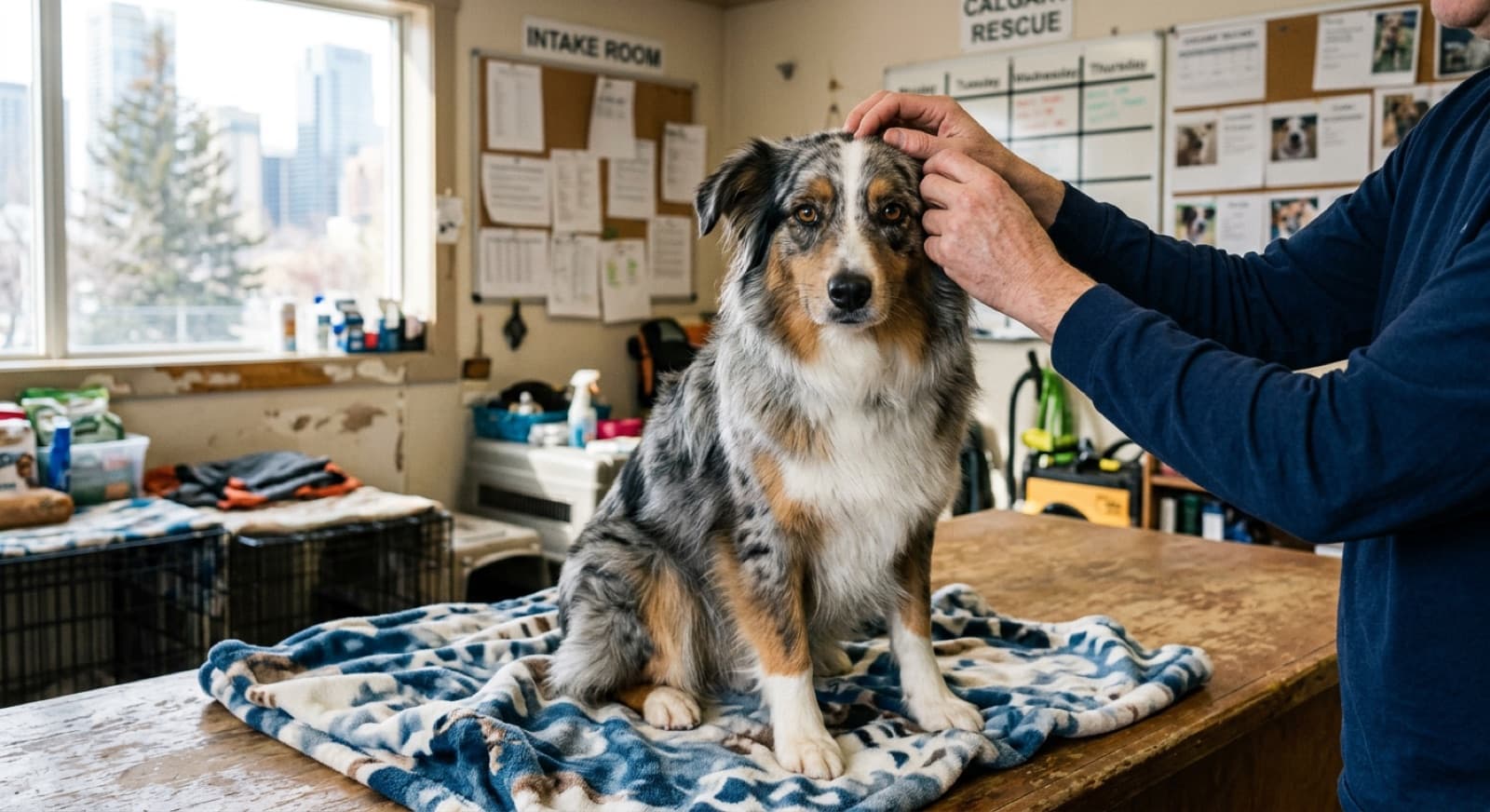
The Australian Shepherd breed health picture, briefly
Australian Shepherds are working herding dogs (developed in the western United States despite the name) bred for stamina, intelligence, and durability. They typically live 12 to 15 years and most Aussies reach senior age in functional health. The breed health picture has more named genetic conditions than most breeds, but a meaningful share are testable through a single DNA panel that costs under $300. This makes Aussie health planning relatively tractable.
The conditions worth knowing about cluster into four groups. Group one: DNA-testable inherited diseases, headed by the MDR1 mutation and including PRA variants and Collie Eye Anomaly. Group two: conditions with elevated breed prevalence that are not yet DNA testable, including idiopathic epilepsy and autoimmune thyroiditis. Group three: orthopaedic and structural conditions, including hip dysplasia (moderate-to-high prevalence) and elbow dysplasia. Group four: senior conditions like cataracts, Cushings disease, and the moderate cancer load (lymphoma, hemangiosarcoma, mast cell tumours). The Orthopedic Foundation for Animals registry maintains Aussie orthopaedic and ophthalmologic data, and the American College of Veterinary Internal Medicine governs the neurology and internal medicine specialty boards most relevant to epilepsy and autoimmune workups.
The other reality every Edmonton Aussie owner should know up front: pet insurance enrolled in week one is the single highest-leverage health decision you make. Every Canadian provider excludes pre-existing conditions, and the moment a vet documents anything (a single seizure, a hip finding, a thyroid abnormality, an eye finding), that condition becomes a permanent exclusion on any policy enrolled afterward. The clock starts the day you adopt.
MDR1: the defining Aussie drug-safety test
MDR1 is the single most important Australian Shepherd health test from an emergency-vet-awareness standpoint. The mutation affects the gene coding for P-glycoprotein, a protein that pumps certain drugs out of the central nervous system. Dogs with two copies of the mutation cannot clear those drugs from the brain, which causes severe neurological toxicity (tremors, ataxia, blindness, seizures, coma, death) at standard label doses. Affected dogs are clinically normal until exposed.
Aussies have the highest documented MDR1 prevalence of any breed. Roughly half of all Australian Shepherds carry at least one copy of the mutation, and a substantial subset carry two copies (the affected state). For context, MDR1 prevalence in Border Collies sits under 5 percent. The Aussie MDR1 reality is structural: every adopted Aussie should be assumed to be at risk until tested.
The Washington State University Veterinary Clinical Pharmacology Laboratory developed the canonical MDR1 DNA test and maintains the authoritative drug list. The headline drugs to flag on every chart:
- Ivermectin: especially overdoses on heartworm-prevention products or accidental ingestion of large-animal injectable formulations. Standard heartworm-prevention doses are usually safe even in affected dogs, but margins are smaller.
- Loperamide (Imodium): the everyday anti-diarrhoeal that produces severe neurological toxicity in MDR1-affected dogs at standard human doses. This is the most common accidental MDR1 exposure.
- Selected chemotherapy drugs: vincristine, vinblastine, doxorubicin. Oncology dosing protocols adjust for MDR1 status when known, and lifetime cancer risk in Aussies makes this category practically relevant.
- Acepromazine: a common pre-anaesthetic sedative. Affected dogs need alternative sedatives or dose adjustments.
- Butorphanol: a pain medication and pre-anaesthetic. Same management as acepromazine.
- Erythromycin and rifampin: antibiotic effects can be amplified in affected dogs.
For Edmonton Aussie owners, the practical move is straightforward. Test in month one. Write MDR1 status (clear, carrier, or affected) on every vet chart for life. Flag it verbally at every emergency visit. Keep the WSU drug list saved on your phone for any urgent pharmacy or vet conversation. Carrier dogs (one copy) are usually clinically normal but pass the mutation to offspring. Affected dogs (two copies) need permanent drug-list awareness from every clinician. See our companion Aussie MDR1 drug safety guide for the full clinician-ready protocol.
Hip dysplasia and elbow dysplasia
Australian Shepherds sit at moderate-to-high breed prevalence for hip dysplasia, higher than Border Collies and lower than the heaviest giant breeds. The OFA registry maintains extensive Aussie hip data and responsible breeders screen all breeding stock. For rescue Aussies of unknown parentage, hip status is unknown until clinical signs appear or screening radiographs are taken.
Signs of hip dysplasia in an Aussie: a bunny-hopping gait, reluctance to climb stairs or jump into vehicles, stiffness after rest that loosens with movement, weight shifting away from one hip, and visible muscle wasting in the hindquarters. Severe cases present by age one. Many mild and moderate cases show no clinical signs until age five to seven. Working-line Aussies sometimes mask early signs through drive and athletic compensation, then decompensate sharply in middle age.
Diagnosis is by hip radiographs graded under the OFA or PennHIP systems, typically $300 to $600 at an Edmonton clinic depending on sedation and PennHIP positioning. Treatment runs a spectrum. Conservative management is the first line for mild and moderate cases: lean body weight (the single most protective intervention), joint supplements (glucosamine, chondroitin, omega-3 fatty acids), restricted high-impact activity, prescription anti-inflammatories during flares, and structured physical therapy or hydrotherapy. Several Edmonton practices offer underwater treadmill rehabilitation.
Surgical options for severe cases include femoral head ostectomy (FHO, a salvage procedure that lets a fibrous false joint form, $3,000 to $5,000 at Edmonton specialty), and total hip replacement (THR, $7,000 to $10,000 per hip). THR has better long-term outcomes for active dogs and is the preferred approach for working-line Aussies who need full sport-level function. FHO is more affordable, recovers faster, and works well for casual-companion Aussies. The American College of Veterinary Surgeons governs the relevant specialty board.
Elbow dysplasia is the other Aussie orthopaedic concern worth knowing about. The condition covers a group of developmental elbow defects (fragmented coronoid process, ununited anconeal process, osteochondritis dissecans of the medial humeral condyle). Signs include front-leg lameness in a young dog (typically 4 to 12 months), worse after exercise, sometimes intermittent. Diagnosis is by radiographs and often a CT scan ($800 to $1,500 at Edmonton specialty). Treatment is usually arthroscopic surgery ($2,500 to $5,000). Body-condition score in puppyhood is the highest-leverage prevention. Overfed Aussie puppies grow too fast and develop elbow disease at higher rates than lean ones.
Eye disease: cataracts, PRA, and Collie Eye Anomaly
Australian Shepherds carry three main hereditary eye conditions. Cataracts are the most common Aussie eye disease and develop in two patterns. Juvenile cataracts present in young dogs and are often hereditary, sometimes bilateral. Senior cataracts develop as a degenerative process from age eight onward. Signs include visible cloudiness or whitish appearance to the lens, the dog bumping into furniture at low light, and reluctance to navigate stairs or unfamiliar spaces. Surgical removal at Edmonton or Calgary specialty ophthalmology runs $4,000 to $7,000 per eye with good prognosis when caught early. The American College of Veterinary Ophthalmologists maintains the eye-certification protocol your vet may reference.
Progressive Retinal Atrophy (PRA) is a hereditary retinal degeneration that progresses from night blindness through complete blindness over months to years. Several PRA variants affect Aussies, and DNA testing is available for the most common forms (included in Embark and Wisdom Panel Aussie panels). Onset is typically adult age (3 to 7 years). There is no cure. Most affected Aussies adjust well to gradual vision loss in familiar environments. Management is environmental: stable furniture layouts, textured rugs to mark transitions, scent and verbal cues, and avoiding off-leash work in unfamiliar terrain once night-vision loss is documented.
Collie Eye Anomaly (CEA) affects Australian Shepherds and the broader Collie family. The condition involves abnormal development of the choroid (the vascular layer behind the retina) and in more severe cases the retina and optic nerve. Severity ranges from mild choroidal hypoplasia (the dog has visibly thin choroidal tissue but functions normally for life) through to severe colobomatous defects with retinal detachment and blindness. CEA is present from birth and largely does not progress. DNA testing is included in standard Aussie breed panels.
Distichiasis (extra eyelashes growing from the meibomian gland openings) is a common Aussie finding. Most cases are mild and asymptomatic. Severe cases cause corneal irritation and warrant eyelash removal at an ophthalmology practice ($800 to $2,000 depending on technique).
For Edmonton Aussie adopters, the practical sequence: DNA panel in month one, ophthalmology consult in month two or based on any noted vision concerns, and annual ophthalmology check from age seven to monitor for senior cataracts. Edmonton ophthalmology consultations typically run $250 to $500.
Epilepsy: moderate breed prevalence, lifelong management
Idiopathic epilepsy has moderate breed prevalence in Australian Shepherds. The term “idiopathic” means seizures with no identifiable structural, metabolic, or toxic cause. The condition is presumed genetic, but no DNA test is yet available. Onset typically falls between 1 and 5 years of age. For Edmonton Aussie adopters, epilepsy is a headline medical risk that cannot be screened away in advance.
What a generalised tonic-clonic seizure looks like: sudden collapse, loss of consciousness, rigid limb extension followed by paddling motions, loss of bladder or bowel control, drooling, and recovery over 1 to 15 minutes with a post-seizure period of disorientation that lasts minutes to hours. Focal seizures present more subtly: facial twitching, lip licking, a dazed appearance, sometimes a sudden behaviour change. Both warrant veterinary evaluation.
What to do during a seizure: time it on your phone, move objects the dog could fall against, do not put your hand near the mouth (no risk of swallowing the tongue, real risk of bites during the unconscious phase), keep voices calm, and call your vet. Status epilepticus (a seizure lasting more than five minutes, or back-to-back seizures without recovery) is a true emergency and warrants an immediate drive to a 24-hour Edmonton emergency vet.
Diagnosis is by exclusion. Your vet rules out metabolic causes (low blood sugar, electrolyte abnormalities, liver shunts), toxic exposures, and structural brain disease (MRI is the gold standard but expensive). Most Aussies with seizures starting between 1 and 5 years and a normal neurological exam between events are presumed idiopathic without imaging. Edmonton MRI runs $1,500 to $2,500 at specialty practices when used.
Treatment is daily anticonvulsant medication. Vets typically start medication after a second seizure, after a cluster (more than one seizure in 24 hours), or after a single seizure lasting more than five minutes. Phenobarbital, levetiracetam (Keppra), zonisamide, and potassium bromide are the most common first-line options. Monthly medication cost runs $40 to $120 depending on drug and dose. Periodic bloodwork ($150 to $300 annually) monitors drug levels and liver function. The MDR1-aware caveat matters here: phenobarbital is generally safe in MDR1-affected dogs but acepromazine and butorphanol (sometimes used as adjuncts) are contraindicated. Most epileptic Aussies achieve substantial seizure reduction on medication and live normal lifespans.
Autoimmune disease: thyroiditis and immune-mediated conditions
Australian Shepherds have moderate breed prevalence for several autoimmune diseases. The most common is autoimmune thyroiditis, the leading cause of canine hypothyroidism in the breed. The immune system attacks the thyroid gland, slowly destroying function over months to years. The dog gradually transitions from euthyroid (normal function) through compensated subclinical disease to overt hypothyroidism. Signs are slow, vague, and easy to misread as behaviour change: weight gain without diet change, lethargy, exercise intolerance, dry coat, recurrent skin infections, cold intolerance, and sometimes behavioural changes (anxiety, irritability, reduced engagement).
Screening is by full thyroid panel: total T4, free T4, TSH, and thyroglobulin autoantibody (TgAA). Total T4 alone is not sufficient. The full panel runs $200 to $350 at Edmonton clinics. Hypothyroid Aussies are managed with daily oral levothyroxine ($15 to $40 monthly) with twice-yearly bloodwork to monitor dose. Treated dogs return to normal energy and function within 4 to 8 weeks. Aussies who develop hypothyroidism in their adult years should be screened for autoimmune thyroiditis specifically with the TgAA test, because the autoimmune form has implications for breeding decisions and sometimes co-occurs with other immune-mediated conditions.
Immune-mediated thrombocytopenia (ITP) is a less common but more acute autoimmune condition. The immune system destroys platelets, the blood cells responsible for clotting. Presentation includes unexplained bruising, petechiae (small red dots on the gums or skin), nosebleeds, bloody urine or stool, and sometimes acute collapse. ITP is a veterinary emergency. Diagnosis is by CBC showing low platelet count, plus immunology workup to confirm the immune-mediated mechanism. Treatment is immunosuppressive (prednisone $40 to $80 monthly, sometimes adjunct drugs like mycophenolate or cyclosporine at $100 to $300 monthly), and the workup-plus-stabilisation episode at an Edmonton specialty practice often runs $3,000 to $6,000.
Immune-mediated haemolytic anaemia (IMHA) is rarer but life-threatening: the immune system destroys red blood cells. Signs include pale gums, weakness, exercise intolerance, yellow tint to skin or eyes, and dark or discoloured urine. Treatment mirrors ITP (immunosuppressives, sometimes transfusions), with workup-plus-stabilisation costs in the $4,000 to $8,000 range. For Aussies, the autoimmune-disease category is the third strongest argument (after MDR1 awareness and epilepsy possibility) for early pet insurance enrolment.
Browse adoptable Edmonton Australian Shepherds
Current Edmonton Aussie and Aussie-mix listings from SCARS, Zoe's Animal Rescue, Edmonton Humane Society, GEARS, Hope Lives Here, AHHRB, and AARCS Edmonton fosters. Use foster notes to flag any seizure history, vision concerns, or known MDR1 status before you apply, and plan a first-month vet workup that includes the Aussie DNA panel.
See Available Australian Shepherds →Hypothyroidism and Cushings disease
Hypothyroidism is common in Australian Shepherds, often (but not always) driven by autoimmune thyroiditis as discussed above. The behaviour-misread risk is real: a slow-developing hypothyroid Aussie often presents at the vet as a behaviour problem (anxious, reactive, less responsive to training) when the underlying cause is endocrine. A full thyroid panel for any adopted Aussie over age three with behavioural concerns or vague weight or coat changes is high-leverage and inexpensive ($200 to $350).
Cushings disease (hyperadrenocorticism) is a senior Aussie concern with moderate breed prevalence. The condition involves overproduction of cortisol, usually from a pituitary tumour (85 percent of cases) or less commonly an adrenal tumour. Signs are gradual and often dismissed as normal ageing: increased thirst and urination, increased appetite, pot-bellied appearance, muscle wasting, thinning coat or hair loss, and recurrent skin or urinary infections. Diagnosis is by ACTH stimulation test or low-dose dexamethasone suppression test ($200 to $400) plus abdominal ultrasound to characterise adrenal vs pituitary origin ($400 to $700).
Treatment is daily trilostane (Vetoryl) at $60 to $150 monthly with quarterly monitoring bloodwork. Treated Cushings dogs typically return to normal energy and appearance within 2 to 4 months. Untreated, Cushings produces gradual decline and progressive secondary problems (calcinosis cutis, recurrent infections, diabetes, cardiac complications). For Edmonton senior Aussies, Cushings screening should be on the list any time a dog over eight presents with the classic constellation (drinking more, urinating more, hair loss, pot belly).
Cancer load: moderate but real
Australian Shepherds carry a moderate cancer load over their 12-to-15-year lifespan. The category is not as concentrated as in Bernese Mountain Dogs (where cancer is the dominant cause of death) or Golden Retrievers (with documented elevated lifetime cancer risk), but cancer is a meaningful contributor to senior Aussie mortality. The conditions worth knowing:
- Lymphoma: the most common Aussie cancer. Presentation is usually painless lymph node swelling (under the jaw, in front of the shoulder, behind the knee). Diagnosis is by fine-needle aspirate ($150 to $300). Chemotherapy at an Edmonton or Calgary specialty oncology practice typically achieves remission with median survival of 12 to 14 months on the standard CHOP protocol ($6,000 to $10,000 for the full course).
- Hemangiosarcoma: a vascular cancer of the spleen, heart, or other vascular tissue. Often presents acutely with collapse from internal bleeding. Splenic hemangiosarcoma diagnosis usually involves emergency splenectomy ($3,500 to $6,000); prognosis is guarded even with chemotherapy.
- Mast cell tumours: skin cancers that vary widely in behaviour from low-grade and curable with surgical excision to high-grade and aggressive. Any persistent skin lump on an adult Aussie warrants aspirate ($150 to $300). Surgical removal runs $800 to $3,000 depending on location and grade.
- Osteosarcoma: bone cancer, less common than in giant breeds but documented in Aussies. Presents with lameness and bone pain in an older dog. Treatment options include limb amputation plus chemotherapy or palliative pain management.
The MDR1 cross-reference matters here: several common chemotherapy drugs (vincristine, vinblastine, doxorubicin) are on the MDR1 contraindication list. Any Aussie diagnosed with cancer needs MDR1 status confirmed before chemotherapy begins. Oncologists adjust protocols when MDR1 status is known, but only when they know.
Cardiac: patent ductus arteriosus and other concerns
Patent ductus arteriosus (PDA) is a congenital cardiac defect with elevated prevalence in Australian Shepherds. The ductus arteriosus is a fetal blood vessel that normally closes shortly after birth. When it stays open (patent), blood shunts abnormally between the aorta and pulmonary artery, eventually producing heart failure if uncorrected. PDA is typically detected as a continuous murmur on the first puppy exam (a classic “washing machine” sound on the left side of the chest).
Treatment is surgical closure, ideally before significant heart remodelling occurs. Minimally invasive catheter-based closure at a specialty cardiology practice ($6,000 to $9,000) is the current standard for most cases. Open-chest surgical ligation is the older approach and is still used for specific PDA anatomies. Untreated PDA produces left-sided heart failure in young adulthood; treated PDA usually results in a normal lifespan.
For Edmonton Aussie adopters, the practical check: ask the rescue whether the puppy or young dog has had a cardiac auscultation by a vet and whether any murmur was noted. PDA in an adult rescue Aussie is uncommon (most were diagnosed and addressed in puppyhood or contributed to early mortality), but a screening cardiac exam at the first-month vet visit is reasonable for any young Aussie of unknown history.
Double-merle health issues
The merle gene produces the marbled coat pattern Australian Shepherds are famous for: blue merle, red merle, and the merle variants that often come with copper points and white markings. One copy of the merle gene (single-merle) is normal and healthy. Two copies (double-merle, sometimes called “lethal white” even though most are not actually lethal) cause a stack of developmental defects.
Double-merles result when two merle-coated parents are bred together. Responsible breeders never breed merle to merle, because each litter has roughly 25 percent double-merle puppies. The health profile of a double-merle Aussie typically includes: significant or total deafness (often bilateral), significant or total blindness from microphthalmia (abnormally small or absent eyes), additional eye defects (coloboma, persistent pupillary membranes, cataracts), and sometimes other developmental issues. Most double-merle dogs are predominantly white with blue eyes (or very pale eyes) and often have small or unusual eye appearance.
For Edmonton Aussie adopters, double-merles occasionally appear from negligent or backyard-breeding situations and end up in rescue. Single-merle Aussies (the standard healthy merle pattern) are normal and represent the vast majority of merle Aussies. If you adopt a predominantly-white Aussie, a primarily-blue-eyed Aussie with unusual eye appearance, or any Aussie the rescue flags as double-merle:
- BAER (Brainstem Auditory Evoked Response) hearing test at an Edmonton specialty practice ($150 to $300). Most double-merles fail BAER bilaterally.
- Ophthalmology consult with a board-certified veterinary ophthalmologist ($250 to $500) to characterise eye findings and predict functional vision.
- Genetic confirmation through Embark or Wisdom Panel if breed background is uncertain.
Deaf-blind Aussies can live full happy lives in calm households with structured routines, but the day-to-day management is more involved (tactile cues, scent marking of furniture and doorways, careful supervision around stairs and traffic). See our companion Aussie merle coat genetics guide for the full breeding ethics picture and a deeper look at the genetic mechanism.
Edmonton specialty veterinary access reality
Edmonton has solid general-practice veterinary coverage for Australian Shepherds. For routine care (annual physical, vaccinations, dental, bloodwork, minor injuries, weight management), any reputable Edmonton clinic is a fine starting point and most have substantial Aussie familiarity. For breed-specific work, the picture is more nuanced.
Edmonton specialty veterinary medicine includes orthopaedic surgery, neurology, internal medicine, ophthalmology, oncology, and 24-hour emergency. The specialty network is smaller than Calgary's and substantially smaller than the largest Canadian hubs. For most Aussie concerns, your general-practice vet refers you to a local specialty practice and the workup happens here. The conditions that most often warrant specialty referral for an Aussie: epilepsy that does not respond to first-line medication (neurology), autoimmune disease workup beyond basic thyroid (internal medicine), cataract or PRA evaluation (ophthalmology), hip or elbow surgery (orthopaedic surgery), cancer diagnosis and chemotherapy (oncology with MDR1 status flagged on every order), and PDA correction (cardiology).
WCVM Saskatoon
The Western College of Veterinary Medicine at the University of Saskatchewan is the closest full veterinary teaching hospital, about five and a half hours each way from Edmonton. WCVM handles complex referrals beyond local capacity: difficult neurology workups (refractory epilepsy, suspected immune-mediated central nervous system disease), unusual cardiology cases, advanced ophthalmology imaging, rare-disease investigation, and complex oncology. The University of Alberta does not have a veterinary school, which is why Saskatoon is the closest academic referral. Your general-practice or specialty vet initiates the referral.
Calgary specialty centres
Some Edmonton Aussie owners drive to Calgary specialty centres for procedures not offered locally, for neurology consultations with shorter wait times, or for oncology with specific protocol expertise. The drive is about three hours each way. This pattern is more common for elective work than emergencies. It adds travel logistics to recovery, which matters in the first 24 to 48 hours post-surgery. Ask your local specialty practice whether the case is one that genuinely benefits from a Calgary referral or whether Edmonton can handle it well.
Building your network in month one
The practical move when you adopt: establish a primary Edmonton vet in the first month, flag MDR1 status (or pending test) on the chart, ask which specialty practices they refer Aussies to, and write the answer down. Pre-save at least one 24-hour Edmonton emergency clinic in your phone. Most Edmonton Aussies will never need a specialty referral. For the subset that do, knowing the pathway before you need it cuts hours off the response time when it matters.
DNA testing for new Aussie adopters: what to test and when
Australian Shepherds are one of the breeds where DNA testing genuinely changes management. MDR1 in particular has direct clinical consequences (drug selection in every future vet visit), and the other tested conditions (PRA, CEA) inform ophthalmology screening priorities. Two practical pathways for Edmonton Aussie adopters:
Pathway 1: Direct-to-consumer breed panel ($150 to $250)
Embark and Wisdom Panel both offer comprehensive Australian Shepherd panels that include MDR1, several PRA variants, CEA, and breed identification. For most rescue Aussies (where parentage and even confirmed breed mix are uncertain), this is the practical first choice. Sample collection is a cheek swab at home, results take 4 to 6 weeks, and the breed-identification component is useful for confirming whether the dog is a purebred Aussie or an Aussie mix. The downside: direct-to-consumer panels are not always accepted as breeder-quality results by some breed registries, and individual disease tests are less specifically validated than dedicated lab versions.
Pathway 2: WSU VCPL standalone MDR1 plus vet-referred panel ($200 to $400)
The Washington State University Veterinary Clinical Pharmacology Laboratory offers the original validated MDR1 test directly through the lab at $60 to $80. For Aussies with a strong MDR1 concern (planned chemotherapy, planned surgery requiring acepromazine alternatives, or any clinician who wants the gold-standard validation), this is the better choice. The same screen is included in the Embark and Wisdom Panel breed panels, so for most adopters pathway 1 covers MDR1 adequately. Paw Print Genetics and UC Davis VGL offer breeder-quality dedicated Aussie panels for confirmed-purebred dogs from a known line.
Timing: ideally month one of adoption, so results are in hand before any emergency drug exposure (MDR1) and before management decisions on ophthalmology screening (PRA, CEA). Carrier results (one copy of a recessive mutation) generally do not affect the dog's own health but matter if the dog will ever be bred. Affected results (two copies) typically change daily-life management. Keep a printed and digital copy of results in your dog's permanent file and bring it to every emergency vet visit. Write MDR1 status in pen on the front of your dog's vaccination record. AAHA general guidance on adopting a new dog reinforces the value of building this baseline early.
Adoption health workup: what the rescue covers vs what you re-screen
Edmonton rescues do a baseline vet workup before adoption, but the depth varies by rescue and by individual dog. Understanding what is and is not covered helps you plan the first-month vet visit.
What most Edmonton rescues cover
- Physical exam by a vet at intake
- Core vaccinations (DAPP and rabies, sometimes Bordetella if boarded)
- Spay or neuter surgery
- Microchip implant and registration
- Deworming and flea and tick treatment
- Basic adult bloodwork (CBC and chemistry panel) in many cases
- Treatment of any acute ear, skin, or other concerns identified at intake
What is usually NOT covered (and what to plan for)
- MDR1 DNA test (the non-negotiable first-month test)
- Hip and elbow radiographs (OFA or PennHIP grading)
- Ophthalmology consult for cataracts, PRA, or CEA screening
- The Australian Shepherd DNA panel (MDR1, PRA variants, CEA)
- Full thyroid panel with autoantibody screening
- Neurology consult or MRI for any seizure history
- BAER hearing test for merle dogs with vision or hearing concerns
- Cardiology evaluation for any noted murmur
- Dental cleaning beyond a visual exam
Plan a first-month vet visit with your chosen Edmonton vet that establishes a baseline you can build on. The standard ask: a careful orthopaedic exam, an ophthalmology referral if not screened, a neurological exam, a body condition score with a weight target, MDR1 testing ordered or performed, and a frank conversation about which additional DNA testing makes sense given the dog's history. If the rescue can share intake imaging, bloodwork, or vet notes, bring them.
For senior Aussies (eight years and up), the first-month workup is more involved: full senior bloodwork including urinalysis, ophthalmology consult, dental evaluation, thyroid panel, neurological exam with a low threshold to refer for any abnormality, and a careful lump check. Budget $400 to $900 for the senior intake workup at an Edmonton clinic.
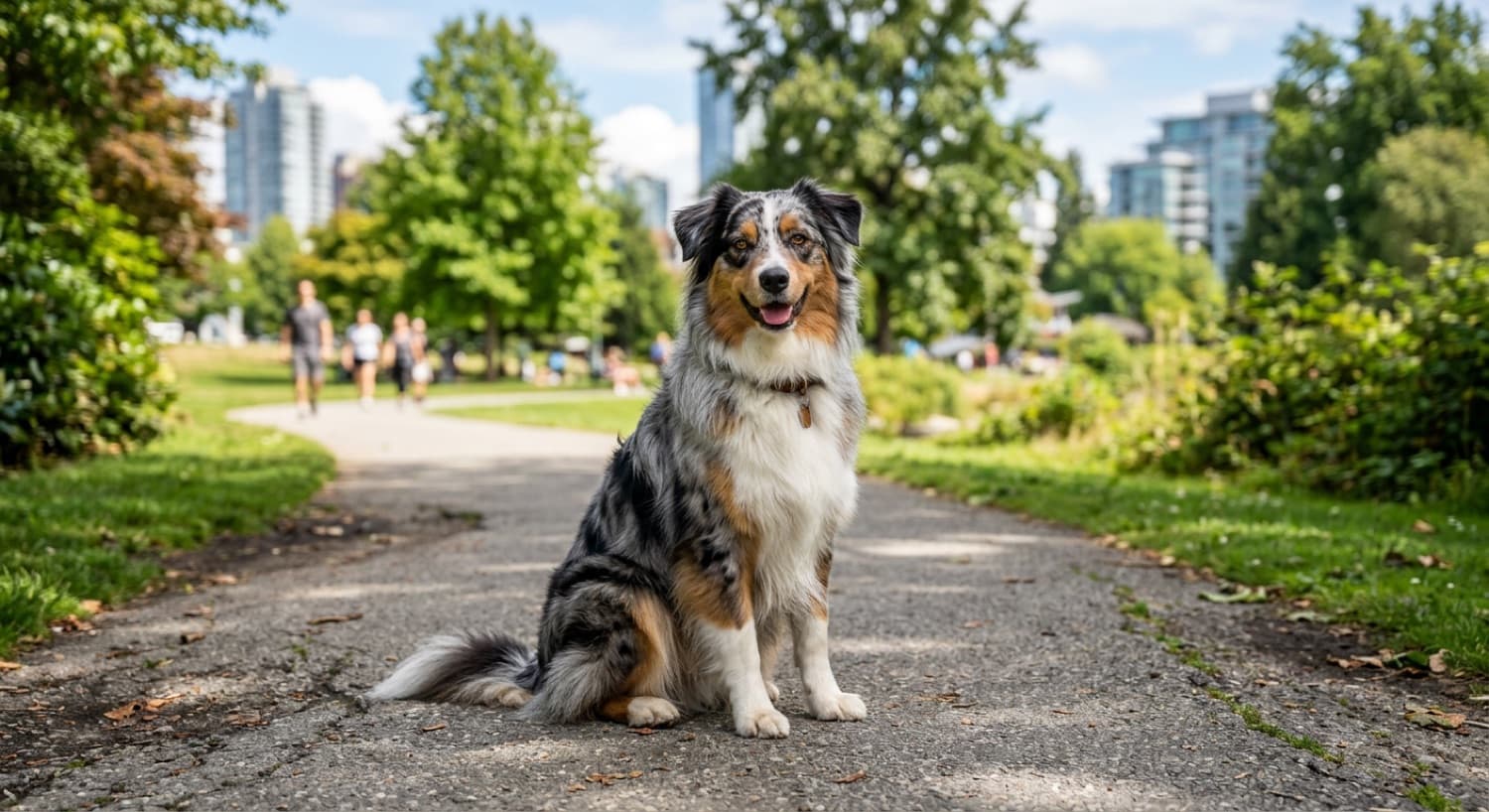
Senior Aussie care: the 12-to-15-year picture
Australian Shepherds typically live 12 to 15 years, a solid medium-large herding breed lifespan. Senior management starts around age eight. The main conditions to watch for in senior Aussies: Cushings disease (the senior endocrine workhorse), arthritis from earlier hip or elbow disease, senior cataracts, hypothyroidism that develops late, cancer (the moderate breed load coming into play), and dental disease.
Senior Aussie care plan to discuss with your Edmonton vet: twice-yearly vet visits with bloodwork and urinalysis from age eight, annual ophthalmology check from age seven (cataracts catch early), proactive dental care, careful weight management (an overweight senior Aussie compounds every other condition), low-impact exercise tuned to joint comfort, and monthly home lump checks. Pet insurance enrolled before the senior years pays off most reliably in this stage. Aussies who reach age twelve in good health often have a few more good years; many decline gradually over the last 12 to 18 months with cardiac, neurological, or oncologic contributors.
End-of-life planning matters, and it matters earlier for breeds where the lifespan is well defined. Have the conversation about quality of life, in-home euthanasia options, and what your preferences are before a crisis arrives. Edmonton has in-home veterinary end-of-life services that allow a peaceful passage at home for senior Aussies who would find a clinic visit stressful.
Pet insurance for an Edmonton Australian Shepherd
Week-one pet insurance enrolment is the single highest-leverage health decision for any rescue Aussie. Every Canadian provider excludes pre-existing conditions, which means the day a vet documents anything (a single seizure, a hip finding, an eye anomaly, a low thyroid value, an autoimmune marker), that condition becomes a permanent exclusion on any policy enrolled afterward. The clock starts the day you adopt.
The breed-specific value math for Aussies is unusually strong because multiple lifetime risks stack:
- Idiopathic epilepsy: $40 to $120 monthly medication plus $150 to $300 annual bloodwork for life if affected
- Hip dysplasia surgical correction: $5,000 to $10,000 per hip if needed
- Elbow arthroscopy: $2,500 to $5,000
- Cataract surgery: $4,000 to $7,000 per eye
- Autoimmune thyroiditis: $200 to $350 diagnostic plus $15 to $40 monthly levothyroxine for life
- ITP or IMHA workup-and-stabilisation: $3,000 to $8,000
- Cushings diagnosis and trilostane: $600 to $1,100 first year, $60 to $150 monthly thereafter
- Lymphoma chemotherapy: $6,000 to $10,000 for full CHOP protocol
- Emergency MDR1 reaction workup: $2,000 to $5,000 (uncommon if status is known)
- Aussie DNA panel: $150 to $250 first year (often not covered, since it's preventive testing)
A typical pet insurance policy for a young healthy Aussie in Edmonton runs $55 to $95 per month depending on deductible, reimbursement percentage, and coverage limits. Over the dog's lifetime, premiums total $8,000 to $15,000. An Aussie who develops epilepsy at age three and needs hip surgery at age seven and a thyroid diagnosis at age nine can easily generate $25,000 to $40,000 in lifetime medical costs.
What to look for in an Aussie policy:
- Hereditary and congenital conditions explicitly covered (cheaper policies that exclude these are nearly useless for an Aussie)
- Annual coverage caps rather than per-condition caps
- Annual caps of $15,000 or more
- Explicit coverage for neurological and autoimmune conditions (epilepsy and autoimmune thyroiditis are the two most common Aussie claim categories)
- Reasonable wait times for orthopaedic and neurology coverage (typically 14 to 30 days)
- Claims process that allows direct vet payment or fast reimbursement
Compare three to four providers before enrolling. The American Animal Hospital Association publishes general guidance on what to look for in a pet insurance policy; the checklist applies to Canadian providers. Your Edmonton vet and your foster contact can both share which providers other Aussie adopters have used and what their claim experience has been.
Frequently asked questions
Where can I find a vet for an Australian Shepherd near me in Edmonton?
Any reputable Edmonton general-practice clinic is a fine starting point for routine Aussie care. Australian Shepherds are common across Alberta and most Edmonton vets have substantial breed familiarity. For breed-specific concerns (MDR1 drug sensitivity protocols, ophthalmology for cataracts or Collie Eye Anomaly, neurology for epilepsy, orthopaedic surgery for hips, internal medicine for autoimmune workups), ask your general-practice vet which Edmonton specialty practice they refer working herding dogs to. Edmonton has a smaller specialty network than Calgary and substantially smaller than the largest Canadian veterinary hubs. Difficult cases occasionally route to the Western College of Veterinary Medicine in Saskatoon, the closest full teaching hospital. Some Edmonton Aussie owners drive to Calgary specialty centres for shorter wait times. Establish a primary vet in month one, flag MDR1 status (or pending test) on every chart, and pre-save at least one 24-hour Edmonton emergency clinic in your phone.
What are the main Australian Shepherd health issues to know before adopting?
Aussies carry a defined set of inherited diseases, several testable through a single DNA panel. The conditions in rough order of practical importance: MDR1 mutation (drug sensitivity affecting roughly half of all Aussies, with severe and sometimes fatal reactions to ivermectin, loperamide, and several chemotherapy and anaesthesia drugs), hip dysplasia (moderate-to-high breed prevalence), elbow dysplasia, cataracts (common, often hereditary), Progressive Retinal Atrophy (PRA), Collie Eye Anomaly (CEA), idiopathic epilepsy (moderate breed prevalence), autoimmune disease (autoimmune thyroiditis, immune-mediated thrombocytopenia), hypothyroidism, cancer (lymphoma, hemangiosarcoma, mast cell), Cushings disease in seniors, and double-merle health concerns (deafness, blindness, microphthalmia) when two merle parents are bred. A first-month vet workup plus an Aussie DNA panel builds the baseline. Pet insurance enrolled in week one is essentially mandatory.
How common is MDR1 in Australian Shepherds and what should I do?
MDR1 prevalence in Australian Shepherds is the highest of any breed. Roughly half of all Aussies carry at least one copy of the mutation, and a substantial subset carry two copies (the affected state). The mutation disables a protein that normally pumps certain drugs out of the brain, so affected dogs accumulate toxic concentrations of those drugs at standard label doses. Test in month one through Embark, Wisdom Panel, or the Washington State University Veterinary Clinical Pharmacology Laboratory (the original validated test, $60 to $80 directly through the lab). Write the result (clear, carrier, or affected) on every vet chart for life and flag it verbally at every emergency visit. The full WSU drug list deserves a permanent saved spot on your phone. Cross-link our companion article on MDR1 drug safety for the full clinician-ready protocol.
How worried should I be about epilepsy in an adopted Australian Shepherd?
Worried enough to recognise a seizure, calm enough to live with the dog you adopted. Aussies have moderate breed prevalence for idiopathic epilepsy with typical onset between 1 and 5 years of age. Many epileptic Aussies live full lives on daily anticonvulsant medication. If you witness a seizure, time it on your phone, move objects the dog could fall against, do not put your hand near the mouth, keep voices calm, and call your vet. A single seizure does not necessarily mean lifetime medication. Vets typically start anticonvulsants after a second seizure, after a cluster, or after a seizure lasting more than five minutes. Monthly medication runs $40 to $120 depending on the drug. Pet insurance enrolled before the first seizure covers epilepsy cleanly. Enrolled after, it becomes a permanent pre-existing exclusion. This is the strongest argument for week-one enrolment on any young rescue Aussie.
How much does hip dysplasia surgery cost for an Aussie in Edmonton?
Australian Shepherds sit at moderate-to-high breed prevalence for hip dysplasia. Diagnosis is by hip radiographs graded under the OFA or PennHIP systems, typically $300 to $600 at an Edmonton clinic depending on sedation and PennHIP positioning. Total hip replacement at an Edmonton or Alberta specialty practice runs roughly $7,000 to $10,000 per hip. Femoral head ostectomy (a salvage procedure that lets a fibrous false joint form) usually lands at $3,000 to $5,000 and recovers faster, with more limitations on long-term sport. Conservative management with lean body weight, joint supplements, physical therapy, hydrotherapy, and prescription anti-inflammatories defers or replaces surgery in many mild and moderate cases. Several Edmonton practices offer underwater treadmill rehabilitation. Pet insurance enrolled before diagnosis covers most of the surgical cost. Insurance enrolled after will not.
What eye diseases affect Australian Shepherds?
Three main hereditary eye conditions affect Aussies. Cataracts are the most common, often hereditary, sometimes bilateral, with juvenile and senior presentations. Surgical removal at Edmonton or Calgary specialty ophthalmology runs $4,000 to $7,000 per eye with good prognosis when caught early. Progressive Retinal Atrophy (PRA) is a hereditary retinal degeneration that progresses from night blindness through complete blindness. Several PRA variants affect Aussies and DNA testing covers the common forms. There is no cure, but most affected Aussies adjust well to gradual vision loss in familiar environments. Collie Eye Anomaly (CEA) is a developmental defect of the choroid and sometimes the retina. Severity ranges from mild and asymptomatic to severe with retinal detachment. Annual ophthalmology exams from age seven catch early senior cataracts. Edmonton ophthalmology consultations run $250 to $500.
What is autoimmune disease in Aussies and how is it diagnosed?
Australian Shepherds have moderate breed prevalence for several autoimmune conditions. Autoimmune thyroiditis is the leading cause of canine hypothyroidism in the breed (the immune system attacks the thyroid gland, eventually destroying function). Screening is by full thyroid panel (T4, free T4, TSH, and thyroglobulin autoantibody) at $200 to $350. Immune-mediated thrombocytopenia (ITP) presents with bleeding, bruising, or unexplained nosebleeds and warrants emergency evaluation with CBC and immunology workup. Immune-mediated haemolytic anaemia (IMHA) is rarer but life-threatening, with pale gums, weakness, and yellow tint to skin or eyes. Management of autoimmune disease usually involves immunosuppressive drugs (prednisone, cyclosporine, mycophenolate) at $80 to $300 monthly, lifelong monitoring, and an internal medicine specialist for refractory cases. Pet insurance is the difference between treatment and decision pressure when these diagnoses arrive.
What is the double-merle problem in Australian Shepherds?
The merle gene produces the marbled coat pattern Aussies are known for. One copy (single-merle) is normal and healthy. Two copies (double-merle, sometimes called lethal white) cause a stack of health problems: significant or total deafness, significant or total blindness from microphthalmia (small or absent eyes), and increased risk of other developmental defects. Double-merles result when two merle-coated dogs are bred together (a known welfare violation in responsible breeding). Most merle Aussies in Edmonton rescue are single-merles with normal vision and hearing. Double-merles occasionally appear from negligent breeding situations. If you adopt a primarily-white Aussie or a dog with unusual eye appearance, request a BAER (Brainstem Auditory Evoked Response) hearing test at $150 to $300 and an ophthalmology consult. See our companion article on Aussie merle coat genetics for the full breeding ethics picture.
Should I get pet insurance for an Edmonton rescue Aussie?
Yes, and enrol in week one. Every Canadian provider excludes pre-existing conditions, and the timeline starts the day you adopt. The breed-specific value math for Aussies is strong because multiple lifetime risks stack: predictable testable inherited disease (MDR1 + DNA-panel conditions become excluded once documented), moderate orthopaedic possibility (hip surgery in the $5,000 to $10,000 range), the realistic possibility of lifelong epilepsy medication, and moderate autoimmune disease prevalence with lifelong management costs. Monthly premiums for a young healthy Aussie in Edmonton run $55 to $95 depending on deductible and reimbursement percentage. Look for explicit hereditary and congenital coverage (cheaper policies that exclude these are nearly useless for an Aussie), annual caps of $15,000 or more, explicit coverage for neurological and autoimmune conditions, and reasonable wait times. Compare three to four providers before enrolling.
What health screening should the Edmonton rescue have done?
Edmonton rescues do a baseline vet workup before adoption, but the depth varies by rescue and individual dog. What most cover: vet physical exam at intake, core vaccinations (DAPP and rabies), spay or neuter surgery, microchip, deworming, flea and tick treatment, and basic adult bloodwork in many cases. What is usually NOT covered: hip and elbow radiographs, ophthalmology exam for cataracts or CEA screening, the Australian Shepherd DNA panel (MDR1, PRA, CEA, plus breed identification for mixes), full thyroid panel with autoantibody screening, neurology consult, or BAER hearing test for merle dogs. Plan a first-month vet visit that establishes the orthopaedic, ophthalmology, neurological, and endocrine baseline. The non-negotiable first-month test is MDR1, before any urgent drug exposure. If the rescue can share intake bloodwork, vet notes, or genetic-test results, bring them.
How long do Australian Shepherds live?
Australian Shepherds typically live 12 to 15 years, a solid lifespan for a medium-large herding breed. Senior age starts around eight for management purposes (more frequent vet visits, senior bloodwork twice yearly, dental tracking, weight management, and proactive screening for Cushings disease and senior cataracts). Cancer load is moderate (lymphoma, hemangiosarcoma, mast cell tumours) but not as concentrated as in cancer-stacked breeds like Bernese Mountain Dogs or Boxers. Most Aussies reach senior age in functional health and decline gradually over the last 1 to 2 years. Pet insurance enrolled before any senior diagnosis pays for itself many times over for the dogs that develop chronic conditions; for the dogs that stay healthy, premiums are the cost of risk transfer on a breed where the risk is real.
Related Edmonton Australian Shepherd guides
Edmonton Adoptable Dogs
Current Edmonton-area Australian Shepherd and Aussie-mix listings from SCARS, Zoe's, EHS, GEARS, Hope Lives Here, AHHRB, and AARCS Edmonton fosters.
Australian Shepherd Adoption Edmonton
Rescue sources, real adoption fees, Aussie vs Aussie-mix availability, surrender patterns at the working-line adolescent stage, and the breed-vs-buy reframe for Edmonton adopters.
Aussie MDR1 Drug Safety Edmonton
The clinician-ready MDR1 protocol: full drug list, testing logistics, what to write on every vet chart, and the emergency-room scripts that prevent fatal reactions.
Aussie Merle Coat Genetics Edmonton
The single-merle vs double-merle distinction, the breeding ethics, BAER and ophthalmology screening for predominantly-white Aussies, and what to look for in a merle rescue dog.
Find your Edmonton rescue Australian Shepherd
Browse current Edmonton-area Aussie and Aussie-mix listings. Foster temperament notes help you flag any seizure history, vision concerns, or known MDR1 status before you apply, and your first-month vet workup plus the Aussie DNA panel builds the baseline.
Browse All Edmonton Dogs →New dog? Start with these care guides
Everything a new adopter needs to set up a safe, happy home.