The short answer
Merle is an incomplete-dominant gene at the SILV/PMEL locus. One copy (Mm, single merle) produces the marbled coat pattern with no significant health impact. Two copies (MM, double merle) cause hearing loss, eye abnormalities including microphthalmia, partial or complete blindness, and increased skin cancer risk on unpigmented areas. Merle-to-merle breeding produces 25 percent double merle puppies and is opposed by every major Aussie parent club. For new adopters, the $80 to $150 DNA test confirms genotype and identifies cryptic carriers. The $200 to $400 BAER hearing test belongs in the first 30 days for any merle Aussie. For deeper medical pathology, see our Australian Shepherd health issues guide.
What the merle gene actually does
Merle is a coat colour pattern produced by a gene located at the SILV locus (also called PMEL or PMEL17). The gene codes for a protein involved in pigment cell development. The merle allele is a SINE (Short Interspersed Nuclear Element) insertion that disrupts normal pigment production in a patchy, irregular pattern across the coat. The result is the marbled appearance of merge dogs: regions of full base colour (black or liver) interspersed with diluted patches of grey or cream, often with white markings layered on top.
The merle gene follows an incomplete dominant inheritance pattern. The standard notation is M (merle allele) and m (non-merle allele). A dog with two non-merle alleles (mm) shows no merle pattern and looks solid colour. A dog with one merle allele and one non-merle allele (Mm, single merle) shows the classic marbled pattern. A dog with two merle alleles (MM, double merle) shows excessive pigment loss across the body, ending up mostly white with sparse patches of colour, and carries the associated health consequences.
The pigment cells affected by the merle gene are also involved in inner ear and eye development. In a single merle dog, the disruption is mild enough that hearing and vision develop normally. In a double merle dog, the disruption extends to the cells that line the cochlea and form the structures of the eye, which is why double merles carry the deafness, microphthalmia, and visual impairment that define the phenotype.
The Australian Shepherd Health and Genetics Institute (ASHGI) maintains the most authoritative breed-specific reference on merle genetics, inheritance patterns, and responsible breeding practices. Every Aussie owner considering breeding should read the ASHGI resources end to end before any pairing decision.
Single merle (Mm): the healthy pattern
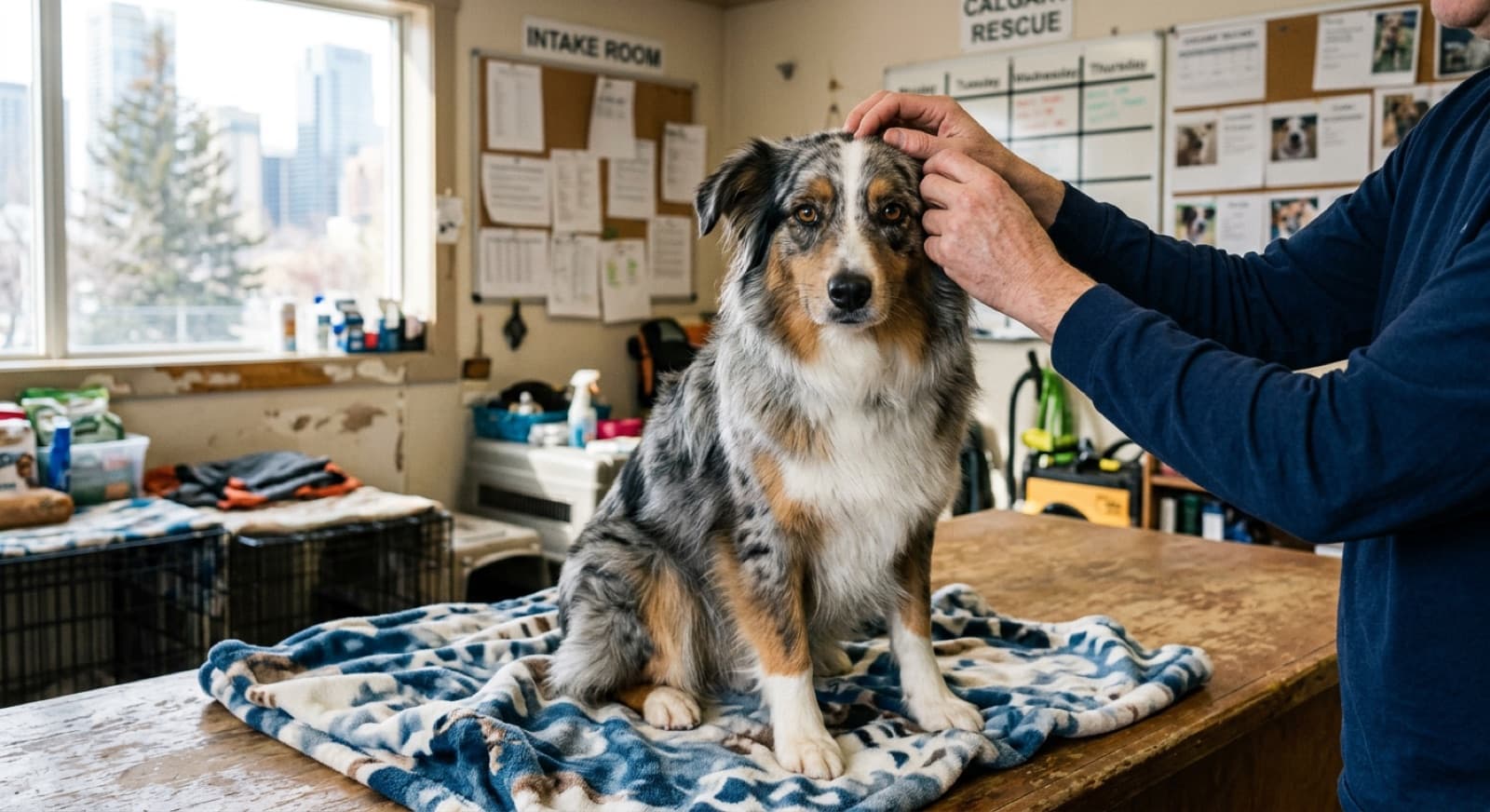
A single merle Aussie carries one copy of the merle allele and shows the classic marbled coat pattern. Blue merle is the marbled pattern on a black base coat, with regions of black, grey, and white often accompanied by copper or tan markings on the face and legs. Red merle is the same pattern on a liver (red) base coat, producing marbled red, cream, and brown. Both colour variants are recognised by the AKC, the CKC, and the Australian Shepherd Club of America.
Health-wise, the single merle dog is essentially identical to a non-merle Aussie. Lifespan is 12 to 15 years. Hip dysplasia risk, epilepsy risk, cancer risk, and MDR1 drug sensitivity are all governed by other genes and follow the breed-typical distribution. Some peer-reviewed work suggests a small elevation in unilateral hearing loss in single merles compared to non-merles, but the rate is low (under 5 percent in most studies) and the practical impact is rarely noticed by owners. Most single merle Aussies have completely normal hearing.
Eye abnormalities are rare in single merles. Some individuals have heterochromia (one blue eye and one brown eye, or sectoral heterochromia within a single eye) which is a cosmetic variation with no functional impact. Pink or partially unpigmented skin on the nose, eyelid rims, and lips is common and benefits from sunscreen on prolonged summer outings in the Edmonton river valley or out on lake properties.
For pet owners, the single merle dog needs the same care as any Aussie: appropriate exercise, mental stimulation, training, parasite prevention, and routine wellness. The merle status is on the medical record for completeness but does not change day-to-day management.
Double merle (MM): the disability load
A double merle Aussie inherited two copies of the merle allele, one from each parent. The visible coat is usually mostly white with sparse patches of merle pattern, often concentrated around the ears, eyes, or rump. Eye colour is frequently blue, sometimes very pale or partially missing pigment. The health consequences fall into four categories.
Hearing loss
The most common and most clinically significant consequence. Peer-reviewed estimates of bilateral deafness in double merle dogs range from 25 to 86 percent depending on the study population and methodology. Unilateral hearing loss (one ear only) adds another large fraction. Many double merles arrive at rescue with no behavioural training history because the previous owner interpreted the deafness as stubbornness. A BAER (Brainstem Auditory Evoked Response) test confirms the genotype-to-phenotype mapping and establishes a baseline.
Eye abnormalities
Microphthalmia (abnormally small eyes), coloboma (gaps in the iris, retina, or optic disc), and starburst or asymmetric pupils all appear in double merles at elevated rates. The American College of Veterinary Ophthalmologists (ACVO) recommends a full ophthalmology workup at intake for any suspected double merle. Visual impairment ranges from mild (perceptible only on testing) to complete blindness. The ACVO eye registry tracks genetic eye disease in breeding dogs.
Skin cancer risk
The mostly white coat and pink unpigmented skin of a double merle gives less protection from UV exposure. Skin cancer risk on the nose, ears, and exposed body surfaces is elevated. Edmonton summer UV is high (lake-country exposure, long daylight hours June through August), and sun protection becomes a real management practice for these dogs.
Behavioural and training implications
A deaf, partially blind dog requires a different training framework: hand signals, visual cues, vibration markers, consistent home layouts, and fenced outdoor spaces. Most double merles adapt well with committed handlers, but the adopter needs to enter the relationship with the right expectations.
The combination is not a death sentence for the dog. Many double merles live happy 12 to 14 year lifespans with the right home. But the management commitment is real and is the reason rescues screen adopters carefully for double merle placements.
Cryptic merle: the hidden risk
Cryptic merle (also called phantom merle) is the genetic-but-invisible state where a dog carries the merle allele but shows little or no merle pattern in the coat. The mechanism is variation in the length of the SINE insertion at the SILV gene. Shorter insertions produce less pigment disruption and may show as only a small patch of merle on one ear or paw, or be entirely absent to visual assessment.
The clinical problem is that two cryptic merle carriers can breed together without anyone realising the pairing is merle-to-merle, and produce double merle puppies 25 percent of the time. The puppies arrive with the full disability profile and no one understands the genetic origin.
DNA testing through Embark, Wisdom Panel, or a parent-club registered lab identifies cryptic merles regardless of coat appearance. The test returns the genotype at the SILV/PMEL locus with the SINE insertion length, which distinguishes obvious merle, cryptic merle, and non-merle. Any breeding pair should have both parents tested through DNA, never visual assessment alone. Pet adopters do not face the same urgency, but the test is useful for completeness on the medical record.
The lesson for adopters considering buying from a breeder rather than adopting: ask about DNA testing of both parents at the SILV/PMEL locus. A reputable breeder has the results and shares them without hesitation. A breeder who answers “visual assessment confirms one merle, one non-merle parent” without DNA testing has not done due diligence on cryptic merle risk.
Heterochromia: different colour eyes
Heterochromia describes a dog with two different eye colours. Complete heterochromia means one fully blue eye and one fully brown (or amber) eye. Sectoral heterochromia means a single eye with regions of both blue and brown pigment. Both are common in single merle Aussies and are also found in Huskies, Catahoulas, and a handful of other breeds.
The trait is linked to the merle gene because both blue eye colour and the merle coat pattern share underlying pigment cell biology. A merle Aussie is more likely to have heterochromia than a non-merle Aussie. The trait is benign. Vision in the blue eye is normal. The dog has full binocular vision and depth perception. Many Aussie owners specifically seek out heterochromia because the look is striking.
The one practical consideration is sun protection on any unpigmented eyelid rim, which can be pink or partially unpigmented in heterochromic dogs. A pet-safe sunscreen on summer outings handles this. The Edmonton river valley and lake-country summer UV exposure is high enough that this becomes a real protocol on full-day outings.
Heterochromia is not associated with hearing loss, vision impairment, or any other clinical issue. The trait is cosmetic and a celebrated feature of the breed.
The four recognised Aussie colours
The American Kennel Club, Canadian Kennel Club, and Australian Shepherd Club of America all recognise four colour patterns in the breed. None is healthier than another, and none is preferred from a working or pet standpoint.
- Blue merle: marbled black, grey, and white over a black base coat. Often accompanied by copper or tan markings on the face and legs (called blue merle tri or blue merle bi depending on the markings). The most recognisable and most common merle variant.
- Red merle: marbled red, cream, and brown over a liver base coat. Same gene at work as blue merle, different base colour. Equally common in some lines, less common in others.
- Black tri: solid black base coat with copper or tan markings on the face, chest, and legs, plus white markings on the face, chest, and feet. No merle pattern. A classic working-line look.
- Red tri: solid liver (red) base coat with copper markings and white markings. The non-merle counterpart to red merle.
Bi-colour variants (no tan points, just base colour plus white markings) and self variants (no white at all) exist within the four patterns. The AKC and CKC breed standards accept all combinations within the four parent patterns.
For a fuller breakdown of breed standards across registries, the American Kennel Club breed page and the Canadian Kennel Club registry page document the colour and conformation expectations.
The merle DNA test in Edmonton
The merle DNA test is a simple buccal swab and returns the SILV/PMEL genotype including the SINE insertion length. Three practical options for Edmonton owners:
Multi-panel DNA tests (Embark, Wisdom Panel)
Direct-to-consumer panels run $130 to $200 and include merle status alongside breed identification, MDR1, eye disease markers, and dozens of other health screens in one purchase. For a new Aussie adopter wanting a comprehensive workup, this is the best value. The merle component of these tests uses the same underlying methodology as the parent-club labs and is reliable for distinguishing obvious merle, cryptic merle, and non-merle.
Through your Edmonton vet
Your vet can do a cheek swab in the exam room and send it through a referral diagnostic lab. Cost is typically $120 to $180 in Edmonton including consultation. The result goes directly to the medical record. Turnaround is 2 to 3 weeks.
Parent-club specialty labs
ASHGI maintains relationships with specialty genetic labs that test specifically for the SILV/PMEL alleles with high precision on insertion length. Cost runs $80 to $120. This is the path used by breeders for breeding decisions where cryptic merle detection matters most.
For pet owners, the result is informational. For breeders, the result is essential. Either way, the test belongs on the medical record because future owners and veterinary teams benefit from knowing the genotype.
BAER hearing test at adoption
BAER stands for Brainstem Auditory Evoked Response. It is the only objective test for canine deafness. The dog wears small electrodes on the head, receives a brief audio click in each ear, and the equipment records the electrical response from the brainstem. The procedure takes 15 to 30 minutes, requires no sedation in most calm dogs (mild sedation for anxious ones), and provides a definitive ear-by-ear hearing assessment.
Cost in Edmonton runs $200 to $400 through a specialty practice. The Western College of Veterinary Medicine at the University of Saskatchewan provides BAER testing through the Veterinary Medical Centre for referral cases including complex or sedation-needed assessments.
Who needs BAER testing:
- Any double merle Aussie at adoption. The hearing loss rate is high and the result changes the training plan.
- Any merle Aussie showing behavioural signs of unilateral or bilateral deafness. Not responding to sounds from one side, sleeping through unexpected noises, struggling with verbal recall in distracting environments.
- Any Aussie used for breeding. Hearing loss carries forward genetically in subtle ways and a clean BAER baseline informs the breeding ethic.
Single merle Aussies with no behavioural concerns do not strictly need BAER testing, though some owners pursue it for completeness. The test result is a hearing status snapshot, not a permanent verdict (acquired hearing loss in older dogs is a separate question).
Browse adoptable Australian Shepherds in Edmonton
Merle Aussies arrive in Edmonton rescues at moderate volume, occasionally including double merles that need experienced adopters. Rescues run BAER testing and ophthalmology workups at intake to establish the functional profile.
See Edmonton Adoptable Dogs →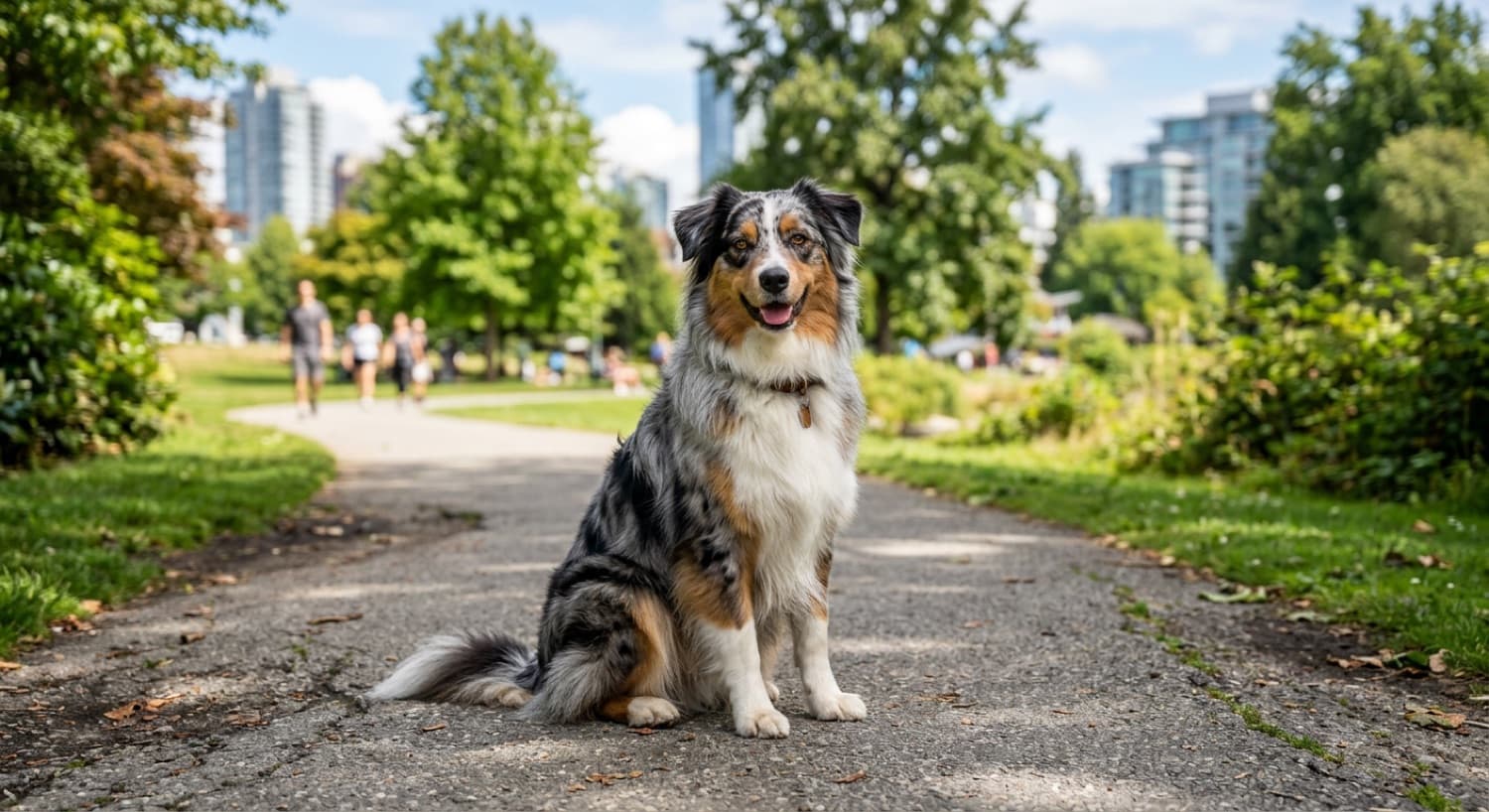
Merle-to-merle breeding: the ethics position
Every major Aussie parent club and welfare organisation opposes merle-to-merle breeding. The mechanism is predictable: 25 percent of puppies from a merle-to-merle pairing will be double merle with the associated deafness, eye abnormalities, blindness, and skin cancer risk. The remaining puppies break down as 50 percent single merle and 25 percent non-merle. The breeding intentionally creates a quarter of the litter as disabled dogs.
The Australian Shepherd Club of America Code of Ethics explicitly prohibits the practice. The Canadian Kennel Club, while it registers the resulting puppies as a matter of administrative policy, considers merle-to-merle breeding outside best practice. ASHGI publishes the breeding-decision framework that responsible breeders follow.
Responsible breeders pair one merle parent with one non-merle parent. The statistical outcome is approximately 50 percent merle puppies and 50 percent solid puppies with no double merles. The full coat-pattern variety of the breed is preserved without the disability load.
For adopters considering buying from a breeder rather than adopting, the merle-to-merle question is the most direct screening question. The answer must be no, and the parents must be DNA tested to rule out cryptic merle. A breeder who pairs two visible merles, or two solid-coated dogs without DNA testing for cryptic merle, has not met the threshold of responsible breeding.
The double merle rescue reality in Edmonton
Edmonton rescues see double merle Aussies at low but steady volume. The common arrival paths:
- Commercial breeder surrender. A breeder produced a litter from a merle-to-merle pairing aimed at maximising the merle percentage, then surrendered the double merle puppies once the disabilities became apparent.
- Owner surrender from misunderstood disability. An owner bought a mostly white “rare Aussie” from an unregulated breeder, did not understand the genetics or the disability, and surrendered when the dog did not respond to verbal training or showed visual difficulties.
- Accidental cryptic-merle breeding. Two visually solid-coated parents both carried cryptic merle alleles, and the resulting double merle puppies arrived at rescues with no clear breeding history.
- Stray intake. Occasionally a double merle is found stray and arrives at Edmonton Humane Society or another shelter without any history.
Edmonton Humane Society, SCARS, Zoe's Animal Rescue, and AHHRB all occasionally list double merle Aussies. Intake protocol typically includes a BAER hearing test and an ophthalmology workup to establish the functional profile. Adoption fees usually stay in the standard $400 to $700 range, sometimes reduced to encourage placement with experienced adopters.
The dogs are adoptable. They live full lives in the right homes. The screening exists because the management commitment is real, and a placement that fails because the adopter underestimated the demands is harder on the dog than waiting for the right home.
Living with a single merle Aussie in Edmonton
Day-to-day care for a single merle Aussie matches care for any other Aussie. The breed-typical needs apply: 60 to 90 minutes of structured exercise daily, mental stimulation through training and puzzle work, force-free socialisation, year-round parasite prevention, and routine wellness.
The two small additions specific to merle:
- Sun protection on unpigmented skin. Pink nose, pink eyelid rims, and any white skin patches benefit from a pet-safe sunscreen on summer outings longer than 30 minutes in direct sun. Edmonton lake country and river valley outings in July and August are the highest-exposure scenarios.
- Awareness of mild unilateral hearing loss. A small percentage of single merles have undiagnosed unilateral deafness. If your dog consistently fails to respond to a recall from one side, a BAER test confirms whether unilateral loss is present. Training adjustments are minor (verbal cues plus visual hand signals as backup) but knowing helps avoid mistaking deafness for disobedience.
Single merle Aussies are otherwise unremarkable from a management standpoint. The medical record carries the merle genotype for completeness and future continuity.
Living with a double merle Aussie
The double merle adopter commits to a different training and management framework. The work pays off. Deaf and blind dogs bond strongly, learn quickly through the channels they do have, and live meaningful 12 to 14 year lifespans with the right home.
Hand signals and visual cues
Deaf dogs train through hand signals, body posture, and visual markers. A thumbs-up replaces a clicker. Recall uses a wide arm wave plus a long line in fenced areas. Sit, down, stay, and place all teach the same way as verbal cues, just with a hand signal as the cue and a visual marker as the bridge. Force-free trainers in Edmonton experienced with deaf dogs can be found through rescue referral.
Vibration markers
A vibration collar set to a gentle non-aversive buzz works as a tactile attention cue at distance. Never use a shock collar. The buzz becomes a paired cue (vibrate then visual hand signal) and the dog learns to check in when buzzed.
Fenced outdoor spaces
Off-leash exercise happens only in fenced yards or fenced dog parks because a deaf dog cannot hear an approaching car, a cyclist, or a verbal recall from a distance. The Edmonton off-leash park system includes fenced sections that work for this purpose.
Consistent home layout for blind dogs
Blind dogs memorise the layout of the home within days and navigate confidently as long as furniture stays in consistent positions. Rearranging the living room disorients a blind dog for several days. Stair safety relies on a verbal marker at the top and bottom and a gate when needed.
Sun protection
The mostly white coat plus elevated skin cancer risk makes summer sun protection a daily practice. Pet-safe sunscreen on exposed areas, shade during peak UV hours, and shorter outdoor sessions in direct July sun. Indoor enrichment can substitute for outdoor exposure on the hottest days.
Edmonton sun exposure and merle skin protection
Edmonton sits at 53 degrees north latitude. Summer days are long (17 hours of daylight at the June solstice), and clear-sky UV index regularly hits 7 or 8 from late May through August. For dogs with unpigmented skin, the cumulative exposure adds up faster than most owners expect.
The practical protocol for merle Aussies with pink noses, pink eyelid rims, or white body patches:
- Pet-safe sunscreen on exposed skin for any outing longer than 30 minutes in direct sun. Zinc oxide is toxic to dogs; use a product specifically formulated for canine skin.
- Shade during peak UV hours. 11 AM to 3 PM is peak intensity in Edmonton summer. Schedule longer outings for morning or evening.
- Light-coloured cooling vest for lake outings or beach visits where reflected UV adds to the direct exposure.
- Annual skin examination at the wellness visit. Any new pink lesion, scaly patch, or non-healing bump on a merle Aussie deserves a closer look.
Double merles with extensive unpigmented skin carry the highest skin cancer risk and benefit most from the protocol. Single merles with only nose and eyelid pigment gaps need the protection but at lower urgency.
Multi-merle households and accidental breeding
A common Edmonton household has more than one Aussie. If both are intact and both are single merle, accidental breeding produces 25 percent double merle puppies. This is the classic preventable tragedy: two healthy dogs, two beautiful coats, one accidental pairing producing disabled puppies.
The prevention is simple but worth stating: spay and neuter or strict separation during heat cycles. Rescue dogs come spayed or neutered by default through the adoption contract. Breeder dogs are sometimes intact and a multi-merle household needs the management plan.
The same logic applies to merle dogs of any two breeds in the same household. A merle Aussie and a merle Catahoula in the same intact household is the same risk profile, just with mixed-breed offspring. The genetics do not care which breed the merle alleles came from.
Edmonton specialty access for merle complications
Most merle-related care is managed at the primary vet. The DNA test is mailed in or processed locally. The BAER test runs through Edmonton specialty practices or WCVM Saskatoon. Ophthalmology workups for double merles run through Edmonton specialty ophthalmology referral.
The standard escalation path:
- Primary vet: DNA test ordering, medical record flag for genotype, routine wellness, skin cancer screening, sun protection guidance.
- Edmonton specialty practices: BAER hearing test through board-certified internal medicine, ophthalmology workup through board-certified veterinary ophthalmologists, skin biopsy and oncology referral when needed.
- WCVM Saskatoon: the regional referral hub at the University of Saskatchewan. Reachable by road (5 hours) for complex cases. Provides BAER testing, ophthalmology, and behavioural medicine consultation for deaf-blind double merles needing complex management plans.
For single merles with no complications, the primary vet handles everything routine. For double merles, expect at least one specialty consultation in the first year to establish baseline hearing, vision, and skin examination findings. Annual follow-up at the primary vet captures changes over time.
Senior merle Aussie care
By the senior years (age 9 onward) every Aussie accumulates some age-related health load. For merle dogs, the senior protocol includes a few additions:
- Skin examination at every wellness visit. Cumulative sun exposure raises skin cancer risk in seniors with unpigmented skin. Any new lesion deserves a biopsy or a closer look.
- Vision assessment. Senior cataracts are common in Aussies and a merle dog with eye abnormalities at baseline benefits from annual ophthalmology evaluation. Cataract surgery runs $4,000 to $7,000 per eye if recommended.
- Hearing assessment. Senior hearing loss adds to any congenital deficit. A senior merle dog that worked well with verbal cues may need a transition to hand signals as age-related hearing loss accumulates.
- Cognitive support. The American Veterinary Medical Association publishes guidance on canine cognitive dysfunction. Selegiline (Anipryl) is the standard medication when symptoms appear; the AVMA senior pet care resources cover the framework.
The 12 to 15 year Aussie lifespan applies equally to single merles and non-merles. Double merles with significant disability load sometimes shorten that, but with good care many reach the same range. Senior care is the time when the early investments in pet insurance and a known MDR1 status pay back the most.
Frequently asked questions
What is a double merle Australian Shepherd?
A double merle Aussie is a dog that inherited two copies of the merle gene, one from each parent (genotype MM). The merle gene is incomplete dominant, meaning one copy produces the beautiful marbled coat pattern with no major health impact, but two copies disrupt pigment formation across the body in ways that affect the inner ear, the eyes, and the skin. Roughly 25 percent of puppies from a merle-to-merle breeding will be double merle. Clinical impact varies but typically includes some degree of deafness (estimates range from 25 to 86 percent depending on the study and methodology), eye abnormalities like microphthalmia (small eyes) and coloboma (gaps in eye structures), partial or complete blindness, and increased skin cancer risk on the unpigmented areas. Double merles are usually mostly white with patches of merle. They end up in rescue at disproportionately high rates because some commercial breeders deliberately breed merle-to-merle to produce more merle puppies, then surrender the affected offspring when the disabilities become apparent. A BAER hearing test confirms deafness and an ophthalmology workup confirms eye involvement. With proper management deaf and blind dogs live full lives, but the upfront commitment is real.
Is a single merle Aussie healthy?
Yes. A single merle Aussie (genotype Mm) is a healthy dog with the classic merle coat pattern. The single copy of the merle gene produces the marbled pattern across a normally pigmented base coat (blue merle on a black base, red merle on a liver base) without disrupting inner ear or eye development the way the double dose does. Some studies suggest a small elevation in unilateral hearing loss compared to non-merle Aussies but the rate is low and the practical impact for most dogs is none. Eye abnormalities are rare in single merles. The dogs live the same 12 to 15 year lifespan as non-merle Aussies. The only practical caveats are mild sun sensitivity on any unpigmented skin (pink nose, pink eyelids) and the genetic reality that breeding two single merles together produces double merle puppies 25 percent of the time. That breeding ethic question matters for breeders but not for pet owners.
What is cryptic merle?
Cryptic merle (sometimes called phantom merle) is a dog that carries the merle gene but shows little or no visible merle pattern. The marbling may be present only on small patches, a single ear, or be entirely absent to the eye. Genetic testing reveals the dog carries the M allele despite looking solid coloured. Cryptic merles are the hidden risk in unregulated breeding because two dogs that look solid colour can both carry a cryptic merle allele, breed together, and produce double merle puppies without anyone realising the merle pairing happened. The mechanism is variation in the length of the SINE insertion at the SILV/PMEL gene; shorter insertions express less visible merle. DNA testing through Embark, Wisdom Panel, or a parent-club registered lab will identify cryptic carriers regardless of coat appearance. Any breeder pairing two Aussies needs to know the merle status of both parents through DNA testing, not visual assessment alone.
How much does the merle DNA test cost in Edmonton?
The merle DNA test runs $80 to $150 in Edmonton depending on the route. Direct-to-consumer panels from Embark or Wisdom Panel run $130 to $200 and include merle status alongside breed identification, MDR1, and dozens of other health markers in one purchase. This is the best value for a new adopter who wants a comprehensive workup. Standalone merle tests through a referral diagnostic lab via your Edmonton vet run $80 to $120 and return only the SILV/PMEL result. Turnaround is typically 2 to 3 weeks. The test uses a buccal swab (cheek cells) and requires no blood draw or fasting. The result identifies cryptic carriers that visual assessment misses, which is the entire point of running the test on any Aussie used for breeding. Pet owners do not strictly need the merle test for medical management of a single merle dog, but the result belongs on the medical record for completeness and for any future owner.
What is the BAER hearing test and does my merle Aussie need one?
BAER stands for Brainstem Auditory Evoked Response. It is the gold-standard objective hearing test for dogs and the only reliable way to confirm bilateral or unilateral deafness. The dog wears small electrodes on the head, receives a brief audio click in each ear, and the equipment records the brainstem electrical response. The procedure takes 15 to 30 minutes, requires no sedation in most calm dogs, and costs $200 to $400 in Edmonton through a specialty practice or the Western College of Veterinary Medicine in Saskatoon. Single merle Aussies do not strictly need a BAER test unless behavioural signs suggest a problem (not responding to sounds from one side, sleeping through unexpected noises). Double merle Aussies should have a BAER test at adoption or before placement because the deafness rate is high and the result changes the training and management plan. Many double merles have unilateral deafness (one ear) that is invisible without BAER and would otherwise be misread as inattention or stubbornness.
Is heterochromia (different colour eyes) a health concern in Aussies?
No. Heterochromia (two different eye colours, classically one blue and one brown, or partial blue and brown in the same eye called sectoral heterochromia) is a cosmetic trait common in merle Aussies and Huskies. There is no clinical concern attached to it. The blue eye sees as well as the brown eye and the dog has normal binocular vision. The trait is linked to the merle gene because both blue eye colour and the merle pattern share underlying pigment biology, but heterochromia by itself does not signal any health issue. Some single merle Aussies have heterochromia, some do not. Some non-merle Aussies have heterochromia as well. The trait is benign and aesthetically distinctive. The only sun-protection caveat applies to a pink or partially unpigmented eyelid rim, which can need sunscreen on prolonged summer outings.
Why are double merle Aussies common in rescue?
Two reasons. First, some commercial breeders deliberately pair two merle parents because merle-to-merle breeding produces a higher percentage of merle puppies, which sell at premium prices. The 25 percent of puppies that come out as double merle (often mostly white with blue eyes and varying degrees of deafness or blindness) are then surrendered, sold cheaply with no disclosure of the disabilities, or abandoned. Second, accidental merle-to-merle breeding from undisclosed cryptic carriers happens in unregulated breeding settings where neither parent was genetically tested. Edmonton rescues including Edmonton Humane Society, SCARS, and Zoe's Animal Rescue see double merle Aussies at low but steady volume. Many arrive without medical history or even confirmation of the disability. A BAER hearing test and ophthalmology workup at intake establish the actual functional profile. Adoption fees for double merles often stay in the standard $400 to $700 range or are reduced to encourage placement, but the lifetime medical cost is higher and the training commitment is real.
Can I train a deaf Aussie?
Yes, and very effectively. Deaf dogs learn entirely through hand signals, visual cues, and tactile feedback. The training mechanics are the same as for hearing dogs but the marker shifts from a verbal cue or clicker to a thumbs-up, a flash of a small flashlight, or a vibration collar set to a gentle non-aversive buzz (never a shock collar). Recall is taught with hand signals plus a long line in fenced areas. Settle and place commands work the same way. The main household adjustments are a gentle tap on the shoulder to wake the dog rather than calling, a stomp on the floor for vibration cues, and a fenced yard for off-leash safety because a deaf dog cannot hear an approaching car. Edmonton has force-free trainers experienced with deaf dogs available through referral; ask your Aussie rescue for current recommendations. Deaf dogs bond strongly, learn quickly through visual training, and live full social lives.
Can I train a blind or visually impaired Aussie?
Yes. Blind dogs adapt remarkably well to a stable home environment through scent, sound, and tactile memory. The training approach uses verbal cues and consistent furniture placement. The dog memorises the layout of the home in days, learns to navigate stairs with a verbal marker at the top and bottom, and uses scent trails to find favourite spots. Outdoor walks happen on leash with the handler narrating obstacles (curb up, curb down, step). Toys with bells or crinkle sounds replace visual fetch. The two practical commitments are keeping furniture in consistent positions (rearranging the living room disorients a blind dog for days) and protecting the dog from drop-offs, pools, and traffic. Blind dogs that also have hearing loss (the double-merle worst case) need more environmental management but still live meaningful lives. The American Veterinary Medical Association publishes guidance for managing blind dogs that any new adopter should read.
What is the merle-to-merle breeding ethics position?
Every major Aussie parent club and welfare organisation opposes merle-to-merle breeding. The Australian Shepherd Club of America Code of Ethics prohibits it. The Canadian Kennel Club registration system, while it does not refuse to register the resulting puppies, considers the breeding outside best practice. The Australian Shepherd Genetics Institute (ASHGI) publishes the breeding-decision framework that responsible breeders follow. The mechanism is clear: 25 percent of puppies from a merle-to-merle breeding will be double merle with predictable health consequences. Responsible breeders pair one merle parent with one non-merle parent, which produces approximately 50 percent merle and 50 percent solid puppies with no double merles. If you are considering buying from a breeder rather than adopting, the merle-to-merle question is the most direct screening question to ask, and the answer must be no.
What does merle look like in different colours?
Aussies come in four recognised colour patterns and merle can appear in two of them. Blue merle is the most common and most recognisable: a marbled pattern of black, grey, and white across a black base coat, often with copper or tan markings on the face and legs. Red merle is the second variant: marbled red, cream, and brown across a liver base. Both blue merle and red merle can come with or without tan points (the markings on the face and legs that produce the “tri” pattern). Black tri and red tri are solid base colours (black or liver) with tan points and white markings, no merle pattern. All four colour patterns are recognised by the American Kennel Club, the Canadian Kennel Club, and the Australian Shepherd Club of America. None of the four is healthier or working-better than another; the colour is purely aesthetic in single-merle and non-merle dogs. The pattern intensity within merle (heavy marbling vs sparse) varies even within litters from the same parents.
Related Edmonton Australian Shepherd guides
Adoptable Dogs in Edmonton
Browse current Aussies and Aussie crosses listed with Edmonton-area rescues. Updated regularly.
Australian Shepherd Adoption Edmonton
Edmonton Aussie rescue sources, adoption costs, surrender patterns, and the working-dog adopter reality.
Australian Shepherd Health Issues: MDR1, Eyes
Australian Shepherd health issues to plan for: MDR1 drug sensitivity, epilepsy, Collie eye anomaly and other eye disease, hip dysplasia, EPI and deafness in merle-to-merle puppies.
Australian Shepherd MDR1 Drug Safety Edmonton
MDR1 mutation, the DNA test, the avoidance list, safe alternatives, and the Edmonton ER protocol.
Find your Edmonton Australian Shepherd
Browse adoptable Aussies and Aussie crosses from Edmonton-area rescues. Filter by age and energy to find a match.
Browse All Edmonton Dogs →New dog? Start with these care guides
Everything a new adopter needs to set up a safe, happy home.