The short answer
Bernese are the most cancer-stacked breed in dogdom. Lifetime cancer rate sits around half of all Bernese in breed-club data, with histiocytic sarcoma (a Bernese-specific cancer with generally poor prognosis) leading the list alongside lymphoma, osteosarcoma, hemangiosarcoma, and mast cell tumours. Median lifespan is 7 to 9 years. Hip and elbow dysplasia, bloat, OCD in growing puppies, cruciate tears, hypothyroidism, mild cardiac involvement, and real heat intolerance round out the picture. Enrol in pet insurance week one: the catastrophic risk is unusually predictable, and the American College of Veterinary Internal Medicine oncology specialty handles the diagnostic and treatment pathway.
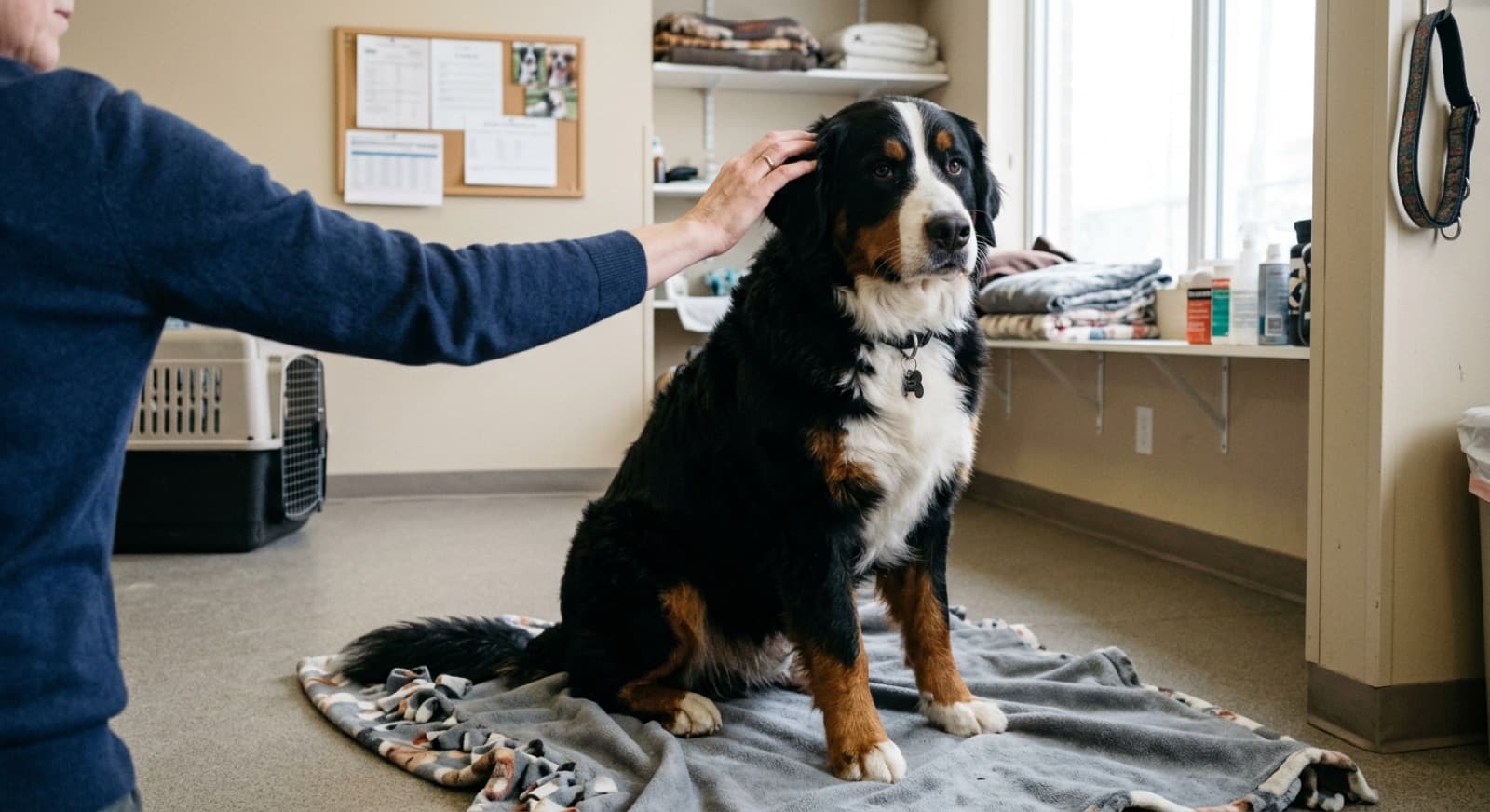
The Bernese breed health picture, briefly
Bernese Mountain Dogs are one of the most distinctive breeds in veterinary medicine for a hard reason. Cancer dominates the picture. Lifetime cancer rate sits at roughly half of all Bernese in published breed-club data, the highest documented load of any breed. Histiocytic sarcoma alone accounts for a substantial share. Median lifespan lands between 7 and 9 years in most veterinary references. Some Bernese reach 10 or 11. Few reach 12. This shorter arc is the trade-off for one of the most affectionate and calm large breeds.
Beyond cancer, the breed carries a giant breed orthopaedic load. Hip dysplasia and elbow dysplasia are both common. OCD shows up in growing puppies. Cruciate ligament tears appear in middle age. Bloat (GDV) is the deep-chested giant emergency every Bernese owner needs the emergency-vet number for. Hypothyroidism is common. Heart disease (subaortic stenosis as the congenital concern, DCM at moderate rates) needs annual cardiac screening. Aseptic meningitis is rare but Bernese-noted. Allergies and atopic dermatitis are common. Heat intolerance is real and limits Edmonton summer activity. Eye conditions (cataracts, PRA) appear at moderate rates.
The other reality every Edmonton Bernese owner should know: pet insurance enrolled in week one is the single highest-leverage health decision you make. The cancer plus orthopaedic stack produces the most predictable lifetime spending of any breed. Every Canadian provider excludes pre-existing conditions, and skipping insurance is a defensible choice only if you can self-insure $40,000 to $80,000 in lifetime out-of-pocket vet costs. The American Animal Hospital Association publishes general pet insurance evaluation guidance that applies to Canadian providers.
Histiocytic sarcoma (HS): the breed-defining cancer
Histiocytic sarcoma is the cancer reality that defines Bernese ownership. The disease arises from histiocytic cells (immune cells that normally help process tissue debris and present antigens) and is strongly overrepresented in Bernese. Breed-specific research has identified a polygenic genetic basis. Prevalence in Bernese is dramatically higher than in the general dog population, with breed-club studies commonly citing roughly one in four lifetime risk. The disease is aggressive, the prognosis is generally poor, and the practical reality at adoption is that every Bernese owner should know what to watch for.
Three clinical presentations
HS presents in three patterns that matter for diagnosis and treatment. Localised HS appears as a soft tissue mass, often near a joint (carpus, stifle, elbow) or in the spleen, and may be amenable to surgical resection at presentation. Disseminated HS involves multiple organs at diagnosis (spleen, liver, lungs, lymph nodes, bone marrow) and presents with weight loss, lethargy, decreased appetite, and sometimes laboured breathing. Hemophagocytic HS is a specific splenic subtype that presents with severe anaemia, sometimes with collapse, and carries a particularly grim prognosis with median survival often measured in weeks.
Diagnosis
Diagnosis requires tissue biopsy with histopathology, often supplemented by immunohistochemistry to distinguish HS from other round cell tumours including lymphoma. Fine needle aspirate cytology can raise suspicion but rarely confirms the diagnosis on its own. Staging adds abdominal ultrasound, thoracic radiographs or CT, regional lymph node aspirate, and sometimes bone marrow aspirate. Staging at an Edmonton specialty practice typically runs $1,500 to $3,500. The diagnostic workup needs board-certified veterinary oncology or internal medicine involvement to interpret correctly.
Treatment
Treatment depends on whether the disease is localised or disseminated. Localised HS that is fully resectable may respond to wide surgical excision plus adjuvant chemotherapy. Edmonton surgical excision runs $3,000 to $6,000 depending on tumour location. CCNU (lomustine) chemotherapy is the most studied protocol and runs roughly $4,000 to $9,000 across the treatment course. Disseminated HS is rarely curable; treatment is palliative with the goal of buying weeks to a few months of good quality time. Even localised disease frequently recurs or metastasises after surgery. Median survival across all treatment combinations is measured in weeks to months for most presentations, with some long survivors on aggressive multi-modal protocols.
Edmonton oncology pathway
Edmonton oncology specialty capacity handles routine HS workup and CCNU chemotherapy. For complex cases (advanced staging, radiation therapy, clinical trial enrolment), some Edmonton owners route to Calgary specialty centres or to the Western College of Veterinary Medicine in Saskatoon. The earlier the diagnosis the better the treatment trajectory; aspirate cytology in primary care plus specialty oncology referral within days, not weeks, makes a real difference. The American College of Veterinary Internal Medicine credentials veterinary oncologists.
The wider Bernese cancer reality
Histiocytic sarcoma is the headline cancer but it is not alone. The Bernese cancer load is broad. Other common cancers in the breed:
- Lymphoma: peripheral lymph node enlargement, sometimes with weight loss or lethargy. Diagnosis by fine needle aspirate, with flow cytometry and PCR for clonality used to subtype B-cell versus T-cell disease. CHOP chemotherapy at an Edmonton specialty oncology practice runs $5,000 to $15,000 with median survival around 12 to 14 months for B-cell disease.
- Osteosarcoma: the giant breed bone cancer. Presents as lameness or visible swelling, most often on a limb. Diagnosis by radiograph plus biopsy. Treatment is amputation plus chemotherapy or limb-sparing surgery plus chemotherapy at specialty practice. Edmonton amputation plus adjuvant chemotherapy runs $7,000 to $14,000 with median survival around 10 to 12 months.
- Hemangiosarcoma: aggressive cancer of blood vessel cells, often arising in the spleen, heart, or skin. Splenic and cardiac hemangiosarcoma may present as acute collapse from internal bleeding. Diagnosis by imaging plus biopsy. Treatment is splenectomy plus chemotherapy where feasible, with median survival often 4 to 7 months even with treatment.
- Mast cell tumours: present as skin lesions of variable appearance. Diagnosis by fine needle aspirate. Treatment depends on grade and stage, with low-grade cured by surgical excision and high-grade requiring staging plus chemotherapy or radiation.
The practical owner takeaway: build the monthly skin and lymph node check habit at home, schedule annual senior bloodwork starting at age four (earlier than for most breeds), and book aspirate cytology on every new lump rather than wait-and-see. Late detection is the most common avoidable failure in Bernese cancer cases.
Browse adoptable Edmonton dogs
Current Edmonton-area listings. Bernese in rescue are uncommon and often arrive with documented health history that matters for planning. Foster notes flag cancer baselines, orthopaedic findings, and senior status. Plan a first-month vet workup with cancer baseline, hip and elbow assessment, cardiac auscultation, and thyroid panel.
See Available Dogs →Hip dysplasia, elbow dysplasia, and orthopaedic care
Bernese are giant-breed dogs and the orthopaedic load is meaningful. Both hip dysplasia and elbow dysplasia are common in the breed.
Hip dysplasia
Hip dysplasia involves abnormal hip joint development that progresses to arthritis with age. Signs include a bunny-hopping gait, reluctance to climb stairs or jump into vehicles, stiffness after rest, weight shifting away from the affected hip, and visible muscle wasting in the hindquarters. Diagnosis is by hip radiographs graded under the Orthopedic Foundation for Animals or PennHIP systems, typically $400 to $700 at an Edmonton clinic. Conservative management with lean body weight, joint supplements, hydrotherapy, and prescription anti-inflammatories defers or replaces surgery in many cases. Severe cases need femoral head ostectomy ($3,500 to $6,000) or total hip replacement ($7,000 to $11,000 per hip) at specialty practice.
Elbow dysplasia
Elbow dysplasia is a collective term for several developmental conditions including fragmented coronoid process, osteochondritis of the elbow, and ununited anconeal process. Presentation is forelimb lameness, often bilateral, sometimes with a stiff or shortened forelimb gait. Diagnosis is by radiograph and sometimes CT or arthroscopy at specialty practice. Conservative management buys time in many cases. Arthroscopic surgery to address the specific lesion runs $3,500 to $6,500 per elbow at Edmonton specialty practice. The American College of Veterinary Surgeons governs the surgical specialty board.
Cruciate ligament tears
Cranial cruciate ligament rupture is common in Bernese given the giant body weight and joint stress. Presentation is acute hindlimb lameness, often during play or after a slip. Diagnosis is by physical exam (cranial drawer sign) and radiograph. Surgical correction with TPLO (tibial plateau levelling osteotomy) at an Edmonton specialty practice runs $5,000 to $8,000 per knee. Bilateral cruciate disease is common; one side blows and the other follows within 12 to 18 months in many cases. Budget mentally for that possibility. Conservative management is less satisfactory in a 90 to 110 pound Bernese than in smaller dogs.
Osteochondritis dissecans (OCD) in young Bernese
OCD is a developmental cartilage disease that affects large and giant breed puppies between 4 and 10 months old. A flap of cartilage detaches from the underlying bone, most often in the shoulder, elbow, or stifle, producing pain and lameness. Bernese are predisposed because of rapid growth rate and joint stress. The lesions are sometimes bilateral.
Prevention sits on three pillars. First, feed a large or giant breed puppy food formulated for controlled growth (not a generic high-calorie puppy formula). Slower growth reduces OCD risk. Second, avoid repetitive high-impact exercise during the growth window. No forced running. No jumping out of vehicles. No long ball-chasing sessions. Free play and structured low-impact activity are fine; the joints just cannot tolerate repeated high-impact loading while still forming. Third, keep puppy weight strictly lean. Overweight giant breed puppies have dramatically worse orthopaedic outcomes.
Diagnosis is by radiograph and sometimes MRI at an Edmonton specialty practice. Treatment ranges from conservative management (rest, anti-inflammatories, weight control) for mild lesions to arthroscopic surgery for larger lesions. Surgical correction runs $3,500 to $6,000 per joint at specialty practice. Early diagnosis matters; a young Bernese with persistent unilateral lameness deserves prompt orthopaedic workup rather than wait-and-see.
Bloat (gastric dilatation-volvulus, GDV)
Gastric dilatation-volvulus is a life-threatening emergency where the stomach distends with gas and twists on its axis, cutting off blood supply. Without surgical correction within hours it is fatal. Bernese are deep-chested giants, placing them at elevated GDV risk. Symptoms to recognise immediately:
- Visibly distended or hard abdomen, sometimes drum-tight to the touch
- Non-productive retching (tries to vomit but nothing comes up; this is the most reliable early sign)
- Restlessness or inability to settle, pacing
- Drooling and frothy saliva
- Pale gums (check by lifting the lip)
- Rapid shallow breathing that does not match the activity
- Progressive weakness or collapse
If you see any combination of these in a Bernese, drive directly to a 24-hour Edmonton emergency veterinary clinic without calling first. Bloat surgery runs $5,000 to $10,000 including post-op care; survival improves dramatically the earlier the dog arrives.
Prophylactic gastropexy is a preventive surgery that anchors the stomach to the body wall, preventing the twist that makes GDV fatal. Performed at the time of spay or neuter (or as a standalone procedure) it runs $1,500 to $3,000 and dramatically reduces lifetime GDV risk. Most Edmonton specialty surgeons strongly recommend it for giant breeds, and many Bernese rescues coordinate it before adoption when feasible. Pre-save the contact info for at least one 24-hour Edmonton emergency vet before you need it.
Heart disease, hypothyroidism, and other conditions to know
Heart disease
Subaortic stenosis (SAS) is the congenital cardiac concern, a narrowing of the outflow tract below the aortic valve that obstructs blood flow and predisposes to arrhythmias and exercise intolerance. Diagnosis starts with cardiac auscultation; an experienced vet hears a characteristic left-basilar systolic ejection murmur. Echocardiogram with Doppler confirms and grades severity. Mild cases need annual monitoring only. Moderate to severe cases benefit from beta-blocker therapy and exercise modification under cardiology guidance. Dilated cardiomyopathy (DCM) appears at moderate rates in the breed; presentation is exercise intolerance, cough, or laboured breathing, often in middle-aged to senior dogs. Annual cardiac auscultation with low threshold to refer for echocardiogram is the practical baseline. Any Bernese with a heart murmur needs prompt echocardiogram before any anaesthetic event (including spay or neuter) so the anaesthesia plan accounts for the cardiac status.
Hypothyroidism
Hypothyroidism is common in Bernese and frequently misread as behaviour problems or normal ageing. Symptoms cluster around metabolism: weight gain despite stable diet, lethargy, reduced exercise tolerance, dull or thinning coat, recurrent skin or ear infections, cold intolerance, and behaviour changes including increased anxiety or reduced sociability. The behaviour link is the most under-recognised piece. Diagnosis is by full thyroid panel including TSH and free T4 by equilibrium dialysis. Baseline total T4 alone has limited diagnostic value. Treatment is daily levothyroxine at $25 to $50 per month plus periodic rechecks. Most hypothyroid Bernese recover normal energy, coat, and temperament within four to eight weeks of starting medication.
Aseptic (steroid-responsive) meningitis
Aseptic meningitis is a rare but Bernese-noted neurological condition presenting as acute neck pain, reluctance to move the head, fever, and lethargy, often in young adult dogs. Diagnosis is by cerebrospinal fluid analysis at a specialty practice. Treatment with immunosuppressive doses of prednisone produces dramatic improvement in many cases. The condition can relapse and may require extended steroid courses. Any sudden onset of neck pain or stiffness in a young Bernese deserves prompt vet evaluation rather than wait-and-see.
Eye disease
Cataracts (lens opacity progressively reducing vision) and progressive retinal atrophy (PRA, a progressive degeneration of the retina causing eventual blindness) both appear in the breed at moderate rates. Diagnosis is by ophthalmology exam. Cataract surgery (phacoemulsification) at a veterinary ophthalmologist runs $3,500 to $5,500 per eye when vision restoration is the goal. PRA has no treatment; affected dogs slowly lose vision but most adapt remarkably well to blindness when the home environment is stable. Annual ophthalmology evaluation for senior Bernese is reasonable.
Atopic dermatitis
Allergies and atopic dermatitis are common in the breed. Presentation is recurrent ear infections, paw licking, face rubbing, and recurrent skin or skin-fold infections. Edmonton seasons drive the pattern: spring tree pollens, summer grass pollens, and indoor allergens during the long winter. Workup ranges from symptomatic management (medicated shampoos, anti-itch medications like oclacitinib or lokivetmab, dietary trials) up to formal allergy testing and immunotherapy at a veterinary dermatologist. Lifelong management is the norm. Plan for $500 to $2,500 per year on allergy management once a Bernese becomes symptomatic. The dedicated Bernese grooming guide (cross-linked below) covers coat-and-skin care relevant for the breed.
Heat intolerance: the Edmonton summer reality
Bernese were bred for Swiss alpine work and carry a heavy double coat plus a giant body that thermoregulates poorly in heat. Heat intolerance is genuinely worse than for most breeds. Anything above roughly 22 degrees Celsius is borderline; above 25 degrees Celsius is risky. Edmonton summer routinely hits both thresholds and exceeds them. The practical reality is morning and evening exercise only on warm days, no midday activity above 22 degrees Celsius, constant access to water and shade, and a low threshold to skip a walk entirely on a hot day. Indoor air conditioning becomes a real consideration for the breed.
Heat distress signs: excessive panting, drooling, gum colour changes from pink to deep red or pale, weakness, wobble, and progressive collapse. A Bernese showing heat distress needs immediate shade, water, and active cooling (wet the belly and groin with cool water, not ice; ice can produce shock-driven vasoconstriction that worsens heat retention). The dedicated Edmonton summer heat guide (cross-linked below) covers the breed-specific summer protocol in depth.
Edmonton specialty veterinary access reality
Edmonton has solid general-practice veterinary coverage for Bernese. For routine care (annual physical, vaccinations, dental, bloodwork, weight management), any reputable Edmonton clinic is a fine starting point. For Bernese-specific work, particularly oncology and orthopaedic surgery, the picture is more nuanced.
Edmonton oncology
Edmonton has veterinary oncology specialty access adequate for routine Bernese cancer workup and treatment (histiocytic sarcoma staging and CCNU chemotherapy, lymphoma CHOP protocols, mast cell tumour management, palliative care). For complex cases (advanced radiation therapy, clinical trial enrolment, unusual diagnoses, advanced cardiac oncology), some Edmonton owners route to Calgary specialty centres or to the WCVM in Saskatoon. The earlier you connect with an oncologist for a higher-grade tumour, the better the trajectory; aspirate cytology in primary care plus specialty referral within days, not weeks.
Edmonton orthopaedic surgery and cardiology
Edmonton has board-certified veterinary surgeons handling hip and elbow procedures, cruciate repair, and OCD arthroscopy. Total hip replacement is a more specialised procedure; some Edmonton owners travel for it. Cardiology specialty capacity is adequate for routine echocardiogram, SAS workup, and DCM screening. Edmonton owners with complex cardiac cases sometimes route to Calgary or the WCVM in Saskatoon.
WCVM Saskatoon
The Western College of Veterinary Medicine at the University of Saskatchewan is the closest full veterinary teaching hospital, about five and a half hours each way from Edmonton. WCVM handles complex Bernese referrals beyond local capacity: difficult oncology including advanced radiation, neurology and neurosurgery, complex cardiac cases, and unusual orthopaedic revisions. The University of Alberta does not have a veterinary school, which is why Saskatoon is the closest academic referral.
Building your network in month one
The practical move when you adopt a Bernese: establish a primary Edmonton vet in the first month, ask specifically which oncologist and which orthopaedic surgeon they refer Bernese to, and write the answers down. Pre-save at least one 24-hour Edmonton emergency clinic in your phone. Most Edmonton Bernese will need specialty oncology referral at some point. Knowing the pathway before you need it cuts friction out of the process at the worst possible moment.
Pet insurance for an Edmonton Bernese
Week-one pet insurance enrolment is the single highest-leverage health decision for any rescue Bernese. Every Canadian provider excludes pre-existing conditions, which means the day a vet documents anything (a skin lump, a heart murmur, a slight hip subluxation, a low thyroid value, a mild limp), that condition becomes a permanent exclusion on any policy enrolled afterward. The clock starts the day you adopt.
The Bernese-specific value math is the strongest of any breed because the catastrophic risks are unusually predictable:
- Histiocytic sarcoma workup plus CCNU chemotherapy: $12,000 to $18,000
- Lymphoma CHOP chemotherapy: $5,000 to $15,000
- Osteosarcoma amputation plus chemotherapy: $7,000 to $14,000
- Hemangiosarcoma splenectomy plus chemotherapy: $7,000 to $13,000
- Total hip replacement: $7,000 to $11,000 per hip
- Elbow arthroscopy: $3,500 to $6,500 per elbow
- TPLO cruciate surgery: $5,000 to $8,000 per knee (often bilateral over time)
- Bloat (GDV) emergency surgery: $5,000 to $10,000
- OCD arthroscopy: $3,500 to $6,000 per joint
- Allergy management at the specialty dermatology end: $500 to $2,500 per year ongoing
- Cardiac workup and ongoing management: $1,000 to $3,000 per year once diagnosed
A Bernese who develops histiocytic sarcoma plus bilateral cruciate surgery can easily generate $25,000 to $40,000 in out-of-pocket costs across just a few years; a dog with a major cancer plus orthopaedic stack reaches $40,000 to $80,000 over the dog's lifetime. A typical pet insurance policy for a young healthy Bernese in Edmonton runs $90 to $160 per month depending on deductible, reimbursement percentage, and coverage limits. The premium is higher than for most breeds because insurers know the risk profile.
What to look for in a Bernese policy:
- Hereditary and congenital conditions explicitly covered (policies that exclude these are useless for a Bernese)
- Explicit oncology coverage with no separate cancer cap (some policies cap cancer separately, which is brutal for this breed)
- Annual coverage caps of $20,000 or more, ideally with no lifetime cap
- Explicit coverage of orthopaedic conditions including hip and elbow dysplasia, OCD, and cruciate repair
- Coverage for diagnostic imaging including CT and MRI (cancer staging and orthopaedic workup depend on it)
- Reasonable wait times for cardiac and orthopaedic coverage (typically 14 to 30 days)
Compare three to four providers before enrolling. The American Animal Hospital Association publishes general guidance on pet insurance evaluation. Your Edmonton vet and your foster contact can both share which providers other Bernese adopters have used and what their claim experience has been.
Adoption health workup: what the rescue covers vs what you re-screen
Edmonton rescues do a baseline vet workup before adoption, but the depth varies by rescue and by individual dog. Understanding what is and is not covered helps you plan the first-month vet visit, which for a Bernese should explicitly establish cancer, orthopaedic, thyroid, and cardiac baselines.
What most Edmonton rescues cover
- Physical exam by a vet at intake including cardiac auscultation, lymph node palpation, and skin assessment
- Core vaccinations (DAPP and rabies, sometimes Bordetella if boarded)
- Spay or neuter surgery (often with prophylactic gastropexy at the same time for giant breeds, but confirm)
- Microchip implant and registration
- Deworming and flea and tick treatment
- Basic adult bloodwork (CBC and chemistry panel) in many cases
- Treatment of any acute concerns identified at intake
What is usually NOT covered (and what to plan for)
- Fine needle aspirate cytology on existing skin lumps not flagged at intake
- Hip and elbow radiographs (OFA or PennHIP grading)
- Full thyroid panel for dogs over two
- Echocardiogram for any heart murmur noted on auscultation
- Ophthalmology consult with a board-certified veterinary ophthalmologist
- Senior cancer baseline workup (chest radiographs, abdominal ultrasound)
- Specialty consultation pathway planning
Plan a first-month vet visit with your chosen Edmonton vet that establishes the Bernese baseline you can build on. The standard ask: a careful physical with lymph node palpation, a thorough skin survey with photo documentation of every lump or unusual spot, an orthopaedic exam, baseline thyroid panel, cardiac auscultation with low threshold to refer for echocardiogram, and a frank conversation about the oncology referral pathway. If the rescue can share intake imaging, bloodwork, or vet notes, bring them.
For senior Bernese (five years and up given the shorter breed lifespan), the first-month workup is more involved: full senior bloodwork, urinalysis, baseline thyroid panel, careful cardiac auscultation with low threshold to refer for echocardiogram, dental evaluation, lymph node palpation, abdominal ultrasound if budget allows (spleen assessment matters in a cancer-prone breed), and a thorough lump check with aspirate cytology on any suspicious lesion. Budget $1,000 to $2,000 for the senior intake workup at an Edmonton clinic.
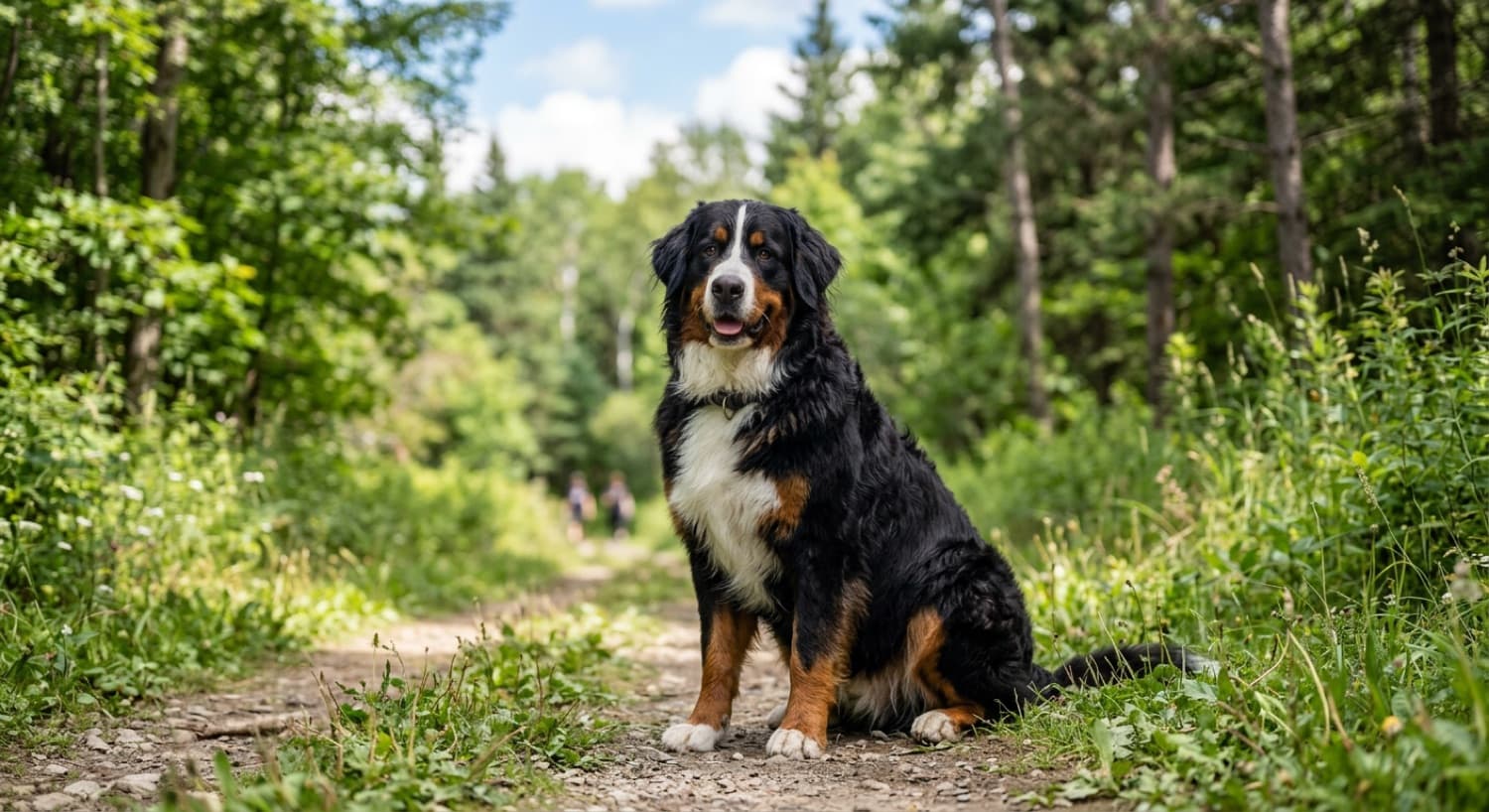
The short Bernese lifespan and senior care after age six
Bernese median lifespan sits at 7 to 9 years in most published references. Some reach 10 or 11. Few reach 12. Cancer drives most early losses, with histiocytic sarcoma alone responsible for a meaningful share. The reality matters at adoption planning. A four-year-old Bernese is functionally middle-aged. A six-year-old Bernese is a senior. Plan financially and emotionally for that timeline. Many Edmonton rescue volunteers will tell you senior Bernese adoptions are among the most rewarding placements they see; the dogs settle deeply and bond hard, and the families who adopt them go in with eyes open about the timeline.
Reasonable senior-care adjustments for a Bernese after age six, all guided by your Edmonton vet:
- Biannual vet exams instead of annual
- Full annual senior bloodwork including thyroid panel and urinalysis
- Annual cardiac auscultation with low threshold to refer for echocardiogram
- Annual ophthalmology check (cataracts and PRA risk both progress through these years)
- Routine dental care including professional cleanings every 18 to 24 months
- Joint support (glucosamine, chondroitin, omega-3) and prescription anti-inflammatories during arthritis flares
- Tight weight monitoring (overweight Bernese do worse on every front, especially orthopaedic and heat tolerance)
- Aggressive lump monitoring with aspirate cytology on every new lesion rather than wait-and-see
- Mobility aids: orthopaedic bed, traction rugs on hardwood, ramps for stairs and vehicles. These matter sooner for Bernese than for most breeds
- Climate comfort: a cool refuge for summer in particular; senior Bernese thermoregulate even less efficiently than middle-aged dogs and the heat threshold drops further
Some Bernese develop canine cognitive dysfunction in their later years, with disorientation, anxiety, or sleep changes. Your vet can advise on management options ranging from environmental adjustments to prescription medications.
Pet insurance becomes harder and more expensive to obtain for first-time enrolment past age six in this breed, and some providers will not enrol senior Bernese at all (particularly those with documented cardiac, orthopaedic, or cancer findings). If you adopt a senior Bernese, price-compare carefully and consider whether a dedicated savings account makes more sense than insurance. Talk through the math with your vet at the first visit, and have honest quality-of-life conversations early; for many senior Bernese, the choice is calm comfortable years rather than aggressive intervention.
Frequently asked questions
Where can I find a vet for a Bernese near me in Edmonton?
Start with your general-practice Edmonton vet, who refers to local board-certified veterinary oncologists, surgeons, and internal medicine specialists for the workup a Bernese typically needs across its lifetime. Edmonton has solid general-practice and intermediate specialty coverage. For complex oncology (histiocytic sarcoma diagnosis and management, advanced chemotherapy protocols, radiation), some Edmonton owners route to the Western College of Veterinary Medicine in Saskatoon. Establish a primary vet in month one, ask which oncologist and which orthopaedic surgeon they refer Bernese to, and book the first month workup with cancer baseline, hip and elbow assessment, and cardiac auscultation. The American College of Veterinary Internal Medicine credentials the oncology specialty board.
What is the lifespan of a Bernese Mountain Dog?
Median lifespan for the breed sits roughly between 7 and 9 years in published veterinary references, with cancer driving most early losses. Some Bernese reach 10 or 11. Few reach 12. This is meaningfully shorter than most other large breeds and shorter than the giant breed average. The reality matters at adoption: a four-year-old Bernese is functionally middle-aged. A six-year-old Bernese is a senior. Plan financially and emotionally for that timeline. Many Edmonton Bernese rescues say the trade-off for the breed is unusually deep companionship across a shorter arc.
How common is cancer in Bernese Mountain Dogs?
Bernese carry the heaviest documented cancer load of any breed in veterinary literature. Lifetime cancer incidence sits at roughly half of all Bernese in multiple breed-club studies, with histiocytic sarcoma alone accounting for a substantial share. Lymphoma, mast cell tumours, osteosarcoma, and hemangiosarcoma fill out the rest. The breed-defining concern is histiocytic sarcoma because it is Bernese-specific in its prevalence and prognosis is generally poor. Practical takeaway: monthly skin and lymph node checks at home, week-one pet insurance with explicit oncology coverage, and a strong specialty oncology pathway are not optional for this breed.
What is histiocytic sarcoma in Bernese?
Histiocytic sarcoma (HS) is an aggressive cancer of histiocytic cells, immune cells that normally help process tissue debris and present antigens. In Bernese the disease is strongly overrepresented, with a polygenic genetic basis identified in breed-specific research. Presentation varies. Localised HS shows up as a soft tissue mass, often near a joint or in the spleen. Disseminated HS involves multiple organs at presentation (spleen, liver, lungs, lymph nodes, bone marrow). A specific subtype, hemophagocytic HS, presents with anaemia and splenic disease and carries a particularly grim prognosis. Diagnosis requires biopsy with histopathology and often immunohistochemistry to distinguish from lymphoma. Even localised HS frequently recurs or metastasises after surgical resection. Treatment combines surgery (where feasible), chemotherapy (lomustine, also called CCNU, is the most studied protocol), and supportive care. Median survival is commonly measured in weeks to months. The American College of Veterinary Internal Medicine oncology specialty handles the workup and protocol selection.
How is histiocytic sarcoma treated and what does it cost?
Treatment depends on whether the disease is localised or disseminated. Localised HS that is fully resectable may be managed with wide surgical excision plus adjuvant chemotherapy; surgery runs $3,000 to $6,000 at an Edmonton specialty practice depending on location, and CCNU (lomustine) chemotherapy protocols add roughly $4,000 to $9,000 across the course. Disseminated HS is rarely curable; treatment is palliative with CCNU plus supportive care, with the goal of buying weeks to a few months of good quality time. Staging adds abdominal ultrasound, thoracic radiographs or CT, lymph node aspirate, and sometimes bone marrow aspirate. Edmonton owners pursuing aggressive treatment often consult with the Western College of Veterinary Medicine in Saskatoon or with Calgary specialty oncology for protocol planning. The decision is profoundly personal; an experienced veterinary oncologist walks families through realistic expectations. Pet insurance enrolled before any related symptom is documented covers the bulk of treatment cost.
How serious is hip and elbow dysplasia in Bernese?
Both are common in the breed and both progress to arthritis. Hip dysplasia involves abnormal hip joint development; signs include a bunny-hopping gait, reluctance to climb stairs or jump into vehicles, stiffness after rest, and visible muscle wasting in the hindquarters. Elbow dysplasia (a collective term for several conditions including fragmented coronoid process, osteochondritis of the elbow, and ununited anconeal process) presents as forelimb lameness, often bilateral, sometimes with a stiff or shortened forelimb gait. Diagnosis uses radiographs graded under the Orthopedic Foundation for Animals or PennHIP systems and runs $300 to $700 in Edmonton. Conservative management with lean body weight, joint supplements, hydrotherapy, and prescription anti-inflammatories defers surgery in many cases. Surgical correction depends on the specific lesion and severity; total hip replacement runs $7,000 to $11,000 per hip and arthroscopic elbow procedures run $3,500 to $6,500 per elbow at Edmonton specialty practice. The American College of Veterinary Surgeons governs the surgical board.
Why is bloat (GDV) a giant breed emergency in Bernese?
Gastric dilatation-volvulus (GDV, or bloat) is a life-threatening emergency where the stomach distends with gas and twists on its axis, cutting off blood supply. Without surgical correction within hours it is fatal. Bernese are deep-chested giants, placing them at elevated GDV risk. Recognise non-productive retching (the dog tries to vomit but nothing comes up), visibly distended abdomen, restlessness, drooling, pale gums, and rapid shallow breathing. If you see any combination of these, drive directly to a 24-hour Edmonton emergency veterinary clinic without calling first. Bloat surgery runs $5,000 to $10,000 including post-op care. Prophylactic gastropexy (a preventive surgery that anchors the stomach in place to prevent twisting) at the time of spay or neuter, or as a standalone procedure, costs $1,500 to $3,000 and dramatically reduces lifetime GDV risk. Most Edmonton specialty surgeons strongly recommend it for the breed. Pre-save the contact info for at least one 24-hour Edmonton emergency vet before you need it.
Should I get pet insurance for an Edmonton Bernese?
Yes, and enrol in week one. The Bernese math is the strongest insurance case of any breed because the catastrophic risks are unusually predictable. A single histiocytic sarcoma workup including surgery and chemotherapy can reach $12,000 to $18,000. Lymphoma CHOP runs $5,000 to $15,000. Total hip replacement runs $7,000 to $11,000 per hip. Elbow arthroscopy runs $3,500 to $6,500 per elbow. Bloat surgery runs $5,000 to $10,000. Allergy management on the dermatology end runs $500 to $2,500 per year. Every Canadian provider excludes pre-existing conditions and the clock starts the day you adopt. A skin lump on auscultation, a lymph node noted at intake, a slight hip subluxation, or a low thyroid value becomes a permanent exclusion. Monthly premiums for a young healthy Bernese in Edmonton run $90 to $160 depending on deductible and reimbursement percentage; the premium load is higher than average because insurers know the breed risk. Look for explicit hereditary and congenital coverage, annual caps of $20,000 or more, explicit oncology coverage without separate cancer caps, and explicit lifetime limits that are not too tight on a cancer-prone breed.
How do I handle Edmonton heat for a Bernese?
Bernese are double-coated giants bred for Swiss alpine winters. Heat tolerance is genuinely poor. Anything above roughly 22 degrees Celsius is borderline; above 25 degrees Celsius is risky. In Edmonton summer that means morning and evening exercise only, no midday activity on warm days, constant access to water and shade, and a low threshold to skip a walk entirely on a hot day. Indoor air conditioning becomes a real consideration for the breed. Watch for excessive panting, drooling, gum colour changes from pink to deep red or pale, weakness, and any wobble. A Bernese showing heat distress needs immediate shade, water, and active cooling (wet the belly and groin with cool water, not ice). For deeper detail, see the dedicated Edmonton summer heat guide cross-linked at the bottom of this page.
What is OCD (osteochondritis dissecans) in young Bernese?
Osteochondritis dissecans (OCD) is a developmental cartilage disease where a flap of cartilage detaches from the underlying bone, most often in the shoulder, elbow, or stifle of large and giant breed puppies between 4 and 10 months old. Signs include unilateral lameness that worsens with exercise, joint swelling, and reluctance to use a particular limb. Bernese are predisposed because of growth rate and joint stress. Prevention sits on three pillars: feeding a large or giant breed puppy food formulated for controlled growth (not a generic puppy formula), avoiding repetitive high-impact exercise during the growth window (no forced running, no jumping out of vehicles, no repetitive ball chasing), and keeping puppy weight strictly lean. Diagnosis is by radiograph or MRI at an Edmonton specialty practice. Treatment ranges from conservative management to arthroscopic surgery depending on lesion severity. Surgical correction runs $3,500 to $6,000 per joint at specialty practice. The Orthopedic Foundation for Animals publishes screening guidance for breeding stock.
How do I manage a senior Bernese after age six?
A six-year-old Bernese is functionally a senior dog. Biannual vet exams, full senior bloodwork annually, ophthalmology and cardiac assessment each year, aggressive lump monitoring with fine needle aspirate on every new lesion, and joint support become the baseline. Mobility aids matter sooner than for other breeds: orthopaedic bed, traction rugs on hardwood, ramps for stairs and vehicles. Tight weight monitoring reduces stress on already-stressed joints. Climate comfort matters in both directions; senior Bernese thermoregulate less efficiently than their middle-aged selves, and the heat threshold drops noticeably. Quality of life conversations should happen earlier with this breed than with most others. Many Edmonton rescue volunteers will tell you senior Bernese adoptions are among the most meaningful placements; the dogs settle deeply and bond hard, and the families who adopt them go in with eyes open about the timeline. The American Animal Hospital Association publishes senior care guidelines that frame the visit.
Related Edmonton Bernese guides
Edmonton Adoptable Dogs
Current Edmonton-area listings from SCARS, Zoe's, EHS, GEARS, Hope Lives Here, AHHRB, and AARCS Edmonton fosters.
Bernese Mountain Dog Adoption Edmonton
Rescue sources, real adoption costs, surrender patterns, breed-vs-buy reframe, and the first 30 days for an Edmonton Bernese adopter.
Bernese Summer Heat Edmonton
The Edmonton summer heat protocol for a heavy double-coated giant: temperature thresholds, exercise timing, cooling tools, and heat distress recognition.
Bernese Grooming Edmonton
Coat care for the heavy double-coated breed: brushing schedule, seasonal coat blow, skin and ear care, and Edmonton grooming costs.
Find your Edmonton rescue Bernese
Browse current Edmonton-area listings. Bernese in rescue are uncommon and often arrive with documented health history that matters for planning. Your first-month vet workup builds the cancer, orthopaedic, thyroid, and cardiac baseline.
Browse All Edmonton Dogs →New dog? Start with these care guides
Everything a new adopter needs to set up a safe, happy home.