The short answer
Edmonton Bernese adoption is a 12 to 24 month project. Purebred Berners are rare in local intake because the breed has low surrender volume and a short lifespan. The faster path is national breed-rescue: the Bernese Mountain Dog Club of Canada and Western Canada Berner rescue networks. Locally, monitor Edmonton Humane Society, AARCS Edmonton fosters, Zoe's, and AHHRB. Fees $500 to $900 plus $400 to $700 baseline workup. Plan for the 7 to 9 year lifespan reality and cancer-financial preparedness before you apply.
Why Bernese Mountain Dogs surrender to Edmonton rescue
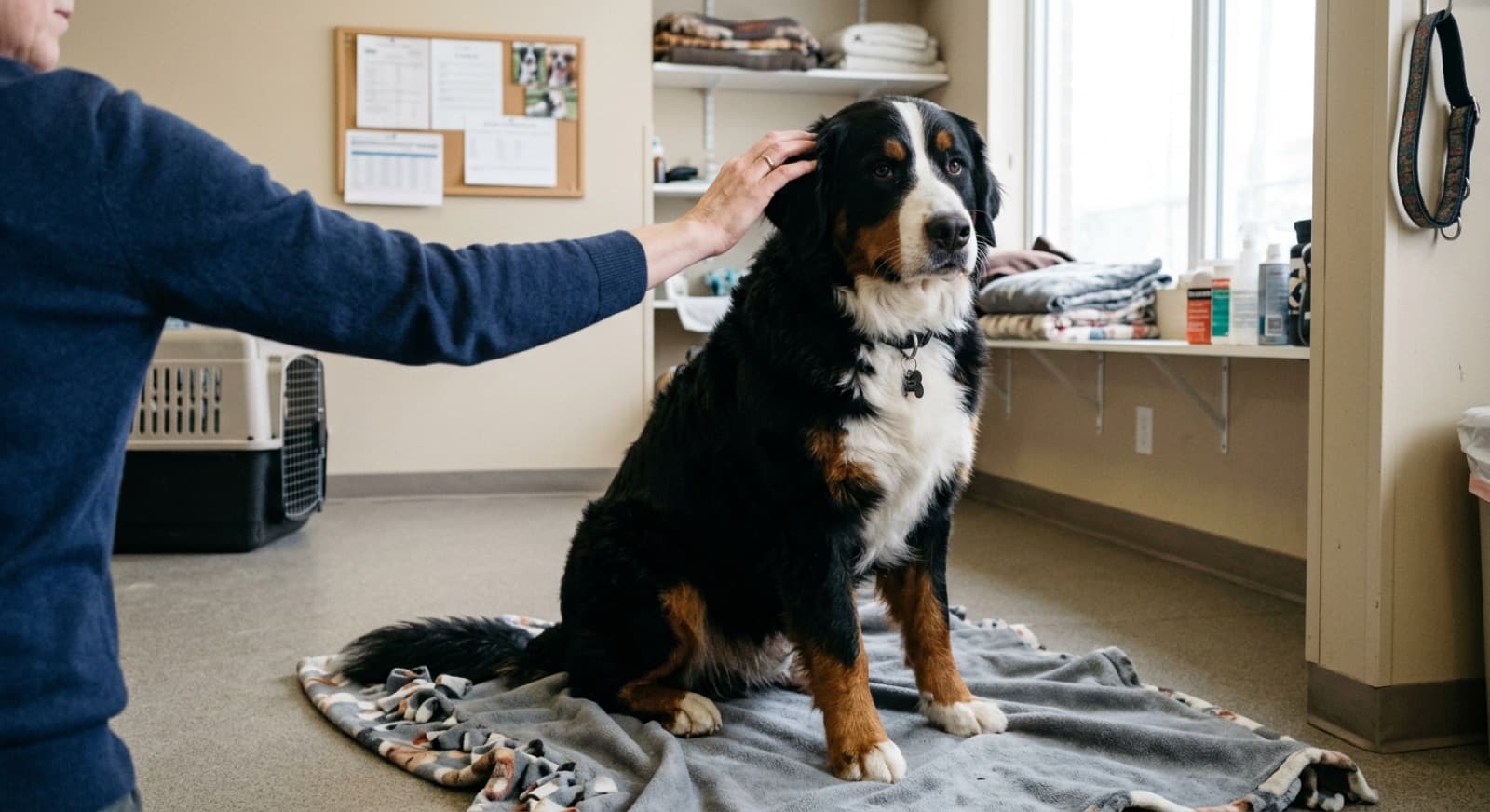
Berners are low-volume in Edmonton rescue intake. Most months no Edmonton-area rescue lists a purebred Berner at all. The breed is deeply loved by the families who choose it, surrender rates are low, and the 7 to 9 year lifespan means many Berners die in their original home before any re-homing pressure arises. When Berners do reach Edmonton rescue, the pattern almost always involves a forced circumstance the owner could not control. Four patterns dominate.
The first pattern is the owner-death surrender. Berners are popular with retirees and older adopters who choose the breed for its calm temperament, and the owner sometimes dies before the dog. A Berner who has just lost their primary person and is grieving needs a soft landing with a family willing to absorb the emotional weight. These dogs are often well-raised, well-mannered, and bonded to a routine. They typically move quickly through the system because they need so little adjustment beyond grief support.
The second pattern is the owner cancer diagnosis. A family member diagnosed with cancer sometimes cannot continue the physical and financial work of a 90-pound dog through treatment. The surrender is usually well-planned and reluctant, and the family often stays in touch with the rescue throughout the placement. These Berners are typically excellent rescue matches because the original home was attentive and the dog is well-socialized.
The third pattern is the lifestyle-change surrender. Divorce, a job relocation to a Berner-incompatible housing situation, or downsizing to a small apartment forces the family to rehome. The dogs in this pattern are generally well-adjusted; the surrender is purely a housing or life-stage problem. Berners do need space (not necessarily a yard, but indoor room for a large dog to settle), so a small condo move can be a legitimate trigger.
The fourth pattern is the allergy diagnosis. Berners shed steadily year-round with two heavy seasonal coat blows in spring and fall, and produce significant dander. A household member newly diagnosed with severe dog allergies sometimes cannot continue living with the dog despite air filtration, allergy treatment, and segregated living space. These are typically well-loved, well-trained adult dogs whose families tried everything before surrendering. They are excellent rescue matches for any household without allergy constraints.
Edmonton rescues that occasionally list Bernese Mountain Dogs
Because Berner intake is rare rather than monthly, the realistic local strategy is to monitor all Edmonton-area rescues that could see the breed, set up listing alerts, and be ready to act fast when a Berner appears. Local listings are not the most reliable path (national breed-specific rescue is — covered in the next section) but they do happen, and a settled Edmonton-foster Berner is the easiest placement.
- Edmonton Humane Society: the highest-volume Edmonton intake source. EHS sees a purebred Berner less than once a year on average, and Berner mixes (especially Bernedoodles) a few times annually. The centralized facility lets you meet the dog before applying, and the EHS behaviour team produces detailed temperament assessments. The medical team flags joint and cardiac concerns clearly, which matters for this breed. More on adoptable dogs and the adoption process is on the Edmonton Humane Society website.
- AARCS (Alberta Animal Rescue Crew Society): headquartered in Calgary with Edmonton-area foster homes. AARCS tags each dog with its current foster location, so Edmonton-foster Berners surface on Edmonton listings. AARCS foster temperament write-ups are among the most detailed in the province and are explicit about which dogs suit kid homes, cat homes, and multi-dog households. Berner intake at AARCS is rare but real.
- Alberta Homeward Hound Rescue Bureau (AHHRB): Edmonton-area foster-based rescue intaking from northern Alberta. AHHRB lists every dog as Mixed Breed on paper as a matter of policy, so Berner-types are identified by photo and description rather than a breed tag. Worth checking even if a breed search returns nothing because Berner crosses appear in their listings under generic descriptions.
- Zoe's Animal Rescue: long-running Edmonton foster-based rescue with rotating intake. Berner volume is very low, but Bernedoodles appear with some regularity. Zoe's temperament assessments are thorough and the application emphasizes fit and prior breed experience.
- SCARS (Second Chance Animal Rescue Society): the largest northern-Alberta intake rescue. SCARS pulls steadily from northern communities. Purebred Berners are rare in that pipeline, but Berner-Lab and Berner-GSD crosses appear occasionally.
- GEARS and Hope Lives Here: smaller Edmonton foster-based rescues with very limited Berner intake. Worth following for inventory updates and for Bernedoodle listings.
The practical tactic for monitoring local rescues is to set up email alerts on each rescue site that supports them, follow each rescue on Facebook and Instagram (Berners are often posted on social before the website), and check inventory weekly. Acting within 24 to 48 hours of a Berner being posted is often the difference between meeting the dog and missing the placement, because the breed is in demand and applications stack up quickly.
National and Western Canada breed-specific Bernese rescue
Because Edmonton local intake is sparse, the more reliable path is national breed-specific rescue. Two networks matter for an Edmonton-area adopter.
The Canadian Kennel Club recognizes the Bernese Mountain Dog Club of Canada as the breed parent club. The club operates a rescue committee that coordinates re-homing for retired show dogs, owner-surrender adults from ethical breeder homes, and Berners whose original placement did not work out. Application is online; expect a thorough screening process and a longer timeline than a local rescue. The dogs placed through the parent-club rescue committee are almost always well-bred, well-socialized, and come with full medical history. Verification: confirm the rescue committee through the Bernese Mountain Dog Club of Canada directly rather than through any third-party listing. Phone or email the committee chair before sending an application.
For breed-specific rescue, the Bernese Mountain Dog Club of Canada (BMDCC) runs a national rescue committee that re-homes Berners in distress through a volunteer network across Canada, including an Alberta contact. North Peace Bernese Mountain Dog Rescue and Sanctuary also takes in and rehabilitates Berners in Western Canada. Intake is small and Berners are rarely available on demand, so expect a wait and be ready to travel between provinces for a match. Confirm any rescue through current adoptable listings and public references rather than a generic web search; pet-scam operators sometimes use breed-rescue branding fraudulently.
Beyond breed-specific rescue, established giant-breed and large-breed rescue groups in Western Canada (Saint Bernard rescue, Great Pyrenees rescue, Newfoundland rescue) occasionally intake Berners and Berner crosses. If your search has been quiet for six months, contacting those organizations directly and asking to be on a Berner-specific notification list is worth the time. The path from a national or western-Canada referral to a dog in your house is slower than a local application (often 3 to 6 months for the placement itself plus transport coordination), but the dogs are typically well-vetted and well-documented.
The Bernedoodle surrender wave
If you are open to a Berner cross, the Bernedoodle path is dramatically easier. Bernedoodles (Bernese-Poodle crosses) surged in popularity through the 2020 to 2022 pandemic puppy boom, marketed as low-shedding family dogs with Berner gentleness and Poodle intelligence. Many of those puppies are now 3 to 5 years old and surrendering to Edmonton rescues at significant volume.
The surrender drivers are predictable. First, grooming costs surprised owners who expected a low-maintenance dog and instead faced $150 to $250 every 6 to 8 weeks at the groomer, plus daily home brushing to prevent matting. Second, exercise demand exceeded owner capacity: a Bernedoodle is a 60 to 90-minute-a-day dog through adolescence, and many owners chose the breed expecting the calm-Berner side and got the high-drive Poodle side. Third, the late-maturing adolescent window from 18 to 30 months caught owners off guard, with jumping, leash reactivity, and selective hearing emerging in dogs that had been calm puppies. Fourth, allergy issues, because while Bernedoodles shed less than purebred Berners, the “hypoallergenic” marketing is overstated and some allergic owners still react.
F1 Bernedoodles (50 percent Berner, 50 percent Poodle) and F1B Bernedoodles (75 percent Poodle, 25 percent Berner) both appear in Edmonton rescue intake. F1B dogs are smaller, more athletic, and more Poodle-like in coat and behaviour. F1 dogs are larger, calmer, and shed more. F2 generations (Bernedoodle-Bernedoodle) are rarer and have more variable coats. None of the generation labels guarantee a specific temperament or coat type; the foster write-up of the actual dog matters far more than the label.
Bernedoodle health is a real concern because most are bred without parental health testing. Hip dysplasia, elbow dysplasia, cardiac disease, and progressive retinal atrophy can all appear in poorly-bred crosses. An adopted Bernedoodle benefits from the same week-one baseline workup as a purebred Berner (cardiac auscultation, orthopedic assessment, thyroid panel). Expect a Bernedoodle to live 10 to 14 years, longer than a purebred Berner because the Poodle genetics dilute the cancer load somewhat. Pet insurance from week one is still essential. Budget grooming the way you would for a Standard Poodle: $150 to $250 every 6 to 8 weeks plus daily brushing.
Common Bernese mixes in Edmonton rescue
Mixes are more common than purebreds in Edmonton Berner intake. Understanding the major crosses helps adopters read foster notes accurately and pick a dog that matches their household.
- Bernedoodle (Berner-Poodle): by far the most common, covered in detail above. Variable coat and temperament, longer lifespan than purebred Berner, significant grooming commitment.
- Berner-Lab (sometimes called Bernese Labrador): large, calm, family-bonded. The Lab genetics typically reduce cancer load and joint disease somewhat, and extend lifespan toward 10 to 13 years. Heavy shedding persists. Often an excellent first-time Berner adopter dog.
- Berner-GSD (Berner-German Shepherd): higher-drive than pure Berner, more guarding instinct, often more reactive. Better suited to experienced owners with a training plan. The Shepherd side adds energy and intensity the calm Berner reputation does not prepare you for.
- Berner-Newfoundland (Newfie-Berner): very large (often 110 to 150 pounds), calm, water-loving, and heavily shedding. Drool is significant. Beautiful, gentle dogs for the right home with space.
- Berner-Saint Bernard: giant breed cross with similar lifespan concerns to a purebred Berner. Heavy drool, heavy shedding, calm temperament.
- Berner-Great Pyrenees: guardian-breed cross with more independence and stranger-wariness than pure Berner. Better in rural or large-property homes than condo settings.
- Berner-Bouvier des Flandres: rare but appears occasionally. The Bouvier side adds working-breed drive and grooming complexity.
Mix labels at intake are foster best-guess from physical appearance and any owner-provided history. The actual dog's temperament, energy, and compatibility are what the foster write-up captures, and that description is more useful than any breed label. A “Berner mix” in Edmonton rescue could be 50 percent Berner or 12 percent Berner; the dog in front of you is what you are adopting.
The short lifespan reality every adopter needs to face
Bernese Mountain Dogs have one of the shortest lifespans of any dog breed. Median age at death is around 7 to 9 years, with cancer dominating cause of death. The American College of Veterinary Internal Medicine and multiple veterinary oncology references identify Berners as one of the most cancer-affected breeds, with malignant histiocytosis (a breed-defining cancer that is rare in other breeds), hemangiosarcoma, mast cell tumours, lymphoma, and osteosarcoma all over-represented.
This is not a reason not to adopt a Berner. It is the reason to be financially and emotionally prepared before you do. Adopting an adult Berner often means committing to 3 to 6 years together rather than the 10 to 14 years you might get from a Lab or a Golden. A 5-year-old rescue Berner is already in late mid-life. A senior Berner (7 plus) is in geriatric territory by lifespan standards even though they may look and act years younger.
The financial planning side is straightforward. Pet insurance from week one is essential rather than optional for this breed. A single cancer treatment can exceed $15,000: lymphoma chemotherapy runs $6,000 to $12,000 over six months, hemangiosarcoma emergency surgery plus chemotherapy can exceed $15,000, and mast cell tumour surgical excision with margins runs $1,500 to $3,500. Any condition that appears after pet insurance enrolment is covered; anything diagnosed before is pre-existing and excluded forever. Enrolling on the first day the dog comes home is the single highest-impact financial decision a Berner adopter makes. Build an additional $3,000 to $5,000 emergency fund for the deductible-and-co-insurance gap.
The emotional planning side is harder and more important. A Berner adopter is signing up to love a calm, gentle giant knowing the relationship will likely be shorter than they want. Some families specifically choose senior Berners precisely because they want to give a soft landing to the last few years of a beloved breed. Other families choose adolescent Berners (1 to 3 years old) for maximum years together. Either choice is honourable. What does not work is adopting a Berner without thinking through the lifespan, then being blindsided by an early cancer diagnosis at 6 or 7.
Many Edmonton adopters who go through the Berner lifespan once choose to do it again. The breed is worth it for the families who go in clear-eyed. The quality of those years (calm, devoted, loving, snow-loving, kid-gentle) often outweighs the heartbreak of fewer years on the back end.
What an Edmonton rescue Bernese actually costs
Edmonton rescue adoption fees for Berners generally land between $500 and $900. The fee is a recovery on costs the rescue has already incurred, not a sale price. A typical Berner adoption fee covers:
- Spay or neuter surgery. Standalone, this runs $500 to $900 at an Edmonton vet clinic for a giant-breed dog.
- Core vaccinations. DAPP and rabies at minimum. Bordetella is often included if the dog has been boarded.
- Microchip implant and registration. Required for licensed dogs in Edmonton.
- Deworming and flea and tick treatment. Standard intake processing.
- Baseline cardiac auscultation. Many rescues include this given the breed's cardiac risk profile. A full cardiac workup with echocardiogram adds $400 to $700 if the auscultation flags concern.
- Orthopedic assessment. Hip and elbow palpation, gait observation, range-of-motion check. The breed has elevated hip and elbow dysplasia rates.
- Basic vet workup. Physical exam, dental check, thyroid panel, and a behaviour assessment from the foster home.
Stacked at retail Edmonton vet pricing, those services cost $1,400 to $2,300 for a rescue intake. The rescue fee is a partial recovery. Senior Berners (6 years and up) often have reduced fees of $200 to $500 because the rescue prioritizes placement on a breed where every year matters and senior dogs of any breed are harder to home.
Beyond the fee, plan on ongoing Berner costs of $3,500 to $5,500 per year for a healthy adult. Food costs are substantial (a Berner eats 5 to 7 cups of quality kibble daily, plus joint supplements). Grooming is moderate (the heavy double coat needs brushing 2 to 3 times weekly with daily brushing during seasonal coat blows; many owners do this at home, but professional grooming runs $80 to $150 every 6 to 10 weeks if you prefer). Winter gear is largely unnecessary for the breed because the coat is built for cold; budget for paw balm and nothing more elaborate. Pet insurance for a young healthy Berner in Edmonton runs $110 to $200 per month and climbs fast as the dog ages, often exceeding $300 per month by age 6.
For comparison, a Bernese puppy from an ethical Alberta breeder runs $2,500 to $4,500 with health-tested parents (hip, elbow, cardiac, eye, and degenerative myelopathy clearances). The breeder puppy comes with health testing and a known pedigree, but with none of the spay or neuter work, vaccinations, or microchip the rescue dog already has. The cost gap to the rescue path is significant and the local rescue dogs need homes. The breeder waitlist for an ethical Alberta Berner often runs 12 to 24 months, which is the same window as a thorough rescue search.
Edmonton Bernese adopter readiness check
Before applying, work through this honestly. Most failed Edmonton Berner placements come back to one or two of these questions not being answered before the dog moves in.
- Emotional readiness for the 7 to 9 year lifespan? The single highest-impact question for this breed. Going in knowing the relationship will be shorter than most dogs. Some adopters specifically want this and welcome the chance to give an older Berner a soft landing. Others underestimate the emotional weight.
- Cancer-financial preparedness? Pet insurance enrolment in week one plus a $3,000 to $5,000 emergency fund for the deductible-and-co-insurance gap. If a $12,000 cancer treatment decision would force a financial-overwhelm surrender, the timing is not right.
- Space for a 70 to 115-pound dog? Berners do not need a large yard, but they do need indoor room to stretch out and settle. Small condo or studio apartment situations are usually not realistic.
- Daily exercise capacity? 45 to 60 minutes of moderate activity daily for an adult Berner. The breed is calmer than working breeds but still needs real movement. Specific: duration, route, and what happens on +28 C summer days when the heavy coat overheats.
- Shedding tolerance? Berners shed steadily year-round with two heavy seasonal coat blows. Plan for a good vacuum, regular brushing, and accepting black undercoat on every soft surface in the house.
- Housing approval in writing? Condo bylaws confirmed for weight limits, landlord pet addendum that specifically names the breed and size, or owned home. Verbal approval is not enough.
- Edmonton vet identified, ideally one who knows giant breeds? Berners benefit from a vet comfortable with cardiac auscultation, orthopedic assessment, lump-screening palpation, and prompt oncology referral. Several Edmonton vet clinics have associate vets with giant-breed experience.
- Household consensus? Every adult in the household commits to the dog and to the lifespan reality. Giant-breed adoptions fail fastest when one person wanted the dog and the rest of the household did not anticipate the shedding, drool, or short years together.
- Time at home? Berners are deeply people-bonded and do badly left alone for long stretches. Owners working from home or with a flexible schedule are a better fit than 10-hour-out-of-house households.
- Summer heat planning? The breed overheats easily. Edmonton summer reaches +28 to +32 C several days per year. Air conditioning or a reliable cooling strategy, plus willingness to shift exercise to early morning and late evening, are non-negotiable.
If most of these check out, you are a strong candidate. If a few do not, the rescue may steer you toward a more settled adult dog or recommend you wait until your situation is ready. Either way, honesty in the application strengthens it.
Browse adoptable Edmonton Bernese Mountain Dogs and Berner mixes
Berners are rare in Edmonton intake but appear several times a year across EHS, AARCS Edmonton fosters, AHHRB, Zoe's, SCARS, GEARS, and Hope Lives Here. Bernedoodles and Berner mixes are more common. Foster temperament notes help match the right dog to your household, housing, and lifespan readiness.
See Edmonton Adoptable Dogs →What Edmonton rescues evaluate for Bernese placement
Edmonton Berner applications are screened thoroughly, particularly for younger dogs and dogs with active medical conditions. The reasons are practical: the breed's short lifespan and cancer risk mean the rescue is placing a dog whose later years will involve significant medical decisions, and the placement needs to be in a home equipped to handle that. Thorough screening protects both the dog and the adopter.
The eight criteria most Edmonton rescues weigh for Berner placement:
- Lifespan readiness. The first question many Berner placements turn on. Has the adopter thought through the 7 to 9 year reality? Foster phone screens often probe this directly.
- Financial preparedness for cancer. Pet insurance plans, emergency fund, willingness to commit to treatment if a diagnosis comes. Specific numbers in the application read better than vague reassurances.
- Housing verification. Written condo-board approval confirming weight limits or written landlord pet addendum that specifically names the breed. Verbal approval is not enough.
- Indoor space. Berners are calm but large. A studio apartment is usually disqualifying; a small condo can work if the dog has room to settle and the building has elevator and outdoor access.
- Summer heat plan. Air conditioning, cooling strategy, exercise time-shifting. Berners overheat fast and Edmonton summers regularly hit the breed's danger zone.
- Schedule. How many hours the dog will be alone on a typical day. Working-from-home situations are preferred; daycare or dog-walker plans for full-time-out households can be acceptable.
- Existing pets compatibility. Documented introduction with any existing dog, clear answer on cat compatibility if applicable. Most Berners are good with other dogs and most are good with cats, but individuals vary and the foster notes capture it.
- Vet identified. Most Edmonton rescues will ask whether you have a vet relationship already, and bonus points if that vet has giant-breed experience. Continuity of care matters for a breed with elevated medical risk.
Specificity wins applications. If your yard is small but you have a strong daily walking plan through Mill Creek Ravine or Terwillegar Park, say so. If you have already requested pet insurance quotes, say so. If you have a $5,000 emergency veterinary fund, say so. If you have lived with a Berner before and understand the lifespan reality, say so explicitly. Rescues are not looking for a perfect adopter; they are looking for an honest adopter whose situation matches the dog in front of them.
How to apply for an Edmonton Bernese adoption
Most Edmonton rescues run their Berner adoption process online. The typical sequence:
- Find a specific dog you want to apply for. Edmonton rescues apply per-dog rather than maintaining a general waitlist. Browse current Edmonton listings and identify a specific Berner or Berner mix whose foster notes match your home situation. Read the entire write-up, including the parts about kid tolerance, dog tolerance, energy, and any medical notes.
- Confirm housing, insurance, and pet-insurance quotes BEFORE applying. Call your condo board or landlord; get the breed-and-weight-specific written approval in hand. Call your home insurance broker. Request pet-insurance quotes from two carriers and have them ready. This step delays most Berner adoptions when skipped.
- Complete the online application. Expect 45 to 90 minutes for a thorough Berner application. Have your housing approval ready to attach, home insurance confirmation, pet-insurance plan, your vet's name if you have other pets, and two non-family references.
- Phone screen with the foster. If the application clears the first review, the dog's foster home will call you. This conversation decides most applications. Be honest about prior breed experience, exercise capacity, schedule, financial preparedness, lifespan readiness, and any concerns. Foster homes look for honesty, not perfection.
- Home check or virtual home tour. Edmonton rescues frequently do in-person home checks for Berner placements, particularly for younger dogs and dogs with medical histories. They look at indoor space, summer cooling, yard fencing if any, and general living space. For renters, they may want to see the written addendum.
- Meet-and-greet. Either at the foster's home, a neutral location, or the rescue facility. If you have other dogs, this is when the dog-dog introduction happens on neutral ground.
- Reference checks. Most Edmonton rescues call two references, including any prior vet if you have other pets. Give your references a heads-up so they pick up.
- Adoption contract and fee. Standard contracts specify the dog must be returned to the rescue if you can no longer keep them. Berner contracts sometimes include additional clauses about not rehoming the dog independently and about ongoing medical care expectations.
Realistic timeline from application to dog-in-your-house is 3 to 6 weeks for a Berner placement. The wait is not rejection; it is the verification process doing its job. The realistic timeline from starting your search to bringing a dog home is 12 to 24 months because of rare local intake and the breed's placement carefulness. National breed-rescue paths often shorten the “find the dog” phase but add transport time on the back end.
The first 30 days with an Edmonton rescue Bernese
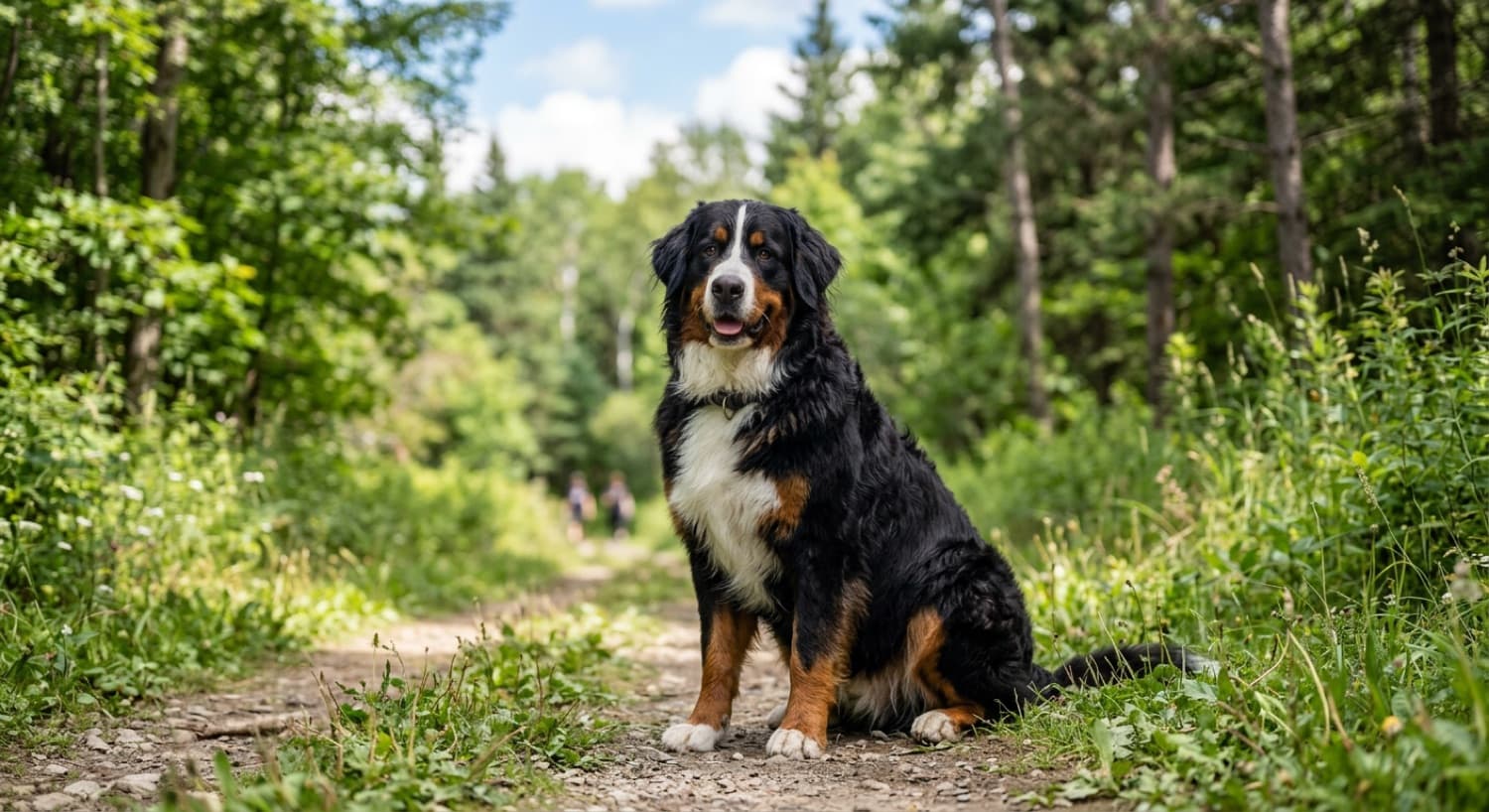
The 3-3-3 decompression principle applies to every rescue dog. With Berners the first three days are about survival mode and quiet safety. The first three weeks are about routine and gentle adjustment. The first three months are about real personality emerging and the calm-devoted-Berner character settling in. Plan around it rather than against it.
Shelter-stressed Berners often present even quieter than the dog they actually are, which can mask real temperament. A dog that seemed almost lethargic on day three is frequently more interactive, playful, and demonstrative by week three. This is normal and is the breed coming back online. The reverse can also happen: the day-three calm dog may show subtle stress signs at week three as they feel safe enough to express what was masked.
Practical week-one priorities for an Edmonton rescue Berner:
- Cardiac and cancer baseline workup within the first 30 days. Have your Edmonton vet listen to the dog's heart, palpate for lumps and lymph nodes, and pull baseline bloodwork including thyroid panel. If the auscultation flags anything, request a referral to a veterinary cardiologist for an echocardiogram. Establishing a baseline matters because future lumps and future bloodwork changes become comparison points.
- Enrol pet insurance in week one. The most important single financial decision for this breed. Any condition that appears after enrolment is covered; anything diagnosed before enrolment is pre-existing and excluded. Berners benefit enormously from early enrolment given cancer, cardiac, and joint disease risk.
- Orthopedic baseline. Hip and elbow palpation, gait observation, range-of-motion check. The breed has elevated hip and elbow dysplasia rates, and an early baseline helps detect arthritis years later.
- License the dog with the City of Edmonton. Required for any dog over six months. Tags should be visible on the collar from day one. Information is on the City of Edmonton dogs page.
- Yard check. Walk the fence line looking for gaps, loose boards, and gate-latch weaknesses. Berners are not jumpers (the breed is too heavy for athletic escape), but they will lean on a weak gate.
- Stay on leash everywhere outside the yard. Recall is not yet established. Use a six-foot leash for transit and a 10 to 15 metre long-line for any open-space exploration. River-valley trails work for long-line walks; off-leash zones are not yet appropriate.
- Summer heat planning starts on day one. If you are adopting between May and September, the cooling strategy needs to be in place before the dog arrives. Air conditioning, cooling mats, indoor exercise on hot days, and exercise time-shifting to early morning and late evening.
- Establish structure. Twice-daily meals at consistent times, predictable walk windows, and clear house rules. Berners settle into structure faster than most; they want to know what is expected.
- Start light exercise. Long leashed walks rather than off-leash sessions for the first two weeks. The dog needs to learn the neighbourhood, the routes, and your handling style. Forty-five minutes per day is the starting point; build slowly to 60 minutes by week four.
- Add mental work early. A Berner that gets only physical exercise is still under-stimulated. Puzzle feeders, basic obedience refreshers, chew enrichment, and short training sessions burn brain energy without overworking still-stiff joints.
- Establish a grooming routine. Daily brushing for the first two weeks builds trust and lets you check for lumps weekly. Full body palpation while brushing catches mast cell tumours and lipomas early.
- Hold off on the dog park. Not for the first two weeks at minimum, and longer if foster notes flag any dog-tolerance variability. The stimulation and dog density are too much for a still-decompressing rescue Berner. The Edmonton Humane Society behaviour resources cover dog-park readiness for adopted dogs.
By week three, the real dog starts emerging. By month three, structure and gentle exercise have done most of their work, and the foster-write-up dog is the dog living in your house. For Berners, this is when the calm, leaning, soulful, devoted family-companion personality really emerges, and the work of the first 30 days pays off.
Frequently asked questions
Where can I adopt a Bernese Mountain Dog near me in Edmonton?
Purebred Berners are rare in Edmonton-area rescue intake. The breed has low surrender volume because the dogs are deeply loved and the short lifespan means many never reach a re-homing situation. The most consistent local pipelines are the Edmonton Humane Society, AARCS (with Edmonton-area foster homes), Zoe's Animal Rescue, AHHRB, SCARS, GEARS, and Hope Lives Here. None of these list a Berner in any given month with reliability. The faster path is usually national breed-specific rescue: the Bernese Mountain Dog Club of Canada (BMDCC) runs a national rescue committee with an Alberta contact, and North Peace Bernese Mountain Dog Rescue and Sanctuary also serves Western Canada. Plan a 12 to 24 month timeline from starting your search to bringing a dog home.
How much does it cost to adopt a Bernese Mountain Dog in Edmonton?
Edmonton rescue adoption fees for Berners typically run $500 to $900. The fee covers spay or neuter, core vaccinations, microchip, deworming, and a basic vet workup. Many rescues add baseline orthopedic and cardiac screening because of breed-specific joint and cardiac disease patterns. A baseline workup including hip and elbow assessment, cardiac auscultation, and thyroid panel adds $400 to $700 on top of the standard intake. Senior Berners (six years and up) often have reduced fees of $200 to $500 because the rescue prioritizes placement on a breed where every year matters. Compare that to a Bernese puppy from an ethical Alberta breeder at $2,500 to $4,500 with hip, elbow, cardiac, and degenerative myelopathy clearances. The rescue path costs a fraction and the dog already has the vet work done.
Why are Bernese Mountain Dogs so rare in Edmonton rescue?
Three reasons stacked. First, the breed has comparatively low ownership numbers in Alberta because of the breeder price tag and the well-known short lifespan, so the absolute pool of Berners is smaller than Labs, Goldens, or Shepherds. Second, surrender rates are low because families who choose the breed tend to be deeply committed and emotionally bonded, and they keep the dog through almost every situation. Third, the short 7 to 9 year lifespan means many Berners die in their original home before any re-homing pressure arises. When Berners do surrender, the pattern is almost always a forced circumstance the owner could not control: owner death, owner cancer diagnosis, severe allergy in a household member, or divorce-driven downsizing.
What is the lifespan reality for an adopted Bernese Mountain Dog?
Bernese Mountain Dogs have one of the shortest lifespans of any dog breed, with median age at death around 7 to 9 years. Cancer is the dominant cause: malignant histiocytosis, hemangiosarcoma, mast cell tumours, lymphoma, and osteosarcoma are all over-represented in the breed. Adopting an adult Berner often means committing to 3 to 6 years together rather than the 10 to 14 years you might get from a Lab or a Golden. The financial planning matters (pet insurance from week one, emergency fund for cancer treatment) and so does the emotional planning. The breed is worth it for the families who go in clear-eyed. Adopting one is loving a calm, devoted, gentle giant knowing the time may be short and choosing the dog anyway.
Are Bernedoodles easier to find in Edmonton rescue than purebred Berners?
Yes, significantly. Bernedoodles (Bernese-Poodle crosses) surged in popularity through the 2020 to 2022 pandemic puppy boom, and many of those dogs are now surrendering to Edmonton rescues at 3 to 5 years old. The patterns are owner underestimation of grooming costs ($150 to $250 every 6 to 8 weeks), exercise demand (60 to 90 minutes daily for an F1 Bernedoodle), and the late-maturing adolescent window. F1 Bernedoodles (50 percent Berner, 50 percent Poodle) and F1B Bernedoodles (75 percent Poodle, 25 percent Berner) both appear in Edmonton rescue intake. Bernedoodle health is variable because most are bred without parental health testing. Expect a Bernedoodle to land between Berner and Standard Poodle on lifespan (10 to 14 years is realistic), and budget for grooming the way you would for a Standard Poodle.
Will home insurance in Edmonton cover a Bernese Mountain Dog?
Almost always yes. Bernese Mountain Dogs are not on any Alberta insurance carrier internal restricted-breed list that we have seen. The breed is associated with gentle family-companion behaviour and large-but-calm presence, neither of which triggers insurance flags. Pet insurance is a separate question and is essential for this breed given elevated cancer and joint-disease risk. Enrol in week one before any condition becomes pre-existing. Bernese pet insurance in Edmonton runs $110 to $200 per month for a young healthy adult, climbing fast as the dog ages. The math works because a single cancer treatment can exceed $15,000.
Are Bernese Mountain Dogs good first dogs?
Yes for the right home. Berners are calm, eager to please, gentle with kids, and forgiving of beginner mistakes in ways some working breeds are not. The questions for a first-time owner are space (the dog is 70 to 115 pounds), shedding tolerance (heavy year-round with two seasonal blow-coats), financial readiness for cancer and joint disease, and emotional readiness for the short lifespan. A first-time owner who passes those checks does well with a Berner, particularly an adult dog whose temperament is already established. The rescue path actually favours first-time Berner owners because foster-write-ups give a much clearer picture of the dog than a puppy from a breeder.
Are Berner mixes common in Edmonton rescue?
More common than purebreds. The patterns are Bernedoodle (Berner-Poodle, by far the most common), Berner-Lab (sometimes called Bernese Labrador, large and calm), Berner-GSD (working blend, more drive than pure Berner), and Berner-Newfoundland (Newfie-Berner, very large and water-loving). Less common but real: Berner-Saint Bernard, Berner-Great Pyrenees, and Berner-Bouvier crosses. Mix labels at intake are foster best-guess; what matters is the foster temperament write-up of the dog in front of you. A Berner-Lab in Edmonton rescue is often a better first-time-owner fit than a purebred Berner because the Lab side reduces the lifespan and cancer issues somewhat, though heavy shedding and large size persist.
Do Bernese Mountain Dogs handle Edmonton winters?
Beautifully. The breed was developed for Swiss alpine farm work, and the thick double coat is built for deep cold. Most Berners love snow and prefer winter activity over summer activity. The flip side is summer heat: a Berner in Edmonton July can overheat fast and needs early-morning or late-evening exercise and indoor cooling during the day. The other winter consideration is the heavy shedding and seasonal coat blow, which produces a constant tumbleweed of black undercoat across the house. Plan for a good vacuum and regular brushing year-round.
How long does Edmonton Bernese adoption take?
Realistically 12 to 24 months from starting your search to bringing a dog home. Sometimes faster if you are flexible on age, mix, and willing to drive to meet a dog placed through a national breed-rescue network. Sometimes longer if you are looking specifically for a young purebred. The two strategies that shorten the timeline are casting a wider geographic net (Western Canada Berner rescue networks, not just Edmonton) and being open to senior dogs and Berner mixes. Adolescent Berners in particular are easier to find than young adults because of the surrender patterns. Once you find a specific dog you want to apply for, expect 3 to 6 weeks for the application, foster phone screen, home check, meet-and-greet, and reference checks.
What if I see a free Bernese Mountain Dog on Kijiji Edmonton?
Treat free-Berner listings with extreme caution. Purebred Berners are valuable and beloved; free or extremely cheap listings often signal scams, backyard breeders using free as a hook before the price reveals at pickup, sick dogs being dumped, or flipping operations. A legitimate owner rehoming a Berner usually goes through a breed-rescue network because they want a vetted home. If you do see a private listing, ask for vet records, ask blunt questions about why the dog is being rehomed, visit the dog in its current home, and check whether the owner is willing to do a meet-and-greet at a neutral location. If the answers are rushed or evasive, walk. The Canadian Anti-Fraud Centre tracks pet scams in Canada and the Alberta SPCA receives fraudulent rehoming reports. Verify before you commit money or transport.
Related Edmonton Bernese guides
Edmonton Adoptable Dogs
Current Edmonton-area Bernese, Berner-mix, and Bernedoodle listings from EHS, AARCS Edmonton fosters, AHHRB, Zoe's, SCARS, GEARS, and Hope Lives Here.
Bernese Mountain Dog Health Issues: Cancer, Joints
Bernese Mountain Dog health issues to plan for: histiocytic sarcoma and other cancers, hip and elbow dysplasia, degenerative myelopathy, bloat and epilepsy.
Bernese Summer Heat Edmonton
Heat tolerance thresholds, cooling strategies for the heavy double coat, exercise time-shifting, and heat stroke recognition for a breed bred for Swiss alpine cold.
Bernese Grooming Edmonton
The heavy double coat, two annual coat blows, daily brushing routine, professional grooming options, and lump-screening palpation during brushing sessions.
Find your Edmonton rescue Bernese
Browse current Edmonton-area Bernese, Berner-mix, and Bernedoodle listings. Foster temperament notes help you find the right match for your household, housing situation, lifespan readiness, and prior experience.
Browse All Edmonton Dogs →New dog? Start with these care guides
Everything a new adopter needs to set up a safe, happy home.