The short answer
Adopt from Edmonton rescue ($400 to $800). Bullmastiffs appear occasionally through SCARS, Edmonton Humane Society, Zoe's Animal Rescue, AHHRB, and AARCS Edmonton fosters. Mastiff-type mixes (Bullmastiff-Lab, Bullmastiff-Pit Bull, Bullmastiff-Mastiff) appear more frequently and are equally well-suited candidates. Bullmastiff vs other mastiff types: Bullmastiff (100-130 lbs, English gamekeeper origin), English Mastiff (130-230+ lbs, the largest), Cane Corso (90-120 lbs, Italian athletic), Neapolitan Mastiff (110-165 lbs, wrinkled skin). Drool is substantial and continuous. Giant-breed costs roughly double smaller breeds (food, medical, insurance). Lifespan is 8 to 10 years; senior adoption (5+ years) is genuinely valuable. Verify Edmonton condo policies and home insurance before adopting; many have giant-breed restrictions.
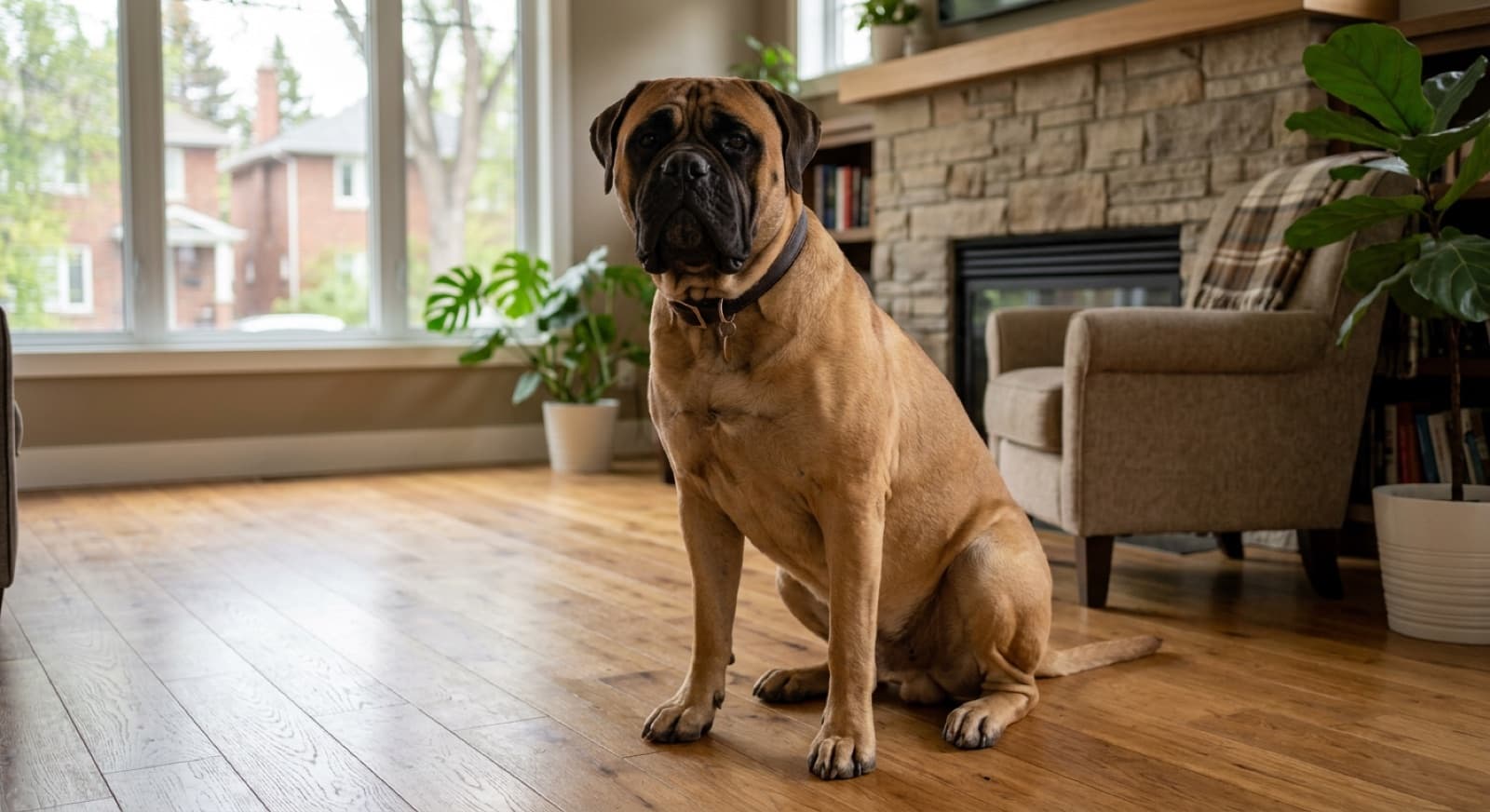
Browse adoptable large dogs in Edmonton
Bullmastiff mixes (Bullmastiff-Lab, Bullmastiff-Pit Bull) appear more frequently than purebreds. Flexibility on mix substantially shortens the wait.
See Available Dogs →Four mastiff-type breeds at a glance
| Breed | Weight | Coat | Drool | Temperament |
|---|---|---|---|---|
| Bullmastiff | 100 to 130 lbs | Short, fawn or brindle | Substantial | Balanced, family-oriented |
| English Mastiff | 130 to 230+ lbs | Short, fawn/apricot/brindle | Heavy | Gentle giant, calm |
| Cane Corso | 90 to 120 lbs | Short, various colours | Moderate | Athletic, experienced handler |
| Neapolitan Mastiff | 110 to 165 lbs | Short, heavy wrinkles | Very heavy | Slow, reserved |
All four are large guardian-type breeds with deep-chest structure (elevated bloat/GDV risk) and giant-breed care requirements. Foster home should disclose breed-type during the phone screen because care requirements scale substantially with size.
Giant-breed health priorities
Bloat/GDV (Gastric Dilatation-Volvulus) is the catastrophic giant-breed risk. Deep-chested giants are at meaningfully elevated risk. Prevention strategy: slow-feeder bowl, two meals daily not one, no elevated bowl, no vigorous exercise within 30 to 60 minutes of feeding. Prophylactic gastropexy is worth discussing with your Edmonton vet during spay/neuter.
Other giant-breed concerns: hip and elbow dysplasia (OFA-tested parents are responsible breeding), dilated cardiomyopathy and other cardiac conditions, cancer (giant breeds have elevated lifetime cancer mortality; hemangiosarcoma, osteosarcoma, lymphoma), eye conditions, allergies, hypothyroidism, ligament injuries from body weight stress.
Pet insurance enrolled at adoption is essential because giant-breed surgical and oncological costs are substantial. Edmonton specialty cardiology and orthopedic referrals are available; WCVM Saskatoon handles complex surgical cases. Talk to your Edmonton vet about a senior care plan beginning at age 5 to 6.
Frequently Asked Questions
Where can I adopt a Bullmastiff in Edmonton?
Bullmastiffs appear in Edmonton rescue occasionally; they are not as common as small or medium breeds but place quickly when listed. SCARS (Second Chance Animal Rescue Society), Edmonton Humane Society, Zoe's Animal Rescue, AHHRB (Alberta Homeward Hound Rescue Bureau), and AARCS Edmonton fosters all see Bullmastiffs and Bullmastiff mixes through the year. National Bullmastiff and Mastiff rescue networks sometimes coordinate placement into Alberta when foster homes are available. Many Edmonton Bullmastiffs are surrendered because of underestimated giant-breed costs (food, medical, insurance) or life-circumstance changes (housing changes that no longer accommodate the size). Mastiff mixes (Bullmastiff-Mastiff, Bullmastiff-Pit Bull, Mastiff-Lab) appear more frequently than purebreds and are equally well-suited adoption candidates.
Bullmastiff vs English Mastiff vs Cane Corso vs Neapolitan: which is which?
Four distinct mastiff-type breeds frequently confused. Bullmastiff: 100 to 130 lbs typically, originally bred by 19th-century English gamekeepers (60% Mastiff + 40% Bulldog), short fawn or brindle coat, balanced temperament between Mastiff and Bulldog. English Mastiff (sometimes just "Mastiff"): substantially larger at 130 to 230+ lbs, the largest breed by weight, short coat in fawn or apricot or brindle, gentle giant temperament, ancient breed dating to Roman Britain. Cane Corso: 90 to 120 lbs, Italian working breed, more athletic and active than Bullmastiff or Mastiff, short coat in various colours, requires experienced handler. Neapolitan Mastiff: 110 to 165 lbs, distinctive heavy wrinkled skin, slower and more reserved than other mastiff types, Italian breed. Edmonton rescue tends to see Bullmastiff most often among the four; English Mastiff and Cane Corso appear less frequently; Neapolitan is rare. Foster home should disclose breed-type during the phone screen because care requirements scale substantially with size.
How much does it cost to adopt a Bullmastiff in Edmonton?
Edmonton rescue adoption fees for Bullmastiffs typically run $400 to $800 covering spay/neuter, current vaccinations, microchip, and a baseline vet workup. The fee is well below ethical breeder pricing ($2,500 to $4,500 for a properly health-tested Bullmastiff puppy from a CKC-registered breeder with parents OFA hip and elbow tested, eye certified, and cardiac evaluated). Initial setup costs after adoption: large-dog harness ($60 to $120; sized for 100+ lb dog), 6-ft leash, slicker brush, large crate ($200 to $400 for a 100+ lb dog), large dog bed ($150 to $300), food bowls, large-breed coat (optional for sub-zero Edmonton walks; many short-coated giants benefit from a coat below -20C). Annual ownership cost is substantially higher than smaller breeds: $3,500 to $6,000 typically: quality large-breed food ($1,000 to $1,800; the volume is real), routine veterinary care ($600 to $1,000), pet insurance ($600 to $1,200; giant breeds have higher premiums), Edmonton dog licence (confirm current fee with the City of Edmonton), drool management supplies, seasonal gear.
How much do Bullmastiffs actually drool?
Substantially, and continuously. Mastiff-type breeds have loose lip and jowl structure that retains saliva; after eating and drinking, the breed produces "drool slings" that travel surprisingly far during head-shakes. Owners report saliva on walls, ceilings, furniture, clothing, and human faces during routine interaction. The volume varies by individual but is consistently more than non-mastiff breeds. Daily reality: keep a "drool rag" in every room and on your shoulder during meal times, expect to wipe down walls and furniture regularly, light-coloured clothing will show saliva more obviously, the dog may want to lean against you during affection (the head-rest will leave a wet patch). Bullmastiff is moderately droolier than Cane Corso but less droolier than Neapolitan Mastiff or large English Mastiff. Underestimating the drool reality is one of the most common reasons mastiff-type breeds are surrendered to rescue.
Are Bullmastiffs good first dogs for Edmonton families?
Generally not, but case-by-case based on owner preparation. Bullmastiffs are affectionate, protective, family-oriented, gentle with children when properly introduced (the breed is famously good with kids despite the size), and generally calm indoors. However, the breed-specific demands typically exceed first-time owner capacity: 100+ lb dogs are physically difficult to manage if behaviour issues develop in adolescence, training mistakes are harder to correct because of size and strength, the drool and physical management requirements are real, giant-breed medical costs are substantially higher than smaller breeds, lifespan is shorter than smaller breeds (typically 8 to 10 years). Adult Bullmastiffs from Edmonton rescue (3+ years) often arrive socialised with documented temperament and CAN be appropriate first-large-breed matches for households with realistic expectations and willingness to commit to force-free training within the first 4 weeks. Working with an Edmonton force-free trainer (CCPDT, KPA, IAABC, or Fear Free certified) from the start matters substantially.
How long do Bullmastiffs live?
Typical lifespan is 8 to 10 years, with some individuals reaching 11 to 12 years. This is substantially shorter than smaller breeds (12 to 16 years for many small dogs, 10 to 14 years for Greyhounds) and is the giant-breed reality. The shorter lifespan reflects: giant-breed cardiac risk, orthopedic stress on joints from carrying body weight, elevated cancer rates in giant breeds, accelerated aging metabolism. Senior status begins around age 5 to 6 in most Bullmastiffs (much earlier than smaller breeds where senior status starts at 7 to 8). Senior care includes more frequent vet visits, joint support, weight management, comfort prioritization, and quality-of-life monitoring. Adopting an adult or senior Bullmastiff (5+ years) from Edmonton rescue is genuinely meaningful: the dog gets a stable home for their remaining years and the adopter gets a fully-developed temperament without the adolescent challenges. Many Edmonton Bullmastiff adopters specifically choose senior adoption for this reason.
What about housing and insurance considerations for Bullmastiffs in Edmonton?
Two practical considerations. Housing: many Edmonton condominium boards have weight restrictions (often 25 to 50 lbs) that exclude giant breeds; some have explicit breed restrictions affecting Mastiff-type dogs. Verify your condo board policy in writing before adopting. Rental housing varies; many landlords accept large dogs but may require pet deposits or breed-specific clauses. Insurance: home or tenant insurance providers in Alberta sometimes have breed restrictions affecting Mastiff-type dogs along with other "powerful breed" categories (Pit Bull, Rottweiler, similar). Confirm with your insurer before adopting. Pet insurance enrolled at adoption is valuable; giant-breed premiums are higher than for smaller dogs but the medical-cost exposure is also higher (cardiac surgery, orthopedic surgery, cancer treatment all higher cost). Edmonton Bylaw 21244 dangerous-dog provisions apply equally to all breeds; force-free training builds your defence if any incident occurs.
What are common Bullmastiff health issues to plan for?
Giant-breed health concerns dominate. Bloat/GDV (Gastric Dilatation-Volvulus; deep-chested giant breeds are at meaningfully elevated risk; prevention strategy includes slow-feeder bowl, two meals daily not one, no elevated bowl, no vigorous exercise within 30 to 60 minutes of feeding; prophylactic gastropexy is worth discussing with your vet during spay/neuter), hip and elbow dysplasia (OFA-tested parents are responsible breeding), cardiac conditions including dilated cardiomyopathy (cardiac evaluation of breeding parents is responsible breeding; routine cardiac auscultation at annual exams matters), cancer (giant breeds have elevated lifetime cancer mortality; specific cancers include hemangiosarcoma, osteosarcoma, lymphoma), eye conditions, allergies common, hypothyroidism in some lines, ligament injuries from body weight stress. Pet insurance enrolled at adoption is essential; giant-breed surgical costs are substantial. Edmonton specialty cardiology and orthopedic referrals available; WCVM Saskatoon handles complex surgical cases.
How do Bullmastiffs handle Edmonton winters?
Variable based on individual coat and body condition. The Bullmastiff has a short single coat with minimal insulation, but the body mass provides substantial heat retention. Healthy adult Bullmastiffs in good body condition tolerate -10C to -15C walks for 20 to 30 minutes without a coat; below -20C wind chill they benefit from a coat. Booties help on heavily salted Edmonton sidewalks (the short coat means salt irritates the pads readily). Some Bullmastiffs in lean body condition or with thinner coats are more cold-sensitive and need a coat earlier; others with heavier body fat tolerate cold better. The breed is not built for extended cold exposure; structured walks of 20 to 40 minutes plus indoor enrichment is the breed-appropriate winter routine. Heat management in summer matters more than cold management for Mastiff types; the body mass and short coat mean overheating risk is real above 25C.
What are common Bullmastiff mixes in Edmonton rescue?
Bullmastiff-Mastiff cross (combining the two related breeds; typically 110 to 200 lbs, similar care to either parent), Bullmastiff-Pit Bull cross (or Bullmastiff-American Bulldog; 70 to 110 lbs, often more athletic than purebred Bullmastiff, common in Edmonton rescue), Bullmastiff-Lab cross (smaller giant at 80 to 110 lbs, friendlier outgoing temperament, often easier first-large-breed match), Bullmastiff-Boxer cross (90 to 130 lbs, more energetic than purebred), Bullmastiff-Rottweiler cross (110 to 150 lbs, guardian-breed temperament from both parents). All these mixes appear in Edmonton rescue and adoption costs match purebred Bullmastiff ($400 to $800). Mixed-breed Bullmastiffs sometimes have hybrid vigour (slightly fewer breed-specific health risks than concentrated breeding) but inherit risks from both parents. Foster home should disclose body structure and any behavioural observation during the phone screen.
How long does it take to adopt a Bullmastiff in Edmonton?
Typically 2 to 6 months for a Bullmastiff or Bullmastiff mix; 4 to 12 months for a specifically purebred Bullmastiff from a reputable Edmonton-area rescue. Set up email alerts at multiple rescues (SCARS, Edmonton Humane Society, Zoe's Animal Rescue, AARCS, AHHRB) with broad keywords: Bullmastiff, Mastiff, English Mastiff, Cane Corso, Neapolitan Mastiff, Mastiff mix, giant breed. Apply within 24 to 48 hours when a match appears. Adult and senior Bullmastiffs often have shorter wait times than puppies because puppy demand is highest and many adopters underestimate the senior-care commitment. Foster home temperament notes matter substantially for giant breeds; ask the rescue specifically about observed behaviour with children, other dogs, prey drive on cats, drool tolerance, and orthopedic baseline assessment.
Bottom line for Edmonton Bullmastiff adoption?
Bullmastiffs are wonderful Edmonton companions for households who accept the giant-breed reality. Affectionate, protective, family-oriented, generally gentle with children, calm indoors, 8 to 10 year lifespan. The breed-specific demands that determine fit: substantial drool, food and medical costs roughly double smaller breeds, force-free training commitment from the start (100+ lb dogs are difficult to manage if training is skipped), housing verification (condo weight restrictions, rental clauses), pet insurance enrolled at adoption for giant-breed medical exposure. Adopt from SCARS, Edmonton Humane Society, Zoe's, AHHRB, AARCS Edmonton fosters; $400 to $800 fee covers spay/neuter, vaccines, microchip, baseline workup. Mastiff-type mixes (Bullmastiff-Lab, Bullmastiff-Pit, Bullmastiff-Rottweiler) are equally well-suited adoption candidates. Adult and senior Bullmastiffs (5+ years) skip the adolescent phase and offer meaningful stable-home placement; the shorter lifespan means senior adoption is genuinely valuable to the dog.
Adoptable Dogs in Edmonton
Live listings from SCARS, EHS, Zoe's, AHHRB, and AARCS Edmonton fosters.
Cane Corso Adoption Edmonton
Italian mastiff cousin; more athletic and requires experienced handler.
Great Dane Adoption Edmonton
Another giant breed with similar bloat/GDV risk and shorter lifespan reality.
Great Dane Bloat (GDV): Signs and Prevention
Bloat (GDV) in Great Danes: why the breed is at the top of the risk list, the signs to recognise in seconds, what to do, and how a preventive gastropexy helps.
New dog? Start with these care guides
Everything a new adopter needs to set up a safe, happy home.