The short answer
Edmonton Great Dane adoption is a 4 to 8 month project. Purebred Danes appear several times a year across Edmonton-area rescues; Dane mixes more often. Monitor Edmonton Humane Society, Zoe's, AARCS Edmonton fosters, AHHRB, SCARS, GEARS, and Hope Lives Here. Fees $400 to $700 plus a $500 to $700 cardiac and orthopaedic baseline. Plan for the 7 to 10 year lifespan, bloat preparedness, and the gentle-giant cost reality before you apply.
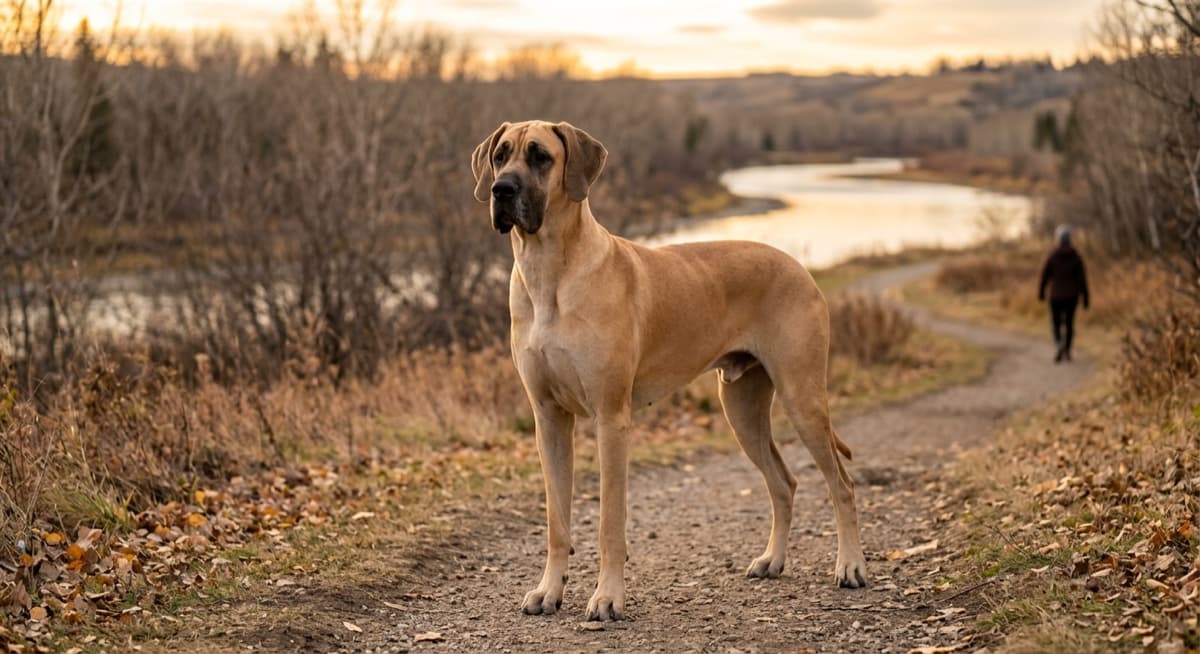
Why Great Danes surrender to Edmonton rescue
Great Danes are not a high-volume Edmonton rescue breed. Most months no Edmonton-area rescue lists a purebred Dane at all, and the breed has lower surrender rates than working breeds because Dane owners tend to be deeply committed and the short lifespan means many dogs die in their original homes. When a Dane does reach rescue, the surrender story almost always involves a forced circumstance the owner could not control. Five patterns dominate.
The first pattern is the housing-change surrender. A family moves from a detached home into a condo or rental with weight restrictions, and a 150-pound Dane no longer fits the building's pet policy or the unit's indoor space. Dane owners can absorb most life changes, but a hard housing constraint sometimes forces the hand. These dogs are usually well-adjusted and well-trained; the surrender is purely a building or unit-size problem. They often move quickly through Edmonton rescue because the dog itself is ready for a home.
The second pattern is the DCM diagnosis surrender. Dilated cardiomyopathy hits Great Danes at relatively young ages compared to most breeds, often in the 4 to 6 year window. A family without pet insurance facing $300 to $500 per month in cardiac medication plus periodic echocardiograms and Holter monitors sometimes cannot continue the care. These dogs come to Edmonton rescue with an active vet plan and a medical history, and the adopter needs to be financially prepared for ongoing cardiac care. They are excellent matches for adopters who already have pet insurance lined up and a vet relationship.
The third pattern is the wobbler diagnosis surrender. Cervical vertebral instability (wobbler syndrome) is a Dane-prone neurological condition where neck instability causes incoordination, weakness, and progressive disability. Treatment ranges from medication and lifestyle modification to surgical intervention costing $6,000 to $12,000. A wobbler-diagnosed Dane needs a settled home willing to manage a chronic neurological condition. These dogs surrender less often than DCM cases because the diagnosis often happens later in life, but they do appear in Edmonton rescue.
The fourth pattern is the owner-death surrender. Danes are popular with retirees and older adopters who appreciate the calm indoor temperament, and the owner sometimes dies before the dog. A Dane who has just lost their primary person and is grieving needs a soft landing. These dogs are usually well-raised, well-mannered, and bonded to a routine. They move quickly through rescue because they need little beyond grief support and a stable household.
The fifth pattern is the bloat-grief surrender. A family loses one Dane to gastric dilatation-volvulus (bloat) and finds they cannot live with another Dane while the loss is fresh. The surviving sibling Dane gets surrendered. These dogs are often deeply bonded family pets whose only issue is that they remind the household of the dog who died. They are excellent rescue matches for any committed Dane home.
Edmonton rescues that occasionally list Great Danes
Because Dane intake is rare rather than monthly, the realistic local strategy is to monitor every Edmonton-area rescue that could see the breed, set up listing alerts, and be ready to act fast when a Dane appears. Local listings are not always the most reliable path, but they happen, and a settled Edmonton-foster Dane is the easiest placement.
- Edmonton Humane Society: the highest-volume Edmonton intake source and the most likely place to see a Dane in any given month. EHS lists purebred Danes a few times a year and Dane mixes more often. The centralised facility lets you meet the dog before applying, and the EHS behaviour team produces detailed temperament assessments. The medical team flags cardiac and orthopaedic concerns clearly. More on adoptable dogs is on the Edmonton Humane Society website.
- Zoe's Animal Rescue: long-running Edmonton foster-based rescue with rotating intake. Dane volume is low but Dane mixes (especially Dane-Lab and Daniff) appear with some regularity. Zoe's temperament assessments are thorough and the application emphasises fit and prior large-breed experience.
- AARCS (Alberta Animal Rescue Crew Society): headquartered in Calgary with Edmonton-area foster homes. AARCS tags each dog with its current foster location, so Edmonton-foster Danes surface on Edmonton listings. AARCS foster temperament write-ups are among the most detailed in the province and are explicit about which dogs suit kid homes, cat homes, and multi-dog households. Dane intake at AARCS is rare but real.
- Alberta Homeward Hound Rescue Bureau (AHHRB): Edmonton-area foster-based rescue intaking from northern Alberta. AHHRB lists every dog as Mixed Breed on paper as a matter of policy, so Dane-types are identified by photo and description rather than a breed tag. Worth checking even if a breed search returns nothing because Dane crosses appear in their listings under generic descriptions.
- SCARS (Second Chance Animal Rescue Society): the largest northern-Alberta intake rescue. SCARS pulls steadily from northern communities. Purebred Danes are uncommon in that pipeline, but Dane-Lab and Dane-Mastiff crosses appear more often than at any other Edmonton-area rescue.
- GEARS and Hope Lives Here: smaller Edmonton foster-based rescues with very limited Dane intake. Worth following for inventory updates and for Daniff or Dane-Mastiff listings, which both rescues see occasionally.
The practical tactic for monitoring local rescues is to set up email alerts on each rescue site that supports them, follow each rescue on Facebook and Instagram (Danes are often posted on social before the website), and check inventory weekly. Acting within 24 to 72 hours of a Dane being posted is often the difference between meeting the dog and missing the placement because giant-breed applications stack up quickly.
National and provincial breed-specific Great Dane rescue
Because Edmonton local intake is uneven, national breed-specific rescue is a parallel path worth pursuing. The Canadian Kennel Club recognises the Great Dane Club of Canada as the breed parent club. The club maintains breed-rescue referrals and connects adopters with retired show dogs, owner-surrender adults from ethical breeder homes, and Danes whose original placement did not work out. Application is online; expect a thorough screening process and a longer timeline than a local rescue. Dogs placed through parent-club rescue are almost always well-bred, well-socialised, and come with full medical history.
South of the border, the Great Dane Club of America operates a rescue network that occasionally coordinates cross-border placements when a Canadian-side foster home or transport volunteer is available. The path is slow and the paperwork (CKC import documentation, customs declaration, health certificates) adds friction, but the dogs placed through GDCA rescue are among the best-documented in the breed-rescue ecosystem. Verification matters here: confirm any rescue claiming GDCA affiliation through the GDCA website directly rather than through a third-party listing.
Beyond breed-specific rescue, established giant-breed rescue groups in Western Canada (Saint Bernard rescue, Mastiff rescue, Newfoundland rescue) occasionally intake Danes and Dane crosses. If your search has been quiet for four months, contacting those organisations directly and asking to be on a Dane-specific notification list is worth the time. The path from a national or western-Canada referral to a dog in your house is slower than a local application (often 2 to 4 months for the placement plus transport coordination), but the dogs are typically well-vetted and well-documented.
Great Dane colours in Edmonton rescue
Great Danes come in seven main coat colours recognised by the Canadian Kennel Club, and Edmonton rescue sees most of them. Colour is largely aesthetic for adopters, but two patterns (merle and harlequin) carry health implications adopters should understand before applying.
- Fawn: the classic golden-yellow coat with a black mask. The most common Dane colour in Edmonton rescue and the colour most people picture when they think of the breed. No specific health concerns linked to the coat.
- Brindle: fawn base with black tiger-stripe markings. Common in Edmonton rescue. No coat-linked health concerns.
- Black: solid glossy black coat. Less common in rescue than fawn or brindle but appears regularly. No coat-linked health concerns.
- Blue: solid steel-grey coat from a dilute black pigment gene. Less common in rescue. Some blue Danes carry colour-dilution alopecia (thinning coat and skin issues over the dilute areas), though most are unaffected.
- Harlequin: white base with black torn-patch markings. A signature Dane coat. Bred carefully to avoid double-merle pairings (harlequin is genetically a merle pattern), so reputable harlequin breeding tests parents. Backyard harlequin breeding can produce double-merle puppies with serious deafness, blindness, and skin issues.
- Mantle: black coat with white blaze, chest, collar, and feet (similar to a Boston Terrier pattern but giant-scale). Common in rescue. No coat-linked health concerns.
- Merle: grey or fawn base with darker mottled markings. Not historically a CKC-recognised solo colour but appears in rescue from breedings that produced merle-pattern dogs. Reputable breeders do not cross two merles. Backyard merle-to-merle pairings produce double-merle puppies with the same deafness and blindness issues as backyard harlequin breeding.
For an Edmonton adopter, the practical takeaway is to ask the rescue whether a harlequin or merle dog came from a known-tested breeder or a backyard source, and whether any hearing or vision testing has been done. A double-merle Dane is no less deserving of a home, but adopters need to know what they are signing up for. Most Edmonton rescue Danes are fawn, brindle, mantle, or black, and most have no coat-linked health concerns.
Common Great Dane mixes in Edmonton rescue
Mixes are more common than purebreds in Edmonton Dane intake. Understanding the major crosses helps adopters read foster notes accurately and pick a dog that matches their household.
- Dane-Lab (sometimes called Labradane): large, calm, family-bonded. The Lab genetics typically reduce cancer load and cardiac risk somewhat, and extend lifespan toward 10 to 13 years. Energy is higher than pure Dane through adolescence. Often an excellent first-time-giant-breed adopter dog.
- Daniff (Dane-Mastiff): very large (often 130 to 200 pounds), calm, heavy drool. The Mastiff side adds size but does not extend lifespan; Mastiffs share many of the same giant-breed health concerns. Beautiful gentle dogs for the right home with space and drool tolerance.
- Dane-GSD (Dane-German Shepherd): higher-drive than pure Dane, more guarding instinct, often more reactive on leash. Better suited to experienced owners with a training plan. The Shepherd side adds energy and intensity the calm-Dane reputation does not prepare you for.
- Dane-Pit (sometimes confusingly called a Great Danebull): athletic, muscular, intense, and devoted. The Pit side often gets the dog flagged by housing and insurance even though the Dane side is the dominant size driver. Confirm housing and insurance carefully if you are considering a Dane-Pit cross.
- Dane-Newfoundland (Newfie-Dane): giant breed cross with water-loving Newfoundland temperament. Heavy drool, heavy shedding, calm and loving. Excellent family dogs for the right home with significant grooming patience.
- Dane-Boxer (sometimes called Boxane): energetic, playful, often goofier than pure Dane. The Boxer side adds athletic drive and brings some brachycephalic considerations if the muzzle inherits Boxer flatness.
- Dane-Saint Bernard: rare but appears occasionally. Massive, calm, heavy drool, short lifespan.
Mix labels at intake are foster best-guess from physical appearance and any owner-provided history. The actual dog's temperament, energy, and compatibility are what the foster write-up captures, and that description is more useful than any breed label. A “Dane mix” in Edmonton rescue could be 75 percent Dane or 25 percent Dane; the dog in front of you is what you are adopting.
The short lifespan and DCM reality every adopter needs to face
Great Danes have one of the shortest lifespans of any dog breed, averaging 7 to 10 years and sometimes less. Cancer (especially osteosarcoma, the breed's defining bone cancer), dilated cardiomyopathy, and bloat dominate cause of death. The American College of Veterinary Internal Medicine identifies Danes as one of the most cardiac-affected large breeds, and the American College of Veterinary Surgeons publishes gastric dilatation-volvulus reference material that every Dane owner should read in the first 30 days.
This is not a reason not to adopt a Dane. It is the reason to be financially and emotionally prepared before you do. Adopting an adult Dane often means committing to 3 to 6 years together rather than the 10 to 14 years you might get from a Lab. A 5-year-old rescue Dane is already in late mid-life. A senior Dane (7 plus) is in geriatric territory by lifespan standards even though they may look and act years younger.
The financial planning side is straightforward. Pet insurance from week one is essential rather than optional for this breed. A single bloat surgery can exceed $8,000 in Edmonton (the procedure includes gastric decompression, surgical de-rotation, and prophylactic gastropexy to prevent recurrence). DCM medication and monitoring runs $300 to $500 per month plus periodic echocardiograms. Osteosarcoma amputation plus chemotherapy can exceed $12,000. Wobbler surgery runs $6,000 to $12,000. Any condition that appears after pet insurance enrolment is covered; anything diagnosed before is pre-existing and excluded forever. Enrolling on the first day the dog comes home is the single highest-impact financial decision a Dane adopter makes. Build an additional $3,000 to $5,000 emergency fund for the deductible-and-co-insurance gap.
The emotional planning side is harder. A Dane adopter is signing up to love a calm gentle giant knowing the relationship will likely be shorter than they want. Some families specifically choose senior Danes precisely because they want to give a soft landing to the last few years of a beloved breed. Other families choose adolescent Danes (1 to 3 years old) for maximum years together. Either choice is honourable. What does not work is adopting a Dane without thinking through the lifespan, then being blindsided by a cancer or cardiac diagnosis at 6 or 7. For more on the lifespan side, see our Great Dane short lifespan guide.
What an Edmonton rescue Great Dane actually costs
Edmonton rescue adoption fees for Great Danes generally land between $400 and $700. The fee is a recovery on costs the rescue has already incurred, not a sale price. A typical Dane adoption fee covers:
- Spay or neuter surgery. Standalone, this runs $500 to $900 at an Edmonton vet clinic for a giant-breed dog (the surgery itself is more complex and uses more anaesthesia and recovery resources than for a medium dog).
- Core vaccinations. DAPP and rabies at minimum. Bordetella is often included if the dog has been boarded.
- Microchip implant and registration. Required for licensed dogs under City of Edmonton Animal Care and Control Bylaw 21244.
- Deworming and flea and tick treatment. Standard intake processing.
- Baseline cardiac auscultation. Many rescues include this given the breed's DCM risk profile. A full cardiac workup with echocardiogram adds $400 to $600 if the auscultation flags concern.
- Orthopaedic assessment. Hip and elbow palpation, gait observation, range-of-motion check, plus a wobbler-screening neurological exam. The breed has elevated hip dysplasia and wobbler-syndrome rates.
- Basic vet workup. Physical exam, dental check, thyroid panel, and a behaviour assessment from the foster home.
Stacked at retail Edmonton vet pricing, those services cost $1,500 to $2,400 for a giant-breed rescue intake, not including a full cardiac workup. The rescue fee is a partial recovery. Senior Danes (five years and up, given the short lifespan) often have reduced fees of $200 to $400 because the rescue prioritises placement and senior giant-breed dogs are harder to home.
Beyond the fee, plan on ongoing Dane costs of $3,500 to $5,500 per year for a healthy adult. Food costs are substantial (a Dane eats 6 to 8 cups of quality kibble daily, plus joint supplements and large-breed feeding hardware). Bedding is non-trivial (orthopaedic giant-breed beds run $200 to $400 and need replacing every 2 to 3 years). Winter gear is moderate (most Danes do well in Edmonton winters with a coat below -15 C and paw protection on heavily salted sidewalks). Pet insurance for a young healthy Dane in Edmonton runs $90 to $160 per month and climbs fast as the dog ages, often exceeding $250 per month by age 5.
For comparison, a Great Dane puppy from an ethical Alberta breeder runs $1,500 to $3,500 with health-tested parents (cardiac, hip, eye, and thyroid clearances; harlequin and merle parents additionally tested for the merle gene combination). The breeder puppy comes with health testing and a known pedigree, but with none of the spay or neuter work, vaccinations, or microchip the rescue dog already has. The cost gap to the rescue path is significant and the local rescue dogs need homes. The breeder waitlist for an ethical Alberta Dane often runs 6 to 18 months, which overlaps significantly with a thorough rescue search.
The ear cropping question
Ear cropping is the cosmetic surgical procedure that gives Danes the upright pointed ears people sometimes associate with the breed. Naturally, Dane ears are folded and floppy. The procedure cuts and reshapes the ear cartilage and posts the ears for weeks to set the upright shape. It serves no functional purpose for a pet dog. The Canadian Kennel Club has moved away from rewarding cropped ears in the show ring, and the Alberta SPCA discourages the procedure.
Several Canadian provinces (British Columbia, Nova Scotia, Newfoundland and Labrador, Prince Edward Island, Quebec, and Saskatchewan) have banned cropping outright. Alberta has not yet legislated a ban, but most reputable Edmonton vets will decline to perform the surgery on welfare grounds. Cropping in Alberta is mostly performed by a small number of vets or by unlicensed cosmetic operators outside the regulated veterinary system. For Dane adopters in Edmonton, this means rescue Danes are almost always natural-eared, because the surrender population is dominated by family pets rather than imported show or guard dogs.
If you do encounter a cropped rescue Dane, the dog is no less deserving of a home than a natural-eared dog. The welfare position on the surgery itself is settled; the welfare position on the individual rescue dog is to give them a good life. If you are considering a Dane puppy from any source and the breeder offers or recommends cropping, that is a strong signal to look at other breeders. Reputable Canadian Dane breeders increasingly leave ears natural.
Edmonton Great Dane adopter readiness check
Before applying, work through this honestly. Most failed Edmonton Dane placements come back to one or two of these questions not being answered before the dog moves in.
- Emotional readiness for the 7 to 10 year lifespan? The single highest-impact question for this breed. Going in knowing the relationship will be shorter than most dogs. Some adopters specifically want this and welcome the chance to give an older Dane a soft landing. Others underestimate the emotional weight when a cancer or cardiac diagnosis arrives at year five or six.
- Cancer, cardiac, and bloat-financial preparedness? Pet insurance enrolment in week one plus a $3,000 to $5,000 emergency fund for the deductible-and-co-insurance gap. If a $10,000 bloat surgery decision would force a financial-overwhelm surrender, the timing is not right.
- Indoor space for a 110 to 180-pound dog? Danes do not need a large yard, but they do need indoor room to stretch out and settle. A Dane lying down takes up a couch or a six-foot floor span. Studio apartments and tightly-furnished spaces are usually not realistic.
- Elevator and building access? If you live in a condo or apartment, confirm the building's pet policy in writing for a dog of this size. Some buildings restrict large dogs in shared elevators or common areas. Verbal approval is not enough.
- Daily exercise capacity? 45 to 60 minutes of moderate activity daily for an adult Dane, less for seniors and more for adolescents. Danes are calmer than working breeds but still need real movement. Specific: duration, route, and what happens on +28 C summer days.
- Bloat awareness and emergency vet route? Every Edmonton Dane owner should know the route to the nearest 24-hour emergency veterinary clinic before they need it. Bloat treatment is time-critical and a few minutes can decide the outcome.
- Housing approval in writing? Condo bylaws confirmed for weight limits and breed-mix flags, or landlord pet addendum that specifically names the dog and the size, or owned home.
- Edmonton vet identified, ideally one familiar with giant breeds? Danes benefit from a vet comfortable with cardiac auscultation, orthopaedic assessment, bloat recognition, and prompt cardiology and surgery referral. Several Edmonton vet clinics have associate vets with giant-breed experience.
- Household consensus? Every adult in the household commits to the dog and to the short lifespan reality. Giant-breed adoptions fail fastest when one person wanted the dog and the rest of the household did not anticipate the size, the drool, or the years.
- Time at home? Danes are deeply people-bonded and do badly left alone for long stretches. Owners working from home or with a flexible schedule are a better fit than 10-hour-out-of-house households.
If most of these check out, you are a strong candidate. If a few do not, the rescue may steer you toward a more settled adult dog or recommend you wait until your situation is ready. Either way, honesty in the application strengthens it.
Browse adoptable Edmonton Great Danes and Dane mixes
Danes appear several times a year across EHS, Zoe's, AARCS Edmonton fosters, AHHRB, SCARS, GEARS, and Hope Lives Here. Dane mixes are more common than purebreds. Foster temperament notes help match the right dog to your household, housing, and lifespan readiness.
See Edmonton Adoptable Dogs →What Edmonton rescues evaluate for Great Dane placement
Edmonton Dane applications are screened thoroughly, particularly for younger dogs and dogs with active medical conditions. The reasons are practical: the breed's short lifespan and elevated medical risk mean the rescue is placing a dog whose middle years may involve significant medical decisions, and the placement needs to be in a home equipped to handle that. Thorough screening protects both the dog and the adopter.
The eight criteria most Edmonton rescues weigh for Dane placement:
- Lifespan readiness. The first question many Dane placements turn on. Has the adopter thought through the 7 to 10 year reality? Foster phone screens often probe this directly.
- Financial preparedness for giant-breed medicine. Pet insurance plans, emergency fund, willingness to commit to bloat surgery and cardiac care if a diagnosis comes. Specific numbers in the application read better than vague reassurances.
- Indoor space. Danes need indoor room to settle and a sleeping surface that supports a giant frame. Studio apartments are usually disqualifying; a small condo can work if the dog has stretch space and the building has appropriate access.
- Housing verification. Written condo-board approval confirming weight limits or written landlord pet addendum that specifically names the dog and the size. Verbal approval is not enough.
- Bloat awareness. Most Edmonton rescues will ask whether you know what bloat is, how to recognise it, and where the nearest 24-hour emergency vet is. The answer matters.
- Schedule. How many hours the dog will be alone on a typical day. Working-from-home situations are preferred; daycare or dog-walker plans for full-time-out households can be acceptable.
- Existing pets compatibility. Documented introduction with any existing dog, clear answer on cat compatibility if applicable. Most Danes are good with other dogs and most are good with cats, but individuals vary and the foster notes capture it.
- Vet identified. Most Edmonton rescues will ask whether you have a vet relationship already, and bonus points if that vet has giant-breed experience. Continuity of care matters for a breed with elevated medical risk.
Specificity wins applications. If your yard is small but you have a strong daily walking plan through Mill Creek Ravine or Terwillegar Park, say so. If you have already requested pet insurance quotes, say so. If you have a $5,000 emergency veterinary fund and you have already located the nearest emergency clinic, say so. Rescues are not looking for a perfect adopter; they are looking for an honest adopter whose situation matches the dog in front of them.
How to apply for an Edmonton Great Dane adoption
Most Edmonton rescues run their Dane adoption process online. The typical sequence:
- Find a specific dog you want to apply for. Edmonton rescues apply per-dog rather than maintaining a general waitlist. Browse current Edmonton listings and identify a specific Dane or Dane mix whose foster notes match your home situation. Read the entire write-up, including the parts about kid tolerance, dog tolerance, energy, and any medical notes.
- Confirm housing, vet relationship, and pet-insurance quotes BEFORE applying. Call your condo board or landlord; get the breed-and-weight-specific written approval in hand. Identify your nearest 24-hour emergency veterinary clinic. Request pet-insurance quotes from two carriers and have them ready. This step delays most Dane adoptions when skipped.
- Complete the online application. Expect 45 to 90 minutes for a thorough Dane application. Have your housing approval ready to attach, home insurance confirmation, pet-insurance plan, your vet's name if you have other pets, and two non-family references.
- Phone screen with the foster. If the application clears the first review, the dog's foster home will call you. This conversation decides most applications. Be honest about prior breed experience, exercise capacity, schedule, financial preparedness, lifespan readiness, and any concerns. Foster homes look for honesty, not perfection.
- Home check or virtual home tour. Edmonton rescues frequently do in-person home checks for Dane placements, particularly for younger dogs and dogs with medical histories. They look at indoor space, sleep surfaces, yard fencing if any, and general living space. For renters, they may want to see the written addendum.
- Meet-and-greet. Either at the foster's home, a neutral location, or the rescue facility. If you have other dogs, this is when the dog-dog introduction happens on neutral ground.
- Reference checks. Most Edmonton rescues call two references, including any prior vet if you have other pets. Give your references a heads-up so they pick up.
- Adoption contract and fee. Standard contracts specify the dog must be returned to the rescue if you can no longer keep them. Dane contracts often include additional clauses about not rehoming the dog independently and about ongoing medical care expectations.
Realistic timeline from application to dog-in-your-house is 3 to 6 weeks for a Dane placement. The wait is not rejection; it is the verification process doing its job. The realistic timeline from starting your search to bringing a dog home is 4 to 8 months because of rare local intake. National breed-rescue paths often shorten the “find the dog” phase but add transport time on the back end.
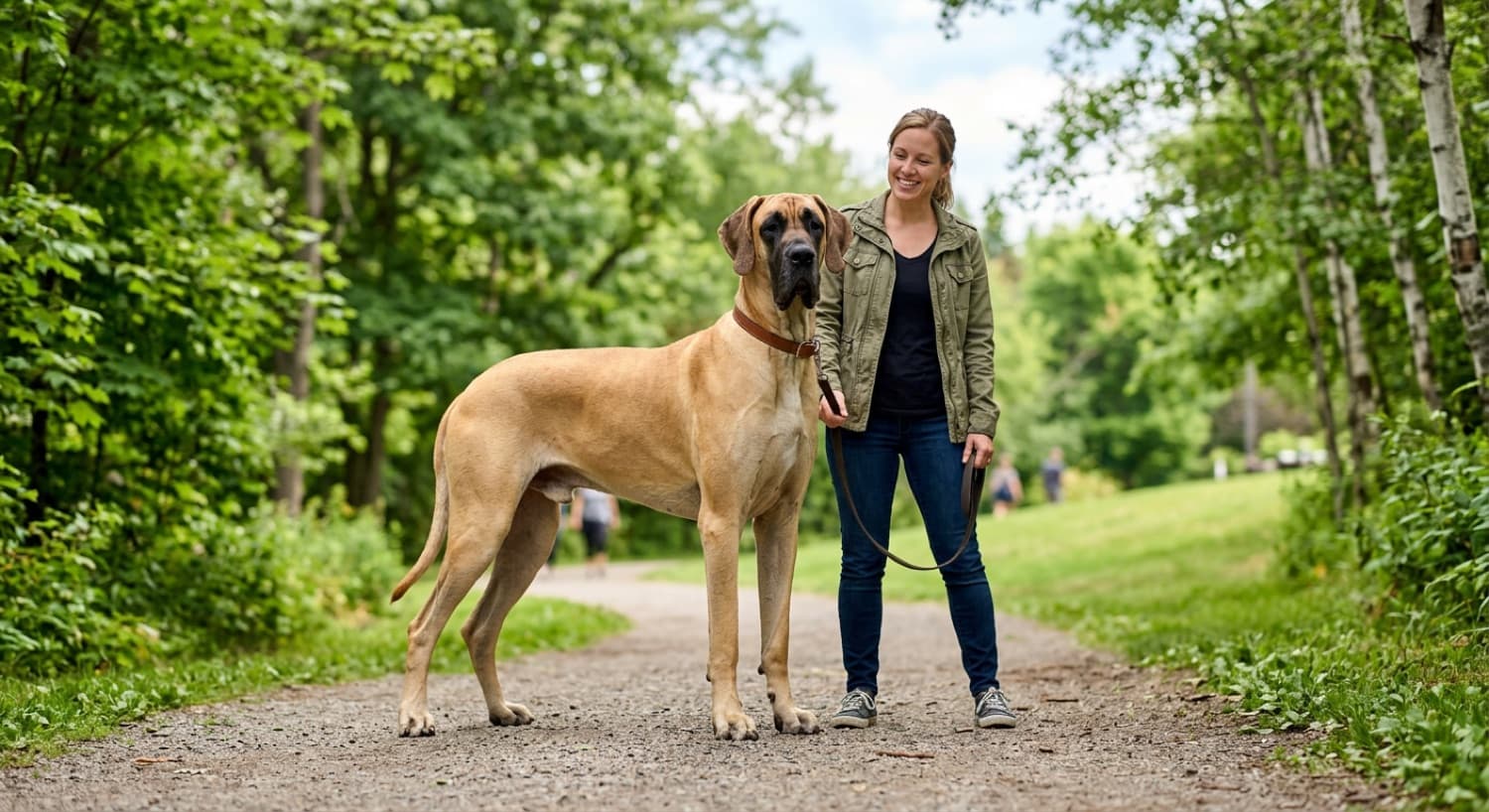
The first 30 days with an Edmonton rescue Great Dane
The 3-3-3 decompression principle applies to every rescue dog. With Danes the first three days are about survival mode and quiet safety. The first three weeks are about routine and gentle adjustment. The first three months are about real personality emerging and the calm-devoted-gentle-giant character settling in. Plan around it rather than against it.
Shelter-stressed Danes often present even quieter than the dog they actually are, which can mask real temperament. A dog that seemed almost lethargic on day three is frequently more interactive, playful, and demonstrative by week three. This is normal and is the breed coming back online. Twelve practical week-one and month-one priorities for an Edmonton rescue Dane:
- Cardiac baseline within the first 30 days. Have your Edmonton vet listen to the dog's heart and pull baseline bloodwork. If the auscultation flags anything, request a referral to a veterinary cardiologist for an echocardiogram and a Holter monitor. Establishing a baseline matters because future bloodwork changes and heart sounds become comparison points. Early DCM diagnosis substantially changes the management trajectory.
- Orthopaedic and wobbler baseline. Hip and elbow palpation, gait observation, range-of-motion check, and a neurological exam looking for any incoordination consistent with early wobbler syndrome. The breed has elevated rates for both conditions and an early baseline helps detect changes later.
- Enrol pet insurance in week one. The most important single financial decision for this breed. Any condition that appears after enrolment is covered; anything diagnosed before enrolment is pre-existing and excluded. Danes benefit enormously from early enrolment given cancer, cardiac, bloat, and wobbler risk.
- Identify the nearest 24-hour emergency veterinary clinic. Put the address and phone number in your phone before you need it. Bloat is time-critical and a few minutes of delay can change the outcome. The American College of Veterinary Surgeons publishes a bloat reference worth reading in the first week.
- License the dog with the City of Edmonton. Required for any dog over six months under Animal Care and Control Bylaw 21244. Tags should be visible on the collar from day one. Information is on the City of Edmonton dogs page.
- Bloat-prevention feeding setup. Two smaller meals daily rather than one large meal, slow-feeder bowl, no vigorous exercise for an hour before or after meals, no elevated food bowls (research has shown elevated bowls may increase rather than decrease bloat risk). These are operational habits that start day one.
- Yard and indoor-space check. Walk the fence line for gaps and weak gates (Danes are not jumpers but they will lean on a weak gate). Check indoor space for sharp corners or unstable furniture a 150-pound dog could knock over.
- Stay on leash everywhere outside the yard. Recall is not yet established. Use a six-foot leash for transit and a 10 to 15 metre long-line for any open-space exploration. River-valley trails work for long-line walks; off-leash zones are not yet appropriate.
- Establish structure. Twice-daily meals at consistent times, predictable walk windows, and clear house rules. Danes settle into structure faster than most; they want to know what is expected.
- Start light exercise. Long leashed walks rather than off-leash sessions for the first two weeks. Forty-five minutes per day is the starting point; build slowly to 60 minutes by week four. Avoid stairs-heavy routes during the decompression window if the foster notes mention any orthopaedic concerns.
- Add mental work early. A Dane that gets only physical exercise is still under-stimulated. Puzzle feeders, basic obedience refreshers, chew enrichment, and short training sessions burn brain energy without overworking still-developing or aging joints.
- Hold off on the dog park. Not for the first two weeks at minimum, and longer if foster notes flag any dog-tolerance variability. The stimulation and dog density are too much for a still-decompressing rescue Dane. The Edmonton Humane Society behaviour resources cover dog-park readiness for adopted dogs.
By week three, the real dog starts emerging. By month three, structure and gentle exercise have done most of their work, and the foster-write-up dog is the dog living in your house. For Danes, this is when the calm, leaning, soulful, devoted gentle-giant personality really emerges, and the work of the first 30 days pays off.
Frequently asked questions
Where can I adopt a Great Dane near me in Edmonton?
Purebred Great Danes are uncommon in Edmonton-area rescue intake, but they do appear several times a year across the local list. The most consistent local pipelines are the Edmonton Humane Society, Zoe's Animal Rescue, AARCS (Calgary headquartered with Edmonton-area foster homes), AHHRB, SCARS, GEARS, and Hope Lives Here. None of these list a Dane every month, so monitoring all of them and setting alerts is the realistic local strategy. Dane mixes (Dane-Lab, Daniff, Dane-GSD) appear more often than purebreds. National breed-specific rescue through the Great Dane Club of America rescue network and Canadian sister-club referrals is a parallel path. Plan for a 4 to 8 month timeline from starting your search to bringing a dog home.
How much does it cost to adopt a Great Dane in Edmonton?
Edmonton rescue adoption fees for Great Danes typically run $400 to $700. The fee covers spay or neuter, core vaccinations, microchip, deworming, and a basic vet workup. Many rescues add a baseline cardiac auscultation given the breed's dilated cardiomyopathy risk. A full cardiac workup with echocardiogram plus an orthopaedic baseline adds $500 to $700 if recommended. Senior Danes (five years and up, given the short lifespan) often have reduced fees of $200 to $400. Compare that to a Dane puppy from an ethical Alberta breeder at $1,500 to $3,500 for pet-quality with health-tested parents. The rescue path is significantly cheaper and the rescue dog already has the vet work done.
What is the lifespan reality for an adopted Great Dane?
Great Danes have one of the shortest lifespans of any breed, averaging 7 to 10 years and sometimes less. Cancer (especially osteosarcoma), dilated cardiomyopathy, and bloat dominate cause of death. Adopting an adult Dane often means committing to 3 to 6 years together rather than the 10 to 14 years you might get from a Lab. A 5-year-old rescue Dane is already in late mid-life. This is not a reason not to adopt; it is the reason to be financially and emotionally prepared before you do. Pet insurance from week one is essential for this breed. Many Edmonton adopters who go through the Dane lifespan once choose to do it again because the quality of those years is exceptional.
Why are Great Danes uncommon in Edmonton rescue?
Three reasons stacked. First, Dane ownership numbers in Alberta are smaller than for Labs, Huskies, or Shepherds because of the breeder price tag and the well-known short lifespan, so the absolute pool is smaller. Second, families who choose a Dane tend to be committed, and surrender rates are lower than for working breeds. Third, the 7 to 10 year lifespan means many Danes die in their original home before any re-homing pressure arises. When Danes do reach Edmonton rescue, the surrender pattern is almost always a forced circumstance: housing change to a Dane-incompatible condo, owner death, DCM or wobbler diagnosis, or the loss of a sibling Dane to bloat that ends the household's comfort with the breed.
Are Great Dane mixes common in Edmonton rescue?
More common than purebreds. The patterns are Dane-Lab (calmer than purebred Dane, often a better first-time-owner fit), Daniff (Dane-Mastiff, very large, drool-heavy, calm), Dane-GSD (higher-drive working blend, often more reactive than pure Dane), and Dane-Pit (athletic, intense, devoted, often misread by housing and insurance). Less common but real: Dane-Boxer (Boxane, energetic) and Dane-Newfoundland (giant, calm, drool-heavy). Mix labels at intake are foster best-guess; the foster temperament write-up of the actual dog matters more than the label. A Dane-Lab in Edmonton rescue is often a better first-time-giant-breed fit than a purebred Dane because the Lab side reduces the lifespan and cancer load somewhat.
What about double-merle Great Danes?
Double merles (offspring of merle-to-merle breeding) face serious health issues including deafness, blindness, and skin problems, the same pattern seen in double-merle Australian Shepherds and Catahoulas. Reputable Dane breeders do not cross two merles, but backyard merle breeding does happen because the harlequin and merle coats are commercially popular. Double-merle Danes occasionally surface in Edmonton rescue, typically when a backyard litter produced affected puppies that the breeder could not sell. These dogs are no less deserving of a home, but they need adopters who understand the deafness or blindness reality and are prepared for hand signal training, harness-and-long-line management, and the financial planning around sensory disability. Rescue write-ups will flag a double-merle Dane explicitly.
Are Great Danes good first dogs in Edmonton?
Mixed answer. Danes are calmer than working breeds, eager to please, generally gentle with kids, and forgiving of beginner training mistakes in ways some breeds are not. The questions for a first-time owner are the giant-breed financial commitment ($3,500 to $5,500 per year for a healthy adult, climbing fast with medical events), the lifespan reality, the physical strength of a 150-pound dog on leash, and the indoor space for a dog that takes up a couch. A first-time owner who passes those checks does well with a Dane, particularly an adult dog whose temperament is already established. The rescue path actually favours first-time Dane owners because foster write-ups give a much clearer picture than a puppy from a breeder.
Are Great Danes good for Edmonton condos and apartments?
Surprisingly yes, with one logistical caveat: elevators. Danes are calm indoors and a moderate exercise routine suits apartment life well. The catch is a 150-pound dog in a shared elevator. Some Edmonton buildings restrict large dogs in common areas regardless of breed; confirm the pet policy in writing before applying. Detached homes and main-floor units suit the breed best simply for the access ease. Indoor space matters more than yard space; a Dane needs room to stretch out on the couch and not knock over furniture turning around, but they do not need a large yard.
How long does Edmonton Great Dane adoption take?
Realistically 4 to 8 months from starting your search to bringing a dog home. Sometimes faster if you are flexible on age and mix, or if you cast a wider net across Edmonton-area rescues and national breed-specific networks. Sometimes longer if you are looking specifically for a young purebred fawn or harlequin. The two strategies that shorten the timeline are being open to Dane mixes (especially Dane-Lab and Daniff) and being willing to consider seniors. Adolescent Danes (1 to 3 years old) tend to be the most-applied-for and move fastest when they appear. Once you find a specific dog you want to apply for, expect 3 to 6 weeks for the application, foster phone screen, home check, meet-and-greet, and reference checks.
Will home insurance in Edmonton cover a Great Dane?
Almost always yes. Great Danes are not on any Alberta insurance carrier internal restricted-breed list that we have seen. The breed is associated with gentle family-companion behaviour and the size, while striking, does not trigger insurance flags the way Pit Bull-type, Rottweiler, or Doberman labels can. Pet insurance is a separate question and is essential for this breed given elevated cancer, cardiac, and bloat risk. Enrol in week one before any condition becomes pre-existing. Dane pet insurance in Edmonton typically runs $90 to $160 per month for a young healthy adult, climbing fast as the dog ages. The math works because a single bloat surgery can exceed $8,000 and DCM medication and monitoring runs several thousand a year.
What if I see a free Great Dane on Kijiji Edmonton?
Treat free-Dane listings with caution. Purebred Danes are valuable, and free or extremely cheap listings often signal scams, backyard breeders using free as a hook before the price reveals at pickup, sick dogs being dumped, or flipping operations. A legitimate owner rehoming a Dane usually goes through a rescue because they want a vetted home and they understand the breed-specific medical handoff matters. If you do see a private listing, ask for vet records, ask blunt questions about why the dog is being rehomed, visit the dog in its current home, and check whether the owner is willing to do a meet-and-greet at a neutral location. If the answers are rushed or evasive, walk. The Canadian Anti-Fraud Centre tracks pet scams in Canada.
Related Edmonton Great Dane guides
Edmonton Adoptable Dogs
Current Edmonton-area Great Dane, Dane-mix, and Daniff listings from EHS, Zoe's, AARCS Edmonton fosters, AHHRB, SCARS, GEARS, and Hope Lives Here.
Great Dane Health Issues: Bloat, Heart, Bones
Great Dane health issues to plan for: bloat, dilated cardiomyopathy, wobbler syndrome in young Danes, bone cancer, giant-breed growth and kneecaps.
Great Dane Puppy Growth Edmonton
The 18 to 24 month growth window, large-breed puppy nutrition, joint development, exercise restrictions, and how to support a giant-breed puppy through skeletal maturity.
Great Dane Short Lifespan Edmonton
Why Danes live 7 to 10 years, cancer load, cardiac risk, quality-of-life planning, end-of-life support, and the emotional preparation every Dane adopter should do.
Find your Edmonton rescue Great Dane
Browse current Edmonton-area Great Dane, Dane-mix, and Daniff listings. Foster temperament notes help you find the right match for your household, housing situation, lifespan readiness, and prior experience.
Browse All Edmonton Dogs →New dog? Start with these care guides
Everything a new adopter needs to set up a safe, happy home.