The short answer
Bloat is the #1 cause of death in Great Danes. Highest lifetime risk of any breed. Emergency surgery within hours or it is fatal. KEY SYMPTOM: unproductive retching (dog tries to vomit, nothing comes up) plus distended hard abdomen plus restless pacing. Do not wait. Do not try home remedies. Do not give food or water. Go directly to a 24-hour Edmonton emergency vet. Identify the closest one + backup BEFORE the emergency, save addresses in phone, do a daylight practice drive. Gastropexy preventive surgery anchors stomach to abdominal wall; most breed-club advisors recommend it at spay or neuter ($1,200 to $2,500 added cost vs $2,000 to $4,000 standalone later). Emergency surgery cost: $4,000 to $10,000+. Pet insurance within 14 days of adoption is non-negotiable; single GDV episode can exceed a year of premiums. Feeding: 2 to 3 meals daily, slow feeder, no exercise 1 hour before or 1 to 2 hours after meals. Dane mixes with deep-chested build have same anatomical risk.
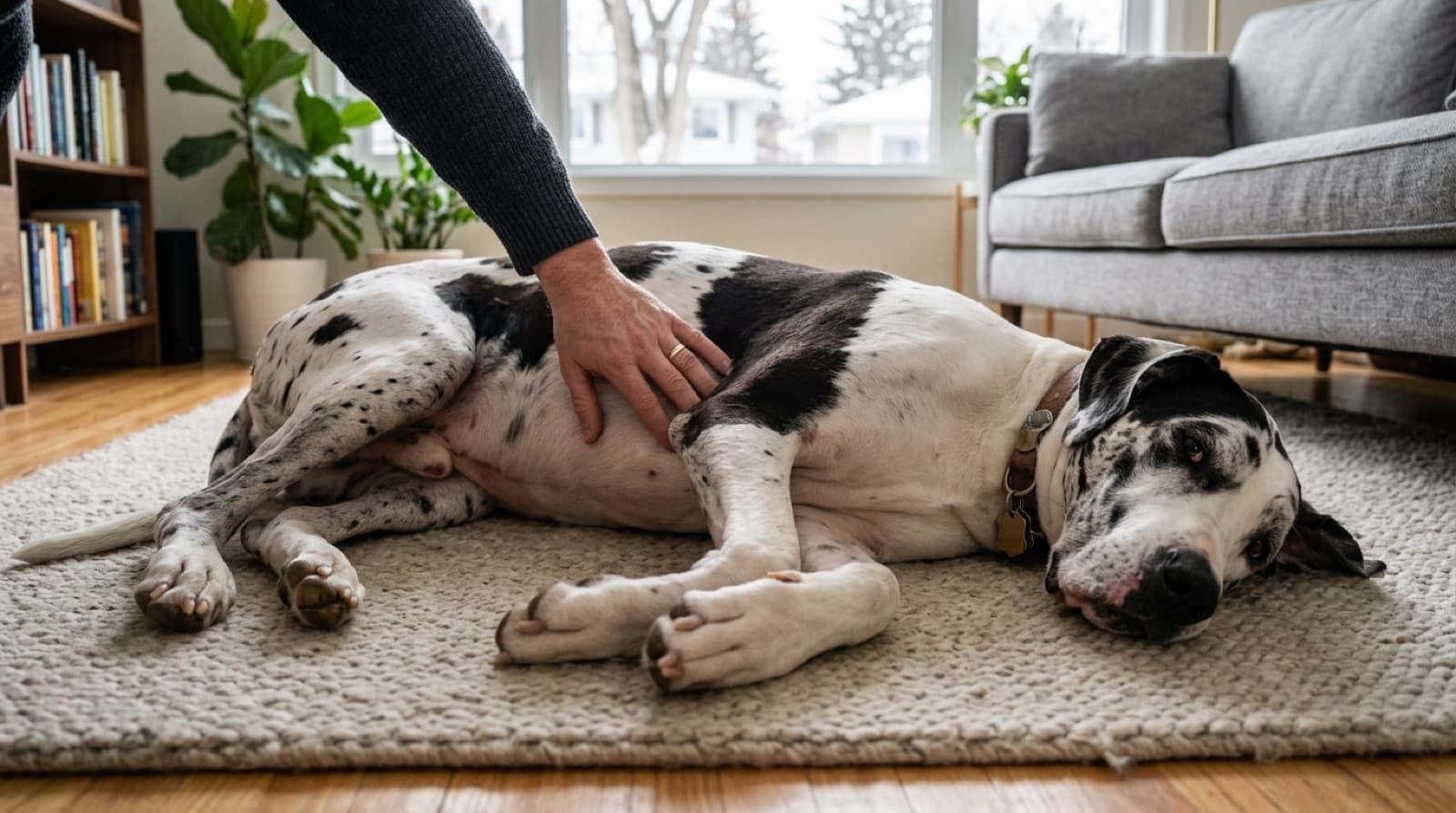
What bloat (GDV) actually is
Bloat is a medical emergency where the stomach fills with gas and can twist on itself, cutting off blood flow to the stomach and spleen. Without emergency surgery within hours, GDV is usually fatal.
Formally called Gastric Dilatation and Volvulus, GDV occurs in two stages. First, gastric dilatation: the stomach fills with gas, fluid, or food and expands. Second, volvulus: the distended stomach rotates on its axis (the twist), trapping the gas inside and cutting off blood flow to the stomach wall and the spleen. Without rapid surgical intervention, tissue dies, the dog goes into shock, and death follows.
Why Great Danes specifically: the deep-chested body shape gives the stomach room to rotate. The American Veterinary Medical Association lists GDV as one of the most serious emergencies in large and giant breeds, and Great Danes carry the highest lifetime risk of any breed.
Peer-reviewed veterinary literature consistently identifies bloat as the leading cause of death in Great Danes, accounting for a substantial portion of breed mortality. The Purdue bloat studies from the early 2000s remain the most-cited reference; subsequent research has refined understanding of risk factors but the core finding (Danes are highest-risk breed) is consistent.
Symptom recognition: train every household member
The most specific early warning sign is unproductive retching: the dog tries to vomit but nothing comes up. This single symptom should trigger an immediate ER trip.
Other early signs:
- Visibly distended or swollen abdomen
- Restlessness or pacing
- Inability to settle
- Excessive drooling
- Hunched posture or signs of abdominal pain
- Tight drum-like belly
Later signs of shock (emergency):
- Pale gums
- Weak pulse
- Collapse
- Rapid shallow breathing
Symptoms typically come on fast, over minutes to an hour or two. Many Edmonton owners report the early “something is off” feeling preceding the obvious symptoms by 15 to 60 minutes; trust that instinct.
Train every household member. Every adult in the home and every regular dog-sitter should know the symptoms. The Great Dane could be alone with a teenager, a partner, or a friend when bloat strikes; recognition cannot depend on one person.
Better an unnecessary ER visit than a delayed treatment death. If you are not sure, go to the ER. Vets would rather examine a dog that turned out to be fine than receive one that delayed care.
The Edmonton 24-hour ER vet protocol
Speed from symptom onset to surgery is the dominant outcome factor. Dogs reaching surgery within 2 to 4 hours of symptom onset have dramatically better survival rates than dogs reaching surgery later.
Pre-emergency preparation (do this BEFORE the dog has a problem):
- Identify the two closest 24-hour Edmonton emergency veterinary clinics to your home.
- Save both addresses and phone numbers in every household member's phone.
- Do a practice drive to the primary clinic in daylight so you know the route.
- Identify alternative routes for road conditions (closures, construction, winter ice).
- Confirm both clinics handle GDV surgery (most Edmonton 24-hour emergency clinics do, but confirm).
- Know your pet insurance policy details (claim filing process, pre-authorisation if needed).
If bloat strikes:
- Get the dog to the car immediately. Do not call the regular vet first.
- Drive directly to the closest 24-hour ER.
- Call the clinic on the way if a passenger can do so, so they know a possible GDV is coming.
- Do NOT give food, water, or any medication.
- Do NOT try home remedies (de-gassing solutions, walking the dog, etc).
- Drive carefully but quickly. A fatal car accident on the way does not help the dog.
The closest clinic at the moment of emergency wins (not the regular vet 30 minutes away). The Edmonton emergency vet network has experienced GDV surgeons; outcomes are good when transport time is fast.
Browse adoptable Great Danes in Edmonton
Adult Great Danes (3+ years) from Edmonton rescue often arrive with documented medical baseline including any previous bloat history. Foster home observation matters.
See Available Great Danes →Gastropexy: the preventive surgery decision
Gastropexy anchors the stomach to the abdominal wall so it cannot twist. It does not prevent gas buildup (the dilatation part of GDV) but greatly reduces the risk of the life-threatening volvulus (twist).
Factors typically discussed with your vet:
- Dog's age (younger is generally easier recovery)
- Overall health
- Whether it can be done at the same time as spay or neuter (significant cost savings)
- Family history if available (Dane parents or siblings with bloat history elevate risk)
- Owner ability to recognise bloat symptoms and access ER quickly (a gastropexied dog still needs ER visit for full GDV)
Procedure options: laparoscopic gastropexy (less invasive, faster recovery, 1 to 2 hour procedure) or traditional open surgery (longer recovery, often done at spay/neuter or as part of emergency GDV surgery).
Edmonton gastropexy costs:
- $1,200 to $2,500 when done at the same time as spay or neuter (the additional cost over the spay/neuter procedure)
- $2,000 to $4,000 as standalone procedure later in adult life
- $4,000 to $10,000+ when done as part of emergency GDV surgery (which includes additional bloat-related interventions)
The cost math: preventive gastropexy at spay/neuter is the cheapest path. Emergency gastropexy during a GDV event is the most expensive AND requires the dog to survive the bloat episode first. Most Great Dane breed-club veterinary advisors recommend preventive gastropexy at spay or neuter for the breed.
The decision is between owner and vet. Some owners prioritise it as part of standard breed care; others weigh anaesthesia risk for healthy young dogs. Discuss with your Edmonton vet.
Feeding rules to reduce risk
No single feeding setup prevents bloat. Practices commonly discussed with vets to reduce risk:
- Multiple meals daily (2 to 3 for adult Danes) rather than one large meal
- Slow-feeder bowls or food puzzles or snuffle mats to reduce gulping
- No heavy exercise immediately before or after meals (wait at least 1 hour before exercise, 1 to 2 hours after)
- Avoid stress around mealtimes (calm feeding environment matters)
- Multi-dog households: feed the Dane in a separate quiet space to reduce resource-guarding stress
- Healthy weight maintenance (obesity correlates with increased risk in some studies)
- Avoid raised food bowls. The research on bowl height has been revised since the early 2000s; later analyses suggested raised bowls may increase rather than decrease risk in deep-chested breeds. Floor-level slow feeder is the current conservative recommendation.
Important caveat: bloat can happen even with perfect feeding practices. Vigilance for early symptoms matters more than any specific feeding routine.
The pet insurance reality
Pet insurance enrolment within 14 days of adoption is non-negotiable for Great Danes. A single GDV episode can exceed a year of premiums by a wide margin.
Emergency GDV surgery in Edmonton: $4,000 to $10,000+. Add hospitalisation, IV fluids, monitoring, and potential complications (splenectomy, post-surgical care) and the bill can climb higher. This is one of the strongest cases for pet insurance for any breed.
Edmonton-active carriers (coverage philosophies vary; read policy carefully):
- Trupanion (90% coverage after deductible, no per-condition caps; bloat surgery covered)
- Pets Plus Us (80% reimbursement, multiple plan tiers)
- OVMA Pet Health Insurance (Ontario Veterinary Medical Association, available to Alberta dogs)
- Fetch (formerly Petplan Canada, 90% reimbursement available)
Premium estimates for Great Dane: $70 to $150/month for young adults, climbing to $150 to $300/month by age 5 to 7. Lifetime premium total: $8,000 to $25,000.
Critical timing rule: get insurance within 14 days of adoption, before the first wellness visit if possible. Any condition noted in vet records becomes pre-existing. Pre-existing bloat history is one of the most common Great Dane insurance exclusions for adult rescue dogs; adult Dane adoption strategy includes scheduling baseline vet exam BEFORE starting insurance only if you understand that any noted conditions will be excluded.
Frequently Asked Questions
What is bloat (GDV) in Great Danes?
Bloat, formally called Gastric Dilatation and Volvulus (GDV), is a medical emergency where the stomach fills with gas and can twist on itself, cutting off blood flow to the stomach and spleen. The American Veterinary Medical Association lists GDV as one of the most serious emergencies in large and giant breeds. Great Danes carry the highest lifetime risk of any breed because the deep-chested body shape gives the stomach room to rotate. Without emergency surgical treatment within hours, GDV is usually fatal. Peer-reviewed veterinary literature consistently identifies bloat as the leading cause of death in Great Danes, accounting for a substantial portion of breed mortality. The Edmonton reality: every Great Dane household needs an emergency-recognition plan, a 24-hour vet clinic identified and saved in phone contacts, and ideally pet insurance in place before the first symptom appears.
What are the symptoms of bloat in a Great Dane?
The most specific early warning sign is unproductive retching: the dog tries to vomit but nothing comes up. Other signs are a visibly distended or swollen abdomen, restlessness or pacing, inability to settle, excessive drooling, hunched posture or signs of abdominal pain, and a tight drum-like belly. Later signs of shock include pale gums, weak pulse, and collapse. Symptoms typically come on fast, over minutes to an hour or two. If you see these signs in your Great Dane, do not wait: go straight to an Edmonton 24-hour emergency veterinary clinic. Many Edmonton owners report the early "something is off" feeling preceding the obvious symptoms by 15 to 60 minutes; trust that instinct. If your Great Dane is restless, pacing, drooling more than usual, and you cannot put your finger on why, treat it as possible early bloat and head for the ER. Better an unnecessary ER visit than a delayed treatment death.
How fast can bloat kill a Great Dane?
GDV can become fatal within hours from symptom onset. There is no wait-and-see window, no over-the-counter remedy, and no safe way to manage it at home. Survival depends on getting the dog to an emergency veterinary clinic for decompression and surgery as quickly as possible. The faster the trip from symptom onset to the operating table, the better the outcome. Veterinary outcome studies consistently show that dogs reaching surgery within 2 to 4 hours of symptom onset have dramatically better survival rates than dogs reaching surgery later. This is why every Great Dane household needs a 24-hour Edmonton emergency vet identified and the address saved in your phone before the dog ever has a problem. Edmonton 24-hour emergency vet clinics include several specialty practices around the city; identify the closest one to your home plus a backup, and save both addresses.
Should I get gastropexy surgery for my Great Dane?
Gastropexy is a preventive surgery that anchors the stomach to the abdominal wall so it cannot twist. It is commonly discussed for Great Danes because the breed carries the highest lifetime bloat risk. The decision belongs between the owner and the vet; factors typically discussed include the dog's age, overall health, whether it can be done at the same time as spay or neuter (significant cost savings), and family history if available. Gastropexy does not prevent bloat itself (gas buildup can still happen) but it greatly reduces the risk of the life-threatening twist. The procedure can be done laparoscopically (less invasive, faster recovery) or as a traditional open surgery. Edmonton specialty veterinary surgeons and some general practices offer gastropexy. Cost: $1,200 to $2,500 when done at the same time as spay/neuter; $2,000 to $4,000 as standalone procedure. Most Great Dane breed-club veterinary advisors recommend gastropexy at the time of spay or neuter for the breed. Discuss with your Edmonton vet about whether and when gastropexy makes sense for your specific dog.
Can I prevent bloat with food bowl height or feeding setup?
The research on raised food bowls and bloat risk is disputed and has been revised multiple times since the Purdue bloat studies in the early 2000s. Older guidance favoured raised bowls; later analyses suggested raised bowls may increase rather than decrease risk in deep-chested breeds. There is no single feeding setup that prevents bloat. Practices commonly discussed with vets include keeping the dog at a healthy weight, splitting meals across the day rather than feeding one large meal (2 to 3 meals daily for adult Danes), slow-feeder bowls to reduce gulping (or food puzzles, snuffle mats, scattered feeding), avoiding heavy exercise immediately before or after meals (wait at least 1 hour before exercise, 1 to 2 hours after), and avoiding stress around mealtimes. Multi-dog households may benefit from feeding the Dane in a separate quiet space. None of these is a guarantee. Talk to your vet about a feeding plan for your specific dog. Important context: bloat can happen even with perfect feeding practices. Vigilance for early symptoms matters more than any specific feeding routine.
How much does emergency bloat surgery cost in Edmonton?
Bloat surgery is one of the most expensive single emergencies in giant-breed ownership. Total cost depends on the clinic, surgical complexity, length of hospitalisation, and whether complications develop. Typical Edmonton range: $4,000 to $10,000+ for emergency GDV surgery including decompression, surgery, gastropexy (done during the emergency procedure), hospitalisation, IV fluids, and monitoring. Complex cases requiring splenectomy (spleen removal due to compromised blood flow) or extensive post-surgical complications can run higher. This is one of the strongest cases for pet insurance for a Great Dane: a single GDV episode can exceed a year of premiums by a wide margin. Pet insurance enrolment within 14 days of adoption is the rule for Great Danes specifically because GDV is a documented breed risk; pre-existing exclusions apply if the dog has had previous bloat episodes documented before policy start. Trupanion, Pets Plus Us, OVMA Pet Health Insurance, and Fetch are the main Edmonton-active carriers; coverage philosophies vary, read the policy specifically for emergency surgery coverage caps before signing.
What should I do if I think my Great Dane is bloating?
Go directly to a 24-hour emergency veterinary clinic. Do not wait to see if it passes. Do not try home remedies. Do not give food, water, or medication. Call the clinic on the way if you can, so they know a possible GDV is coming, but do not delay leaving the house to find the number. The clinic will assess, stabilise, decompress the stomach if needed, and move to surgery if GDV is confirmed. Speed from symptom onset to clinic is the biggest factor in outcome. Edmonton 24-hour emergency vet protocol: the closest clinic at the moment of emergency wins (not the regular vet 30 minutes away). Several Edmonton-area emergency veterinary clinics operate 24/7; identify the closest two to your home, save addresses + phone numbers in your phone contacts, and ideally do a practice drive in daylight so you know the route. The Edmonton emergency vet network has experienced GDV surgeons; outcomes are good when transport time is fast.
Are Great Dane mixes at risk for bloat too?
Yes. Bloat risk follows body shape, not pedigree paperwork. Any deep-chested large or giant breed mix (Great Dane mixes, Mastiff mixes, Saint Bernard mixes, Standard Poodle mixes, Weimaraner mixes, German Shepherd mixes) carries elevated risk compared to a small or medium dog. If your rescue dog has the tall, narrow, deep-chested build typical of Dane lineage, treat it as a high-risk dog: learn the symptoms, plan an ER route, and discuss gastropexy with your vet. The fact that the rescue called the dog a mix does not lower the anatomical risk. Edmonton rescue intake (SCARS, Edmonton Humane Society, Zoe's Animal Rescue, AHHRB, AARCS Edmonton fosters) regularly includes Dane mixes from northern Alberta and central Alberta intake; foster home observation of body shape matters more than the breed label on the listing for bloat-risk assessment.
Are there other bloat risk factors I should know about?
Several factors have been associated with elevated bloat risk in peer-reviewed veterinary studies, though none individually predicts bloat. Increased risk factors documented in the literature: deep-chested body shape (anatomical, cannot change); first-degree relatives with bloat history (family genetics); older age (most bloat occurs in middle-aged to older dogs); stress (particularly stressful events like boarding, travel, vet visits); rapid eating; large single daily meals; fearful or anxious temperament. Decreased risk factors: relaxed temperament, multi-meal feeding, slow eating practices. Importantly, exercise immediately before or after eating has been associated with both increased and unchanged risk in different studies; the conservative recommendation is to wait 1 hour before and 1 to 2 hours after meals. The Purdue bloat studies from the early 2000s remain the most-cited reference; the field has refined understanding since but the core risk-factor list is consistent. Your Edmonton vet can review your specific dog's risk profile and recommend monitoring or preventive measures appropriate for individual circumstances.
Does Edmonton winter change bloat risk?
No documented direct effect, but indirect effects matter. Cold-weather stress can elevate cortisol and anxiety in some dogs; stressed dogs have higher bloat incidence. Holiday-season feeding disruptions (more table scraps, irregular meal times during family gatherings) can affect digestion and increase risk. Boarding stress around winter travel can be a trigger; consider in-home pet sitters instead of boarding for Great Danes when possible. The Edmonton-specific consideration is winter ER transport: -25C to -40C wind chill can complicate emergency vet trips; ensure your vehicle is reliable, have a backup plan if your primary car has cold-start issues, and consider that your closest 24-hour ER may be the right call even if a slightly further clinic is your regular preference. Time-to-surgery is the dominant outcome factor; do not drive 45 minutes across town in icy conditions when a 15-minute closer ER exists.
Is a Great Dane right for me given the bloat risk?
Yes, with realistic planning. Bloat is a defined risk that can be managed with preparation: pet insurance enrolment within 14 days of adoption, 24-hour Edmonton ER vet identified and saved, gastropexy decision made with your vet (most breed advisors recommend it at spay/neuter), feeding protocol established (multi-meal, slow feeder, post-meal rest), symptom recognition trained into every household member. The breed-defining short lifespan (7 to 10 years average) and elevated medical risk profile combine to make Great Dane ownership a significant emotional and financial commitment. Right for you if: realistic about lifespan, financial bandwidth for $70 to $150/month pet insurance + potential $4,000 to $10,000+ emergency surgery, comfortable making quality-of-life decisions earlier than other breeds, Edmonton home with space for a giant dog, willing to commit to feeding discipline. Wrong for you if: limited budget for emergency surgery, expectation of long-lifespan companion through teen-years of kids, unable to handle emergency-recognition vigilance. Adult Great Dane adoption (4+ years) from Edmonton rescue often arrives with documented medical baseline including any previous bloat history.
Bottom line for Edmonton Great Dane owners on bloat?
Bloat is the #1 cause of death in Great Danes and the highest lifetime risk of any breed. Preparation is non-negotiable. Required Great Dane Edmonton household setup: (1) pet insurance within 14 days of adoption (insurance pays for the $4,000 to $10,000+ emergency surgery that uninsured owners often cannot absorb); (2) closest 24-hour Edmonton emergency veterinary clinic identified with address + phone saved in every household member's phone (do a practice drive in daylight); (3) gastropexy decision made with your vet (most breed advisors recommend at spay/neuter for cost efficiency, $1,200 to $2,500 added vs $2,000 to $4,000 standalone later); (4) feeding protocol (2 to 3 meals daily, slow-feeder bowl or food puzzle, no exercise 1 hour before or 1 to 2 hours after meals, multi-dog households feed Dane in quiet separate space); (5) symptom recognition training (every household member knows unproductive retching, distended abdomen, restless pacing, drooling, hunched posture); (6) emergency protocol (ER immediately, no home remedies, no food or water, call clinic on the way). The breed is worth the trade-off for many Edmonton households, but the preparation is the cost of admission. Edmonton senior Great Dane adoption (4+ years) from SCARS, EHS, Zoe's, AHHRB, or AARCS Edmonton fosters often arrives with documented bloat history (or thankfully, none); ask the rescue.
Adoptable Great Danes in Edmonton
Live listings from SCARS, Edmonton Humane Society, Zoe's, AHHRB, and AARCS Edmonton fosters.
Great Dane Adoption Edmonton
Rescue pipelines, costs, breed-mix patterns, family-fit framework, lifespan reality.
Great Dane Health Issues Edmonton
DCM, wobbler syndrome, hip dysplasia, megaesophagus, anaesthesia profile, specialty vet access.
Great Dane Short Lifespan Edmonton
7-10 year lifespan reality, emotional framework, senior Dane care, end-of-life planning.
New dog? Start with these care guides
Everything a new adopter needs to set up a safe, happy home.