The short answer
Chihuahua adoption in Edmonton runs at high volume. Most rescues have multiple Chihuahuas listed at any time, including Edmonton Humane Society, AARCS Edmonton fosters, Zoe's, and AHHRB. Fees $300 to $600. Plan two to four weeks from application to dog-in-house, not six to twelve. Choose a deer-head over an apple-head for lower medical risk, smooth or long coat by preference, and walk away from any listing using the word teacup.
Why Chihuahuas surrender to Edmonton rescue
Chihuahuas are one of the highest-volume breed groups in Edmonton rescue intake, comparable to Pit Bull crosses and Labrador mixes. The intake patterns are remarkably consistent year to year. Understanding them helps an adopter read foster temperament notes more accurately and walk into the application conversation with realistic expectations. Five patterns dominate.
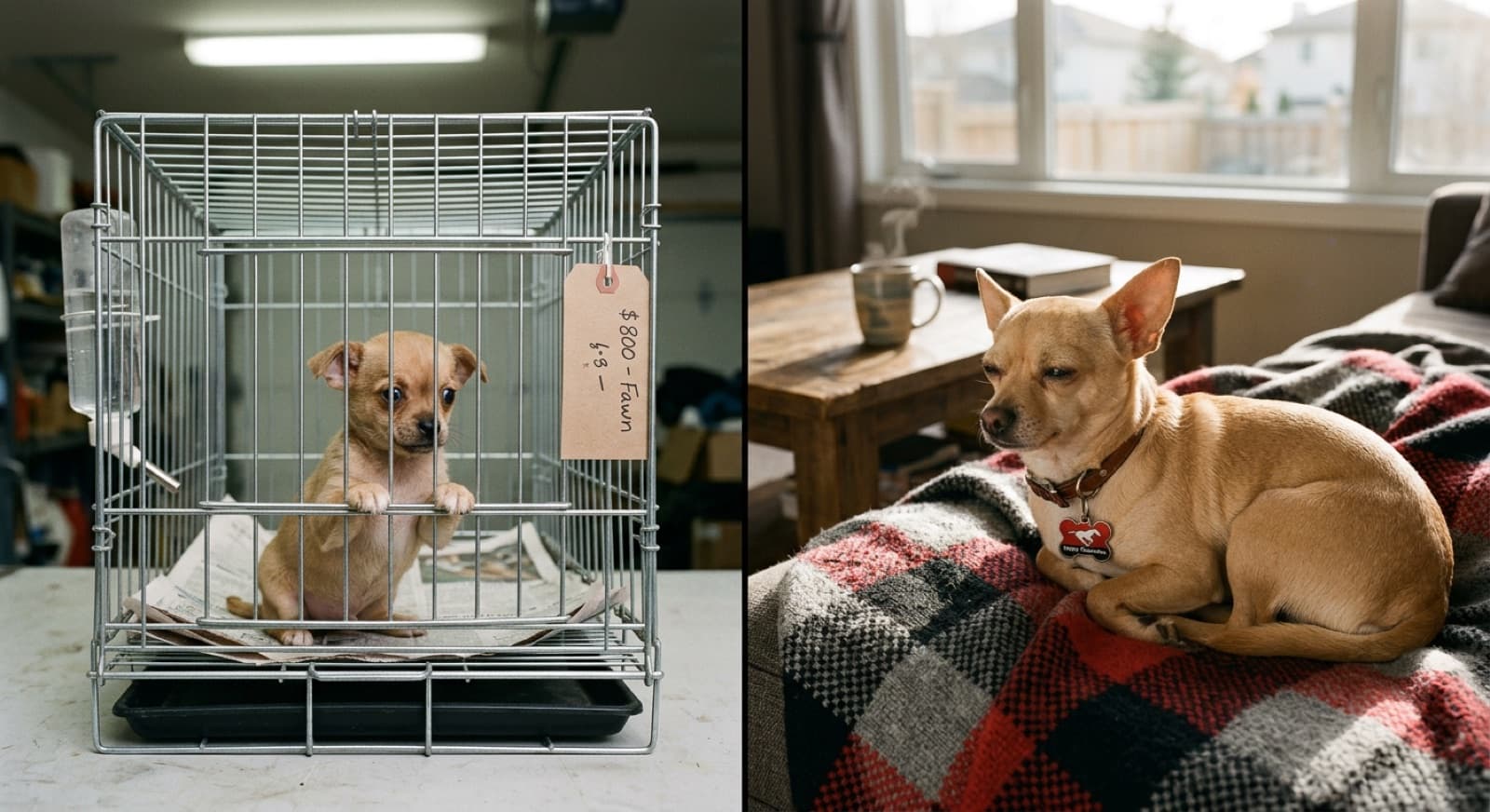
The first pattern is the backyard-breeder dump. A high-volume small-breed operation in Alberta or northern Saskatchewan is shut down by enforcement, scaled back by the operator, or financially collapses. The breeding mothers, unsold puppies, and sometimes the stud dogs are absorbed by rescues. Edmonton rescues regularly take in groups of five, ten, or twenty Chihuahuas at once from this pattern. The mothers often come in undersocialised, dental disease, and emotionally shut down. With patient foster care most recover, but it takes months.
The second pattern is the owner death or assisted-living surrender. Chihuahuas are devoted long-lived companions for elderly owners, and they often outlive them or face household dissolution when the owner moves into care. These Chihuahuas come into rescue well-adjusted, housetrained, and grieving. They are typically the best-prepared rescue dogs in the system because they were raised properly and lived stable lives. The foster home gets a settled dog who only needs help adjusting to new people.
The third pattern is small-dog syndrome behaviour problems. A Chihuahua raised without consistent training because the owner thought of the dog as a furry accessory hits adolescence (typically 10 to 24 months) and starts showing resource guarding around food or laps, snapping at strangers, chronic alert barking neighbours complain about, leash reactivity to other dogs, and refusal to walk in winter. The owner is overwhelmed and surrenders. These dogs are absolutely placeable with adopters who treat them as dogs and work with a force-free trainer; the behaviours respond well to consistent positive reinforcement.
The fourth pattern is the allergy diagnosis surrender. A household member is diagnosed with a severe dog allergy, asthma, or eczema flare-up, and the medical advice is to rehome. These surrenders are often on short notice and emotionally hard on the family. The dogs themselves are usually well-adjusted and ready to slot into a new home quickly.
The fifth pattern is the teacup buyer's remorse surrender. A family bought a marketed teacup Chihuahua from a backyard breeder or pet store for $2,000 to $4,000. The puppy turned out chronically sick (hypoglycemia, heart murmur, hydrocephalus, dental crowding), and the ongoing vet costs are unsustainable. The dog ends up at rescue with significant medical needs. Edmonton rescues that take in these dogs are transparent about the ongoing care required and often reduce or waive fees for the right adopter.
Edmonton rescues that consistently list Chihuahuas
All six of the main Edmonton-area rescues see Chihuahuas regularly. Volume is high enough that a thoughtful adopter can usually find two or three suitable matches within a few weeks. Inventory rotates faster than for rare breeds like Yorkies, so applying same-day matters less, but applying with care still matters more.
- Edmonton Humane Society: the highest-volume Chihuahua intake source in the city. EHS sees Chihuahuas through owner surrender, backyard-breeder shutdowns, and city pickup transfers. The centralised facility means you can meet the dog in person before applying. The EHS behaviour team produces detailed temperament assessments, and the medical team flags any apple-head related health concerns clearly. Read the medical notes carefully on every EHS Chihuahua listing. More information on adoptable dogs and adoption process is on the Edmonton Humane Society website.
- AARCS (Alberta Animal Rescue Crew Society): headquartered in Calgary with Edmonton-area foster homes. AARCS tags each dog with current foster location, so Edmonton-foster Chihuahuas surface on Edmonton listings. AARCS foster temperament write-ups are among the most detailed in the province, and they consistently flag small-dog syndrome behaviours, dental issues, and prior breeding-mother history when applicable. AARCS Chihuahua volume is steady, with new listings rotating weekly.
- Zoe's Animal Rescue: long-running Edmonton foster-based rescue. Chi volume is high and includes purebreds, Chi-mixes, and rescued breeding mothers. Zoe's temperament assessments are thorough. The application emphasises fit over speed; expect the foster home to ask specifically about your prior small-dog experience, your household energy, and your willingness to do force-free training.
- Alberta Homeward Hound Rescue Bureau (AHHRB): Edmonton-area foster-based rescue. AHHRB lists every dog as Mixed Breed on paper as a matter of policy, so Chihuahuas and Chi-mixes are identified by photo and description rather than a breed tag. Their foster network includes experienced small-dog homes, which matters for a high-needs companion breed. Volume is moderate.
- GEARS (Greater Edmonton Animal Rescue Society) and Hope Lives Here Animal Rescue: both Edmonton-area rescues with smaller rotating inventory that regularly includes a Chihuahua or Chi-mix. Lower frequency than EHS or AARCS but worth following, especially for senior Chihuahuas which both rescues prioritise.
- SCARS (Second Chance Animal Rescue Society): the largest northern-Alberta intake rescue. SCARS pulls steadily from northern communities and occasionally takes in Chihuahuas from backyard-breeder situations in remote Alberta. Volume varies month to month. Worth watching for Chi-mix listings, especially Chihuahua-Pomeranian and Chihuahua-Dachshund crosses.
Some adopters ask about a Chihuahua-specific national breed rescue. If you can verify one that serves Alberta, the application process is usually more rigorous, the wait can be months, and transport may be involved, but the matching quality is typically excellent. Verify any breed-specific group the same way you would verify any pet transaction: a current adoptable-dog list, a real address or named foster network, public-facing vet references, and a Canada Revenue Agency charitable registry record. Most Edmonton Chihuahua adopters find their dog through the six local rescues above.
Apple-head vs deer-head Chihuahuas
Chihuahuas come in two recognised head shapes, and the difference matters for both adoption matching and ongoing medical risk. The Canadian Kennel Club breed standard describes the apple-head profile as the conformation standard, but in the rescue world deer-head dogs are typically the lower-risk medical bet.
- Apple-head Chihuahua. Rounded dome-shaped skull, short muzzle, prominent forehead, eyes set wide apart. Fits the formal breed standard for show. Comes with elevated medical risk: hydrocephalus (fluid on the brain), a soft spot called a molera that may not close (similar to a human infant fontanelle), dental crowding from the shortened muzzle, and in extreme cases mild brachycephalic breathing issues. Apple-heads are usually slightly smaller framed than deer-heads.
- Deer-head Chihuahua. Longer, more sloped muzzle that looks closer to a small terrier or fox. Skull is less domed. Eyes are set forward. Does not fit the formal breed standard but is generally healthier: fewer dental crowding issues, no hydrocephalus risk, no molera concerns, and a more functional breathing structure. Often slightly larger framed (six to nine pounds versus the apple-head three to six pound range).
- Mixed feature dogs. Most Edmonton rescue Chihuahuas show mixed apple and deer features rather than fitting cleanly into either category. This is fine and usually healthier than a strict apple-head. Foster notes describe the actual dog; the head-shape label is informational rather than disqualifying.
For an Edmonton rescue adopter, the practical rule is simple: if you have a choice between an apple-head and a deer-head of similar temperament and similar fit for your household, the deer-head is the lower-risk medical bet over a fifteen-year lifespan. If you fall for an apple-head, the dog is still very adoptable; just budget for slightly higher dental care and ask the rescue whether a vet check for molera and hydrocephalus has been done.
Smooth coat or long coat in Edmonton
Chihuahuas come in two coat varieties. The grooming and winter-gear implications matter in Edmonton; the temperament difference is smaller than people assume.
- Smooth-coat (short-haired). Short shiny coat that sheds modestly year-round. Weekly brushing covers grooming. Almost no grooming budget. Cold-vulnerable in Edmonton winter; an insulated coat is essential below -10C and a sweater is sensible at any temperature below freezing. The classic Chihuahua look.
- Long-coat (long-haired). Soft flowing coat with feathering on the ears, chest, legs, and tail. Brushing two or three times a week prevents mats, especially behind the ears and on the chest. A professional groom every eight to ten weeks, typically $45 to $75 in Edmonton, keeps the coat manageable. Slightly better natural cold tolerance than smooth coats but still needs a winter coat below -10C.
Temperament is similar across coats. Some long-coat lines tend slightly calmer because the long coat traces partly to historical Papillon and toy-spaniel crosses, but the difference is small and individual variation dominates. Pick on grooming budget and personal preference. Most Edmonton rescue Chihuahuas are smooth coat or mixed-coat crosses. Long coats appear less frequently but consistently.
The teacup warning: why Edmonton rescues will tell you there is no such thing
Teacup Chihuahua is a marketing term, not a recognised variety. The Canadian Kennel Club recognises only one size of Chihuahua, with a standard weight range of three to six pounds for show and a healthy pet range of four to eight pounds. The American Kennel Club and every legitimate breed registry agree. There is no teacup classification anywhere in the breed world. The word exists solely to charge $3,000 to $5,000 for runts that should never have been bred together.
What is actually being sold as a teacup Chihuahua is typically a runt under three pounds at adult weight, produced by deliberately pairing the smallest available dogs together over multiple generations. The welfare consequences are severe and documented:
- Hypoglycemia. Blood sugar crashes that can cause seizures, collapse, and death. Teacup puppies typically need feeding every two to three hours and high-calorie supplementation. Many die in the first six months.
- Hydrocephalus. Fluid on the brain, more common in extreme apple-head conformation. Causes neurological problems, seizures, and often requires lifelong medication or surgical shunt placement.
- Fragile bones. A two-pound adult dog has bones the diameter of a pencil. Jumps off a couch can fracture legs. Dropped accidentally, the dog dies.
- Heart defects. Patent ductus arteriosus and other congenital heart problems are over-represented in teacup-bred Chihuahuas.
- Severe dental crowding. A tiny jaw cannot accommodate a full set of teeth. Extractions and chronic dental disease are near-universal.
- Shortened lifespan. Standard Chihuahuas often live fourteen to eighteen years. Teacup-marketed dogs frequently die in their first few years from the combined medical problems above.
Edmonton rescues see the failed-teacup pipeline regularly. A family bought a teacup puppy from a backyard breeder or pet store, paid $2,000 to $4,000, and within six months the dog has cost another $3,000 to $8,000 in emergency vet care and is still chronically sick. The family surrenders to rescue, often distraught. The rescue takes on the ongoing medical costs and lists the dog when stable.
The practical rule for an Edmonton adopter is clear: a dog under three pounds at adult weight is a welfare red flag, not a feature. Healthy adult Chihuahuas weigh four to eight pounds. Anything significantly smaller comes from a breeding pattern that should not have happened. If you see the word teacup on a listing, the rescue is being descriptive about a dog that came in through this pipeline; they are not endorsing the term, and they will tell you the same thing in conversation. Avoid breeders and pet stores using the term as a sales feature.
Common Chihuahua mixes in Edmonton rescue
Chihuahua crosses are extremely common in Edmonton intake, often outnumbering purebreds in any given month. Many Chi-mix listings have unknown second parent, and the breed label on a first-generation cross is a best guess based on appearance. Foster temperament notes do the real work. Four mix patterns appear most often.
- Chiweenie (Chihuahua-Dachshund). Typically 6 to 12 pounds, variable body length and leg proportion. The most common Chi-mix in Edmonton rescue intake. Often shorter-backed than a pure Dachshund (which reduces IVDD risk slightly) but still long enough to need ramps and no-jump rules. Temperament combines Chihuahua alertness with Dachshund boldness; can be a lot of dog in a small package. Frequently surrenders for similar reasons to both parent breeds.
- Chug (Chihuahua-Pug). Typically 10 to 18 pounds, often with Pug body type and Chihuahua head shape. Sometimes carries brachycephalic breathing issues from the Pug side, especially in deep Edmonton cold or summer heat. Temperament is usually friendlier and less reactive than pure Chihuahua. Often easier with kids than pure Chi.
- Pomchi (Chihuahua-Pomeranian). Typically 4 to 9 pounds, fluffy coat that needs brushing two or three times a week. Temperament combines Pom alertness with Chihuahua devotion. Often has the Pomeranian propensity for alert barking. Long lifespan (thirteen to seventeen years), generally healthy if not from teacup-bred lines.
- Chorkie (Chihuahua-Yorkie). Typically 4 to 10 pounds, silky to wiry coat that often needs daily brushing and a professional groom every eight weeks. Temperament tends spirited and confident. Often more trainable than pure Chihuahua because the Yorkie side adds biddability. Common in Edmonton small-breed rescue.
Other Chihuahua mixes appear less frequently: Chihuahua-Pinscher (Chipin), Chihuahua-Shih Tzu (ShiChi), and Chihuahua-Jack Russell crosses. Each has its own personality. Read the foster temperament notes and ask the foster home directly about energy level, housetraining status, kid tolerance, and dental status.
What an Edmonton rescue Chihuahua actually costs
Edmonton rescue adoption fees for Chihuahuas generally land between $300 and $600, with young adults and puppies at the upper end and seniors at the lower end. The fee is a partial recovery on costs the rescue has already incurred. A typical Chihuahua adoption fee covers:
- Spay or neuter surgery. Standalone, this is $250 to $450 at an Edmonton vet clinic for a toy-breed dog.
- Core vaccinations. DAPP and rabies at minimum. Bordetella is often included if the dog has been boarded.
- Microchip implant and registration. Required by City of Edmonton bylaw for licensed dogs.
- Deworming and flea and tick treatment. Standard intake processing.
- Basic vet workup with dental assessment. Physical exam, dental check, and any imaging the intake vet recommends. Dental disease is extremely common in adult and senior rescue Chihuahuas, and the rescue will flag what they found.
- Dental work, often. Many Edmonton rescue Chihuahuas arrive with significant dental disease and need extractions before listing. A full dental with multiple extractions at retail Edmonton pricing is $800 to $1,500. The rescue typically completes this before adoption, which is part of why fees are higher than the spay-neuter cost alone.
Stacked at retail Edmonton vet pricing, those services run $900 to $1,800 for a Chihuahua intake. The rescue fee is a partial recovery, not a profit. Senior Chihuahuas (around eight years and up) often have reduced fees of $150 to $300. Chihuahuas with ongoing medical needs from a teacup background or chronic dental disease sometimes have reduced fees too, in exchange for an adopter who commits to the ongoing care.
Beyond the fee, plan on ongoing Chihuahua costs of $1,400 to $2,600 per year for a healthy adult. Food is minimal given the size. Grooming is modest for smooth coats and small for long coats. Dental care is meaningful; daily tooth brushing at home plus annual professional cleanings prevents thousands in later extractions. Pet insurance for a young healthy Chihuahua in Edmonton typically runs $35 to $60 per month and is worth it; dental work alone over a lifetime adds up, and emergency care for a small fragile dog can come fast.
For comparison, a Chihuahua puppy from an Alberta breeder runs $800 to $2,500 for pet-quality, with rare colours and small-marketed-size dogs at the upper end. Teacup-marketed Chihuahuas from backyard breeders or pet stores run $3,000 to $5,000 and (per the warning above) come with serious welfare problems. The rescue path is significantly cheaper, the medical work is already done, and the dog comes with a known foster temperament write-up.
The high-volume reality: you usually have a choice
One of the practical advantages of Chihuahua adoption in Edmonton is that volume is high enough that adopters usually have a real choice. Rare-breed adopters often wait six to twelve months for a single suitable dog. Chihuahua adopters can typically meet two or three suitable matches within a month and pick the dog whose temperament fits the household best.
This changes how the application conversation goes. Instead of pressuring you to commit to whichever dog is available, Edmonton rescues are usually willing to keep working with you to find the right fit. A foster home that thinks one of their dogs is not quite right for your household will tell you, and they will let you know when a different dog comes in. The rescues benefit from good matches because returns are expensive (emotionally and operationally) and they would rather wait two weeks for the right adopter than place too fast.
The practical implication is that you can be specific in your application about what you are looking for: a calm older smooth-coat Chihuahua good with cats, or a young adult deer-head needing a force-free training partner, or a senior who just wants a lap. The rescues have the inventory to match those preferences. Patience pays back; the dog who arrives in your house should be a fit, not a settle.
Edmonton Chihuahua adopter readiness check
Before applying, work through this honestly. Most failed Edmonton Chihuahua placements come back to one or two of these questions not being answered before the dog moves in.
- Apartment or condo fit? Chihuahuas suit apartments and condos well, but barking can be an issue with shared walls. Are you committed to training through alert barking with a force-free trainer rather than letting it run? Most condo placements work fine with consistent training.
- Small-dog syndrome management? Many rescue Chihuahuas arrive with resource guarding, snapping, or alert barking from prior lack of training. Are you willing to work with a CCPDT-certified trainer for three to six months on consistent positive reinforcement?
- Dental commitment? Daily home tooth brushing with dog-safe enzymatic toothpaste plus annual professional cleanings. Dental disease is the most common Chihuahua health issue across the breed's lifespan. Are you prepared for daily routine and annual budget?
- Supervision around children? Chihuahuas can snap when handled roughly or startled. Households with calm older kids (eight and up) work; toddlers do not. Most Edmonton rescues will not place into homes with children under six.
- Winter gear plan? Insulated coat or sweater for outings below -10C, booties for salted sidewalks, pee-pad backup for extreme cold. Are you willing to bundle the dog up daily for five months of the year?
- Force-free training commitment? Chihuahuas do not respond well to dominance-based methods, prong collars, or harsh corrections. They shut down or escalate. Force-free positive reinforcement works. Are you on board with that approach?
- Anxiety management? Chihuahuas are bonded companion dogs and many show some separation anxiety. Crate training, gradual alone-time conditioning, and not leaving the dog alone for ten-hour stretches. Is your schedule realistic for a companion breed?
- Household consensus? Every adult in the household agrees on the training approach, the no-snapping rules around handling, and the budget for dental care. Placements fail fastest when one person follows the rules and another lets the dog get away with everything.
If most of these check out, you are a strong candidate. If a few do not, the rescue may steer you toward a more settled adult dog, recommend you wait until your situation is ready, or suggest a Chi-mix with a different temperament profile. Either way, honesty in the application strengthens it.
Browse adoptable Edmonton Chihuahuas and Chi-mixes
Current Edmonton listings from EHS, AARCS Edmonton fosters, Zoe's, AHHRB, GEARS, Hope Lives Here, and SCARS in one place. High-volume intake means you usually have a real choice; set up alerts and meet the dog whose temperament fits your household.
See Edmonton Adoptable Dogs →What Edmonton rescues evaluate in a Chihuahua application
Chihuahua applications are screened differently from working-breed applications. The rescue is focused on household safety, small-dog-syndrome management willingness, multi-pet compatibility, dental care commitment, and force-free training approach. The screening typically covers:
- Household structure and kid age. Most Edmonton rescues will not place a Chihuahua into a home with children under six. Older calm kids who understand small-dog handling are usually fine.
- Training philosophy. The rescue will ask whether you are committed to force-free positive reinforcement. Mention of dominance methods, prong collars, or harsh corrections is usually disqualifying for this breed.
- Existing pets. Chihuahuas live happily with other small dogs and with cats they are introduced to gradually. Households with large high-prey-drive dogs face more scrutiny because of the size mismatch.
- Apartment or condo barking management. Chihuahuas can be alert barkers. Rescues will ask about your plan for managing barking through training, exercise, and not leaving the dog bored.
- Schedule and time alone. Chihuahuas are companion dogs and form strong bonds. A fifty-hour work-from-office week with no midday check is a harder fit than a retiree home, a work-from-home household, or a household with multiple adults present at different times.
- Dental care commitment. The rescue will ask whether you understand the daily tooth brushing routine and the annual cleaning budget. Strong signal of a prepared Chihuahua adopter.
- Pet insurance plan. Less critical than for IVDD breeds but still recommended. Dental work over a lifetime and emergency care add up.
- Prior small-breed experience. Not required, but it strengthens the application. First-time Chihuahua adopters who show real homework (training class plans, force-free trainer identified, vet identified) are usually fine.
The screening is not a hurdle; it is the conversation that determines whether this placement lasts. Specificity wins applications. Honest answers about your household's rhythm and your training approach beat aspirational ones every time.
How to apply for an Edmonton Chihuahua adoption
Most Edmonton rescues run their Chihuahua adoption process online. Volume is high enough that you usually have time to apply thoughtfully rather than same-day, but applying carefully still matters. The typical sequence:
- Set up listing alerts. Register for adoption alerts on the rescue websites and check the Edmonton listings page regularly. Chihuahua inventory rotates weekly at the higher-volume rescues.
- Find a specific dog you want to apply for. Edmonton rescues apply per-dog rather than maintaining general waitlists. Read the entire foster write-up: medical history (especially dental notes), kid tolerance, dog tolerance, cat tolerance, housetraining status, and any small-dog syndrome notes.
- Complete the online application thoroughly. Expect 30 to 45 minutes for a thorough application. Have your vet's name ready if you have other pets, your landlord's name if you rent, your condo board contact if you live in a condo, and two non-family references.
- Phone screen with the foster. If the application clears the first review, the dog's foster home will call you. This conversation decides most applications. Be honest about household rhythm, work schedule, training approach, and prior breed experience.
- Meet-and-greet. Either at the foster's home or a neutral location. Chihuahuas often warm up faster in a quiet environment than in a busy rescue facility, so a home visit usually shows the better version of the dog. Expect the foster to coach you on how to greet the dog appropriately.
- Home check, sometimes. Some rescues do a brief home visit to confirm fencing, household setup, and any small-dog safety prep. Have crate and bedding ready by this point if you can.
- Reference checks. Most Edmonton rescues call two references, including any prior vet. Give your references a heads-up so they pick up promptly.
- Adoption contract and fee. Most rescues use a standard contract that requires the dog be returned to the rescue if you can no longer keep them, ever. Read it.
Realistic timeline from application to dog-in-your-house is two to four weeks for a Chihuahua placement, faster than larger breeds. Prepare your application materials in advance so you can move when the right dog appears.
The first 30 days with an Edmonton rescue Chihuahua
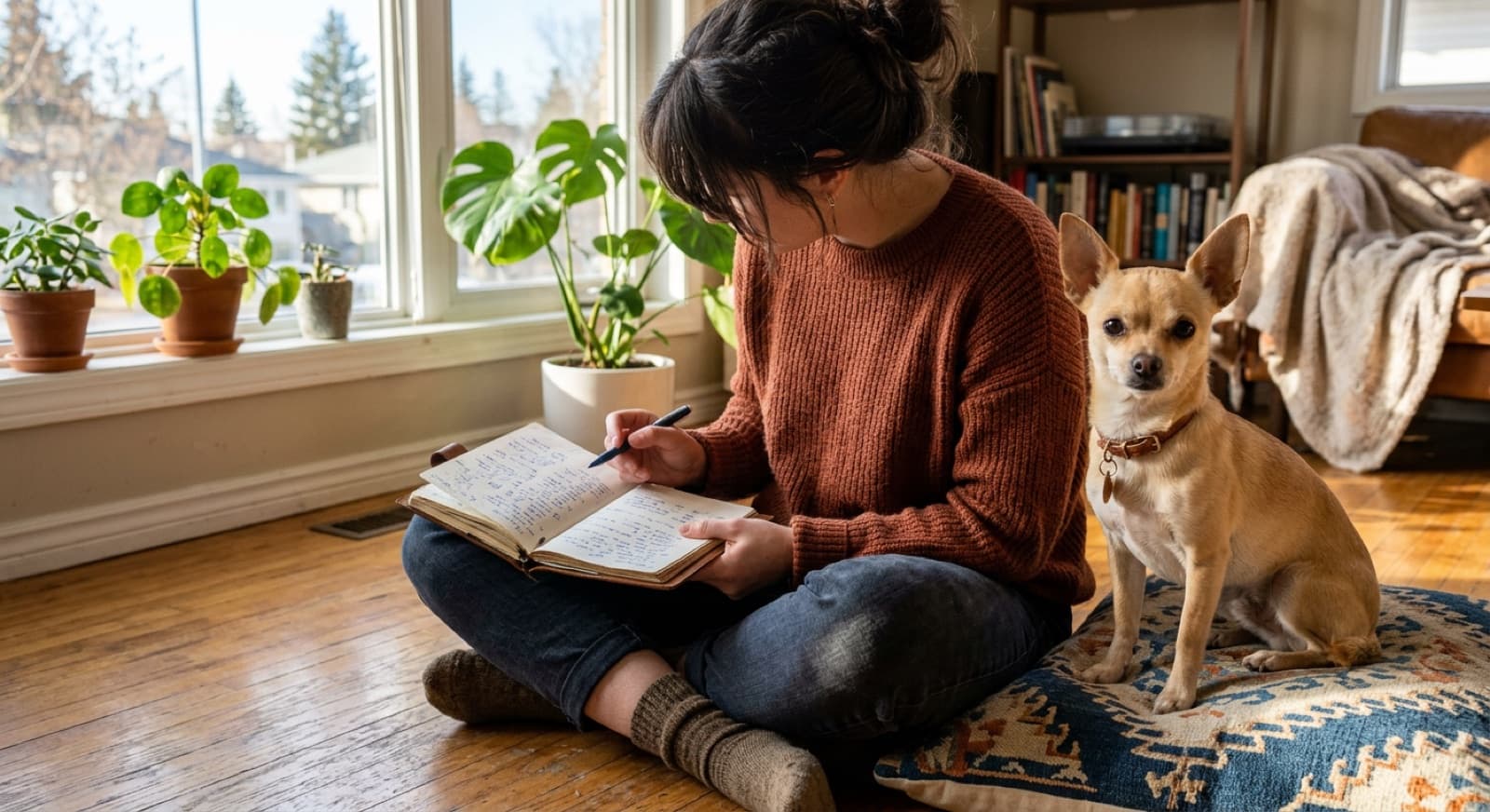
The 3-3-3 decompression principle applies to Chihuahuas, but the rhythm is faster than for larger rescue dogs. Toy-breed adjustment often compresses to three days, three weeks, and three months. The real personality usually emerges around week three. Practical week-one priorities for an Edmonton rescue Chihuahua:
- Set up a quiet decompression space. A crate or covered bed in a low-traffic room. Chihuahuas often arrive overwhelmed and need somewhere to retreat. Let them choose when to come out for the first few days.
- Block under-furniture gaps. A small Chihuahua can wedge under a couch and get stuck. Walk the house at Chihuahua height before the dog arrives.
- Use a step-in harness, not a collar. Chihuahuas are prone to tracheal collapse, and collar pressure on a small neck is a real injury risk. Step-in harness from day one for all walks.
- Watch the yard for predator risk. Edmonton has urban coyotes, magpies, and the occasional bird of prey. A Chihuahua is genuinely prey-sized. Supervised yard time only, especially at dawn and dusk, and never alone outside.
- License the dog with the City of Edmonton. Required for any dog over six months under City of Edmonton bylaw. Tags visible on the harness from day one.
- Establish a feeding schedule. Two or three small meals per day rather than free-feeding. Helps with housetraining predictability and prevents the hypoglycemia risk that affects small Chihuahuas.
- Start a dental baseline. Introduce daily tooth brushing slowly in week one with a soft finger brush and a dog-safe enzymatic toothpaste. Build the routine gradually. Schedule a vet exam in week two for a baseline dental assessment.
- Find a force-free trainer for week three. A trainer certified by the Certification Council for Professional Dog Trainers (CCPDT) who works with small breeds. Most Chihuahuas benefit from a four to six week basic obedience course to build confidence and address any small-dog syndrome behaviours.
- Start light leashed exercise. Two short walks per day (10 to 20 minutes each, weather permitting) plus calm indoor play. Build slowly as the dog settles.
- Add mental work early. Snuffle mats, puzzle feeders, basic obedience refreshers. Mental work tires a Chihuahua faster than physical exercise and prevents boredom-driven barking.
- Begin grooming routine right away. Smooth coats need weekly brushing. Long coats need brushing two or three times a week and a first professional groom in week three or four.
- Winter routine startup. If you adopt in winter, the cold hits Chihuahuas hard. Insulated coat for outings below -10C, very short outdoor trips below -25C, booties on salted Edmonton sidewalks, paw-pad rinses after walks, and pee-pad backup for extreme cold snaps. Most winter exercise moves indoors.
By week three, you will start seeing the real dog. Senior Chihuahuas often warm up faster than younger ones because they have lived in homes before and recognise the rhythm. Breeding-mother Chihuahuas from backyard-breeder shutdowns take longer, sometimes two or three months, because they have to learn what life inside a home looks like. By month three the routine is established and the foster-write-up dog is the dog living in your house. For Chihuahuas, this is when the bold, devoted, often-funny little personality really emerges, and it is genuinely a joy.
Frequently asked questions
Where can I adopt a Chihuahua near me in Edmonton?
Chihuahuas and Chi-mixes are one of the highest-volume small-breed groups in Edmonton rescue. The Edmonton Humane Society lists Chihuahuas most weeks, often multiple at once. AARCS, headquartered in Calgary, tags Edmonton-foster dogs and Chihuahuas surface there on a regular cadence. Zoe's Animal Rescue and AHHRB also list Chihuahuas and Chi-mixes through their Edmonton foster networks. GEARS, Hope Lives Here, and SCARS see the breed less consistently but worth following. Adopters often have a choice of two or three suitable Chihuahuas in any given month, which is rare for small-breed rescue. Check current Edmonton listings, set up alerts, and apply when a temperament-fit dog appears.
Why do Chihuahuas surrender to Edmonton rescue?
Five patterns dominate. The biggest is the backyard-breeder dump where a high-volume small-breed operation is shut down or scaled back and rescues absorb the breeding mothers and unsold puppies. The second is owner death or assisted-living downsizing, common with small-breed companions of elderly owners. The third is small-dog-syndrome behaviour problems (resource guarding, snapping at strangers, chronic alert barking) the owner never trained through. The fourth is allergy diagnosis in the household, which forces a rehome on short notice. The fifth is the teacup buyer's remorse pattern where a family bought a marketed teacup puppy that turned out chronically sick. Backyard-breeder and senior-surrender patterns drive the highest volume.
How much does it cost to adopt a Chihuahua in Edmonton?
Edmonton rescue adoption fees for Chihuahuas typically run $300 to $600. The fee covers spay or neuter, core vaccinations (DAPP and rabies), microchip, deworming, flea and tick treatment, and a basic vet workup including a dental assessment. Senior Chihuahuas (around eight years and up) often have reduced fees of $150 to $300. Compare to an Alberta breeder Chihuahua at $800 to $2,500 pet-quality and a marketed teacup at $3,000 and up (which is almost always a scam pattern). The rescue path is significantly cheaper, the medical work is already done, and you can usually meet the dog in foster before applying.
What is the difference between an apple-head and a deer-head Chihuahua?
Apple-head Chihuahuas have the rounded, dome-shaped skull that fits the formal breed standard. Deer-heads have a longer, more sloped muzzle that looks closer to a small terrier or fox. Deer-heads are generally healthier because the round apple-head skull comes with elevated risk of hydrocephalus (fluid on the brain), a soft spot called a molera that may not close, dental crowding from a shortened muzzle, and breathing problems in extreme cases. In Edmonton rescue, most Chihuahuas are mixed apple and deer features rather than show-standard apple-heads. If you have a choice between an apple-head and a deer-head of similar temperament, the deer-head is usually the lower-risk medical bet.
Smooth coat or long coat: which is easier in Edmonton?
Both work in Edmonton with proper winter gear. Smooth-coat Chihuahuas have a short shiny coat that needs only weekly brushing and almost no grooming budget. They are cold-vulnerable and need an insulated coat for any outing below -10C. Long-coat Chihuahuas have a soft flowing coat that needs brushing two or three times a week and a professional groom every eight to ten weeks ($45 to $75 in Edmonton). The long coat offers slightly better cold tolerance but still needs winter clothing. Temperament is similar across coat types; pick on grooming budget and personal preference. Most Edmonton rescue Chihuahuas are smooth coat or mixed-coat crosses.
What is a teacup Chihuahua and why do rescues warn against them?
Teacup is a marketing label, not a recognised variety. The Canadian Kennel Club and every legitimate breed registry recognise only one size of Chihuahua, with a standard weight range of three to six pounds. So-called teacup Chihuahuas are typically runts under three pounds, often bred deliberately by backyard breeders pairing the smallest dogs together to produce ever-smaller offspring. These dogs come with serious welfare problems: hypoglycemia, fragile bones, hydrocephalus, heart defects, dental disease, and a shortened lifespan. Edmonton rescues regularly intake teacup-marketed puppies whose buyers could not afford the ongoing vet care. Any reputable rescue will tell you there is no such thing as a teacup Chihuahua. A dog under three pounds at adult weight is a welfare red flag, not a feature.
Are Chihuahua mixes common in Edmonton rescue?
Very common. Chiweenie (Chihuahua-Dachshund), Chug (Chihuahua-Pug), Pomchi (Chihuahua-Pomeranian), and Chorkie (Chihuahua-Yorkie) appear regularly. Many Edmonton rescue Chihuahua listings are mixes rather than purebreds, often with unknown second parent. Mixes often soften some breed-typical traits (reduced reactivity, sturdier build, less small-dog syndrome) but can carry health issues from both parents. Foster temperament notes describe the actual dog in front of you. Read them carefully; the breed label on a first-generation cross is a best guess based on appearance.
Are Chihuahuas good with kids?
Better with calm older kids (eight and up) who know how to handle a small dog gently. Most Edmonton rescues will not place a Chihuahua into a home with children under six because the size mismatch creates real injury risk for the dog and bite risk for the child. Chihuahuas can be snappy when handled roughly, dropped, or startled out of sleep. Households with calm older kids who understand small-dog rules (no picking up unexpectedly, no rough handling, supervised interaction) are usually fine. Foster notes on the specific dog matter most.
Do Chihuahuas handle Edmonton winters?
They need help. Chihuahuas have minimal body fat and (for smooth coats) almost no insulating coat. Plan on an insulated winter coat or sweater for any outing below -10C, booties for salted Edmonton sidewalks, very short outdoor trips below -25C, and pee-pad backup for extreme cold snaps. Many Edmonton Chihuahua owners do most winter exercise indoors with food puzzles, basic training games, and short hallway play sessions. The cold tolerance is genuinely poor; this is not optional gear.
What about small-dog syndrome and can it be trained?
Small-dog syndrome refers to a cluster of behaviours (resource guarding, alert barking, snapping at strangers, leash reactivity, refusal to walk) that show up when a small dog has never been trained or socialised because the owner did not see the behaviours as a real problem. Yes, it is trainable, and force-free positive reinforcement methods work as well on Chihuahuas as on any other breed. Working with a CCPDT-certified trainer (the certification body for professional dog trainers) typically resolves most issues within three to six months of consistent practice. The mistake is treating a Chihuahua as a furry accessory rather than as a dog that needs training, exercise, and structure.
What about a free Chihuahua on Kijiji Edmonton?
Treat free or low-fee Chihuahua listings with caution. Common patterns are owners bypassing rescue surrender (no behavioural disclosure, no vet history), backyard breeders using free as a hook before the price reveals at pickup, and flippers collecting free toy-breed dogs to resell. A legitimate owner-rehoming with a modest fee can be fine, but verification matters: ask for vet records, see the dog in its current home, and ask blunt questions about behavioural history, dental status, and any prior health issues. If the answer is rushed or vague, walk away. The Edmonton rescue path costs about the same and the dog comes with known medical history and a foster temperament write-up.
Related Edmonton Chihuahua guides
Edmonton Adoptable Dogs
Current Edmonton-area Chihuahua, Chiweenie, Chug, Pomchi, and Chorkie listings from EHS, AARCS Edmonton fosters, Zoe's, AHHRB, GEARS, Hope Lives Here, and SCARS.
Chihuahua Health Issues: Teeth, Knees, Heart
Chihuahua health issues to plan for: dental disease, slipping kneecaps, collapsing trachea, puppy low blood sugar and heart valve disease, and what to ask your vet.
Chihuahua Temperament and Training: Building a Confident Dog
Why many Chihuahuas snap or bark at strangers, building confidence without force, house-training and apartment life.
Find your Edmonton rescue Chihuahua
Browse current Edmonton-area Chihuahua and Chi-mix listings. High-volume intake means you usually have a real choice; set up alerts and meet the dog whose temperament fits your household.
Browse All Edmonton Dogs →New dog? Start with these care guides
Everything a new adopter needs to set up a safe, happy home.