The short answer
Chihuahuas have the highest dental disease prevalence in any small breed: annual professional cleanings start at age 1 to 2, not when you notice tartar. Patellar luxation, hydrocephalus and molera (the open fontanelle), puppy hypoglycaemia under 6 months, tracheal collapse in seniors, and mitral valve disease round out the conditions Edmonton owners plan for. Edmonton specialty coverage handles most cases; the Western College of Veterinary Medicine in Saskatoon handles the harder ones. Enrol in pet insurance week one: every Canadian provider excludes pre-existing conditions.
The Chihuahua breed health picture, briefly
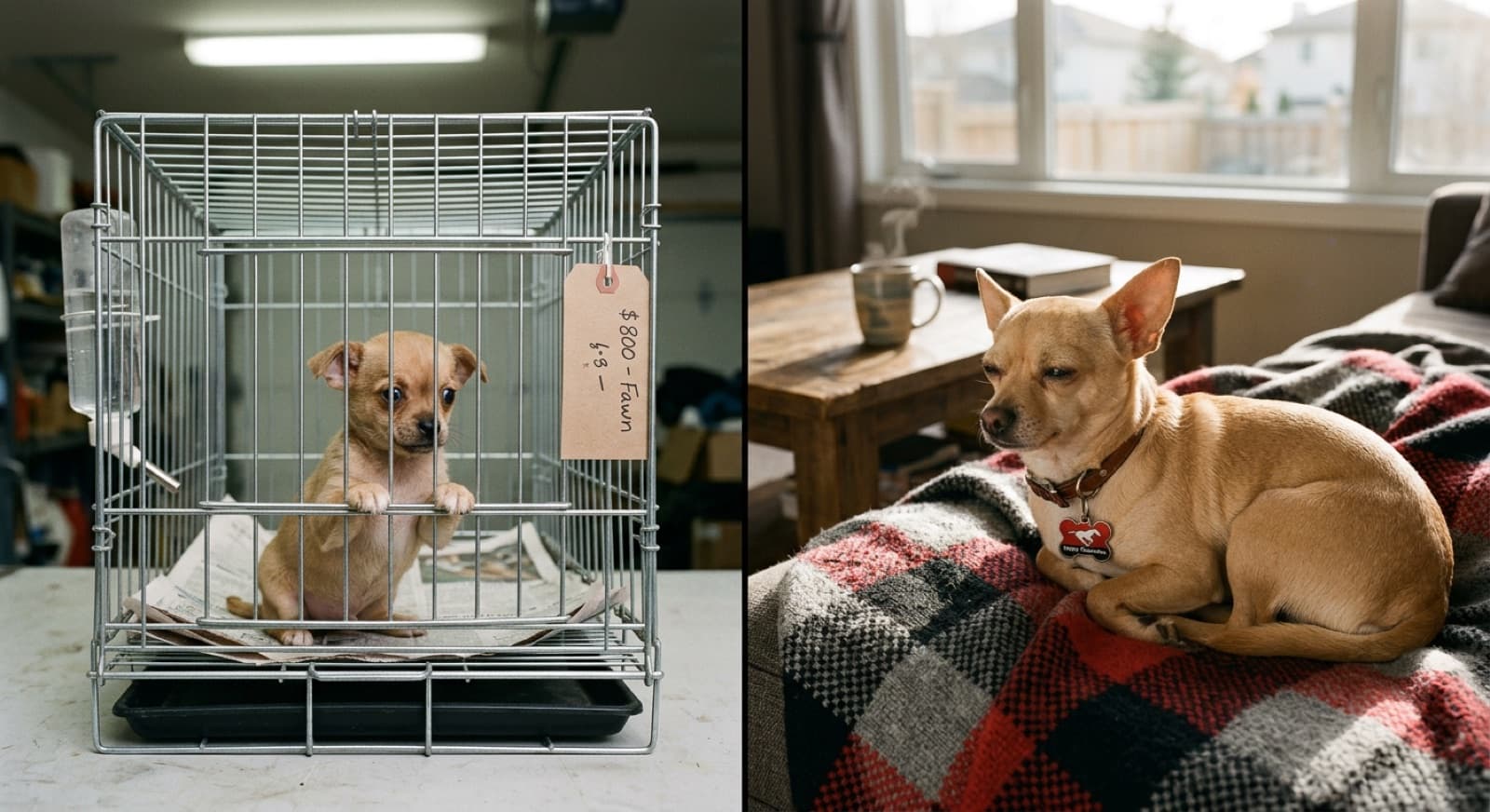
Chihuahuas are the smallest dog breed by adult weight, typically 3 to 6 pounds, with a long-lived breed average of 15 to 17 years and many dogs reaching 18 to 20. Most of that lifespan is functional, but the breed carries a defined inherited disease load that an Edmonton owner needs to plan around. Three of those conditions involve very small, fragile structures (the mouth, the knees, the trachea) that simply have less margin than larger dogs have. One involves the skull (a persistent molera and the hydrocephalus that sometimes follows). One is a paediatric emergency that any new owner of a small puppy needs to know about. One is the senior cardiac condition that shows up in most small breeds eventually.
The breed is not catastrophically unhealthy. Many Chihuahuas live long full lives with routine veterinary care and a harness. What they are is a breed where small problems escalate quickly because the dog itself is small, and where the per-procedure cost of veterinary care is disproportionately high relative to body weight. Anaesthesia on a 4-pound dog requires more monitoring, more careful drug calculation, and more specialist involvement than anaesthesia on a 40-pound dog. The result: a Chihuahua dental cleaning costs roughly what a medium-dog dental cleaning costs, and any surgical procedure carries the small-patient premium.
The American Veterinary Dental College publishes the small-breed dental disease standards your Edmonton vet uses. The Orthopedic Foundation for Animals tracks patellar luxation prevalence by breed. The American College of Veterinary Surgeons publishes tracheal stenting and orthopaedic surgical standards. The American College of Veterinary Internal Medicine governs cardiology and neurology specialty referrals. The Canadian Kennel Club publishes the Chihuahua breed standard recognising the molera as a normal trait. These specialty boards are the relevant references your Edmonton vet will work from when a case escalates.
Severe dental disease: the defining Chihuahua issue
If you adopt a Chihuahua, the single biggest ongoing health investment you will make over the dog's lifetime is dental. Most Chihuahuas develop severe periodontal disease without active management. The breed combination of a very small jaw (one of the smallest in the canine world), crowded teeth (Chihuahuas have the same 42 adult teeth as a large dog, packed into a much smaller mouth), retained deciduous puppy teeth that fail to fall out on schedule, and a genetic susceptibility to gum disease means tartar accumulates fast, gums recede, and teeth loosen earlier than in larger breeds. Many Chihuahuas need multiple extractions by age 5 to 8; some lose most of their adult teeth by 12.
Daily prevention
Daily toothbrushing with a vet-approved pet toothpaste (never human toothpaste, which contains xylitol or fluoride that harms dogs) is the single most effective prevention. Start in puppyhood if possible; even adult rescue Chihuahuas can be conditioned to tolerate brushing with patient gradual training over several weeks. Dental chews and water additives are supportive but not substitutes. Your Edmonton vet can demonstrate the technique at the first visit and recommend a brush appropriate to a tiny mouth.
Retained puppy teeth
A very common Chihuahua pattern: the puppy teeth do not fall out on schedule, and the adult canines come in alongside them. The result is double rows of teeth in a mouth already too small for one full set. Retained deciduous teeth get removed at spay or neuter surgery while the dog is already under anaesthesia (usually a small add-on charge of $100 to $300). Left in place, they trap food, accelerate periodontal disease, and worsen crowding. Ask your Edmonton vet to check at every visit through the 4 to 7 month window.
Annual professional cleaning under anaesthesia
Every adult Chihuahua needs professional dental cleaning under general anaesthesia, typically every 12 months for life starting between age 1 and 2. A routine cleaning at an Edmonton clinic runs $400 to $800 including pre-anaesthetic bloodwork, IV fluids, anaesthesia, scaling, polishing, and full-mouth dental radiographs. A cleaning with extractions runs $1,200 to $2,800 depending on how many teeth and complexity. Toy-breed anaesthesia requires careful monitoring; ask about your clinic's anaesthetic protocol for small dogs at the first visit. The American Veterinary Dental College publishes the standards your vet will follow.
Pet insurance covers dental disease treatment at most providers (extractions, periodontal surgery), but most exclude routine prophylactic cleanings. Read the dental fine print before enrolling. A Chihuahua with chronic dental disease over a 15- to 17-year lifetime can easily generate $8,000 to $15,000 in dental costs; insurance offsets the treatment side meaningfully but rarely the preventive side. Plan for the cleaning cost regardless.
Patellar luxation: the Chihuahua knee
Patellar luxation is the slipping of the kneecap out of its normal groove on the femur. Toy breeds, including Chihuahuas, have a much higher prevalence than larger breeds due to a combination of shallow grooves, ligament laxity, and limb conformation. The condition is graded 1 to 4 by an orthopaedic exam.
- Grade 1: the kneecap can be manually pushed out of place but returns on its own. Usually no clinical signs; managed conservatively.
- Grade 2: the kneecap dislocates intermittently during normal activity. The dog may skip a step or hold up the leg briefly, then resume normal gait. Surgical decision depends on frequency and severity of clinical signs.
- Grade 3: the kneecap is dislocated most of the time but can be manually returned. Usually a surgical candidate.
- Grade 4: the kneecap is permanently dislocated. Surgery is needed.
Surgical correction at an Edmonton orthopaedic specialty practice typically runs $2,000 to $3,500 per knee for a Chihuahua. The procedure deepens the groove the kneecap rides in, releases any pulling soft tissues on one side, and tightens supporting tissues on the other. Post-operative rehabilitation runs 6 to 12 weeks of strict activity restriction followed by gradual return to normal activity. For Grade 1 and many Grade 2 cases, conservative management is the right answer: lean body weight, glucosamine and omega-3 supplementation, and avoiding repetitive jumping. Many mild cases never progress to surgery.
The long-term outcome of surgical correction is good for most Chihuahuas: roughly 90 percent return to comfortable function within 12 weeks. Bilateral surgery (both knees) is often staged 6 to 12 weeks apart rather than done simultaneously, because Chihuahuas need at least one good leg during recovery. Underwater treadmill hydrotherapy at an Edmonton rehab practice helps recovery; ask your Edmonton orthopaedic specialty practice for a referral.
Hydrocephalus and the molera: the Chihuahua skull
A molera is an open fontanelle, a soft spot on top of the skull where the bones did not fully close. Most Chihuahuas are born with one. In many dogs it closes by 4 to 6 months of age; in a meaningful subset it persists for life. The Canadian Kennel Club breed standard accepts a persistent molera as a normal Chihuahua trait, particularly in apple-head dogs. By itself a molera is not dangerous, but it requires lifelong protection: the underlying brain is covered only by skin and a thin membrane in that spot.
Living with a persistent molera
Practical management is straightforward. Avoid rough handling around the head. Choose toys that cannot strike the top of the skull. Prevent falls (Chihuahuas should not jump from furniture; use ramps or step-stools). Supervise interactions with children and other dogs. Ask your Edmonton vet to palpate the skull at every visit and document size and any changes.
Hydrocephalus
Hydrocephalus is excess cerebrospinal fluid in the brain. It develops most often in apple-head Chihuahuas, often correlates with persistent molera, but does not develop in every dog with a molera. Signs include a domed dome-shaped skull, slow learning, delayed housetraining, abnormal eye movements (the eyes may appear to look down and out), seizures, head pressing, and circling. The signs often appear in puppyhood but can develop later. Diagnosis is by ultrasound through the open fontanelle in puppies and MRI in adults at a specialty practice; MRI cost at an Edmonton or Calgary specialty centre runs $2,500 to $4,500.
Treatment and prognosis
Mild cases manage with medication: corticosteroids to reduce CSF production, diuretics, and anti-seizure medications as needed. Severe cases are referred to specialty neurology for ventriculoperitoneal shunt placement, a procedure that drains excess CSF from the brain to the abdomen. Lifespan and quality of life depend heavily on severity at diagnosis. Many mildly affected dogs live normal lifespans with medication; severely affected dogs have a guarded prognosis. Reputable Edmonton rescues screen for obvious signs at intake; ask whether a dome-shaped skull has been noted and whether the dog showed any neurological signs in foster.
Puppy hypoglycaemia: the emergency every Chihuahua owner learns
Toy-breed puppies under 6 months are at real risk of hypoglycaemia (dangerously low blood sugar) because they have very small fat reserves and a high metabolic rate. Chihuahuas sit at the very small end of toy size and are at higher risk than most breeds. Triggers include missed meals, stress, mild illness, parasites, and cold exposure. The condition can progress fast from mild lethargy to collapse and seizures within an hour or two.
Recognising symptoms
Early signs: lethargy, weakness, wobbliness on the legs, glassy or unfocused eyes, cool body temperature. Later signs: collapse, tremors, seizures, unresponsiveness. If a Chihuahua puppy looks sleepy and wobbly when they were fine an hour ago, treat it as hypoglycaemia until proven otherwise.
The corn-syrup emergency protocol
Rub corn syrup or Karo syrup (or honey if those are not available) directly onto the puppy's gums. Not down the throat: aspiration is a real risk in a wobbly puppy, and pouring liquid into the mouth can cause it to go into the airway. About a teaspoon-equivalent for a small Chihuahua puppy is enough to start raising blood sugar within minutes. Then warm the puppy gently (wrap in a blanket, towel from the dryer) and get to a vet immediately. Recovery from a single episode is usually rapid, but a vet needs to identify and address the underlying cause; recurrence is common without treatment.
Prevention
Frequent small meals (4 to 5 per day under 4 months of age, gradually reducing to 3 per day by 6 months), warm sleeping spots, indoor temperature control during deep Edmonton winter cold snaps, and immediate vet visits for any signs of illness. The risk window closes by about 6 months in most pups as fat reserves and metabolic regulation mature. Have corn syrup or Karo syrup on hand for the first 6 months if you adopt a young Chihuahua puppy.
Browse adoptable Edmonton dogs
Current Edmonton-area Chihuahua and Chihuahua-mix listings from SCARS, Zoe's Animal Rescue, Edmonton Humane Society, GEARS, Hope Lives Here, AHHRB, and AARCS Edmonton fosters. Use the foster notes to flag any cough, dental, knee, or skull concerns before you apply, and budget for the first-month vet workup.
See Edmonton Adoptable Dogs →Tracheal collapse: the harness rule is not optional
Tracheal collapse is an airway condition Chihuahuas share with Yorkies, Pomeranians, and other toys. The trachea is a tube made of stacked cartilage rings; in collapse, those rings soften and flatten during the negative pressure of inhalation, partially closing the airway. The classic sign is a goose-honk cough triggered by excitement, drinking water, pulling on a leash, pressure on the throat, or cold dry air. Many cases are mild and intermittent for years; some progress to severe exercise intolerance, blue-tinged gums during episodes, or collapse.
The harness rule
Every Chihuahua wears a harness for leash attachment. Not a collar. A flat collar is fine for ID tags and licence, but the leash clips to the harness ring on the back or chest, never the collar. The breed has lifelong tracheal vulnerability and any sustained pull on a neck collar can trigger or worsen collapse. This applies from the day you adopt, before any symptoms are present. Foster homes and rescues in Edmonton generally fit Chihuahuas for a harness at intake; if yours arrives without one, fit one before the first walk.
Diagnosis and management
Diagnosis uses chest radiographs at an Edmonton general-practice clinic ($200 to $400) and, for severity grading, fluoroscopy at a specialty practice (a moving X-ray that captures the trachea during a full breathing cycle, $250 to $500). Most cases are managed medically: cough suppressants during flares, prescription anti-inflammatories for inflamed cases, strict weight control (an overweight Chihuahua collapses the trachea more readily), a harness as the absolute baseline, and avoiding cold-air exercise during deep Edmonton winter cold snaps. For dogs with severe progressive disease, surgical placement of an intraluminal tracheal stent is an option at a specialty surgical centre; cost runs $5,000 to $10,000 and the procedure is reserved for cases where medical management has failed.
Mitral valve disease: the senior Chihuahua heart
Mitral valve disease (MVD) is the most common cardiac condition in small-breed seniors and Chihuahuas are among the affected breeds. The mitral valve degenerates with age, becoming leaky; a gradually progressing heart murmur typically appears between age 7 and 10 and the condition progresses over years. Management is medical (cardiac medications like pimobendan and ACE inhibitors); the disease is not curable but well-managed dogs often live many additional years.
Annual cardiac auscultation from age 7 onwards is the standard. When a murmur is heard, the next step is an echocardiogram (a cardiac ultrasound) at an Edmonton or Calgary specialty practice; cost runs $500 to $900 and the result tells your vet what stage the disease is in and whether to start medication. The American College of Veterinary Internal Medicine publishes the staging and treatment guidelines your cardiologist follows.
For Edmonton adopters of senior Chihuahuas, ask the rescue what cardiac findings the intake exam captured. If a murmur was noted, ask about grade (1 to 6) and any subsequent workup. If no echo has been done, plan one at the first-month vet visit; baseline staging at adoption is helpful for tracking progression. Medication, once started, is usually lifelong but inexpensive: $20 to $60 per month for most senior Chihuahuas on cardiac therapy.
Eye conditions in Chihuahuas
Chihuahuas have large prominent eyes for their head size, and the breed sees several eye conditions often enough to plan for.
Corneal ulcers
The exposed eye surface area makes corneal ulcers more common than in dogs with deeper-set eyes. Triggers include minor trauma (a tree branch, a paw scratch, dust irritation), dry eye, or distichiasis (extra eyelashes growing toward the eye). Signs include squinting, tearing, redness, a cloudy area on the cornea, and rubbing at the eye. Treatment is medical (topical antibiotics, lubricant, sometimes an Elizabethan collar to prevent rubbing) for most cases; treatment at an Edmonton clinic runs $200 to $600. Untreated or deep ulcers can perforate and become emergencies.
Dry eye (keratoconjunctivitis sicca)
Reduced tear production leads to chronic eye redness, thick discharge, and corneal damage if untreated. Diagnosis is a Schirmer tear test at any Edmonton clinic. Treatment is lifelong topical immunosuppressive medication (cyclosporine ointment) with monthly cost of $20 to $40.
Lens luxation
Apple-head Chihuahuas have elevated risk of lens luxation, where the lens slips out of position and can cause glaucoma and blindness if untreated. Signs include sudden eye redness, pain, cloudiness, and squinting. This is an emergency requiring same-day veterinary care. Treatment may include emergency lens removal at a specialty veterinary ophthalmologist; the closest in Edmonton handles most cases, with referrals to Calgary or WCVM Saskatoon for complex cases. Annual eye exams from age 5 onwards catch lens luxation risk factors before crisis.
Other conditions that appear at moderate prevalence
Beyond the major conditions above, several less common but breed-relevant issues appear often enough to plan for.
Bladder stones
Calcium oxalate bladder stones appear in Chihuahuas more often than in many breeds. Signs include straining to urinate, blood in urine, frequent small voids, and house-trained dogs having accidents. Diagnosis is by urinalysis and abdominal radiographs at an Edmonton clinic. Treatment for small stones may be dietary dissolution; larger stones require surgical removal (cystotomy), running $1,800 to $3,500 at an Edmonton practice. Some dogs need lifelong prescription diet to prevent recurrence.
Idiopathic epilepsy
Idiopathic (no identifiable cause) seizures appear in Chihuahuas at moderate prevalence, often beginning between 1 and 5 years of age. Diagnosis is by exclusion; your Edmonton vet rules out hypoglycaemia, liver shunt, toxins, infections, and structural brain disease before settling on idiopathic. Treatment is lifelong anti-seizure medication (phenobarbital, levetiracetam, others) with periodic bloodwork to monitor liver function and drug levels. Well-controlled epileptic dogs often live normal lifespans.
Reverse sneezing
Reverse sneezing (paroxysmal respiration) is a sudden episode of rapid noisy inhalation that sounds alarming but is not dangerous. The dog stands still, head extended, making a loud snorting sound for 5 to 30 seconds. It is common in toy breeds including Chihuahuas. Triggers include excitement, eating or drinking too fast, or irritation at the back of the throat. Gently massaging the throat or covering the nostrils briefly often shortens the episode. Reverse sneezing does not require treatment unless episodes become frequent (more than once per week), in which case your vet rules out allergies, infections, or nasal mites.
Cold sensitivity
Chihuahuas are a single-coated breed with very low body mass, and Edmonton winters are hard on them. A coat or sweater is standard from October through April for outdoor time. At temperatures below -10C with wind chill, outdoor time should be limited to bathroom breaks. Below -25C, even bathroom breaks should be brief and boots help with paw protection from cold and road salt. Indoor temperature matters too; many Chihuahua owners keep the home slightly warmer in winter than the dog-free baseline. Cold exposure also triggers hypoglycaemia in young puppies, which is another reason to limit deep-winter outdoor time for under-6-month dogs.
Edmonton specialty veterinary access reality
Edmonton has good general-practice veterinary coverage. For routine Chihuahua care (annual physical, vaccinations, dental cleaning, basic bloodwork, minor illness, patella checks), any reputable Edmonton clinic is a fine starting point. For breed-specific work, the picture is more nuanced.
Edmonton specialty medicine includes dermatology, orthopaedic surgery, internal medicine, cardiology, soft-tissue surgery, ophthalmology, and emergency. The network is smaller than Calgary's and substantially smaller than the major-city specialty hubs in the rest of Canada. For most Chihuahua concerns, your general-practice vet refers you to a local specialty practice and the workup happens here. For the harder cases, two referral paths matter.
WCVM Saskatoon
The Western College of Veterinary Medicine at the University of Saskatchewan is the closest full veterinary teaching hospital. The drive from Edmonton is about five and a half hours each way. WCVM handles complex referrals beyond local specialty capacity: hydrocephalus shunt placement, complicated lens luxation, rare-disease workups, complex tracheal stenting, and advanced cardiac cases. The University of Alberta does not have a veterinary school, which is why Saskatoon is the closest academic referral. Your general-practice or specialty vet initiates the referral; you do not self-refer.
Calgary specialty centres
Some Edmonton Chihuahua owners drive to Calgary specialty centres for procedures with shorter wait times. The drive is about three hours each way. This pattern is more common for elective specialty surgery (patellar luxation, tracheal stenting, dental work requiring board-certified veterinary dentists, ophthalmology procedures) than for emergencies, since post-operative recovery is gentler when the dog does not travel. Ask your Edmonton specialty practice whether the case genuinely benefits from a Calgary referral or whether local capacity is fine.
Building your network in month one
The practical move when you adopt: establish a primary Edmonton vet in the first month, ask them which dental, orthopaedic, internal medicine, cardiology, and ophthalmology specialty practices they refer toy breeds to, and write the answer down. Most Chihuahuas will eventually see a board-certified veterinary dentist (the dental disease prevalence makes this very likely). Other specialty referrals are rarer, but knowing the pathway saves time when it matters. The American Animal Hospital Association publishes accreditation standards your Edmonton vet should meet.
Pet insurance for an Edmonton Chihuahua
Week-one pet insurance enrolment is the single highest-leverage health decision for any rescue Chihuahua. Every Canadian provider excludes pre-existing conditions, which means the day a vet documents anything (a heart murmur, a luxating patella, a tracheal episode, a dental issue, an abnormal skull palpation), that condition becomes a permanent exclusion on any policy enrolled afterward. The clock starts the day you adopt.
The breed-specific value math is compelling for Chihuahuas because they stack ongoing dental costs with a meaningful catastrophic-event tail:
- Lifetime dental cleanings and extractions: $8,000 to $15,000 cumulative
- Patellar luxation surgery: $2,000 to $3,500 per knee
- Hydrocephalus MRI workup and management: $2,500 to $4,500 plus ongoing medication
- Hydrocephalus shunt placement (severe cases): $5,000 to $9,000 per dog
- Tracheal stent placement (severe collapse): $5,000 to $10,000 per dog
- MVD medical management (senior cardiac): $20 to $60 per month for life once diagnosed
- Lens luxation emergency surgery: $3,000 to $5,500 per eye
- Bladder stone surgery (cystotomy): $1,800 to $3,500
- Idiopathic epilepsy lifetime medication and monitoring: $40 to $120 per month
Monthly premiums for a young healthy Chihuahua in Edmonton typically run $35 to $65 depending on deductible, reimbursement percentage, and coverage limits. Over the dog's 15- to 17-year lifetime, premiums total $7,000 to $13,000. The math works for most adopters; a single tracheal stent or hydrocephalus workup pays back years of premiums.
What to verify in a Chihuahua policy:
- Hereditary and congenital coverage: patellar luxation, hydrocephalus, lens luxation, and tracheal collapse all qualify. Verify these are explicitly covered, since some cheaper policies exclude congenital conditions entirely.
- Dental disease coverage: Chihuahuas use it heavily. Read the dental fine print closely. Routine prophylactic cleanings are usually excluded; treatment of disease (extractions, periodontal surgery) is usually covered.
- Annual or per-condition limits: prefer annual caps over per-condition caps. Chihuahuas with stacked conditions exhaust per-condition caps fast.
- Reasonable wait times: typically 14 to 30 days for accidents, longer for some specific conditions. Read the orthopaedic and dental wait fine print.
- Senior renewal: some policies become much more expensive after age 7 or stop covering certain conditions. Ask before enrolling, especially given Chihuahua longevity.
Compare three to four providers before enrolling. The American Animal Hospital Association publishes general policy-evaluation guidance that applies to Canadian providers. Your Edmonton vet and your foster contact at the rescue can both share which providers other Chihuahua adopters have used and what their claim experience has been.
Adoption health workup: what the rescue covers vs what you re-screen
Edmonton rescues do a baseline vet workup before adoption, but the depth varies by rescue and by individual dog. Understanding what is and is not covered helps you plan your first-month vet visit.
What most Edmonton rescues cover
- Physical exam by a vet at intake
- Core vaccinations (DAPP and rabies, sometimes Bordetella if boarded)
- Spay or neuter surgery
- Microchip implant and registration
- Deworming and flea/tick treatment
- Basic adult bloodwork (CBC and chemistry panel) in many cases
- Treatment of any active dental disease or skin issues at intake
- Cardiac auscultation at the intake physical
- Removal of retained puppy teeth at spay or neuter if present
What is usually NOT covered (and what to plan for)
- Cardiac echocardiogram (auscultation is done; specialty echo is not)
- Tracheal radiographs or fluoroscopy
- Orthopaedic specialty patellar grading
- MRI or ultrasound for hydrocephalus screening (skull palpation is done)
- Full thyroid panel
- Comprehensive dental radiographs without active treatment
- Ophthalmology exam for lens luxation or hereditary eye conditions
- Schirmer tear test for dry eye
Plan a first-month vet visit with your chosen Edmonton vet that establishes a baseline you can build on. The standard asks for a Chihuahua: a careful oral assessment with notes on any retained puppy teeth or early periodontal signs, a skull palpation for molera with measurement, an airway exam with notes on any cough history, cardiac auscultation, a patella check on both knees, an eye check (Schirmer test if concerns), body condition score, and frank conversation about insurance enrolment if you have not yet. Confirm the harness fit while you are there.
For senior Chihuahuas (nine years and up), the first-month workup is more involved: full senior bloodwork including urinalysis, cardiac auscultation with low threshold to refer to echo, full oral assessment with dental radiographs if needed, patella grading, an eye exam including Schirmer test, and a mobility assessment. Budget $500 to $1,200 for the senior intake workup at an Edmonton clinic.
Senior Chihuahua health after age nine
Chihuahuas are one of the longest-lived dog breeds, typically reaching 15 to 17 years and sometimes 18 to 20. Senior care begins around age 9. The trade-off for adopting an older Chihuahua is shorter overall companionship in exchange for a calmer, settled dog who has aged past the high-energy puppy years. Edmonton rescue volunteers often share that senior toy-breed adoptions are some of the most rewarding placements, partly because seniors sit in rescue longer than younger dogs despite being lower-maintenance companions.
Reasonable senior-care adjustments, all guided by your Edmonton vet:
- Biannual vet exams instead of annual
- Full annual senior bloodwork including urinalysis
- Cardiac auscultation at every visit (MVD risk rises sharply after age 7)
- Dental assessment at every visit, professional cleaning when needed
- Patella grading to track any progression
- Annual eye exam including Schirmer tear test
- Weight monitoring (overweight seniors do worse on every front, especially trachea and knees)
- Mobility aids if needed: orthopaedic bed, ramps for furniture, traction rugs on hardwood
- Climate comfort (small dogs feel Edmonton winter; a warm bed, indoor temperature control, and a coat for outdoor time matter)
Some senior Chihuahuas develop cognitive dysfunction (the dog equivalent of dementia) presenting as disorientation, changed sleep patterns, or housetraining slip-ups. Your vet can advise on management, which ranges from environmental enrichment and senior diets to specific medications.
Pet insurance becomes harder and more expensive to obtain for first-time enrolment past age eight, and some providers will not enrol senior dogs at all. If you adopt a senior Chihuahua, price-compare carefully and consider whether a dedicated savings account makes more sense than insurance for your specific case. Talk through the math with your vet at the first visit.
Frequently asked questions
Where can I find a vet for a Chihuahua near me in Edmonton?
Any reputable Edmonton general-practice clinic is a fine starting point for routine Chihuahua care. For breed-specific concerns (severe dental work, patellar luxation grading and surgery, hydrocephalus workup, paediatric hypoglycaemia management, tracheal collapse, mitral valve disease), ask your general-practice vet which Edmonton specialty practice they refer to. Edmonton has a smaller specialty network than Calgary, and difficult cases occasionally route to the Western College of Veterinary Medicine in Saskatoon, the closest full veterinary teaching hospital. The University of Alberta does not have a veterinary school, so academic referrals all go to WCVM. Establish a primary vet in month one and let them build the specialist network around your dog.
What are the main Chihuahua health issues to know before adopting?
Six conditions shape Chihuahua medical planning. First, severe dental disease (the defining Chihuahua issue, with annual cleanings essential from age 1 to 2 and extractions common by age 5). Second, patellar luxation (high toy-breed prevalence, surgical correction $2,000 to $3,500 per knee if severe). Third, hydrocephalus and molera (the open fontanelle on the skull, predominantly in apple-head Chihuahuas, with hydrocephalus developing in a subset). Fourth, puppy hypoglycaemia (under-6-month risk window with a corn-syrup emergency protocol). Fifth, tracheal collapse in older Chihuahuas (always a harness, never a collar). Sixth, mitral valve disease in seniors plus eye conditions, bladder stones, and idiopathic epilepsy. An Edmonton rescue will share whatever medical history they have; gaps get filled in by your first-month vet workup.
Why do Chihuahuas have such bad teeth?
The combination of a very small jaw, crowded teeth, retained deciduous teeth, and a genetic predisposition to periodontal disease makes severe dental disease the most common Chihuahua health problem. Chihuahuas have the same 42 adult teeth as a large dog, packed into one of the smallest mouths in the canine world. Tartar accumulates fast, gums recede, and teeth loosen earlier than in larger breeds. Most Chihuahuas need professional dental cleaning under anaesthesia annually starting at age 1 to 2, not when you notice tartar. Many require multiple extractions by age 5 to 8. Daily toothbrushing with a vet-approved pet toothpaste is the single most effective prevention. A professional cleaning under anaesthesia at an Edmonton clinic runs $400 to $800; cleanings with multiple extractions run $1,200 to $2,800. The American Veterinary Dental College publishes the small-breed dental standards your Edmonton vet uses.
What does patellar luxation surgery cost in Edmonton for a Chihuahua?
Surgical correction at an Edmonton orthopaedic specialty practice typically runs $2,000 to $3,500 per knee for a Chihuahua. Patellar luxation is the slipping of the kneecap out of its groove, and it is one of the most common orthopaedic conditions in toy breeds. Grades run 1 (occasional slipping that pops back on its own) to 4 (permanently dislocated). Grade 1 cases are usually managed conservatively: lean body weight, joint supplements with glucosamine and omega-3, and avoiding repetitive jumping. Grades 2 and 3 with clinical signs (intermittent skipping or carrying the leg) are surgical candidates. Grade 4 needs surgery. The Orthopedic Foundation for Animals registry tracks patellar luxation data by breed and Chihuahuas sit in the high-prevalence tier. Post-surgery rehabilitation runs 6 to 12 weeks; underwater treadmill hydrotherapy at an Edmonton rehab practice helps recovery.
What is a molera and is it dangerous?
A molera is an open fontanelle, the soft spot on top of a Chihuahua skull that does not fully close. Most Chihuahuas are born with one; in many dogs it closes by 4 to 6 months of age, but in a meaningful subset it persists for life. The breed standard accepts a molera as a normal Chihuahua trait. By itself, a persistent molera is not dangerous, but it does require lifelong protection: the underlying brain is covered only by skin and a thin membrane in that spot. Avoid rough handling around the head, choose toys that cannot strike the top of the skull, and prevent falls. The clinical concern is that a persistent molera correlates with elevated hydrocephalus risk; not every dog with a molera develops hydrocephalus, but the overlap is real. Discuss skull palpation findings at every Edmonton vet visit, especially for apple-head Chihuahuas.
My Chihuahua puppy is wobbly and lethargic. What do I do?
Treat it as a hypoglycaemia emergency until proven otherwise. Toy-breed puppies under 6 months have very small fat reserves and can crash blood sugar after stress, missed meals, illness, or cold exposure. Chihuahuas sit at the very small end of toy size and are at higher risk than most breeds. Signs include lethargy, wobbliness, glassy eyes, weakness, and progression to seizures or collapse. The first-aid protocol: rub corn syrup or Karo syrup directly on the gums (not down the throat, which risks aspiration). About a teaspoon-equivalent for a small Chihuahua puppy is enough to start. Then get to a vet immediately, even if the puppy seems to recover. Hypoglycaemia can recur and a vet needs to identify and treat the underlying cause (often parasites, infection, or simply too-spaced feedings in a tiny puppy). Prevent recurrence with frequent small meals (4 to 5 a day under 4 months), warm sleeping spots, and a vet-approved feeding schedule. The risk window closes by about 6 months in most pups.
Why does my older Chihuahua make a honking cough?
A goose-honk cough in an older Chihuahua almost always points to tracheal collapse, an airway condition the breed shares with Pomeranians, Yorkies, and other toys. The trachea has soft cartilage rings that flatten during inhalation, partially closing the airway. The cough is most often triggered by excitement, drinking water, pulling on a leash, or pressure on the throat. The first action is mandatory: switch immediately to a harness if you have not already, and never use a collar for leash attachment on this breed. The second action is a vet visit. Diagnosis uses chest radiographs or fluoroscopy (a moving X-ray, $250 to $500 at an Edmonton specialty practice). Most cases are managed medically with cough suppressants, weight control, and airway-supporting habits. Severe cases sometimes need a tracheal stent at a specialty surgical centre, reserved for the small subset where medical management has failed.
Should I get pet insurance for an Edmonton rescue Chihuahua?
Yes, and enrol in week one. Every Canadian provider excludes pre-existing conditions; the timeline starts the day you adopt. The breed-specific math is compelling for Chihuahuas because they stack ongoing dental costs with a meaningful catastrophic-event tail: patellar luxation surgery runs $2,000 to $3,500 per knee, hydrocephalus workup with MRI runs $2,500 to $4,500, tracheal stenting $5,000 to $10,000 in severe cases, and lifetime dental costs frequently total $8,000 to $15,000. Monthly premiums for a young healthy Chihuahua in Edmonton typically run $35 to $65 depending on deductible and reimbursement percentage. Read for two things: hereditary and congenital coverage (patellar luxation and hydrocephalus both qualify, and some cheaper policies exclude these), and explicit dental disease coverage (Chihuahuas use it heavily; routine prophylactic cleanings are usually excluded, but treatment of active disease should be covered). Verify clauses before enrolling.
What health screening should I expect the Edmonton rescue to have done?
Reputable Edmonton rescues (SCARS, Zoe's Animal Rescue, Edmonton Humane Society, GEARS, Hope Lives Here, AHHRB) perform a baseline vet workup before adoption: physical exam, core vaccinations (DAPP and rabies), spay or neuter, microchip, deworming, and basic bloodwork for adults. They also typically treat any obvious dental disease, skin issues, or active medical concerns at intake. What is usually NOT covered: full thyroid panel, cardiac echocardiogram (auscultation is done, specialty echo is not), tracheal fluoroscopy, patellar grading by an orthopaedic specialist, MRI for hydrocephalus, ophthalmology exam for lens luxation, or full dental radiographs without active treatment. Plan a first-month vet visit with your chosen Edmonton vet to establish a baseline. The standard asks: a careful oral assessment, a skull palpation for molera, a patella check on both knees, cardiac auscultation, and a frank conversation about the dog's adoption-day status so future changes can be compared against a known baseline.
How long do Chihuahuas live and what does senior care look like?
Chihuahuas are one of the longest-lived dog breeds, typically reaching 15 to 17 years and sometimes 18 to 20. Senior care begins around age 9. Reasonable adjustments include biannual vet exams instead of annual, full annual senior bloodwork including urinalysis, cardiac auscultation at every visit (mitral valve disease risk rises sharply after age 7), dental assessment at every visit with professional cleaning when needed, patella grading to track progression, annual eye exams, weight monitoring, and mobility aids like orthopaedic beds and ramps for furniture. Climate comfort matters more for senior Chihuahuas: a warm bed, indoor temperature control, and a coat for outdoor time become more important with age. Some senior Chihuahuas develop cognitive dysfunction (the dog equivalent of dementia); your vet can advise on management ranging from environmental enrichment and senior diets to specific medications. Pet insurance becomes harder to obtain for first-time enrolment past age eight, so price-compare carefully if you adopt a senior.
What about apple-head versus deer-head Chihuahuas and health risk?
The breed standard recognises only the apple-head Chihuahua (a domed skull with a defined stop between forehead and muzzle). Deer-head Chihuahuas have a longer flatter skull and a less pronounced stop, and they are common in pet populations but not in show populations. The health implications differ. Apple-head Chihuahuas have higher prevalence of molera, hydrocephalus, and lens luxation. Deer-head Chihuahuas tend to have fewer skull-related issues and slightly fewer eye problems, but they still share the breed-wide dental, patellar, and cardiac risks. Most Edmonton rescue Chihuahuas are mixes or pet-line dogs and skull type is mainly cosmetic for adoption purposes; the underlying medical planning is the same. If you adopt an apple-head with a persistent molera, ask your Edmonton vet to track skull palpation findings and watch for hydrocephalus signs (slow learning, abnormal eye movements, seizures, persistent open fontanelle past 6 months).
Related Edmonton Chihuahua guides
Edmonton Adoptable Dogs
Current Edmonton-area Chihuahua and Chihuahua-mix listings from SCARS, Zoe's, EHS, GEARS, Hope Lives Here, AHHRB, and AARCS Edmonton fosters.
Chihuahua Adoption Edmonton
Rescue sources, adoption fees, the senior-Chihuahua pattern, and what to verify before applying for a Chihuahua in Edmonton.
Chihuahua Anxiety & Reactivity Edmonton
Threshold-based work for the breed's small-dog reactivity patterns, fear management, and positive socialisation strategies in Edmonton.
Chihuahua Apartment Living Edmonton
Apartment-friendly routines for the breed, indoor exercise, potty training in a tower, and barking-management strategies for Edmonton renters.
Find your Edmonton rescue Chihuahua
Browse current Edmonton-area Chihuahua and Chihuahua-mix listings. Foster notes help you flag any cough, dental, knee, or skull concerns before you apply, and your first-month vet workup builds the baseline.
Browse All Edmonton Dogs →New dog? Start with these care guides
Everything a new adopter needs to set up a safe, happy home.