The brutal math
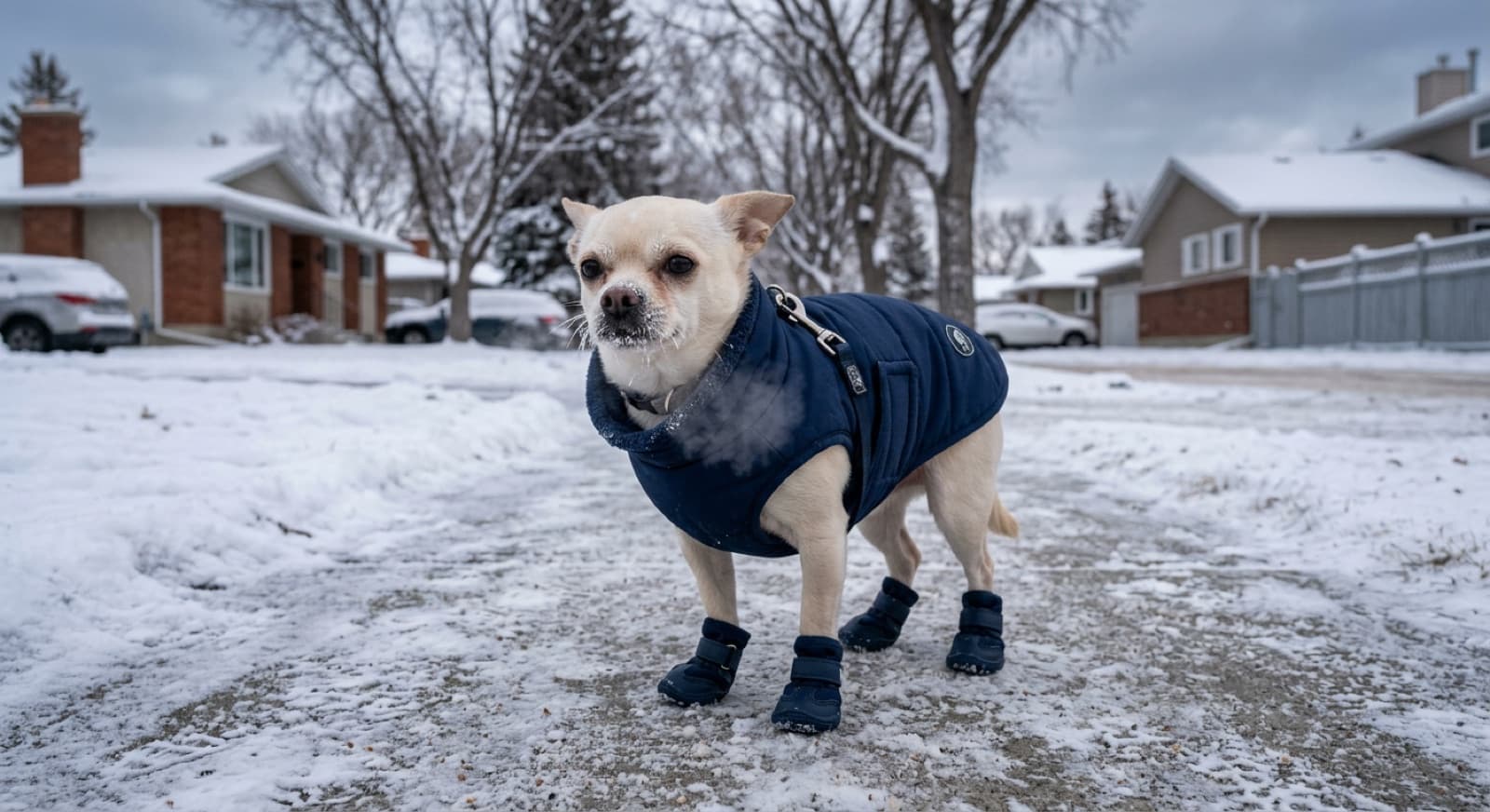
A Chihuahua weighs 3 to 6 lbs and carries only 5 to 10% body fat. The surface-area-to-volume ratio of a 4 lb dog is huge, which means heat leaves the body almost as fast as it is generated. Edmonton January averages -10 to -14C ambient with no chinook moderation, and cold snaps with wind chill regularly reach -30 to -40C. At those temperatures, frostbite on ear tips, tail tips, and paw pads can develop in under 5 minutes on a small short-coat dog. The default winter mode for an Edmonton Chihuahua is indoor potty, brief outdoor trips with a coat and booties, and most walks happening above -10C or skipped entirely.
Temperature-by-temperature walk guidelines
Use these as starting points. Watch your dog. A Chihuahua lifting one paw at a time, shivering, or trying to turn home is finished, regardless of the clock. Wind chill matters more than ambient; reference the Environment and Climate Change Canada wind chill chart for the official thresholds.
Above +5C: Most Chihuahuas are fine
Standard walks of 15 to 30 minutes work for most healthy adult Chihuahuas. A short-coat dog may still prefer a light sweater below +10C, especially in wind. Long-coat Chihuahuas are usually fine in their natural coat. This is the comfortable zone for normal park visits and longer outings.
0C to +5C: Sweater recommended, 15 to 20 minutes
A fleece sweater is enough for most short-coats at this range. Long-coats may not need a layer, but check that the belly stays warm. Walks should stay under 20 minutes. Wet snow at this temperature soaks the coat fast and chills the dog, so a water-resistant outer layer helps on slushy days.
-5C to 0C: Insulated coat required, 10 to 15 minutes
Every Chihuahua needs an insulated coat in this range, covering chest, belly, and neck. Walks should stay 10 to 15 minutes. Paw balm before going out helps protect from salt and ice. If your dog is shivering at the door even with the coat on, layer a fleece underneath.
-10C to -5C: Coat plus booties, 5 to 10 minutes
Booties become non-negotiable, both for salt protection and to slow paw freezing. Walk times shrink to 5 to 10 minutes. Many Edmonton owners switch to two or three brief potty trips per day instead of one longer walk. Watch for paw lifting, the clearest signal that the dog is in pain and ready to go home.
-20C to -10C: Very brief outdoor, 2 to 5 minutes
At this range, indoor potty is the better option for most Chihuahuas. If your dog will only go outside, keep trips to 2 to 5 minutes with full coat and booties. Carry the dog to a quick patch of grass or snow at the edge of the yard, wait, and bring them straight back in. No walks, no parks, no errands together.
Below -20C: Indoor potty only
Frostbite can develop in under 5 minutes on ears, tail tips, and paw pads. Outdoor trips are a real injury risk. Use the indoor pad. If you absolutely must go out (vet visit, emergency), carry the dog wrapped in a blanket, hold them against your body, and limit total exposure to under 2 minutes. Edmonton hits this range multiple times every winter, and the indoor option is genuinely the standard, not a workaround.
Below -35C wind chill: Genuine emergency only
Frostbite timeline drops to under 5 minutes for exposed extremities at this range. No outdoor anything unless the dog is in medical distress and needs immediate vet transport. Bundled-in-blanket transport between heated car and heated building only. Use the indoor pad without exception. Edmonton hits this multiple times most winters during a polar vortex event.
Frostbite and hypothermia: what to watch for
These are real medical emergencies in a 4 lb dog. Recognising them early is the difference between a quick warm-up and a vet visit.
Frostbite signs
- Pale, white, or blue-grey skin on ear tips, tail tips, paw pads
- Skin feels cold and stiff to the touch
- Pain or yelping when the area is touched as it warms
- Skin may turn red or dark grey as it thaws
- Blistering 24 to 48 hours after exposure
Hypothermia signs
- Shivering that does not stop after warming starts
- Weakness, wobbly walking, confusion
- Slow heart rate, slow breathing
- Pale gums, low body temperature (normal is 38 to 39C)
- In severe cases, collapse and loss of consciousness
The rewarming protocol
Get the dog indoors immediately. Wrap in a warm (NOT hot) blanket. Rewarm gradually with lukewarm cloths or lukewarm water bottles wrapped in towels placed near the body. Do NOT use hot water, hair dryers on hot, or direct heat on frostbitten tissue (this damages the partially frozen tissue further). Do NOT rub the frostbitten area. Contact a vet for any suspected frostbite beyond minor redness, and for any hypothermia suspicion at all. The Edmonton Humane Society resource library covers seasonal pet care, and Edmonton 24-hour emergency clinics handle cold-weather emergencies through the worst weather.
Hypoglycaemia: the cold-stress risk most owners miss
Cold stress increases caloric expenditure, and small dogs have minimal glycogen reserve. Extended cold exposure can drop blood sugar fast, particularly in puppies, very small adults, and seniors.
The dogs at highest risk: puppies under 6 months, adults under 4 lbs, seniors 8+ years, and dogs with hypothyroidism or other endocrine conditions. The mechanism is straightforward. Small dogs run their metabolism hot to maintain core temperature in cold, glycogen stores in a 4 lb dog are tiny, and once stores deplete, blood glucose drops faster than the body can convert other energy sources. The first sign is often subtle: a normally bouncy Chihuahua becomes quiet, then wobbly, then unresponsive. Owners sometimes mistake the early stage for “tired from the cold” and miss the window.
Hypoglycaemia signs: weakness, wobbly walking, confusion or unresponsiveness, shivering that does not stop with rewarming, glassy eyes, and in severe cases seizures or collapse.
Home protocol: rub a small amount of corn syrup, Karo syrup, honey, or glucose gel on the gums (NOT down the throat; aspiration risk if the dog is unresponsive). Keep the dog warm in a blanket. Contact a vet immediately, especially if the dog does not perk up within 10 to 15 minutes.
Prevention: smaller more frequent meals during cold weather, never extend cold exposure beyond the temperature thresholds above, watch for early signs in puppies and seniors, and keep an emergency sugar source accessible (corn syrup in a small bottle by the front door is the standard Chihuahua-owner setup). Edmonton-specific consideration: the worst polar vortex stretches sometimes last a week, and the cumulative caloric drain on a small dog over that time can require feeding adjustments.
Indoor potty setup: the Edmonton winter default
Indoor potty is the default winter mode for most Edmonton Chihuahuas from mid-November through March. The setup options range from cheapest to most natural:
- Pee pads. Disposable, $20 to $40 per month, easiest to start. Train the dog to one location with consistent reinforcement. Some dogs continue indoor potty past winter, which some owners are fine with and some are not.
- Washable pad trays. Mid-range, $40 to $80 upfront plus reusable pads. Less smell, less waste, more environmentally responsible. Daily cleaning required.
- Real-grass patches. Most natural transition, $25 to $40 per month subscription from services that ship real grass mats (FreshPatch, DoggyLawn, others). Best for dogs who resist pad training. Easiest seasonal transition back to outdoor potty in April.
- Litter-style trays. Less common but works for some dogs. Trade-off is cost and smell management.
Training arc: 2 to 3 weeks for most adults. Confine the dog to the room with the pad or grass during the training window. Take the dog to it after every meal and nap. Reward immediately on use with a small high-value treat. Gradually expand the access area as the habit holds. For winter-only training, set the system up in early November before extreme cold hits, run it through March, and transition back to outdoor potty in April when temperatures stabilise above 0C.
The mistake to avoid: skipping indoor training and trying to force outdoor potty at -30C. Outcomes include anxious dogs, accident patterns, urinary tract issues from the dog holding too long, and stressed owners. Edmonton winter is too long and too cold to fight the breed's physiology.
Coats, booties, and what actually works in Edmonton
Coat standards: the coat needs to cover chest, belly, and neck. A coat that wraps just the back leaves the underside exposed, which defeats the purpose for a dog with a thin belly coat. The fit should be snug without restricting movement. Velcro closures fail in salt and snow; zippered or buckle closures hold up better. Budget $40 to $120 for a serviceable insulated coat that lasts multiple winters.
Bootie standards: four boots, not two. Booties that fit too loose fall off in deep snow; too tight cuts circulation. Rubber-soled options with adjustable Velcro straps work for most Chihuahuas. Condition booties in fall through short indoor sessions with treats before deep cold hits, because dogs who first see booties in January often refuse them for the first week and the timing makes that a problem. Budget $25 to $60 for a serviceable set. Plan to replace at least once per winter due to wear.
Musher's wax alternative: for dogs who absolutely refuse booties, musher's wax (a thick beeswax-based barrier) applied to the pads before walks gives partial protection against salt and short cold exposure. Not as protective as booties, but real protection. $15 to $25 per tin lasts most owners a full winter.
Other winter gear that matters: a heated bed for senior dogs ($40 to $100, low-watt safe options), an absorbent door mat at the entry for paw-drying on return, a small towel by the door for quick paw wipes after salt exposure, and a stash of treats by the door to reward fast indoor returns.
Browse adoptable Chihuahuas in Edmonton
Most Edmonton Chihuahua surrenders happen between November and March when first-time small-dog owners hit winter unprepared. The dogs are in foster care and the rescues will share each dog's observed cold tolerance from the foster home.
See Available Chihuahuas →Senior Chihuahua winter: stricter limits across the board
Senior Chihuahuas (8 years and up) need a different winter playbook. Reduced thermoregulation, frequent cardiac and endocrine conditions, and mobility limitations on ice all compound. The temperature thresholds shift up roughly 5C from the adult guidelines: a senior who tolerated -10C as an adult may now need indoor potty by -5C.
Senior-specific winter protocol:
- Heated bed in a draft-free spot (low-watt safe pet bed, $40 to $100).
- Insulated coat from 0C downward, no exceptions.
- Booties from -5C downward.
- Indoor potty as default through January and February.
- No walks below -15C.
- Fall vet check to review heart, kidney, or endocrine conditions that should adjust the winter plan.
- Ice-safe outdoor surface (paving stones, traction mat) at the door for the few outdoor trips that happen.
- Slower indoor exercise rotation (short play sessions, gentle massage, food puzzles).
Joint stiffness in cold weather is real, and a senior Chihuahua slipping on Edmonton ice can fracture a hip or pelvis. The recovery from a small-dog hip fracture is often months of restricted mobility and significant vet cost. Prevention is cheaper than treatment.
Senior Chihuahuas come to Edmonton rescue specifically because first owners did not plan for winter care. If you have adopted a senior in fall, build the winter playbook before the first cold snap and consult specialty veterinary referral pathways through the Western College of Veterinary Medicine if cardiac or endocrine conditions emerge.
Frequently Asked Questions
How cold is too cold for a Chihuahua in Edmonton?
For a healthy adult Chihuahua, the working thresholds most Edmonton owners use are: above +5C is comfortable for normal walks, 0 to +5C means a sweater, -5 to 0C means an insulated coat, -10 to -5C means coat plus booties and walks shorten to 5 to 10 minutes, -20 to -10C means brief outdoor potty trips of 2 to 5 minutes only, and below -20C means indoor potty by default. Wind chill matters more than ambient. Edmonton wind chill drops effective temperature 10 to 15C below the thermometer reading, and the Environment and Climate Change Canada wind chill chart classifies -28 to -39 as frostbite possible in 10 to 30 minutes on exposed skin. For a 4 lb dog, ear tips, tail tip, and paw pads are the exposed skin. Puppies under 6 months, seniors, short-coats, and dogs with cardiac or endocrine conditions need stricter limits than the breed average.
Does a Chihuahua actually need a coat in Edmonton?
Yes, from about 0C downward for short-coats and from about -5C for long-coats. The Chihuahua coat (even on long-coat varieties) is not insulated for prairie winter. A 3 to 6 lb body loses heat fast because the surface-area-to-volume ratio is huge, which means a small dog cools rapidly in conditions a 60 lb Lab handles with no thought. The coat does not need to be expensive; it needs to cover chest, belly, and neck. A fleece sweater works for milder days; an insulated waterproof shell works below -5C. Dogs that shiver at the door even with a coat on need a fleece layer underneath. If the dog visibly braces against the cold before reaching the sidewalk, the coat is not enough.
When does a Chihuahua need booties in Edmonton?
From -10C downward, and on any heavily salted sidewalk regardless of temperature. Booties protect against two different injuries: cold-induced paw pad damage (the pads freeze faster than the rest of the body because they have less fur and direct contact with snow and ice) and chemical burn from de-icing salt on Edmonton sidewalks. Salt-cracked pads are the most common Edmonton winter small-dog injury. The protocol most owners settle on: condition the booties in fall through short indoor sessions with treats so the dog accepts them by November, use them whenever salt is on the ground or temperature drops below -10C, and check pads after every winter walk for cracks, redness, or ice balling between the toes. Musher's wax is a lower-friction alternative many small-dog owners use on dogs who refuse booties, applied to pads before walks. It is not as protective as booties but it is real protection against salt and short cold exposure.
How long does frostbite take on a Chihuahua in Edmonton?
At -25C wind chill, frostbite can develop on ear tips, tail tip, and paw pads in under 10 minutes. At -35C wind chill, the timeline shrinks to under 5 minutes for the most exposed areas. The Environment and Climate Change Canada wind chill chart classifies -28 to -39 as frostbite possible in 10 to 30 minutes for exposed human skin, which is a reasonable proxy for the unprotected extremities on a 4 lb dog. Below -40C, frostbite can develop in 5 to 10 minutes. The exposed areas to watch are ear tips (highest risk because they protrude and have less fur), tail tip, paw pads, scrotum on intact males, and nose. Signs are pale, white, or blue-grey skin, skin that feels cold and stiff, pain or yelping when the area is touched as it warms, and skin turning red or dark grey as it thaws. If you suspect frostbite, get the dog indoors, gradually rewarm with lukewarm (NOT hot) cloths, and contact a vet because partial-thickness damage may need treatment beyond rewarming.
What does indoor potty look like for an Edmonton Chihuahua?
Indoor potty is the default winter mode for most Edmonton Chihuahuas below -15C. The setup options range from pee pads (cheapest, most disposable, work but build a habit some dogs continue past winter) to washable pad trays (mid-range, reusable, less smell) to real-grass patches delivered to your door from companies like FreshPatch or DoggyLawn (most natural transition, $25 to $40 monthly subscription, easiest for dogs who resist pad training). The training arc takes 2 to 3 weeks for most adults: confine the dog to the room with the pad or grass during the training window, reward immediately when they use it, gradually expand the access area as the habit holds. For winter-only training, set the system up in early November before extreme cold hits, run it through March, and transition back to outdoor potty in April. Adopters who skip the training and try to force outdoor potty at -30C often end up with anxious dogs, accident patterns, and sometimes urinary tract issues from the dog holding too long.
Is my Chihuahua at risk of hypoglycaemia from cold stress?
Yes, particularly for puppies under 6 months, very small adults (under 4 lbs), seniors, and dogs with thyroid or other endocrine conditions. Cold stress increases caloric expenditure, and small dogs have minimal glycogen reserve, which means an extended cold exposure can drop blood sugar fast. Hypoglycaemia signs are weakness, wobbly walking, confusion or unresponsiveness, shivering that does not stop with rewarming, glassy eyes, and in severe cases seizures or collapse. The home protocol if you suspect hypoglycaemia in a Chihuahua: rub a small amount of corn syrup or Karo syrup on the gums (NOT down the throat, because there is aspiration risk in an unresponsive dog), keep the dog warm, and contact a vet immediately. Prevention: smaller more frequent meals during cold weather, never extend cold exposure beyond temperature thresholds, watch for early signs in puppies and seniors, and keep an emergency sugar source (corn syrup, honey, glucose gel) accessible.
How do senior Chihuahuas handle Edmonton winter differently?
Stricter limits across the board. Senior Chihuahuas (8 years and up) have reduced thermoregulation, often carry cardiac or endocrine conditions that reduce cold tolerance, and frequently have mobility limitations that make icy sidewalks dangerous. The temperature thresholds shift up roughly 5C from the adult guidelines: a senior who could tolerate -10C as an adult may now need indoor potty by -5C. Joint stiffness in cold weather is real, and a senior Chihuahua slipping on Edmonton ice can fracture a hip or pelvis. The Edmonton senior Chihuahua winter protocol: heated bed, insulated coat from 0C downward, booties from -5C downward, indoor potty as default through January and February, no walks below -15C, and a fall vet check to review any heart, kidney, or endocrine conditions that should adjust the winter plan. Senior Chihuahuas often come to Edmonton rescue specifically because owners did not plan for winter care; if you have adopted a senior in fall, plan the winter playbook before the first cold snap.
Can apartment Chihuahuas skip outdoor potty entirely all winter?
Many Edmonton owners do exactly this from November through March, and the dogs are healthy. The trade-offs to know: indoor potty during winter sometimes generalises to year-round indoor potty if the dog never relearns the outdoor pattern (some owners are fine with this, some prefer outdoor potty by April), the apartment setup requires daily cleaning to prevent odour and bacterial issues, and the dog still needs daily mental and physical exercise indoors which the building hallway or a covered parkade can provide. For an apartment Chihuahua specifically, indoor potty is often the responsible choice during deep winter because the alternative (forced cold exposure or holding too long) creates worse outcomes. Some Edmonton condo buildings have indoor dog relief areas or rooftop covered space; check the building amenities before assuming you need the standard street-walk routine.
What about the river valley off-leash zones in winter?
Not for Chihuahuas in deep winter. The Edmonton river-valley off-leash zones (Hawrelak south slope, Mill Creek Ravine, Whitemud Ravine) are sheltered from prairie wind and noticeably warmer than the rim parks, but the trail surface is packed snow with ice underneath, deep drifts, and salt absent (which is good for paws but bad for traction). For a 4 lb dog with short legs, deep snow becomes belly-deep within a few metres, ice patches mean broken legs and sprained ankles, and getting back to the trailhead through deep cold is a real risk if the dog gets too cold mid-walk. Edmonton Bylaw 21244 requires dogs under voice or visual control in off-leash zones; the $250 fine applies regardless of breed size. The honest read: river-valley winter walks work for medium and large dogs. For Chihuahuas, save the river valley for shoulder seasons and milder winter days above -10C, and stick to neighbourhood blocks or indoor exercise the rest of the time.
Should I just adopt a long-coat Chihuahua for Edmonton winter?
Slightly better cold tolerance, but the difference is smaller than most adopters expect. Long-coat Chihuahuas have softer longer coats that trap a bit more warm air against the body, which extends comfortable cold tolerance by maybe 3 to 5C. The basic limits still apply: insulated coat from -5C, booties from -10C, indoor potty below -20C. Long-coats also require more grooming (regular brushing to prevent matting, occasional bath, more visible shedding) which is a trade-off many adopters underestimate. The breed-specific cold sensitivity is not eliminated by coat type because the underlying surface-area-to-volume ratio and low body fat percentage are physiological, not cosmetic. Adopt the dog whose temperament matches your household, then build the winter plan around the dog. Edmonton rescues will discuss specific dogs' observed cold tolerance from foster experience.
Bottom line, can a Chihuahua live well in Edmonton?
Yes, with realistic winter planning. The breed thrives in Edmonton as long as the owner accepts that 5 months of the year operate on different rules: indoor potty default, brief bundled outings only above -15C, coat and booties from October to April, vigilance about hypoglycaemia in small adults and puppies, and the mental flexibility to skip walks on -35C wind chill days without guilt. Edmonton Chihuahuas live full happy lives with this approach. The owners who struggle are usually those who assume small-dog winter management is like big-dog winter management: it is not. The math is different because the body is smaller. If you cannot commit to indoor potty setup, coat and bootie conditioning, and routine adjustments for 5 months of the year, the breed is the wrong fit for Edmonton. If you can, adopt with confidence. Edmonton Humane Society, SCARS, Zoe's Animal Rescue, and AHHRB all list Chihuahuas regularly.
What if I adopt a Chihuahua mid-winter?
Set up the indoor potty system before the dog arrives. Most adult Chihuahuas relearn potty location in 2 to 3 weeks with consistent reinforcement, and the 3-3-3 adjustment period (3 days decompress, 3 weeks settle, 3 months bond) overlaps with the training window in a way that mostly works. The first week, confine the dog to one room with the pad or grass, take them to it after every meal and nap, and reward immediately on use. Watch for cold shock if the dog came from a warmer rescue facility: ears, paws, and tail may take 24 to 48 hours to acclimate. Do NOT take a freshly-adopted Chihuahua on a long winter walk in the first week; the combination of stress, unfamiliar environment, and cold can compound. Edmonton rescues will share the foster home's observed winter behaviour and any specific tolerances the dog has shown.
Adoptable Chihuahuas in Edmonton
Live listings from Edmonton Humane Society, SCARS, Zoe's, AHHRB, and the rest of the Edmonton rescue network.
Chihuahua Adoption Edmonton
Rescue pipelines, costs, apple-head vs deer-head, teacup warnings, small-dog adoption reality.
Chihuahua Temperament and Training: Building a Confident Dog
Why many Chihuahuas snap or bark at strangers, building confidence without force, house-training and apartment life.
Chihuahua Health Issues: Teeth, Knees, Heart
Chihuahua health issues to plan for: dental disease, slipping kneecaps, collapsing trachea, puppy low blood sugar and heart valve disease, and what to ask your vet.
New dog? Start with these care guides
Everything a new adopter needs to set up a safe, happy home.