The short answer
Edmonton Basset Hound adoption is moderate-volume rescue work. The Edmonton Humane Society, Zoe's Animal Rescue, AARCS Edmonton fosters, and AHHRB list Bassets and Basset mixes occasionally. Fees run $400 to $700. Plan a two-to-four-month wait. The four daily commitments are weekly ear cleaning, lean weight management, spine protection (no jumping on or off furniture, ramps for vehicles, no stairs in the first month), and long-line living because the nose runs the brain. Apartments are usually wrong because the deep bay carries through shared walls.
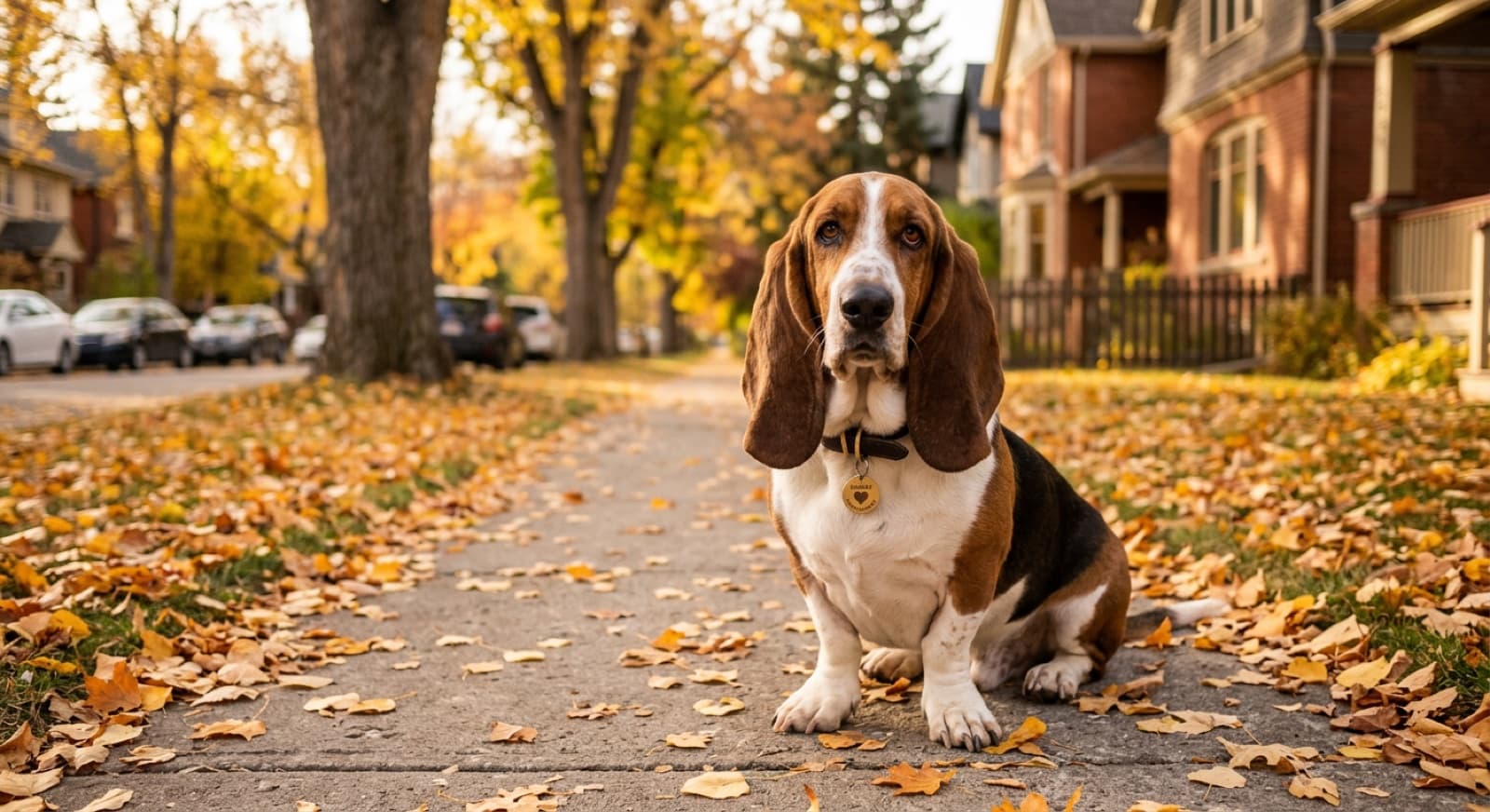
Why Bassets end up in Edmonton rescue: the five surrender patterns
Edmonton Basset surrenders follow five repeating patterns. Most surrenders happen between three and eight years of age when chronic-care realities catch up with the original household. The dog is rarely the reason. The original family’s capacity to manage breed-specific care almost always is.
- Chronic otitis externa. The long pendulous ears (12 to 14 inches and dragging in food bowls and grass) trap moisture, debris, and yeast against the ear canal. Without weekly cleaning, infection cycles start. The household tries antibiotic drops, the infection clears, the cleaning routine slips, and the cycle repeats. By year three or four the dog has scarred ear canals, chronic head shaking, and the family is exhausted. Surrender often comes after a vet recommendation for total ear canal ablation (TECA) surgery at $4,000 to $7,000 per ear.
- IVDD or spinal injury diagnosis. The long back and short legs put extreme load on the lumbar spine. Disc disease commonly presents between five and eight years old as sudden hind-end weakness, dragging back legs, or a refusal to jump. Conservative management runs $1,500 to $3,000. Surgical decompression at WCVM Saskatoon or an Edmonton specialty hospital runs $6,000 to $10,000. Families that cannot fund either surrender the dog to a rescue that will see treatment through.
- Weight management failure. Bassets are food-driven on a Beagle level and metabolise like a couch on legs. An extra 15 to 25 pounds is common and devastating for a dog already carrying a long spine on short legs. Owners who could not say no to the begging eyes (and the breed has weaponised begging eyes) often surrender when the vet warns that the dog needs to lose 20 pounds or face joint failure within a year.
- Scent escapes and recall failure. Bassets bolt after rabbit, squirrel, or food trails and ignore recall. They dig under fences, slip out of partially-open gates, and follow scents across roads. Most Edmonton Basset escape stories end at the river valley, the alley three blocks over, or someone else’s back yard. Owners who cannot accept long-line living forever sometimes surrender after the third or fourth escape.
- Owner death or move to assisted living, plus baying complaints. The breed has historically been a senior favourite, and senior owners reach a point where the dog needs a new home. The deep bay that an older homeowner tolerated also drives complaints in apartments and condos when the dog is bored, lonely, or left for the workday. Owners moving from a detached home into a condo often find the new building does not tolerate the noise.
A Basset in a household that committed to weekly ear cleaning, a fenced yard with a buried dig barrier, a measured-portion diet, ramps for furniture and vehicles, and a long-line trail routine gets ten to twelve years of one of the most affectionate, comic, household-stable companions available. The breed rewards adopters who do the daily work.
Basset Hound vs Beagle: sister scent hounds, different lifestyles
Adopters often compare Bassets and Beagles because both are family-friendly scent hounds with deep bays and food obsession. The two breeds share heritage but diverge dramatically in physical build, daily energy, and household feel. Picking the right one matters more than picking the more available one.
- Body shape. Bassets are 50 to 65 pounds on 12-to-15-inch legs, heavy-boned and slow. Beagles are 20 to 30 pounds on taller proportional legs, light-boned and quick. A Basset is a small dog in a heavy dog’s body. A Beagle is a small dog in a small dog’s body.
- Daily energy. Bassets need a 30-to-45-minute slow walk plus scent enrichment and spend the rest of the day on the couch. Beagles need 45 to 75 minutes of structured activity plus scent enrichment or they get destructive. Edmonton households with low daily activity capacity fit Bassets better than Beagles.
- Voice profile. Bassets bay deep and slow, a hound voice from horror-film soundtracks. Beagles bay higher and faster, a more melodic carry. Both carry through walls. Bassets bay less often but with more depth; Beagles bay more often with sharper edge.
- Drool factor. Bassets drool considerably. The loose lips fling drool on walls, ceilings (yes, ceilings), and visitors at neck level. Beagles drool around food but rarely sling. If a clean-walled home matters, Bassets are the wrong breed.
- Stamina. Bassets do one solid walk and then nap. Beagles do one walk, then a backyard scent session, then a training session, then more scent work, then ask what is next.
- Back issues. Bassets carry significant IVDD risk because of the long spine and short legs. Beagles carry moderate IVDD risk that escalates with weight gain. Ramps, no furniture jumping, and weight control matter for both but Bassets demand it.
- Cold tolerance. Beagles handle Edmonton winters slightly better because the longer legs lift the belly above the snow. Bassets need shorter walks below -20 C and a belly-protecting coat.
Adopters who want a calm couch hound that doubles as a comic dignity-free companion lean Basset. Adopters who want an active scent hound for daily trails and structured enrichment lean Beagle. Both reward food-motivated force-free training. Both fail at off-leash recall. Both deserve fenced yards and locked-up snacks. The choice is lifestyle fit, not better-or-worse breed.
Edmonton rescues that occasionally list Bassets and Basset mixes
Bassets appear across most Edmonton-area rescues at moderate volume. The breed is less common than Labradors, German Shepherds, or Huskies but more common than Bloodhounds or Otterhounds. Mixes outnumber purebreds in intake records. Inventory rotates slowly; set up alerts and check current Edmonton listings before fixating on a single rescue.
- Edmonton Humane Society (EHS): the city's largest shelter and the most consistent source of urban Basset intake. EHS sees Bassets primarily through chronic ear infection management surrender, IVDD diagnosis surrender, and owner-life-change transitions. The centralised facility lets adopters meet the dog in person, and the EHS behaviour team writes detailed temperament assessments. EHS publishes adoption protocols and breed-friendly placement notes on their adoption page.
- Zoe's Animal Rescue: long-running Edmonton foster-based rescue. Zoe's takes Bassets through their foster network, often from rural Alberta surrender pipelines or owner life-change situations. Zoe's foster write-ups are among the most thorough in Edmonton, which matters for matching a Basset’s actual energy level, ear condition, and back conformation to the right adopter.
- AARCS (Alberta Animal Rescue Crew Society): headquartered in Calgary with active Edmonton-area foster homes. AARCS tags each dog with its current foster location, so Edmonton-foster Bassets surface on Edmonton listings. AARCS foster notes explicitly cover kid tolerance, multi-pet compatibility, exercise capacity, ear-care history, and any documented back or joint concerns.
- Alberta Homeward Hound Rescue Bureau (AHHRB): Edmonton-area foster-based rescue. AHHRB lists every dog as Mixed Breed by policy, so Bassets and Basset-cross dogs are identified by photo and description rather than a breed tag. Always worth checking even when a search for Basset returns nothing on a breed-tag filter.
- GEARS (Greater Edmonton Animal Rescue Society) and Hope Lives Here Animal Rescue: both Edmonton-area rescues with smaller rotating inventories that occasionally list Bassets or Basset mixes. Lower frequency than the rescues above but worth following. Basset-Beagle and Basset-Lab crosses appear here more often than purebred Bassets.
- SCARS (Second Chance Animal Rescue Society): northern-Alberta intake skews to working breeds, Northern dogs, and rural surrender, so Bassets appear less often than at the other rescues. When they do list, they tend to be Basset-Coonhound or Basset-Hound mixes from rural surrender pipelines. Worth following but not the primary source.
Beyond the general rescues, the national breed-specific path runs through the Basset Hound Club of America rescue coordinator network and the Basset Hound Club of Canada referral channels. As of writing we cannot verify a current Alberta-based Basset-specific rescue with active adoptable listings. If you find one on social media, verify it through the Canada Revenue Agency charitable registry, a real Alberta address, public-facing vet references, and a current adoptable-dog list before engaging.
Common Basset Hound mixes in Edmonton rescue
Mixed Bassets outnumber purebreds in Edmonton intake records. Each combination shifts the temperament and physical profile in different directions. Foster notes are more reliable than breed-mix labels because most rescue intake records list parentage as a best guess from physical appearance.
- Basset-Beagle (Bagle): the most common Basset mix in Edmonton rescue. Lighter than a purebred Basset (35 to 50 pounds), faster, more energetic, with a louder more-frequent bay. The Beagle side adds stamina and reduces some of the back load while keeping the long ears. Bagles tend to need more daily exercise than purebred Bassets and benefit from structured scent enrichment. Often a good fit for households that want a slightly more active scent hound.
- Basset-Labrador (Basselab): larger (45 to 65 pounds), longer-legged, with retriever sociability layered on Basset scent drive. The Lab influence often softens the worst Basset traits (lower drool, better recall potential, more biddable) while keeping the affectionate household-stable temperament. Family-friendly and a good first-time-Basset option. Recall is still unreliable around scent, but the dog is usually easier to train and lift into a vehicle.
- Basset-Dachshund (Bashund): the IVDD warning combination. Both parent breeds carry significant disc disease risk, and the cross amplifies it. Bashunds tend to be smaller (25 to 40 pounds) with even more extreme long-spine short-leg proportions than a purebred Basset. Adopters need to commit to no furniture jumping, ramps everywhere, body-conscious lifting technique, and pet insurance enrolled before any pre-existing condition appears in vet records. The cross is affectionate and stubborn in equal measure.
- Basset-Hound mix (Walker Coonhound, Bluetick Coonhound, or Treeing Coonhound cross): taller (40 to 60 pounds), longer-legged, with a deeper carrying bay. The Coonhound combinations amplify the Basset scent drive and add a hound voice with serious carry. Often serious escape risks because the additional hound parent typically carries even stronger scent compulsion. Best matched to experienced hound owners with fenced acreage.
- Basset-Bloodhound: uncommon but appears occasionally. Adds significant size (60 to 90 pounds) and the deepest scent drive of any breed. Drool levels reach industrial quantities. Health-issue stacking includes both the Basset back load and the Bloodhound bloat risk. Best matched to experienced large-hound households with realistic budgets.
- Basset-Pit cross: the surprise pairing that appears in rural intake. Tends to be a medium-sized affectionate dog (45 to 65 pounds) with shortened legs, a broader head, and the scent drive intact. Foster notes are the only reliable guide because no two are alike physically.
For any Basset mix, the foster will describe the dog’s actual size, ear length, back conformation, energy level, and known behaviour patterns. That information is more reliable than any breed-mix guess. Adult appearance and behaviour tell the story; lineage labels are decoration. Ask the rescue specifically about ear-care history, back palpation results, and weight trajectory.
What an Edmonton rescue Basset actually costs
Edmonton rescue adoption fees for Bassets and Basset mixes generally land between $400 and $700, with senior Bassets often reduced to $300 to $500. The fee is a partial recovery on medical work the rescue already absorbed, not a sale price. A typical Basset adoption fee covers:
- Spay or neuter surgery. Standalone at an Edmonton vet clinic, spay or neuter for a medium-large breed runs $450 to $750.
- Core vaccinations. DAPP and rabies at minimum. Bordetella often included if the dog has been boarded.
- Microchip implant and registration. Required for licensed dogs under City of Edmonton Animal Care and Control Bylaw 21244.
- Deworming, flea, and tick treatment. Standard intake processing.
- Basic vet workup. Physical exam, ear cytology, thyroid screen for older dogs, fecal screen, and spinal palpation. Many Bassets arrive with a recent ear culture in the file.
Stacked at retail Edmonton vet pricing, those services cost $1,000 to $2,000. The rescue fee recovers part of that; donations cover the rest.
Plan an additional $300 to $500 in the first month for an Edmonton vet baseline that covers a thorough ear workup (cytology, culture if needed, a treatment plan), a baseline orthopaedic exam, and pet insurance enrolment. The American Animal Hospital Association publishes preventive-care guidelines that most accredited Edmonton vets follow for first-visit baselines.
Ongoing Basset costs run $2,500 to $4,000 per year. Food for a 50-to-65-pound Basset runs $80 to $120 per month for quality kibble at measured portions (the right volume matters more than the brand because Bassets gain weight fast on overfeeding). Routine vet care averages $500 to $1,000 per year. Pet insurance for a young adult Basset in Edmonton runs $50 to $90 per month and is worth enrolling in the first week before any pre-existing conditions appear in vet records. Compare the adoption math to a Basset puppy from a breeder at $1,500 to $3,000, which comes with none of the vet work the rescue dog already has and the same daily commitments regardless of source.
The Basset health reality and what it means for adopters
Bassets are a long-spine short-leg breed bred for slow methodical scent work, and the physical conformation creates predictable health load. A 10-to-12-year lifespan is average. The full health planning sits in the separate Basset Hound health issues guide. Headlines for adopters:
- Chronic ear infections. The long pendulous ears trap moisture and yeast. Weekly cleaning is the floor, not the ceiling. Some Bassets need ear cleaning twice a week. The American College of Veterinary Surgeons documents the surgical end of the spectrum (aural hematoma, total ear canal ablation) for owners who skipped weekly maintenance for too long.
- IVDD (intervertebral disc disease). The long back and short legs concentrate spinal load. No jumping on or off furniture, ramps for vehicles, body-supported lifting technique, and lean weight are the protective baseline. Disc disease commonly presents between five and eight years old.
- Weight management. Bassets are food-driven and metabolise slowly. An extra 15 pounds is common and catastrophic for spinal load. Measured portions, no table food, and structured exercise are non-negotiable.
- Hip and elbow dysplasia. Moderate prevalence in the breed, often clinically silent until middle age. OFA radiographs are not always in the rescue file; ask if results are available.
- Glaucoma and cherry eye. The breed carries elevated risk. Annual ophthalmic exams matter from year three onward.
- Bloat risk. Lower than in giant deep-chested breeds but present. Avoid heavy exercise within an hour of meals and use slow-feeder bowls.
- Hypothyroidism. Common and often misread as low energy or weight gain. A full thyroid panel during the first vet visit is worth requesting.
- Skin and ear allergies. Moderate prevalence. Often the root cause of recurring ear infections.
The health load is predictable, which is actually good news for adopters. A household that commits to weekly ear cleaning, lean weight, ramps and no-furniture-jumping for the back, and pet insurance from week one absorbs most of the breed health risk. Adopters who skip those four routines often end up at the surrender step the previous family reached.
Basset colour varieties in Edmonton rescue
The Canadian Kennel Club recognises a handful of Basset colour patterns. None of them carry temperament differences, and rescue selection should focus on behaviour and health rather than colour preference, but adopters often ask which colours they will see in Edmonton intake.
- Tri-colour (black, white, and tan). The classic Basset look and the most common in Edmonton rescue. Black saddle over the back, white legs and chest, tan points on the face and ears.
- Red and white (sometimes called open red and white). Less black saddle, more red and tan over the body, white legs and chest. Common in rescue, often slightly lighter framed than tri-colours.
- Lemon and white. Pale tan or cream patches on a white base. Less common, occasionally appears in Edmonton intake. The lighter colouring sometimes goes with a slightly more athletic build.
- Mahogany and white or red mantle. Deeper red colouring with a partial mantle pattern. Uncommon but appears occasionally.
- Blue Basset (dilute black). Very rare and often associated with colour-dilution alopecia, a skin condition that can require lifelong management. If a rescue lists a blue Basset, ask specifically about coat and skin condition.
For adoption priorities: temperament, ear condition, back palpation, and weight trajectory matter dramatically more than colour. The Canadian Kennel Club’s Basset Hound breed profile documents the recognised colour standard. Rescue adopters should not let colour drive a decision over fit.
Adopter readiness check: 10 questions before you apply
Honest answers to these ten questions sort the households that succeed with an Edmonton Basset from those that join the surrender pattern. If more than three answers are uncertain, the breed is probably wrong for the household right now.
- Can you commit to weekly ear cleaning, every week, for the dog’s life? A Basset without weekly ear care is a Basset heading to a chronic infection.
- Do you accept that the dog cannot be off-leash in unfenced spaces? Long-line living on river-valley trails is the standard, not a temporary phase.
- Will your fenced yard hold a determined Basset? Six-foot solid fence, buried perimeter or paving stone barrier to prevent under-digging, gate latches the dog cannot nose open.
- Can you keep food locked away? Sealed containers, locked cupboards, trash-can locks, no food on counters. Bassets countersurf with mature creativity.
- Are you ready to enforce no-furniture-jumping for back protection? Ramps for couches and vehicles, body-supported lifting technique, no stairs unsupervised in the first month.
- Can you measure food portions and resist the begging eyes? Weight management is the difference between a Basset that lives 12 years and one that develops disc disease at six.
- Does your housing tolerate the bay? Detached homes are easiest. Apartments and condos need detached neighbours or hybrid work schedules and a noise-prevention plan.
- Do you have $300 to $500 ready for first-month vet baseline? Ear workup, orthopaedic exam, insurance enrolment.
- Can you commit to pet insurance from week one? The breed carries enough predictable health load that monthly premiums earn out within the first IVDD or ear-surgery claim.
- Is everyone in the household on board with the daily commitments? Ear cleaning, food security, ramps, long-line walks. A divided household is a surrender risk.
Adopters who answer yes to all ten get one of the most affectionate, comic, household-stable companions available. Adopters who hedge on more than three are usually better served by a different breed or a different life stage.
Browse adoptable Edmonton Bassets and Basset mixes
Current Edmonton listings from EHS, Zoe's, AARCS Edmonton fosters, AHHRB, GEARS, Hope Lives Here, and SCARS in one place. Basset inventory rotates slowly; set up listing alerts so you catch them the day they appear.
See Edmonton Adoptable Dogs →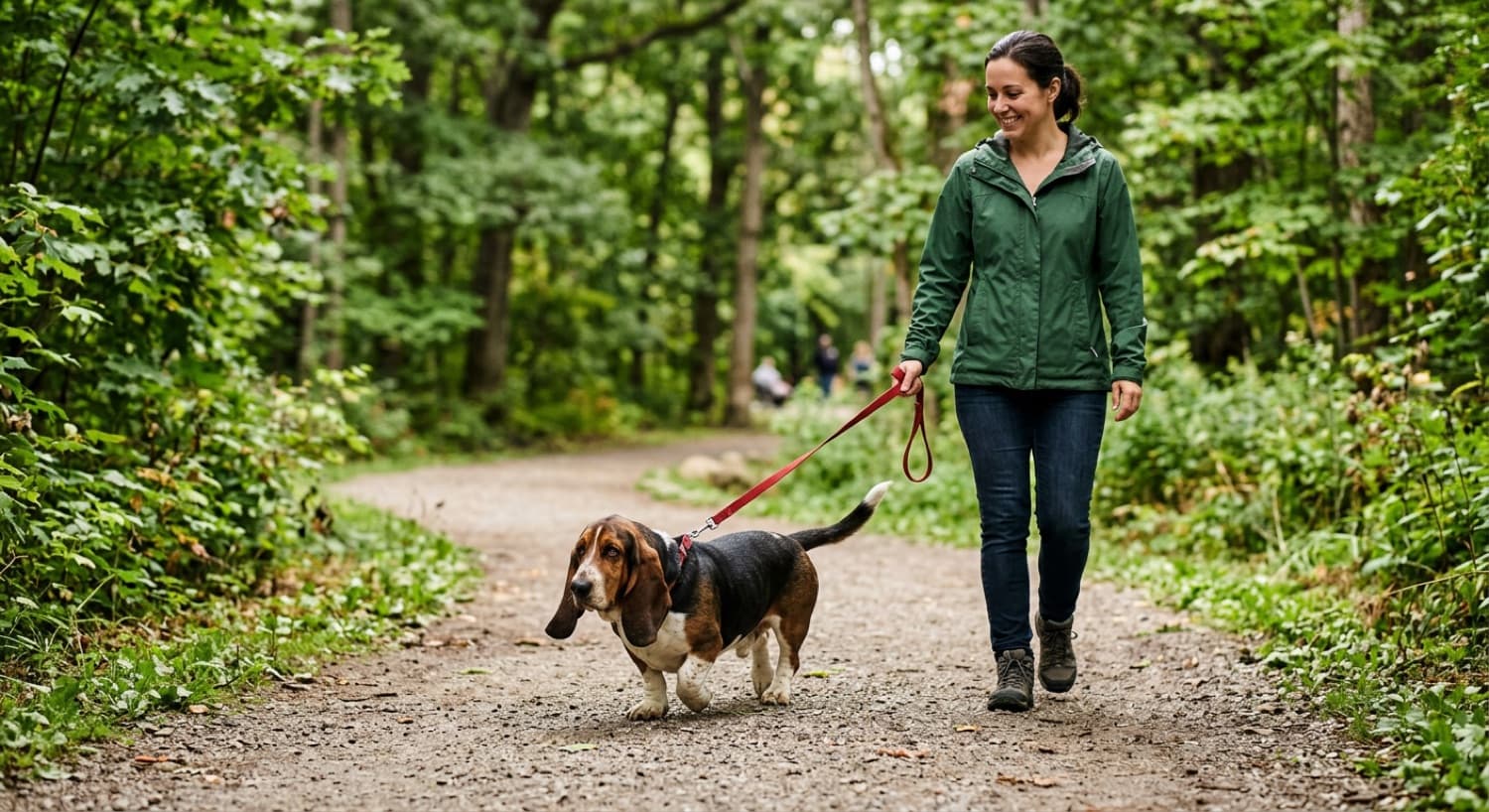
What Edmonton rescues evaluate in a Basset application
Basset applications are screened for environment readiness and chronic-care honesty. Edmonton rescues are not worried about whether you love Bassets; everyone does. They are worried about whether the household can sustain weekly ear cleaning, weight management, back protection, and scent-driven recall failure over a 10-to-12-year lifespan. The screening typically covers:
- Fenced yard quality. Six-foot solid fence is the gold standard. Three-foot picket fences will be flagged. Be specific about gate latches, perimeter dig prevention, and any known weak spots.
- Ear-care plan. The rescue will ask whether you have cleaned dog ears before, what supplies you have or plan to buy, and how often you intend to clean. Weekly is the floor.
- Back-protection setup. Ramps for couches and vehicles, body-supported lifting technique, no-stairs plan for the first month. Specificity matters.
- Food management plan. Locked cupboards, sealed containers, no food on counters, supervised meal times. Open-plan kitchens with toddler snacks at floor level will get flagged.
- Housing type and noise tolerance. Detached homes, townhouses with detached neighbours, and acreage are preferred. Apartments and shared-wall condos get harder scrutiny.
- Existing pets. Most Bassets do well with other dogs and cats raised in the home. Small pets (rabbits, guinea pigs) are usually not safe.
- Daily routine and exercise capacity. A 30-to-45-minute slow walk plus scent enrichment is the daily minimum. The rescue will ask what your typical week looks like and how you plan to handle deep winter.
- Pet insurance commitment. The rescue will ask whether you have or plan to enrol pet insurance. The breed health load makes this near-mandatory for the first IVDD or ear surgery to be financially survivable.
Specificity wins applications. “We have a six-foot board fence with a buried perimeter, plan to use a 20-foot long line on Mill Creek trails, work from home four days a week, have a ramp for the couch and a ramp for the truck, and have already chosen Trupanion for insurance” is much stronger than “we love Bassets and have a fenced yard.” The rescue is trying to determine whether the placement will survive the first chronic-care decision. A specific plan signals a realistic commitment.
How to apply prepared and apply fast
Edmonton Basset adoptions move at moderate-to-slow speed because inventory rotates slowly and the breed has a devoted fan base. Most placements go to applicants who applied within hours of the listing going live, with prepared application materials. The typical sequence:
- Set up listing alerts on every Edmonton rescue. Register on EHS, Zoe's, AARCS, AHHRB, GEARS, Hope Lives Here, and SCARS. Alerts catch listings the day they appear.
- Get application materials ready in advance. Vet contact ready if you have other pets, landlord or condo board approval in writing if you rent, fence photos and dimensions ready to attach, pet insurance research done, two non-family references with current phone numbers, and a written summary of your weekly schedule, ear-care plan, food management plan, and back-protection setup.
- Find a specific dog you want to apply for. Read the entire foster write-up: ear-care history, back palpation, weight trajectory, kid tolerance, dog tolerance, known medical history. Watch any available videos.
- Submit the application same day. Expect 30 to 45 minutes for a thorough Basset application. Same-day applications are reviewed first.
- Phone screen with the foster or shelter. The conversation that decides most placements. Be honest about your fence, schedule, ear-care commitment, and housing situation. The foster has lived with the dog and will tell you what they see.
- Meet-and-greet. At the foster’s home, the shelter, or a neutral location. Bring everyone in the household, including kids and other dogs if relevant.
- Reference and home check. Most rescues call two references. Smaller foster-based rescues sometimes do a brief home visit before approval, with special attention to fence quality, ramp setup, and food security.
- Adoption contract and fee. Standard contracts specify return-to-rescue terms if you cannot keep the dog. Read it before signing.
Realistic timeline from application to dog-in-your-house is two to six weeks for a Basset placement, longer for purebred Bassets with multiple applications. If you are not selected for a specific dog, ask the rescue to keep your application on file for similar dogs.
The first 30 days with an Edmonton rescue Basset
The 3-3-3 decompression principle (three days to start settling, three weeks to learn the routine, three months to fully bond) applies to Bassets, though most settle on the faster end because the breed defaults to affectionate and household-stable. Practical week-one priorities for an Edmonton rescue Basset:
- Baseline ear exam at an Edmonton vet. Cytology, culture if needed, a treatment plan, and a weekly cleaning supply list. Establish the routine from day one before the dog associates ear cleaning with discomfort.
- Spinal palpation and orthopaedic baseline. A baseline lets future vets compare if the dog later presents with back symptoms. Ask specifically about IVDD risk and any visible disc concerns.
- Weight check and feeding plan. Establish the dog’s current weight, the target weight, and the daily portion. Use a kitchen scale or measuring cup, not a guess. Most adult Bassets need 2 to 3 cups of quality kibble per day split into two meals depending on activity level.
- Lock down food access from day one. Move all food to locked cupboards or sealed containers, install trash-can locks, and brief the household on no-food-on-counters rules. The first countersurfing event sets a habit that takes weeks to unwind.
- Set up ramps before the dog arrives. Couch ramp, vehicle ramp, baby gate at the stairs. Bassets will jump down off a couch in the first 48 hours and risk a disc injury before they have learned the rules.
- Use a long line for every off-property walk in the first month. Even if the foster says recall is acceptable, the dog does not know the new neighbourhood scents yet. Long-line everything until trust is established.
- Check fence integrity before the first yard release. Walk the perimeter looking for dig spots, gaps, gate latch issues, and weak boards. Many Bassets test the fence within the first 48 hours.
- License the dog with the City of Edmonton. Required for any dog over six months under Animal Care and Control Bylaw 21244. Tags should be visible on the collar from day one. Details are on the City of Edmonton dogs page.
- Microchip registration verification. Confirm the chip is registered to your contact information. Most rescues handle the transfer; verify directly with the chip registry. Bassets are scent-escape risks; chip registration is the recovery lifeline.
- Pet insurance enrolment in the first week. Enrol before any pre-existing conditions appear in vet records. The Basset health load makes this nearly mandatory.
- Establish the weekly ear cleaning routine. Quiet location, treats, a vet-recommended cleaner, gauze pads or cotton balls (never Q-tips into the canal), and gentle technique. Build the routine before the dog associates the ears with stress.
- Same routes, same routine for the first two weeks. Predictability speeds settling. Save dog parks, new friends, and travel for after week three. New scent environments overwhelm decompressing Bassets.
By week three the routine is established. By month three the bond is solid and the household has adapted to weekly ear care, ramp life, and long-line walks. Use the first 90 days as a non-decision window. Most early concerns resolve with consistency and time. Detailed decompression guidance is in the first week rescue dog guide.
Frequently asked questions
Where can I adopt a Basset Hound near me in Edmonton?
Basset Hounds and Basset mixes appear in Edmonton-area rescue at moderate volume, less common than Beagles or Labradors but more common than Bloodhounds. The Edmonton Humane Society lists Bassets and Basset mixes through urban owner-surrender, often tied to chronic ear infection management failure or back injury diagnoses. Zoe's Animal Rescue takes Bassets through their foster network from rural Alberta and Edmonton-area surrender pipelines. AARCS, headquartered in Calgary, tags Edmonton-foster Bassets so they surface on Edmonton listings. AHHRB lists Basset-cross dogs under generic Mixed Breed labels, so check photos rather than breed filters. GEARS and Hope Lives Here see Bassets occasionally. Basset mixes (Bagle, Basselab, Bashund) outnumber purebred Bassets in Edmonton intake records.
Why are Basset Hounds surrendered in Edmonton?
Five patterns drive almost every Edmonton Basset surrender. Chronic otitis externa where the long ears trap moisture and yeast, the household stopped managing weekly cleaning, and the dog landed in pain. IVDD or spinal injury diagnosis where the long back and short legs caught up with the dog around five to eight years old, and the family could not fund a $6,000 to $10,000 surgery. Weight management failure where the food-driven hound packed on 15 to 25 extra pounds and the family could not reverse it. Scent escapes and recall failure where the dog kept following rabbit and food trails out of yards and across roads. Owner death or move-to-assisted-living where the older Basset suddenly had nowhere to go. The dogs themselves are typically affectionate and household-stable. The surrender pattern is the original household's capacity to manage breed-specific care.
How much does adopting a Basset Hound cost in Edmonton?
Edmonton rescue adoption fees for Bassets and Basset mixes typically run $400 to $700. Senior Bassets (around eight years and up) often have reduced fees of $300 to $500. The fee covers spay or neuter surgery, core vaccinations (DAPP and rabies), microchip registration under City of Edmonton Animal Care and Control Bylaw 21244, deworming, parasite treatment, and a basic vet workup. Bassets often arrive with a recent ear culture, a thyroid panel, and a spinal palpation note in the medical file. Beyond the adoption fee, plan a first-month vet baseline of $300 to $500 covering a thorough ear workup at an Edmonton vet, a baseline orthopaedic exam, and pet insurance enrolment. Ongoing annual cost averages $2,500 to $4,000 with food, routine vet care, ear-cleaning supplies, and insurance.
What is the difference between a Basset Hound and a Beagle?
They are sister scent hounds with very different physical and lifestyle profiles. A Basset is heavier (50 to 65 lb), lower (around 12 to 15 inches at the shoulder), and built for slow methodical trailing. A Beagle is smaller (20 to 30 lb), taller (13 to 15 inches but on long legs), and built for energetic group hunting. Bassets are slower, lower-stamina, and tend toward couch-potato household behaviour outside their daily walk. Beagles are higher-energy, more vocal at the kid-scaring melodic level, and need more daily activity. Both carry heavy scent drive and unreliable recall. Both have long ears that need cleaning. Bassets drool considerably more, have more back issues, and chew through joint medications earlier in life because of the long-spine short-leg conformation.
Are Basset Hounds good apartment dogs in Edmonton?
Sometimes yes, often no. The body size (50 to 65 lb) fits apartments physically, and Bassets are lower-energy than most breeds. The two issues are the bay and the drool. A Basset alone for a workday will bay in long carrying howls that pierce shared walls, and the deep hound voice carries further than most condo board noise clauses tolerate. The drool sprays on walls, floors, and visitors at neck level. Apartments with detached neighbours, top-floor units, or hybrid work schedules can work. Open-plan condos with shared walls and full-time on-site work usually do not. Some Edmonton rescues will decline apartment Basset applications outright; others will approve with documented separation-anxiety prevention plans and neighbour buy-in.
Can Basset Hounds be off-leash in Edmonton?
Rarely safely. A Basset on a scent enters tunnel-vision mode and follows the trail across roads, out of off-leash parks, and through fence lines that hold any other breed. The dog is slower than a Beagle but just as committed to the trail, and the slow pace means it can be a kilometre away before you catch up. Most experienced Basset owners in Edmonton use a long line (15 to 30 feet) on Mill Creek Ravine, Whitemud Park, or Hawrelak trails, and a secure six-foot fenced yard at home. Off-leash works only in fully fenced dog parks where the perimeter is dog-proof. Even then, some Bassets will refuse to come when called and need to be carried out, which at 60 pounds is a workout. Plan for long-line living from day one.
What are the most common Basset Hound mixes in Edmonton rescue?
Mixes outnumber purebreds in Edmonton Basset intake. The most common combinations: Basset-Beagle (sometimes called Bagle, lighter and faster than a purebred Basset with louder bay), Basset-Labrador (sometimes called Basselab, larger 45 to 65 lb with retriever sociability and Basset scent drive), Basset-Dachshund (sometimes called Bashund, even longer back with amplified IVDD risk), Basset-Hound mix (Walker, Bluetick, or Treeing Coonhound parentage with deeper bay and longer leg). Most rescue intake records list mixed Bassets without confirmed parentage. The foster will describe size, energy, ear length, and back conformation more reliably than any breed-mix label. Adult appearance and behaviour tell you more than a guess at lineage.
How do Basset Hounds handle Edmonton winters?
Reasonably well, with planning. The short dense coat insulates against cold better than short-coated breeds like Vizslas or Boxers, but the low body and short legs create unique winter challenges. Belly-deep snow tires Bassets fast and chills the belly directly. The long ears can frostbite at the tip in deep cold. Salt accumulates in the paw fur. Most Edmonton Basset owners shorten winter walks to 20 to 30 minutes on cleared paths, use a belly-protecting coat in deep wind chill below -20 C, dry the ears after every walk, and rinse paws to clear salt. Indoor scent enrichment matters more in winter because a bored Basset is a vocal Basset. Snuffle mats, scatter feeding, and short scent games burn the mental energy a long winter walk cannot.
How long do Bassets wait in Edmonton rescue?
Two to six weeks is a realistic average for purebred Bassets, longer for Basset mixes. The breed has a small but devoted fan base that watches Edmonton listings closely. Young adult purebred Bassets (two to four years) place within one to three weeks. Senior Bassets (eight years and up) wait longer despite often being the easiest to live with. Bassets with flagged medical concerns (recent IVDD diagnosis, chronic ear infections in active treatment, weight management needs) wait the longest and are best matched to experienced Basset homes. Basset mixes from the pandemic-puppy surrender wave (2022 and later) list more frequently than they did before. Same-day applications win most placements.
Should I adopt a Basset Hound puppy or an adult?
For most Edmonton households, an adult Basset is dramatically easier. Basset puppy adolescence runs roughly six to eighteen months and includes house-training, ear-care routine learning, scent-recall failures, and the chewing-through-household phase that food-driven hounds excel at. An adult Basset has settled temperament, established household manners, documented medical history, and lower adoption fees. Senior Bassets (eight years and up) are often the most affectionate companions available with the trade-off that ear, ortho, and dental work may be more immediate. If you specifically want a puppy and have budget for a year of intense training plus ear-care habit formation, a Basset puppy can work; for most adopters, a four-to-seven-year-old rescue Basset is the sweet spot.
Is there an Alberta-based Basset Hound rescue?
As of writing we cannot verify a current Alberta-based Basset-specific rescue with active adoptable listings. The Basset Hound Club of America runs a rescue coordinator network that occasionally helps coordinate Canadian placements, and the Basset Hound Club of Canada maintains breed-club referral channels. Most Edmonton Basset adopters find their dog through the general Edmonton rescues (EHS, Zoe's, AARCS Edmonton fosters, AHHRB, GEARS, Hope Lives Here, SCARS). If you see a Basset-specific rescue name on social media, verify it through the Canada Revenue Agency charitable registry, a real Alberta address, public-facing vet references, and a current adoptable-dog list before sending money or filling out an application.
Related Edmonton Basset Hound guides
Edmonton Adoptable Dogs
Current Edmonton-area Basset, Basset-mix, and scent-hound listings from EHS, Zoe's, AARCS Edmonton fosters, AHHRB, GEARS, Hope Lives Here, and SCARS.
Basset Hound Health Issues: Back, Ears, Bloat
Basset Hound health issues to plan for: back disease (IVDD), weight, ear infections, glaucoma and bloat, and what to ask your vet in your first month.
Basset Hound Recall & Scent Drive Edmonton
The hunting heritage that makes Bassets unreliable off-leash, fence-proofing for Edmonton yards, long-line training, river-valley trail management, and what to do when a Basset bolts on a scent.
Basset Hound Ear Care Edmonton
The weekly cleaning routine that prevents chronic otitis, supplies and technique, what infection looks like, when to escalate to a vet, and the surgical end of the spectrum when weekly care slipped for too long.
Find your Edmonton rescue Basset
Browse current Edmonton-area Basset and Basset-mix listings. Inventory rotates slowly; alerts and same-day applications win.
Browse All Edmonton Dogs →New dog? Start with these care guides
Everything a new adopter needs to set up a safe, happy home.