The short answer
The Corgi's long spine on short legs makes intervertebral disc disease (IVDD) the breed-defining risk, but you have real influence over it. The four levers that matter most: keep the dog lean (excess weight is the biggest controllable factor), limit high-impact spinal movement (ramps for furniture and the car, gates on stairs, a no-jumping rule), lift and support the back correctly, and give floors good traction. Learn the early signs of a disc episode, because sudden hind-leg weakness or paralysis is a true emergency where hours matter. If a disc does go, strict crate rest or prompt surgery, followed by rehab, gives most Corgis a good outcome. For the medical detail, see the Corgi health guide.
Why the Corgi back is vulnerable
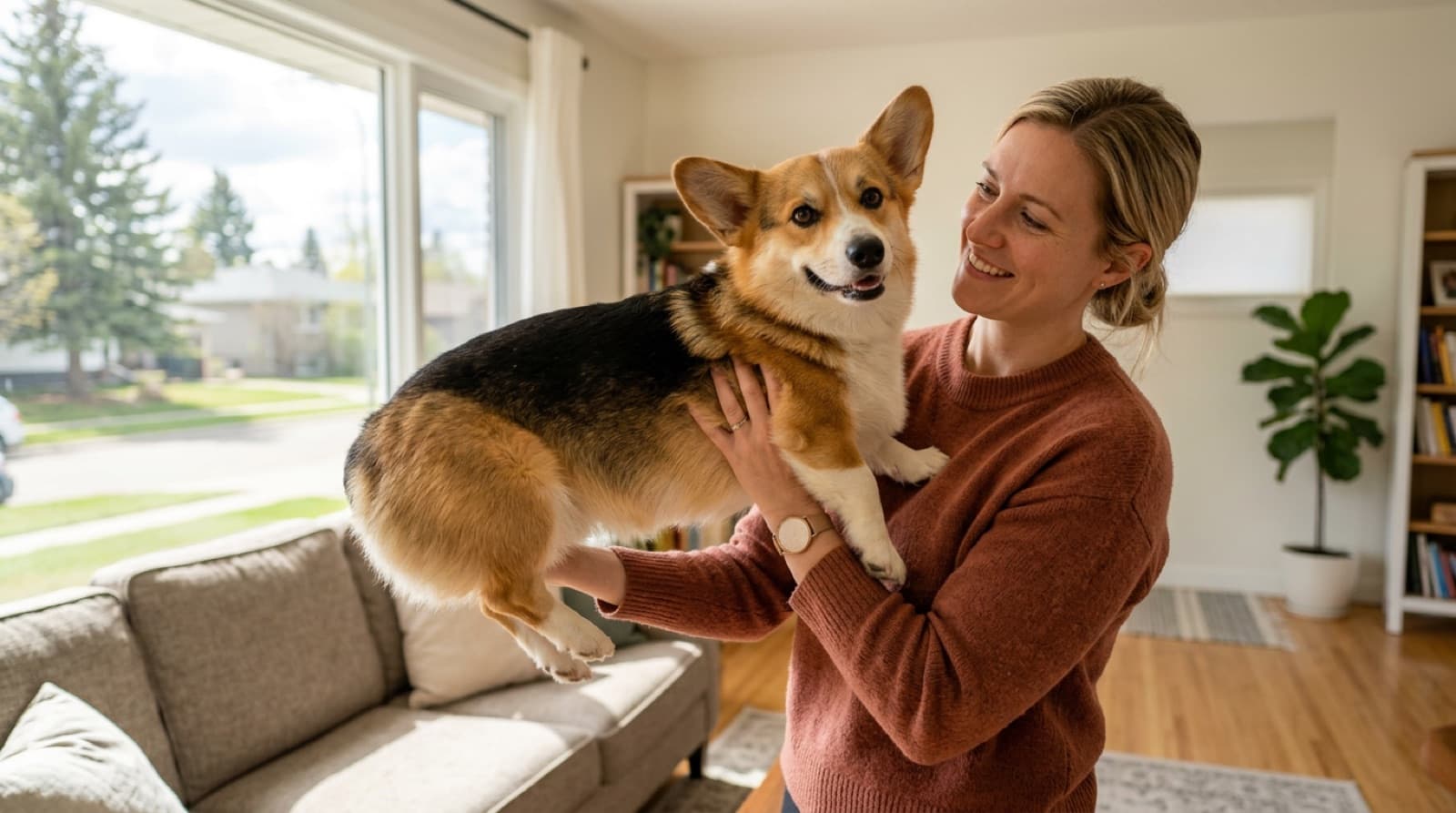
The Corgi is a chondrodysplastic (dwarf) breed: a normal-length spine carried on short legs. That conformation is the whole reason back protection matters more for a Corgi than for a square-built dog. The long span of the spine gives more discs the chance to degenerate and more mechanical leverage when one fails, and the dwarf cartilage means the cushioning discs tend to calcify and harden early in life, making a sudden forceful herniation more likely.
The encouraging part is that a large share of the risk runs through things you control day to day. Genetics and conformation set the stage, but body weight, the impact movements you allow, how you lift and support the dog, and the footing under its feet all shape whether and how badly a disc episode happens. This guide is the practical playbook for those controllable factors. For the medical picture (diagnosis, surgery, degenerative myelopathy, and the rest of the breed health profile), read the companion Corgi health issues guide.
Lever one: keep the dog lean
Weight is the foundation of back protection, full stop. Every extra pound increases the load and leverage through the long spine, raising both the likelihood and the severity of a disc episode, and Corgis are notoriously food-motivated and easy to overfeed. The thick double coat hides the body, so owners routinely do not realise their dog has crept overweight until a vet points it out.
The practical routine is simple and unglamorous: ask your Edmonton vet for a target body condition score and how to assess it by feel, measure every meal with a cup or scale rather than eyeballing, count treats inside the daily calorie total (use part of the dog's own kibble for training), skip table scraps, and weigh the dog on a regular schedule. Watch winter especially, when Edmonton cold cuts activity but appetite holds. If you do only one thing for your Corgi's back, keep it lean.
The American Animal Hospital Association publishes weight-management guidance that frames the conversation, but your own vet's hands-on assessment is what sets the target for your individual dog.
Lever two: limit high-impact movement
The everyday movements that load a long dwarf spine worst are the explosive ones: jumping on and off the couch and bed, leaping in and out of the car, and repeated stair use, plus hard twisting play. None of these are catastrophic in isolation, but over years they add up, and any one of them can be the trigger for a herniation. The fix is to engineer them out of daily life rather than relying on willpower.
A Corgi-friendly home setup:
- Ramps or pet steps to any furniture the dog is allowed on, and a ramp for the car. Train the dog to use them and reward it.
- Baby gates to block staircases when the dog is unsupervised, so it cannot bolt up or down stairs at speed.
- A no-jumping rule taught and reinforced, so the dog learns to wait to be lifted or to use the ramp rather than launching.
- Lower-impact play: swap repetitive high-twist fetch and rough wrestling for sniffing games, gentle tug at body level, and flat-ground exercise.
These changes feel fussy for a week and then become invisible habit. They are some of the cheapest insurance you can buy against a five-figure surgery.
Levers three and four: safe lifting and good traction
Lift to keep the spine level
How you pick a Corgi up matters. Always support the body in two places: one hand or arm under the chest, the other under the hindquarters, so the spine stays level and the back never dangles. Never lift a Corgi by the front legs, by the scruff, or with the hind end hanging, all of which strain the back. Teach children and visitors the same method, or have them leave lifting to you. A supportive harness with a handle makes assisted lifts easier for an older or recovering dog.
Give floors traction
Slippery floors are an underrated spinal hazard. A Corgi scrabbling for grip on hardwood or tile, or landing hard on a slick surface, can tweak its back, and the splayed-leg slipping is bad for the joints too. Lay down runners and rugs on the routes the dog uses most, keep the paw fur trimmed between the pads for grip, and discourage skidding sprints indoors.
Finally, always walk on a harness, not a neck collar, so leash pressure goes through the chest rather than the neck and spine. These small mechanical choices, repeated thousands of times over a dog's life, add up to real protection.
Browse adoptable Edmonton Corgis
Current Edmonton Corgi and Corgi-mix listings from SCARS, Zoe's, EHS, GEARS, Hope Lives Here, AHHRB, and AARCS Edmonton fosters. Set up the ramps, gates, and traction before your new Corgi comes home, and the back-protection routine is in place from day one.
See Available Corgis →Recognising a disc episode early
Acting fast on a disc episode genuinely changes the outcome, so every Corgi owner should know the signs. They run from subtle pain to clear emergency:
- Early or mild (pain): reluctance to move, a hunched or roached back, shivering or trembling, yelping or flinching when touched or lifted, suddenly refusing stairs or furniture, a stiff careful gait, a withdrawn mood or reduced appetite.
- Serious (neurological): wobbliness, a back paw that scuffs, drags, or knuckles over, hind-end weakness, or inability to stand.
- Emergency: hind-limb paralysis, or a dog that cannot urinate. This is an immediate emergency-vet trip, not a wait-and-see, because the window to preserve function is measured in hours.
The safe default with any back pain in a Corgi is to confine the dog to prevent further movement and call your vet promptly. Treating early pain seriously can stop a mild episode from becoming a severe one.
If a disc goes: recovery and rehab
Conservative management and strict crate rest
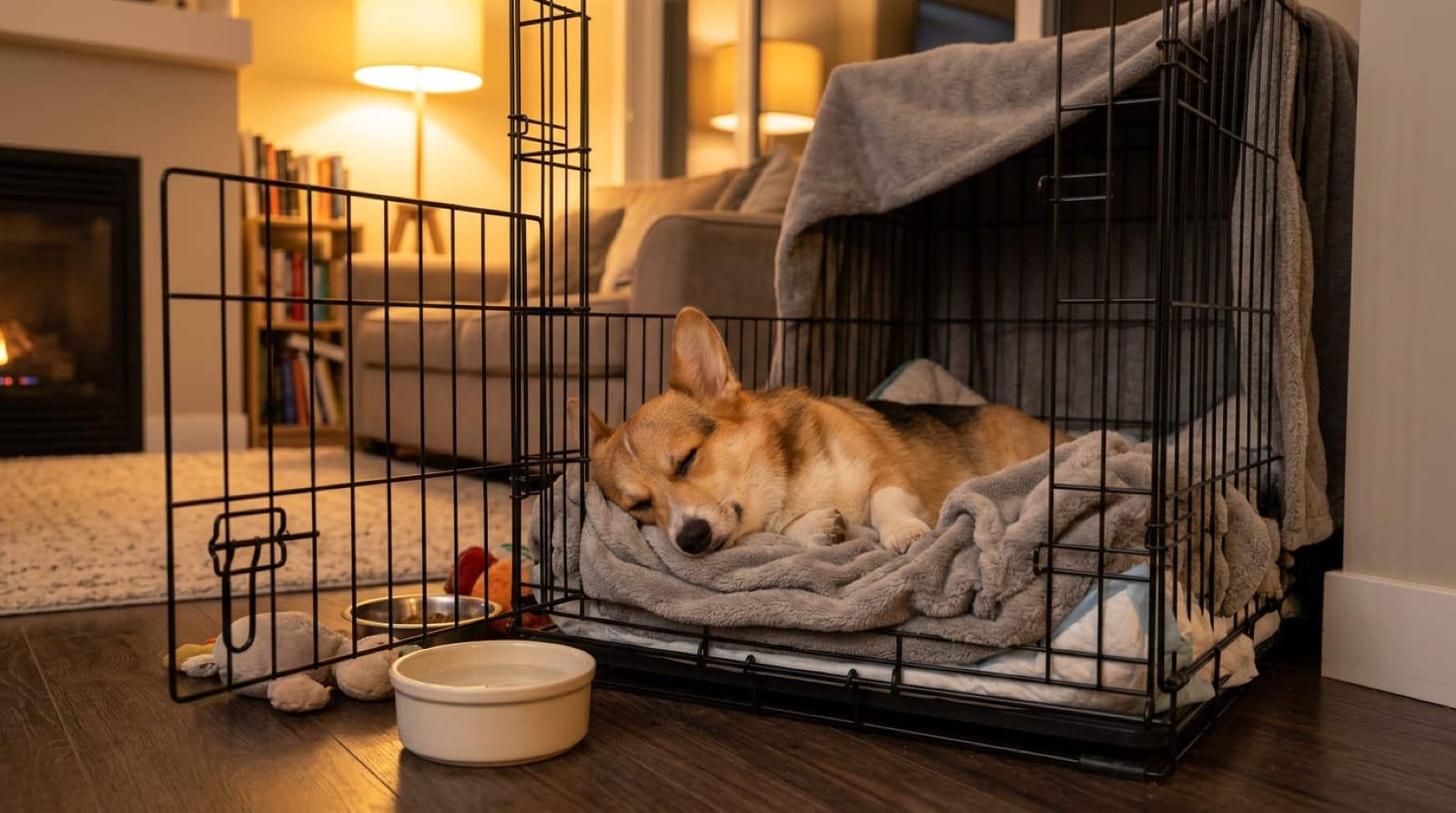
For pain-only or milder cases, vets often prescribe conservative management: strict crate rest for several weeks (your vet sets the duration) plus pain relief and anti-inflammatory medication. Strict means genuinely confined to a crate or small pen, leashed bathroom breaks only, no roaming, stairs, jumping, or play. This is harder than it sounds because the dog feels better long before the disc heals, and cutting the rest short is a leading cause of relapse. The discipline of completing the full rest is what gives conservative management its best chance.
Surgery
For dogs with significant or worsening neurological deficits, prompt surgical decompression at a specialty practice removes the material pressing on the spinal cord. Outcomes are often very good when surgery happens quickly, especially while the dog still has deep pain sensation. Some Edmonton owners travel to Calgary specialty centres or the WCVM in Saskatoon for MRI and surgery; the medical guide covers the cost picture in detail.
Rehabilitation and recurrence prevention
Recovery from either path usually includes rehabilitation to rebuild strength and coordination, guided by your vet or a canine rehab service. And because disc disease can recur at other sites, the prevention playbook is not a one-time fix but a lifelong routine: stay lean, keep the ramps and gates, lift safely, hold the traction, and watch for early signs. A Corgi that recovers from one episode and then goes back to jumping off the couch is a Corgi at high risk of the next one.
Frequently asked questions
Where can I find help protecting my Corgi's back near me in Edmonton?
Start with your general-practice Edmonton vet, who assesses spinal and orthopaedic health, sets a target body weight, and can refer to canine rehabilitation services for conditioning, weight loss support, and post-injury recovery. For an acute disc episode with neurological signs, your vet refers to a board-certified neurologist or surgeon, and some Edmonton owners travel to Calgary specialty centres or the Western College of Veterinary Medicine (WCVM) in Saskatoon for MRI and spinal surgery. The most useful thing you can do before any problem arises is build the prevention routine described here and keep an after-hours emergency plan on the fridge, because in a severe disc episode the window to preserve function is measured in hours.
What are the early signs of a back problem in a Corgi?
Catching a disc episode early changes the outcome, so learn the subtle signs. Early or mild signs include a reluctance to move, a hunched or roached back, shivering or trembling, yelping or flinching when picked up or touched along the spine, suddenly refusing stairs or furniture the dog used to manage, a stiff or careful gait, and reduced appetite or a withdrawn mood from pain. More serious signs are neurological: wobbliness, a back paw that scuffs, drags, or knuckles over, weakness in the hind end, or an inability to stand or use the back legs. Any sign of hind-limb weakness or paralysis, or a dog that cannot urinate, is an immediate emergency. When in doubt, treat back pain in a Corgi as a reason to rest the dog and call your vet rather than wait and see.
Should Corgis use stairs or jump on and off furniture?
Minimise both. The repeated impact and twisting of jumping on and off couches, beds, and in and out of vehicles, plus the strain of stairs, load a long dwarf spine in exactly the way it is built poorly to handle, and these everyday movements are a common trigger for disc episodes. You do not have to wrap the dog in cotton wool, but the sensible defaults are: a ramp or pet steps to any furniture the dog is allowed on, a ramp for the car, baby gates to block staircases when unsupervised, and a no-jumping rule that you train and reinforce. Lifting the dog for stairs or teaching it to wait for the ramp becomes second nature quickly. These are cheap changes that meaningfully lower lifetime disc risk.
How strict does crate rest need to be for a Corgi disc episode?
Very strict, and this is where many recoveries are won or lost. When a vet prescribes conservative management for a disc episode, strict crate rest for several weeks (your vet sets the exact duration) means genuinely confined: a crate or small pen, leashed bathroom breaks only, no free roaming, no stairs, no jumping, no play. The goal is to let the inflamed disc and spinal cord settle without further movement, and cutting the rest short because the dog seems better is one of the most common causes of relapse, because the dog feels improved long before the disc has healed. It is hard to confine a dog that wants to move, but the discipline of full crate rest, combined with the medications your vet prescribes, is what gives conservative management its best chance.
Do harnesses or back braces help a Corgi's spine?
A harness helps in one clear way: always walk a Corgi on a harness rather than a neck collar, so leash pressure goes through the chest and shoulders instead of the neck and spine. For everyday life that is the main gear change worth making. Supportive harnesses with a handle are also useful for helping an older or recovering dog up steps or into a car without straining the back. Back braces are sometimes used as part of a veterinary recovery plan, but they are not a general prevention tool and should only be used on a vet's recommendation for a specific situation. The bigger levers by far are weight, limiting high-impact movement, safe lifting, and floor traction, not a brace.
Can a Corgi recover from IVDD and walk again?
Often, yes, especially with prompt treatment, though outcomes depend on the severity and how quickly care happens. Dogs with pain only or mild signs frequently recover well with strict crate rest and medication. Dogs with significant neurological deficits often do well with prompt surgical decompression, and the presence of deep pain sensation at the time of treatment is an important positive sign. Recovery usually includes a period of rehabilitation. Even dogs left with some permanent deficit can have an excellent quality of life with mobility aids like carts and supportive harnesses. The two factors most within your control are recognising an episode early and acting fast, and following the recovery plan (especially crate rest) to the letter. Your vet and, where needed, a veterinary neurologist guide the realistic outlook for your individual dog.
How do I stop my Corgi gaining weight over an Edmonton winter?
Winter is the Corgi weight trap: deep cold and ice cut outdoor activity while a food-motivated dog's appetite does not drop, and every extra pound loads the back. The fixes are practical. Keep meals measured and resist adding food just because the dog seems hungry. Move exercise indoors on bitter days: hallway fetch, stairs are out so use flat-ground games, food puzzles and snuffle mats for mental work, and short, safe walks with good traction when conditions allow. Count treats inside the daily calorie budget and use part of the dog's kibble for training. Weigh the dog regularly through the winter rather than discovering the gain in spring. Your Edmonton vet can set a target body condition and help you adjust portions for a less active season.
Related Edmonton Corgi guides
Corgi Health Issues Edmonton
The full medical picture: IVDD, degenerative myelopathy and the SOD1 test, hips, eyes, von Willebrand disease, and obesity.
Corgi Adoption Edmonton
Rescue sources, real costs, Pembroke vs Cardigan, the mini-Corgi warning, common mixes, and the shedding and herding reality.
Dachshund IVDD Prevention Edmonton
The other long-backed dwarf breed, with a closely related disc-disease prevention playbook.
Edmonton Adoptable Dogs
Current Edmonton-area Corgi and Corgi-mix listings from local rescues and fosters.
Find your Edmonton rescue Corgi
Browse current Edmonton-area Corgi and Corgi-mix listings. Set up the ramps, gates, and floor traction before your new Corgi arrives, and the back-protection routine that keeps the breed sound is in place from day one.
Browse All Edmonton Dogs →New dog? Start with these care guides
Everything a new adopter needs to set up a safe, happy home.