The short answer
For large breeds (50 to 90 lbs), current Edmonton vet guidance recommends spay/neuter at 12 to 18 months. For giant breeds (over 90 lbs), wait until 18 to 24 months. Small dogs under 20 lbs are generally fine at 6 months. The shift is driven by UC Davis research (Hart et al., 2020) showing early neuter raises the risk of cruciate ligament tears, hip dysplasia, and several cancers in some breeds, especially Golden Retrievers, Labradors, German Shepherds, Rottweilers, and Great Danes. Females face a trade-off: spaying before first heat protects against mammary cancer but means earlier orthopedic risk. Talk to your Edmonton vet about your specific dog. Important caveat: most Edmonton rescues require spay/neuter before adoption regardless of age, so this timing flexibility usually only applies to puppies from breeders or breed-specific rescues.
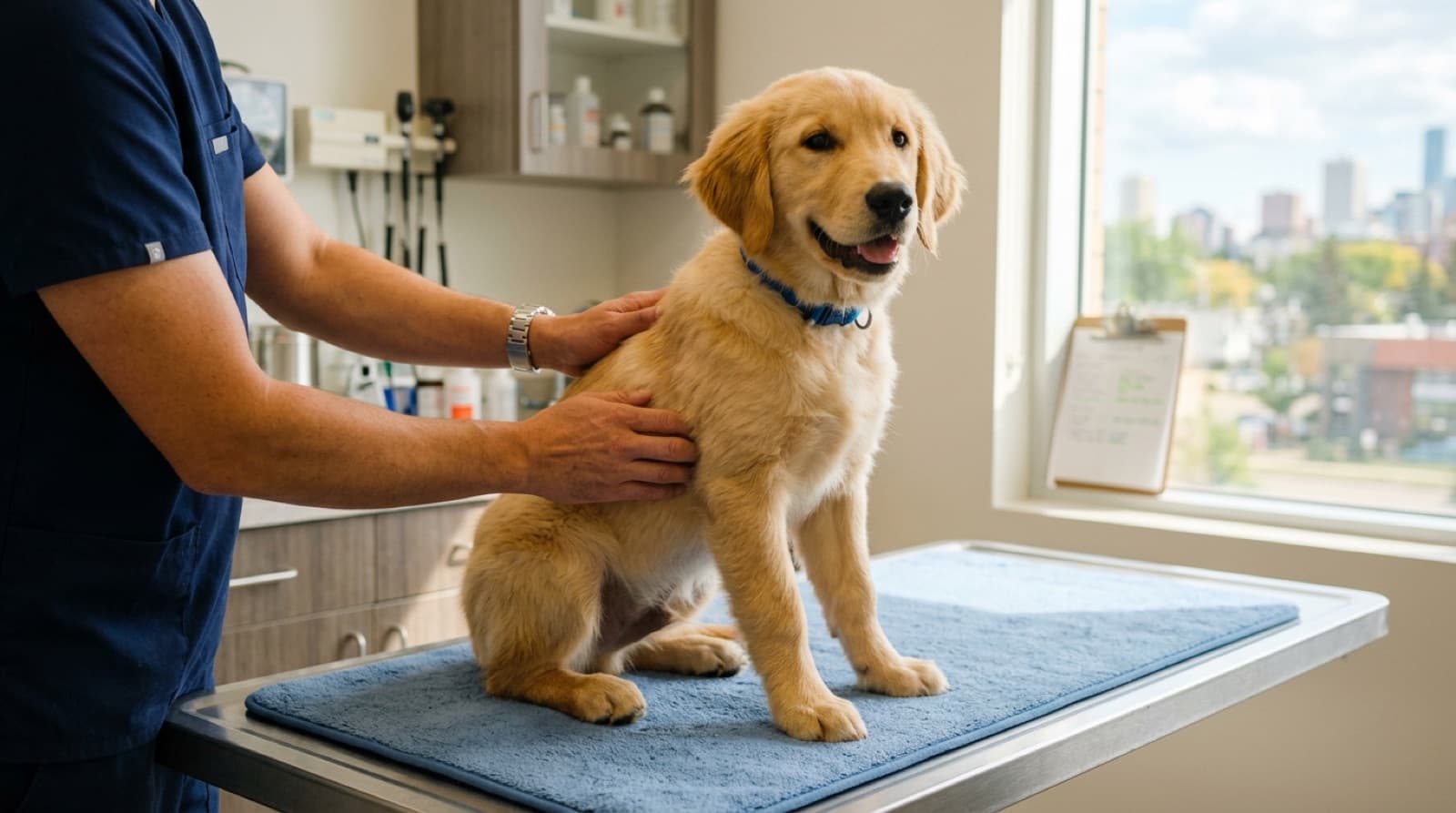
Heads up: This article summarises current peer-reviewed veterinary research, but it is not veterinary advice for your specific dog. Always consult your Edmonton veterinarian about timing decisions. Breed-specific guidance evolves as new research is published; what's right today may shift in coming years.
For decades, the standard recommendation was “spay or neuter at 6 months.” That guidance came from a population-control era and was applied equally to a 5-pound Chihuahua and a 100-pound Great Dane. Recent veterinary research has pushed back on the one-size-fits-all rule, especially for large and giant breeds. The American Veterinary Medical Association now acknowledges that optimal timing varies by breed and individual factors.
The most influential research is the UC Davis study by Hart, Hart, Thigpen, and Willits (2020), which examined health outcomes for 35 breeds based on the age of spay or neuter. The findings shifted the conversation for several large and giant breeds. This article walks through what the research found, what current Edmonton vet guidance is, and the practical Edmonton reality that most rescues require spay/neuter before adoption regardless of age.
If you're still planning the surgery itself, see our Edmonton spay/neuter cost guide. For recovery, our recovery guide covers the 10 to 14 day post-op walkthrough.
Spay/Neuter Timing by Breed Size
| Weight Category | Examples | Recommended Age | Why |
|---|---|---|---|
| Small (under 20 lbs) | Chihuahua, Pomeranian, Yorkie, Shih Tzu | 6 months is generally fine | Growth plates close earlier; orthopedic risk from early neuter is minimal |
| Medium (20 to 50 lbs) | Beagle, Border Collie, Cocker Spaniel, Mini Schnauzer | 6 to 12 months | Some breed-specific evidence emerging; discuss with vet |
| Large (50 to 90 lbs) | Labrador, Golden Retriever, German Shepherd, Boxer, Rottweiler | 12 to 18 months | UC Davis research shows elevated orthopedic and cancer risk with early neuter |
| Giant (over 90 lbs) | Great Dane, Mastiff, Saint Bernard, Newfoundland, Bernese Mountain Dog | 18 to 24 months | Growth plates close late; bone cancer risk elevated with early neuter |
Mixed-breed dogs generally follow the size category of their adult weight. A 70-pound mix likely follows large-breed guidance even without breed-specific data.
What the UC Davis Research Found
The UC Davis study (Hart, Hart, Thigpen, and Willits, 2020) is the most-cited contemporary research on spay/neuter timing. The team examined health outcomes for 35 breeds, tracking rates of joint disorders and cancers as a function of when (or whether) dogs were spayed/neutered. Data is published through the UC Davis School of Veterinary Medicine and available at vetmed.ucdavis.edu.
The main findings:
- Orthopedic disease risk increased with early neuter for several large breeds, including elevated rates of cranial cruciate ligament tears (CCL), hip dysplasia, and elbow dysplasia. The Golden Retriever data was particularly stark: early neuter (before 6 months) was associated with roughly double the CCL rate compared to intact or late-neutered males.
- Cancer rates shifted with timing for several breeds. Lymphoma, hemangiosarcoma, mast cell tumors, and osteosarcoma rates varied based on when the dog was neutered, with the direction of effect differing by breed.
- Effects were strongest in large and giant breeds. The same early-neuter age that was fine for a small dog produced measurable harm in large dogs. The mechanism is partly hormonal: sex hormones play a role in joint development and immune regulation that continues past 6 months in larger dogs.
- Breed-specific patterns differed. The optimal timing for a Golden Retriever isn't the same as for a German Shepherd or a Great Dane. The research notes the importance of breed-specific recommendations rather than a single rule.
Caveats: the research is observational rather than randomised. Confounding factors (lifestyle, exercise, diet, regional vet practices) can't be fully controlled. The findings should be read as “timing matters, and here are reasonable updated defaults,” not as “exact ages are scientifically proven for every dog.” The American College of Veterinary Surgeons and the UC Davis Veterinary Genetics Laboratory both continue to publish updated guidance as new data accumulates.
Breed-Specific Guidance
Golden Retriever
The breed with the strongest signal in the UC Davis data. Current guidance: wait until at least 12 months, and many vets recommend 12 to 18 months for males and 12 months minimum for females. Trade-off for females: one heat cycle before spay slightly raises mammary cancer risk but is offset by orthopedic and other-cancer protection.
For Golden-specific health resources, the Golden health guide covers ongoing care.
Labrador Retriever
Similar pattern to Goldens, with somewhat less dramatic effect sizes. Current guidance: 12 to 18 months. Labs are prone to joint disease independent of neuter timing; combining late neuter with weight management gives the best joint outcomes. For more on Lab-specific issues, see our Lab health guide.
German Shepherd
Clear orthopedic risk with early neuter, particularly elevated CCL tear rates. Current guidance: 12 to 18 months. GSDs are predisposed to hip and elbow dysplasia; the timing choice combines with breeding quality and weight management to determine joint outcomes. See GSD health guide.
Rottweiler
Both orthopedic risk and elevated bone cancer (osteosarcoma) risk in the UC Davis data with early neuter. Current guidance: 12 to 18 months, with some vets recommending up to 24 months for males. Rotts have a high baseline osteosarcoma rate independent of neuter timing.
Great Dane and Other Giants
Giant breeds have late-closing growth plates and high baseline orthopedic risk. Current guidance: 18 to 24 months. The Great Dane lifespan is short (typically 7 to 10 years) and bone cancer is a leading cause of death; timing matters. See Edmonton Great Dane puppy growth guide for related joint care.
Bernese Mountain Dog
Berners have very high baseline cancer rates (histiocytic sarcoma, lymphoma, and others), so neuter timing is part of a much larger health picture. Current guidance: 18 to 24 months based on size, but Berner-specific genetic factors arguably matter more than neuter timing alone. Discuss with a vet familiar with the breed. See Edmonton Berner cancer guide.
Browse adoptable Edmonton dogs
Most Edmonton rescues spay/neuter before adoption regardless of age, so you skip the timing decision. Your dog arrives ready.
See Available Edmonton Dogs →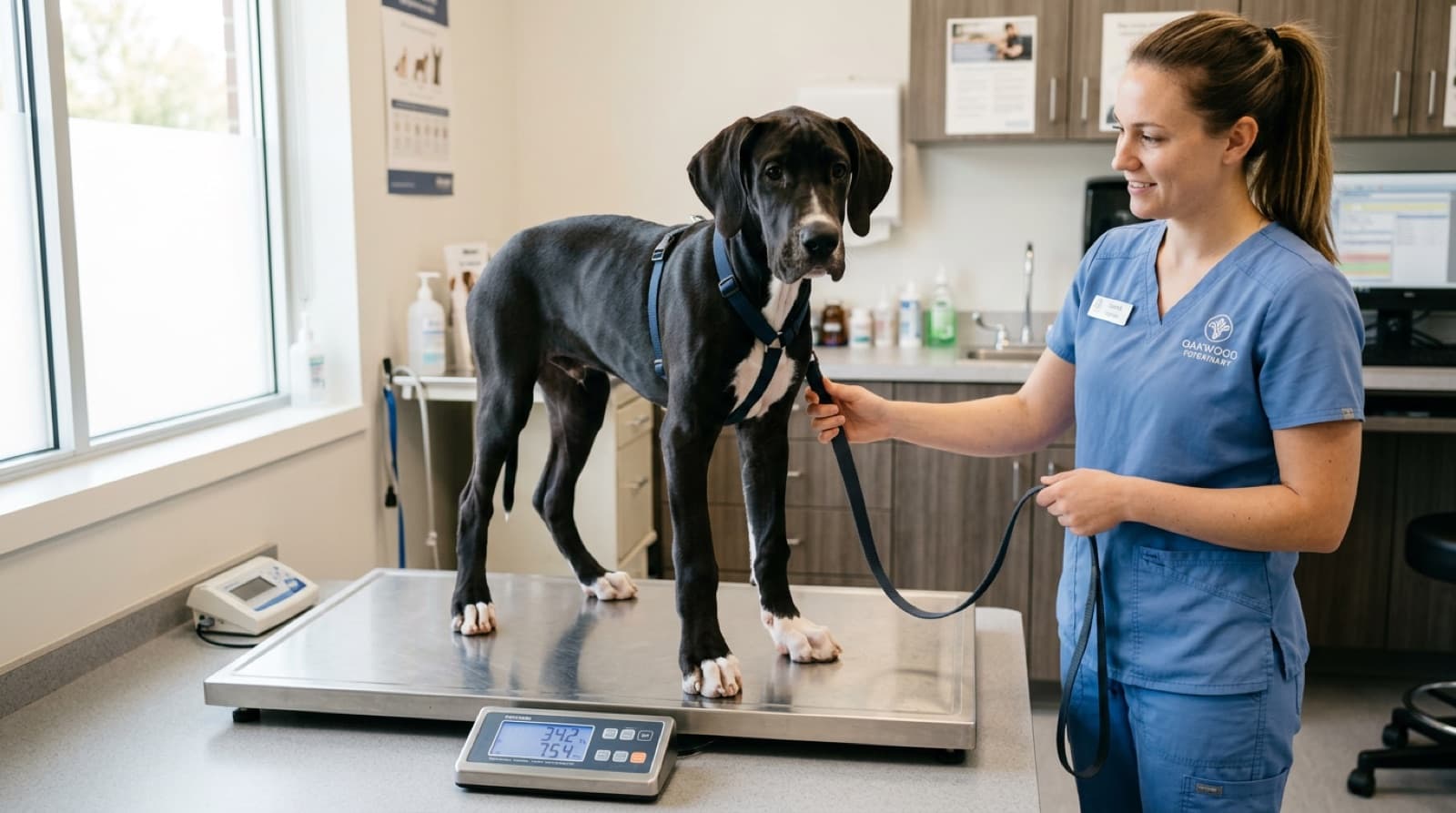
Female Trade-Offs: Mammary Cancer vs Joint Health
For female dogs, the timing decision creates a specific trade-off that doesn't apply to males. Spaying before the first heat cycle significantly reduces mammary cancer risk later in life. The protective effect drops with each heat cycle: the first heat reduces protection meaningfully, by the second heat the protective effect is lower, and by the third heat the benefit plateaus near zero.
For small and medium dogs, spaying before first heat (around 6 months) is usually the right call because the orthopedic and cancer trade-offs are small. For large and giant breeds, the math is harder: spaying before first heat protects against mammary cancer but accepts elevated orthopedic and other-cancer risk. Waiting until 12 to 18 months protects joints and reduces certain cancer risks but accepts slightly higher mammary cancer risk.
The pyometra factor: there's also a third risk for unspayed females. Pyometra (uterine infection) affects unspayed females, primarily older ones. The risk increases significantly with age. Emergency pyometra surgery in Edmonton costs $3,000 to $6,000 and the condition is fatal if untreated. This is why even owners who delay for orthopedic reasons usually plan to spay by age 2 to 3 unless intentionally breeding.
What helps with the decision: talk to your Edmonton vet about your dog's breed-specific cancer profile (especially if you know family history), the dog's lifestyle and activity level, and your tolerance for managing one or two heat cycles. There's no universally right answer; there's a right answer for your dog.
The Edmonton Rescue Reality: Timing Is Usually Decided For You
For most Edmonton adopters, the timing flexibility above is theoretical. The major Edmonton rescue organizations require spay/neuter before adoption regardless of age:
- Edmonton Humane Society: spay/neuter required before placement, no exceptions for owner choice. PALS subsidy applies to adopters who later need affordable care for a different pet.
- AHHRB (Alberta Homeward Hound Rescue Bureau): spay/neuter required.
- GEARS (Greater Edmonton Animal Rescue Society): spay/neuter required.
- Hope Lives Here Animal Rescue: spay/neuter required.
- Zoe's Animal Rescue: spay/neuter required.
- SCARS (Second Chance Animal Rescue): spay/neuter required.
The policy exists for population-control reasons. Intact dogs released to adopters historically resulted in unplanned litters that returned to the rescue system. The trade-off (slightly elevated orthopedic and cancer risk for individual dogs in exchange for fewer system-wide unplanned litters) is one the rescues have collectively made.
If you want timing flexibility for a large breed: work with a reputable breeder, who can keep the puppy intact and time the surgery based on your shared plan; or work with a breed-specific rescue with flexible policies. The major Edmonton shelters won't accommodate timing requests.
If you adopted an Edmonton rescue dog who was neutered young: focus on what you can control. Maintain a healthy weight (overweight large breeds have much higher joint disease rates regardless of neuter timing), invest in joint supplements as recommended by your vet, manage activity to avoid high-impact growth-plate stress in puppies, and schedule breed-specific cancer screening per your vet's guidance.
AVMA Position
The American Veterinary Medical Association maintains a position statement on spay/neuter that has shifted to acknowledge optimal timing varies by breed, size, and individual factors. The general statement: spay/neuter remains beneficial for the population and most individual dogs, but the “6 months for everyone” era is over.
The AVMA recommends working with your veterinarian to determine appropriate timing for your specific dog. This is consistent with what most Canadian vets, including Edmonton-area practices, now advise. The Canadian Veterinary Medical Association similarly emphasises individualised guidance.
The bottom line: the research has moved, the official guidance has moved, and most Edmonton vets have moved. If your vet still recommends 6 months for every large breed dog without discussion of breed-specific factors, ask whether they've reviewed the recent literature. A second opinion is reasonable.
Frequently Asked Questions
When should I spay or neuter a large breed dog?
Current veterinary guidance for large and giant breeds (over 50 lbs at maturity) recommends waiting until 12 to 18 months for large breeds and 18 to 24 months for giant breeds. This allows growth plates to close and reduces the risk of orthopedic disease like cranial cruciate ligament tears and hip dysplasia. The traditional 6-month rule is being challenged for these dogs based on recent UC Davis research. Talk to your Edmonton vet about timing specific to your dog's breed, size, and health.
What did the UC Davis study find about early spay/neuter?
The UC Davis study by Hart, Hart, Thigpen, and Willits (2020) examined 35 breeds and found that early spay/neuter increased the risk of certain orthopedic diseases (cranial cruciate ligament tears, hip dysplasia, elbow dysplasia) and several cancers (lymphoma, hemangiosarcoma, mast cell tumors, osteosarcoma) in some breeds. The effect was strongest in large and giant breeds. The risk pattern varied by breed; the same early-neuter age that was fine for a small dog was harmful for a Golden Retriever. The study is available at vetmed.ucdavis.edu.
Which breeds are most affected by early spay/neuter?
The breeds most clearly affected in published research include Golden Retriever, Labrador Retriever, German Shepherd, Rottweiler, Great Dane, and Bernese Mountain Dog. For Golden Retrievers specifically, early neutering before 6 months has been associated with roughly double the rate of cranial cruciate ligament tears compared to intact or late-neutered dogs. Mixed-breed large dogs likely share similar risk patterns, though the breed-specific research data is strongest for purebred populations.
When should I spay/neuter a Golden Retriever?
Current UC Davis guidance for Golden Retrievers recommends waiting until at least 12 months and ideally beyond. The orthopedic risk and cancer risk both correlate with very early neutering. Many Edmonton veterinarians now suggest 12 to 18 months for males and 12 months minimum for females (with the trade-off of one heat cycle). Discuss with your vet because individual factors matter. The Golden Retriever Club of America and the UC Davis veterinary genetics laboratory both publish guidance worth reviewing.
When should I spay/neuter a Labrador Retriever?
Similar to Goldens, current guidance suggests waiting until 12 to 18 months for Labradors. The orthopedic risk is meaningful but somewhat lower than for Goldens based on the UC Davis data. Females face a trade-off: spaying before the first heat reduces mammary cancer risk, but the orthopedic and other-cancer risk increases. Discuss the trade-off with your Edmonton vet to find the right timing for your dog.
When should I spay/neuter a German Shepherd?
German Shepherds show clear evidence of orthopedic risk with early neuter, including elevated rates of cranial cruciate ligament tears. Current guidance suggests waiting until 12 to 18 months for males. Females have a similar trade-off to other large breeds. Cancer risk patterns differ; consult your vet for breed-specific recommendations. The UC Davis study includes German Shepherds in the high-impact category for orthopedic disease risk.
When should I spay/neuter a giant breed like a Great Dane?
For giant breeds (over 90 lbs at maturity) like Great Danes, Mastiffs, Saint Bernards, and Newfoundlands, current guidance suggests waiting 18 to 24 months. Growth plates close later in giant breeds; the joints continue developing well past 12 months. Early neuter in giant breeds correlates with elevated rates of bone cancer (osteosarcoma) and orthopedic disease. Discuss with your Edmonton vet, who can advise on growth plate closure for your specific dog.
What about mammary cancer risk in females?
Spaying before the first heat cycle significantly reduces mammary cancer risk in female dogs. After the first heat, the protective effect drops. After multiple heat cycles, the protective benefit plateaus near zero. This creates a trade-off for large breeds: spay before first heat for mammary protection, but accept higher orthopedic and other-cancer risk; or wait until 12 to 18 months for orthopedic protection, but lose some mammary cancer prevention. There's no single right answer; it depends on the breed, family cancer history if known, and your vet's assessment.
What is pyometra and how does it factor into the timing decision?
Pyometra is a life-threatening uterine infection that affects unspayed female dogs, primarily older females. The risk increases with age. Emergency pyometra surgery can cost $3,000 to $6,000 in Edmonton and the condition is fatal if untreated. Spaying eliminates pyometra risk entirely. This is part of why waiting too long to spay (or never spaying) carries its own substantial risk. Most veterinarians recommend spaying by 2 to 3 years of age at the latest for females not intended for breeding.
My Edmonton rescue dog is already fixed at 4 months. Should I be worried?
Most Edmonton rescues (Edmonton Humane Society, AHHRB, GEARS, Hope Lives Here, Zoe's) require spay/neuter before adoption regardless of age. This is a population-control decision that prioritizes preventing unwanted litters over individual breed-optimal timing. For most rescue dogs, the trade-off is acceptable because the alternative would be more unwanted litters in the system. Talk to your vet about what monitoring or preventive steps make sense for your specific dog if you know they were neutered young. Joint health support, weight management, and breed-specific cancer screening can mitigate some of the elevated risk.
Can I adopt an intact dog from an Edmonton rescue?
Generally no. All major Edmonton rescues require spay/neuter before placement: Edmonton Humane Society, AHHRB, GEARS, Hope Lives Here, and Zoe's Animal Rescue. The policy exists because intact dogs released to adopters historically resulted in unplanned litters that returned to the rescue system. A few breed-specific rescues operating in Alberta may have different policies, but the major Edmonton organizations do not. If you want to control the timing for an at-risk breed, the path is to work with a reputable breeder or a breed-specific rescue with flexible policies, not the major Edmonton shelters.
What if I want my large breed dog to be evaluated for breeding?
If you're considering responsible breeding (with health-cleared parents through OFA evaluations, breed-specific genetic testing, and a long-term plan), don't spay/neuter before maturity. Coordinate with a reputable breed mentor, your vet, and breed club guidance. The Orthopedic Foundation for Animals (ofa.org) maintains health databases for major breeding-eligible breeds. This isn't a path for most owners; responsible breeding is a substantial commitment of time, money, and expertise.
Related Edmonton Guides
Already Fixed, Vaccinated, and Microchipped
Most Edmonton rescue dogs arrive ready. The timing decision is already made. Skip to the part where you bring your new dog home.
Browse Available Edmonton Dogs →Spay & Neuter Cost Across Canada
What the surgery costs by province, what subsidised clinics charge, and how to find one near you.
New dog? Start with these care guides
Everything a new adopter needs to set up a safe, happy home.