The short answer
Golden Retrievers are rare in Edmonton rescue but they appear, and most are seniors. The Edmonton Humane Society sees them most. AARCS Edmonton fosters, Zoe's, GEARS, and Hope Lives Here see lower volume. Fees $500 to $700 purebred, $400 to $600 mixes, $300 to $500 seniors. Common surrender patterns: downsizing-to-condo, owner returning to Asia, pandemic-puppy two to four year olds, and Golden-Doodle adolescence. Apply prepared with housing, work-from-home schedule, exercise capacity, and pet insurance sorted before a Golden lists. Most Golden adoptions are won by adopters who applied within 24 hours.
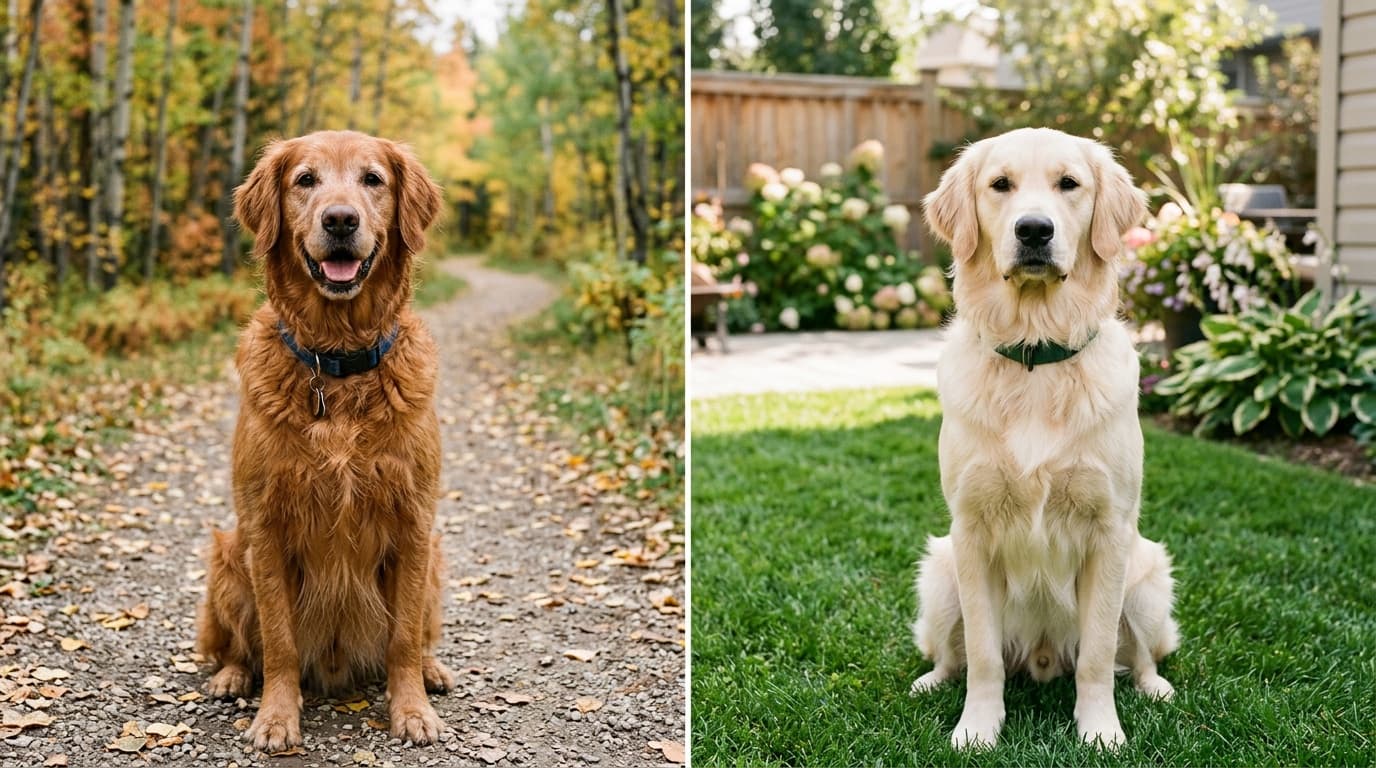
Why Goldens are rare in Edmonton rescue
Golden Retrievers are one of the most-wanted family dogs in Canada. Demand is steady and intake is small. Most Edmonton families keep their Goldens through the full ten to twelve year lifespan, and the dog never enters the rescue pipeline. The combination produces a market where a Golden listing on EHS or Zoe's draws a stack of applications inside the first day.
The northern Alberta intake pipeline that drives Edmonton rescue volume does not bring Goldens. SCARS, GEARS, Hope Lives Here, and AHHRB process intake from stray pickups, owner-surrender of working breeds, transfers from rural shelters with no capacity, and First Nations community partnerships. That pipeline brings Huskies, Shepherds, Pit Bull-types, and large mixed-breed dogs. Purebred Goldens reach those rescues only by accident.
The Goldens that reach Edmonton rescue arrive through a different pipeline entirely: urban owner-surrender from inside Edmonton city limits. A retired couple downsizing from a Riverbend house to a Downtown condo. A family relocating to Hong Kong, Shanghai, or Mumbai for work and unable to bring a 70 pound dog. An older owner moving into assisted living. A divorce where neither party can manage the dog. A pandemic-era puppy whose adult exercise needs do not fit the new return-to-office schedule. These surrenders happen quietly and the dogs usually arrive at EHS or at a foster-based rescue rather than through northern intake.
The practical effect for Edmonton Golden adopters is that listings are rare and competition is intense. Set up listing alerts on every Edmonton rescue you would consider. Have your application materials ready in advance. Apply the day a Golden lists, not the week after. Most placements go to applicants who responded within hours of the listing going live.
Edmonton rescues that occasionally list Goldens
Five Edmonton-area rescues carry Goldens or Golden mixes from time to time. Inventory is genuinely intermittent, so set up alerts where you can and check current Edmonton listings before fixating on a single rescue.
- Edmonton Humane Society (EHS): the city's largest shelter and the most consistent source of Golden intake in Edmonton. EHS sees Goldens primarily through urban owner-surrender, with seniors making up the majority of cases. The centralised facility lets adopters meet the dog in person before applying, and the EHS behaviour team writes detailed temperament assessments covering energy level, kid tolerance, and any medical findings. Golden turnover at EHS is fast; same-day applications usually win.
- AARCS (Alberta Animal Rescue Crew Society): headquartered in Calgary with Edmonton-area foster homes. AARCS tags each dog with its current foster location, so Edmonton-foster Goldens surface on Edmonton listings. AARCS foster notes explicitly cover kid tolerance, multi-pet compatibility, and any known medical history. Goldens at AARCS often come from international-relocation surrenders or from rural southern Alberta surrenders that route through the AARCS foster network.
- Zoe's Animal Rescue: long-running Edmonton foster-based rescue. Lower-volume intake than EHS but a real source for Goldens, especially seniors. Zoe's foster write-ups are among the most thorough in Edmonton, which matters when you are matching a senior Golden with realistic medical expectations to the right adopter. The application emphasises long-term fit over speed.
- GEARS (Greater Edmonton Animal Rescue Society) and Hope Lives Here Animal Rescue: both Edmonton-area rescues with smaller rotating dog inventory that occasionally includes a Golden or Golden mix. Lower frequency than the three rescues above, but worth following. Golden-Lab and Golden-Husky mixes appear here more often than purebreds.
- Alberta Homeward Hound Rescue Bureau (AHHRB): Edmonton-area foster-based rescue. AHHRB lists every dog as Mixed Breed on paper, so Goldens and Golden-cross dogs are identified by photo and description rather than a breed tag. Worth checking even if a search for Golden Retriever returns nothing.
Two national options are worth adding to the search. Golden Rescue Canada is a registered Canadian charity headquartered in Ontario that operates a national volunteer network. Alberta placements are infrequent but possible. The application is thorough and the wait can be months; worth being on their list as a backup. The Canadian Kennel Club publishes breed standards and breed-club listings that include occasional rehome referrals for retired adults from ethical breeders.
Adopters sometimes ask whether there is a dedicated Golden Retriever rescue based in Edmonton. As of writing we cannot verify an Edmonton-based Golden-specific rescue with current adoptable listings. If you see a Golden-rescue name on social media, verify it through Canada Revenue Agency charitable registry, a real address, public-facing vet references, and a current adoptable-dog list before sending money. Most Edmonton Golden adopters find their dog through the five rescues above plus Golden Rescue Canada as a national backup.
What an Edmonton rescue Golden actually costs
Edmonton rescue adoption fees for purebred Goldens generally land between $500 and $700. Golden mixes typically run $400 to $600. Senior Goldens (around eight years and up) often have reduced fees of $300 to $500 to prioritise placement. The fee is not a sale price; it is a partial recovery on the medical work the rescue has already absorbed. A typical Golden adoption fee covers:
- Spay or neuter surgery. Standalone at an Edmonton vet clinic, spay or neuter for a large breed runs $400 to $700.
- Core vaccinations. DAPP and rabies at minimum. Bordetella often included if the dog has been boarded.
- Microchip implant and registration. Required for licensed dogs by the City of Edmonton Animal Care and Control Bylaw 21244.
- Deworming and flea and tick treatment. Standard intake processing.
- Basic vet workup. Physical exam, bloodwork for older dogs, fecal screen, and any breed-specific assessments the rescue elects to run before listing.
- Senior-specific work, often. Dental scaling, joint X-rays for hip and elbow status, and a cardiac auscultation are common pre-listing steps for Goldens seven years and older. The fee reflects part of that cost.
Stacked on their own, those services cost $1,000 to $2,500 at retail Edmonton vet pricing, sometimes more if the senior workup is thorough. The rescue fee is a partial recovery; the rest is subsidised by donations.
Beyond the adoption fee, plan on ongoing Golden costs of $2,200 to $4,000 per year. Food for a 60 to 75 pound Golden runs $80 to $130 per month for a quality kibble. Routine vet care averages $500 to $1,000 per year (annual exam, vaccines, parasite prevention, and senior bloodwork from age seven). Pet insurance for a young adult Golden in Edmonton runs $60 to $110 per month and is genuinely worth it for this breed. Goldens have an elevated lifetime cancer rate that varies by source but is widely cited as the breed-defining risk; coverage that includes oncology pays for itself when the diagnosis comes. Enrol in the first week before any pre-existing conditions appear in vet records. Joint supplements ($25 to $50 per month) are a reasonable preventive line item from age four for a breed with documented hip and elbow risk.
Professional grooming is optional for a Golden but most owners use a groomer every six to eight weeks for $80 to $120 in Edmonton. The coat itself is manageable with a weekly thorough brushing at home plus more during the spring and fall coat blow. Compare the adoption math to a Golden puppy from an ethical Alberta breeder, which runs $2,500 to $4,500 with hip, elbow, eye, and cardiac clearances on both parents. The breeder puppy comes with none of the vet work the rescue dog already has, and the medical reality of the breed is the same regardless of where the dog came from. The rescue path is significantly cheaper and the dog often has years of stable temperament already established.
Senior Goldens dominate Edmonton intake
Most Edmonton rescue Goldens are seven to ten years old. A handful are older. The common triggers are predictable and rarely about the dog:
- Downsizing to a condo. An older couple selling a Riverbend or Glenora house and moving into a Downtown or Oliver condo cannot reasonably keep a 65 to 75 pound dog through the building's common areas and elevator. The dog has lived a full family life and arrives at rescue confused but stable.
- Owner life-change. An older owner moving into assisted living, a serious illness diagnosis, or the death of a sole owner. Family members sometimes try to keep the dog briefly and then surrender when the practical reality sets in.
- Owner passing away. Goldens often outlive elderly owners. When there is no family member who can take the dog, rescue is the next step.
- International relocation. A family returning to a home country where importing a large dog is logistically or legally difficult.
- Divorce. A separation where neither party can keep the dog in their new living situation.
- Owner aging physically. A 75-year-old can no longer manage a 70 pound dog pulling on leash, jumping up, or moving through the household. The owner loves the dog but cannot safely care for them.
These senior Goldens arrive with stable temperaments, full basic training, predictable household manners, and known medical histories. For retiree adopters, single adopters in quiet apartments, work-from-home households, and families with older kids who want a calm dog rather than a puppy, a senior Golden is one of the easiest dogs in Edmonton rescue. The dogs themselves are rarely the challenge.
The medical reality is real and worth planning for. Goldens have an elevated lifetime cancer rate, and the risk increases substantially in the senior years. A nine-year-old Golden may have one good year ahead, may have five, and may have a cancer diagnosis within months of adoption. Pet insurance for a senior Golden is harder to obtain and often excludes pre-existing conditions, which means the financial planning shifts toward a savings buffer for a $7,000 to $15,000 oncology workup. Some senior Golden adopters proceed knowing the risk and accepting it as the cost of giving a dog a soft landing. Others avoid senior placements for financial protection. Both choices are valid. Be honest with yourself about which side you sit on before applying.
The international-relocation surrender pattern
Edmonton has a significant population of families on work or study residency from countries across Asia and elsewhere. A real share of Edmonton Goldens were bought during that residency period and then surrendered when the family relocated back to a home country where importing a 65 pound dog is logistically expensive, legally complicated, or simply not feasible. The pattern is documented across Edmonton rescues and across other Canadian cities with similar immigration profiles. Vancouver and Toronto rescues report the same trend.
These dogs are typically four to eight years old at the time of surrender, healthy, well socialised, family-oriented, and arrive at rescue with full vaccination records and a stable temperament. The surrender is rarely a reflection on the dog. The family loved the Golden and made the decision because the alternative was a long-distance flight, a multi-month quarantine, and a major financial cost that the household could not absorb during an international move.
For Edmonton adopters, these Goldens are usually fast placements because the dogs are genuinely easy companions. Foster notes are clear, medical history is documented, and the dog has lived a full family life that translates well to a new home. The framing here is factual: a real demographic pattern in Edmonton drives a real intake stream of healthy, stable Goldens into rescue. Adopters who understand the pattern can apply with confidence when one of these dogs lists.
The pandemic-puppy surrender wave reaches Goldens
The Golden Retriever market in Canada ran hot between 2020 and 2022. Demand spiked during pandemic lockdowns, ethical breeders had multi-year waitlists, and backyard breeders filled the gap with $1,500 to $3,500 Goldens of variable quality. Out-of-province transports moved Goldens into Alberta in volume. Buyers paid the premium because everyone wanted a family dog and Goldens were one of the most-requested breeds.
Those puppies are now two to four year old adults, and the surrender wave is hitting Edmonton rescue. The triggers are predictable:
- Lifestyle reversal. Owners who worked from home through the pandemic are now back in the office for eight to nine hours a day. A Golden alone for that long develops boredom-driven destruction, separation anxiety, and chewing. The household decides the dog needs a different home.
- Exercise mismatch. Adult Goldens need a real hour of daily exercise. Owners who expected the “calm family Golden” without budgeting for a year and a half of intense adolescence often run out of energy somewhere between months twelve and eighteen.
- Vet-cost overwhelm. Hip dysplasia diagnosed at age two, allergic skin disease, early cancer screening, and orthopaedic injuries can stack to several thousand dollars in the first three years. Many original buyers did not budget for it.
- Post-pandemic financial pressure. Households that bought a $3,500 puppy in 2021 are now facing higher mortgage payments, return-to-office costs, and inflation. The Golden is one of the discretionary cuts.
- Move into a building that does not accommodate. Edmonton condo and rental moves often expose weight restrictions that were not a factor in the original house.
These two to four year old Goldens are usually sound, friendly, and energetic. They need an active household, real daily exercise, and a schedule that does not leave them alone for nine hours. They are not difficult dogs; they are the right dogs in the wrong original homes. Adopters who can match the breed's actual exercise and companionship needs get a Golden in their prime with eight to ten years of life ahead.
Golden mixes in Edmonton rescue
Edmonton rescue lists Golden mixes more often than purebred Goldens. The breed label on a cross is a guess; the foster temperament and energy write-up is the real read. The common Edmonton Golden-mix patterns:
- Golden-Lab cross (Goldador): the most common Edmonton Golden mix. Combines Golden gentleness with Lab playfulness. Usually 55 to 80 pounds. Often easier to live with than a purebred Golden because the Lab parent moderates the Golden's velcro tendencies and the Golden parent moderates the Lab's intensity. Goldadors appear regularly at EHS and SCARS and are often the most family-friendly large mix available in Edmonton rescue.
- Golden-Doodle cross (Goldendoodle): appears in Edmonton rescue from doodle-breeder surrender pipelines, especially backyard breeders who flooded the market between 2020 and 2022 and whose buyers now realise the grooming load. Doodles need professional grooming every six to eight weeks at $100 to $180 per visit in Edmonton, plus daily brushing to prevent severe matting. Many Doodle surrenders happen at adolescence (eight to fifteen months) when the coat first matures and the household runs into the maintenance reality. The dogs themselves are usually friendly and trainable.
- Golden-Husky cross: rare but exists. Combines Golden friendliness with Husky exercise needs, escape drive, and prey drive. These dogs need a six-foot fence, off-leash recall work on a long line for the first year, and a household that can deliver real daily exercise through Edmonton winter. The Golden parent moderates some of the Husky stubbornness but does not eliminate the escape risk.
- Golden-Bernese cross: uncommon and concerning. Both parent breeds carry elevated cancer risk, and the cross does not mitigate it. Lifespan is often shorter than a purebred Golden. The temperament is usually wonderful. Adopters need to plan for the medical reality.
- Golden-Shepherd cross: uncommon. Larger build, more handler-focused, sometimes with shepherd reactivity. Foster notes will flag this; the cross can be a great fit for a household that wants the working-dog brain with a softer temperament.
- Golden-Mixed-Breed of unknown: common in northern intake dogs where parentage is genuinely unknown but the Golden head, body, and coat are obvious. Foster temperament notes matter much more than the label.
The general rule for Golden mixes is that temperament matters more than breed label. A foster who has lived with the dog for six weeks knows the dog. Read the write-up, watch any available videos, and ask the foster directly about exercise needs, household manners, and any flagged behaviours before applying.
What Edmonton rescues evaluate in a Golden application
Golden applications are screened for active-household fit. Edmonton rescues are not worried about whether you love the breed; everyone does. They are worried about exercise capacity, schedule, grooming commitment, medical-cost planning, and household structure. The screening typically covers:
- Daily exercise capacity. Adult Goldens need an hour of activity a day, sometimes more for young dogs. The rescue will ask what your typical weekday looks like, who walks the dog, and what your plan is through Edmonton winter. A specific answer (“morning forty-five minutes river valley walk, evening playtime, weekend off-leash at Terwillegar”) reassures more than “we are active.”
- Time alone. Goldens are companion dogs and bond closely. A 50-hour-a-week work-from-office schedule with no midday check is a harder fit than a retiree home, a work-from-home home, a hybrid schedule, or a household with multiple adults present at different times. The rescue will ask directly.
- Household structure and kid age. Goldens are famously good with children, and most Edmonton rescues will place a Golden into a household with kids of any age. Some specific dogs have flagged tolerance for toddlers; the foster note will say. Older Goldens may prefer calmer homes simply because they want to nap more than they want to play.
- Existing pets. Most Goldens are dog-friendly and cat-friendly when introduced properly. The rescue will ask about your other dogs' ages, sizes, and temperaments. Households with reactive resident dogs or fragile senior cats face more scrutiny.
- Fence and yard. Not always required but preferred. Most Edmonton rescues will place a Golden into a no-yard household if the exercise plan is specific and realistic. Apartment placements are common for senior Goldens whose exercise needs are modest.
- Vet-cost planning. The rescue will ask whether you have pet insurance lined up, whether you have a savings buffer for a $5,000 to $15,000 emergency, and whether you understand the elevated cancer risk in the breed. Vague answers do not reassure when the breed risk profile is well documented.
- Grooming commitment. Weekly brushing minimum, daily during the spring and fall coat blow, professional grooming every six to eight weeks for many owners, and ear cleaning every couple of weeks (Goldens are prone to ear infections). The rescue will ask whether you are realistic about the maintenance.
- Housing approval. If you live in a condo or rent, the rescue will ask for written confirmation from your board or landlord that the dog is approved at the dog's weight. Edmonton condo weight caps catch many adopters off guard.
- Long-term commitment. Goldens live ten to twelve years. The rescue will ask about your life situation over that horizon. Major upcoming changes (a planned move, a new baby, a career change) come up in the conversation.
Specificity wins applications. “We work from home four days a week, have a savings buffer for vet emergencies plus pet insurance lined up before bringing the dog home, and walk every morning along Mill Creek Ravine” is much stronger than “we love Goldens and will take great care of the dog.” The rescue is trying to determine whether the placement will last the dog's full life. A specific plan signals a realistic commitment.
Browse adoptable Edmonton Golden Retrievers and Golden mixes
Current Edmonton listings from EHS, AARCS Edmonton fosters, Zoe's, GEARS, Hope Lives Here, and AHHRB in one place. Golden inventory rotates fast; set up listing alerts so you catch them the day they appear.
See Edmonton Adoptable Dogs →How to apply prepared and apply fast
Edmonton Golden adoptions move fast because demand is high and inventory is intermittent. Most placements go to applicants who applied within hours of the listing going live. The serious applicants have everything ready before a Golden lists, not after. The typical sequence:
- Set up listing alerts on every Edmonton rescue. Register on EHS, AARCS, Zoe's, GEARS, Hope Lives Here, and AHHRB. Also apply to Golden Rescue Canada as a national backup. Alerts catch listings the day they appear.
- Get your application materials ready in advance. Have your vet's name and contact ready if you have other pets, your landlord or condo board approval in writing if you rent or live in a condo, pet insurance research done with a specific provider in mind, two non-family references with current phone numbers, and a written summary of your typical weekly schedule and exercise plan. Goldens get applied for the day they list; preparation in advance is what wins.
- Find a specific dog you want to apply for. Edmonton rescues apply per-dog, not on a general waitlist. Read the entire foster write-up: energy level, kid tolerance, dog tolerance, known medical history, and any flagged conditions. Watch any available videos.
- Submit the application same day. Expect 45 to 60 minutes for a thorough Golden application. Same-day applications are reviewed first.
- Phone screen with the foster or shelter. This is the conversation that decides most placements. Be honest about your schedule, exercise capacity, vet-cost planning, and household. The foster has lived with the dog and will tell you what they see.
- Meet-and-greet. At the foster's home, the shelter, or a neutral location. Bring everyone in the household, including kids and other dogs if relevant.
- Reference and home check. Most rescues call two references. Smaller foster-based rescues sometimes do a brief home visit before approval.
- Adoption contract and fee. Standard contracts specify return-to-rescue terms if you cannot keep the dog. Read it before signing.
Realistic timeline from application to dog-in-your-house is one to three weeks for a Golden placement, sometimes faster when the foster is ready to move the dog and the application is exceptionally strong. Multiple applications on the same dog are normal; if you are not selected, ask the rescue to keep your application on file for similar dogs.

The first 30 days with an Edmonton rescue Golden
The 3-3-3 decompression principle (three days to start settling, three weeks to learn the routine, three months to fully bond) applies to Goldens as it does to other rescue dogs. Goldens tend to move through the early phases quickly because the breed defaults to social and household-oriented. Senior Goldens often skip the worst of decompression entirely and settle within the first week. Practical week-one priorities for an Edmonton rescue Golden:
- Establish a daily exercise routine immediately. Two walks a day, 30 to 45 minutes each for an adult, with at least one off-leash or long-line opportunity in a safe space several times a week. Senior Goldens scale this down to two 20 to 30 minute walks. The Edmonton river valley system (Terwillegar, Mill Creek Ravine, Hawrelak, Capilano, Whitemud) fits Golden energy needs.
- Set up climate management. Goldens handle Edmonton winter well. Watch for ice balls between the toe pads after river valley walks, rinse salt off the paws after sidewalk walks, dry the coat thoroughly after a wet snow outing, and shorten outings below -30 C. Summer above +25 C, pace walks for early morning or evening and carry water.
- License the dog with the City of Edmonton. Required for any dog over six months under the Animal Care and Control Bylaw 21244. Tags should be visible on the collar from day one. Information is on the City of Edmonton dogs page.
- Microchip registration verification. Confirm the chip is registered to your contact information. Most rescues handle the transfer, but verify directly with the chip registry.
- Pet insurance enrolment. Enrol in the first week if possible, before any pre-existing conditions appear in vet records. Cancer coverage matters most for this breed. Compare oncology coverage specifically.
- Ear and coat care routine. Goldens are prone to ear infections; clean ears every two weeks and check for redness, odour, or head-shaking. Brush the coat at least weekly, daily during the spring and fall coat blow.
- Vet check in week one. Establish your relationship with an Edmonton vet and a baseline for the dog. Ask the vet about the dog's breed-specific health risks (hip and elbow, eye, cardiac, cancer screening). This visit is also the right moment to set up pet insurance with current records.
- Water safety. Most Goldens love water and swim well, but never leave any dog unattended near open water. The North Saskatchewan River has real currents and drop-offs. Senior Goldens with arthritis may tire faster than they realise.
- Crate train from night one. Even Goldens who arrive house-trained benefit from crate routine for the first month. Separation anxiety often peaks at week two when you return to your normal work schedule.
- Same routes, same routine for the first two weeks. Predictability speeds settling. Save dog parks, new friends, and travel for after week three.
By week three the routine is established and you will see the real dog. By month three the bond is solid and the household has adapted to the breed-specific care. For senior Goldens the bond can form even faster; many older dogs settle within days because they recognise a stable, calm home and lean into it immediately. Use the first 90 days as a non-decision window. Most early concerns resolve with consistency and time.
Frequently asked questions
Where can I adopt a Golden Retriever near me in Edmonton?
Golden Retrievers are rare in Edmonton rescue but they do appear. The Edmonton Humane Society sees them most often, usually as senior surrenders tied to downsizing or owner life-change. AARCS, headquartered in Calgary, tags Edmonton-foster dogs and surfaces them on Edmonton listings; Goldens show up there occasionally. Zoe's Animal Rescue carries lower-volume intake and lists Goldens or Golden mixes from time to time. GEARS and Hope Lives Here see Goldens less often. SCARS and AHHRB rarely list purebred Goldens because northern Alberta intake skews to working breeds and large mixed-breed dogs. Inventory rotates fast for this breed; same-day applications usually win.
Why are Golden Retrievers rare in Edmonton rescue?
Two reasons stack together. First, Goldens are one of the most-wanted family breeds in Canada, so demand is constant and supply is small. Most families keep their Goldens through the dog's full lifespan. Second, northern Alberta rescue intake brings Huskies, Shepherds, and large mixed-breed dogs in volume, not Goldens. The pipeline that fills SCARS and GEARS does not bring purebred Goldens. The Goldens that reach Edmonton rescue are almost always urban owner-surrenders from inside Edmonton city limits, and they place within days.
How much does it cost to adopt a Golden Retriever in Edmonton?
Edmonton rescue adoption fees for purebred Golden Retrievers typically run $500 to $700. Golden mixes (Golden-Lab, Golden-Doodle, Golden-Husky) generally run $400 to $600. Senior Goldens (around eight years and up) often have reduced fees of $300 to $500 to prioritise placement. The fee covers spay or neuter, core vaccinations, microchip, deworming, flea and tick treatment, and a basic vet workup. Many senior Goldens also receive bloodwork, dental assessment, and joint X-rays before listing, which is reflected in the fee. The number is a partial recovery on costs already absorbed by the rescue, not a sale price.
Why do senior Goldens dominate Edmonton rescue intake?
Most Edmonton Goldens that reach rescue are seven to ten years old. The triggers are predictable: an older couple downsizing to a condo that does not accommodate a 65 pound dog, an owner moving into assisted living or passing away, a family relocating internationally and unable to ship the dog, a divorce where neither party can keep the dog. These dogs were loved through their younger years and the surrender is usually painful for everyone involved. They arrive at rescue with stable temperaments, full training, predictable household manners, and known medical histories. For retiree adopters and quiet households, a senior Golden is one of the easiest dogs to bring home. The medical reality is real and worth planning for, but the dog itself is rarely the challenge.
What is the returning-to-Asia surrender pattern?
Edmonton has a significant population of Chinese, South Asian, and other international families. A real share of Edmonton Goldens were bought during family residency and then surrendered when the family relocated back to a home country where importing a large breed is difficult or impossible. The pattern is documented across rescues in Edmonton and other Canadian cities with similar immigration profiles. These dogs are usually healthy, well socialised, family-oriented, and arrive at rescue at four to eight years old. The surrender is rarely a reflection on the dog. Most place quickly because the dogs are easy companions and the foster notes are clear.
Is the pandemic-puppy surrender wave hitting Goldens?
Yes, though less visibly than for breeds like French Bulldogs. Goldens bought between 2020 and 2022 are now two to four year old adults. The triggers are vet-cost overwhelm (hip surgery, allergy workups, early cancer screening), post-pandemic financial pressure, return to office leaving the dog alone for nine hours, and lifestyle reversal. The dogs are usually sound. The original purchase decision was the mismatch. A two to four year old Golden in Edmonton rescue from this wave is usually a great dog who needs an active home that understands the breed.
What Golden mixes appear in Edmonton rescue?
Golden-Lab (often called Goldadors) are the most common Edmonton Golden mix. They typically inherit the Golden's gentle temperament with a Lab's playful energy and arrive in the 55 to 80 pound range. Golden-Doodle mixes appear in rescue from doodle-breeder surrender pipelines; the grooming load is high and many surrenders happen at adolescence when the coat first matures. Golden-Husky crosses appear rarely but exist; they combine Golden friendliness with Husky exercise needs and escape drive. Golden-Bernese (often called Golden Mountain Dogs) are uncommon and inherit cancer risk from both parents. Foster temperament notes are the truth for any specific mix; the breed label is a hint.
How long do Goldens wait in Edmonton rescue?
Not long. Young and adult Goldens usually place within one to two weeks of listing, often with multiple applications on day one. Senior Goldens (eight years and up) typically place within four to six weeks because retiree adopters and quiet households specifically look for them. Golden mixes wait slightly longer than purebreds, usually one to four weeks. The dogs that wait longest are Goldens with serious active medical needs (cancer in progress, advanced hip dysplasia, mobility issues), Goldens flagged for kid-tolerance concerns, and dogs whose foster notes describe single-person bond patterns that limit household options.
Are Goldens good for Edmonton winters?
Yes. The Golden double coat is built for cold and most Goldens enjoy snow walks. The coat insulates well at -20 C and a healthy adult Golden can comfortably handle outings down to -25 C with paw protection. Below -30 C, even Goldens benefit from shortened outings and indoor exercise. Watch for ice balls between the toe pads after river valley walks, rinse salt off the paws after sidewalk walks, and dry the coat thoroughly after a wet snow outing. Senior Goldens with arthritis tolerate cold less well and may need a coat for warmth at temperatures younger dogs handle easily.
Should I adopt a Golden puppy or an adult?
For most Edmonton households, an adult Golden is dramatically easier than a puppy. Golden puppy adolescence runs roughly eight to eighteen months and is intense: destructive chewing, jumping, mouthing, and infinite energy. Most Golden surrenders happen during this window. An adult Golden's temperament is known, basic training is usually established, the rescue fee is lower, and the dog is genuinely a rescue placement rather than a puppy-mill alternative. Senior Goldens are often the calmest companions available, with the trade-off that cancer risk increases with age. If you specifically want to raise a puppy and have the time and budget for eighteen months of intense adolescence, a Golden puppy can work; for most first-time Golden adopters, an adult is the better fit.
Related Edmonton Golden Retriever guides
Edmonton Adoptable Dogs
Current Edmonton-area Golden Retriever, Golden-mix, and family-friendly large-breed listings from EHS, AARCS Edmonton fosters, Zoe's, GEARS, Hope Lives Here, and AHHRB.
Golden Retriever Health Issues: Cancer, Hips, Heart
Golden Retriever health issues to plan for: cancer risk, hip and elbow dysplasia, subaortic stenosis, eye disease, bloat and weight, and what to ask your vet.
Golden Retriever Cancer Awareness Edmonton
The breed-defining cancer reality for Goldens: hemangiosarcoma, lymphoma, mast cell tumour, and osteosarcoma awareness, early-warning signs, Edmonton oncology referral pathway, and financial planning for a senior Golden adoption.
How to Groom a Golden Retriever
A Golden Retriever grooming guide: why you never shave, the feathering that really mats, the light-tidy-not-clip rule, deshedding the double coat, and cost.
Find your Edmonton rescue Golden
Browse current Edmonton-area Golden Retriever and Golden-mix listings. Inventory is intermittent for this breed; alerts and same-day applications win.
Browse All Edmonton Dogs →New dog? Start with these care guides
Everything a new adopter needs to set up a safe, happy home.