The short answer
Goldens have one of the highest cancer rates of any breed, documented by the ongoing Morris Animal Foundation Golden Retriever Lifetime Study. The four cancers to plan for are hemangiosarcoma, lymphoma, mast cell tumours, and osteosarcoma. Edmonton oncology routes through local specialty practices and the Western College of Veterinary Medicine in Saskatoon for complex cases. Enrol in pet insurance the week of adoption: every Canadian provider excludes pre-existing conditions, and cancer is the costliest exclusion you can carry.
The Golden cancer reality, briefly
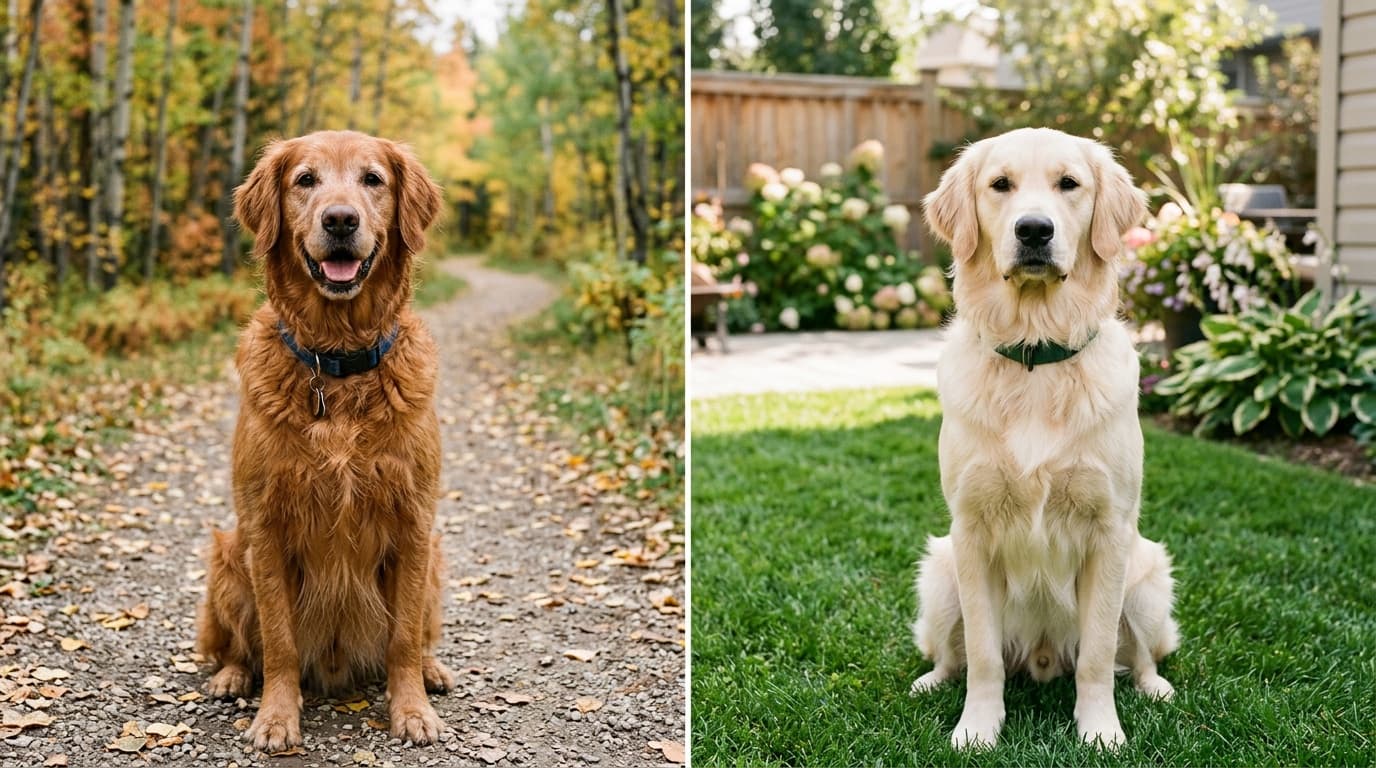
Golden Retrievers have one of the most-studied cancer profiles in veterinary medicine, and the picture is sobering. The breed has one of the highest lifetime cancer rates of any dog breed, well above the general dog population, and cancer is the leading cause of death in the breed. This is the defining medical reality of Golden ownership, and adopters who plan for it have better outcomes than those who do not.
The Morris Animal Foundation Golden Retriever Lifetime Study, launched in 2012, has tracked more than three thousand Goldens from puppyhood across their entire lives to identify the genetic, environmental, dietary, and lifestyle factors that drive breed cancer rates. Current understanding points to a combination of inherited susceptibility (the modern Golden population descends from a small founding gene pool, which concentrated cancer-risk alleles), immune-surveillance differences, large-breed cell-division biology, and environmental exposures. The genetic component is significant, which is why no diet or supplement strategy fully prevents Golden cancer.
What works: monthly home monitoring, twice-yearly senior vet exams starting at age seven, annual abdominal ultrasound screening from age eight at an Edmonton specialty practice, and pet insurance enrolled the week of adoption. The Veterinary Cancer Society and the ASPCA Pet Cancer Awareness resources both reinforce that early detection is the strongest variable Golden owners control.
The big four Golden cancers
Four cancers dominate the Golden Retriever oncology picture. Each presents differently, each is diagnosed differently, and each has its own treatment trajectory and survival profile.
Hemangiosarcoma
Hemangiosarcoma is the most feared Golden cancer because it presents with sudden collapse rather than gradual symptoms. It is an aggressive cancer of blood vessel lining cells, most commonly affecting the spleen, the heart, and the skin. The spleen variant is the textbook Golden emergency: a slowly growing splenic mass eventually ruptures, the dog bleeds internally, and the owner finds the dog collapsed with pale gums and a distended abdomen. Earlier warning signs that owners often miss include intermittent fatigue, transient pale gums after exercise, brief weakness episodes that resolve, and progressive abdominal fullness.
Diagnosis is by abdominal ultrasound, chest X-rays to check for lung metastasis, and bloodwork. If a splenic mass is found, surgical removal of the spleen (splenectomy) is typical, followed by histopathology to confirm the diagnosis and chemotherapy as adjuvant treatment. Median survival with surgery alone is one to three months; with surgery plus chemotherapy, four to six months. Some Goldens live longer; few live more than a year past diagnosis. Annual abdominal ultrasound screening from age eight can catch splenic masses before they rupture, which converts an emergency into an elective surgery and substantially changes the experience for the dog and the owner.
Lymphoma
Lymphoma is the most common Golden cancer and the most treatable. The classic first sign is enlarged peripheral lymph nodes, which you can feel during a monthly home check: under the jaw (submandibular), in front of the shoulder (prescapular), in the armpit or groin (axillary and inguinal), and behind the knee (popliteal). Normal lymph nodes are pea to grape sized, soft, and mobile. Lymphoma lymph nodes are walnut to egg sized, firm, and clearly enlarged. Other signs include decreased appetite, weight loss, increased thirst and urination (from high blood calcium that some lymphomas cause), and lethargy.
Diagnosis is by fine-needle aspirate of an enlarged lymph node (typically $200 to $400 at an Edmonton clinic), often followed by flow cytometry or biopsy to subtype the lymphoma. Treatment options range from no treatment (median survival 4 to 8 weeks) through prednisone alone (median 2 to 4 months, low cost) to the CHOP multi-drug chemotherapy protocol (median 9 to 15 months, $7,000 to $12,000 over six months at a specialty oncology practice). Dogs generally tolerate chemotherapy well, maintaining good quality of life through most of treatment. The American College of Veterinary Internal Medicine board-certifies the oncology specialists who deliver these protocols.
Mast cell tumours
Mast cell tumours are skin tumours that range from cured-by-surgery to aggressive depending on grade. The most important practical rule for Golden owners: any new skin lump, however small or harmless looking, deserves a fine-needle aspirate at the vet. This is the FNA-every-lump rule, and it exists because mast cell tumours can look like benign lipomas or skin tags on the outside. Cost for an FNA at an Edmonton clinic is typically $100 to $250 per lump, and the result tells you within a few days whether a lump can stay or needs to come off.
Treatment is surgical excision with adequate margins, often $1,500 to $3,500 at an Edmonton clinic depending on size and location. Histopathology then grades the tumour. Low-grade tumours are often cured by complete excision. High-grade tumours behave aggressively and benefit from oncology involvement and adjuvant chemotherapy or targeted therapy. The American College of Veterinary Surgeons outlines the surgical principles your vet will follow.
Osteosarcoma
Osteosarcoma is bone cancer, more common in larger Goldens and typically diagnosed at age seven to twelve. The hallmark is persistent lameness that worsens despite rest, which is the opposite of typical orthopaedic injuries that improve with rest. Most commonly the front leg is affected (radius or ulna), often with visible firm swelling near the wrist or elbow. Pathologic fracture (a bone that breaks from minimal trauma because the cancer has weakened it) is a worst-case presentation.
Diagnosis is by radiographs ($300 to $500 at an Edmonton clinic) and bone biopsy or fine-needle aspirate. Chest X-rays check for lung metastasis, which is microscopically present in the vast majority of dogs at diagnosis. Treatment is amputation plus chemotherapy: amputation $3,500 to $6,000, chemotherapy $5,000 to $8,000, median survival around 12 months with some dogs reaching 18 months or more. Goldens adapt remarkably well to three legs, often within weeks. Limb-sparing surgery is available for specific tumour locations at specialty centres but is complex and expensive ($10,000 to $20,000 plus). Pain control is critical: osteosarcoma is extremely painful, and multimodal pain management (NSAIDs plus gabapentin plus opioids plus bisphosphonates) is often needed.
The monthly home check that actually works
There is no universal cancer screening blood test for dogs. What does work is consistent monitoring: a five-minute monthly home check that takes about as long as a coffee break and catches most cancers earlier than waiting for symptoms forces a diagnosis. Set a calendar reminder. Repeat monthly from adoption onward. The routine:
- Full-body lump check. Run your hands systematically across the head, ears, neck, shoulders, front legs, chest, abdomen, hindquarters, tail, and hind legs. Note any new lump, however small. Compare to last month.
- Lymph node palpation. Feel the four major superficial lymph node groups: under the jaw, in front of the shoulder, in the armpit and groin, and behind the knee. Normal nodes are pea to grape sized and soft. Enlarged, hard, or fixed nodes warrant a vet visit within a week.
- Gum colour check. Pink and moist is normal. Pale or white can mean bleeding or anaemia. Yellow can mean liver issues. Pale gums in a Golden warrant an emergency vet visit.
- Abdomen palpation. Gently feel the abdomen for unusual fullness, pain reaction, or palpable mass. Splenic masses can sometimes be felt as firm fullness in the mid-abdomen.
- Energy, appetite, and behaviour baseline. Note any sustained change over three days or more. A sudden drop in energy or appetite is a vet visit.
Document findings in your phone notes. Pattern recognition saves lives, and a Golden owner who has tracked monthly changes for a year can give their vet much more useful information than one who is comparing today to a vague memory of last spring.
Symptoms that warrant a vet visit this week
Some symptoms are easy to dismiss as aging or minor issues. In a Golden over seven, do not dismiss any of the following without a vet conversation:
- Any new lump or skin mass, however small (FNA every lump)
- Enlarged lymph nodes anywhere on the body
- Persistent lameness that worsens despite rest
- Sustained appetite drop for three or more days
- Sudden lethargy or reluctance to move
- Unexplained weight loss over weeks
- Increased thirst and urination
- Persistent vomiting, diarrhoea, or blood in stool or urine
- Breathing changes or persistent cough
- Behaviour changes (hiding, irritability, reluctance to play)
Emergency vet signs that need an immediate trip to a 24-hour Edmonton emergency clinic:
- Sudden collapse or inability to stand
- Pale or white gums
- Distended, hard abdomen
- Difficulty breathing
- Signs of shock (weakness, rapid heart rate, cold extremities)
Hemangiosarcoma splenic rupture is the most common emergency presentation, and time matters. Know your nearest 24-hour Edmonton emergency clinic before you need it.
Edmonton veterinary oncology access reality
Edmonton has a working oncology referral path but a smaller specialty footprint than Calgary, and significantly smaller than the major specialty hubs in the rest of Canada. Most Golden cancer journeys start with your general-practice vet doing the diagnostic workup and referring out for treatment. Three referral pathways matter.
Local Edmonton specialty practices
Edmonton has a small number of multi-specialty veterinary hospitals that handle oncology, surgical oncology, and supportive care. For routine chemotherapy protocols (CHOP for lymphoma, adjuvant chemotherapy after splenectomy or amputation), local Edmonton specialty care is often sufficient and saves the travel of a Saskatoon or Calgary referral. Your general-practice vet will know which Edmonton specialty practices have current oncology coverage; ask at your first visit and write the answer down.
WCVM Saskatoon
The Western College of Veterinary Medicine at the University of Saskatchewan is the closest full veterinary teaching hospital and handles complex oncology referrals from across the prairies. The drive from Edmonton is about five and a half hours each way. WCVM oncology takes referrals for cases that benefit from teaching-hospital-level diagnostic depth, clinical trial enrolment, complex surgical oncology, and radiation therapy (which is not consistently available in Edmonton). Your specialty vet initiates the referral. Travel logistics matter for chemotherapy cycles, so most owners who pursue Saskatoon treatment coordinate fewer, more substantial visits rather than weekly trips.
Calgary specialty centres
Calgary has a larger specialty veterinary network with oncology coverage, and some Edmonton Golden owners coordinate Calgary referrals for treatments not offered locally or when Edmonton specialty wait times are too long. The drive is about three hours each way. This pattern shows up most often for radiation therapy, specific surgical oncology cases, and second opinions on aggressive cancers.
Building your network before you need it
The practical move when you adopt: establish a primary Edmonton vet in the first month, ask which specialty practices they refer Goldens to for oncology, and confirm which 24-hour emergency clinic is closest to you. Most Edmonton Goldens will never need an oncology referral. For the ones that do, knowing the pathway in advance cuts hours and days off the response time when it matters.
Treatment cost framework
Cancer treatment costs vary substantially by cancer type, treatment intensity, and where the treatment happens. Edmonton ranges (2026 estimates) are useful for planning conversations with your vet and your insurance. These are approximate.
- Diagnostic workup (consult, bloodwork, imaging, biopsy): $1,500 to $3,500
- Oncology specialist consultation: $300 to $500
- Hemangiosarcoma splenectomy plus chemotherapy: $7,000 to $14,000 total. Elective splenectomy (caught on screening ultrasound) sits at the lower end; emergency splenectomy after rupture sits higher.
- Lymphoma CHOP chemotherapy: $7,000 to $12,000 over six months. Prednisone-only palliation is much cheaper ($30 to $60 per month) but median survival is two to four months rather than nine to fifteen.
- Osteosarcoma amputation plus chemotherapy: $8,500 to $14,000 total. Limb-sparing surgery (if applicable) is $10,000 to $20,000 or more.
- Mast cell tumour surgical excision: $1,500 to $3,500. Adjuvant chemotherapy or targeted therapy adds $3,000 to $8,000 for high-grade cases.
- Palliative care (pain management without curative attempt): $200 to $500 per month
- Travel for WCVM Saskatoon: fuel and lodging cost variable; budget realistically for multi-day trips
For families without insurance or a contingency cushion, options include pet-specific lending (CareCredit and similar), small grants from cancer-support funds, and social fundraising. Some Edmonton Golden owners successfully use these paths. Your vet and your specialty practice will discuss the full spectrum from aggressive treatment to palliative care openly; there is no shame in choosing comfort-focused care when it is the right fit for your dog and your family.
The week-one pet insurance reality
Pet insurance enrolled the week of adoption is the single most important medical decision Golden owners make. Every Canadian provider excludes pre-existing conditions. The day a vet documents anything (a small skin lump, a slightly enlarged lymph node, a mild abdominal finding), that condition becomes a permanent exclusion on any policy enrolled afterward. The clock starts the day you adopt.
The breed-specific value math is unforgiving for Goldens. A single cancer journey can easily generate $10,000 to $20,000 in treatment costs, and the cumulative lifetime cancer risk for the breed is high. A typical pet insurance policy for a young healthy Edmonton Golden runs $50 to $100 per month depending on the deductible, reimbursement percentage, and coverage caps. Over a 10-year lifespan, premiums total $6,000 to $12,000. For the meaningful percentage of Goldens that develop cancer, the policy pays for itself many times over.
What to look for in a Golden policy:
- Hereditary and congenital conditions explicitly covered (some cheaper policies exclude these, which makes them nearly useless for a Golden)
- Cancer treatment specifically covered, including chemotherapy, radiation, and surgical oncology
- Annual rather than per-condition coverage caps (per-condition caps can hit fast on chemotherapy)
- No bilateral exclusion clauses that exclude the second instance of a condition
- Reasonable wait times for cancer coverage (typically 14 to 30 days, sometimes longer)
- Direct vet payment or fast reimbursement on claims
Compare three to four providers before enrolling. The American Animal Hospital Association publishes general guidance on choosing a policy that applies to Canadian providers too. Your Edmonton vet and foster contact can both share which providers other Golden adopters have used and how their claim experiences went. For senior Goldens (eight and up), first-time enrolment becomes harder and more expensive; price-compare carefully and consider whether a dedicated savings account makes more sense than insurance for your specific case.
Browse adoptable Edmonton Goldens
Current Edmonton listings from SCARS, Zoe's Animal Rescue, Edmonton Humane Society, GEARS, Hope Lives Here, AHHRB, and AARCS Edmonton fosters in one place. Foster notes flag any known medical history, and your first-month vet visit establishes the cancer-awareness baseline.
See Edmonton Adoptable Dogs →
Quality-of-life decisions and end-of-life care
Quality-of-life assessment and end-of-life decision-making is one of the hardest aspects of Golden ownership. Cancer forces these conversations more often than most owners expect. Frameworks help.
The HHHHHMM scale (Hurt, Hunger, Hydration, Hygiene, Happiness, Mobility, More good days than bad), developed by veterinary oncologist Dr. Alice Villalobos, is a structured way to track quality of life over time. Each dimension scores from 0 to 10, and tracking the trend across weeks gives you data rather than a guess. Many Edmonton vets use this framework or a close variant when supporting families through cancer care.
A simpler check is the favourite-activities baseline: list five to seven things your Golden loves (a particular walk, eating breakfast, greeting family at the door, a favourite chew, play with a specific toy, watching the yard from a window, swimming in summer). When more than half of those are no longer possible or no longer interesting for one to two weeks, quality of life has meaningfully declined.
Pain management comes first, always. Many issues that look like quality-of-life decline are actually under-treated pain, and multimodal pain control directed by your vet often returns weeks or months of comfortable life. Combinations of NSAIDs, gabapentin, opioids, bisphosphonates, and adjuncts work where any single medication does not.
Edmonton has in-home euthanasia services available through Lap of Love and other providers, with home visits typically running $400 to $700. Many families prefer this for a peaceful, family-present farewell at home rather than a clinic visit. Cremation services run $80 to $150 for communal and $200 to $500 for individual cremation. Burial within Edmonton city limits has restrictions; rural property burial is possible where applicable.
The decision for euthanasia is yours, based on your specific Golden, your specific situation, and your honest assessment of suffering versus quality. Most Edmonton vets and specialty oncologists support owner decision-making without judgement, and pet loss support resources are available through Lap of Love grief services, Argus Institute, and Edmonton-area pet loss support groups.
What you can do (and what is out of your hands)
You cannot prevent Golden cancer. The genetic component is too strong for diet, exercise, or environmental choices to override fully. What you can do is optimise the variables you control.
- Weight management. Maintain a Body Condition Score of 4 to 5 out of 9 (visible waist from above, ribs palpable but not visible). Obesity correlates with cancer risk and worsens treatment outcomes.
- WSAVA-compliant diet. Stick to grain-inclusive commercial foods from manufacturers that employ board-certified veterinary nutritionists and run AAFCO feeding trials. Avoid grain-free diets unless prescribed by your vet.
- Routine vet exams. Annual until age seven, twice-yearly thereafter. Annual senior bloodwork from age seven. Annual abdominal ultrasound from age eight.
- Monthly home check. Five minutes, every month, every Golden.
- Pet insurance from week one. The single highest-leverage decision Golden owners make.
- Reduce environmental carcinogen exposure. Avoid lawn herbicide-treated grass, secondhand smoke, and very charred grilled meats where reasonably possible.
- Discuss spay or neuter timing with your vet. Some studies suggest later spay or neuter in Goldens correlates with lower cancer rates. Most rescue Goldens arrive already altered; this is a non-issue for them.
These do not eliminate risk. They tilt the odds toward longer, better life. Many Edmonton Goldens reach 12 to 14 healthy years with this routine, and many never face a cancer diagnosis at all. The work is worth doing.
The emotional reality, briefly
Goldens dying of cancer in middle age is a recognised breed pattern. Edmonton Golden owners who lose a dog this way are not alone, and the grief is real. Many families find it helpful to know they did the work: monthly checks, attentive vet care, prompt response to symptoms, insurance in place, treatment decisions made thoughtfully. Doing the work does not always change the outcome, but it changes the experience.
If you are considering a Golden Retriever knowing all of this, you are the kind of adopter the breed needs. Goldens are deeply loved by the families that take them on. Loving them all the way through, including the hard ending some of them have, is part of the work.
Frequently asked questions
Why do Goldens get cancer so often?
Golden Retrievers carry one of the highest cancer rates of any breed, and the reason is mostly genetic. The Morris Animal Foundation Golden Retriever Lifetime Study has tracked thousands of Goldens from puppyhood to identify the contributing factors, and the picture that has emerged points to inherited susceptibility, immune-system differences, and breed-bottleneck genetics that concentrate cancer-risk alleles. Environmental exposures and spay or neuter timing also play roles. This is not hopeless: monthly home monitoring, twice-yearly senior vet exams, and pet insurance enrolled the week of adoption substantially improve outcomes. Many Edmonton Goldens still live 10 to 12 healthy years.
How do I know if my Golden has cancer?
Cancer in Goldens often presents as one of five patterns: a new lump or skin mass that grows, an enlarged lymph node (under the jaw, in front of the shoulder, in the armpit or groin, or behind the knee), unexplained lameness that worsens despite rest, sudden lethargy or appetite loss lasting more than a few days, or an acute collapse with pale gums (which is a hemangiosarcoma emergency). Run a five-minute monthly home check, and book a vet visit within a week for any new finding. Annual senior bloodwork from age seven and an annual abdominal ultrasound from age eight catch problems that are not yet visible from the outside.
What are the survival times for treated Golden cancers?
Survival times vary substantially by cancer type and treatment chosen. Hemangiosarcoma, the most aggressive of the four, typically has median survival of 4 to 6 months with surgery plus chemotherapy and a few weeks without treatment. Lymphoma, the most treatable, has median survival of 9 to 15 months on the CHOP chemotherapy protocol. Osteosarcoma has median survival around 12 months with amputation plus chemotherapy. Mast cell tumours are the most variable: low-grade tumours are often cured by complete surgical excision, while high-grade tumours behave aggressively and need oncology involvement. Your vet and a veterinary oncologist will give you specifics for your dog.
Where do Edmonton owners go for veterinary oncology?
For routine workup, your Edmonton general-practice vet starts the diagnostic process: physical exam, bloodwork, imaging, fine-needle aspirate or biopsy. Treatment usually requires specialty involvement. Edmonton has a smaller specialty veterinary network than Calgary, so for chemotherapy, radiation therapy, and complex surgical oncology your vet may refer to the Western College of Veterinary Medicine in Saskatoon (the closest full veterinary teaching hospital, about five and a half hours each way) or to Calgary specialty centres (about three hours each way). Some Edmonton owners coordinate chemotherapy locally and travel only for the more complex interventions.
How much does Golden cancer treatment cost in Edmonton?
Diagnostic workup runs $1,500 to $3,500 for consult plus bloodwork, imaging, and biopsy. Hemangiosarcoma splenectomy plus chemotherapy is typically $7,000 to $14,000. Lymphoma CHOP chemotherapy is typically $7,000 to $12,000 over six months. Osteosarcoma amputation plus chemotherapy is typically $8,000 to $14,000. Mast cell tumour surgery is $1,500 to $3,500 for excision, plus chemotherapy if high-grade. Oncology specialist consultations run $300 to $500. Travel for WCVM Saskatoon adds fuel and lodging. Pet insurance enrolled before any cancer diagnosis usually covers most of this; pet insurance enrolled after will not.
Is there a cancer screening test I can ask my vet for?
There is no universal cancer screening blood test for dogs that reliably predicts which Goldens will develop cancer. What does work: a five-minute monthly home check (lump check, lymph node palpation, gum colour, energy and appetite baseline), twice-yearly senior vet exams from age seven, annual senior bloodwork, and an annual abdominal ultrasound starting at age eight ($400 to $600 at Edmonton specialty practices). The ultrasound is the highest-leverage screening tool because it can catch splenic masses before hemangiosarcoma ruptures and forces an emergency.
What should I feed my Golden to reduce cancer risk?
No diet prevents Golden cancer; the genetic component is too strong. The dietary basics that matter: a grain-inclusive WSAVA-compliant commercial food (Royal Canin, Hill’s Science Diet, Purina Pro Plan, Eukanuba, Iams are the brands that meet the guidelines and run feeding trials), appropriate calorie intake to maintain a Body Condition Score of 4 to 5 out of 9 (visible waist, ribs palpable but not visible), and avoidance of grain-free diets unless your vet has prescribed one. Avoid known carcinogens where possible: secondhand smoke, lawn herbicide exposure, and very charred grilled meats. Talk to your vet about omega-3 supplementation, which has supportive evidence for general inflammation reduction.
Should I avoid adopting a senior Golden because of cancer risk?
Senior Goldens are some of the most rewarding adoptions Edmonton rescues place, and they are also the dogs most likely to need rescue placement. The honest reality: a Golden adopted at age eight has a meaningful chance of facing a cancer diagnosis in the years you have together. Many adopters find this work deeply meaningful anyway, knowing they are giving a wonderful dog a soft landing. If you are considering a senior Golden, confirm pet insurance options before you commit (some insurers will not cover dogs over eight), be honest about your financial capacity for treatment, and remember that palliative and comfort-focused care is a valid and loving choice when aggressive treatment is not the right fit.
What does a quality-of-life decision look like for a Golden with cancer?
Quality-of-life decisions are the hardest part of cancer care. Helpful frameworks include the HHHHHMM scale (Hurt, Hunger, Hydration, Hygiene, Happiness, Mobility, More good days than bad), each scored to track trajectory over time, and the favourite-activities check (when more than half of your Golden’s favourite activities are no longer possible for one to two weeks, quality of life has meaningfully declined). Pain management comes first; many quality-of-life issues resolve with multimodal pain control directed by your vet. Edmonton has in-home euthanasia services available through Lap of Love and other providers ($400 to $700) for families who want a calm, home-based farewell. Cremation services run $200 to $500 for individual cremation. The decision is yours, based on your specific Golden and your capacity to support late-stage care.
Does genetic testing predict whether my Golden will get cancer?
No commercial genetic test currently predicts Golden cancer development reliably. The Morris Animal Foundation Lifetime Study has identified some genetic markers associated with hemangiosarcoma and lymphoma risk, but these are population-level associations rather than individual predictions, and they are not on standard Embark or Wisdom Panel results. Treat your Golden as carrying typical breed cancer risk and apply the protocol: monthly home monitoring, twice-yearly vet exams from age seven, annual senior bloodwork, abdominal ultrasound from age eight, and pet insurance enrolled the week of adoption. This combination produces the best outcomes that current veterinary medicine supports.
Related Edmonton Golden Retriever guides
Edmonton Adoptable Dogs
Current Edmonton-area Golden Retriever and Golden mix listings from SCARS, Zoe's, EHS, GEARS, Hope Lives Here, AHHRB, and AARCS Edmonton fosters.
Golden Retriever Adoption Edmonton
Rescue sources, fees, why Goldens are hard to find in rescue, Golden mixes, and what to expect through the application process.
Golden Retriever Health Issues: Cancer, Hips, Heart
Golden Retriever health issues to plan for: cancer risk, hip and elbow dysplasia, subaortic stenosis, eye disease, bloat and weight, and what to ask your vet.
How to Groom a Golden Retriever
A Golden Retriever grooming guide: why you never shave, the feathering that really mats, the light-tidy-not-clip rule, deshedding the double coat, and cost.
Find your Edmonton rescue Golden
Browse current Edmonton-area Golden Retriever and Golden mix listings. Foster temperament notes flag any known medical history before you apply, and your first-month vet visit establishes the cancer-awareness baseline.
Browse All Edmonton Dogs →New dog? Start with these care guides
Everything a new adopter needs to set up a safe, happy home.