The short answer
Daily brushing, weekly ear cleaning, never shave. A Golden Retriever double coat sheds heavily year-round and blows undercoat twice a year for four to six weeks at a time. Professional grooming in Edmonton runs $80 to $130 every six to eight weeks for bath, high-velocity blow-dry, nails, ears, sanitary trim. The most damaging owner mistake is asking for a summer shave-down. Goldens are prone to Post-Clipping Alopecia, where shaved coat grows back patchy or never returns. The second most common mistake is skipping weekly ear cleaning, which produces chronic infections in this breed's heavy drop ears.
How the Golden double coat actually works
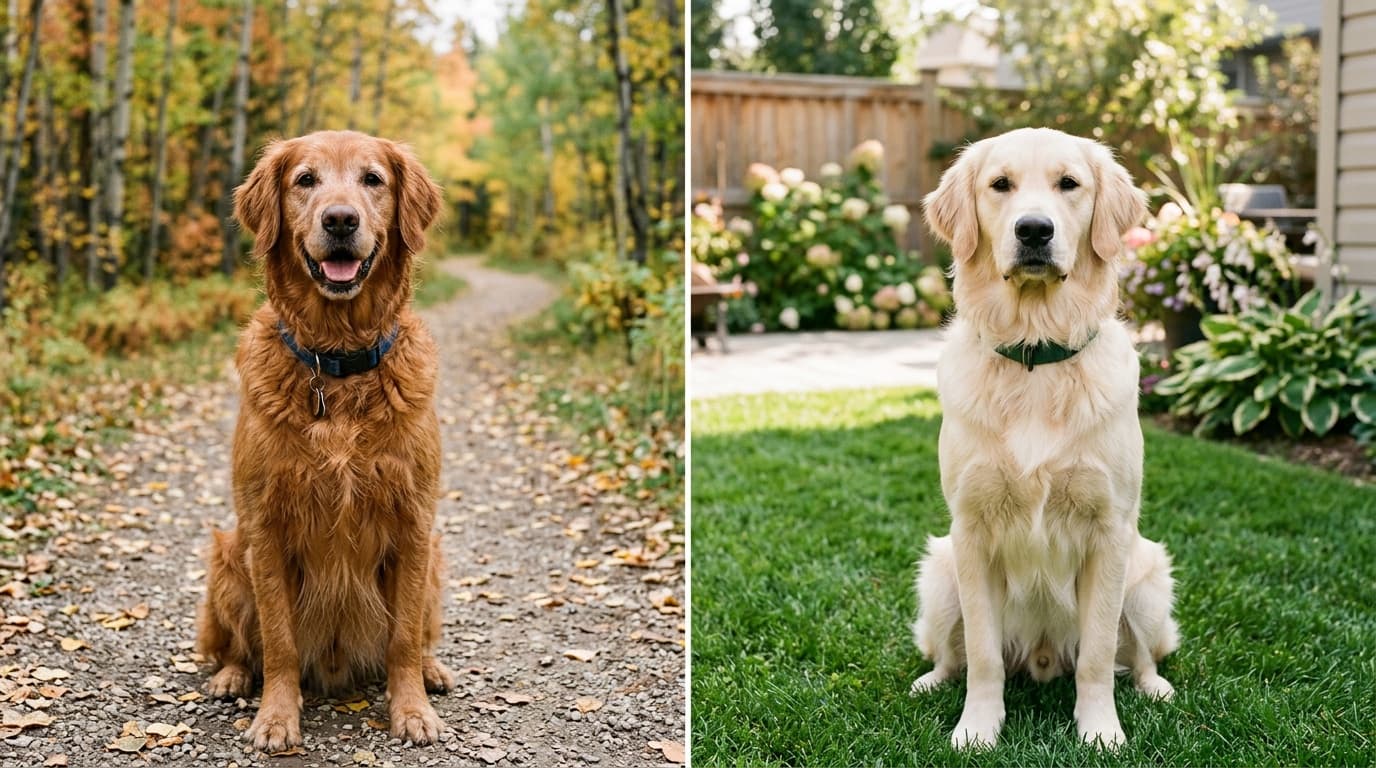
A Golden Retriever has two layers of coat doing two different jobs. The dense soft undercoat sits close to the skin and traps a layer of air for insulation. The longer water-resistant outer guard hairs sit on top, shed water, deflect dirt, and give the breed its trademark golden silhouette and feathering on the legs, chest, belly, and tail. The two layers depend on each other. Damage one and the other stops working properly. That single fact is the foundation for every grooming decision below.
Both layers grow on cycles. The undercoat thickens before winter and releases before summer, then thickens again before winter and releases again before summer. This twice-yearly release is what owners call coat blowing. The guard hairs grow more slowly and continuously throughout the dog's life. The Canadian Kennel Club Golden Retriever breed standard describes the coat as dense and water-repellent with a good undercoat. That description matters because it is also what makes the coat vulnerable to clipper damage.
Edmonton owners often assume a heavier-looking coat means a hotter dog in summer. It does not. The same insulation that traps warm air in winter traps cooler air against the skin in summer, provided the undercoat is brushed out regularly and is not matted. A matted coat genuinely is hotter, because the trapped air pockets compress and the natural ventilation stops working. The fix is brushing, not clipping.
Heavy shedding year-round
There is a long-running joke that Goldens shed twice a year. Six months in spring and summer, six months in fall and winter. It is funny because it is true. Goldens shed every day of their lives. The dense undercoat constantly releases small amounts of hair, the longer guard hairs cycle through replacement, and the feathering on the legs and tail sheds at its own rate. Year-round shedding is not a coat problem to fix. It is the price of admission for the breed.
What this looks like in an Edmonton home. Golden hair on every dark surface within forty-eight hours of vacuuming. Hair embedded in the couch cushions. Hair on every black sweater. Hair in the dishwasher. New owners are routinely shocked at how much hair appears between coat-blow seasons, before they have even seen a real blow. The honest answer is to invest in two things: a vacuum that handles pet hair well, and lint rollers stationed at the door, in the car, and on a bedside table.
A weekly to daily brushing routine cuts ambient shedding by about half to two-thirds depending on how thorough the session is. The hair the brush catches in your living room is hair that does not end up on the floor. Routine grooming literally moves the shedding from the house into a single concentrated location you control.
Sudden excessive shedding outside the coat-blow windows, patchy bald spots, or thinning that does not stop are different. Those signal something underlying that needs a vet. Common culprits in Edmonton Goldens include hypothyroidism (very common in middle-aged Goldens, easily diagnosed on bloodwork and effectively treated), allergies, fleas brought in from a friend's home, stress from a household change, or a nutritional gap. Routine annual bloodwork at your vet catches the thyroid version early.
Coat blowing: the twice-yearly shed event
Twice a year the Golden undercoat releases in bulk. The two windows in Edmonton roughly map to March through May (spring blow, releasing the heavy winter undercoat) and September through November (fall blow, releasing the lighter summer coat as the winter undercoat grows in). Each window lasts four to six weeks. Many Edmonton owners report the spring blow runs longer than the fall one, which makes sense given how long winter coat sits locked in by cold weather.
During these weeks expect dramatic shedding, golden tumbleweeds in corners, a vacuum bag that fills in days rather than weeks, and a coat that may look patchy or uneven partway through. The undercoat releases unevenly across the body, so a Golden mid-blow can look slightly motheaten before evening out.
The management routine is more brushing, not less. An undercoat rake used daily through the coat blow pulls dead undercoat out cleanly. Twenty to thirty minutes per session is reasonable during the heaviest weeks. A professional groom mid-blow that includes a high-velocity dryer (the loud blower groomers use) accelerates the process by blowing out loose undercoat a brush cannot reach. Many Edmonton groomers book longer appointments during March and October specifically for coat-blow grooms, which is part of why waitlists stretch during those months.
Coat blowing is normal and healthy. The mistake is panicking at the patchy mid-blow look and asking a groomer to even it out with a clipper. That is the single most common path to Post-Clipping Alopecia in adult Goldens.
The never-shave rule and Post-Clipping Alopecia
The single most important rule for a Golden Retriever coat: do not shave it. Not in summer to cool the dog down. Not during a coat blow to even it out. Not for a shorter-easier-care look. Not because a groomer suggests it. Body shaving a Golden is for genuine medical reasons only, such as a post-surgical site or a severely matted area that cannot be brushed out humanely.
Goldens are one of the breeds most strongly associated with Post-Clipping Alopecia, sometimes called clip-and-shave alopecia or post-clipping hair loss. After a body shave, the coat may grow back patchy, woolly in texture, sparse in coverage, or in some cases not return at all in the shaved area. The American College of Veterinary Dermatology recognises Post-Clipping Alopecia as a real condition, particularly in plush double-coated breeds. The mechanism is not fully understood (theories include hair-cycle disruption, follicle damage, and underlying endocrine triggers) but the clinical picture is consistent across the breeds it affects.
Recovery, when it happens, is slow. Most regrowth takes twelve to twenty-four months and may not return to original density or texture. Some dogs never fully regrow the coat in the affected area. There is no reliable treatment beyond patience, regular gentle brushing, ruling out endocrine causes (hypothyroidism, hyperadrenocorticism) with a vet workup, and supportive care.
The summer-cooling argument for shaving is wrong on the physiology. A properly brushed-out double coat insulates against heat by trapping cooler air against the skin. A shaved coat exposes pink Golden skin directly to sun, leading to sunburn and increased heat absorption. The dog is hotter, not cooler. Edmonton summers run mild compared to many climates, but the principle holds regardless.
The American Animal Hospital Association grooming guidance for double-coated breeds aligns with this approach: maintain coat through brushing and bathing, not through clipping. When a medical clip is unavoidable, the owner should be counselled in advance that regrowth may be slow or incomplete. A groomer who suggests a body shave on a healthy Golden does not understand the breed coat. Find a different shop.
The daily brushing routine
Five to fifteen minutes a day is enough on most days. The goal is to reach the undercoat, lift dead coat, and check for mats in the four common trouble zones: behind the ears, under the armpits, in the rear feathering, and along the leg and tail feathering.
Line brushing works like this. Sit the dog on a non-slip surface or stand them on the floor with one paw on a step or low couch for stability. Start at one shoulder. Part the coat in a horizontal line near the skin with one hand. With the other hand, brush from the skin outward through the parted section using a slicker brush. Lay down a new horizontal line a half-inch higher and repeat. Work up the body in sections, then repeat on the other side, the legs, the chest, the tail, and the rear. A metal comb passed through the same sections at the end catches anything the brush missed.
Four tools cover most of the work. A slicker brush with fine bent wires reaches the undercoat and lifts loose hair without cutting the topcoat. A pin brush is a gentler daily tool for the topcoat and the feathering. A metal greyhound-style comb checks your work, finds the spots a brush glossed over, and catches early mat formation. An undercoat rake is the fourth tool, used heavily during coat blowing and once weekly the rest of the year to pull dead undercoat that the slicker leaves behind.
Some of the product links in this section are Amazon affiliate links — we may earn a small commission at no extra cost to you. It never changes which products we recommend.
Avoid Furminator-style deshedding blades. They feel productive but cut the guard hairs at the base, damaging the topcoat over months in ways that do not regrow quickly. The whole point of the double-coat system is the intact guard layer. A clean coat-blow brush-out with the right tools removes more dead hair anyway, without the cumulative damage.
Browse adoptable Edmonton Golden Retrievers
Goldens do not come up in Edmonton rescue intake as often as Labs or Shepherds. When they do, foster notes on existing coat condition and grooming routine save weeks of guesswork in the first month at home.
See Available Golden Retrievers →Edmonton groomer pricing and waitlist reality
A full professional Golden Retriever groom in Edmonton typically runs $80 to $130 every six to eight weeks. The price covers a bath, high-velocity blow-dry, brush-out, sanitary trim around the rear, paw trim, face tidy, nail trim, and ear cleaning. Mobile groomers and higher-end salons can charge $140 to $180 for the same service. Quick puppy intro grooms (a gentler short session for under-six-month puppies) often run $50 to $70 to acclimatise the dog to handling.
Waitlists are a real planning factor in Edmonton. Established groomers run three to eight weeks for new clients during normal months. During spring and fall coat blowing season, expect six to ten weeks. Goldens are large and time-intensive on the table, so groomers cap how many they book per day. Two practical strategies. First, book your next appointment when you check out of the current one rather than waiting until you need a groom. Second, when trying a new groomer, ask for a paid consultation visit first and confirm in writing that they do not shave Golden Retrievers.
What a good Edmonton groomer should ask you, and what you should ask them. Ask them: whether they use a high-velocity dryer for the coat blow, whether they understand Post-Clipping Alopecia in Goldens, how they handle a dog that resists nail trims, and what they would do if they found serious matting. Good answers are yes to the dryer, yes to the alopecia question, calm desensitisation rather than restraint, and ask the owner before cutting any mat out.
A good groomer should also ask you about your dog. Vaccination status, any health conditions, previous grooming history, behaviour around handling, ear history, and what specific cut you want. A groomer who does not ask is rushing through too many dogs to be careful with yours.
Sanitary trims: the appropriate use of clippers and scissors
Clippers and scissors absolutely do have a role in Golden Retriever grooming. They just do not go on the body proper. The appropriate uses are:
- Rear sanitary area. The feathering under the tail and around the rear gets soiled during bathroom breaks and benefits from a short trim. Most groomers use a number ten clipper here. This is fine and does not affect the protective coat.
- Paw pads and between toes. Long hair between the pads picks up Edmonton snow and de-icing salt in winter and grit in summer. A short trim with scissors or clippers keeps paws clean and grippy. This is particularly important from November through March when sidewalk salt is at its worst.
- Feet rounding. A neat scissor finish around the foot perimeter gives the classic Golden look and reduces tracked-in dirt. Optional but most owners like it.
- Feathering tidy. Scissor trimming the ends of the leg, chest, belly, and tail feathering keeps the silhouette neat without removing any guard coat. This is shaping, not shaving.
- Around the eyes and ear canal opening. A careful scissor tidy keeps hair out of the eyes and improves airflow to the ear canal, which matters for a breed prone to ear infections.
None of this is body shaving. A skilled groomer can do all of these in a way that is invisible from a normal viewing distance. If a groomer suggests extending any clipper work onto the body proper, ask them directly whether they understand the Post-Clipping Alopecia risk in Goldens. The answer will tell you whether you are in the right shop.
Ear care: the Golden grooming priority
If there is one part of Golden grooming most owners under-do, it is ear care. Goldens have heavy drop ears that cover the ear canal and trap warm moist air. They also love water and will swim in any body of water available, which fills the canal with that water. The result is one of the breed-defining medical complaints: chronic ear infections (otitis externa). The good news is that consistent weekly cleaning and post-swim drying prevents the majority of cases.
The weekly routine. Sit the dog calmly. Lift one ear flap and look in. A healthy ear is pale pink, lightly waxy, and not smelly. Apply a vet-recommended ear cleaner per the bottle instructions (usually filling the canal until you see the cleaner pool). Gently massage the base of the ear for ten to fifteen seconds. You should hear a slight squelching sound, which means the cleaner is working into the canal. Step back and let the dog shake its head. Wipe the visible ear flap and the outer canal opening with a cotton pad. Never insert a cotton swab deeper than the visible ear flap; you can pack debris further in or damage the eardrum.
The post-swim routine. After any swim, river dip, or bath, dry the inside of each ear flap with a cotton pad and let the dog shake. If you have just been in suspect water (a stagnant pond, a slow river backwater), follow with a routine ear cleaner application that night. Most Edmonton summer Golden ear infections start with a swim in the North Saskatchewan River or a still pond and are visible by day three.
Signs of an active ear infection. Brown waxy buildup, a yeasty or sweet smell, head shaking, ear scratching, head tilt, redness in the canal, or pain when the ear is touched. These do not respond to more home cleaning. They need a vet visit, an ear swab to identify the bacteria or yeast involved, and a targeted prescription cleaner or medication. Trying to manage an active infection with over-the-counter cleaners often makes it worse.
Chronic recurrent ear infections in a Golden can also point to underlying allergies (food or environmental). If your dog has more than two infections in twelve months, ask your vet about an allergy workup rather than just treating each individual infection as it comes. The American Animal Hospital Association preventive care guidelines flag ear care as one of the high-value routine items for prone breeds.
Bath frequency and the over-bathing trap
Every six to eight weeks is typical for a healthy adult Golden. More often than every four weeks strips natural skin oils, dries the coat, and can trigger dandruff and itching, particularly in Edmonton winter when indoor air is already dry. Less often than every ten to twelve weeks produces noticeable odour, especially in a dog that swims regularly in summer.
How to bathe a Golden well. Brush thoroughly before the bath, not after. Wet matting is much harder to remove and tends to felt under shampoo. Use a dog-specific shampoo (oatmeal-based for sensitive skin works well). Human shampoo has the wrong pH for dog skin and is harsher than needed. Work the shampoo through the coat to the skin, not just over the top. Rinse for longer than feels necessary; residual shampoo is a major cause of post-bath itching in Goldens.
After the bath, dry actively. Towel-dry first, then use a hair dryer on a cool or low setting (or a high-velocity dog dryer if you own one), brushing as you dry. Air-drying a Golden double coat is the fastest route to matting in the feathering and a damp-skin smell that persists for days. Pay particular attention to drying the inside of each ear flap and the rear feathering, which are the wettest zones.
Many Edmonton Golden owners bathe at home between professional grooms. A bathtub-and-handheld-shower setup, a good dog shampoo, and a willingness to vacuum the bathroom afterward will save several hundred dollars a year. The professional groom every six to eight weeks then handles the high-velocity dryer coat-blow and the nail trim, which are harder to do well at home.
Winter coat care in Edmonton
Edmonton winters are harder on Golden coats than summers are, which surprises new owners. The double coat handles -25 C ambient temperatures fine for normal outdoor sessions. The damage comes from the indoor environment. Forced-air heating drops indoor humidity into the teens or twenties in January, creating static that mats the fine undercoat, drying the skin, and accelerating coat breakage at the tips. Repeated transitions between cold outdoor air and dry indoor heat compress the coat further.
The winter routine. Brush daily rather than weekly. The dry-air static makes the undercoat want to mat in the four trouble zones (behind ears, armpits, rear, feathering). A humidifier in the rooms your dog spends most time in helps both the coat and the skin (aim for 40 to 50 percent indoor humidity, measured with a $15 hygrometer). Rinse paws with lukewarm water after walks on salted sidewalks, then towel dry; de-icing salt is harsh on paw pads, the feathering on the legs, and the skin between the toes. A leave-in conditioning spray sparingly applied helps if static is severe.
Paw care matters more in Edmonton winter than most owners expect. Trim the hair between the pads every four to six weeks through the winter to prevent ice-ball buildup, which is painful and can cause the dog to refuse walks. Some Edmonton Golden owners use paw balms (a wax-based barrier applied before walks) on the worst-salt days. Goldens generally tolerate boots poorly, so the paw-trim plus rinse routine usually works better than a full bootie setup.
Bath frequency drops slightly in winter. Every eight to ten weeks is enough for most dogs because winter coats hold less odour and the dry indoor air punishes over-bathed skin. Keep a damp towel by the door for snow shake-off after walks; a healthy Golden coat is water-resistant enough that a quick wipe-down handles most snowy days without a full bath.
The water-loving Golden and the grooming impact
Goldens were bred to retrieve from water. They will swim in any river, lake, pond, or backyard wading pool available, and most will choose swimming over walking on a hot day. Edmonton offers the North Saskatchewan River and the surrounding chain of lakes (Wabamun, Pigeon, Nakamun), which means most Edmonton Goldens spend serious time in water from May through September. The grooming impact is real.
Every swim. Rinse the coat with fresh water if there was any chemical, mud, or algae exposure. River water leaves residue that dries into the coat and contributes to odour. Dry the inside of each ear flap with a cotton pad (this is the single most important step) and let the dog shake. Apply a routine ear cleaner that evening if the water was suspect or stagnant. Check the feathering for tangles; wet feathering mats fast.
Frequent summer swimmers benefit from a slightly closer bath schedule (every five to six weeks instead of six to eight) because the cumulative water exposure does dull the coat. The trade-off is staying ahead of the odour and the ear infection risk that builds across a summer of swims.
One Edmonton-specific caution. The North Saskatchewan River and the chain of nearby lakes can develop blue-green algae blooms from July through September, which are seriously toxic to dogs. If the water looks green, scummy, or has surface foam, do not let a Golden swim, no matter how strong the retrieve drive is. Find a different swim spot for the day. Acute liver failure from blue-green algae ingestion is a known cause of summer Golden deaths in the prairie provinces.
Senior Golden coat care
From around eight to ten years of age, the Golden coat changes. The undercoat thins, guard hairs grow more slowly, the overall coat density decreases, and the texture can shift from harsh and water-resistant to softer and more fragile. White or grey hair appears around the muzzle and eyes. This is normal aging, not a coat problem.
What changes about the routine. Brushing is gentler because thinning skin is more sensitive. The slicker brush stays a daily tool but with lighter pressure. The undercoat rake is reserved for the actual coat blow rather than weekly maintenance. Bath frequency drops to every eight to ten weeks because senior skin dries out faster. A senior-appropriate oatmeal-based shampoo and a quick conditioner pass help.
Watch for sudden changes that are not normal aging. Bilateral symmetrical hair loss (the same pattern on both sides of the body), patchy thinning, sudden coat colour change, or coat that looks dull and brittle despite good nutrition can signal hypothyroidism (very common in senior Goldens), Cushing's disease, or other endocrine problems. All of these need a vet workup including bloodwork, not a grooming change.
Senior Goldens also benefit from a slight reduction in professional grooming frequency if standing on the table is getting harder. Stretching from six weeks to eight or nine weeks, paired with more home brushing, is a reasonable compromise. Some Edmonton groomers offer senior-friendly appointments with shorter sessions, seated work, and a calmer environment. Ask when you book if your dog struggles with long appointments.
Frequently asked questions
How much does Golden Retriever grooming cost in Edmonton?
A full professional Golden groom in Edmonton typically runs $80 to $130 every six to eight weeks. That covers a bath, high-velocity blow-dry, brush-out, nail trim, ear cleaning, sanitary trim, and a tidy of the paws and feathering. During spring and fall coat-blowing season, expect to pay toward the upper end and book longer appointments because more time is needed on the undercoat. Mobile groomers and full-service salons can charge $140 to $180. Add about $80 to $150 once for a home brushing kit (slicker, pin brush, metal comb, undercoat rake). Many Edmonton Golden owners bathe at home between professional grooms to save the schedule and the cost.
Should I shave my Golden Retriever in summer?
No. Shaving a Golden does not cool the dog down. The double coat insulates against summer heat by trapping cooler air against the skin, and shaving removes that thermal buffer while exposing pink skin to sunburn. Worse, Goldens are prone to Post-Clipping Alopecia, a recognised condition where shaved coat grows back patchy, woolly, sparse, or sometimes does not fully return at all. Veterinary dermatology references treat this as a real lifelong risk in plush double-coated breeds. If your Golden seems hot, brush out the dead undercoat (not the topcoat), provide shade and water, and use indoor cooling. Body shaving is only appropriate for medical reasons.
How often should I brush my Golden Retriever?
Daily is the goal, weekly is the absolute minimum. Five to fifteen minutes a day prevents matting behind the ears, under the armpits, at the rear, and on the feathering. During the twice-yearly coat blow in spring and fall, daily brushing with an undercoat rake jumps to twenty to thirty minutes per session. Skip a week off-season and you find a small mat. Skip a week during coat blow and you find handfuls of undercoat in tumbleweeds across the floor and tight mats that may need a groomer to clear. Pair brushing with TV time and it stops feeling like a chore.
What brushes do I need for a Golden Retriever?
Four tools cover everything. A slicker brush for daily and weekly maintenance to lift loose undercoat. A pin brush for gentle daily passes through the feathering and topcoat. A metal greyhound-style comb for finishing and finding hidden mats. An undercoat rake for the twice-yearly coat blow. Avoid Furminator-style deshedding blades that cut the topcoat and damage guard hairs over months. A starter kit of four good single tools costs about $80 to $150 at any Edmonton pet supply store. Cheap multi-packs usually include the wrong tools and underperform on a double coat.
How often should I clean my Golden Retriever's ears?
Weekly minimum, and immediately after every swim. Goldens have heavy drop ears that trap moisture, and they love water, which is the worst combination for ear health. The weekly routine: a vet-recommended ear cleaner applied per the bottle instructions, gentle massage at the base of the ear for ten to fifteen seconds, then let the dog shake and wipe out the visible cleaner with a cotton pad. Never use cotton swabs deeper than the visible ear flap. Brown waxy buildup, a yeasty or sweet smell, head shaking, ear scratching, or head tilt all signal an infection that needs a vet, not more cleaning. Chronic ear infections are one of the top reasons Edmonton Goldens see the vet.
How often should I bathe my Golden Retriever?
Every six to eight weeks at most for a healthy adult Golden. Bathing more often than every four weeks strips natural skin oils and can dry the skin out, particularly in Edmonton winter when indoor air is already arid. Bathing less often than every ten to twelve weeks produces noticeable odour, especially in a Golden who swims regularly in summer. Use a dog-specific shampoo (oatmeal-based for sensitive skin works well) and always blow-dry after a bath while brushing. Air-drying a Golden double coat is the fastest route to matting and a damp-skin smell.
How long is the Edmonton Golden Retriever groomer waitlist?
Popular Edmonton groomers run three to eight weeks for new clients during normal months and six to ten weeks during spring and fall coat-blow season. Goldens are large and time-intensive, so groomers limit how many they book per day. The practical strategy is to book your next appointment on the way out of the current one. If you are new to a groomer, ask for the consultation first and confirm in writing that they do not shave Goldens before you put your dog on the table.
What does coat blowing season look like in Edmonton?
Goldens blow coat twice a year. The two windows in Edmonton roughly map to March through May (spring blow, releasing the heavy winter undercoat) and September through November (fall blow, dropping summer coat as winter undercoat grows in). Each window lasts four to six weeks. During this time, expect dramatic shedding, golden tumbleweeds in corners, more vacuuming than feels normal, and a coat that may look patchy partway through. Edmonton owners often report the spring blow runs slightly longer because of the long cold months keeping winter coat in. Daily undercoat-rake brushing through these windows pulls most of the dead coat before it carpets the home.
Why does my Golden Retriever shed so much year-round?
Goldens shed every day of their lives. The double coat is built to constantly release and replace, and the dense undercoat sheds in micro-amounts even between the two big coat-blow windows. Year-round shedding is normal. Excessive shedding outside the seasonal windows, sudden bald patches, or thinning that does not stop should be checked by a vet. Possible causes include hypothyroidism (common in older Goldens), allergies, parasites, stress, or nutritional gaps. Routine bloodwork at your dog's annual vet visit catches the thyroid issue, which has a very effective treatment.
Are Golden Retrievers good for people with allergies?
No. Goldens are heavy shedders with a dense double coat and produce significant amounts of Can f 1, the main canine allergen, in dander and saliva. People with mild allergies sometimes manage with strict grooming routines, HEPA filtration, and bedroom-free zones, but people with moderate to severe dog allergies usually cannot live comfortably with a Golden. There is no hypoallergenic version of a Golden, and any breeder advertising one is selling marketing language. If allergies are a deal-breaker, look at Poodles, Bichons, Havanese, or Maltese instead.
Related Edmonton Golden Retriever guides
Edmonton Adoptable Dogs
Current Edmonton-area listings from SCARS, Zoe's Animal Rescue, EHS, GEARS, Hope Lives Here, AHHRB, and AARCS Edmonton fosters, including Goldens and Golden mixes when available.
Golden Retriever Adoption Edmonton
Where Edmonton rescue Goldens come from, the senior-and-medical-needs surrender pattern, $400 to $700 fees, and how to set up alerts for fast-moving listings.
Golden Retriever Health Issues Edmonton
Hip and elbow dysplasia, hypothyroidism, the breed cancer rate, chronic ear and skin disease, and the Edmonton specialty vet ecosystem for breed-prone care.
Golden Retriever Cancer Awareness Edmonton
The breed lifetime cancer risk (hemangiosarcoma, lymphoma, mast cell tumour, osteosarcoma), early warning signs to know, screening recommendations, and Edmonton oncology access via WCVM Saskatoon.
Find your Edmonton rescue Golden Retriever
Browse current Edmonton-area Golden Retriever and Golden-mix listings. Foster temperament notes help you find a dog whose coat condition, age, and care needs fit your home before you apply.
Browse Edmonton Golden Retrievers →New dog? Start with these care guides
Everything a new adopter needs to set up a safe, happy home.