The short answer
Five Pit Bull conditions shape Edmonton medical planning: atopic dermatitis (the most common ongoing cost at $80 to $200 a month), demodicosis (Pit Bull-type predisposition, treatable with modern isoxazoline medications), mast cell tumours (every skin lump goes to the vet for an aspirate), hip dysplasia (moderate breed risk, surgery $4,000 to $10,000), and cardiac screening for young Staffies. Edmonton specialty coverage handles most cases; the Western College of Veterinary Medicine in Saskatoon handles the harder ones. Enrol in pet insurance week one: every Canadian provider excludes pre-existing conditions.
The Pit Bull breed health picture, briefly
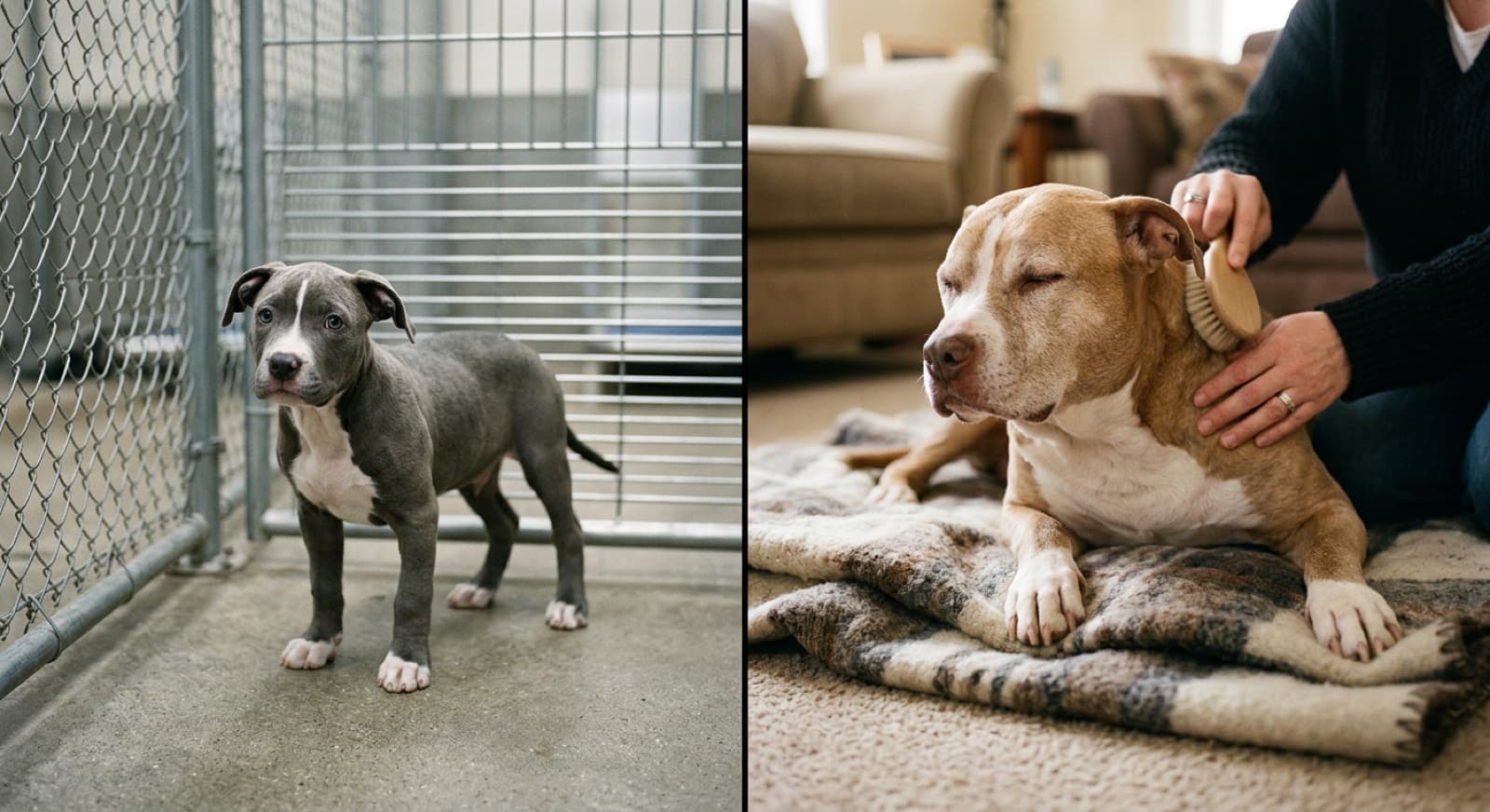
“Pit Bull” is a loose label covering American Pit Bull Terriers, American Staffordshire Terriers, Staffordshire Bull Terriers, American Bullies, and the many Pit Bull mixes that show up in Edmonton rescues. The breed-health picture varies somewhat by line, but several patterns are consistent across the type and worth planning for.
Pit Bull-type dogs are not in the high-risk tier of brachycephalic breeds, and they are not in the giant-breed tier where cardiac disease dominates. Most Pit Bulls reach 12 to 14 years in basically functional health. What they do carry is a recurring pattern of chronic skin disease that becomes the dominant ongoing medical cost for many owners, plus a handful of breed-elevated cancer and orthopaedic risks that require active monitoring.
The American College of Veterinary Dermatology tracks atopic dermatitis prevalence by breed and lists Pit Bull-type dogs among the most commonly affected. The Orthopedic Foundation for Animals registry tracks hip dysplasia and patellar luxation data for the breed. The American College of Veterinary Surgeons publishes mast cell tumour treatment standards that any board-certified surgeon will follow. These specialty boards are the relevant authorities your Edmonton vet will reference when a workup gets complex.
Atopic dermatitis: the Pit Bull medical reality
Skin allergies are the single most common ongoing medical issue in Pit Bulls. Atopic dermatitis is an immune-mediated reaction to environmental allergens (pollen, dust mites, mould, sometimes food proteins) that presents as itching, paw licking, ear infections, flank chewing, and recurrent hot spots. The condition is genetic and lifelong; the goal of treatment is management, not cure.
What it looks like
Classic symptoms in an Edmonton Pit Bull: paws licked constantly until they stain rust-coloured from saliva enzymes, recurring yeast or bacterial ear infections, red and inflamed skin in the armpits and groin, hair loss in symmetrical patches, hot spots after a stressful weekend, and a constant low-grade scratching that ramps up seasonally. Some owners notice flares that track pollen seasons; others see a baseline of year-round itch.
Diagnosis
Atopic dermatitis is a diagnosis of exclusion. Your vet first rules out parasites (a skin scrape and flea check), then runs an elimination diet trial (typically 8 to 12 weeks on a single novel protein and carbohydrate, prescription hydrolysed diet) to rule out food allergy. If the dog still itches, the diagnosis lands on environmental atopy. Allergy testing (intradermal or serum-based) is available at Edmonton dermatology specialty practices and informs the immunotherapy formula.
Treatment options in 2026
Modern atopic dermatitis treatment is meaningfully better than it was a decade ago. Common Edmonton options:
- Cytopoint: monoclonal antibody injection given monthly to every 4 to 8 weeks. $90 to $150 per dose for a typical Pit Bull. Works very well for many dogs; some are non-responders.
- Apoquel: daily oral tablet that blocks itch signalling. $100 to $180 per month for a typical Pit Bull dose. Fast-acting (sometimes within 24 hours) and well-studied.
- Prescription elimination diets: hydrolysed-protein foods like Royal Canin Hypoallergenic, Hill's z/d, or Purina Pro Plan HA. $90 to $140 per bag. Used both for diagnosis and for ongoing management in dogs with food-allergy overlay.
- Immunotherapy: custom allergy serum based on allergy test results, given as injections (owner-administered) or oral drops over years. $800 to $1,500 first year, $300 to $500 per year ongoing. The only treatment that addresses the underlying immune response rather than symptoms.
- Topicals and supplements: chlorhexidine medicated shampoos for skin infections, omega-3 supplementation, and antifungal mousses for yeast control. $25 to $60 per month for the supplemental stack.
Most Pit Bull atopic dermatitis cases land at $80 to $200 per month in ongoing costs once a stable regimen is found. This is the single biggest reason pet insurance enrolled before the first skin visit matters: that monthly cost runs for the dog's lifetime.
Demodicosis: the Pit Bull mite condition
Demodex mites live on most dogs at low levels without causing problems. In Pit Bull-type dogs, an above-average rate of generalised demodicosis (widespread mite overgrowth with skin disease) is documented in veterinary dermatology literature. The condition typically appears in dogs under two, in stressed shelter-environment dogs, or rarely in older dogs whose immune system is otherwise compromised.
What it looks like: patchy hair loss often starting around the eyes, muzzle, or front legs, red or scaly skin in the affected areas, and a generally moth-eaten coat appearance. Itching is variable; some demodicosis dogs do not scratch much, while others develop secondary bacterial skin infections that drive intense itch.
Diagnosis is by skin scrape: your vet uses a scalpel blade to collect a small skin sample and looks for mites under a microscope. Cost at an Edmonton clinic typically runs $80 to $150 for the scrape and same-visit diagnosis. Treatment in 2026 is much simpler than it used to be:
- An isoxazoline-class oral medication (Bravecto, Simparica, NexGard, or Credelio), dosed for demodex by your vet. These same medications are commonly used for flea and tick prevention; for demodex, the dosing schedule is adjusted.
- Treatment course typically runs 6 to 12 months with repeat skin scrapes at 4 to 6 week intervals to confirm progress.
- Treatment continues until two consecutive negative skin scrapes confirm clearance.
- Cost runs $40 to $100 per month depending on dog weight and the specific medication.
Most cases resolve cleanly with this protocol. A generalised demodex case in an older Pit Bull (over four) is less common and sometimes signals an underlying immune issue; your vet may recommend bloodwork to check thyroid function, Cushing's screening, or other immune-system assessments. Day-to-day, the most important step after diagnosis is keeping stress low and treatment compliance high.
Mast cell tumours: every Pit Bull skin lump goes to the vet
Mast cell tumours (MCTs) are the most common skin cancer in dogs, and Pit Bull-type dogs have elevated breed prevalence according to oncology references. They can appear anywhere on the body, take on almost any visual form (a wart, a fatty lump, an inflamed red bump, a hairless patch), and can grow slowly over months or quickly over weeks. There is no reliable way to tell visually whether a lump is a MCT, a benign lipoma, or something else. The rule for Pit Bulls is straightforward: every new skin lump gets aspirated by a vet.
The fine-needle aspirate workflow
Fine-needle aspiration (FNA) is a quick, well-tolerated procedure at an Edmonton general-practice clinic. Your vet uses a small needle to collect cells from the lump, smears them on a slide, and either reads them in-house or sends to a pathology lab. Cost typically runs $150 to $300 including the lab read. For mast cell tumours, FNA gives a definitive answer in most cases within 24 to 48 hours.
Surgical excision and grading
Once a MCT diagnosis is confirmed, treatment is surgical excision with wide margins (2 to 3 cm of healthy tissue removed around the tumour). The removed tissue goes to a pathologist for grading: Grade 1 tumours are low-risk and rarely recur after clean removal; Grade 2 is intermediate; Grade 3 is high-risk and typically referred to a veterinary oncologist for chemotherapy or radiation. Edmonton surgical cost runs $2,000 to $6,000 depending on tumour size, location, and how complex the reconstruction is. A tumour on the side of the chest with loose skin is simpler than one on the leg, which sometimes needs reconstructive flaps.
Why early detection matters
Grade 1 and most Grade 2 MCTs have excellent long-term outcomes when caught early and removed with clean margins. The cases that go badly are the ones where the lump was watched for six months before getting aspirated, by which time the tumour had grown into surrounding tissue and clean margins became surgically impossible. The cost of an FNA on a benign lump is $150; the cost of a delayed-diagnosis Grade 2 MCT requiring referral oncology is $5,000 to $15,000. The math favours aspirating early.
Day-to-day, the habit to build: a weekly head-to-tail body scan during evening cuddles. Run your hands over your dog and feel for anything new. Write down the location and approximate size of any lumps you find so you can track changes. Show your vet at the next visit, or sooner if the lump is growing fast or breaking the skin.
Hip dysplasia and orthopaedic considerations
Hip dysplasia is reported at moderate frequency in Pit Bull-type breeds. The condition involves an improperly developed hip joint that loosens over time, causing pain, lameness, and eventual arthritis. Pit Bulls are not at the highest breed risk (German Shepherds and giant breeds rank higher), but the prevalence is meaningful and the surgical correction is expensive enough to plan for.
Signs to watch for: bunny-hopping gait (both hind legs moving together), reluctance to climb stairs or jump into vehicles, stiffness after rest that loosens with movement, and muscle wasting in the hindquarters relative to the front end. These signs often appear in middle age rather than at adoption. If a young rescue Pit Bull already shows any of them, bring it up at your first vet visit.
Diagnosis is by hip radiographs graded under the OFA or PennHIP systems. Cost at an Edmonton clinic typically runs $200 to $400 for the radiographs; specialty grading adds another $100 to $200. Mild and moderate cases respond well to conservative management: maintaining lean body weight, joint supplements (glucosamine, chondroitin, omega-3 fatty acids, $30 to $60 per month), prescription anti-inflammatories during flare-ups, and structured physical therapy. Several Edmonton practices offer underwater treadmill hydrotherapy, which is excellent for Pit Bull joint conditioning.
For severe cases, surgical options are femoral head ostectomy (FHO, a salvage procedure, $3,000 to $5,000) and total hip replacement (THR, $7,000 to $10,000 per hip). Edmonton has orthopaedic surgical specialty practices that handle both procedures; complex revisions sometimes route to the WCVM in Saskatoon. THR has better long-term outcomes for active large dogs; FHO is more affordable and recovers faster but produces a slightly altered gait. Your surgeon will recommend based on size, age, and lifestyle.
The single highest-leverage day-to-day management for any Pit Bull's hips is weight control. An overweight Pit Bull stresses every joint disproportionately, and the breed's food motivation makes overfeeding easy. Aim for a visible waist from above and a slight tuck-up from the side. Patellar luxation is also reported at low frequency in some Staffordshire Bull Terrier lines; your vet checks for it at the annual physical.
Cardiac screening: a small but real concern
Cardiac disease is less prevalent in Pit Bull-type dogs than in Dobermans, Boxers, or Cavaliers, but two conditions are worth knowing about. Aortic stenosis (a congenital narrowing of the aortic valve) has documented breed prevalence in some Pit Bull lines, particularly young Staffordshire Bull Terriers. Severity ranges from clinically silent (no impact on lifespan) to severe (heart failure in the first few years of life).
The screening pathway is straightforward. A routine cardiac auscultation at every annual vet visit catches most clinically relevant cases; your vet listens for murmurs. If a murmur is heard, the next step is an echocardiogram with a board-certified veterinary cardiologist, which assesses the structural and functional cardiac picture in detail. Edmonton specialty echo runs $500 to $900; some owners drive to Calgary specialty cardiology centres when wait times are shorter. The American College of Veterinary Internal Medicine governs the cardiology board.
Most aortic stenosis cases are managed with medication (typically a beta-blocker like atenolol, $30 to $80 per month) and exercise restriction proportional to severity. Mild cases require no intervention beyond annual monitoring; moderate-to-severe cases benefit from cardiology follow-up every 6 to 12 months. A small subset of severe cases is referred for balloon valvuloplasty at a specialty surgery centre.
Dilated cardiomyopathy (DCM) is less common in Pit Bulls than in Dobermans or Boxers but is reported at low frequency, particularly in some American Bully lines. If your dog has been on a grain-free diet, an ongoing FDA investigation has linked some grain-free formulations to taurine-deficient DCM across multiple breeds. Ask your vet whether a taurine blood test makes sense at your first visit if the dog's prior diet history is unclear.
Hereditary conditions: the Staffordshire DNA tests
Two hereditary conditions in Staffordshire Bull Terrier lines have DNA tests available. Both are autosomal recessive: a dog needs two copies of the mutation to be affected, and a dog with one copy is a clinically unaffected carrier.
L-2-Hydroxyglutaric Aciduria (L-2-HGA)
L-2-HGA is a metabolic disorder where a deficient enzyme leads to accumulation of L-2-hydroxyglutaric acid in the brain and other tissues. Affected dogs typically show neurological signs in young adulthood: episodes that resemble seizures, behavioural changes, exercise intolerance, and progressive ataxia. There is no cure, but management can slow progression. DNA testing identifies affected dogs and carriers before clinical signs appear; cost runs $150 to $250 from veterinary genetics labs.
Hereditary cerebellar ataxia
Hereditary ataxia in Staffordshire Bull Terriers causes progressive coordination loss in young dogs, typically appearing between 6 weeks and 6 months of age. Signs include unsteady gait, frequent stumbling, and difficulty judging distances. The condition is progressive and there is no cure; affected dogs require lifelong supportive care. DNA testing is straightforward and definitive.
When DNA testing makes sense
For a confirmed Staffordshire Bull Terrier, particularly a young dog where the foster has noted any neurological or coordination concerns, both tests are worth running at your first vet visit. For American Pit Bull Terriers, American Staffordshire Terriers, and Pit Bull mixes without specific breed concerns or symptoms, routine DNA testing is less important. If the rescue can share any health-related notes from the foster home, that information shapes whether to invest in genetic screening at intake.
Edmonton specialty veterinary access reality
Edmonton has good general-practice veterinary coverage. For routine Pit Bull care (annual physical, vaccinations, dental, basic bloodwork, minor injuries, FNA of skin lumps), any reputable Edmonton clinic is a fine starting point. For breed-specific work, the picture is more nuanced.
Edmonton specialty medicine includes dermatology, orthopaedic surgery, internal medicine, oncology, cardiology, and emergency. The network is smaller than Calgary's and substantially smaller than the major-city specialty hubs in the rest of Canada. For most Pit Bull concerns, your general-practice vet refers you to a local specialty practice and the workup happens here. For the harder cases, two referral paths matter.
WCVM Saskatoon
The Western College of Veterinary Medicine at the University of Saskatchewan is the closest full veterinary teaching hospital. The drive from Edmonton is about five and a half hours each way. WCVM handles complex referrals beyond local specialty capacity: complex oncology cases, rare-disease workups, advanced orthopaedic revisions. The University of Alberta does not have a veterinary school, which is why Saskatoon is the closest academic referral. Your general-practice or specialty vet initiates the referral; you do not self-refer.
Calgary specialty centres
Some Edmonton Pit Bull owners drive to Calgary specialty centres for procedures with shorter wait times. The drive is about three hours each way. This pattern is more common for elective specialty surgery (mast cell tumour excisions with complex reconstruction, orthopaedic procedures) than for emergencies, since post-operative recovery is gentler when the dog does not travel. Ask your Edmonton specialty practice whether the case genuinely benefits from a Calgary referral or whether local capacity is fine.
Building your network in month one
The practical move when you adopt: establish a primary Edmonton vet in the first month, ask them which dermatology, orthopaedic, and oncology specialty practices they refer Pit Bulls to, and write the answer down. Most Edmonton Pit Bulls will eventually see a dermatologist (the atopic dermatitis prevalence makes this almost certain). Other specialty referrals are rarer, but knowing the pathway saves time when it matters.
Pet insurance for an Edmonton Pit Bull
Week-one pet insurance enrolment is the single highest-leverage health decision for any rescue Pit Bull. Every Canadian provider excludes pre-existing conditions, which means the day a vet documents anything (a skin lesion, a mild limp, a lump), that condition becomes a permanent exclusion on any policy enrolled afterward. The clock starts the day you adopt.
The breed-specific value math for Pit Bulls is unusually compelling because both the recurring and the catastrophic costs apply:
- Atopic dermatitis management: $80 to $200 per month for life
- Demodicosis treatment course: $300 to $1,200 over 6 to 12 months
- Mast cell tumour excision: $2,000 to $6,000 per surgery
- Hip dysplasia surgical correction: $4,000 to $10,000 per hip
- Cardiac specialty consult and echo: $500 to $900 per workup
- Allergy testing and immunotherapy: $800 to $1,500 first year, $300 to $500 per year ongoing
A Pit Bull with chronic atopic dermatitis plus a single MCT excision over their lifetime could easily generate $20,000 to $35,000 in out-of-pocket medical costs. A typical pet insurance policy for a young healthy Pit Bull in Edmonton runs $50 to $90 per month depending on deductible, reimbursement percentage, and coverage limits. Over the dog's lifetime, premiums total $8,000 to $15,000. The math works decisively for most adopters.
What to verify in a Pit Bull policy:
- Breed acceptance: a small number of Canadian insurers have historically excluded Pit Bull-type breeds. Verify breed acceptance before assuming any policy will cover your dog.
- Chronic skin condition coverage: atopic dermatitis is the highest-frequency Pit Bull claim. Some cheaper policies exclude or cap chronic conditions, which makes them nearly useless for the breed.
- Hereditary and congenital coverage: hip dysplasia and aortic stenosis both qualify. Verify these are explicitly covered.
- Annual or per-condition limits: prefer policies with annual caps over per-condition caps. Pit Bulls with combined conditions exhaust per-condition caps fast.
- Reasonable wait times: typically 14 to 30 days for accidents, longer for some specific conditions. Read the fine print on orthopaedic and skin condition waits.
Compare three to four providers before enrolling. The American Animal Hospital Association publishes general policy-evaluation guidance that applies to Canadian providers. Your Edmonton vet and your foster contact at the rescue can both share which providers other Pit Bull adopters have used and what their claim experience has been.
Browse adoptable Edmonton dogs
Current Edmonton-area Pit Bull and Pit Bull-mix listings from SCARS, Zoe's Animal Rescue, Edmonton Humane Society, GEARS, Hope Lives Here, AHHRB, and AARCS Edmonton fosters. Use the foster notes to flag any skin, lump, or mobility concerns before you apply, and budget for the first-month vet workup.
See Edmonton Adoptable Dogs →Adoption health workup: what the rescue covers vs what you re-screen
Edmonton rescues do a baseline vet workup before adoption, but the depth varies by rescue and by individual dog. Understanding what is and is not covered helps you plan your first-month vet visit.
What most Edmonton rescues cover
- Physical exam by a vet at intake
- Core vaccinations (DAPP and rabies, sometimes Bordetella if boarded)
- Spay or neuter surgery
- Microchip implant and registration
- Deworming and flea/tick treatment
- Basic adult bloodwork (CBC and chemistry panel) in many cases
- Treatment of any active skin issues or demodex flares at intake
- FNA of any obviously suspicious skin lumps noted on physical exam
What is usually NOT covered (and what to plan for)
- Full thyroid panel for adult dogs
- Cardiac echocardiogram (auscultation is done; specialty echo is not)
- Hip radiographs (OFA or PennHIP grading)
- Allergy testing or dermatology specialty consults
- FNA of every visible lump (only suspicious ones)
- Staffordshire DNA panels (L-2-HGA, hereditary ataxia)
- Dental cleaning beyond a visual exam
Plan a first-month vet visit with your chosen Edmonton vet that establishes a baseline you can build on. The standard asks for a Pit Bull: a careful head-to-tail skin exam with notes on any lumps and current skin status (so future flares have a documented baseline), cardiac auscultation, a basic orthopaedic check, and frank conversation about insurance enrolment if you have not yet.
For senior Pit Bulls (eight years and up), the first-month workup is more involved: full senior bloodwork including urinalysis, cardiac auscultation with low threshold to refer to echo, careful lump survey with FNA on anything new, and a mobility assessment. Budget $500 to $900 for the senior intake workup at an Edmonton clinic.
Senior Pit Bull health after age eight
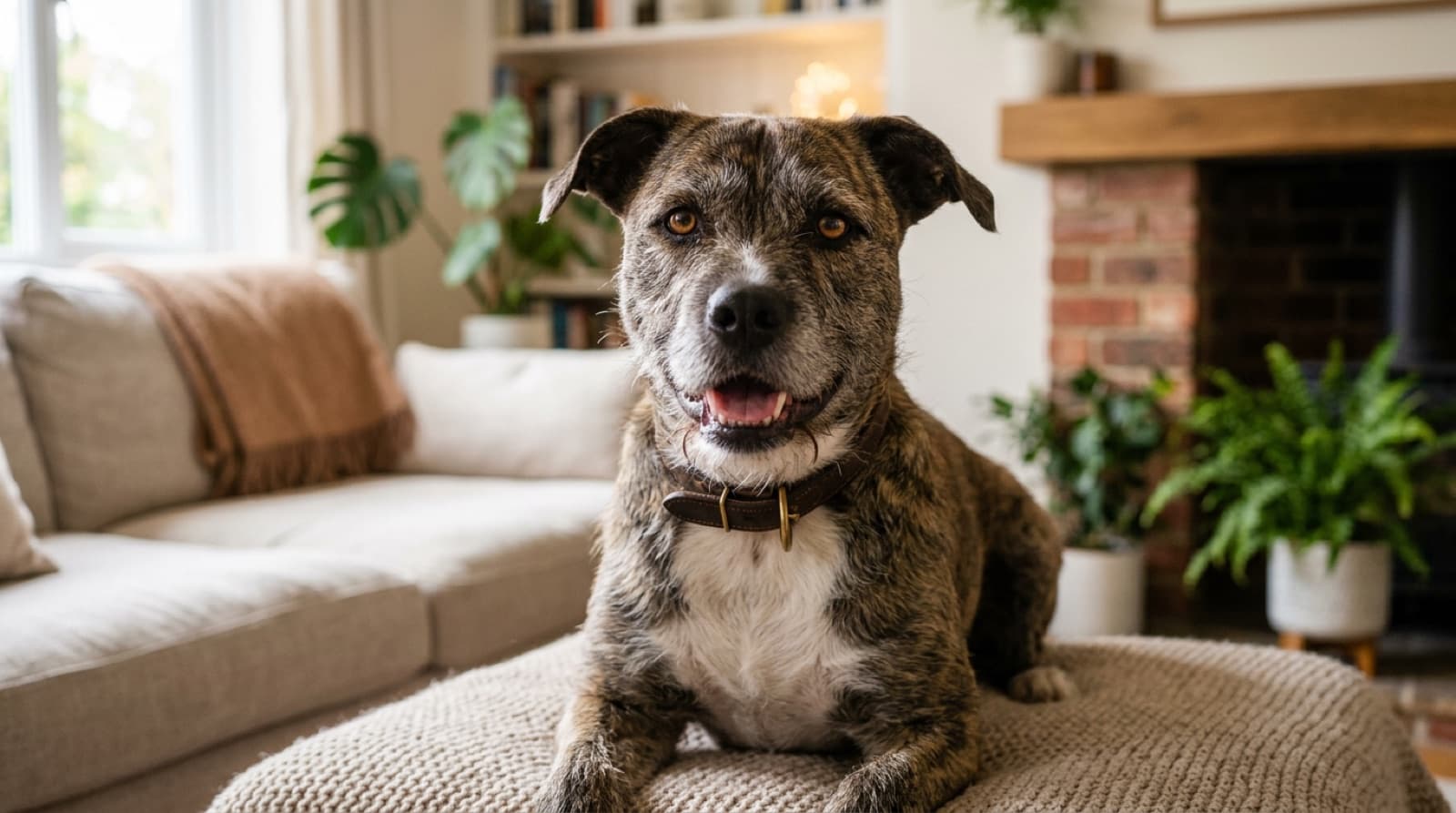
Pit Bulls typically reach 12 to 14 years, so senior care begins around age eight. The trade-off for adopting an older Pit Bull is shorter overall companionship in exchange for a calmer, settled dog who has aged out of the high-energy adolescent years. Many Edmonton rescue volunteers will tell you that senior Pit Bull adoptions are some of the most rewarding placements, partly because seniors sit in rescue much longer than younger dogs.
Reasonable senior-care adjustments, all guided by your Edmonton vet:
- Biannual vet exams instead of annual
- Full annual senior bloodwork including urinalysis
- Careful lump survey at every visit (MCT risk rises with age)
- Routine dental care including professional cleanings every 18 to 24 months
- Joint support if hip or elbow stiffness develops
- Weight monitoring (overweight seniors do worse on every front)
- Mobility aids if needed: orthopaedic bed, traction rugs on hardwood, ramps for stairs and vehicles
- Climate comfort (short coats feel Edmonton winter; a warm bed and a coat for outdoor time matter)
Some senior Pit Bulls develop spinal degenerative disease that presents as hind-end weakness or reluctance to jump. Your vet can advise on management, which ranges from joint support and physical therapy to specialty neurology referrals for more severe cases.
Pet insurance becomes harder and more expensive to obtain for first-time enrolment past age eight, and some providers will not enrol senior dogs at all. If you adopt a senior Pit Bull, price-compare carefully and consider whether a dedicated savings account makes more sense than insurance for your specific case. Talk through the math with your vet at the first visit.
Frequently asked questions
Where can I find a vet for a Pit Bull near me in Edmonton?
Any reputable Edmonton general-practice clinic is a fine starting point for routine Pit Bull care. For breed-specific concerns (chronic skin disease, mast cell tumour evaluation, orthopaedic surgery, cardiology), ask your general-practice vet which Edmonton specialty practice they refer to. Edmonton has a smaller specialty network than Calgary, and difficult cases occasionally route to the Western College of Veterinary Medicine in Saskatoon, which is the closest full veterinary teaching hospital. Some Edmonton Pit Bull owners also drive to Calgary specialty centres for procedures with shorter wait times. Establish a primary vet in month one and let them build the specialist network around your dog.
What are the main Pit Bull health issues to know before adopting?
Five conditions shape Pit Bull medical planning. First, atopic dermatitis (the breed-defining chronic skin allergy picture, the most common ongoing cost). Second, demodicosis (Pit Bull-type predisposition to the generalised form, especially in young dogs). Third, mast cell tumours (elevated breed risk, every skin lump needs vet evaluation). Fourth, hip dysplasia (moderate breed risk, surgical correction expensive). Fifth, cardiac conditions including aortic stenosis (less common but worth a screening auscultation, particularly in young Staffy-line dogs). Staffordshire Bull Terrier lines also carry two hereditary conditions with DNA tests available: L-2-Hydroxyglutaric Aciduria and hereditary cerebellar ataxia. An Edmonton rescue will share whatever medical history they have; gaps get filled in by your first-month vet workup.
My Pit Bull licks his paws constantly. Is that allergies?
Often yes. Paw licking, ear infections, flank chewing, and hot spots are the classic atopic dermatitis pattern in Pit Bulls, and the breed is one of the most commonly affected by canine atopic dermatitis according to veterinary dermatology references. Diagnosis starts with ruling out parasites and food allergy (an elimination diet trial), then proceeds to allergy workup if needed. Modern Edmonton treatment options include Cytopoint injections ($90 to $150 per month-equivalent dose), Apoquel daily tablets ($100 to $180 per month), prescription elimination diets, and immunotherapy for severe cases. The American College of Veterinary Dermatology is the relevant specialty board, and your Edmonton general-practice vet will refer to a board-certified dermatologist when needed. This is a lifelong management condition, not a curable one, which is why pet insurance enrolled before the first vet visit matters so much.
How is demodicosis treated in Pit Bulls?
Demodex is a skin mite that lives on most dogs at low levels. In Pit Bull-type dogs, immune-system susceptibility makes generalised overgrowth more common, especially in dogs under two and in stressed shelter-environment dogs. Diagnosis is by skin scrape (a vet scrapes a small skin sample and looks for mites under a microscope, $80 to $150 at an Edmonton clinic). Treatment in 2026 is straightforward: an isoxazoline-class oral medication (Bravecto, Simparica, NexGard, or Credelio) dosed for demodex by your vet. Course length is typically 6 to 12 months with repeat skin scrapes to confirm clearance. Cost runs $40 to $100 per month depending on dog weight. Most cases resolve cleanly; relapses are uncommon when treatment runs the full course. Generalised demodex in an older Pit Bull (over four) sometimes signals an underlying immune issue; your vet may recommend additional bloodwork.
What is a mast cell tumour and how worried should I be?
Mast cell tumours (MCTs) are the most common skin cancer in dogs and have elevated breed prevalence in Pit Bull-type dogs. They appear as skin lumps that can look like almost anything (a wart, a bug bite, a fatty lump, an angry red bump), which is why the rule is simple: every new skin lump on a Pit Bull goes to the vet. Diagnosis starts with a fine-needle aspirate ($150 to $300 at an Edmonton clinic), which often gives a definitive answer same-day. Treatment is surgical excision with wide margins, sent to a pathology lab for grading. Grade 1 and most grade 2 tumours have good long-term outcomes after clean surgical removal. Grade 3 tumours, or any tumour with incomplete margins, get referred to a veterinary oncologist for adjunctive treatment. Edmonton surgical cost typically runs $2,000 to $6,000 depending on tumour size, location, and reconstructive complexity. The American College of Veterinary Surgeons maintains practice standards for soft-tissue oncology surgery. The early-detection lesson: if you see a new lump, do not wait three months to see if it grows. Get it aspirated.
How much does hip dysplasia surgery cost for a Pit Bull in Edmonton?
Total hip replacement at an Edmonton specialty practice typically runs $7,000 to $10,000 per hip. Femoral head ostectomy (a salvage procedure, lower-cost) usually lands at $3,000 to $5,000. Mild and moderate cases are managed conservatively first: lean body weight (the single highest-leverage variable), joint supplements with glucosamine and omega-3, prescription anti-inflammatories during flare-ups, and structured physical therapy or hydrotherapy. Several Edmonton practices offer underwater treadmill rehab. Pit Bull hips are at moderate breed risk according to the Orthopedic Foundation for Animals registry data, not as high as Labrador or Golden but still meaningful. Pet insurance enrolled before diagnosis covers most of this; insurance enrolled after the diagnosis will not.
Should I have my Pit Bull screened for cardiac issues?
A routine cardiac auscultation at every annual vet visit catches most clinically relevant cases. For young Staffordshire Bull Terriers in particular, an echocardiogram with a board-certified cardiologist around age one to two is reasonable to screen for aortic stenosis (a congenital narrowing of the aortic valve that has documented breed prevalence). Echocardiogram cost at an Edmonton or Calgary specialty practice runs $500 to $900. If the rescue has any cardiac history on the dog, share it with your first-month vet. The American College of Veterinary Internal Medicine governs the cardiology specialty board, and your general-practice vet refers to a board-certified cardiologist when an echo is warranted. Most Pit Bulls have unremarkable cardiac exams; the screening exists to catch the small subset who do.
Are there genetic tests I should run on a Staffordshire Bull Terrier?
Two hereditary conditions in Staffordshire Bull Terrier lines have DNA tests available and are worth knowing about. L-2-Hydroxyglutaric Aciduria (L-2-HGA) is a metabolic disorder causing neurological signs that typically appear in young adults. Hereditary cerebellar ataxia (also called hereditary ataxia in Staffies) causes progressive coordination loss in young dogs. Both are recessive: a dog needs two copies to be affected. DNA tests are inexpensive ($150 to $250 from veterinary genetics labs) and definitive. If the rescue notes any neurological symptoms or coordination concerns in the foster write-up, prioritise these tests at your first vet visit. For American Pit Bull Terriers and American Staffordshire Terriers without these specific breed concerns, routine DNA testing is less important; mixed-breed Pit Bulls almost never need targeted testing unless symptoms point that way.
Should I get pet insurance for an Edmonton rescue Pit Bull?
Yes, and enrol in week one. Every Canadian provider excludes pre-existing conditions; the timeline starts the day you adopt. The breed-specific math for Pit Bulls is compelling because the recurring costs (allergy management at $80 to $200 per month, lifelong) and the catastrophic possibilities (mast cell tumour surgery $2,000 to $6,000, hip surgery $4,000 to $10,000) both apply. Monthly premiums for a young healthy Pit Bull in Edmonton typically run $50 to $90 depending on deductible and reimbursement percentage. Read for two things specifically: hereditary and congenital coverage (some cheaper policies exclude these and become useless for a Pit Bull), and explicit coverage for chronic skin conditions (atopic dermatitis is the single most common claim). Bilateral exclusion clauses matter less for Pit Bulls than for Huskies, but worth checking. The American Animal Hospital Association publishes general guidance on policy evaluation that applies to Canadian providers.
What health screening should I expect the Edmonton rescue to have done?
Reputable Edmonton rescues (SCARS, Zoe's, Edmonton Humane Society, GEARS, Hope Lives Here, AHHRB) perform a baseline vet workup before adoption: physical exam, core vaccinations (DAPP and rabies), spay or neuter, microchip, deworming, and basic bloodwork for adults. They also typically treat any obvious skin issues, demodex, or active medical concerns at intake. What is usually NOT covered: full thyroid panel, cardiac echo, hip radiographs, MCT aspirates on benign-looking lumps, or DNA testing. Plan a first-month vet visit with your chosen Edmonton vet to establish a baseline. The standard asks: a careful skin and ear exam, fine-needle aspirate of any visible lumps, cardiac auscultation, and a frank conversation about the dog's adoption-day skin status so future flares can be compared against a known baseline.
Related Edmonton Pit Bull guides
Edmonton Adoptable Dogs
Current Edmonton-area Pit Bull and Pit Bull-mix listings from SCARS, Zoe's, EHS, GEARS, Hope Lives Here, AHHRB, and AARCS Edmonton fosters.
Pit Bull Adoption Edmonton
Rescue sources, adoption fees, the long-wait pattern, and why bully-type dogs sit in Edmonton rescues for months despite excellent temperament assessments.
Pit Bull Housing & Insurance Edmonton
Edmonton landlord and condo restrictions, home insurance reality, the questions to ask before applying, and pet insurance shopping for bully-type breeds.
Pit Bull Temperament: Myth vs Reality
What the breed actually is, what foster assessments capture, and how to read Edmonton rescue temperament notes accurately when you apply.
Find your Edmonton rescue Pit Bull
Browse current Edmonton-area Pit Bull and Pit Bull-mix listings. Foster temperament notes help you flag any skin, lump, or mobility concerns before you apply, and your first-month vet workup builds the baseline.
Browse All Edmonton Dogs →New dog? Start with these care guides
Everything a new adopter needs to set up a safe, happy home.