The short answer
Shibas are cat-like Japanese primitives with selection-bred independence, escape-artist agility, and the famously unreliable Shiba recall. Force-free training is mandatory because aversive tools erode trust and Shibas remember corrections. Never off-leash in unfenced spaces. Six-foot fences with dig barriers and a worked-out door-management routine are baseline. The Shiba scream is normal vocalisation under stress, not pain, but rule out medical contributors first via our Shiba health issues guide.
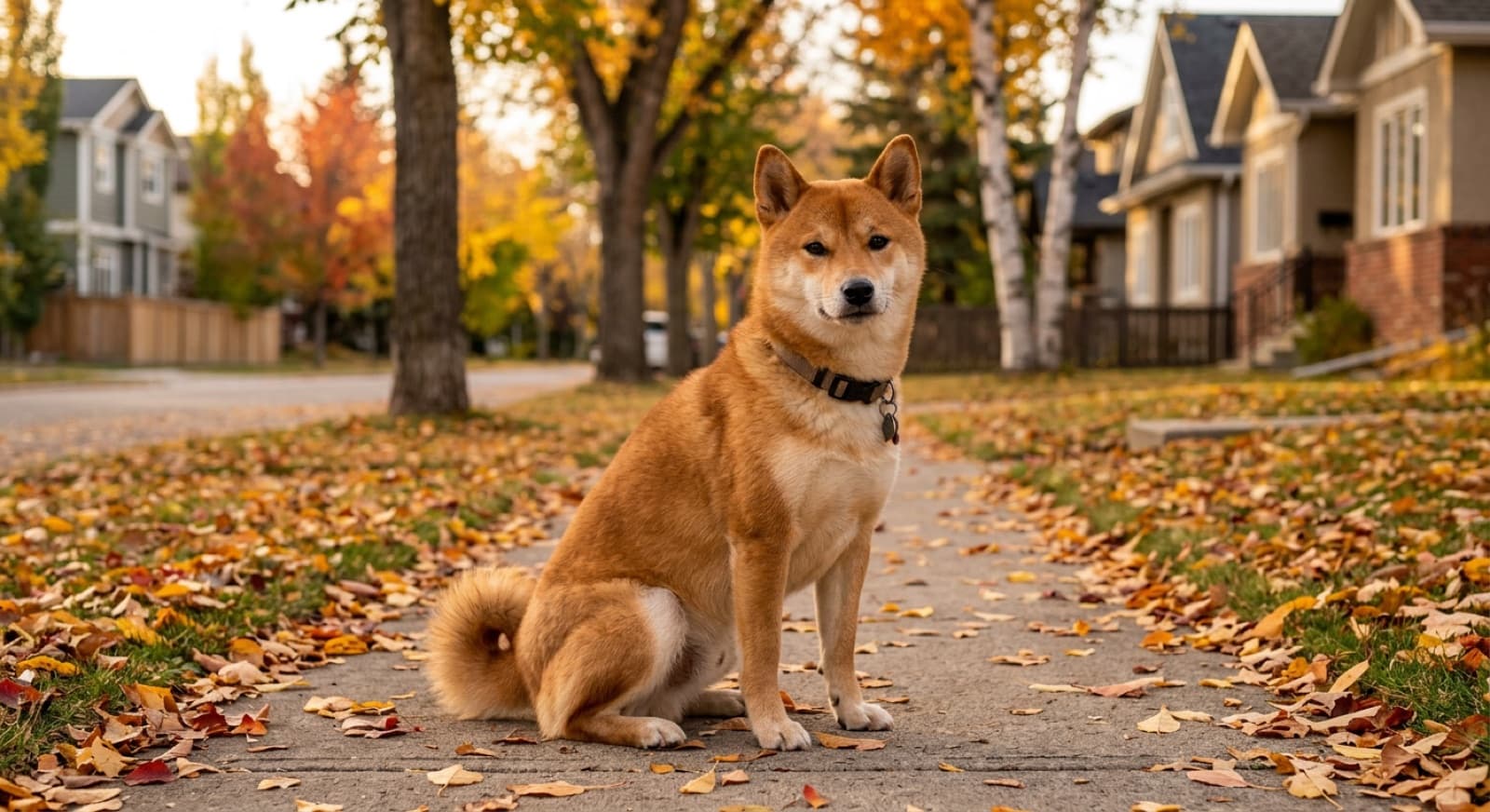
The Shiba temperament profile
The Shiba Inu is the smallest of the six native Japanese spitz breeds, developed in the mountainous regions of central Japan to flush small game and birds. The breed is ancient. DNA studies place Shibas among the most genetically distinct dogs in the world, closer to wolves than most modern breeds, and the primitive temperament shows up in everything from the cat-like grooming habits to the famous independence. The Canadian Kennel Club recognises the breed in the Non-Sporting group. Adult weight runs 17 to 23 pounds with a dense double coat.
The temperament package includes six core traits, each rooted in the breed's working history.
- Independent and confident. Shibas make decisions without consulting the handler. This is genetic. A working Shiba flushing birds in a mountain valley needed to act on its own, and the trait carries forward into the companion home as a dog that processes every cue rather than reflex-responding.
- Aloof with strangers. The default Shiba greeting is to ignore. A well-socialised adult Shiba on a walk often looks past an approaching stranger as if the person is not there. This is breed-typical, not a behaviour problem to fix.
- Cat-like in self-possession. Shibas groom themselves, walk away from rough handling, and rebuff hugs they did not invite. The comparison to a cat is accurate at almost every level except the meow.
- Dignified. Shibas carry themselves with deliberate posture. They are not bouncy clowns. Even Shiba puppies often look composed in a way other puppies do not.
- Resource-aware. Most Shibas guard valued items (food, chews, favourite resting spots) more than retriever breeds. Resource guarding is a default pattern to manage with trade-up protocols, not an exception.
- Confident solo. Shibas are not pack-dependent dogs. Many do best as the only dog in the household. The breed enjoys company but does not require it the way a Lab does.
Owners who understand the package have steady, fascinating companions for 13 to 16 years. Owners who expect Shiba temperament to look like Golden Retriever temperament end up frustrated. The mismatch is the single biggest predictor of Shiba surrender to Edmonton rescues, and the “doge” meme has done the breed real damage in Alberta over the past decade by selling the cute face without the cat-like soul.
Slow to bond is the breed default
Shibas are not Velcro dogs. The breed bonds deliberately, often over six to twelve months for an adult adopter, and longer for a rescue Shiba with prior trauma. New adopters who expect a Lab-style instant attachment frequently report that the dog seems indifferent or even rejecting in the first weeks. That reading is usually wrong. The Shiba is observing, evaluating, and processing the new environment. The bond builds through consistent care and predictable structure, not through demonstrative affection.
What works during the bonding window: a calm predictable routine, low-pressure interactions (sit near the dog rather than approach), high-value food delivered by the new handler, voluntary cooperation (the dog chooses to come to you rather than being pulled in), and time. What does not work: forced hugs, picking the dog up against its preference, expecting eye contact and obvious affection on day three, or pressuring the dog into close contact with strangers.
The adult bond, once it forms, is deep and genuine. Most Shiba owners describe the relationship as more equal-partner than handler-dog. The dog loves you on its own terms, and a Shiba who chooses to settle on the couch beside you at month nine is paying a real compliment.
Not a pack dog
Shibas were never developed as pack hunters. They worked solo or in small loose groups, flushing birds and small game in mountainous terrain, and the trait carries forward into the modern breed as confident solo dogs that do not need canine company to feel complete. Many Edmonton Shibas thrive as the only dog in the household.
Multi-Shiba households are possible but more complex than multi-Lab households. Same-sex Shiba pairs (particularly two adult females) have elevated conflict risk, less severe than the Akita pattern but present, and resource guarding between Shibas is more common than between retrievers. Opposite-sex pairs work more reliably, both ideally spayed or neutered, and rescues usually facilitate a structured meet-and-greet before placement into a multi-dog home.
Households committed to multi-dog life with a Shiba do best when the second dog is opposite sex, different size, and lower-arousal temperament. A Shiba with a calm older Lab or a mid-size mixed-breed is a more workable combination than two adolescent Shibas under the same roof.
Prey drive on small animals
Shibas were developed to flush and chase small game and birds. The prey response is genetic, strong, and not trainable away. For Edmonton households, this matters in four ways.
- Cats. Shibas raised from puppyhood with a resident cat often coexist fine with that specific cat while still being unsafe with unfamiliar outdoor cats. Adult Shibas adopted into homes with cats are a higher-risk introduction. Foster temperament evaluation matters more than breed generalisation.
- Small dogs under 15 pounds. Small fast-moving dogs sometimes trigger prey response in adult Shibas. The risk is highest when the small dog runs, yips, or behaves in a way that mimics prey. Off-leash interactions with unfamiliar small dogs are a known failure pattern.
- Rabbits, ferrets, hamsters, small birds. Generally unsafe. The close-quarters reality of household life means an incident can happen in seconds. Most reputable rescues will not place Shibas in homes with these animals.
- Urban wildlife on walks. Squirrels, rabbits, and small wildlife along Edmonton river-valley trails trigger lunging and bolting in many Shibas. A solid loose-leash foundation and a front-clip harness reduce but do not eliminate the response.
The honest screening question from rescues is whether the household has small pets and is willing to accept that this specific Shiba may never be safe with them. An adopter who says “we will just train it out” is the adopter most likely to surrender the dog within ninety days.
The Shiba recall is unreliable by genetics
Shiba recall is one of the most well-documented breed weaknesses in dog ownership. The behaviour-science explanation involves three overlapping genetic traits: independent decision-making (the dog evaluates the recall cue and decides), high prey drive (a moving stimulus outvotes the handler), and sighthound-like willingness to bolt and run at speed for long distances. The trait shows up across the breed worldwide and is consistent enough that breed clubs and reputable rescues warn every adopter directly.
What this means in practice for Edmonton owners: a Shiba should never be off-leash in an unfenced space. Not in the river valley, not on a hiking trail, not in a quiet park, not in an empty parking lot. The breed will bolt after a squirrel, a rabbit, a moving leaf, or a scent trail, and the recall that worked at home will fail at the critical moment. Most Edmonton lost-Shiba cases start with an owner who believed their training would hold and was proven wrong by a single moving stimulus.
The realistic alternatives that give the dog meaningful freedom:
- Long-line work. A 15 to 30 foot biothane or rope long line attached to a front-clip harness lets the dog run, sniff, and explore while keeping the bolt option off the table. Most Shibas do most of their off-leash-feeling exercise on a long line their entire life.
- Fully fenced off-leash zones. Some Edmonton neighbourhood off-leash parks are fully enclosed. These are the only public off-leash spaces a Shiba should run in. Off-peak hours reduce dog-dog conflict risk.
- Hourly fenced rentals. Private rental spaces (often booked through dog-services apps) give an individual dog or small known group full off-leash time in a securely fenced acre. The model exists in the Edmonton metro and is the safest off-leash option for a Shiba with reliable canine companions.
- Secure backyard. A properly fenced yard (see the fencing section below) is real off-leash space. Many Shibas do most of their daily zoomies in a 30-foot backyard run rather than in a public park.
Force-free trainers will still teach recall as a foundation skill because the cue is useful inside fenced spaces and as one layer of safety, but no credentialed trainer will tell you that a Shiba has a bombproof recall reliable enough for unfenced public use. The honest framing is that recall in a Shiba is a useful tool inside controlled environments, not a substitute for a secure boundary.
The escape-artist reality
Shibas escape. The breed combines sighthound-like agility, terrier-like determination, and primitive-breed intelligence in a small athletic package that finds and exploits weaknesses in fencing, doors, and leashes. Most Edmonton Shiba owners discover the escape-artist reality the hard way in the first six months. Anticipating it and engineering the home environment to defeat it is the only reliable approach.
The four common escape modes, ranked by frequency:
- Door-bolting. The most common escape. A door opens for a delivery, a guest, or a child, and the Shiba is through the gap in under a second. Once outside, the dog often does not respond to recall and bolts further. The fix is engineered door management, covered below.
- Fence climbing. Many Shibas climb chain-link, lattice, and even solid wood fences using foot-holds. A Shiba with motivation (a squirrel on the other side, a delivery truck) can scale a six-foot chain-link fence in seconds.
- Digging under. Shibas dig methodically along the fence line, particularly in shaded soft soil. A small dog needs only a six-inch gap. A dedicated escape attempt over multiple days creates that gap if there is no dig barrier.
- Leash-slipping. A Shiba in a flat collar can back out of the collar in under a second when motivated. Front-clip harnesses with two attachment points (chest plus back) and a martingale collar as backup are the standard for Shiba leash work.
The international Shiba community runs a network of lost-dog protocols and online alert groups because the escape rate is high enough to justify it. The realistic Edmonton planning assumption is that your Shiba will attempt to escape at least once in its lifetime. The question is whether the systems you have in place catch the attempt.
Edmonton fence requirements
The fence checklist for an Edmonton Shiba yard is not optional. Skipping any element creates a failure point.
- Six feet minimum height. Six feet defeats most Shibas. Some climb anyway; for those dogs, add a 45-degree inward lattice top that defeats the climb mechanically.
- Solid panels rather than chain-link. Climbing is harder on solid vertical wood than on chain-link with toe-holds every few inches. If chain-link is the only option, add a smooth top rail and consider an inward overhang.
- Dig barrier along the bottom. Paving stones laid flat against the fence line on the inside, buried hardware cloth (16-gauge welded wire mesh) extending 12 inches down and 12 inches inward, or a poured concrete curb. Without a dig barrier, the fence height is irrelevant; the Shiba digs under.
- No climbable objects within four feet of the fence on the inside. Garbage bins, woodpiles, air conditioner units, planters, snow piles in winter, kids' toys. Anything the dog can use as a launching point becomes a launching point.
- Self-closing gate with a working latch. The gate is the weakest part of every fence. A double-gate or vestibule entry is best. The latch should be one the dog cannot operate (Shibas can manipulate simple drop latches with their nose).
- No gaps under the gate. A four-inch gap at the bottom of a gate is a Shiba escape route. Add a brush sweep or a bottom rail.
Even with all of this, a Shiba in the yard should be supervised, not left for hours. The dog that tests the fence at month six and finds a weakness is the dog that is gone at month seven. Daily yard time is part of the routine; unsupervised yard time is the failure mode.
Door-management protocol
Door-bolting is the single most common Shiba escape mode in urban Edmonton homes. The dog learns within weeks that the front door opens occasionally, and that beyond the door is an interesting world full of squirrels and adventure. Once the dog has bolted successfully even once, the behaviour is reinforced and harder to extinguish.
The door-management protocol that works:
- A vestibule or baby gate. Install a baby gate or use a vestibule (interior hallway or porch) between the main living area and the front door. The Shiba cannot reach the door directly. Even an inexpensive pressure-mounted gate buys the critical three seconds.
- Leash-on-before-door-opens. The dog wears a leash any time the door is about to open: deliveries, guests, taking out the trash. The leash attaches to a sturdy point inside the vestibule. The cost is a few seconds per door event; the benefit is a Shiba that never bolts.
- Default settle on a mat. Train a strong settle-on-mat cue that the dog performs reliably when the doorbell rings. The mat is far enough from the door that the dog cannot reach it. Reinforce heavily with high-value food during training.
- Visitor protocol. Visitors are briefed before entering: do not open the door wide, do not greet the dog enthusiastically, step inside and close the door before any interaction. Family rules are most useful when guests know them.
- Children's training. Children in the household need explicit rules about door management: never open the front door without an adult, never leave a side door propped open, always check where the dog is before opening any door. A four-year-old following the rules prevents an escape that a perfectly trained Shiba could not prevent on its own.
- Microchip and tags. Current microchip registration and a visible collar tag with a phone number. The Shiba who escapes despite every system is the dog whose recovery depends on a stranger calling the number.
Most Edmonton owners who add door management to their routine find the bolt risk drops to near zero within a few months. The dog learns the door does not open the way it used to, and the household pattern stabilises around the new rules. The investment is modest; the payoff is enormous.
The Shiba scream
The Shiba scream is a piercing high-pitched vocalisation that sounds genuinely alarming the first time a new owner hears it. It is part of the breed's normal vocal repertoire. It is not necessarily a sign of pain. Common triggers include vet handling, nail trims, restraint by a stranger, being picked up against the dog's preference, grooming sessions, and frustration when the dog is prevented from doing something it wants to do. Most Shibas scream at least occasionally. Some scream more than others; individual variation is wide.
The management approach is not to suppress the scream but to reduce the underlying stress. The methodology is the same as for any breed handling reactivity, with adjustments for the Shiba's memory and trust profile.
- Cooperative-care training. Teach the dog to consent to handling. The dog learns that putting a chin on a target means it agrees to nail trims, ear checks, or grooming. The dog learns it can opt out, and that opting out does not produce force. The result is a Shiba that screams less because the handling is less stressful.
- Gradual desensitisation to specific triggers. Nail trims build over weeks: touch one paw with the clipper, reward, no actual cut. Build to one nail, reward. Build to all four paws over a month or more.
- Force-free vet visits. Ask the vet to allow muzzle training (the muzzle is a tool that lets handling happen safely without forcing), use high-value food during the exam, allow extra time, and avoid unnecessary restraint. A good Edmonton vet will collaborate on this.
- Rule out pain. A Shiba that suddenly screams in a context that did not produce it before needs a vet exam. Pain, dental issues, ear infections, and orthopaedic problems can all present as new vocalisation. The medical rule-out protocol lives in the cluster sibling on Shiba health issues.
- Condo and apartment management. Neighbours hear the scream and may not know what it is. A brief courtesy note to immediate neighbours explaining the breed-typical vocalisation reduces complaints and bylaw friction. Most Edmonton condo boards do not have a problem once they understand the dog is not in distress.
A Shiba that screams during routine handling needs a behaviour plan, not a louder correction. Punishing the scream worsens the underlying stress and erodes trust. Quiet handling is built through cooperative-care training over months, not through compulsion.
Resource guarding and trade-up protocols
Shibas guard valued items more than most breeds. Food, chews, favourite resting spots, sometimes a particular toy, occasionally a primary person. Resource guarding is a default behaviour pattern in this breed, not an exception, and managing it from day one prevents escalation.
The trade-up protocol works like this: when the dog has a valued item, never take it directly. Approach with a higher-value item (cooked chicken, cheese), offer the trade, take the original item gently while the dog eats the trade, then return the original item if it is safe to do so. The dog learns that human approach to a valued item predicts an upgrade, not a loss. Over weeks, the guarding response decreases because the dog has built up dozens of positive associations.
What does not work: confronting the dog, taking items away forcefully, “showing the dog who is boss,” or punishing the growl. The growl is information. Punishing it teaches the dog to skip the warning and bite without preamble, which is the most dangerous bite pattern.
Resource guarding that escalates over weeks rather than settling under a trade-up protocol warrants a same-week call to a CCPDT or IAABC behaviour consultant. Medical contributors (dental pain, GI discomfort, hypothyroidism) can also drive new or worsening resource guarding; rule those out via the health-issues guide.
Mounting behaviour
Mounting (humping, in casual usage) is common in Shibas and often arousal-related rather than sexual. Adolescent Shibas in particular mount during high-arousal play, when meeting new dogs, or during frustration. It is normal Shiba assertion behaviour, not necessarily a dominance display, and it does not require harsh correction to manage.
The management approach is to interrupt calmly, redirect to another activity, and reduce arousal. If the mounting is directed at people or escalates, a force-free behaviour consultant can help work out the trigger pattern. Punishing the mounting often increases arousal and makes it worse. Normalising it as a breed behaviour pattern while interrupting situations where it is problematic is the workable middle.
Force-free training methodology
Force-free, reward-based training is the methodology supported by current behaviour science across all breeds, and it is the only methodology that fits the Shiba. Aversive tools (prong collars, choke chains, e-collars, alpha rolls) are contraindicated for any breed on the American Veterinary Society of Animal Behavior (AVSAB) position statement on humane training. For Shibas specifically, the harm signal is amplified because the breed remembers corrections and recalibrates the relationship.
The training plan that works for the breed has four pillars.
Foundation skills, not a long trick list
Layer six to eight reliable skills rather than 40 mediocre ones. Name response, loose-leash walking, settle on a mat, long-line recall, trade-up, leave-it, default check-in, polite door behaviour. Trick training is fine after the foundations are solid; it is not the priority during the first 18 months.
High-value, variable reinforcement
An independent breed needs richer reinforcement than a biddable one. Cooked chicken, cheese, freeze-dried liver. A variable schedule (sometimes high-value, sometimes lower, occasionally a jackpot) keeps motivation steady. Predictable kibble-only reinforcement runs out of value fast with this breed.
Realistic timelines
A Lab might have a usable recall at 6 months and a reliable one at 18 months. A Shiba may never have a recall reliable enough for unfenced public use, and the foundations that other breeds reach in 12 months may take a Shiba 18 to 24. Owners who set expectations against the Shiba timeline rather than the sporting-breed timeline are less frustrated and more consistent.
Trainer credentials that matter
Dog training is unregulated in Alberta. The credentials that mean something are independent: CCPDT (Certification Council for Professional Dog Trainers) for trainers and IAABC (International Association of Animal Behaviour Consultants) for behaviour consultants. Ask any prospective trainer whether they have worked with primitive breeds specifically, what they would adjust for a Shiba, and what their position is on aversive tools. The answers matter.
Browse adoptable Edmonton Shibas
Current Edmonton-area Shiba and Shiba-mix listings from SCARS, the Edmonton Humane Society, AHHRB, and Zoe's Animal Rescue. Foster temperament notes describe the actual recall reliability, escape history, and household fit of the individual dog.
See Edmonton Adoptable Dogs →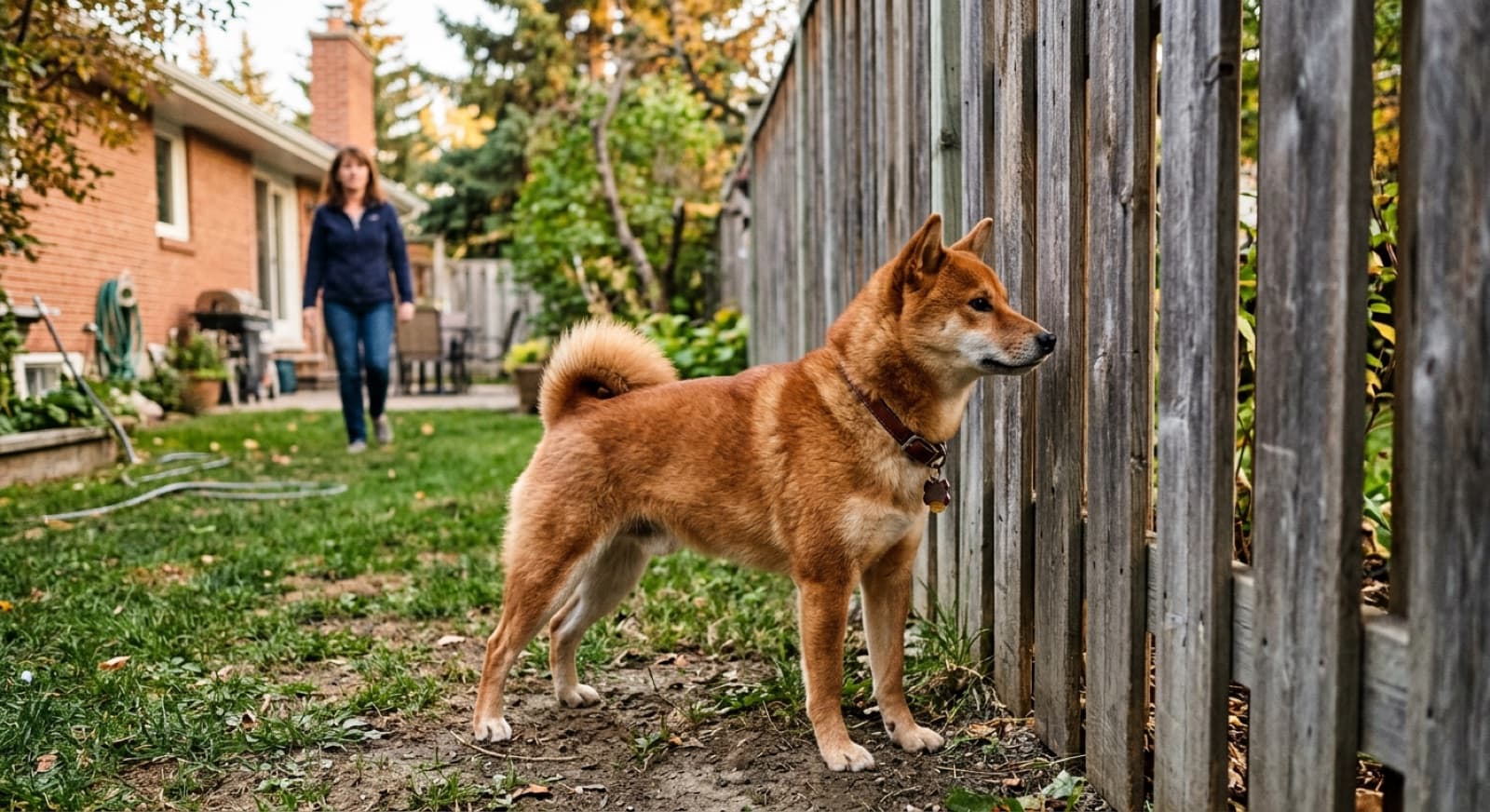
Adolescent maturation (15 to 30 months)
Shibas mature later than most small breeds. Most dogs reach adult temperament by 18 to 24 months. Shibas often take to 24 or 30 months, with full settling sometimes pushing past the second birthday. The extended adolescence shows up across several domains:
- Increased testing behaviour. The dog tests household rules, fence boundaries, leash discipline, and recall reliability through the 15 to 30 month window. Patterns that seemed solid at 12 months may need rework at 18.
- Same-sex tolerance shifts. Multi-Shiba households often see new conflict emerge between 18 and 24 months that was not present in puppyhood. Foster homes report this consistently.
- Resource guarding emergence. Adolescent Shibas often start guarding items they were neutral about as puppies. Trade-up protocols started early prevent the pattern from settling in.
- Reactivity peaks. Leash reactivity, stranger reactivity, and dog-dog reactivity often peak between 14 and 22 months. Most resolves with consistent force-free work by month 30. Owners who panic at month 18 and reach for aversives often make it worse.
The owners who push through the second year with consistent force-free training see the dignified, watchful adult the breed was selected to become. The owners who expect adult Shiba temperament at 12 months are usually frustrated and sometimes surrender the dog.
Lost-Shiba protocol for Edmonton
If your Shiba escapes, the first hour is the highest-recovery window. The protocol below is what works in practice for Edmonton recoveries.
- Do not chase. Running after a Shiba triggers play-flight. The dog runs faster, further, and stops responding to its name. Sit down, open something high-value (canned chicken, sardines, a familiar food smell), and call calmly. Many escapes end with the dog returning on its own within the first thirty minutes if no one chases.
- Drive the immediate area. If the dog is out of sight, drive the neighbourhood in your car with the windows down. Dogs often respond to a familiar car and engine sound. Cover a four-block radius in the first hour, then expand.
- Post immediately to local Facebook groups. Edmonton Lost and Found Pets and similar community groups have active members who watch for posts. Include a clear photo, last-seen location, time, and your phone number. Post within the first hour.
- File with Edmonton Animal Care and Control. Call 311 to file a lost-pet report. The City coordinates lost-pet recovery with the Edmonton Humane Society, which maintains a lost-pet portal. File at both.
- Notify your microchip registry. Flag the chip as lost so any vet, shelter, or person who scans it sees the alert immediately. The chip is the most reliable single recovery tool.
- Knock on neighbour doors within four blocks. Most Shibas are found in someone's yard or under someone's deck. A direct knock with a photo gets faster results than a flyer.
- Use Pawmaw or similar alert services. Paid alert services that distribute the lost pet to local databases and to other pet owners in the area can speed recovery.
- Check the river valley if relevant. A Shiba near the North Saskatchewan River valley may follow the trail system for kilometres. Check trail entry points and post in trail-user community groups.
- Stay visible to the dog. If you spot the dog from a distance, do not run toward it. Sit down, become small, and call calmly while opening something smelly. Most recovered Shibas come back to a stationary calm owner rather than a chasing one.
- Keep posting for days, not hours. Some Shibas are recovered after a week or more. Refresh the social media post daily. Keep the report active with the City and the Humane Society. The dog that does not turn up in 24 hours is not necessarily lost permanently.
Most Edmonton lost-Shiba cases are resolved within 24 to 72 hours when the owner activates the protocol in the first hour. The cases that drag past a week are usually the ones with no microchip, no online posting in the first hour, and an owner who chased on foot for two hours before doing anything else. Activate fast, stay calm, and trust the community network.
Stranger reactivity: ignore is the default
The default Shiba response to strangers is to ignore, not to greet. A well-socialised adult Shiba on a leash walk often looks past an approaching stranger as if the person is not there. This is breed-typical and not a behaviour problem. Owners who try to push the dog into Lab-style greeting (hello to every stranger, sit for petting) are working against the breed.
What does work is structured neutral exposure during the puppy socialisation window (3 to 14 weeks) and consistent low-pressure exposure through adolescence. A puppy Shiba who meets dozens of calm strangers without being pushed into close contact builds a stable adult pattern of ignoring or briefly acknowledging strangers without reactivity. A puppy Shiba forced into close contact with strangers (especially strangers who reach over the head) often grows into an adult more reactive than the breed default.
For Edmonton owners, the practical pattern is to walk the dog through busy public spaces (downtown sidewalks, farmers' markets, outdoor patios at off-peak times) and let the dog observe people from a comfortable distance without expectation. Most adult Shibas reach a calm watchful pattern with strangers by age 3 if the foundation was built well in puppyhood.
City of Edmonton Bylaw 21244
Alberta has no breed-specific legislation, and the City of Edmonton Animal Care and Control Bylaw 21244 treats Shibas the same as every other breed. The dog-at-large provisions apply directly to escape-prone breeds: a Shiba off-leash in a public space without recall is at risk of an at-large citation if the dog is observed by bylaw enforcement, and an escape that ends in someone's yard or in a confrontation with another dog can carry additional fines.
For Shiba owners, the practical implications:
- License the dog under Bylaw 21244. Required for all dogs in Edmonton. The licence connects the dog to the owner of record in case of loss or escape. The licence number on a tag speeds recovery substantially.
- Microchip and keep registration current. Lost-dog recovery is faster with current microchip data. Update the chip whenever you move or change phone numbers.
- Leash everywhere outside fenced yards. Bylaw requires leash in public spaces. For a Shiba with unreliable recall and high prey drive, the bylaw position is also the safe position. There is no productive disagreement here.
- Dangerous-dog provisions are behaviour-based. A dog can be declared dangerous after biting, attacking, or threatening a person or animal, regardless of breed. Force-free training that prevents bites is also the practical legal methodology because aversive tools increase bite probability on AVSAB evidence, and increased bite probability increases legal exposure.
- Carry liability coverage. Most homeowner insurance policies cover dog-bite liability, though some apply limits or exclusions. Confirm coverage with the carrier; a Shiba with no bite history is usually covered, but a documented incident can trigger non-renewal.
The bylaw environment rewards owners who manage their dog well: licensed, microchipped, on-leash in public, trained with force-free methodology, and recovered fast when an escape happens. The system is built for the responsible owner; the Shiba-specific layer is the fence and door management that prevents the escape in the first place.
When to escalate to a veterinary behaviourist
A force-free trainer handles foundation skills and most normal Shiba behaviour management. An IAABC behaviour consultant handles entrenched reactivity, resource guarding, or aggression that has not responded to standard protocols. A veterinary behaviourist credentialed through the American College of Veterinary Behaviorists (DACVB) handles cases that need diagnosis of a behavioural disorder and often medication alongside training.
Escalate to a DACVB for any of these triggers:
- Any actual bite to a human that breaks skin or holds.
- Resource guarding that escalates over weeks rather than settling under a trade-up protocol.
- Sustained generalised anxiety that prevents the dog from settling anywhere.
- Severe noise phobia producing self-injury or full panic.
- Predatory bite-and-shake on a cat or small dog.
- Sudden behaviour change in an adult dog after thyroid and pain have been ruled out.
The closest DACVB-staffed program for Edmonton is the Western College of Veterinary Medicine at the University of Saskatchewan in Saskatoon. Consultations run by referral from your primary vet, sometimes by telehealth, and expect $400 to $800 for an initial workup plus medication and follow-up costs. For genuinely dangerous behaviour or for cases where training is plateauing, this is the right tier. Medical contributors that mimic behaviour change (pain, hypothyroidism) should be ruled out first via the Shiba health issues guide; behaviour work without a medical workup is incomplete.
Day-to-day Shiba routine
The structured day for an Edmonton Shiba blends typical companion-dog routines with adjustments for the breed's escape risk, independence, and arousal patterns.
- Morning yard check or short patrol. A brief outdoor session before breakfast in the secure fenced yard. The dog gets an environment scan to start the day.
- Breakfast as enrichment. Slow feeder, snuffle mat, or frozen puzzle. Not free-fed from a bowl. Channels resource-aware behaviour into a controlled activity.
- Morning leashed walk, 30 to 45 minutes. Loose-leash work, name response drills, neighbourhood exposure. Always on leash outside fenced spaces.
- Mid-morning training session, 5 to 10 minutes. Foundation skills, high reinforcement rate, end before the dog disengages.
- Daytime indoor settle. The Shiba rests for several hours through the day. A designated bed or place near family activity.
- Midday potty break in the fenced yard. Brief, structured, leash on if there is any reason to suspect the gate latch is uncertain.
- Afternoon long-line walk or fenced off-leash time. 30 to 45 minutes of meaningful exercise on long line in a low-traffic area, or off-leash in a fully fenced space.
- Late afternoon training or scent game. 10 to 15 minutes of mental work. Find-it games, puzzle feeders, structured trade-up practice.
- Dinner as enrichment. Same pattern as breakfast.
- Evening indoor settle with chew or puzzle. The dog channels evening alertness into a contained activity near family.
- Door-management drill at every door event. Leash on before opening, settle on mat for doorbell, baby gate engaged. Not optional. Every door event is a training rep.
- Overnight indoor sleep. The dog sleeps near family or in a designated indoor space. Outdoor overnight sleep produces alarm response and increases escape attempts.
Total handler-engaged time runs about 90 to 120 minutes, which overlaps with normal household routine. Owners who hold this structure through the first 18 to 24 months find the routine becomes automatic, and the dog settles into the calm dignified adult pattern as the maturity window closes.
Red flags: when to call for help today
Most Shiba behaviour is normal primitive-breed behaviour managed with structure and force-free training. A smaller subset is genuine crisis behaviour that warrants a same-week call to a force-free trainer, an IAABC behaviour consultant, or a veterinary behaviourist.
- Any actual bite to a human that breaks skin or holds, regardless of context.
- Repeated successful escapes despite a fence and door audit. The escape pattern needs a behaviour and environment intervention, not just a higher fence.
- Resource guarding that escalates over weeks rather than settling under a trade-up protocol.
- Predatory bite-and-shake on a cat, small dog, or wildlife.
- Sleep-startle aggression where the dog snaps or bites when woken or approached while resting.
- Generalised inability to settle for more than a few minutes at a time in a quiet home.
- Sudden behaviour change in an adult dog with no environmental cause, after thyroid and pain have been ruled out.
Calling early is always cheaper than calling late, and reputable Edmonton rescues are usually willing to consult informally with adopters in the first months. The conversation that ends with a referral to a credentialed behaviour consultant at week six is a much better outcome than the conversation at month eight where the family is exhausted and the dog has built up an escape and incident history. Medical contributors live in the Shiba health issues guide.
Frequently asked questions
How do I train a Shiba Inu in Edmonton?
Train a Shiba with a force-free, reward-based methodology and a trainer who understands primitive breeds. Shibas are not biddable in the Lab or Golden sense. They process every cue rather than reflex-responding, and they have one of the worst off-leash recall reputations of any small breed. The plan that works is six to eight foundation skills (name response, loose-leash walking, settle on a mat, long-line recall, trade-up for resources, leave-it, default check-in, polite door behaviour), very high-value reinforcement (cooked chicken, cheese, freeze-dried liver), and a CCPDT or IAABC credentialed trainer with primitive-breed experience. Aversive tools (prong, e-collar, alpha rolls) are contraindicated on the AVSAB position for all breeds, and the harm signal is amplified in Shibas, who often remember the correction and lose trust in the handler. The realistic timeline is slower than for a retriever: expect 18 to 24 months of consistent work for solid foundations.
Why does my Shiba scream?
The Shiba scream is a piercing high-pitched vocalisation Shibas produce when distressed, restrained, frustrated, or anxious. It is not necessarily a sign of pain. Common triggers include nail trims, vet handling, restraint by a stranger, being picked up against the dog’s preference, grooming sessions, or being prevented from doing something the dog wants to do. The scream sounds alarming and condo neighbours hear it, but it is part of the breed’s normal vocal repertoire. The management approach is not to suppress the scream but to reduce the underlying stress: cooperative-care training for handling, gradual desensitisation to nail trims and grooming, force-free vet visits with high-value reinforcement, and a vet who allows muzzle training and slow handling. A Shiba who screams during routine handling needs a behaviour plan, not a louder correction. If the scream appears suddenly in a context that did not produce it before, rule out pain with your vet first.
Can a Shiba Inu be off-leash in an Edmonton dog park?
For most Shibas, the honest answer is no, particularly in unfenced river-valley off-leash zones. The breed has a notoriously unreliable recall driven by independent thinking, high prey drive on small mammals, and sighthound-like willingness to bolt after a moving target. Most Edmonton lost-dog cases involving Shibas start with an owner who thought their dog had a reliable recall and was proven wrong by a squirrel. The realistic pattern for Shiba off-leash work is fully fenced spaces only: hourly fenced rentals at private facilities, fenced neighbourhood off-leash zones at off-peak hours with a known dog, or a secure backyard. Long-line work on quieter trail segments gives the dog meaningful freedom without the bolt risk. Unfenced off-leash time with a Shiba is the single most common cause of a lost-dog crisis in this breed.
How tall does a fence need to be for a Shiba Inu in Edmonton?
Six feet is the minimum, and even six feet is not always enough. Shibas climb chain-link with surprising agility, slip through gaps under fences, dig under solid panels, and squeeze through openings that look too small. The fence checklist for an Edmonton Shiba yard is six feet minimum height, solid panels rather than chain-link where possible (climbing is harder on solid wood), a dig barrier (paving stones or buried hardware cloth along the bottom), no climbable objects within four feet of the fence on the inside (garbage bins, woodpiles, AC units, planters), and a self-closing gate with a working latch the dog cannot operate. Some Shiba owners add a 45-degree inward lattice top to defeat climbing entirely. Even with all of that, a Shiba in the yard should be supervised, not left unsupervised for hours. The dog who tests the fence at month six and finds a weakness is the dog who is gone at month seven.
Are Shiba Inus good with cats and small pets?
Sometimes, with the right individual Shiba and careful introduction, but high prey drive is a real consideration. Shibas were developed to flush small game and birds in mountainous Japan, and the prey response to fast-moving small animals is genetic. Shibas raised from puppyhood with a resident cat often coexist fine with that specific cat while still being unsafe with unfamiliar cats outside. Adult Shibas adopted into homes with cats are a higher-risk introduction. Rabbits, ferrets, hamsters, and small birds are usually unsafe and most rescues will not place Shibas in homes with them. The honest screening question from a rescue is whether the household is willing to accept that this specific Shiba may never be safe with small pets, and the foster temperament evaluation matters more than any breed-level generalisation. Take the foster note seriously when it says the dog reacts to the foster home cat through a baby gate.
How long does it take to bond with a Shiba Inu?
Longer than with most breeds. Shibas are not Velcro dogs. The breed bonds deliberately and over time, often six to twelve months for full trust with an adult adopter and longer for a rescue Shiba with a difficult prior history. The cat-like comparison is accurate. A Shiba may follow you from room to room not because they need attention but because they are tracking what is happening, and may rebuff a hug that a Lab would lean into. The bond, once formed, is genuine and deep, but it is built through consistent care and predictable structure rather than through demonstrative affection. Owners who expect a Lab-style instant attachment are often disappointed in the first three months. Owners who give the dog space, build a calm predictable routine, and let the relationship develop on the dog’s schedule report strong adult bonds by month nine to twelve.
My Shiba bolted out the door. What do I do?
Act fast and stay calm. Hour one is the highest-recovery window. Do not chase the dog (running after a Shiba triggers play-flight and they almost always outpace you). Sit down, open a tin of something high-value (canned chicken, sardines), and call the dog back in a relaxed voice. If the dog is already out of sight, drive the immediate neighbourhood in your car with the windows down (dogs often respond to a familiar car), post in Edmonton Lost and Found Pets Facebook groups and Pawmaw, file a lost-pet report with Edmonton Animal Care and Control through 311, and check the Edmonton Humane Society lost-pet portal. Notify your microchip provider so the chip is flagged. Knock on neighbour doors within four blocks. Most recovered Shibas are found within 24 hours through community sightings; the cases that drag past a week are usually the ones with no microchip and no online posting in the first hour. The lost-Shiba protocol below covers the full sequence.
Are Shibas good apartment or condo dogs in Edmonton?
Generally yes, with two caveats. Shibas are small (17 to 23 pounds), clean, and quiet day to day, which suits condo life well. The first caveat is the Shiba scream: it is loud, high-pitched, and hard to ignore for neighbours, so cooperative-care training to reduce handling stress is essential. The second is the bolt risk at the unit door. A Shiba in a condo hallway will dart for the elevator the moment a door opens, and an open elevator is a tempting escape route. Door-management training, a leash-on-before-door-opens habit, and a baby gate or vestibule between the main living area and the front door reduce the risk substantially. For owners willing to manage both, Shibas adapt to condo life better than most spitz breeds.
What is the Shiba 500?
The Shiba 500 is the breed nickname for the high-arousal sprinting zoomies Shibas display when over-excited, frustrated, or simply happy. The dog tucks the rear under, drops into a low-slung posture, and tears around the yard, living room, or hallway at full speed in tight circles or figure-eights. It is normal behaviour, not a sign of anxiety, and most Shibas do it daily through their first three years. The management approach is to give the dog a safe space to do it (fenced yard, empty hallway, off-leash play indoors with breakables moved) rather than to suppress it. A Shiba who has been on a structured walk, had a training session, and worked a puzzle feeder still does a Shiba 500 at 8 PM. That is the breed.
When should I escalate to a veterinary behaviourist for my Shiba?
Most Shiba behaviour is normal primitive-breed behaviour managed with structure, force-free training, and patience. A smaller subset warrants escalation to a DACVB credentialed veterinary behaviourist through the American College of Veterinary Behaviorists. The triggers are the same as for any breed: an actual bite to a human that breaks skin, resource guarding that escalates over weeks rather than settling under a trade-up protocol, sustained generalised anxiety, severe noise phobia producing self-injury, predatory bite-and-shake on a cat or small dog, or sudden behaviour change in an adult dog after thyroid and pain have been ruled out. The closest DACVB-staffed program for Edmonton is the Western College of Veterinary Medicine in Saskatoon, accessed by referral from your primary vet. Force-free trainers and IAABC behaviour consultants handle most cases; the DACVB tier is for diagnosis and prescribing when training alone is not enough. The cluster sibling on Shiba health issues covers medical rule-outs (pain and hypothyroidism) that mimic behaviour change.
Why are aversive training tools especially bad for Shibas?
Two breed-specific reasons. First, Shibas have long memories. A Shiba corrected with a prong, e-collar, or harsh physical handling often remembers the event indefinitely and recalibrates the relationship with the handler. Trust erodes in a way that is hard to recover from with this breed. Second, Shibas often fight back rather than submit. The primitive temperament selects for independent decision-making, not deference, and a Shiba pressured with aversive correction may respond with a bite, a scream, or sustained avoidance. The AVSAB position on humane training notes increased fear, anxiety, and aggression across all breeds; Shibas show the response at the high end of the curve. Force-free reward-based training is the only methodology that fits the breed, and it is also the methodology with the strongest behavioural-science support.
Related Edmonton Shiba guides
Edmonton Adoptable Dogs
Current Edmonton-area Shiba and Shiba-mix listings from SCARS, EHS, AHHRB, Zoe's, and other Edmonton rescues. Foster notes describe real recall reliability and household fit.
Shiba Inu Adoption Edmonton
The rescue-first Shiba adoption guide: local intake patterns, surrender pipeline, breed disambiguation, real fees, and the adopter readiness check.
Shiba Inu Health Issues: Knees, Eyes, Hips
Shiba Inu health issues to plan for: slipping kneecaps, hips and eye disease (the breed club’s recommended tests), itchy skin, and the rare inherited disease GM1 gangliosidosis.
Shiba Coat & Grooming Edmonton
Double-coat management, twice-yearly coat blow, undercoat rake technique, Edmonton winter coat care, and the realistic grooming budget for a clean cat-like primitive breed.
Find your Edmonton rescue Shiba
Browse current Edmonton-area Shiba and Shiba-mix listings. Foster temperament notes describe real recall reliability, escape history, and the household match each dog will need.
Browse All Edmonton Dogs →New dog? Start with these care guides
Everything a new adopter needs to set up a safe, happy home.