The short answer
IVDD (intervertebral disc disease) is the risk that defines the Dachshund, and a large share of the breed experiences some form of it. You cannot erase the genetic risk, but you can meaningfully reduce it: keep the dog lean, ban jumping on and off furniture (use ramps or steps), use a harness not a collar, support the back when lifting, and provide moderate muscle-building exercise. Know the emergency signs, a hunched back, yelping, shivering, and especially hind-leg weakness or dragging, and treat any of them as urgent, because with disc disease, speed to treatment can decide whether a dog walks again. Red Deer has local 24-hour emergency care, so you are not facing a long drive; spinal surgery is referred to Calgary or Edmonton.
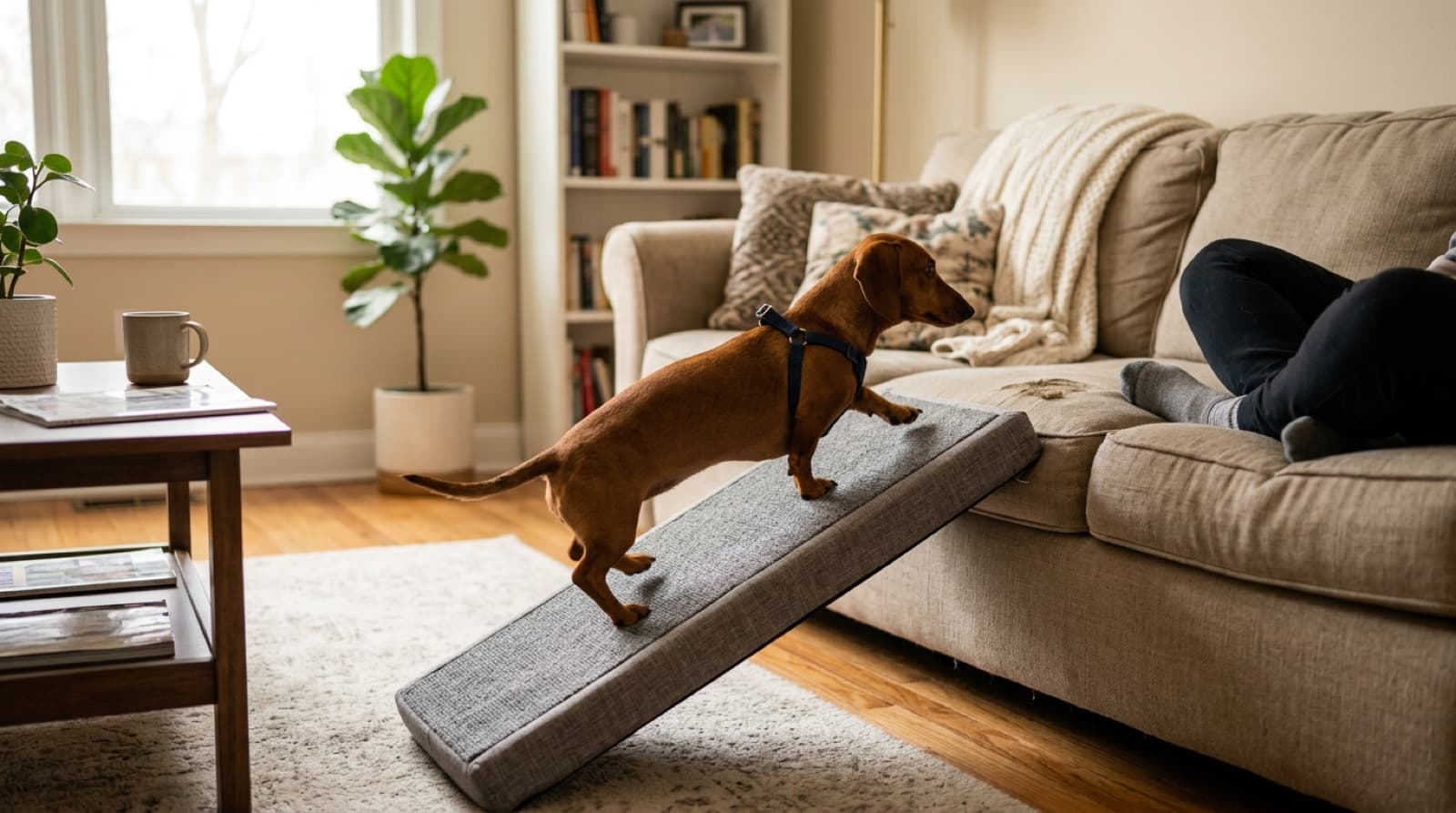
What IVDD is, and why Dachshunds get it
The discs that cushion the vertebrae degenerate and can bulge or rupture, pressing on the spinal cord and causing pain, weakness, or paralysis. Dachshunds are affected far more than most breeds because their long backs and short legs come from a form of dwarfism that also makes the discs prone to early degeneration. This is why the risk is genetic and lifelong, and why prevention focuses on reducing the stress on discs that are already vulnerable. It ranges from a painful episode managed with rest to a spinal emergency needing surgery. The encouraging part, covered next, is how much of the everyday risk you actually control.
The Orthopedic Foundation for Animals supports screening programs relevant to the breed’s heritable conditions.
The prevention that genuinely works
Keep the dog lean. Excess weight is one of the biggest controllable risk factors for disc disease. Measured feeding is your single most powerful tool.
Ban jumping. Jumping on and off furniture, beds, and out of cars repeatedly jolts the spine. Use ramps or pet steps, and block access to high surfaces. Carry the dog on steep stairs.
Use a harness, not a collar. A collar strains the neck and cervical spine when a dog pulls; a well-fitted harness spreads the pressure across the chest. Attach the leash to the harness.
Lift properly. One hand under the chest, one under the hindquarters, keeping the spine level. Never dangle the dog by the front or let the back end drop.
Build supporting muscle. Moderate, regular exercise strengthens the muscles that stabilise the spine, without the high-impact activity that stresses it.
The back emergency: signs and what to do
Know the signs and act fast. Early: reluctance to jump or climb, a hunched back, a tense belly, shivering, yelping when moving or lifted. Advanced and urgent: hind-leg weakness or wobbliness, dragging or knuckling the back paws, and loss of the ability to walk. Any hind-leg weakness or paralysis is a veterinary emergency. Keep the dog as still and confined as possible, support the spine if you must move it, and get to a vet immediately, because with disc disease the window to treatment can decide whether a dog recovers the ability to walk. In Red Deer, call your vet or a local 24-hour emergency clinic at once, the city has emergency care, so you are not facing a long drive in the crisis. Spinal surgery, if needed, is usually referred to Calgary or Edmonton. Do not wait to see if it improves.
Most mild-to-moderate cases recover with strict crate rest and medication; severe ones may need surgery, and many still regain walking if treated promptly. Know your options ahead of time with our Red Deer emergency vet guide, and see the cost picture in our Dachshund health issues guide.
Ready for a Dachshund of your own?
Browse adoptable Dachshunds from Central Alberta rescues. Ask the foster about any back history so you can plan the care.
See Available Dachshunds →Frequently Asked Questions
What is IVDD in Dachshunds?
IVDD stands for intervertebral disc disease, and it is the health issue that defines the Dachshund. The discs that cushion the vertebrae in the spine degenerate and can bulge or rupture, pressing on the spinal cord and causing pain, weakness, and in severe cases paralysis. Dachshunds are affected far more than most breeds because their long backs and short legs are a product of a form of dwarfism (chondrodystrophy) that also makes the discs prone to early degeneration. A large share of Dachshunds experience some form of IVDD in their lives. It ranges from a painful episode managed with rest and medication to a spinal emergency requiring surgery. Understanding it, and how much of the risk you can influence, is the most important part of owning the breed.
What are the early warning signs of a Dachshund back problem?
Catching a back problem early can change the outcome, so know the signs. Watch for reluctance or refusal to jump or climb stairs the dog used to manage, a hunched or arched back, a tense abdomen, shivering or trembling, yelping or crying when picked up or when moving, reluctance to move at all, and a general sense that the dog is in pain. More advanced signs are wobbliness or weakness in the hind legs, dragging the back paws, knuckling over on the paws, and loss of the ability to walk or move the back legs. Any of these, and especially any hind-leg weakness or paralysis, is a veterinary emergency, treat it as urgent, because with disc disease, time to treatment can affect whether a dog recovers the ability to walk.
How do I prevent back problems in my Dachshund?
You cannot eliminate the genetic risk, but you can meaningfully reduce it, and the prevention is concrete. Keep the dog lean, because excess weight is one of the biggest controllable risk factors for disc disease. Ban jumping on and off furniture and beds, which repeatedly jolts the spine, by using ramps or pet steps and blocking access to high surfaces. Discourage stairs where you can, and carry the dog on steep ones. Support the back properly when lifting: one hand under the chest, one under the hindquarters, keeping the spine level, never dangling the dog by the front or letting the back end drop. Use a harness rather than a neck collar to avoid strain. And provide moderate, regular exercise to build the muscles that support the spine, without the high-impact stuff that stresses it.
Should I use a harness instead of a collar on a Dachshund?
Yes, a harness is strongly recommended for Dachshunds over a neck collar. A collar puts pressure on the neck and can strain the cervical spine when a dog pulls, and Dachshunds can have disc problems in the neck as well as the back. A well-fitted harness distributes the pressure across the chest and shoulders instead, protecting the neck and spine, and it also gives you more control and a safer point to guide the dog without jerking its neck. Choose a harness that fits snugly without rubbing and does not restrict the shoulders. Keep the collar for ID tags if you like, but attach the leash to the harness. It is a small, cheap change that removes an avoidable source of strain on a spine that is already vulnerable.
What should I do if my Dachshund suddenly cannot walk or is in pain?
Treat it as an emergency and act fast. If your Dachshund suddenly shows severe back pain, hind-leg weakness, dragging the back legs, or an inability to walk, keep the dog as still and confined as possible to prevent further injury, support the spine if you must move it, and get to a vet immediately. With disc disease, the window to treatment matters, because prompt intervention, whether medical management or surgery, gives the best chance of recovery, and delay can mean the difference between walking again and permanent paralysis. In Red Deer, contact your regular vet or a local 24-hour emergency clinic at once, the city has emergency veterinary care, so you are not facing a long drive in the crisis, and knowing your nearest emergency clinic in advance saves precious time. Spinal surgery, if needed, is usually referred to Calgary or Edmonton. Do not wait to see if it improves on its own.
Can a Dachshund recover from IVDD?
Often yes, and many Dachshunds recover well, though it depends on the severity and how quickly it is treated. Mild to moderate cases, where the dog still has pain sensation and some movement, frequently recover with conservative treatment: strict crate rest for several weeks, anti-inflammatory and pain medication, and a careful, gradual return to activity, sometimes with physiotherapy. More severe cases, especially with loss of movement, may need spinal surgery, and even then many dogs regain the ability to walk if treated promptly. Some dogs are left with lasting deficits and adapt well, including with wheeled carts. The keys to a good outcome are speed of treatment and strict adherence to the rest and rehab plan, which is hard with a lively dog but essential. Your vet will guide the specific plan.
Does the cold Red Deer winter affect a Dachshund’s back?
Cold itself does not cause disc disease, but a Central Alberta winter creates some back-related considerations worth managing. A cold, stiff dog is more vulnerable to injury from a sudden movement, so keeping a Dachshund warm with a coat and not letting it leap around while chilled helps. Icy, slippery surfaces raise the risk of a fall or an awkward twist that could stress the spine, so watch footing on ice and consider booties for grip. Deep snow makes a low dog work hard and can lead to awkward struggling movements, so keep to shovelled paths. And because winter limits outdoor exercise, be careful the dog does not gain weight from reduced activity, since weight is a key back risk. Keep the dog warm, lean, and on secure footing through the season.
Is it safe to adopt a Dachshund that has already had a back injury?
It can be, with clear information and realistic expectations. A Dachshund that has recovered from an IVDD episode may live a full, happy life with ongoing back-protective care, and rescues are usually upfront about a dog’s back history so you can plan. Ask the rescue for the details: what happened, how it was treated, the current mobility, any lasting deficits, and any ongoing needs. A dog with a past episode is at somewhat higher risk of another, so the prevention, lean weight, ramps, no jumping, a harness, becomes even more important. Some adopters specifically open their homes to Dachshunds with mobility challenges, including those using carts, and find it deeply rewarding. Go in informed, budget for possible future back care, and a previously injured Doxie can be a wonderful companion.
Related Guides
New dog? Start with these care guides
Everything a new adopter needs to set up a safe, happy home.