The short answer
Dachshunds and Doxie mixes turn up in Red Deer rescue regularly, sometimes over house-training struggles or back problems. Best options: the Central Alberta Humane Society and Four Feet and a Heartbeat, with Calgary and Edmonton rescues about an hour and a half away. Adoption fee: about $250 to $600 versus $1,500 to $3,500 from a breeder, plus the $37.55 City of Red Deer licence. They come in two sizes and three coats. Expect a bold, stubborn, vocal little scent hound that is hard to house-train. The defining concern is the long back: keep the dog lean, ban jumping, use ramps, and a harness not a collar. For most homes, an adult is the easiest pick.
Where can I adopt a Dachshund in Red Deer?
Dachshunds and Doxie mixes appear in Red Deer rescue through the year. Best places to check: the Central Alberta Humane Society (still widely called the Red Deer SPCA) and Four Feet and a Heartbeat, with Calgary and Edmonton rescues about an hour and a half away. Browse all currently available Dachshunds on LocalPetFinder's Dachshund breed page, and set up email alerts to hear when a good match is listed.
For the full Red Deer rescue landscape, see our best dog rescues in Red Deer guide, or browse everything at once on the main Red Deer dog adoption listings.
What it costs, and the health-testing rule
Rescue adoption fees run roughly $250 to $600, including spay or neuter, vaccines, microchip, and a vet workup, versus $1,500 to $3,500 from a breeder for this popular breed. Add the $37.55 City of Red Deer licence and Alberta’s 5 per cent GST. Annual care is moderate, roughly $1,200 to $2,200. The biggest budget lever is the back: keeping a Dachshund lean and protecting the spine prevents disc disease that can bring thousands in surgery, so weight management is real preventive medicine, and pet insurance is worth strong consideration given the back risk.
If you buy rather than adopt, choose only breeders who:
- Are CKC-registered (Canadian Kennel Club)
- Health-test both parents (eyes and the breed’s genetic conditions) and breed for sound structure, not exaggerated bodies
- Allow home visits, take dogs back at any age, and never sell through classifieds
See the full budget in our Red Deer adoption costs guide and, most importantly for this breed, our Dachshund back care and IVDD guide.
Browse adoptable Dachshunds in Red Deer
Live inventory from Central Alberta rescues, including all sizes, coats, and Doxie mixes with foster temperament notes. Refreshed regularly, so set an alert.
See Available Dachshunds →Why Dachshunds end up in Central Alberta rescue
House-training struggles. Dachshunds are famously stubborn to house-train, and the frustration drives surrenders.
The bold, wilful personality. The stubbornness and barking surprise owners who wanted a placid lap dog.
Back problems. Disc disease brings health-cost surrenders, sometimes when surgery is unaffordable.
Most Central Alberta Dachshund surrenders are wonderful, characterful dogs whose owners underestimated the stubbornness or the back needs. Matched to a patient owner who protects the spine, a Dachshund is devoted and entertaining. The all-important back care is in our Dachshund back care and IVDD guide.
Frequently Asked Questions
Where can I adopt a Dachshund near me in Red Deer?
Dachshunds and Dachshund mixes turn up in Red Deer rescue through the year, sometimes surrendered over house-training struggles, back problems, or the gap between the cute image and the bold, stubborn reality. Start with the Central Alberta Humane Society (still widely called the Red Deer SPCA) and Four Feet and a Heartbeat, and because Red Deer sits between Calgary and Edmonton, both about an hour and a half away, some adopters widen the search to city rescues there. Browse currently available Red Deer Dachshunds and Doxie mixes on LocalPetFinder’s Dachshund breed page, which updates regularly, and set up email alerts, because these popular little dogs are often adopted quickly once listed.
Is there a Dachshund rescue in Alberta?
There is no large registered Dachshund-only rescue based in Central Alberta, but the general rescues place Dachshunds and Doxie mixes: the Central Alberta Humane Society and Four Feet and a Heartbeat both take them in. National Dachshund breed rescues exist and occasionally transport dogs, but placement is not guaranteed, so confirm any transport terms directly before applying. Run the usual legitimacy check on any breed-specific group: a physical address or named foster network, recent adoptable listings, and, where applicable, charitable status in the Canada Revenue Agency listings. For most Red Deer adopters, the general Central Alberta rescues are the reliable path to a Dachshund.
How much does it cost to adopt a Dachshund in Red Deer?
Red Deer Dachshund rescue adoption fees run roughly $250 to $600, well under the $1,500 to $3,500 a breeder charges for this popular breed. The fee covers spay or neuter, vaccinations, microchip, deworming, and a vet workup. Add the $37.55 City of Red Deer dog licence for an altered dog. Dachshunds are small, so ongoing costs are moderate: annual care runs roughly $1,200 to $2,200 a year, and Alberta adds 5 per cent GST to food, supplies, and vet care, with no provincial sales tax on top. The breed-specific budget note is the back: keeping a Dachshund lean and protecting the spine prevents the disc disease that can bring thousands in surgery, so weight management is genuine preventive medicine. Pet insurance runs commonly $35 to $70 a month for a young Dachshund, and the back risk makes it worth strong consideration.
What are the different types of Dachshund?
Dachshunds come in two sizes and three coat types, and you will see all of them in rescue. Sizes are Standard (typically 16 to 32 lbs) and Miniature (usually 11 lbs and under), with some in-between dogs often called tweenies. Coat types are Smooth (the classic short coat), Longhaired (silky and flowing, needing more grooming), and Wirehaired (a rough, low-shed coat with beard and eyebrows, needing occasional hand-stripping or trimming). Temperament is broadly similar across types, bold, curious, and stubborn, though wirehaired Dachshunds are sometimes described as more terrier-like and outgoing. For most adopters, the size and coat are personal preferences; the shared Dachshund traits and the all-important back care matter far more than which variety you choose.
Should I look at Dachshund puppies for sale in Red Deer instead of adoption?
Adoption is the better path for most Red Deer households, and the Dachshund puppy market is expensive and, thanks to the breed’s popularity, attracts backyard breeders. Buying makes sense mainly if you want a purebred from a health-tested line. For a companion, adoption gives you a known adult temperament, a full vet workup, and a $250 to $600 fee instead of $1,500 to $3,500. If you do buy, choose only CKC-registered breeders who health-test both parents, including eyes and the breed’s genetic conditions, breed for sound structure, allow home visits, and take dogs back at any age. Be especially cautious of breeders pushing extreme exaggerated body types, which worsen the back risk. A rescue Dachshund with a vet workup is often the safer, saner choice.
What are common Dachshund mixes in rescue?
Doxie mixes are common and often charming, though the long back usually carries through, so the spinal-care points apply to most of them. A Chiweenie (Dachshund-Chihuahua) is tiny, bold, and popular. A Dorgi (Dachshund-Corgi) has short legs from both sides and a notable back. A Doxiepoo (Dachshund-Poodle) may have a lower-shedding coat but variable structure. A Dachshund-Beagle (Doxle) leans into scent drive and appetite. Because Dachshund mixes often keep the elongated body, weight management and back protection matter for nearly all of them. As always, read the foster’s temperament notes, since a mix can lean toward either parent in energy, vocal tendency, and stubbornness.
Why do Dachshunds end up in Red Deer and Alberta rescues?
The reasons trace to breed traits that surprise owners expecting an easy little lap dog. House-training is genuinely hard with Dachshunds, who are famously stubborn about it, and the frustration drives surrenders. The bold, wilful personality and tendency to bark surprise people who wanted a placid companion. Back problems bring health-cost surrenders, sometimes when an owner cannot afford disc surgery. And the breed’s popularity means some were impulse-bought without preparation for the training and back-care commitment. Most Central Alberta Dachshund surrenders are wonderful, characterful dogs whose owners underestimated the stubbornness or the back needs. Matched to a patient owner who protects the spine, a Dachshund is a devoted, entertaining companion.
Do Dachshunds handle Red Deer winters?
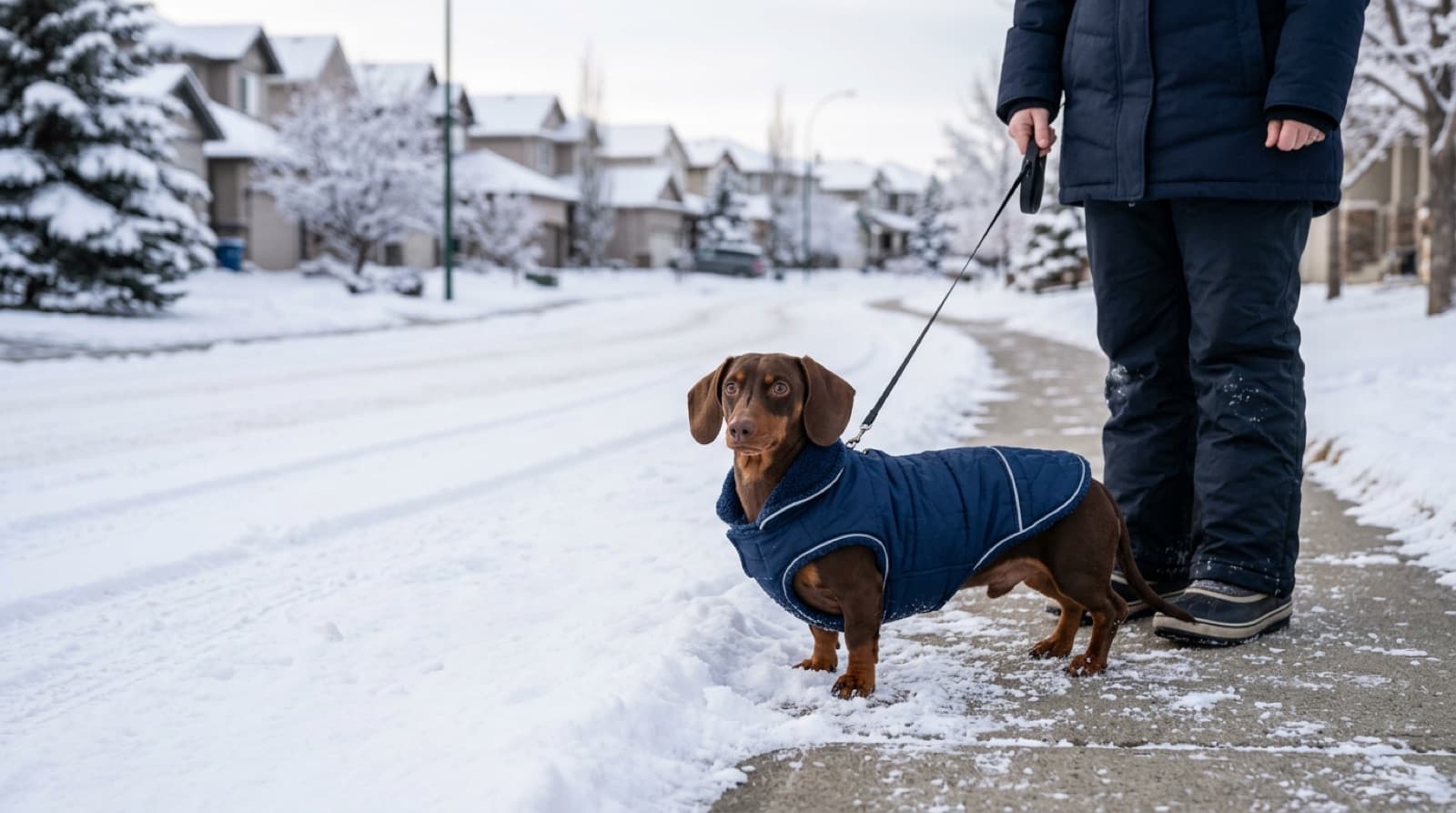
They need real help, especially the smooth-coated ones. Dachshunds are small and low to the ground, and a smooth-coated Dachshund has a thin single coat with little insulation, so it gets cold fast and genuinely needs a warm coat or sweater on a Red Deer winter day. Longhaired and wirehaired Dachshunds fare somewhat better but still benefit from a coat in extreme cold. The low body means the belly drags in snow, chilling the dog and making deep snow hard going, so a shovelled path helps and deep drifts are best avoided. Booties help on salted, icy sidewalks. Keep outdoor time shorter in deep cold, watch for shivering, and cover exercise with indoor play, remembering not to let a cold, stiff dog jump on and off furniture, which stresses the back.
Related Guides
New dog? Start with these care guides
Everything a new adopter needs to set up a safe, happy home.