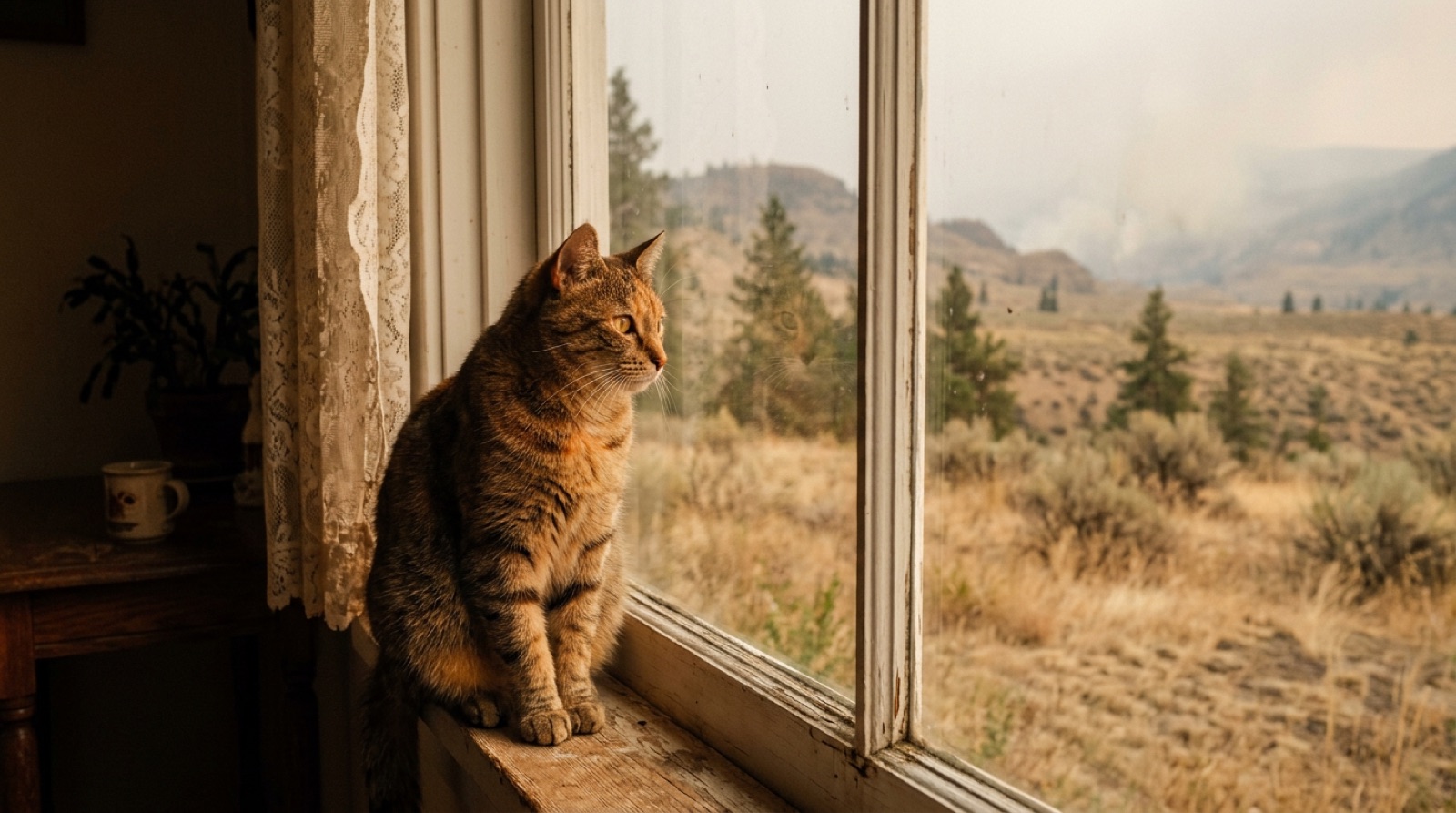
The short answer
Keep the cat indoors. Kamloops Animal Control Bylaw 34-11 uses voluntary registration and a two-cat limit rather than an outright roaming ban, but an unregistered impounded cat is held only 48 hours. Coyotes on the hillsides, dangerous summer heat and wildfire smoke do the rest of the arguing. Register your cat for $40, microchip it, and use a shaded catio or supervised yard time as the safe middle ground.
Kamloops handles cats differently from a lot of Canadian cities. There is no blanket rule that a cat must stay on the owner property.
Instead, Animal Control Bylaw 34-11 leans on voluntary registration, a two-cat property limit, and an impound system. That sounds relaxed until you read the impound clauses, where the real teeth are. An unregistered cat brought to the pound can be sold or humanely destroyed after just 48 hours.
So the Kamloops debate is not really about whether roaming is allowed. It is about what a cat can safely do instead, in a landscape that is harder on outdoor cats than most.
What the Bylaw Actually Says
Animal Control Bylaw 34-11 sets three things worth knowing. Cat registration is voluntary, a one-time $40 for the cat life. No property may keep more than two cats, unless the owner is a licensed breeder registered with a recognised cat fanciers association. And the pound may impound and hold cats.
The impound rules are where it gets serious. A registered cat means the poundkeeper must try to notify the owner within 24 hours. An unregistered cat is held for only 48 hours, after which it may be sold or humanely destroyed regardless of whether the owner is known. That single clause is why the optional registration is worth taking, and why an indoor cat that never reaches the pound is safer still.
There are also impound fees that climb with each pickup, plus a daily maintenance charge, so reclaiming a roaming cat costs money on top of the risk. None of it applies to a cat that stays home.
What Roaming Actually Risks Here
The bylaw is one argument. The Thompson Valley landscape is the other, and it is a harder one to ignore.
The dry sagebrush hills around Kamloops hold a healthy coyote population that comes down into neighbourhoods, especially at dawn and dusk. A cat is prey-sized.
Thompson Valley summers run genuinely hot and dry. Heat stress, dehydration and burnt paw pads on pavement are real risks in July and August.
Interior BC gets weeks of heavy wildfire smoke most summers. It is hard on a cat lungs, and an outdoor cat cannot escape it the way an indoor one can.
Summit Drive, the Tranquille corridor and the highways through town carry fast traffic. Cats do not survive the encounter.
An unregistered impounded cat is only held 48 hours before it can be sold or destroyed. A roaming unregistered cat has very little margin.
The area busy outdoor cat population trades FIV and feline leukemia through bites, and fight wounds abscess quickly.
Summer is the dangerous season here, not winter. Kamloops has milder winters than the prairies, but its summers are hot, dry and smoky. Heat, dehydration, burnt paws and wildfire smoke stack up between June and September, which is exactly when owners are most tempted to let a cat out. Judge it by the air quality index and the afternoon temperature, not by how pleasant the morning felt.
Making an Indoor Life Actually Good
An indoor cat with nothing to do is a worse outcome than a cat with a safe outdoor arrangement. The fix is replacing what the outdoors offered rather than just closing the door.
| What to add | How it works |
|---|---|
| Vertical space | Cat trees, shelves and a windowsill perch. Cats measure territory in height as much as floor area, so a tall room feels bigger to them. |
| A shaded window view | A perch facing a bird feeder is the cheapest entertainment you will buy. Keep it out of direct afternoon sun in summer, when the glass gets hot. |
| Daily play | Two short wand-toy sessions beat one long one. Ten minutes each, ending with a food reward, mimics the hunt and settles a restless cat. |
| Food puzzles | Feeding from a puzzle feeder rather than a bowl turns two minutes of eating into twenty minutes of work. |
| Scratching options | One tall sturdy vertical post plus one horizontal cardboard scratcher covers most preferences. |
| A catio | A shaded, screened patio run gives outdoor air and bird watching with no coyote or traffic exposure. Build shade in for the summer heat. |
The two-cat option is worth a serious look. Kamloops caps you at two per property anyway, and a pair keeps each other busy through the long hot summers when nobody is spending the afternoon outside. That carries a share of the entertainment work that would otherwise fall entirely on you.
The Safe Middle Ground
A cat does not have to be sealed indoors to be safe. It has to be kept out of the coyote, traffic and heat exposure that does the damage.
A catio, meaning an enclosed run attached to a window or door, is the strongest option. Cats get sunlight, air and something to watch, and predators and cars get nowhere near. In Kamloops the one design rule is shade. Build a covered section and position it to avoid the full afternoon sun, or the enclosure becomes dangerous in July rather than pleasant.
Harness training is the other route, and it works better with cats than most people believe, especially if you start young. Go slowly, let the cat wear the harness indoors for days before you attach a lead, and keep early outings to your own shaded yard in the cool of the morning. A cat that panics on a lead near the sagebrush is a cat you will spend the evening looking for.
If Your Cat Gets Out
Escaped indoor cats rarely travel far. They hide, usually within a few houses, under a deck or shed or vehicle, and they stay quiet because they are frightened rather than lost.
Search at dawn and dusk when the neighbourhood is quiet and the heat has dropped. Call normally rather than loudly. Put the litter box, a piece of unwashed bedding and a bowl of strong-smelling food outside the door the cat left by. Contact the BC SPCA Kamloops and check whether the cat has reached the pound, keeping the 48-hour hold on unregistered cats firmly in mind. Then ask neighbours directly, because someone has usually seen the cat before anybody has reported it.
Browse adoptable cats in Kamloops
Most cats listed here are already living as indoor cats in shelters or foster homes, so the transition is nothing new to them. Listings refreshed regularly.
See Available Kamloops Cats →Frequently Asked Questions
Is it legal to let my cat outside in Kamloops?
The bylaw does not ban it the way some cities do, but it does not make it safe either. Kamloops Animal Control Bylaw 34-11 covers cats through voluntary registration, a two-cat property limit, and an impound system rather than an explicit at-large prohibition. The catch is in the impound rules. A cat that ends up in the pound and is not registered may be held for only 48 hours before it can be sold or humanely destroyed. Roaming is legal, but it carries a hard deadline.
Why is the 48-hour rule such a big deal?
Because it turns an ordinary lost-cat situation into an emergency. If a neighbour traps your roaming cat and it goes to the pound, the poundkeeper only has to hold an unregistered cat for 48 hours before rehoming or euthanasia. A registered cat gets you notified first, which is the single strongest argument for the voluntary $40 registration. But the surest protection is an indoor cat that never ends up in the pound at all.
What actually kills outdoor cats in Kamloops?
Coyotes and cars lead, with heat and smoke close behind in summer. Coyotes hunt the dry hillsides that ring the city and move into neighbourhoods at dawn and dusk. Traffic on the main corridors does the rest year round. Then the Thompson Valley summer adds its own hazards, with heat stress and dehydration in the worst of July and August, and weeks of wildfire smoke that an outdoor cat cannot get away from. Indoor cats here simply live longer.
How many cats can I keep in Kamloops?
Two per property under Animal Control Bylaw 34-11, with an exemption for licensed breeders registered with a recognised cat fanciers association. For nearly every household that means two is the ceiling. It is worth knowing before you fall for a bonded trio, because the third cat is not permitted at that address. Two cats is a genuinely good number for an indoor home anyway, since they entertain each other through the long hot indoor summers.
My cat has always gone outside. Can I switch it to indoors?
Yes, and most cats manage it far better than their owners expect. The trick is replacing what the outdoors provided rather than simply removing it. Add height, add a window perch, add two short play sessions a day and feed from a puzzle feeder instead of a bowl. Expect a couple of weeks of complaining at the door. Do not open it during the complaining, because a cat that gets let out on the twelfth attempt has learned that twelve attempts works.
Is a catio worth building in Kamloops?
For most of the year, yes, with one design note. A screened patio run gives a cat real outdoor air, sunlight and bird watching with none of the coyote and traffic exposure. In Kamloops you have to build shade into it, because an unshaded enclosure in a Thompson Valley July becomes an oven. Position it to catch morning sun and afternoon shade, add a covered section, and it solves most of the behaviour problems people blame on indoor confinement.
What about the wildfire smoke?
It is a real and recurring reason to keep cats indoors here. Interior BC gets extended smoke events most summers, and the air quality can stay poor for days or weeks. Cats have small lungs and cannot choose to avoid it outdoors. During heavy smoke, keep windows closed, run the cat indoors entirely, and watch for coughing or laboured breathing, which warrants a vet call. An indoor cat with filtered air is far better placed than an outdoor one during smoke season.
Will an indoor cat get bored or fat?
It can, and both are avoidable with a bit of structure. Boredom shows up as overgrooming, night yowling, or ambushing your ankles at 6am. Weight gain comes from free-feeding a cat that no longer hunts. Fix both with measured meals, a puzzle feeder, and daily play that actually ends in a catch. A cat that plays hard for ten minutes twice a day sleeps properly and stays a sensible weight without much else changing.
Do rescues here adopt cats out as indoor-only?
Usually, and in Kamloops the reasons are easy to point at. Some rescues write indoor-only into the adoption agreement, others treat it as a strong expectation and raise it in conversation. Either way, answer honestly. A rescue that knows you have a shaded yard and want supervised outdoor time can match you with a cat that suits, and can tell you which of their cats has already lived that way. Former colony cats often adapt to indoor life well.
What if my indoor cat escapes?
Start close and start immediately. Most escaped indoor cats hide within a short distance of home rather than travelling, often under a deck, in a shed, or beneath a parked vehicle. Search at dawn and dusk when it is quiet and cooler, call in your normal voice, and put the litter box and a piece of unwashed bedding outside the door. Contact the BC SPCA Kamloops and check whether the cat has been brought to the pound, remembering the 48-hour hold on unregistered cats.
Should I get a GPS tracker for my cat?
A tracker is a reasonable addition for a cat with supervised outdoor access, but it is not a substitute for identification. Trackers rely on batteries and breakaway collars, both of which fail exactly when you need them. A registered microchip works forever and does not fall off in the sagebrush. Get the microchip first, keep the registration current when you move house, and treat a tracker as a convenience on top rather than the main plan.
Are there feral cat colonies around Kamloops?
Yes, on the hillsides and around rural properties, and Sammy's Forgotten Felines is the local group that traps, alters and rehabilitates them. If you are feeding a colony or seeing unaltered cats on your acreage, that is who to contact, because feeding without altering just grows the colony. The BC SPCA non-profit clinic supports the surgical side of this work. Removal alone never solves it, since untouched cats breed back to fill the space.
Related Kamloops Guides
One search, every Kamloops rescue
Shelter cats and foster cats serving Kamloops and the Thompson Valley, in a single list.
Browse Available Kamloops Cats →New cat? Start with these care guides
Everything a new adopter needs to set up a safe, happy home.