The short answer
Give the cat tall, stable scratching posts (sisal is a favourite) plus a flat cardboard scratcher, and place them right next to the furniture it is targeting and near sleeping spots. Reward it for using them, and make the couch less appealing with double-sided sticky tape while it learns. Keep claws trimmed, and consider soft nail caps. Do not declaw: it is an amputation of the last toe bone, and elective declawing is prohibited in BC. Scratching is very manageable.
The five steps
Understand why cats scratch
Scratching is normal, healthy, and necessary. Cats scratch to keep their claws healthy, to stretch their backs and shoulders, and to mark territory with both the visible marks and scent glands in their paws. You cannot and should not try to stop a cat scratching altogether; the goal is to give it appealing places to do it so it chooses those instead of your couch.
Offer the right scratching surfaces
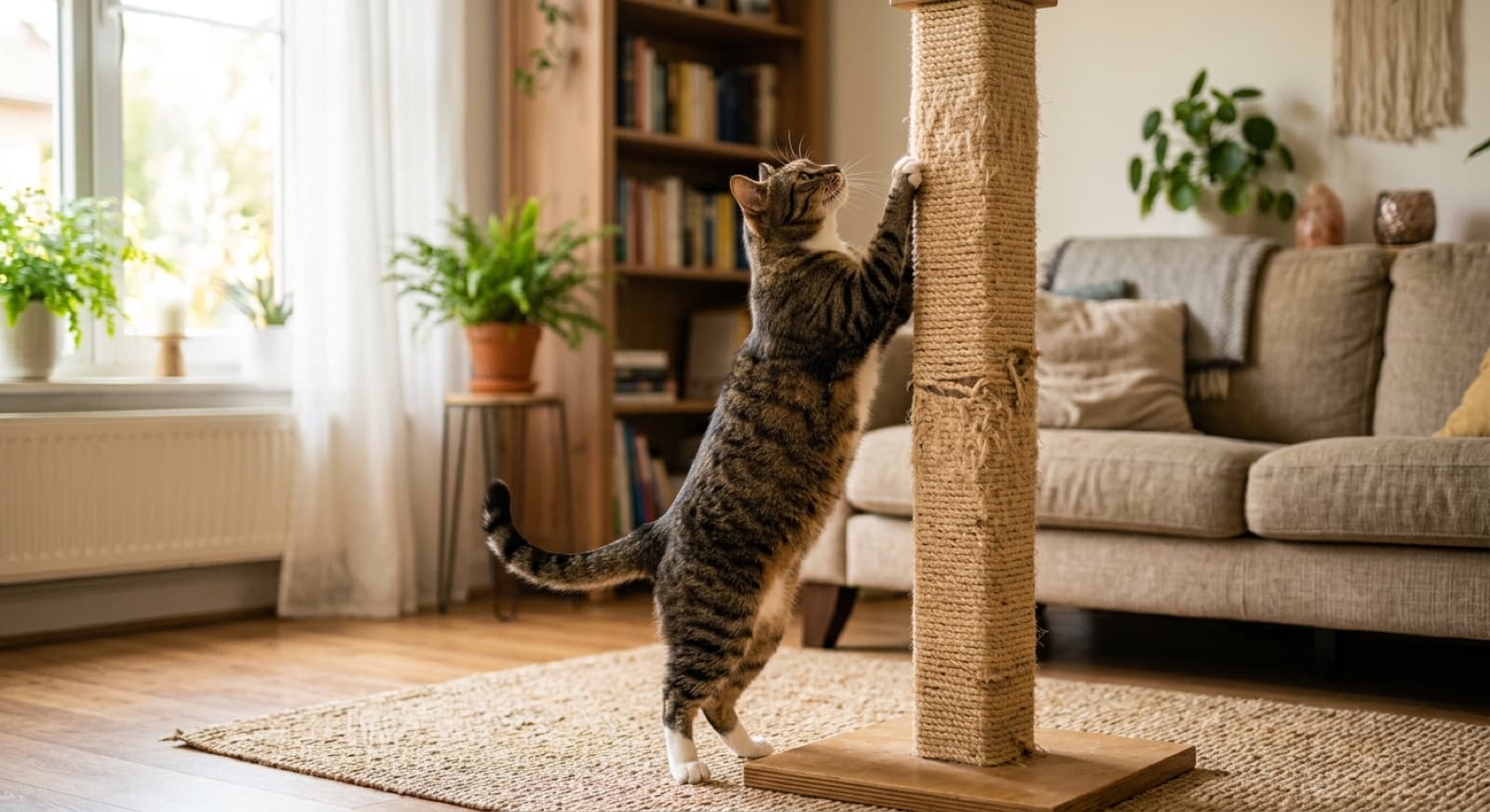
Provide a variety: tall, sturdy vertical posts the cat can fully stretch up on (many cats love sisal rope), plus horizontal cardboard scratchers, since cats have individual preferences. The post must be tall enough for a full stretch and stable enough not to wobble, because a tippy post gets abandoned. Have more than one, and in a multi-cat home, several. Cat trees add scratching and the vertical space indoor Vancouver cats love.
Put posts where the cat wants them
Location is half the battle. Place a scratcher right next to the furniture the cat is targeting, and near sleeping spots, since cats love to scratch and stretch on waking. If the cat is scratching the corner of the sofa, put a post there, not tucked away in a spare room. Once the cat reliably uses it, you can gradually move it a little if needed, but do not hide it away.
Make the post better than the furniture
Reward the cat with praise, play, or a treat when it uses the post, and gently redirect it there when it starts on the couch. Rubbing a little catnip on a new post or dangling a toy near it can build the habit. Make the furniture less appealing in the meantime with double-sided sticky tape or a temporary cover on the target spot; most cats dislike the sticky texture and move to the post.
Trim claws and never declaw
Regular nail trims (every couple of weeks for many cats) blunt the tips and reduce damage, and your vet or a groomer can show you how or do it. Soft nail caps are another humane option. What you should not do is declaw: it is an amputation of the last bone of each toe, not just a nail trim, and it can cause lasting pain and behaviour problems. In British Columbia, elective declawing of cats is prohibited, so it is not a route available here anyway. Scratching is manageable with the steps above.
The mindset that makes this work: redirect, do not punish. A cat scratching the couch is not being bad, it is doing a normal thing in the wrong place, and the fix is to make the right place more appealing than the wrong one. If your cat is newly adopted, some extra scratching is just settling-in behaviour, and our first-week guide covers the safe-room approach. Setting up posts is also on the new-kitten checklist.
Ready to adopt a Vancouver cat?
Most adoptable cats already use a scratching post from their foster home, and fosters can tell you what each cat prefers.
Browse Vancouver Cats →Frequently Asked Questions
Why does my cat scratch the furniture?
Scratching is a normal, healthy behaviour, not misbehaviour. Cats scratch to condition their claws, to stretch their back and shoulder muscles, and to mark territory both visually and with scent glands in their paws. Furniture often gets targeted because it is sturdy, well-placed, and in the middle of the cat's space. The fix is not to stop scratching but to offer better scratching options, in the right spots, so the cat chooses those instead.
How do I get my cat to use a scratching post instead of the couch?
Put an appealing post right next to the furniture the cat is using, make sure it is tall enough for a full stretch and stable, and reward the cat when it uses it with praise, play, or a treat. At the same time, make the couch less inviting with double-sided sticky tape or a temporary cover on the target spot. Catnip or a dangled toy on the new post helps build the habit. Most cats switch over within a couple of weeks of consistent redirection.
What kind of scratching post is best?
Offer variety, because cats have individual preferences. A tall, stable vertical post (sisal rope is a favourite) lets a cat fully stretch, and many cats also like flat cardboard scratchers on the floor. The most common mistake is a post that is too short or wobbly, which cats abandon. Have more than one, place them near favourite furniture and sleeping spots, and in a multi-cat home provide several. A cat tree combines scratching with the vertical space indoor cats love.
Is declawing legal in BC?
No. In British Columbia, elective (non-therapeutic) declawing of cats is prohibited. Beyond the rules, declawing is not a nail trim: it is the surgical amputation of the last bone of each toe, and it can lead to lasting pain, litter box aversion, and other behaviour problems. It is not something to consider. Scratching is very manageable with good posts, smart placement, redirection, regular nail trims, and humane options like soft nail caps.
Should I trim my cat's claws?
Regular nail trims help. Blunting the sharp tips every couple of weeks reduces furniture damage and the risk of snags, and it is a good habit for handling in general. If you are unsure how, your vet or a groomer can demonstrate or do it, and starting slowly with lots of rewards makes it easier over time. Trims work alongside scratching posts, not instead of them: the cat still needs appropriate places to scratch and stretch.
My newly adopted cat is scratching everything. Is that normal?
Yes, a new cat scratching is completely normal, and it often increases at first as the cat marks its new territory and settles in. Set up good scratching posts from day one, ideally in the safe room where the cat starts out, and near the furniture it gravitates to. Redirect gently and reward the right choices. Most adoptable cats are used to a post from their foster home, so ask the foster what the cat likes. It settles as the cat feels at home.
Cat Litter Box Problems
Vet-first troubleshooting for house soiling.
First Week With a Rescue Cat
The safe room, the 3-3-3 rule, and a calm start.
New Kitten Checklist
Scratching posts and everything else to prep.
Indoor vs Outdoor Cats
Enriching indoor life for a Vancouver cat.
New dog? Start with these care guides
Everything a new adopter needs to set up a safe, happy home.