The short answer
The biggest difference is size: the Malamute is much larger and more powerful (75 to 100-plus lbs, a freighting dog), the Husky is smaller, lighter, and often even more energetic (35 to 60 lbs, bred for speed). Beyond that they are remarkably similar demanding breeds: both are high-energy, heavy-shedding, escape-artist, strong-prey-drive, stubborn-to-train northern dogs that suit experienced, active owners only. Neither is off-leash reliable, both need secure fencing, and both overwhelm anyone who underestimates them. Choose the Malamute for a bigger, more independent dog; the Husky for a smaller, more frantically energetic one, but honestly, the real question is whether you can meet the shared demands of either.
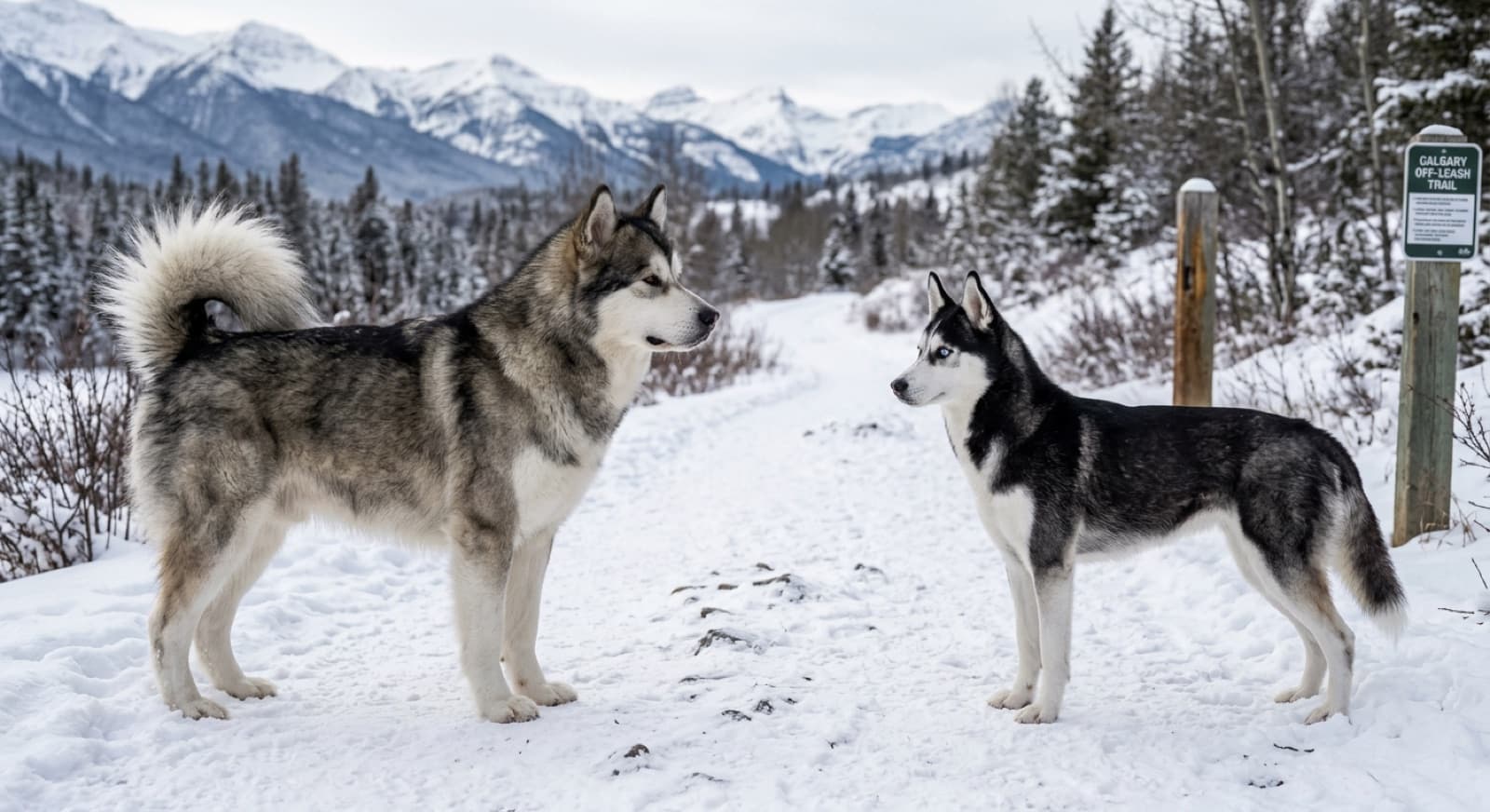
Side by side
| Trait | Alaskan Malamute | Siberian Husky |
|---|---|---|
| Size / weight | Large, powerful, 75 to 100-plus lbs | Medium, lithe, 35 to 60 lbs |
| Built for | Hauling heavy loads (freighting) | Speed and endurance |
| Temperament | Dignified, independent, pack-oriented | Energetic, mischievous, outgoing |
| Energy level | High | Very high (often even more) |
| Prey drive | Strong | Strong |
| Escape artist | Yes, digs and roams | Yes, climbs and runs |
| Grooming | Heavy (more volume, bigger dog) | Heavy |
| Trainability | Independent, stubborn | Independent, stubborn |
Size, build, and temperament
The most obvious difference is size and build. The Malamute is substantially larger and heavier, a powerful freighting dog built to haul heavy loads (typically 75 to 100-plus lbs), while the Husky is smaller, lighter, and more lithe, built for speed and endurance (typically 35 to 60 lbs). Temperamentally, Malamutes tend to be somewhat more independent, dignified, and pack-oriented, while Huskies are often more energetic, mischievous, and outgoing, though both are friendly and people-loving.
In many practical respects they are similar demanding northern breeds: both high-energy, both strong prey drive, both escape artists, both heavy shedders, both stubborn to train. The key distinctions are the Malamute's greater size and strength (and correspondingly greater food, space, and management demands) versus the Husky's smaller size but often higher raw energy and even greater tendency to run.
Which needs more exercise?
Both need substantial daily exercise, but the Husky is often considered even more energetic and tireless, bred for speed and endurance, Huskies can seem to have a bottomless energy tank and a very strong drive to run. Malamutes need plenty too, but as heavier freighting dogs they are somewhat less frantically energetic, though still very demanding. Both need well beyond a casual walk, long walks, hikes, runs, working activities, plus mental stimulation, and both become destructive when under-exercised.
Vancouver's trails, seawall, and cool climate suit both breeds well. The honest takeaway: neither is a good choice unless you can provide serious daily exercise. The Husky may edge out the Malamute in sheer energy and running drive, while the Malamute's greater size means its under-exercised energy can translate into more destructive potential. Either way, plan for a very active lifestyle.
Training and escape artistry
Both are intelligent but independent and challenging to train, and both are notorious escape artists. Neither is eager to please like a Labrador, both will ignore commands they see no point in, and both need patient, consistent, positive training and early socialization. On escaping: both have strong roaming instincts and prey drives and require very secure containment, high fences, dig protection, and never being trusted off-leash in unfenced areas (recall is unreliable in both).
This is a shared and central reality: you must take fencing, leashing, and supervision seriously with both a Malamute and a Husky. Neither is safe to let off-leash in an unfenced Vancouver park, and both will exploit any gap in a fence. If secure containment is not something you can provide, neither breed is a good fit. Our Malamute adoption guide covers the containment reality in more detail.
Kids, other pets, and which to choose
Both are typically friendly with their families and, well-socialized, can be good with children (supervise both, especially the larger Malamute around young kids). The bigger concern with both is other animals: both have strong prey drives that can make them risky with small pets and, in some cases, challenging with other dogs (Malamutes in particular can show same-sex dog aggression). Neither is a safe automatic choice for a home with small pets, and careful introductions are essential with both.
To choose: consider the Malamute if you want a larger, more dignified, independent dog and have the space and budget for a big dog; consider the Husky if you want a smaller, more energetic and playful dog and can keep up with its high energy and running drive. But both share the same core demands, substantial exercise, secure containment, heavy grooming, patient training, strong prey drive, and an experienced, active owner, so the decision is less about picking the easy option (neither is easy) and more about which size and energy profile fits your life. Often the best approach is to adopt an adult of either breed through a rescue, where you can meet the individual dog and assess its actual size, energy, and temperament.
Browse adoptable northern breeds in Vancouver
Whether you lean Malamute or Husky, adopting an adult lets you meet the real dog and assess its size, energy, and temperament. Browse current listings for both breeds at Lower Mainland rescues. Refreshed regularly.
See Available Malamutes →Frequently Asked Questions
What is the main difference between the two?
Size and build: the Malamute is much larger and more powerful (a freighting dog), the Husky smaller and lighter (built for speed). Malamutes are more independent and dignified, Huskies more energetic and mischievous. But both share the same core demands.
Which needs more exercise?
Both need a lot, but the Husky is often even more energetic and tireless with a stronger running drive. The Malamute's greater size means its under-exercised energy can be more destructive. Neither is a good choice without serious daily exercise.
Which is easier to train, and are both escape artists?
Neither is easy, both are independent and stubborn, needing patient positive training. And yes, both are notorious escape artists with strong prey drives, requiring secure high fencing and never off-leash in unfenced areas. Recall is unreliable in both.
How do grooming and shedding compare?
Very similar, both are heavy-shedding double-coated Arctic breeds that blow their coats and need regular brushing and never shaving. The Malamute involves somewhat more volume due to size. If heavy shedding is a dealbreaker, both are off the table.
Which is better with kids and other pets?
Both are typically friendly with their families and can be good with children (supervise, especially the larger Malamute). The concern with both is the strong prey drive around small pets, and Malamutes can show same-sex dog aggression. A rescue will assess how an individual dog does.
Which should I choose for my Vancouver home?
Malamute for a larger, more independent dog with the space and budget; Husky for a smaller, more energetic one. But both share the same demands, so the real question is whether you can meet them at all. Adopting an adult of either breed lets you assess the individual dog.
Related Vancouver guides
Alaskan Malamute Adoption in Vancouver
Where to adopt in BC, the powerful independent temperament, real costs, and who it suits.
Alaskan Malamute Health Issues
Hip dysplasia, bloat, eye conditions, and the large northern-breed vet picture.
Adoptable Alaskan Malamutes in Vancouver
All currently available Malamutes and Malamute mixes with foster temperament notes. Updates regularly.
Best Dog Rescues in Vancouver
Every Vancouver-area rescue reviewed on cost, wait time, and best fit by adopter type.
New dog? Start with these care guides
Everything a new adopter needs to set up a safe, happy home.