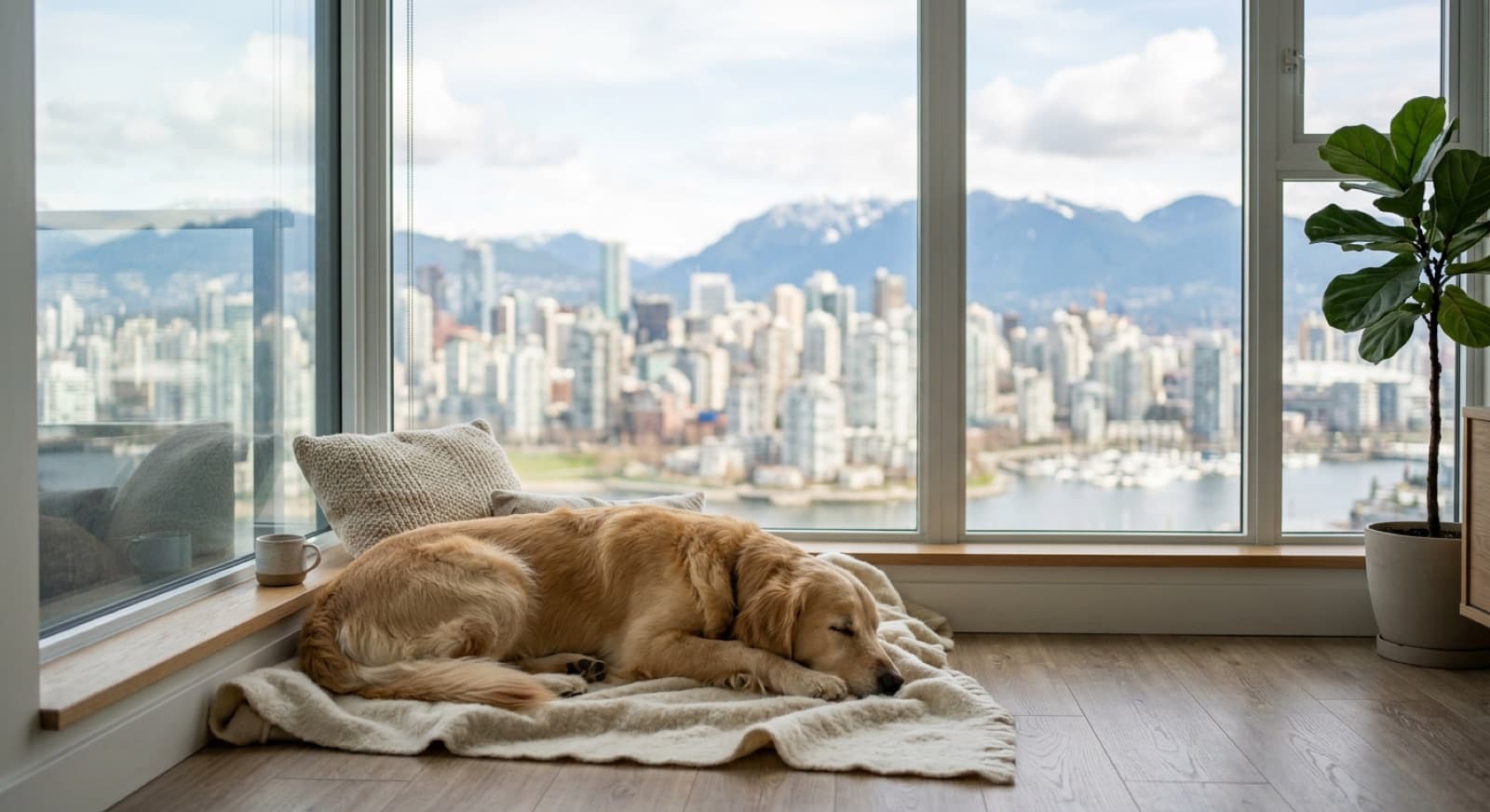
The short answer
The best apartment dog is a calm, quiet, house-trained one, and that is about energy and temperament, not size. Check your strata bylaws and lease first (some cap a dog's weight or number). Then adopt an adult through a foster-based rescue and ask how the dog does alone, with barking, and in small spaces. Vancouver's seawall and parks make exercise easy. Browse adoptable Vancouver dogs and filter for what fits.
It is not about size. It is about these five things
The most common apartment-dog mistake is shopping by size. A quiet, low-energy large dog is a better condo companion than a bouncy, vocal small one. What actually determines whether a dog thrives in a Vancouver apartment is this:
| What matters | Why |
|---|---|
| Energy level | The biggest one. A calm, moderate-energy dog settles in a condo; a high-drive working dog does not, whatever its size. A tired dog is a quiet, content apartment dog. |
| Noise / barking tendency | Shared walls make barking a real neighbour issue. Ask the rescue how vocal a dog is. Many small breeds bark more than big ones, so this is not a size question. |
| House-training status | An adult with established house-training beats a puppy in a high-rise, where getting outside fast is harder. Rescues note this per dog. |
| Time left alone | A dog prone to separation distress will bark or destroy in a small space. Ask about alone-time behaviour, especially for a work-from-office schedule. |
| Size (a smaller factor than you think) | Weight caps in some strata bylaws matter, but temperament matters more. Plenty of large dogs are calm couch dogs, and plenty of small dogs are bouncy and loud. |
This is exactly why adopting an adult through a foster-based rescue is the smart move for condo life: the foster has lived with the dog and can tell you its real energy, noise, and alone-time behaviour, which a puppy simply cannot show you yet. If you are drawn to smaller dogs, our Chihuahua, Dachshund, and Corgi guides each cover the breed's real condo fit (and where the myths break down).
Check your strata bylaws first
Before you fall for a dog, confirm you can keep it. Many Metro Vancouver strata corporations set pet bylaws that can limit the number of pets, cap a dog's weight or size, or restrict certain types, and rental buildings have their own pet policies. Confirm your strata bylaws (and your lease, if you rent) first. A responsible rescue will often ask about your housing as part of matching, precisely because a placement that later collides with a strata rule is bad for everyone, especially the dog.
If a weight cap is the constraint, it narrows the field but rarely rules out adoption; plenty of wonderful dogs fall under common strata limits. If your building restricts certain breeds, focus on the individual dogs a rescue can match to your situation. The key is to know your rules going in, not to discover them after you have bonded with a dog.
Exercise: Vancouver makes it easy
No yard is no problem here. The seawall, the beaches, and the parks and off-leash areas across the Lower Mainland make daily exercise easy, rain included (a coat and a towel by the door handle the wet coast). Two solid walks a day plus play and sniffing time keep most apartment dogs calm and content, and a tired dog is a quiet dog in a shared building. Our Vancouver off-leash parks guide maps the best spots, including the fully fenced areas for dogs that need secure space to run.
Find a condo-friendly rescue dog in Vancouver
Browse live listings from Lower Mainland rescues, with foster notes on energy, noise, and how each dog does in a smaller space. Filter for size and energy to match your building.
Browse Vancouver Dogs →Frequently Asked Questions
What is the best apartment dog to adopt in Vancouver?
The best apartment dog is a calm, quiet, well-house-trained one, and that is about temperament and energy far more than size. Small, lower-energy dogs are the obvious fit, but many larger dogs (Greyhounds are the classic example, famously lazy indoors) do beautifully in a condo with a couple of good daily walks. The single most useful thing you can do is adopt an adult through a foster-based rescue and ask the foster directly how the dog does with alone time, barking, and small spaces. That tells you more than the breed label.
Does my Vancouver strata or landlord allow dogs?
Check before you adopt. Many Metro Vancouver strata corporations set pet bylaws that can limit the number of pets, cap a dog's weight or size, or restrict certain types, and rental buildings have their own pet policies. Confirm your strata bylaws (and your lease, if you rent) first, because a placement that runs into a strata rule later is bad for everyone, especially the dog. A responsible rescue will often ask about your housing as part of matching for this exact reason.
Can a big dog live in a Vancouver apartment?
Often, yes, as long as the dog is calm and gets enough exercise, and as long as any strata weight or size cap allows it. Energy matters far more than size in a condo: a low-energy large dog like a Greyhound or an older large-breed dog can be a wonderful, quiet apartment companion, while a high-drive medium dog can be miserable in the same space. The limiting factors are usually the strata bylaw and the daily exercise commitment, not the square footage itself.
Are small dogs automatically good for apartments?
No, and this is a common mistake. Size and suitability are not the same thing. Some small breeds are energetic, alert barkers that struggle with shared walls, while some larger dogs are quiet and mellow. Judge the individual dog on energy, noise, and temperament rather than assuming small equals easy. A foster's notes on a specific dog beat any breed generalisation.
How do I exercise an apartment dog in Vancouver?
Vancouver is one of the best cities in Canada for it. The seawall, the beaches, and the many parks and off-leash areas across the Lower Mainland make daily exercise easy even without a yard, rain included (a coat and towels handle the wet). Two solid walks a day plus some play and sniffing time keep most apartment dogs content. Our Vancouver off-leash parks guide maps the best spots, including the fully fenced areas for dogs that need secure space to run.
How do I stop my apartment dog from barking and bothering neighbours?
Prevention first: a well-exercised, mentally-stimulated dog barks far less than a bored one. Beyond that, manage the triggers (block the view of a busy hallway, use enrichment when you leave), reward quiet, and address any separation distress early with a positive, reward-based approach rather than punishment. Choosing a naturally quieter dog to begin with, and asking the rescue about a dog's vocal tendency, avoids the problem before it starts. Persistent barking in a strata can lead to complaints, so it is worth getting ahead of.
Should I adopt a puppy or an adult for apartment living?
For most Vancouver condo-dwellers, an adult is the smarter choice. An adult arrives with known energy, known noise levels, and usually established house-training, which is exactly the information you need for apartment life and exactly what a puppy cannot give you. Puppies also need very frequent trips outside, which is harder from a high floor. If you want the calmest path to a good apartment fit, adopt a settled adult whose foster can vouch for how it does indoors and alone.
Vancouver Off-Leash Parks
Where to exercise a condo dog without a yard, across the Lower Mainland.
Best Dog Rescues in Vancouver
Foster-based rescues that can match a dog to your condo and schedule.
New dog? Start with these care guides
Everything a new adopter needs to set up a safe, happy home.