The short answer
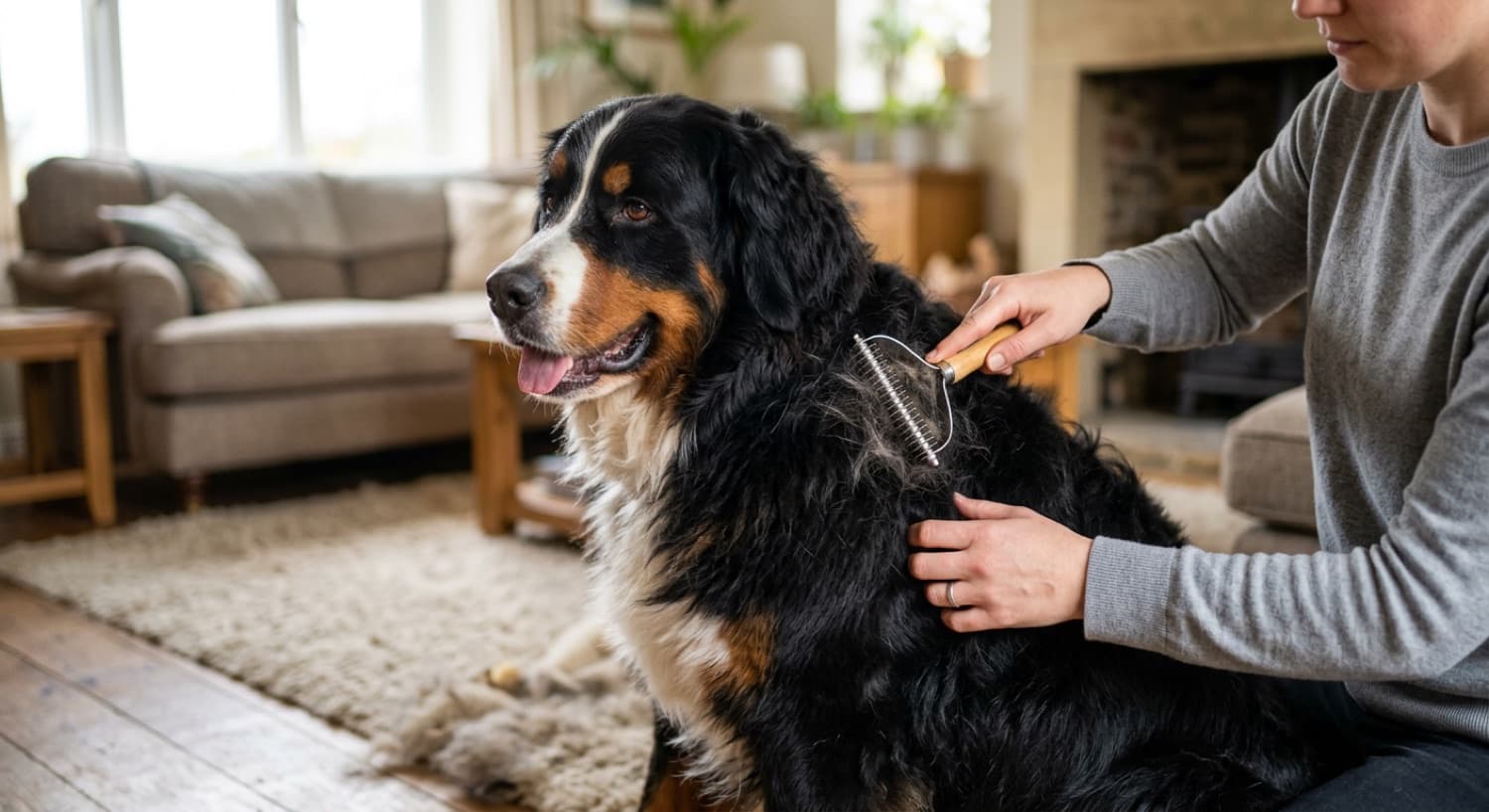
The Berner's thick double coat sheds heavily year-round and blows out dramatically once or twice a year, a genuine lifestyle commitment (not a low-shedding breed). Brush at least a few times a week (daily during a coat blow) with an undercoat rake and slicker, working to the skin. Never shave the double coat, it insulates against heat and cold and protects the skin. In damp Vancouver, the biggest coat-care task is drying the coat thoroughly after wet walks to prevent mats and hot spots, to which the breed is prone. Bathe only occasionally. The daily brushing is the owner's job; many use a groomer for the bath, big blow-out, and nails.
How much do Bernese Mountain Dogs shed?
A great deal, one of the most underestimated realities of the breed. Berners have a thick, moderately long double coat that sheds moderately-to-heavily year-round and then “blows” dramatically once or twice a year, typically spring and fall. Because they are large dogs with a lot of coat, the volume of hair is substantial: you will find Berner hair on floors, furniture, and clothing throughout your home, and a coat blow is impressive. This is not something you can train or feed away; it is how the breed is built for the cold. Anyone considering a Bernese Mountain Dog must be genuinely prepared for the volume of hair and the brushing needed to manage it. If you want a low-shedding dog, the Berner is emphatically not one, the shedding is a full lifestyle factor.
How often should I brush a Bernese Mountain Dog?
At least a few times a week as a baseline, and daily during a seasonal coat blow. Regular brushing removes loose dead undercoat before it mats or coats your home, prevents mats (especially behind the ears, on the britches and tail, and in the feathering), keeps the coat and skin healthy, and lets you check the skin (important for a breed prone to hot spots and to lumps that should be checked). Use the right tools: an undercoat rake and a slicker brush are the workhorses for a double coat, plus a metal comb for the feathering. Brush all the way to the skin, not just over the surface, since mats form in the dense undercoat underneath. Consistent brushing is far easier than dealing with a matted coat, and for a Berner it is a genuine, ongoing commitment, though many owners find the grooming time is also lovely bonding with these affectionate dogs.
Should I ever shave a Bernese Mountain Dog?
No, you should not shave a Berner's double coat, an important and often-misunderstood point, especially if you are tempted to shave for Vancouver's occasional summer heat. It is natural to think shaving would keep the dog cooler, but shaving a double-coated breed is generally harmful: the coat insulates against heat as well as cold and protects against sunburn, so shaving can leave the dog more vulnerable to overheating and sun damage, not less. Shaving can also permanently damage the coat (the undercoat may grow back unevenly or the texture change), and it does not reduce shedding. The correct way to keep a Berner cool in summer is not to shave but to brush out the dead undercoat thoroughly (a well-brushed coat actually helps air circulate) and to manage heat through cool spaces, shade, water, and cool-hour exercise. Leave the coat intact and manage it through brushing, not clippers.
The AKC on shaving double-coated dogs explains why.
How do I manage mats and hot spots on a Bernese Mountain Dog?
Both are common in the breed and both come down largely to grooming and drying. Mats form in the dense undercoat and feathering, especially behind the ears, on the britches and tail, so brush those areas thoroughly and often, working to the skin, and address small mats promptly with a comb and fingers (or a groomer) before they felt. Never bathe a matted coat, water tightens mats. Hot spots (moist, inflamed, often infected skin patches) are a real risk in a heavy-coated breed in damp coastal Vancouver, because moisture trapped in the coat against the skin breeds them, so the key preventive is drying the coat thoroughly after wet walks, baths, or swimming, keeping the coat brushed out so air circulates, and checking the skin regularly. If you find a red, moist, irritated patch, or the dog is licking or chewing an area, see the vet, hot spots worsen fast and often need treatment. Good grooming and diligent drying prevent most of these.
How often should I bathe a Bernese Mountain Dog?
Not very often, every couple of months or when genuinely dirty is plenty, since over-bathing dries the skin and coat. When you do bathe a Berner, the drying afterward matters as much as the wash: that thick double coat holds a lot of water and takes a long time to dry, and a coat left damp against the skin can develop mats, hot spots, or skin issues, a particular concern in damp Vancouver. So dry the coat thoroughly (a high-velocity dog dryer helps enormously, and many owners use a groomer partly for the drying), and brush it out completely once dry. Between baths, regular brushing keeps the coat clean and healthy, brushing does more for a Berner's coat than frequent bathing. In Vancouver's wet climate, the more important routine is not bathing but drying the coat after every rainy walk or swim to prevent moisture-related skin problems.
Do Bernese Mountain Dogs need professional grooming?
Not strictly, since the Berner coat is not trimmed into a style, but many owners find a professional groomer genuinely helpful. A groomer can handle a thorough bath and, crucially, the drying of that huge double coat (hard to do well at home), a deep de-shedding brush-out (especially valuable during a coat blow), nail trims (large dogs need regular trims and it can be a two-person job), ear cleaning, and a tidy-up of the feathering and sanitary areas. Some owners do all the grooming themselves with the right tools (undercoat rake, slicker, comb, and ideally a dog dryer) plus daily brushing; others use a groomer every couple of months for the bath, blow-out, and nails and brush at home in between. Either way, the day-to-day brushing is the owner's job and cannot be skipped. Factor grooming, whether your time or a groomer's fee, into the true cost of a Berner.
Browse adoptable Bernese Mountain Dogs in Vancouver
If you are ready for the brushing, shedding, and coat care, a Berner is a gentle, devoted companion. Browse Lower Mainland rescues, each with a foster's notes on temperament and coat. Refreshed regularly.
See Available Bernese Mountain Dogs →Frequently Asked Questions
How much do they shed?
A lot, a thick double coat that sheds heavily year-round and blows out dramatically once or twice a year. A genuine lifestyle factor. Not a low-shedding breed; regular brushing is essential to manage it.
How often should I brush?
At least a few times a week, daily during a coat blow. Use an undercoat rake, slicker, and comb, working to the skin. Prevents mats and manages shedding, and lets you check the skin for hot spots and lumps.
Should I shave the coat in summer?
No, never shave a double coat. It insulates against heat and protects the skin, so shaving makes overheating and sunburn more likely, can damage the coat, and does not reduce shedding. Brush it out and manage heat instead.
How do I manage mats and hot spots?
Brush to the skin often, especially behind the ears and on the britches, and address small mats promptly. Prevent hot spots by drying the coat thoroughly after wet Vancouver walks and checking the skin. See the vet for any red, moist patch.
How often should I bathe one?
Only every couple of months or when dirty, over-bathing dries the coat. Dry the thick coat thoroughly afterward (a dryer helps). In damp Vancouver, drying after rainy walks matters more than frequent bathing.
Do they need professional grooming?
Not strictly (the coat is not styled), but many owners use a groomer for the bath, big blow-out, and nails, and brush at home in between. The daily brushing is always the owner's job. Factor grooming into the cost.
Related Vancouver guides
Bernese Mountain Dog Adoption in Vancouver
Where to adopt in BC, the gentle temperament, the short-lifespan reality, and who the breed suits.
Bernese Mountain Dog Health Issues
The high cancer rate, joint disease, bloat, and the short-lifespan reality, the full medical picture.
Adoptable Bernese Mountain Dogs in Vancouver
All currently available Berners and Berner mixes with foster notes on temperament and coat. Updates regularly.
Vancouver Off-Leash Parks
Cool, shaded trails and spots for a heavy-coated breed that loves the cool coast.
New dog? Start with these care guides
Everything a new adopter needs to set up a safe, happy home.