The short answer
A Havanese is low-shedding but high-grooming, do not mistake one for the other. The long, silky coat catches its loose hair, so it mats quickly without thorough brushing several times a week (daily for a full coat), down to the skin, plus professional grooming every 4 to 8 weeks (most owners choose a manageable pet clip). Prevent matting with down-to-the-skin brushing, a shorter coat, and thorough drying after wet walks (crucial in damp Vancouver). Keep the facial hair around the eyes trimmed (a grooming and eye-health measure), wipe for tear staining, and care for the drop ears. Budget real time and money, the grooming is the defining commitment of the breed.
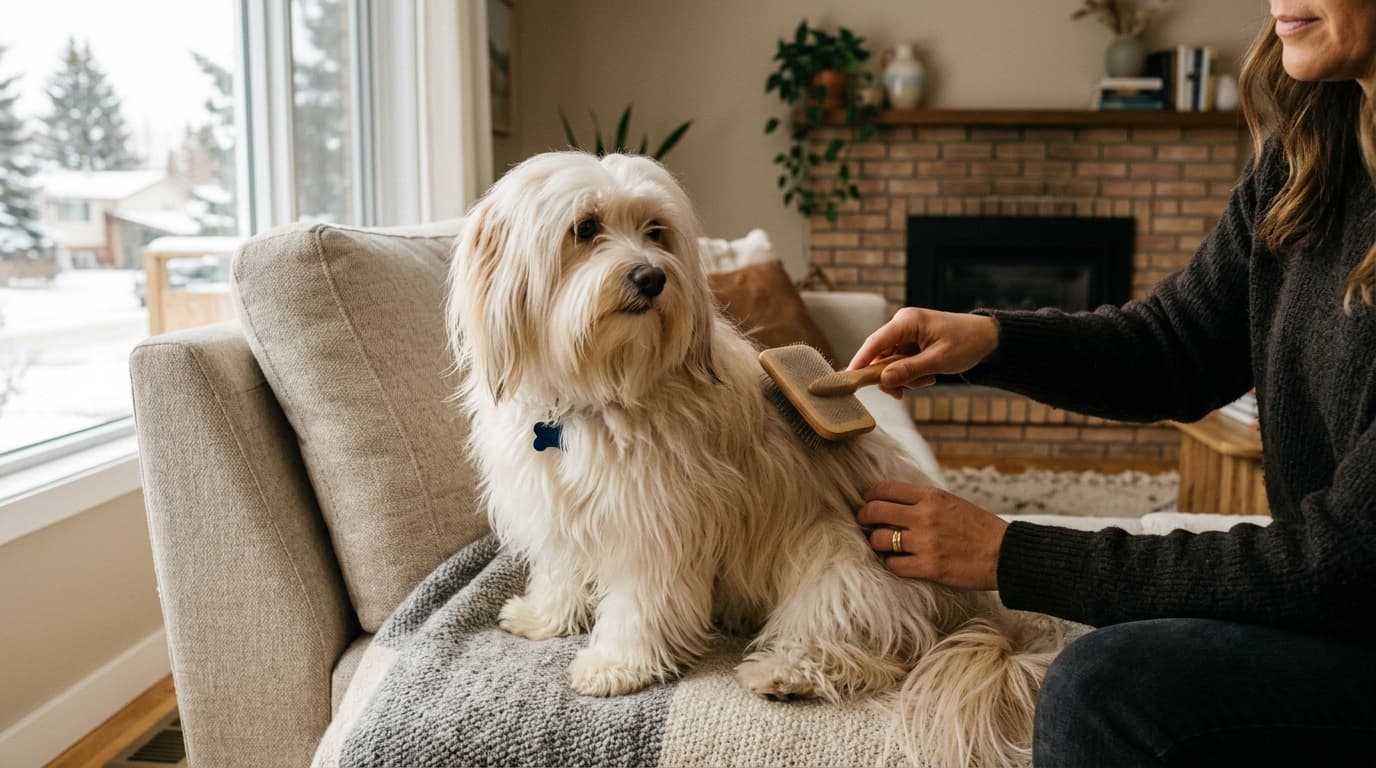
How much grooming does a Havanese need?
Havanese need significant, regular grooming, the single biggest commitment of the breed, and the low-shedding quality is precisely what makes the coat grooming-intensive. The long, silky double coat catches its shed hair rather than dropping it, so without regular thorough brushing, the coat mats quickly. A Havanese requires regular brushing (several times a week, or daily for a full coat) plus professional grooming every 4 to 8 weeks to bathe, trim, and maintain, a significant commitment in both time and money.
Many pet owners keep their Havanese in a shorter pet clip, which is more manageable, but even a pet clip requires regular brushing and frequent professional grooming. Plus the facial area needs attention (trimming the hair around the eyes, keeping the face clean) and the ears need care. The bottom line: the Havanese is low-shedding but high-grooming, the silky coat requires significant regular grooming precisely because the hair does not shed out, and the grooming commitment is the defining care reality of the breed.
Preventing matting
Preventing matting is the central challenge of Havanese coat care, because the long, silky, low-shedding coat is very prone to matting, the shed hair stays in the coat rather than falling out. Mats pull painfully on the skin, trap moisture and debris (leading to skin problems), and, if severe, can require the coat to be shaved down.
The keys: brush regularly and thoroughly (several times a week, ideally daily for a full coat), with a slicker brush and metal comb, all the way down to the skin (mats form close to the skin where surface brushing misses them); focus on mat-prone areas (behind the ears, armpits, legs, collar area, rear); keep a manageable coat length (a shorter clip mats less); dry thoroughly after baths and wet walks (a damp coat mats much more easily, so drying is especially important in Vancouver); and address small tangles promptly. Regular professional grooming also helps. If severe matting develops, do not cut it out with scissors (you can injure the skin), have a groomer clip it short. Consistent, thorough, down-to-the-skin brushing, a manageable length, and diligent drying are the pillars of matting prevention. Our adoption guide covers the full commitment picture.
Pet clip or full show coat?
For most pet owners, keeping the dog in a shorter pet clip (or puppy cut) is the practical, sensible choice, and it is very common. The full, long, flowing show coat is beautiful but extremely high-maintenance, requiring daily thorough brushing plus frequent bathing and grooming. A pet clip dramatically reduces matting and daily brushing, keeps the dog cleaner and more comfortable (valuable in Vancouver's wet, muddy conditions), is more hygienic, and is easier for both of you.
Even with a pet clip, you still need regular brushing (less than a full coat) and professional grooming every 4 to 8 weeks to maintain it, plus the facial and ear care the breed requires regardless. If you love the long, flowing coat and will commit to the substantial daily grooming it demands, you can keep it long, but for the practical, comfortable, manageable option that suits most pet owners and Vancouver's wet climate, a professional pet clip maintained every 4 to 8 weeks is the way to go, and it does not diminish the Havanese's charm at all.
Caring for the face, eyes, and ears
Facial, eye, and ear care are important parts of Havanese grooming, alongside the coat care. Face and eyes: keep the hair around the eyes trimmed (long facial hair can grow into or irritate the eyes, and given the breed's eye-condition tendencies, this is both a grooming and a health measure); clean the eye area regularly (Havanese, especially lighter-coloured ones, can get tear staining, so gently wipe with a damp cloth or pet-safe eye wipe); and keep the facial hair and beard clean (they can trap food and moisture). Ears: the drop ears with hair can trap moisture, so check regularly, clean with a vet-recommended cleaner as needed, keep them dry (especially after baths and wet Vancouver walks), and keep the ear hair managed.
These facial, eye, and ear tasks are part of the regular routine, and in damp Vancouver, keeping the face and ears clean and dry is especially important to prevent irritation and ear issues. Getting a rescue Havanese comfortable with facial and ear handling early makes this ongoing care manageable, and it is an essential part of keeping the dog healthy and comfortable, not just the coat but the face, eyes, and ears too. Our health guide covers the eye conditions that make facial-hair trimming a health measure.
Home vs professional, and the full routine
You must do a lot of Havanese grooming at home, brushing, facial and eye care, ear care, and general upkeep are non-negotiable, but most owners also use a professional groomer for bathing, clipping, and full grooming, and a combination is the typical approach. Essential home tasks: frequent thorough brushing down to the skin (the most important), facial and eye-area care, ear care, and drying after wet walks. For the bathing, clipping, and shaping, a groomer every 4 to 8 weeks is common, a real, frequent recurring cost.
Some dedicated owners learn to groom at home, saving the cost but requiring equipment, skill, and time. The complete routine: coat (brush regularly down to the skin, groom every 4 to 8 weeks, bathe with full drying, dry after wet walks); face and eyes (trim the hair around the eyes, wipe for tear staining, keep the face clean); ears (check, clean, and dry, and manage the ear hair); and general (trim nails, check the skin, brush the teeth).
Establishing this routine early, and getting a rescue Havanese comfortable with handling, brushing, facial care, and bathing, makes the lifelong commitment manageable. The defining feature is the frequent, thorough coat care needed to prevent matting in the low-shedding silky coat, plus the facial, eye, and ear care, and in Vancouver's wet climate, keeping the coat and face clean, dry, and mat-free is especially important. It is a real, ongoing commitment, but manageable with a good routine and a good groomer.
Browse adoptable Havanese in Vancouver
If you are ready for the grooming, a Havanese is an affectionate, playful, low-shedding companion. Browse Lower Mainland rescues, each with a foster's notes on coat and temperament. Refreshed regularly.
See Available Havanese →Frequently Asked Questions
How much grooming does a Havanese need?
A lot, it is low-shedding but high-grooming. The loose hair stays in the coat, so brush several times a week (daily for a full coat) down to the skin, plus professional grooming every 4 to 8 weeks. Most owners use a pet clip. The grooming is the defining commitment of the breed, in time and money.
How do I prevent matting?
Brush regularly down to the skin (mats form close to the skin), focus on ears, armpits, legs, and rear, keep a manageable coat length, dry thoroughly after wet walks, and address small tangles promptly. Never cut out severe mats, have a groomer clip them.
Pet clip or full show coat?
A pet clip for most owners, it dramatically reduces matting and brushing, is easier to keep clean in wet Vancouver, and is more comfortable. You still need regular brushing and grooming every 4 to 8 weeks. Keep the full show coat only if you will commit to daily grooming.
How do I care for the face, eyes, and ears?
Keep the hair around the eyes trimmed (a grooming and eye-health measure), wipe the eye area for tear staining, keep the face clean, and care for the drop ears (check, clean, dry, and manage the ear hair). Especially important in damp Vancouver to prevent irritation and ear issues.
Can I groom one at home?
You must do the essential home tasks (frequent brushing, facial and eye care, ear care, drying), and most owners also use a groomer every 4 to 8 weeks for bathing and clipping. Some learn to groom at home. Budget real time and money either way.
What is the full grooming routine?
Coat: brush regularly down to the skin, groom every 4 to 8 weeks, bathe with full drying, dry after wet walks. Face and eyes: trim the hair, wipe for tear staining. Ears: check, clean, dry. General: trim nails, check skin, brush teeth. Frequent coat care to prevent matting is the defining feature.
Related Vancouver guides
Havanese Adoption in Vancouver
Where to adopt in BC, the velcro-dog temperament, apartment fit, real costs, and who it suits.
Havanese Health Issues
Eye conditions, patellar luxation, hip issues, heart conditions, deafness, and the vet picture.
Adoptable Havanese in Vancouver
All currently available Havanese and Havanese mixes with foster notes. Updates regularly.
Best Dog Rescues in Vancouver
Every Vancouver-area rescue reviewed on cost, wait time, and best fit by adopter type.
New dog? Start with these care guides
Everything a new adopter needs to set up a safe, happy home.