The short answer
A Vizsla needs at least one to two hours of vigorous daily exercise plus real mental stimulation, and under-exercise makes everything worse. As an intensely people-bonded velcro dog, the Vizsla is exceptionally prone to separation anxiety, so it needs a home with enough company and should not be routinely left alone all day. Prevent anxiety with exercise first, gradual alone-time training, enrichment when you leave, and companionship solutions (Vancouver's dog daycares help a lot). A Vizsla can work for a working owner or apartment dweller, if you arrange relief during the day and meet the exercise needs. The deciding factor is your activity level and how much you're home, not your living space.
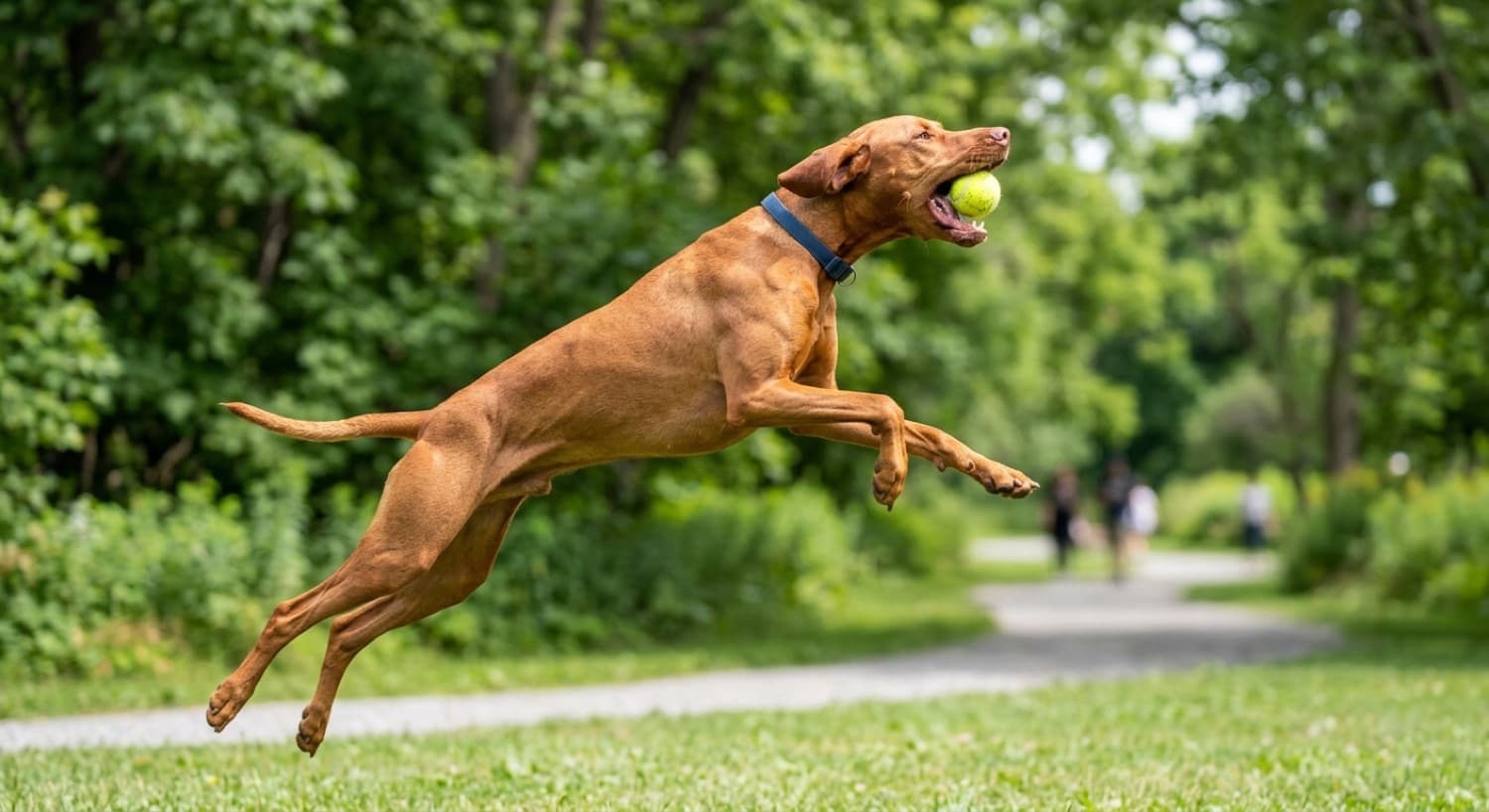
How much exercise does a Vizsla really need?
A Vizsla needs a great deal of exercise, at least one to two hours of vigorous daily activity plus substantial mental stimulation, and this is a genuine, demanding requirement. Bred to work in the field for hours, Vizslas have tremendous stamina and a real need to run and move; a couple of leisurely walks will not cut it. Good exercise means running, hiking, fetch, off-leash galloping, swimming, and dog sports. Equally important is mental exercise: a physically-tired-but-mentally-bored Vizsla is still a problem.
The consequences of under-exercising are significant: an under-exercised Vizsla becomes restless, anxious, hyperactive, and destructive, and crucially, insufficient exercise makes the breed's separation-anxiety tendencies much worse. Vancouver is excellent for meeting these needs, the trails, seawall, off-leash areas, beaches, and mild climate provide great year-round outlets. But a Vizsla needs an active owner genuinely committed to substantial daily exercise; if that is not you, this is the wrong breed.
Why are Vizslas so prone to separation anxiety?
Vizslas are exceptionally prone to separation anxiety because they are one of the most intensely people-bonded breeds, the classic velcro dog. Bred to work in close partnership with their handler and to be affectionate house companions, they form extremely strong bonds and genuinely want to be with their people constantly. When left alone, especially for long periods or without preparation, this intense attachment can manifest as distress, destructive behaviour, excessive barking or howling, house-soiling, pacing, drooling, and escape attempts, all signs of genuine anxiety rather than misbehaviour.
The breed's sensitivity compounds this. This is why the single most important suitability question for a Vizsla is whether the dog will have enough company: a Vizsla is a poor fit for a household out all day or an owner who cannot provide substantial companionship. It is not that Vizslas can never be left alone, with proper training many cope with reasonable alone-time, but the strong predisposition means this must be actively managed and the dog should not be routinely left alone for long stretches. Our adoption guide covers whether the breed fits your household.
How to prevent or manage separation anxiety
Preventing and managing separation anxiety takes a combination of exercise, gradual alone-time training, enrichment, and realistic lifestyle choices.
- •Exercise first: a well-exercised Vizsla is calmer and copes far better with alone time, so exercise before periods alone.
- •Build alone-time gradually: practice short departures and slowly increase, teaching the dog that you always return. Do not jump from constant company to long absences.
- •Make being alone positive: food puzzles, long-lasting chews, or frozen stuffed toys when you leave, and keep departures and returns low-key.
- •Companionship solutions: daycare, a dog walker, or bringing the dog along prevent long solo stretches (Vancouver has good daycare, which adds exercise and socialization too).
- •Get professional help for serious cases: work with a vet and a qualified positive-reinforcement trainer or behaviourist; significant cases may need a structured program and sometimes medication.
The most important prevention, though, is choosing the breed only if your lifestyle genuinely suits it, a home with enough company, and setting the dog up from the start with exercise, gradual alone-time practice, and enrichment.
Can a Vizsla be left alone while I work?
A Vizsla can be left alone for reasonable periods with proper training and management, but the breed is genuinely not suited to being left alone all day every day. A household where the dog is routinely alone for long full-time-work hours without relief is a poor match. If you work full-time, the honest question is whether you can provide relief during the day and enough exercise and company overall.
Solutions that make it workable: dog daycare (often the best solution for a working Vizsla owner, and Vancouver has many options), a midday dog walker or visit, working from home some of the time, a flexible schedule, or another family member home. With a combination of these, plus proper alone-time training and lots of exercise, many working people successfully own Vizslas. But simply leaving a Vizsla home alone for eight-plus hours daily with no relief is likely to result in separation anxiety and an unhappy dog. Be honest about your daily reality: if you can arrange enough company and exercise, a Vizsla can work; if the dog would be alone all day with no relief, choose a more independent breed.
Best ways to exercise a Vizsla in Vancouver, and is it a good first or apartment dog?
Vancouver is close to ideal for exercising a Vizsla: running and jogging (once mature, ~18 months for high-impact), hiking the North Shore and regional trails, off-leash galloping at dog beaches and areas, swimming, and dog sports (Vizslas excel at agility, scent work, and flyball). Do not neglect mental stimulation, training, puzzle feeders, and scent games tire the mind, which matters as much as physical exercise.
On apartment and first-dog questions, the deciding factor is your activity level and how much you are home, not your living space. A Vizsla can live in an apartment if you meet the exercise needs (the size is manageable and they are indoor dogs), and can suit an active first-time owner who is home enough and prepared for the exercise and separation-anxiety management. But it is a demanding first dog and emphatically not for a first-timer wanting an easy, low-maintenance, or frequently-left-alone dog. The honest bottom line: a Vizsla suits an active person who is home a lot and committed to the breed's needs, regardless of experience or living space, and is a poor choice for anyone who cannot provide the exercise and company.
Browse adoptable Vizslas in Vancouver
Adopting an adult Vizsla lets you assess its real energy and any anxiety tendencies, and a good rescue will tell you how the dog copes with alone time. Refreshed regularly across Lower Mainland rescues.
See Available Vizslas →Frequently Asked Questions
How much exercise does a Vizsla really need?
At least one to two hours of vigorous daily exercise plus mental stimulation, running, hiking, fetch, dog sports. A couple of leisurely walks will not cut it, and under-exercise makes the separation anxiety much worse. Vancouver's trails and beaches are ideal.
Why are they so prone to separation anxiety?
They are one of the most intensely people-bonded breeds, the classic velcro dog, so being alone is genuinely hard for them. Left alone, they can show distress, destruction, barking, and escape attempts, real anxiety, not misbehaviour. They need a home with enough company.
How do I prevent or manage it?
Exercise first (a tired Vizsla copes better), build alone-time gradually, make being alone positive with enrichment, use daycare or a walker to prevent long solo stretches, and get professional help for serious cases. Most important: only choose the breed if your lifestyle suits it.
Can a Vizsla be left alone while I work?
For reasonable periods with training, yes, but not alone all day every day with no relief. Daycare, a midday walker, working from home, or another family member make it workable. Eight-plus hours alone daily with no relief will likely cause separation anxiety.
Best ways to exercise one in Vancouver?
Running and hiking the seawall and trails, off-leash galloping at dog beaches, swimming, and dog sports like agility and scent work. Plus mental stimulation, training, puzzles, scent games. Variety and daily consistency keep a Vizsla calm and content.
Is a Vizsla a good first or apartment dog?
Both can work for the right owner, the deciding factor is your activity level and how much you are home, not living space. An apartment Vizsla is fine if well-exercised, and an active, home-enough first-timer can manage one. It is wrong for anyone wanting an easy or frequently-alone dog.
Related Vancouver guides
Vizsla Adoption in Vancouver
Where to adopt in BC, the velcro-dog temperament, exercise needs, real costs, and who it suits.
Vizsla Health Issues
Cancers, epilepsy, hip dysplasia, allergies, and the breed's vet picture.
Adoptable Vizslas in Vancouver
All currently available Vizslas and Vizsla mixes with foster energy notes. Updates regularly.
Best Dog Rescues in Vancouver
Every Vancouver-area rescue reviewed on cost, wait time, and best fit by adopter type.
New dog? Start with these care guides
Everything a new adopter needs to set up a safe, happy home.