The short answer
Choose a Husky if you want a lighter, faster, very sociable running companion around 60 lb or less. Choose a Malamute if you want a larger, stronger, affectionate but strong-willed dog around 85 lb, and you are ready to manage its size and supervise it with young children. Both need lots of exercise, secure management outdoors and serious brushing.
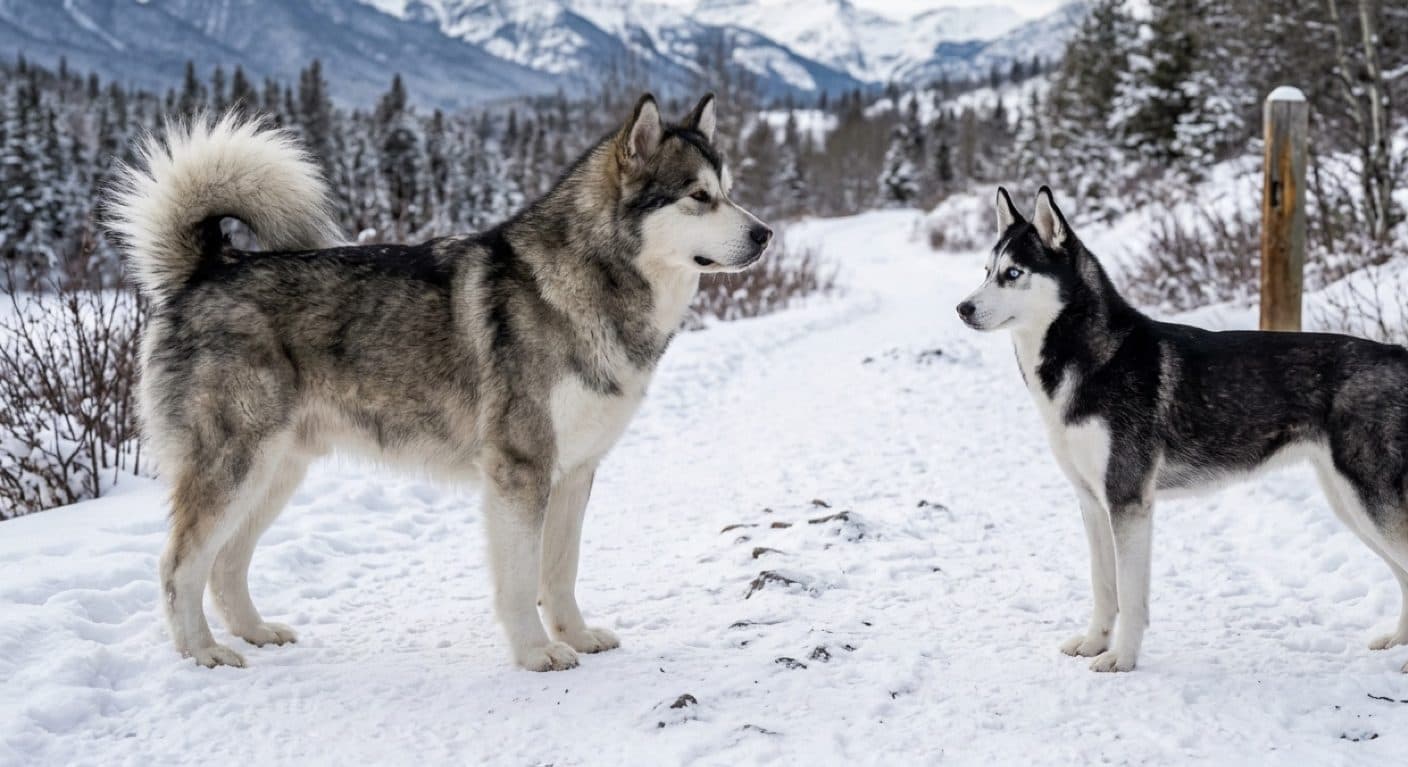
Built for different jobs
The Canadian Kennel Club describes the Malamute as a powerful freighting dog, the choice of many polar explorers, which began with the Mahlemut people. The CKC Siberian Husky page says the Husky was developed by the Chukchi people of northeastern Siberia to pull sleds and herd reindeer.
Put simply, the Malamute was built to haul heavy loads; the Husky to cover distance quickly with lighter loads.
Side by side
From the CKC breed pages:
- Size: Husky males 21 to 23.5 in, up to about 60 lb. Malamute males about 25 in, around 85 lb.
- Temperament: Husky friendly, gentle, outgoing and eager. Malamute affectionate and friendly, but definitely strong-willed.
- Exercise: both need lots of it. The CKC notes the Malamute is in its element when temperatures dip low.
- Children: the CKC advises supervising Malamutes with young children because of their size and strength.
- Coat: both have thick, weather-resistant coats. The Husky needs thorough, regular brushing; heavy seasonal shedding is common in both.
Browse adoptable Alaskan Malamutes
Ask the rescue about the dog’s size, strength on lead, energy and how it does with children and small pets.
See Available Alaskan Malamutes →Living with each
A Husky’s lighter frame makes it easier to handle on lead and a natural running or canicross partner. A Malamute’s strength means loose-lead training matters from puppyhood, and its strong will rewards patient, consistent, reward-based training. The American Veterinary Society of Animal Behavior recommends reward-based methods for all dogs.
Both breeds need secure fencing, on-lead walks in open areas, daily exercise and brain work, and a plan for hot weather. Neither should be shaved.
Which suits you?
If you run, hike or want a smaller, sociable dog, a Husky usually fits better. If you love big dogs, enjoy cold-weather activities and have experience handling strong, independent breeds, a Malamute can be wonderful. If a rescue dog is a mix of the two, judge the individual dog’s size and energy rather than the label. See also Is a Husky right for you?
Frequently asked questions
Is a Malamute bigger than a Husky?
Yes. The Canadian Kennel Club lists Husky males up to about 60 lb and Malamute males around 85 lb.
Which is easier, a Malamute or a Husky?
Many owners find a Husky easier to handle because of its smaller size. Malamutes are affectionate but strong-willed and very strong.
Are Malamutes good with kids?
Many are affectionate. The CKC advises supervising them with young children because of their size and strength.
Do Malamutes and Huskies shed the same?
Both have thick coats and shed heavily in seasonal blows. Regular brushing is essential for both.
Which needs more exercise?
Both need a lot. Huskies are built for speed and distance; Malamutes for strength and endurance in the cold.
Can either be off lead?
Most owners keep both breeds on lead or in secure, fenced areas.
Sources
- Canadian Kennel Club: Alaskan Malamute: freighting dog; size and weight; affectionate but strong-willed; supervise with youngsters; exercise
- Canadian Kennel Club: Siberian Husky: sled and reindeer origin; size; friendly temperament; brushing
- American Veterinary Society of Animal Behavior: Position Statement on Humane Dog Training: reward-based training recommended
General information. Individual dogs vary; a rescue that knows the dog is the best guide to whether it suits your home.
Related guides
New dog? Start with these care guides
Everything a new adopter needs to set up a safe, happy home.