The short answer
Watch an adult Berner closely: a new limp, lump, cough, loss of appetite or low energy deserves a prompt vet visit, because cancer is common in the breed. Keep the dog lean and let puppies grow slowly to protect hips and elbows. Learn the signs of bloat. Ask your vet about degenerative myelopathy testing. Price pet insurance in your first week.
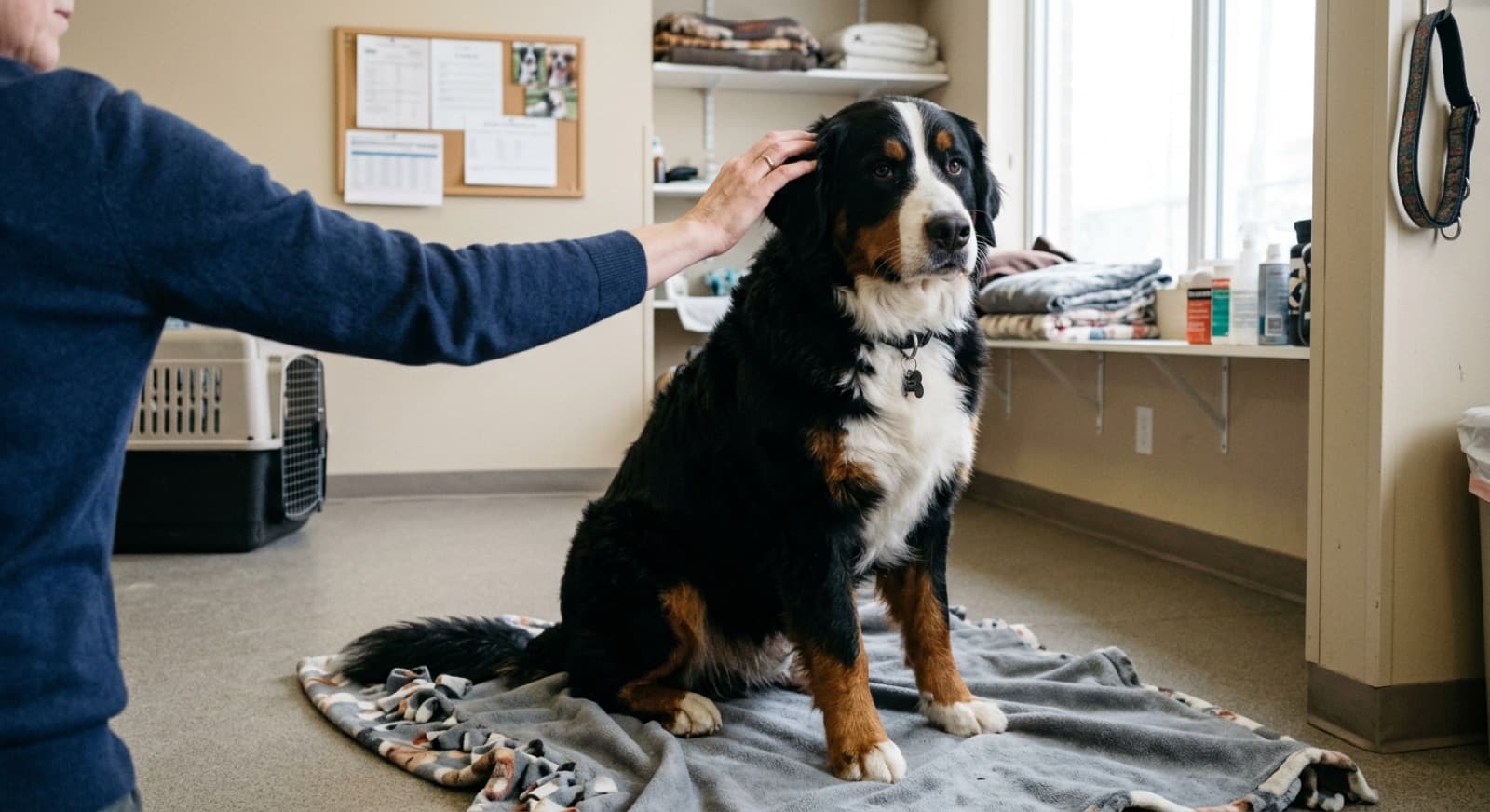
Histiocytic sarcoma and other cancers
Histiocytic sarcoma is an aggressive cancer of immune cells. A study of risk factors in Bernese Mountain Dogs notes that the breed has been estimated to be 225 times more likely to develop it than other breeds, with reports suggesting a lifetime risk of up to 25% of the breed.
Signs vary with where it grows: lethargy, poor appetite, weight loss, a cough, a limp or a new lump. Berners are also prone to other cancers. The practical rule is that any new or unexplained sign in an adult Berner deserves a vet visit soon, not a wait-and-see.
Browse adoptable Bernese Mountain Dogs
Foster notes often mention energy, appetite, lumps or joints, which is exactly what to raise at your first vet visit.
See Available Bernese Mountain Dogs →Hips and elbows
Hip and elbow evaluations are on the breed club’s recommended test list, published by the American Kennel Club, along with heart and eye exams. Dysplasia makes a joint form loosely and wear into arthritis.
VCA Animal Hospitals stresses lean growth in puppies, a large-breed growth diet, weight loss for heavy dogs and moderate, low-impact exercise. Stiffness after rest, reluctance to climb stairs and a bunny-hopping gait are the signs to report.
Degenerative myelopathy
VCA lists the Bernese Mountain Dog among breeds at risk of degenerative myelopathy, a slow, painless disease of the spinal cord in older dogs. The breed club recommends DNA testing for both the common variant and a Bernese-specific variant. Scuffing back paws and a swaying hind end are early signs; your vet can separate it from treatable joint or disc problems.
Bloat and epilepsy
Bloat (gastric dilatation-volvulus) is a risk in large, deep-chested dogs. Unproductive retching, a swollen belly, drooling and restlessness need emergency care within minutes to hours, according to VCA. A preventive gastropexy is worth discussing, often at spay or neuter.
Bernese Mountain Dogs are also on VCA’s list of breeds with a higher rate of epilepsy. A seizure that will not stop, or several close together, is an emergency.
The first vet visit after adoption
Ask for a full physical with a lump check, a gait and joint assessment, a heart listen, an eye check, a body condition score and baseline bloodwork. Ask about degenerative myelopathy testing and gastropexy. Bring the rescue’s records.
Price pet insurance the same week. Every Canadian provider excludes conditions documented before enrolment, and cancer care and orthopaedic surgery are the large costs in this breed.
Frequently asked questions
What are the most common Bernese Mountain Dog health issues?
Cancer, especially histiocytic sarcoma, hip and elbow dysplasia, degenerative myelopathy, bloat and epilepsy.
What is histiocytic sarcoma in Bernese Mountain Dogs?
An aggressive cancer of immune cells that Berners are strongly predisposed to; research estimates the breed is about 225 times more likely to develop it than other breeds. Signs vary, so any new, unexplained sign in an adult Berner deserves a vet visit.
What health tests are recommended for Bernese Mountain Dogs?
The breed club recommends hip and elbow evaluations, a cardiac exam, an eye exam and DNA tests for degenerative myelopathy.
How do I recognise bloat?
Unproductive retching, a swollen or tight belly, drooling, restlessness and laboured breathing. It is life-threatening: go straight to an emergency vet.
Why do Bernese Mountain Dogs have short lives?
Cancer is the main reason, along with the general shorter lifespan of giant breeds. Lean weight, regular checkups and quick attention to new signs give a Berner its best odds.
Should I get pet insurance for a rescue Bernese Mountain Dog?
It is worth pricing in your first week. Canadian pet insurance excludes conditions documented before enrolment, and cancer and joint care are common, costly problems in the breed.
Sources
- Risk factors for histiocytic sarcoma in Bernese Mountain Dogs (PMC): estimated 225 times more likely than other breeds; reported lifetime risk up to 25%
- American Kennel Club: Working Group Health Testing Requirements: Bernese recommended tests: hips, elbows, cardiac, eyes, DM DNA tests
- VCA Animal Hospitals: Hip Dysplasia in Dogs: lean growth, diet and exercise advice
- VCA Animal Hospitals: Degenerative Myelopathy in Dogs: Bernese named; not painful; DNA test
- VCA Animal Hospitals: Gastric Dilatation and Volvulus: deep-chested breeds; urgency; gastropexy
- VCA Animal Hospitals: Epilepsy in Dogs: Bernese among higher-rate breeds
General information, not veterinary advice. Diagnosis and treatment decisions belong with your veterinarian.
Related guides
New dog? Start with these care guides
Everything a new adopter needs to set up a safe, happy home.