The short answer
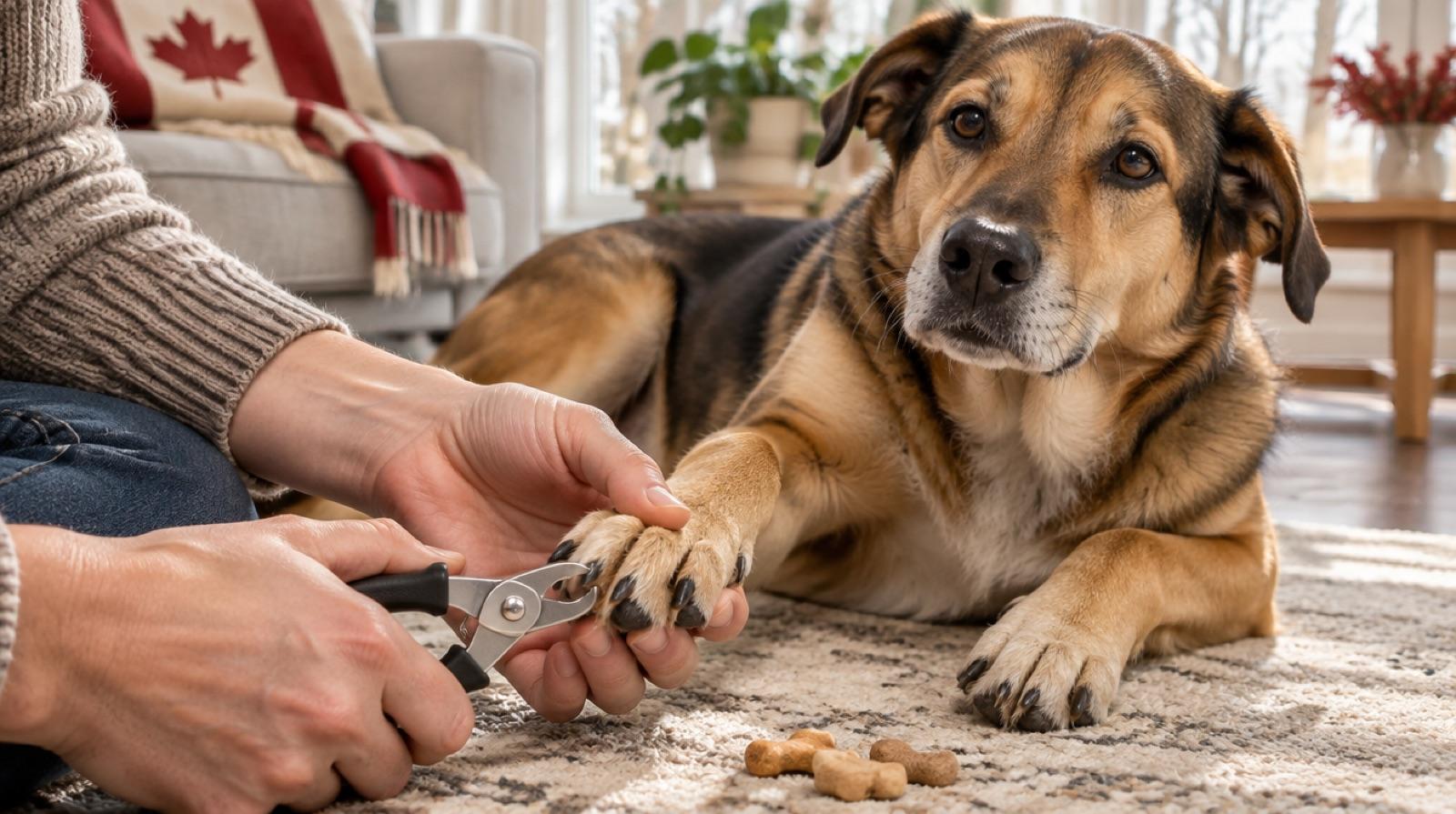
For most dogs, buy the Millers Forge plier-style clipper ($18.99). If you are nervous about cutting too far, the Safari Professional trimmer ($19.63) has a safety stop. If your dog fights clippers, use a grinder: the Dremel PawControl ($59.98) or the cheaper Casfuy two-speed grinder. Add Kwik Stop styptic powder ($20.93) for the day you nick the quick. Prices are from Amazon.ca on November 12, 2026.
The tools worth buying
All five were in stock on Amazon.ca when we checked. The ratings are Amazon.ca customer ratings on the same day.
| Tool | Type | Rating | Price |
|---|---|---|---|
| Millers Forge Stainless Steel Clipper | Plier-style clipper | 4.5 (5,225) | $18.99 |
| Safari Professional Nail Trimmer | Plier-style clipper with a safety stop | 4.5 (12,243) | $19.63 |
| Candure Nail Clippers | Plier-style clipper with a safety guard | 4.5 (51,496) | $13.99 |
| Dremel PawControl | Cordless rechargeable grinder | 4.4 (16,284) | $59.98 |
| Miracle Care Kwik Stop | Styptic powder, 0.5 oz | 4.6 (33,753) | $20.93 |
Prices and ratings as listed on Amazon.ca on November 12, 2026, before tax. They change without notice. Some links on this page are Amazon affiliate links, so we may earn a small commission at no extra cost to you. It never changes what we recommend.
The Millers Forge is the default because it is a plain plier-style clipper in stainless steel with nothing to go wrong. The Safari and the Candure are the same style, and their listings describe a safety stop or safety guard meant to prevent over-cutting. A guard may reassure a first-timer, but it does not know where your dog's quick is, so the technique below still applies.
Clippers or a grinder?
There are three main kinds of tool. The American Kennel Club lists them as nail scissors, guillotine types, and grinder tools made for dogs. Scissor and plier-style clippers cut from both sides. A guillotine has a hole the nail goes through and a single blade. A grinder files the nail down with a spinning drum.
Pick by the dog, not by the tool. VCA Animal Hospitals notes that some dogs with an aversion to clipping are more tolerant of grinding. The AKC adds the trade-off in its nail care guide: grinders are less likely to cause bleeding, but they get hot and can tangle in a dog's coat. The ASPCA points out that some dogs, and some people, find the sound and vibration unpleasant.
On guillotine clippers the vets do not agree. VCA's handling guide says to avoid the single-blade guillotine type because it often crushes the nail instead of cutting it. Washington State University's veterinary hospital calls the guillotine type the easiest to use. We recommend the plier style because VCA positively recommends it (a scissor or plier type, where two sharp blades cross) and none of these sources warns against it.
How often should you trim a dog's nails?
About once a month. VCA says most dogs need a trim roughly monthly, and the AKC says every three to four weeks. The easy test is sound: if you can hear the nails clicking on a hard floor, VCA says they are too long.
Length is a comfort issue, not a cosmetic one. The AKC explains that when a long nail hits the ground, the pressure pushes force back into the foot and leg, and that long nails can turn a sound paw into a splayed foot and reduce traction.
Do not forget the dewclaws, the nails higher up on the inside of the leg. They never touch the ground, so nothing wears them down. VCA warns they often become overgrown and can curve around until they grow into the paw pad.
Where to cut, and how to handle dark nails
Several small cuts beat one big one. Look at the cut surface after each, and stop when its centre changes.
Inside every nail is the quick. The UK veterinary charity PDSA describes it as the part that contains blood vessels and nerves, which will bleed and be painful if it is cut. On a pale nail you can see it as a pink core, and you cut a little in front of it.
On a dark nail you cannot see it, so you find it by taking thin slices. Washington State University says to cut dark claws in several small cuts and to stop when a grey to pink oval starts to appear at the top of the cut surface. VCA describes the same moment as the nail beginning to look slightly shiny, like the inside of a jellybean. The AKC tells owners to watch for a chalky white ring. All three are describing the change that means the quick is close.
If the nails are very long, you cannot fix them in one session, because the quick has grown out with the nail. The AKC notes that regular trimming causes the quick to recede from the end. Take a little off every week or two and the safe length gets shorter over time.
What to do if you cut the quick
It is a common slip and it is manageable. Press styptic powder (a clotting powder) onto the tip of the nail and hold it there. If you have none in the house, VCA says flour or cornstarch will work. Washington State University notes that without styptic powder it may take about five minutes for the bleeding to stop.
The ASPCA's rule for when to worry is simple: if the bleeding continues for more than a few minutes, call your veterinarian. Then give your dog a break and something good to eat, and finish the other paws another day.
How to use a nail grinder safely
Touch, lift, repeat. VCA says a grind of just one to two seconds is enough, because otherwise the nail heats up and the dog becomes uncomfortable. Work around the nail in short touches instead of holding the drum in one spot.
Two more cautions come from VCA's nail trimming guide. The spinning file can easily become entangled in hair, so hold long fur back from the paw or trim it first. And if the file slips onto skin it can cause a burn, so keep a firm hold of the toe you are working on.
Let the dog meet the noise before the tool meets the nail. The AKC's advice for puppies is to turn the grinder on and let them feel the vibration first, which works for a wary adult too. The Dremel PawControl is the dearer of the two grinders, and the Casfuy is the lower-priced one.
If your dog hates nail trims
A better clipper will not fix fear. What works is slow practice with rewards. VCA's guide to low-stress nail trims breaks the job into tiny steps, pairs each one with something the dog likes, and is blunt that the process cannot be rushed or forced. One nail a day with a treat is a real plan.
Do not pin a frightened dog down to get it done. The ASPCA says not to force a dog to submit. For nails that are already very long on a dog that will not allow handling, VCA notes that vet clinics do nail trims and can offer sedation if the dog is very upset. That is a kinder first step than a wrestling match at home.
Nails are one part of a routine. Our breed grooming guides, such as the Labrador and Poodle ones, cover coat care, and the guides to the best dog shampoo and the best dog ear cleaner cover the rest of the kit.
Check the current price
Both are on Amazon.ca in Canadian dollars.
Frequently Asked Questions
What are the best dog nail clippers?
For most dogs, a plier-style (scissor-style) clipper such as the Millers Forge stainless steel clipper is the one to buy. It was $18.99 on Amazon.ca on November 12, 2026. If your dog fights clippers, a grinder such as the Dremel PawControl is the alternative, because some dogs that dislike clipping tolerate grinding better.
Is a nail grinder better than clippers for dogs?
Neither is better for every dog. The American Kennel Club notes that grinders are less likely to cause bleeding, but they get hot and can tangle in a dog's coat. Clippers are faster and much quieter. Choose a grinder if your dog hates the squeeze of clippers, and clippers if your dog is bothered by noise and vibration.
How often should I cut my dog's nails?
About once a month for most dogs. VCA Animal Hospitals says most dogs need a trim roughly monthly, and the American Kennel Club says every three to four weeks. If you can hear the nails clicking on a hard floor, they are already too long.
How do I cut black dog nails without hitting the quick?
Take several small cuts instead of one big one, and look at the cut surface after each. Washington State University's veterinary hospital says to stop when a grey to pink oval appears at the top of the cut surface. VCA describes the same point as the nail starting to look slightly shiny, like the inside of a jellybean.
What do I do if I cut the quick and the nail bleeds?
Press styptic powder onto the nail tip. If you have none, VCA says flour or cornstarch will do. Washington State University notes it can take about five minutes to stop without styptic powder. The ASPCA says to call your veterinarian if the bleeding continues for more than a few minutes.
Are guillotine nail clippers bad for dogs?
Veterinary sources disagree. VCA advises avoiding guillotine clippers with a single blade because they can crush the nail instead of cutting it, while Washington State University calls the guillotine type the easiest to use. That split is why we recommend the plier style, which VCA recommends and none of those sources warns against.
This article is general information, not veterinary advice. See your vet for a nail that is torn, infected or will not stop bleeding.
Best Dog Shampoo in Canada
Which to buy by coat and skin type, and when you need a medicated one.
Best Dog Ear Cleaner
Choosing an ear cleaner, the correct technique, and when to see a vet instead.
Something else going on with your dog?
Pick what is on your mind and we will point you at the guide that answers it, and what to buy if anything.