The short answer
Plan for daily physical exercise plus daily mental work: training sessions, scent games, food puzzles and, ideally, a dog sport. Balance high-arousal games such as ball and frisbee with calm, thinking activities, and teach your dog to settle. Signs of an under-stimulated Border Collie include chewing, pacing, barking, and herding cars, children or other pets.
Why a Border Collie needs a job
The Canadian Kennel Club says "highly active" only begins to describe the breed, calls intelligence and trainability its hallmark, and notes it needs a great deal of work and stimulation and does not suit a sedentary home.
Border Collies were bred to make decisions all day while moving livestock. Physical exercise alone builds an athlete with a busy mind and nothing to do with it. Mental work, problems to solve and calm routines are what actually let them switch off.
A daily structure that works
Every dog is different, but most Border Collies do well with a mix like this:
- A good walk or run, with time to sniff rather than only fetch.
- One or two short training sessions (5 to 10 minutes) teaching new cues or tricks.
- A food puzzle, snuffle mat or scatter-feed in place of a bowl meal.
- A scent game: hide treats or a toy and let the dog search.
- Practice settling on a mat, rewarded, so calm becomes a skill.
Browse adoptable Border Collies
Ask the rescue how much activity the dog has been getting in foster and how it settles indoors.
See Available Border Collies →Careful with ball obsession
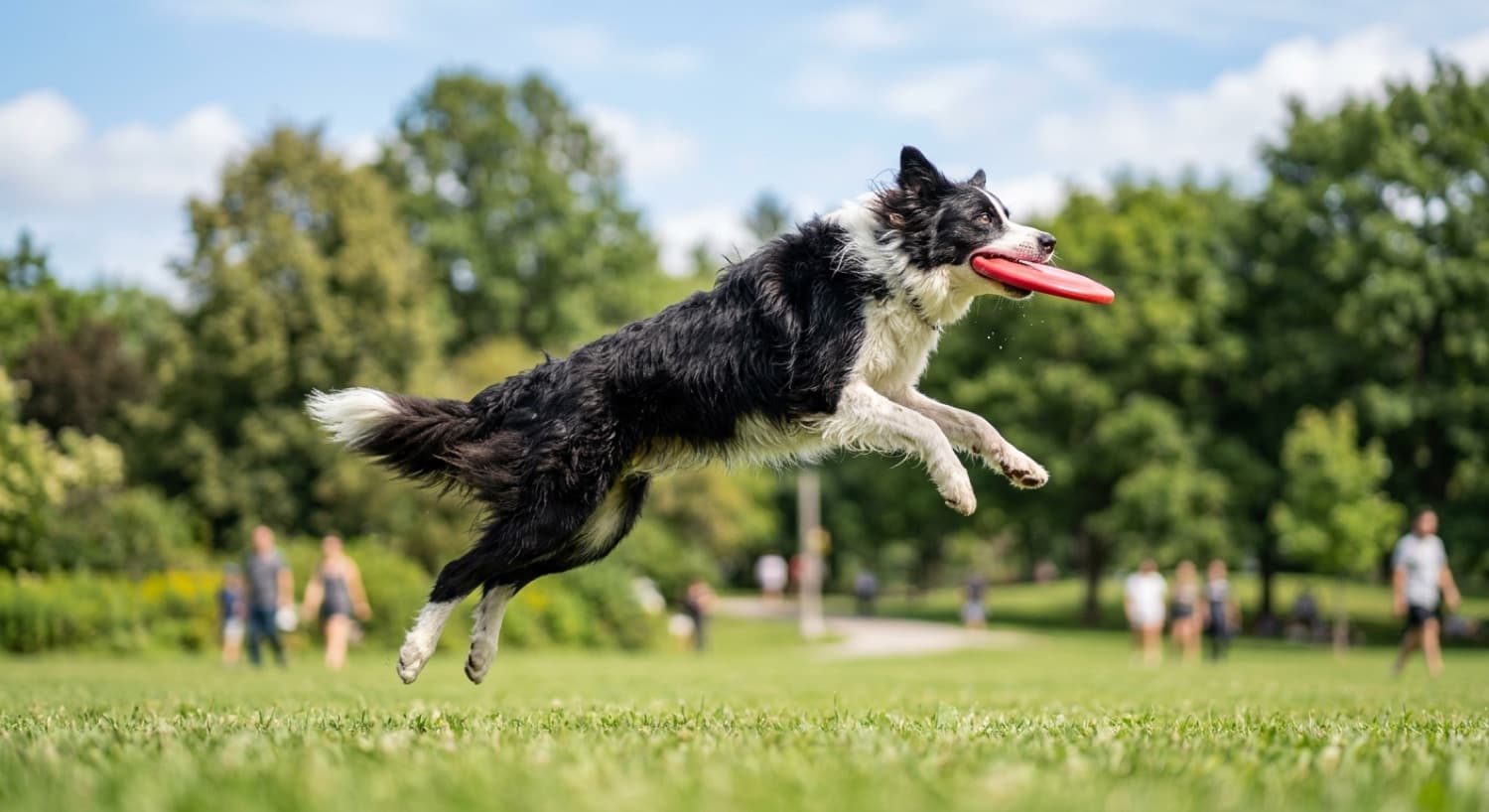
Endless ball or frisbee throwing can wind a Border Collie up rather than tire it out, and repetitive sprints and sharp turns are hard on joints. Mix fetch with thinking games, ask for a sit or a down between throws, and end sessions before the dog is frantic. Running beside a bike or for long distances should wait until a young dog has finished growing.
Bad weather days
On days when long walks are not possible, brain work fills the gap well: trick training, hide-and-seek, scent work around the house, food puzzles and "find it" games with kibble. Twenty minutes of focused thinking can settle a Border Collie as well as a long run.
Dog sports and signs of boredom
Border Collies excel at agility, obedience, rally, flyball, scent work and herding, and a weekly class gives both of you structure. Train with rewards; the American Veterinary Society of Animal Behavior recommends reward-based methods for all dogs.
Watch for chewing, digging, pacing, constant barking, spinning, or herding cars, bikes, children or other pets. These usually mean the dog needs more mental work and more practice relaxing, not just more running.
Frequently asked questions
How much exercise does a Border Collie need?
A lot, and it must include mental work. Daily physical exercise plus training, scent games and puzzles works far better than running alone.
Why is my Border Collie so restless?
Usually not enough mental work, or too much high-arousal play without learning to settle. Add brain games and reward calm.
Can a Border Collie live in an apartment?
Some can, with a committed owner who provides daily exercise, mental work and training. It is harder than in a home with outdoor space and suits experienced owners best.
Is fetch good exercise for a Border Collie?
In moderation. Endless throwing can over-excite the dog and strain joints. Mix it with thinking games and calm breaks.
What dog sports suit Border Collies?
Agility, obedience, rally, flyball, scent work and herding are all popular. A weekly class adds structure.
Why does my Border Collie herd children or cars?
It is herding instinct with nowhere to go. Manage the situation, redirect onto approved games and add more mental work.
Sources
- Canadian Kennel Club: Border Collie: highly active; intelligence and trainability; needs work and stimulation
- American Veterinary Society of Animal Behavior: Position Statement on Humane Dog Training: reward-based training recommended
General information, not a substitute for a qualified trainer or behaviour professional. For obsessive behaviour, sudden changes or lameness, start with your veterinarian.
Related guides
New dog? Start with these care guides
Everything a new adopter needs to set up a safe, happy home.