The short answer
Brush a Cockapoo several times a week down to the skin and book a groomer every several weeks. Check ears weekly: redness, smell, discharge, scratching or head shaking mean a vet visit, not home treatment. Keep ears dry after baths and swimming, clean only as often as your vet advises, never use cotton swabs in the canal, and ask your vet before plucking ear hair.
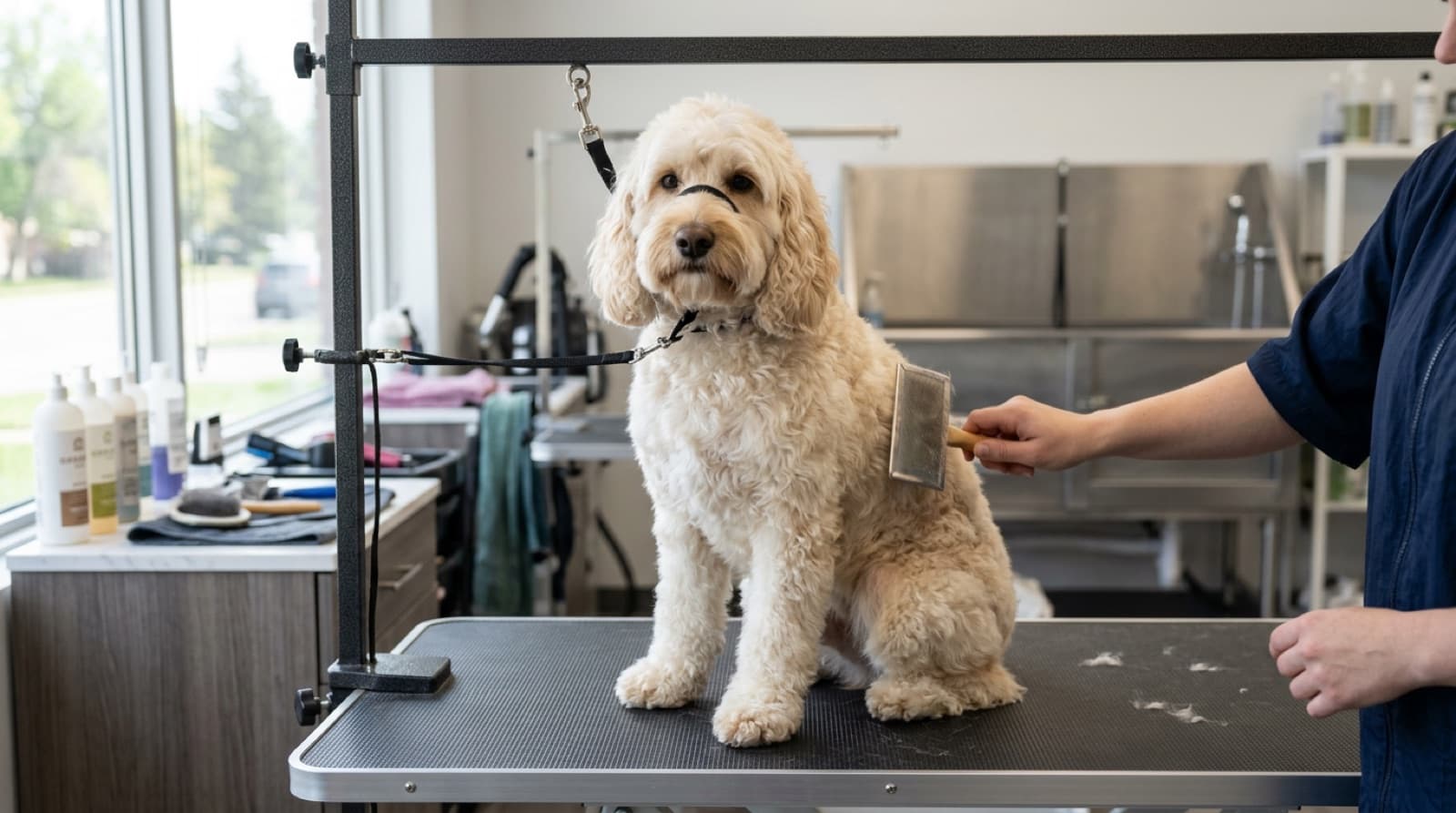
Two coats in one dog
The Canadian Kennel Club describes the Cocker Spaniel coat as silky, flat or slightly wavy, with well-feathered ears, chest, abdomen and legs, needing frequent brushing, and says the eyes and ears should be checked regularly and cleaned as necessary. The Miniature Poodle coat is curly, harsh and dense.
A Cockapoo can inherit either coat or a blend. Wavy and curly coats tangle fastest, and the feathering on the ears and legs mats easily.
Brushing and trims
Brush in layers so you reach the skin:
- Part the coat and brush small sections outwards from the skin with a slicker brush.
- Follow with a metal comb to find hidden tangles.
- Pay extra attention to ear feathering, armpits, collar line, belly and back legs.
- Brush out before baths; water tightens mats.
- Book a groomer every several weeks. A shorter trim, including on the ears, makes home care easier.
Browse adoptable Cockapoos
Ask the rescue about the dog’s ear history and how it handles brushing and grooming.
See Available Cockapoos →Why Cockapoo ears need attention
The Merck Veterinary Manual notes that the shape of the ear flap or canal makes some dogs more likely to get outer ear infections, and lists allergies, parasites and foreign objects among the causes. Signs include head shaking, a foul smell, redness, swelling, scratching and discharge. Merck advises keeping canals dry, avoiding water in the ears during baths, and prompt veterinary attention when changes appear.
Cleaning safely
Clean only as often as your vet recommends; over-cleaning can irritate the canal. VCA Animal Hospitals describes the method: lift the ear flap, fill the canal with a dog ear cleaner, massage the base for about 30 seconds, let the dog shake, and wipe the outer ear with cotton or gauze.
VCA warns never to use cotton-tipped swabs, which can puncture the eardrum or push debris deeper, and to see your vet before cleaning red, inflamed or painful ears. Stop if your dog seems in pain.
Ear hair and plucking
Merck says trimming or plucking hair near the canal can improve airflow, but to consult your vet before removing hair, and not to use powders after plucking because they can form irritating masses. Ask your vet, and tell your groomer what the vet advised.
Frequently asked questions
Why do Cockapoos get so many ear infections?
Heavy, hairy, floppy ears trap moisture, and ear shape is a known risk factor. Allergies are another common cause. Keep ears dry and see a vet for any signs.
How often should I clean my Cockapoo’s ears?
As often as your vet recommends. Over-cleaning can irritate the canal. Check weekly either way.
Should my groomer pluck my Cockapoo’s ear hair?
Ask your vet first. Merck says to consult a vet before removing ear hair and not to use powders afterwards.
Can I use cotton swabs in my dog’s ears?
No. VCA warns they can puncture the eardrum or push debris deeper.
How often does a Cockapoo need a groomer?
Most need a trim every several weeks, with brushing at home several times a week.
Do Cockapoos shed?
It depends on the coat. Curlier coats shed less visibly but mat more.
Sources
- Canadian Kennel Club: American Cocker Spaniel: silky feathered coat; frequent brushing; check and clean ears
- Canadian Kennel Club: Poodle (Miniature): curly, harsh, dense coat
- Merck Veterinary Manual: Ear Infections and Otitis Externa in Dogs: risk factors, signs, keeping ears dry, plucking and powders
- VCA Animal Hospitals: Ear Cleaning in Dogs: cleaning steps; no cotton swabs; see vet for painful ears
General information, not veterinary advice. Painful, red or smelly ears need a vet. Do not put anything in an ear that may have a damaged eardrum.
Related guides
New dog? Start with these care guides
Everything a new adopter needs to set up a safe, happy home.