The short answer
If your Great Dane retches without producing anything, has a swollen or tight belly, drools, paces or cannot settle, go to an emergency vet immediately. Do not wait until morning. Ask your vet about a preventive gastropexy, often done at the time of a spay or neuter, which prevents the stomach from twisting in most dogs.
What bloat is
Bloat starts when the stomach fills with gas and fluid (dilatation). In gastric dilatation-volvulus the swollen stomach then rotates, closing off its entrance and exit and cutting off blood supply to the stomach and spleen. Shock follows quickly. VCA Animal Hospitals describes it as an emergency where treatment is needed within minutes to hours.
Why Great Danes are at the top of the list
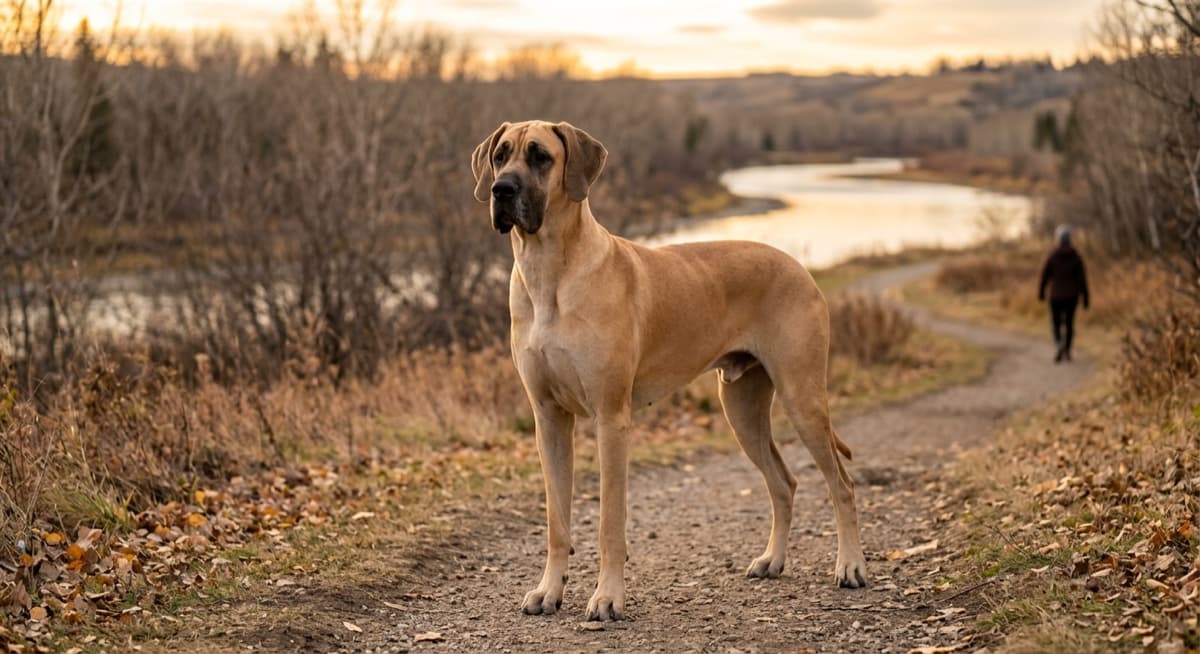
GDV mainly affects large, deep-chested dogs, and VCA lists the Great Dane first among the breeds most often affected. A large US Dog Aging Project analysis also found higher odds in purebred dogs, males and dogs over 40 kg, and found no link with diet type, the number of meals per day or anxiety, which is a useful reminder that feeding tricks alone do not prevent it.
The signs, and what to do
Learn these well enough to recognise them in a few seconds:
- Retching or trying to vomit with nothing coming up.
- A swollen, tight or drum-like belly (not always obvious in a deep-chested dog).
- Drooling, restlessness, pacing and being unable to lie down comfortably.
- Laboured breathing, pale gums, weakness or collapse.
Browse adoptable Great Danes
Ask the rescue whether your Great Dane has had a gastropexy, and keep your nearest 24-hour emergency clinic saved in your phone.
See Available Great Danes →At the emergency clinic
Call ahead so the team is ready, and go straight there. The vet will stabilise the dog, take an X-ray to confirm whether the stomach has twisted, and if it has, surgery is needed to untwist it and assess the stomach and spleen. Outcomes are much better when treatment starts early, which is why the drive matters more than the time of day.
Prevention: the gastropexy
A preventive (prophylactic) gastropexy tacks the stomach to the body wall so it cannot rotate. VCA calls it the most effective preventive option, and it is often done at the same time as a spay or neuter. It does not stop gas from building up, so you still need to know the signs, but it prevents the deadly twist in most dogs.
For a rescue Great Dane, ask whether a gastropexy has already been done; it may be noted in the spay or neuter records.
Frequently asked questions
What are the signs of bloat in a Great Dane?
Retching without producing anything, a swollen or tight belly, drooling, restlessness, pacing, laboured breathing, pale gums and collapse. Go to an emergency vet immediately.
Can bloat wait until morning?
No. Gastric dilatation-volvulus needs emergency treatment within minutes to hours. Call the nearest emergency clinic and go.
What is a gastropexy?
Surgery that attaches the stomach to the body wall so it cannot twist. It is the most effective prevention and is often done at the time of a spay or neuter.
Does feeding several small meals prevent bloat?
It is commonly advised, but a large Dog Aging Project analysis found no link between meals per day or diet type and GDV. A gastropexy and knowing the signs are the reliable protections.
Does a gastropexy mean my dog can never bloat?
It prevents the stomach from twisting in most dogs, but gas can still build up. Any signs of bloat still need a vet promptly.
Is bloat covered by pet insurance?
Usually, if the policy started before any bloat episode. Canadian pet insurance excludes conditions documented before enrolment, so price it in your first week.
Sources
- VCA Animal Hospitals: Gastric Dilatation and Volvulus: Great Dane listed first; deep-chested breeds; emergency within minutes to hours; prophylactic gastropexy most effective, often at spay/neuter
- Dog Aging Project GDV analysis (Europe PMC): higher odds in purebred, male and >40 kg dogs; no link with diet type, meals per day or anxiety
General information, not veterinary advice. Diagnosis and treatment decisions belong with your veterinarian.
Related guides
New dog? Start with these care guides
Everything a new adopter needs to set up a safe, happy home.