The short answer
Learn the signs of bloat and ask your vet about a preventive gastropexy. Ask about heart screening, because Great Danes are predisposed to dilated cardiomyopathy. Watch a young Dane for a wobbly, uncoordinated gait, get any persistent limp in an adult X-rayed, and let puppies grow slowly on a large-breed diet. Price pet insurance in your first week.
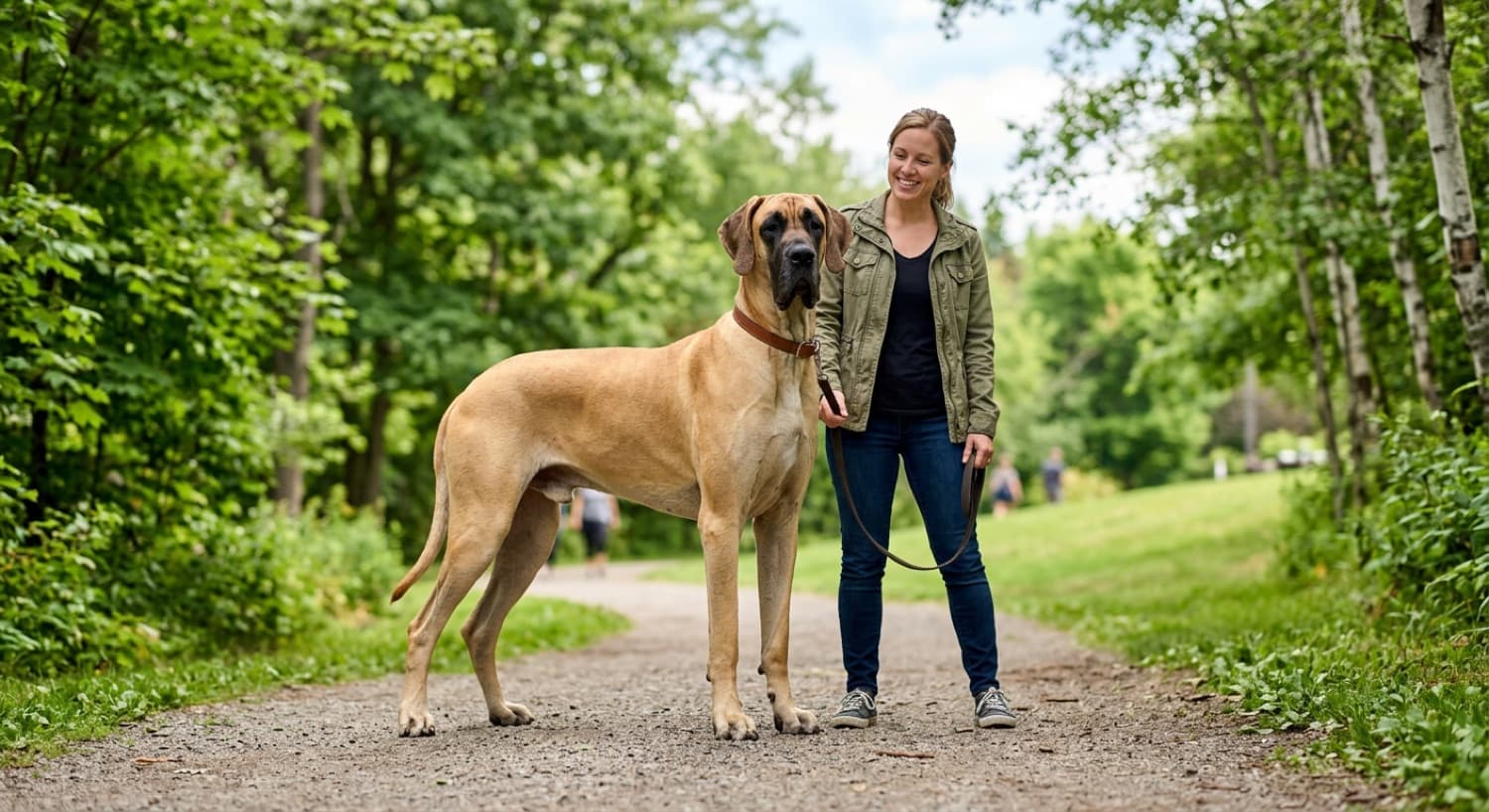
Bloat comes first
VCA Animal Hospitals lists the Great Dane first among the breeds most affected by gastric dilatation-volvulus, where the stomach fills with gas and twists. Retching without producing anything, a swollen belly, drooling and restlessness need emergency care within minutes to hours. A preventive gastropexy prevents the twist in most dogs.
Our Great Dane bloat guide covers the signs, what happens at the clinic and prevention in detail.
Browse adoptable Great Danes
Ask the rescue whether your Great Dane has had a gastropexy or any heart screening.
See Available Great Danes →Dilated cardiomyopathy
DCM weakens the heart muscle and can disturb its rhythm. Cornell’s Riney Canine Health Center names the Great Dane among predisposed breeds and notes that screening predisposed breeds can find disease sooner and improve the outlook.
Ask your vet whether an echocardiogram and a rhythm check (a Holter monitor) make sense for your adult Dane. Tiring easily, a cough, fast breathing at rest, fainting or a swollen belly need prompt attention.
Wobbler syndrome in young Danes
The Merck Veterinary Manual describes a form of wobbler syndrome in young giant-breed dogs, including Great Danes, from several months to four years old, caused by bony changes that compress the spinal cord in the neck.
Signs include an uncoordinated, swaying gait, especially in the back legs, and sometimes neck pain. See your vet for any wobbliness in a young Dane. Use a harness rather than a collar.
Bones, growth and knees
Osteosarcoma is far more common in giant breeds, and VCA names the Great Dane. A limp in an adult that does not settle with rest deserves X-rays rather than waiting.
Giant puppies grow fast, and too-fast growth stresses developing joints. Feed a large-breed puppy diet, keep the puppy lean and avoid forced running. In giant breeds the kneecap can slip toward the outside of the knee; VCA names the Great Dane for this lateral form.
The first vet visit after adoption
Ask for a careful heart listen and a plan for cardiac screening, a gait and neck check, a joint and knee assessment, a body condition score and baseline bloodwork. Raise gastropexy if the dog is not yet spayed or neutered. Bring the rescue’s records.
Price pet insurance the same week. Every Canadian provider excludes conditions documented before enrolment, and bloat surgery, cardiac care and cancer care are large costs in a giant breed.
Frequently asked questions
What are the most common Great Dane health issues?
Bloat, dilated cardiomyopathy, wobbler syndrome in young dogs, bone cancer, growth-related joint problems and slipping kneecaps.
Should my Great Dane have heart screening?
It is worth discussing. Great Danes are predisposed to dilated cardiomyopathy, and screening can catch it earlier, when treatment can help.
Why is my young Great Dane wobbly?
Young giant-breed dogs can develop wobbler syndrome, where bony changes compress the spinal cord in the neck. See your vet promptly.
How do I protect a Great Dane puppy’s joints?
Feed a large-breed puppy diet, keep the puppy lean, and avoid forced running and repetitive jumping while it grows.
Why do Great Danes have short lives?
Giant breeds age faster, and bloat, heart disease and bone cancer are common. Early checks and prevention help a Dane make the most of its years.
Should I get pet insurance for a rescue Great Dane?
It is worth pricing in your first week. Canadian pet insurance excludes conditions documented before enrolment, and giant-breed emergencies are expensive.
Sources
- VCA Animal Hospitals: Gastric Dilatation and Volvulus: Great Dane listed first; urgency; gastropexy
- Cornell University Riney Canine Health Center: Dilated Cardiomyopathy: Great Dane predisposed; screening improves prognosis
- Merck Veterinary Manual: Degenerative Diseases of the Spinal Column and Cord: wobbler in young giant breeds including Great Danes, months to 4 years
- VCA Animal Hospitals: Osteosarcoma in Dogs: Great Dane named
- VCA Animal Hospitals: Luxating Patella: lateral luxation; Great Dane named
General information, not veterinary advice. Diagnosis and treatment decisions belong with your veterinarian.
Related guides
New dog? Start with these care guides
Everything a new adopter needs to set up a safe, happy home.