The short answer
Expect a calm, gentle giant with family that watches over its territory and barks at anything it sees as a threat, sometimes at night. Provide secure fencing, keep socialising so visitors stay normal, train with rewards from a young age while the dog is still small, and supervise around young children because of its size. Lots of brushing keeps shedding manageable.
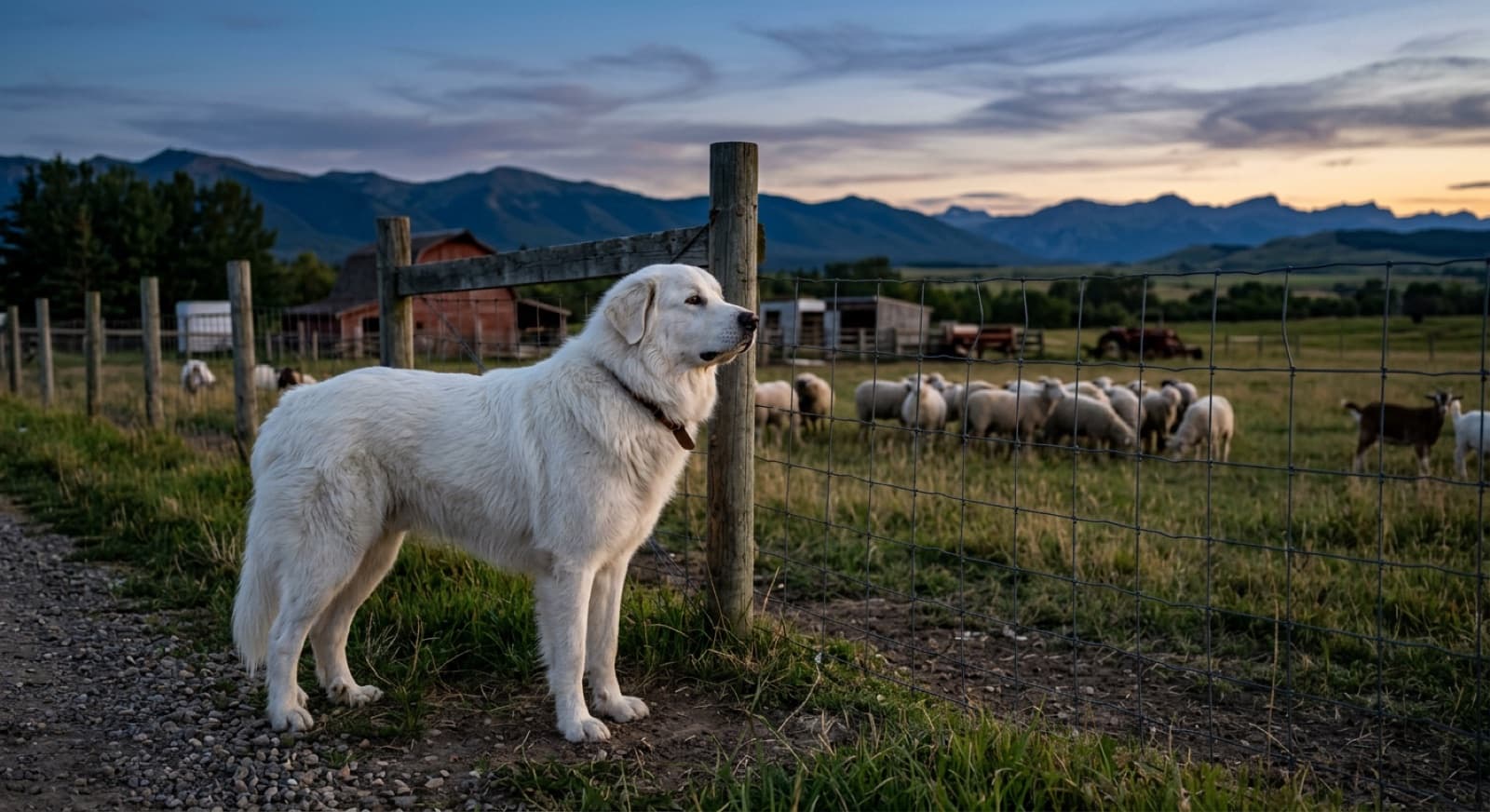
A flock guardian
The Canadian Kennel Club describes the Great Pyrenees as gentle and docile with those it knows, showing courage and a natural protectiveness as a guard dog, used to protect sheep from predators and guard fortresses in the Middle Ages. Adult males stand 27 to 32 inches and weigh 90 to 125 lb.
The Dogs Australia breed standard for the same breed (the Pyrenean Mountain Dog) describes a natural guard dog protecting shepherd and sheep, with an ideal temperament that is calm and self-assured.
What guardian instinct looks like at home
Many Pyrs patrol the yard, watch the fence line, and bark to warn off anything unfamiliar, from wildlife to delivery trucks. That barking can happen at any hour, including overnight. A Pyr may also lie quietly for hours and then move fast if it decides something needs dealing with.
- Bring the dog inside at night if barking is a problem for neighbours.
- Block views of the street from favourite lookout spots.
- Reward calm when a trigger passes, and teach a cue to come away from the fence.
- Check fencing carefully: a giant, determined dog can push or dig through weak spots.
Browse adoptable Great Pyrenees
Ask the rescue how the dog does with visitors, other dogs and small pets, and how much it barks at night.
See Available Great Pyrenees →Socialisation and visitors
A guardian decides who belongs. Keep socialising with people and dogs throughout life, introduce visitors calmly (ideally meeting on neutral ground first), and do not let the dog decide alone whether a newcomer is welcome. Get professional help early for growling, blocking doorways or guarding people.
Training a thoughtful giant
The CKC calls the breed easily trained, and guardian dogs often think before they act. Start while the dog is small: loose-lead walking, a solid recall in safe areas, and calm greetings. The American Veterinary Society of Animal Behavior recommends reward-based methods and warns that aversive tools are linked to fear and aggression.
Coat and exercise
The CKC describes a long, thick, coarse weather-resistant outer coat and says lots of brushing is needed to remove dead hair and keep shedding to a minimum; see our Great Pyrenees grooming guide. Regular outdoor exercise suits the breed, but most Pyrs are steady walkers rather than athletes.
Frequently asked questions
Are Great Pyrenees good family dogs?
Many are calm and gentle with their family. The Canadian Kennel Club describes them as gentle and docile with those they know. Supervise with young children because of their size.
Why does my Great Pyrenees bark at night?
Guardian dogs bark to warn off anything they see as a threat, including sounds and wildlife you may not notice. Bringing the dog inside at night and blocking views helps.
Are Great Pyrenees aggressive?
They are protective by nature, not aggressive by default. Ongoing socialisation and reward-based training keep them calm and stable.
Do Great Pyrenees need a fenced yard?
Secure fencing is strongly recommended. Guardians patrol and can wander after something they want to chase off.
How big does a Great Pyrenees get?
The CKC lists adult males at 27 to 32 inches and 90 to 125 lb.
Do Great Pyrenees shed?
Yes. The CKC says lots of brushing is needed to remove dead hair and keep shedding to a minimum.
Sources
- Canadian Kennel Club: Great Pyrenees: gentle with family; natural protectiveness; flock guarding history; size; coat and brushing; easily trained
- Dogs Australia: Pyrenean Mountain Dog breed standard: natural guard dog of shepherd and sheep; calm, self-assured temperament
- American Veterinary Society of Animal Behavior: Position Statement on Humane Dog Training: reward-based training recommended
General information, not a substitute for a qualified trainer or behaviour professional. For growling, guarding or sudden behaviour change, start with your veterinarian.
Related guides
New dog? Start with these care guides
Everything a new adopter needs to set up a safe, happy home.